Medicare Advantage Insurers Face Pennies in Penalties as Seniors Face Delays and Denials

Even as CMS documents improper denials, ghost networks and unlawful out-of-pocket charges, enforcement remains weak with just $3 million in fines levied in early 2025 against billion-dollar insurers.

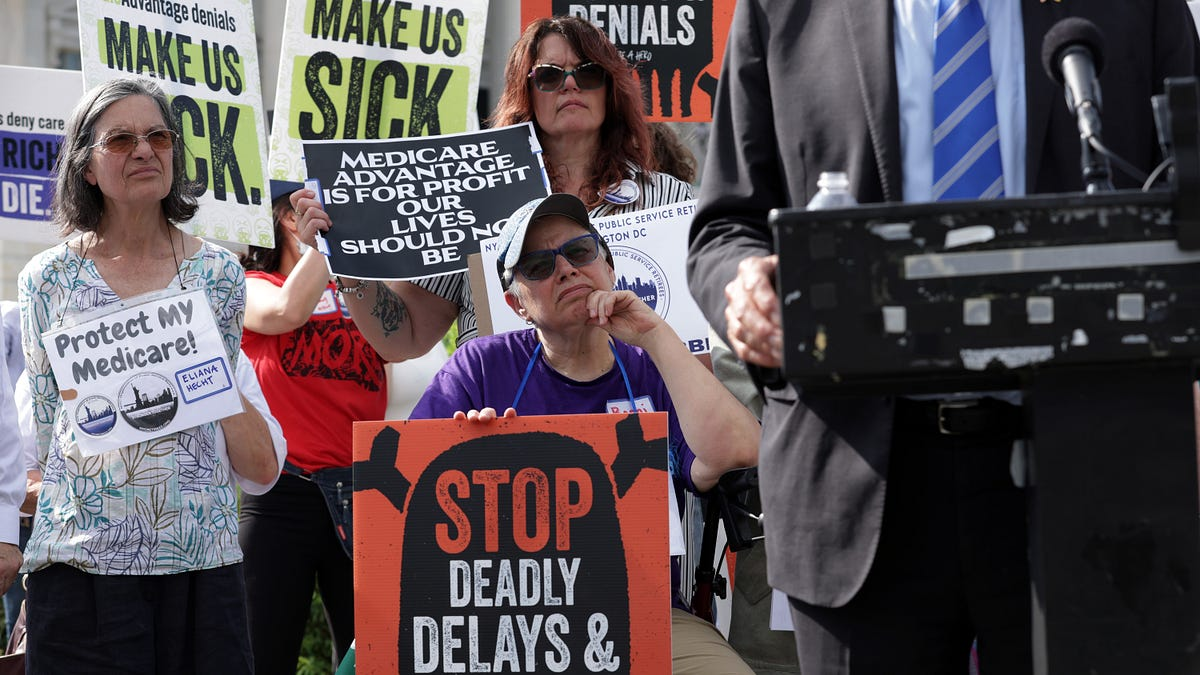
Enrolling in Traditional Medicare means paying more upfront to protect against catastrophic costs because Traditional Medicare lacks an out-of-pocket cap, but in return, you get the care your treating physicians recommend you need. In stark contrast, enrolling in Medicare Advantage typically means allowing a for-profit insurer to second-guess your treating physician and inappropriately delay or deny the care you need, forcing you to gamble with your health and, sometimes, your life. What’s worse is that our federal government is rarely willing or able to punish Medicare Advantage insurers for their bad acts. Consequently, Medicare Advantage insurers too often can get away with restricting access to specialists and specialty hospitals and not covering the treatments their enrollees are entitled to.

Penalties on Medicare Advantage insurers that deprive their enrollees of the care they need are few and far between. In the first four months of 2025, the Trump administration imposed more penalties on the insurers in Medicare Advantage than they faced during the entire four years of the Biden administration. Still, it only imposed about $3 million in penalties, reports Rebecca Pifer Parduhn for HealthcareDive. That is tiny relative to the billions in profits of the big insurers.

Most of the penalties the Centers for Medicare & Medicaid Services (CMS) has imposed in the last few years for Medicare Advantage insurer violations are under $50,000. Penalties imposed were for serious offenses, including improper insurer delays and denials of care and insurers requiring people to spend more out of their own pockets than allowed under the law. Centene was hit with the largest penalty of $2 million for charging its enrollees above the out-of-pocket maximum permitted to be charged, in violation of 42 C.F.R. Part 422, Subpart C.

Molina received the second largest penalty of just over $285,000 for its failure to comply with prescription drug coverage requirements. CMS said that Molina’s failure was “systemic and adversely affected, or had the substantial likelihood of adversely affecting, enrollees because the enrollees experienced delayed access to medications, paid out-of-pocket costs for medications, or never received medications.” It’s hard to believe that Molina didn’t substantially benefit financially from its violations even after paying the $285,000 fine.

Susan Jaffe reports for KFF News that over a seven-year stretch between 2016 and 2022, CMS, under both Trump and Biden, did almost nothing to ensure network adequacy for Medicare Advantage enrollees. Moreover, it did very little to penalize the Medicare Advantage insurers CMS identified as operating Medicare Advantage plans with inadequate networks.

After KFF made a Freedom of Information Act request regarding enforcement actions against Medicare Advantage insurers with inadequate networks, CMS turned over just five letters to insurers regarding seven MA plans with inadequate provider networks. Given the widespread reporting of network inadequacy in Medicare Advantage, it’s inconceivable that only seven MA plans had inadequate networks. When questioned as to why CMS took action in so few instances, the agency explained that it is not overseeing all of the more than 3,000 Medicare Advantage plans but conducting “targeted” reviews of Medicare Advantage plan provider networks.

What’s clear is that CMS does not begin to have the resources to oversee more than 3,000 Medicare Advantage plans to ensure they are in compliance with their contractual obligations and delivering the care they are required to. As a result, Medicare Advantage enrollees are left unprotected. Too often, Medicare Advantage plans have “ghost networks,” networks that look good in the provider directory but turn out to include physicians who are out of network. These MA plans might not have enough primary care physicians, mental health providers, specialists, hospitals, nursing homes, rehab facilities or mental health professionals in their networks.

Technically, CMS can prevent insurers with inadequate networks from marketing their Medicare Advantage plans, freeze enrollment, fine them or even terminate the Medicare Advantage plans. But it never has. In its June 2024 report, the Medicare Payment Advisory Commission (MedPAC) wrote: “CMS has the authority to impose sanctions for noncompliance with network adequacy standards but has never done so.” CMS often doesn’t even let Medicare Advantage enrollees know about the inadequacy of the provider network or allow enrollees the ability to disenroll.

For CMS to oversee Medicare Advantage plans effectively and impose sanctions where appropriate it would need far more resources than it currently has. Moreover, penalties would likely need to be non-discretionary or they would be subject to political interference. In addition, to simplify the process and reduce costs, insurers likely would need to be required to offer the same network for all their Medicare Advantage plans in a given community.

How much will TrumpRx really cut down your drug costs?

President Trump on Thursday unveiled his lower-cost drug platform TrumpRx, touting it as “one of the most transformative health care initiatives of all time.”

“This launch represents the largest reduction in prescription drug prices in history by many, many times,” he added. 

But health policy experts and consumer advocates are skeptical about how many people will benefit, and how significant the deals are. 

The platform features coupons for 43 drugs, ranging from 33 to 93 percent off the list price and treating conditions for obesity, respiratory illnesses, infertility, bladder issues and menopause.

Several observers were quick to note that the advertised prices achievable with the coupons were still higher than the prices one might pay with insurance coverage. 

“If you have insurance, your out-of-pocket costs are probably going to be less than the discounted list price that’s being advertised on TrumpRX,” Juliette Cubanski, deputy director of the Program on Medicare Policy at KFF, told The Hill.  

“For people who are looking at this website and maybe they recognize a drug that they take, they really need to understand how their out-of-pocket cost under insurance would compare to the TrumpRx price.” 

Cubanski noted, however, that some of the medications on TrumpRx aren’t well covered by insurance — such as weight loss and in vitro fertilization drugs, meaning a wider swathe of Americans may find savings on TrumpRx. 

“It’s a valuable effort for some medications, for some people, and I think especially people who don’t have good coverage of some of these medications,” she said. 

Notably, the offerings on TrumpRx are all branded versions of the drugs sold directly by drugmakers who’ve entered “most favored nation” (MFN) pricing agreements with the Trump administration. 

Many of the medications listed on the website have generic alternatives available on the market at significantly lower prices. 

Protonix, a branded medication made by Pfizer that reduces stomach acid, is advertised as having a 55 percent discount on TrumpRx, taking the medication from $447.28 to $200.10 for 30 tablets at a strength of 20 mg. 

But according to GoodRx, its generic equivalent, pantoprazole, can be bought for $10.47 for the same number of tablets at the same dosage with the coupon it offers. Without the coupon, the cost is estimated at just less than $80. 

Another Pfizer product, Tikosyn, for an irregular heartbeat, is shown to have a 50 percent discounted price of $336 for 60 0.125 mg capsules. Generic Tikosyn, dofetilide, is shown to be available for $23.06 on GoodRx with a standard coupon, signifying a 94 percent discount from the $373.96 cost. 

Generics currently make up the majority of prescription medications taken in the U.S., with the Food and Drug Administration estimating in 2023 that 91 percent of prescriptions are filled as generics. 

Anthony Wright, executive director of FamiliesUSA, a nonpartisan consumer health advocacy group, dismissed TrumpRx as a “trumped-up catalog of coupons.” 

“This is not actually lowering drug prices. It steers consumers to the existing drug company programs for uninsured patients that have been around for a while,” said Wright. “This is pretty limited in terms of both who it effects, what drugs it offers and what the benefits are, especially compared to what already existed previously.” 

Ashish Jha, who served as the Biden administration’s White House COVID-19 response coordinator, did not share that skepticism. He called TrumpRx a “good thing” that “is going to be really, really helpful for people who don’t have health insurance” in remarks to The Hill’s sister network NewsNation.

TrumpRx.gov explicitly states that people on government health plans such as Medicaid are ineligible to use the coupons. 

The prohibition on federal health plan enrollees from using TrumpRx coupons likely has to do with the anti-kickback statute in the U.S., which criminalizes willfully offering or exchanging anything of value for reimbursable items through federal programs like Medicaid. 

The Hill has reached out to the Trump administration for clarity on whether all private health insurance enrollees can use TrumpRx coupons. 

But even if this cohort can access the coupons, the scope of TrumpRx appears to be “quite limited in scale,” according to Yunan Ji, assistant professor of strategy at Georgetown’s McDonough School of Business.

It really only applies to cash-pay patients. So, just considering the scale is cash-pay patients we’re thinking about, you know, a percent of the uninsured, plus some of the people who may be underinsured because their insurance coverage may be limited, but the scope is quite limited at the moment,” she said. 

Roughly 8 percent of the U.S. is uninsured, and with its current offering of just 43 drugs, TrumpRx currently stands to benefit a small subset of that population. Administration officials said more medication would be added in the coming weeks. 

“The thing about MFN in general — so this is interesting, because MFN is something I teach my MBA students — is that actually, in the long run, it actually puts upward pricing pressure,” said Ji.

Trump’s signature drug price policy requires countries to sell drugs in the U.S. at least as cheaply as they are offered in other countries. 

When companies are aware that their clients, like the U.S., are expecting MFN pricing, they may set their initial launch prices of new drugs at an elevated level, Ji said. Another outcome of MFN pricing could be that drug launches in other countries with strict pricing regulations will be delayed.

Trump acknowledged the global impact that his MFN pricing policy could have on other countries when announcing the launch of TrumpRx. 

“Drug prices in other nations will go up by doing this, they had to agree,” he said. “In many cases, the drug costs will go up by double and even triple for them, but they’re going way down for the United States.” 

What is “Medically Necessary”?

How Big Health Insurers hijacked a medical term and built a denial machine around it.

We hear the term “medically necessary” used every day by insurance companies as a reason to deny or delay health care. While doctors were hard at work treating patients, insurers quietly co-opted the term, and that’s causing serious problems now.

If you ask most doctors to define ‘medically necessary,’ you’ll get some version of: “The test, therapy, drug or procedure that will do the best job of treating my patient.” It’s that simple: whatever is best for my patient.

If you ask an insurer, you may get some legal definition about care “provided for the cure or relief of a health condition, illness, injury or disease (looks good so far, but wait there’s more!), and is not for experimental, investigational or cosmetic purposes and is necessary for and appropriate to the….” The problem begins with the meaning of “necessary and appropriate.”

The terms ‘necessary’ and ‘appropriate’ are left to interpretation. My doctor may feel that a certain test or medication is necessary and appropriate, but someone else may disagree. So how do insurers resolve that disagreement? This is where things go off the rails.

They resolve it by having a medical director they employ review what my doctor wants for me – and that medical director becomes the sole arbiter of what care I can have that will be covered by my health plan. That medical director can sign off on a denial of a claim or a request, and many times they justify that denial by saying the treatment isn’t medically necessary – for reasons that are entirely defined by the health plan.

It seems a clear conflict of interest when an anonymous medical director – possibly lacking in both expertise and experience – rejects a course of treatment laid out by a physician specializing in that disease or condition who has a history with that particular patient. But it happens all the time.

These medical directors work for the company that is denying the claim or request. They have been granted stock and stock options in that company. Their bonus is tied to the financial performance of the company. To say they are impartial and doing what is best for the patient is laughable at best.

Frequently, these medical directors are reviewing requests in areas outside their specialty. In addition, they make these determinations without ever seeing the patient, or reviewing the medical records, studies or lab results that led the treating physician to make the recommendation in the first place. An investigation by ProPublica found that Cigna medical directors were signing off on denials once every 1.2 seconds. This isn’t clinical review; this is profit enhancement.

This brings us to another problem: “coverage policies.” Insurance corporations have created a whole library of coverage policies, and they differ from health plan to health plan. If you’ve never read one of these coverage policies let me save you some time and trouble. Get up now and place your head between the door and the door jam. Now slam the door. You just achieved the headache and confusion that reading a long coverage policy would give you in a fraction of the time. You’re welcome.

Even if you read the policy and think it’s got you covered, you still aren’t home free. A medical director can overrule the policy and still deny the care. Also, that coverage policy may be different for each health plan, and they change from time to time. I am struck by this basic question: Why should the care you receive depend on the insurance card in your wallet and not your clinical situation? The answer, of course, is because that’s how the insurance companies want it.

So, what do we do about this? Let me give you two relatively easy solutions.

First, follow a coverage policy.

If only there was a group of doctors that represented every specialty, we could get them to meet and determine universal coverage policies that could be mandated for all health insurance, both government and commercial. Wouldn’t that be nice? Doctors could then provide good care to patients without having to figure out a library of different coverage policies. Wait, a group like that does exist. It’s called the RUC.

The RUC (Relative Value Scale Update Committee) is an American Medical Association specialty panel, a volunteer group of 32 physicians and over 300 physician advisors who represent every medical specialty. The committee evaluates thousands of individual services across the medical spectrum. Why don’t we ask them to develop a universal set of clinical coverage policies?

Second, fix the denial system. Pass a law that says whenever an insurer denies payment or a request for care, that denial must be signed by a medical doctor, and signing that denial qualifies as “the practice of medicine.” This would make those denials and the doctor who signed off on them subject to all the responsibilities and accountabilities required to practice medicine.

This includes:

  • having an active license in the state where the patient is seeking care; practicing within your specialty;
  • documenting your decision-making in the patient’s medical record, including the information you reviewed to come to your decision; and
  • being liable for malpractice if your decision causes harm to the patient and is not clinically justified.

Let’s assume we had this in place right now and applied it to a real-world situation: the GLP-1 coverage debate. When these glucagon-like peptide-1 drugs for diabetes and weight loss came to market they would have gone before the RUC for a clinical coverage policy. Let’s say the RUC determines that the drugs should be covered for individuals with a BMI over 30 who have tried and failed other diet programs, or for people with a BMI between 25 and 30 who have significant cardiac risk or are diabetic.

Now we have a universal coverage guideline. The doctors prescribing the drug have a very clear understanding of who will be covered and when, and it would apply to all patients regardless of which insurance company they had. As long as the prescribing physician stays inside the guidelines, no denials would be expected.

Let’s take an example from the flip side. A doctor wants to prescribe an expensive chemotherapy regimen to an elderly patient with cancer. The insurer could have that request reviewed and possibly denied by a medical director. However, that medical director would need to be an oncologist with a valid license in the state where the patient is getting treatment. If that oncologist reviews the patient information, denies the chemotherapy for valid clinical reasons, and documents those reasons in the patient’s chart, then the insurer can deny the request.

These two changes would eliminate so many problems, improve the lives of doctors, improve the lives of patients, and reduce administrative costs.

So why hasn’t this been done already? Well the one thing these changes would not do is increase the stock prices of insurance companies.

To put it more succinctly, it’s profits over patients. That’s why.

If The House Votes for Senate-Approved Spending Package, PBM Reform Becomes Law

As early as today, the House of Representatives is expected to vote on a government funding package (approved by the U.S. Senate last Friday) that includes long-sought reforms to pharmacy benefit managers (PBM) – pharmaceutical middlemen, the biggest of which are owned by just three health insurance conglomerates – that sit between patients and their prescriptions.

None of this happened over night. PBM reform – even in the health care advocacy world – has only recently become a bi-partisan, winning issue. PBMs were largely only known to pharmacists, other middlemen, health-policy wonks and the small but mighty circle of advocates who understood how they squeeze patients and independent pharmacies and funnel profits back to Big Insurance. PBMs began life as intermediaries meant to negotiate lower drug prices on behalf of consumers, but over time their role changed as they huge profit centers for insurers like UnitedHealth, Cigna and Aetna merged with or created their own PBMs – which now control more than 80% of the PBM business in the country.

This monopolistic-evolution captured the attention of policymakers and watchdogs after HEALTH CARE un-covered and reform advocates began to raise the alarm about PBM abuses and profiteering.

The need for PBM reform was one of the reasons I started the Lower Out-of-Pockets (LOOP NOW) Coalition, in 2021. Over the years, the LOOP NOW Coalition, along with its 100 partner organizations, have worked to educate lawmakers about how PBMs restrict access to life-saving medications and contribute to the U.S. medical debt crisis. The coalition has endorsed legislation to ban several PBM business practices, like spread pricing, and to force PBMs to be far more transparent, especially in their dealings with employers that offer health benefits to their workers. Our work also led to an invitation for me to testify at a meeting of the Department of Labor’s Advisory Council on Employee Welfare and Pension Benefit Plans (the ERISA Advisory Council) and to meet with the Federal Trade Commission regarding the vertical integration of big insurers and the need for PBM (and Medicare Advantage) reform.

Through the work of advocates on the ground, things began to shift. What was once a side quest among health-policy activists became something real in Washington because the issue is easy to understand: PBMs have become unneeded profit centers insurers erected between patients and the medicines their doctors say they need.

We came close to reining in the PBM industry in late 2024 when reforms were included in House Speaker Mike Johnson’s first spending package, but they were scrapped after Elon Musk complained about the size and scope of the legislation.. His Tweets prompted GOP leadership to strip out the PBM provisions, even though they had broad bipartisan support in Congress and were backed by many consumer advocates and independent pharmacists. But now, it seems like the PBM language in the current spending package is more locked in. Here’s what the bill will do:

  • Change how PBMs get paid in Medicare Part D by moving them away from percentage-based payments tied to high drug list prices and toward flat, transparent service fees — so PBMs no longer profit more when drug prices are higher.
  • Require CMS to define and enforce contract terms between PBMs and Medicare Part D plans, giving the agency real authority to police abusive or one-sided arrangements.
  • Increase transparency by allowing CMS to track how PBMs pay pharmacies and which pharmacies are included (or excluded) from PBM networks, so regulators can finally see payment patterns and network practices across the system.
  • Lock into law existing protections requiring plan sponsors and PBMs to contract with any pharmacy that agrees to their standard terms — as long as those terms are reasonable and relevant — instead of quietly steering business to preferred or affiliated pharmacies.

These are important reforms, although more are needed. We’ll keep you posted on PBM-related efforts not only on Capitol Hill but also at the Department of Labor and in the states.

UnitedHealth Group Throws a Hail Mary Before CEO Testifies

And the questions I’d ask UnitedHealth Group’s CEO about his company’s ACA pledge.

When I first saw the headline that UnitedHealth Group would “return Obamacare profits to customers in 2026,” my immediate reaction was: Oh good grief.

The timing is just too perfect.

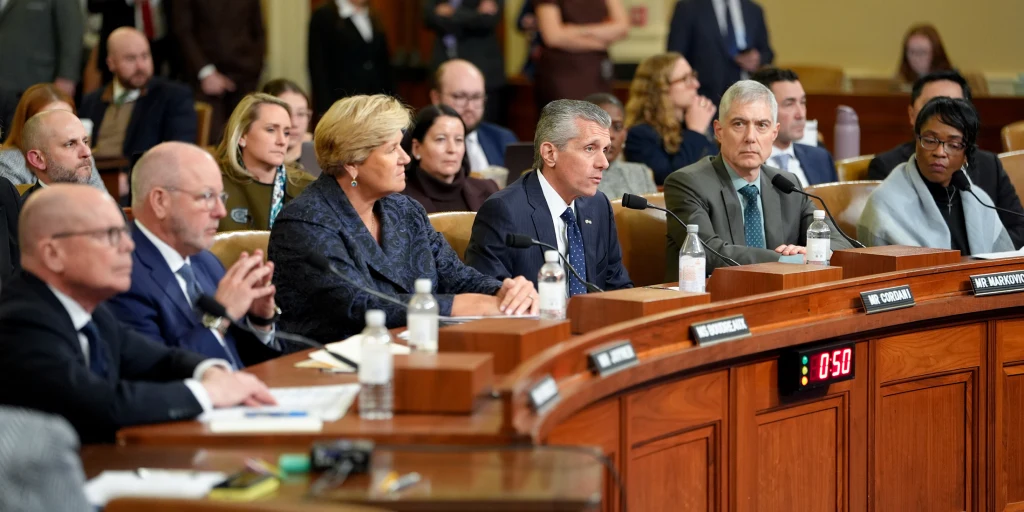
UnitedHealth’s pledge was tucked neatly into prepared testimony from CEO Stephen Hemsley, just hours before he (and four other Big Insurance CEOs) are to be hauled into Congress to testify before two House hearings on health care affordability.

“A text message conversation between my colleague, Joey Rettino, and me.

Today, the CEOs will be asked to explain why Americans are paying through the nose for coverage and still getting denied care, trapped in narrow networks and buried under medical debt. As of late, Republican lawmakers — and President Trump himself — have discovered religion on the issue, publicly fuming about high premiums and insurer abuses.

If you’re feeling a little misty-eyed about this sudden burst of corporate altruism, let me save you the trouble. This isn’t a moral awakening. It’s a PR maneuver and narrative control being implemented in real time.

Hail Mary

It’s the corporate version of a quarterback, down by four points, seconds left on the clock, closing his eyes and launching the ball fifty yards downfield, hoping something — anything — miraculous happens before the time runs out. UnitedHealth’s pledge is just a long, desperate PR pass into the end zone, praying lawmakers and reporters will focus on the gesture instead of the business model that allows them to gobble up those dollars in the first place.

It’s worth noting that UnitedHealthcare, while the largest insurer in the country with 50 million health plan enrollees, is actually a relatively small player in the ACA marketplace — about 1 million customers in 2026, compared with roughly 6 million for Centene, according to Politico. This is not UnitedHealth sacrificing a part of its core profit engine. (It doesn’t even disclose how much it makes on its ACA business, but I can assure you it’s a very small part of the more than $30 billion in annual profits it’s been making in recent years.) This is a carefully calibrated concession of a slice of this conglomerate’s business that won’t jeopardize its Wall Street standing, which is what Hemsley cares about most.

Read Stephen Hemsley’s prepared testimony here.

As I wrote yesterday, I spent years inside the insurance industry, helping executives shape their public image and get ahead of bad headlines. I know this playbook by heart. When scrutiny spikes, you roll out a “good guy” story. You announce a consumer-friendly initiative and you flood the zone with talking points. You give lawmakers anything they can point to as evidence of “progress,” so the temperature in the room drops just a few degrees. It’s all an optics game, and if I was in my old job I’d probably get a bonus for thinking of a stunt like this.

Reputational damage control

When Hemsley and his Big Insurance buddies sit before Congress, don’t be surprised if he pivots quickly from this show of supposed humility to pointing fingers at everyone else for driving up costs – including hospitals, doctors, drug companies and whoever else. How do I know this? Hemsley said as much in his prepared testimony. His fellow CEOs sang from the exact same hymnbook, written by the best flacks money can buy.

So no, I’m not impressed by UnitedHealth Group’s gesture. And neither should lawmakers.

If UnitedHealth and its peers were serious about affordability, they wouldn’t be waiting until the night before a congressional grilling to dangle a symbolic rebate. They would be opening their books and explaining their pricing algorithms. They’d come clean about how much of our premium dollar goes to care and how much goes to executive compensation, stock buybacks and acquisitions that tighten their grip on the health care system.

This isn’t a gift. It’s a distraction.

And like most Hail Marys, it doesn’t work if you’re already down a whole lot of points. I hope the lawmakers at today’s hearing remember the score.

In light of UnitedHealth Group’s latest move, see below for some questions that I would ask Hemsley if I were in Congress:

  • ACA plan and pledge specifics
    • How many people are enrolled in your ACA marketplace plans, and how much total profit are you committing to rebate to them?
    • What were your profits from ACA marketplace plans in recent years?
    • Will you commit to disclosing ACA-specific enrollment and profit figures when you announce 2025 earnings next Tuesday? And how many people dropped coverage after the enhanced ACA subsidies were not renewed?
    • By how much, on average, did you raise ACA premiums because Congress did not renew those subsidies?
  • Public money vs. private plans
    • Between 2020–2024, your filings show about $140 billion in operating profits and roughly $894 billion in revenue from Medicare and Medicaid versus $321 billion from commercial plans. Do you agree that about 74% of your revenue now comes from taxpayers and seniors?
    • Given that you have about twice as many people in commercial plans as in Medicare/Medicaid, do you agree the government is paying you far more per enrollee than private customers are?
  • Accountability going forward
    • Will you commit to disclosing ACA-specific enrollment and profit figures when you announce 2025 earnings next Tuesday?
    • Will you commit not to raise premiums or fees in your other lines of business to offset the ACA rebates?
    • Will you commit to providing the transparency and granularity needed for the public to verify that this rebate pledge is real and not a PR maneuver?

Why So Many Young Families Are Stuck Renting, Delaying Kids — and Getting a Cat Instead

Rising health care costs are quietly reshaping family life and pushing homeownership, parenthood and financial stability further out of reach for millions of Americans.

The youngest of Millennials will hit 30 years old this year. For them and their older Millennial-counterparts, this is supposed to be the stage of life where people buy homes, have kids and settle into the textbook version of stability. But the reality for far too many Americans is something entirely different. It means delaying marriage, delaying children, delaying homeownership — and adopting pets to save them from college tuitions and pediatric specialists.

It’s not because an entire generation is collectively bucking the way “adulthood” used to be. It’s because the math doesn’t work anymore – and health insurance costs are a huge part of why.

Health care is eating the family budget

According to a new analysis from the Center for Economic and Policy Research (CEPR), the typical working family spent $3,960 on health care in 2024, including premiums and out-of-pocket costs. That’s the median… meaning half of families paid more.

Another striking finding from CEPR is that one in ten working families paid more than $14,800 in a single year on health care expenses. And for many low-income and rural households, health care consumed more than 10% of their entire income.

When the average Millennial earns about $47,034 a year, even the “average” health insurance spending now represents a meaningful slice of take-home pay before rent, student loans or the price of simply existing are even deducted. That threshold forces real tradeoffs: rent or deductible? Daycare or co-pays? Savings or prescriptions?

For young families trying to get started, that tradeoff answers itself.

Families with children spend significantly more on both health insurance and health care than those without. Working families with at least one child spent a median $5,150 per year.

Add that to childcare costs and it becomes clearer why many Millennials are putting off parenthood — or skipping it altogether. Hence the cat that doesn’t need braces or an albuterol prescription.

Health costs and home ownership

Diapers aside, medical bills also directly collide with the ability to own a home.

recent study published in JAMA Network Open found that adults carrying medical debt were significantly more likely to experience housing instability such as trouble paying rent and mortgage, or evictions and foreclosures. As KFF researchers found, more than 100 million Americans have medical debt, and the vast majority of them have health insurance. It just isn’t adequate coverage because of ever-growing cost-sharing requirements.

That matters enormously for young families and would-be homeowners. Medical debt lowers credit scores, drains savings needed for down payments and makes lenders more hesitant. It’s hard to compete in today’s housing market when your emergency fund got wiped out by an MRI. Or your credit score took a hit because you found a lump.

This is not about lifestyle choices

In part because of these costs, the traditional milestones that once built financial security now often increase financial risk. Health insurance and health care costs are rising faster than inflation and faster than they did for previous generations. That’s why more and more insured families are delaying prescriptions and skipping care because of cost.

These uniquely American costs bleed into career moves, relationships, everything.

Millennials aren’t afraid of commitment. They’re afraid of math that doesn’t add up in large part because of a health care system that continues to be an ever-growing weight that is capable of wiping out savings and reshaping family decisions.

It’s easy to frame these trends as cultural shifts or personal preferences, but the data helps fill in the blanks. It’s not just Millannials facing these issues. Gen Xers and even Baby Boomers (some of whom still have a few years until they cross the Medicare and Social Security finish line) are dealing with budget-eating health care costs and medical debt, too.

When nearly half of adults say they couldn’t afford an unexpected $500 medical bill, it’s not surprising that people hesitate before taking on a 30-year mortgage or the lifelong responsibility of raising a child (or taking that trip to celebrate their retirement for that matter.)

For now, all that can be said is that Millennials’ cats are doing fine. They are benefiting heavily from the status quo. Maybe they have something to do with all of this.

Insurers face new GOP pressure on affordability

Health insurers are feeling political heat as Republicans try to shape the affordability narrative and counter Democratic messaging on health care costs.

Why it matters: 

President Trump and his allies have been increasingly assailing health plans over costs while seeking to deflect blame for blocking enhanced Affordable Care Act subsidies that help people afford premiums.

  • But the administration and Congress have less leverage than they have with drugmakers, and would have to address underlying drivers of health costs to really do something about premiums.

Driving the news: 

House Republicans have called CEOs of five of the largest health insurance companies in back-to-back hearings on Thursday, where they will be pressed on costs of coverage.

  • Executives from UnitedHealth, CVS, Elevance, Cigna and Ascendiun will appear before the House Energy and Commerce and Ways and Means committees.
  • Energy and Commerce Chair Brett Guthrie (R-Ky.) said on Wednesday the companies cover over half of the insured lives in the U.S., “so everybody’s being affected by the high cost of health insurance.”

Between the lines: 

It’s one thing to bash insurers, but quite another to match the talk with substantive health system changes.

  • “I think it’s interesting that they’re adopting some of the anti-insurer, populist rhetoric, but it needs to be backed up with actual policies that hold the health industry to account,” said Anthony Wright, executive director of consumer group Families USA.
  • He added that the hearing also should not be used to “distract” from the need to extend the ACA subsidies.

The other side: 

Insurers agree that health care costs are too high, but say they’re the part of health care that’s working to bring costs down. Executives blame high premiums on the prices charged by hospitals and drug companies.

  • “Congress is doing its job,” Mike Tuffin, CEO of the insurer trade group AHIP, told Axios when asked about the pressure from Republicans.
  • But he added that “a thorough evaluation of the causes of higher premiums clearly demonstrates that it’s the underlying cost of medical care that is the reason that premiums continue to go up.”

What they’re saying: 

Stephen Hemsley, CEO of UnitedHealth Group, will strike a note of contrition in his testimony, saying “like all of you, we are dissatisfied with the status quo in health care,” according to prepared remarks.

  • The cost of health insurance is driven by the cost of health care,” he adds. “It is a symptom, not a cause.”
  • Still, Hemsley will say his company will rebate its profits this year from ACA coverage back to consumers, though he notes the company is a “relatively small participant” in that market. It’s unclear how much money will be rebated.
  • UnitedHealth became the object of widespread consumer anger just over a year ago, when the killing of CEO Brian Thompson unleashed a wave of social media-fueled rage over coverage denials and other business practices.

The big picture: 

Insurers say they support a range of policies aimed at lowering health care costs by targeting hospitals and drug companies.

  • Those include “site-neutral” payment policies to address hospital outpatient billing, efforts to curb hospital consolidation and a crackdown on tactics drug companies use to delay cheaper generic competition.
  • But lawmakers have broached other changes that would directly strike health plans, like targeting what many experts say are overpayments in Medicare Advantage, or restricting pretreatment reviews that can lead to denials of care.

What’s next: 

Trump earlier this month said he wanted a meeting with health insurance executives to press them on costs, but nothing is on the schedule and it’s unclear if that will happen.

  • Tuffin said he also expects future House hearings on health care costs with other parts of the health care industry besides insurers.
  • An Energy and Commerce Committee spokesperson confirmed there’s more to come but declined to provide details.

Growth In National Health Expenditures: It’s Not The Prices, Stupid

Yesterday, the Centers for Medicare and Medicaid Services released the latest data on national health expenditures (NHE). The headline number, 7.2 percent growth in 2024, is concerning but hardly a surprise. It follows 7.4 percent growth in 2023. This rate of NHE growth is not sustainable. It exceeds general inflation and growth in the gross domestic product (GDP), pushing the share if GDP devoted to health care spending to 18 percent in 2024; the share of GDP devoted to health care is projected to rise to 20.3 percent by 2033. In fact, these figures may be an underestimate of the fiscal burden of the health care system because spending on some things, such as employer administrative costs, are not captured.

Government policies that shield employers, their workers, those seeking individual coverage and participants in public insurance programs from the financial burden of the health care system can mitigate access and affordability problems from the perspective of those groups. But shifting the financing burden from employers and individuals to taxpayers broadly does not solve the affordability problem and will exacerbate already challenging federal and state fiscal situations. Long term fiscal stability of the system requires addressing the underlying growth in spending, not simply who pays.

What Is Not Driving Spending Growth

Given all the attention to prices and insurer profits, it is important to note that those factors are not the main drivers of spending growth—this time, it’s not the prices, stupid. There was virtually no excess medical inflation (medical inflation above general inflation) for 2023 or 2024. In fact, prices for retail drugs (net of rebates) rose at a rate below inflation. There will certainly be cases of rising prices driving spending, but on average, price growth is not the problem. This does not mean high-priced products and services are not an important component of spending growth, but instead it implies that their contribution to spending growth on average stems from their greater use, not rising prices.

Similarly, non-medical spending by private health insurers, which includes profits, grew at 4.4 percent rate, which is below overall spending growth. As the study notes, the increased medical spending was unanticipated by many insurers, which led to reductions in nonmedical insurance expenditures, the subcategory that includes underwriting gains or losses and thus where profits (or surpluses in the case of non-profit insurers) are recorded.

What Is Driving Spending Growth

The main driver of spending growth is greater volume and intensity of care. Volume refers to the number of encounters (admissions, visits, etc.) and intensity refers to the mix of services (high-cost versus low-cost admissions, shifts from an inpatient to an outpatient setting or from an office to a hospital outpatient department, or the use of expensive vs less-expensive drugs). Most decompositions of health spending growth follow the national health accounts framework, focusing on the sector getting paid (hospital, physicians, retail drugs). This may mask some underlying dynamics related to mix that are important.

Coding Intensity

Payment for health care services is based on service codes and the coding system is dependent on coding patterns. Spending may rise if the care delivered is coded differently, even if the underlying delivery of care is unchanged. There is some evidence from recent years of an uptick in coding for sepsis, greater use of higher acuity evaluation and management codes and use of new Evaluation & Management codes.

The drivers of greater coding intensity are unclear. Coding concerns are not new, but new technologies enabled by artificial intelligence (AI) and ambient scribe technology may be accelerating the trend. Some of the coding may be accurate. But if payment rates are based on earlier coding patterns, the payment rates may not be appropriate. As a result, greater coding intensity increases spending and may add very little clinical value.

AI-Enabled Medical Services

Apart from the role of AI technology in supporting administrative activities such as coding, AI offers great potential to improve the value and efficiency of care. New AI-enabled services, particularly diagnostic services, can better direct care, eliminating unnecessary, potentially harmful, and costly services.

It stands to reason that such tools will lower spending, but realization of that promise depends on how AI services are priced and how providers respond. If the new services are paid for by fee for service, price will likely exceed marginal cost and use may grow beyond what would be optimal. (Because of the potential for quality improvement, the optimal level of use would be above the money-saving level.) Moreover, such tools may require use of other, potentially expensive diagnostic services. For example, AI tools that help diagnose heart disease may require CT-scans that would otherwise not occur. Finally, the productivity gains from AI may free up resources to deliver services that would otherwise not be used.

We are very early in the adoption of AI-based services into the health care system, and it is unlikely that such services contributed significantly to the 2024 spending trend. But going forward, monitoring and evaluating the impact of these services will be a first order concern.

Changes In Health Care Infrastructure, Provider Consolidation And Shifts In Patient Flows

The infrastructure of health care is constantly changing. New outpatient facilities (independent and system-affiliated) are opening and providers are consolidating. Private equity firms have a growing presence in the market. These developments may have important consequences for spending. The shift to lower price settings may lower spending, but integration of physician practices with health systems may raise it because, in general, systems are paid more. Expanding infrastructure may also lead to greater utilization of care. Shifts in patients towards higher-priced providers within sectors (e.g., from low-priced to high-priced hospitals) may also increase spending.

Much of the related policy attention has been focused on antitrust issues and private equity, both of which are important, but the impact of the evolving infrastructure and changing patient flows extends well beyond these issues and remains poorly understood. The key issue is the balance between, on the one hand, efficiency-generating shifts toward lower-priced or better-quality care and, on the other hand, inefficient shifts towards high-priced settings, higher-priced providers within settings, or potentially inappropriate use of services.

Use Of Expensive Products

 A non-trivial, though likely not the dominant, driver of spending growth is the increased use of expensive products. Prescription drugs, both in the retail setting and those covered by the medical benefit, garner the most attention. GLP-1s, used to treat diabetes and obesity, are the sentinel example. Despite declines in prices, increased utilization drove up spending on these medications. Yet other products matter as well, including skin substitutes, whose use has skyrocketed. As with all products and services, though more saliently for expensive ones, the core policy questions involve limiting use to situations where the clinical benefit is sufficient to justify the cost (net of any offsets elsewhere) and restraining prices without unduly hampering innovation. Policies such as greater bundling of similar medications, reforming the Average Sales Price+ 6 percent payment policy for drugs under Medicare Part B. and ensuring value is a cap on price should be explored. CMS has been very active in this area, launching several new financing models, including the GLOBE model, the GUARD model and the Generous model, on top of very active implementation of Inflation Reduction Act policies related to drug pricing. Monitoring the impact of these demonstrations on prices, spending, access and innovation will be important.

Looking Forward

Health care spending growth continued at an unsustainable pace in 2024. Early reports suggest spending growth in 2025 will remain elevated. Such growth challenges policy makers and private payers alike.

Reactions often involve efforts to shift the financial burden to other stakeholders. For example, reductions in the federal share of Medicaid spending (the federal Medicare assistance percentage, or FMPAP) shift funding from the federal to state governments; decreases in marketplace subsidies shift some of the burden to individuals, as do employer increases in employee premium contributions. In some cases, shifting who pays may induce reductions in aggregate spending, but such decreases—for example in the case of reductions from higher out-of-pocket cost sharing—may result in lower use of high value services. Our ultimate goal should be to reduce spending in the least deleterious manner possible.

In that spirit, several options include:

  • Focusing on strategies to reduce low-value care and inappropriate coding in fee-for-service settings. The WISeR model and private utilization management programs seek to accomplish this goal. The devil is always in the details.
  • Improving designs of alternative payment models (APM) that create incentives for providers to practice efficiently. Benchmark-setting rules and risk adjustment are likely the greatest leverage points, but it is also important to consider APM programs holistically; Maintaining too many constantly evolving APM experiments will likely be counter-productive.
  • Regulating areas where markets fail. This may include price regulation (including Medicare fee schedule improvement), standardization to support choice, and simplification of administratively burdensome regulations (including broad revision of programs to improve quality). System simplification should be a guiding principle
  • Improving market mechanisms to induce more efficient care-seeking behavior and pricing, which may involve antitrust enforcement, providing better consumer information, improving choice support tools, and creating benefit packages based on the principles of value-based insurance design. But market mechanisms have limits and past efforts have not proven very successful. Thus, pursuit of more efficient markets should not forestall necessary regulation.

The specifics of these strategies will be central to establishing a fiscally sustainable health care system. But the spending growth we have experienced, and will experience in the future, reflect system design choices. Our ability to support access to high-quality care at a cost that is affordable in aggregate will require redoubled efforts to reform both health care financing and delivery.

Hospitals’ make-or-break year

Sweeping changes to Medicaid and the Affordable Care Act are combining with rising health costs to make 2026 a high-stakes year for hospital operators.

Why it matters: 

While major health systems like HCA are likely to weather the worst, some safety net providers and facilities on tight margins could close or scale back services as uncompensated care costs mount and uncertainty around future policies swirls.

  • “We took a big hit in 2025,” said Beth Feldpush, senior vice president of policy and advocacy at America’s Essential Hospitals.
  • “I don’t think that the field can absorb any further hits without us really seeing a crisis.”

State of play: 

Last year’s GOP tax-and-spending law will decrease federal Medicaid funding by nearly $1 trillion over the next decade, translating into millions more uninsured, lower reimbursements and higher costs for hospitals.

  • The Trump administration is also considering big changes to the way Medicare pays for outpatient services that could reduce hospital spending by nearly $11 billion over the next decade, including paying less for chemotherapy.

Hospitals have the rest of this year to boost their balance sheets, invest in technology including AI, and even consider merger plans before the biggest changes take effect in 2027, Fitch Ratings wrote in its annual outlook for the nonprofit hospital sector. The financial outlook remains stable for the sector overall next year, the report predicts.

  • “People are already very proactively looking at those out years and saying, if that’s the worst-case scenario that I’ve got to deal with, what can I do today to make that impact less,” said Kevin Holloran, a senior director at Fitch.

Threat level: 

Hospitals in some instances have started closing unprofitable services like maternity care and behavioral health care in the face of financial pressures.

  • More than 300 rural hospitals are at immediate risk of closing their operations entirely, according to a December report.
  • Safety net providers also are going to court to fight an administration effort to make them pay full price for medicines they currently get at a steep discount and reimburse them later if they’re found to qualify under the government’s 340B discount drug program.
  • “Those hospitals that have been underperforming … they are going to continue to struggle,” said Erik Swanson, managing director at consulting firm Kaufman Hall. “Those who are doing really, really well may continue to see growth in their performance.”

Private equity firms will likely continue buying up and building new businesses in outpatient service areas like ambulatory surgery, labs and imaging, he said.

  • “Hospitals and health systems should continue to expect quite a bit of challenge and disruption in those spaces.”

Congress still could extend the industry some lifelines, though any effort to delay or roll back some of the biggest Medicaid cuts face tough odds this year.

  • Sen. Josh Hawley (R-Mo.) introduced a bill to repeal parts of the GOP budget law that would slash hospitals’ Medicaid dollars.
  • Lawmakers are debating whether to renew enhanced ACA subsidies that expired at the end of 2025 and could result in millions more uninsured patients, but that effort would also have to overcome significant GOP opposition.
  • “Our job is to make sure that we create a predicate that, as these provisions come online, they may very well need to be revisited,” said Stacey Hughes, the American Hospital Association’s executive vice president for government relations and public policy.

What’s ahead: 

Beyond policy changes, hospitals also are dealing with inflationary pressures, including rising medical supply costs, and administrative overhead from insurer pre-treatment reviews.

  • Those trying to pad their margins may ramp up their use of artificial intelligence to code patient visits in a way that increases reimbursements from public and private payers, Raymond James managing director Chris Meekins wrote in an analyst note.
  • While hospitals have historically been able to navigate big policy challenges, if things don’t go their way, it could turn into a “tornado of trouble,” Meekins wrote.

TPAs: The Goodfellas Running Employers’ Health Plans

The 119th Congress headed into the holidays no doubt looking forward to quality time with their loved ones and a fat goose on the dinner table—or whatever the privileged stewards of the People eat at Christmas—with what seemed like little concern for the mess and panic they left behind. Messy panic like what the nearly 25 million Americans getting their health insurance through the ACA are facing as their monthly premiums increase at astronomical rates. (Assuming they stick with the devil they know.) Now they’re back, surely refreshed with all engines blazing on their New Year’s resolution to make health care more affordable. It is, after all, what the People want.

But while what to do with the ACA gets fought over like an unloved middle child in a divorce, another form of health care dupery will continue to operate like a mob-run casino.

Many of us navigate our health care thinking that if we can land a full-time job at a company offering benefits, we—and our families—will be covered for most physical and mental health issues without complete disruption to our financial health. And in many cases, sure, that tracks. What we’re not seeing is the financial fleecing that those companies are experiencing at the hands of third-party administrators (TPAs). What’s more is that the companies aren’t seeing it either. And that’s not a bug. It’s a feature.

An employer has options when deciding how to provide health benefits to its employees. One is to contract directly with an insurance company and pay fixed premiums. Another is to self-insure. Self-insured employers pay for all enrolled member benefits and claims directly from their own funds instead of paying those aforementioned fixed premiums. It’s an attractive option for employers because even though the company assumes the financial risk, it offers control over costs, plan design and claims-related data, all of which can help the company run more efficiently and with greater fiduciary understanding. They’re popular, too, with approximately 57% of private sector workers enrolled in these self-funded plans, according to KFF. To facilitate the company’s coverage, employers contract with a TPA to broker plan details, manage claims, pay providers, assist plan members and ensure the benefit program remains compliant with state and federal regulations.

This is theoretical.

TPAs say they’re looking after the company, but they don’t. They’re looking after themselves and their parent companies. And just who are these parents? Blue Cross Blue Shield, UnitedHealthcare, Cigna, and Aetna. Or, as they’re collectively called, the BUCAs. The usual suspects in the web of health care greed and deception.

It’s like taking a pregnancy test then being told the results can’t be shared with you because the results belong to the stick with the pee on it.

Skimming the till the TPA way

The Employee Retirement Income Security Act (ERISA) was passed in 1974 to protect patients by requiring transparency, fiduciary standards and fair claims processes for employer-sponsored health (and retirement) plans. TPAs have found clever ways to avoid ERISA accountability in the way they structure the administrative services agreements (ASAs) they sign with employers. One is by enlisting gag clauses in the ASAs to protect TPAs from showing their work to the employer, which obviously defeats the whole purpose of choosing to self-fund and have more oversight of how their money is being spent. The Consolidated Appropriation Act of 2021 prevented these gag clauses. But TPAs are nimble and clever, and when pressed to offer up information, such as any of the data related to claims managed and paid, TPAs argue they don’t have to because the data is proprietary. It’s an odd argument to make. It’s the employer’s money being spent and their employees being treated. It’s like taking a pregnancy test then being told the results can’t be shared with you because the results belong to the stick with the pee on it.

Not sharing crucial plan information with the employer is one thing, tacking on fees under the guise of good stewardship is another. Like the overpayment recoupment fee. Here’s how this could play out:

  • The TPA discovers a provider was overpaid due to an error made by duplicating payments, incorrect coding, or any other administrative whoopsie
  • The TPA recoups the overpaid amount, say, $5,000, then takes a percentage of the recouped money—typically 30% — as a fee for cleaning up the mess they made
  • They recover the extra $5,000 the employer paid, the employer gets back $3,500 while the TPA banks $1,500
  • This means that the employer paid a total of $6,500 on a $5,000 claim, making carelessness an incentive for TPAs

Shared savings fees are put in play when someone enrolled in a health plan uses an out-of-network (OON) provider. As we know, OON claims are often hefty bills. Seemingly, in good faith, the TPA will negotiate a discounted rate with the provider. It could look like this:

  • The OON provider bills the employer $50,000
  • The TPA negotiates the provider down to $20,000 then takes their shared savings fee out of the $30,000 savings
  • Again, this fee rate is often around 30%. That puts $9,000 in the TPA’s pocket

The TPA is incentivized here to push members to go OON, and why not? A $30,000 savings sounds real good. But employers aren’t getting the opportunity to weigh in on these negotiations because they are, you know, “proprietary.”

Putting it honestly, TPAs are the neighborhood mafioso.

TPAs also have skip lists, which are providers they do not apply oversight to when looking for billing errors, which they rarely do anyway, but these lists make it more, um, official. In May 2024, W.W. Grainger, Inc., a product distribution company with 20,000-plus employees (and their family members) filed a lawsuit against Aetna claiming Aetna took money paid by Grainger intended to pay for claims, paying providers only a portion of the money, keeping the rest for itself. The suit claims, “Aetna did not use the fraud prevention techniques it regularly employs when administrating claims for its own fully insured plans. Aetna never refunded or credited the difference to the Plans.” The suit further states, “Aetna also engaged in active deception to conceal its breaches of its duties to the Plans. Aetna prevented Grainger from discovering Aetna’s improper conduct, including by limiting audit rights, providing false or inaccurate claims reports, and preventing Grainger from obtaining or accessing data about the actual financial transactions between Aetna and the health care providers.”

Many other similar suits have been filed against TPAs but are either dismissed or held up in the court’s web of confusion and legal ballet.

The uphill battle for Capitol Hill

Putting it kindly, TPAs are middlemen sold as a way to lighten the administrative load for a company. Putting it honestly, TPAs are the neighborhood mafioso. Imagine with me, a neighborhood dry cleaner… One day, a wise guy walks in and tells the owner that he needs to pay 30% of the profits each week in exchange for protection. “Protection from what?” the dry cleaner asks. “From, you know, trouble. And you don’t want any trouble. Not at a nice establishment such as this.” There’s no way the dry cleaner can win. Either pay the guy or risk going to open the door one morning only to discover the door is the only thing left standing after the place mysteriously burned down overnight.

A bill introduced last year by Senators John Hickenlooper (D-Colo.) and Roger Marshall (R-Kan.) called the Patients Deserve Price Tags Act (PDPTA) is designed to make health costs more transparent and provide employers with better tools to hold TPAs accountable as well as to strengthen and expand existing transparency measures like requiring TPAs to disclose compensation practices truthfully, completely and upfront instead of leaving the burden to employers. The bill would make void any provisions in ASAs that support limiting access to employers. Furthermore, it would empower the Department of Labor (DOL) to fine TPAs $10,000 for each day a violation continues. TPAs would also be required to make quarterly reports detailing pricing and compensation practices and report the total they have been paid in rebates, fees, discounts and other forms of payment. Failure to provide this information would be a violation of ERISA, and the DOL could fine the TPA $100,000 per day until the report is provided.

But will it pass? And if so, how much of it will get hacked away thanks to BUCA lobbying efforts? And is another bill even the answer? Legislation has been passed to defend against these practices, and yet, they persist. Apparently, doing the same thing over and over again and expecting a different result is not insanity, but progress for Congress. Another bill may just add to the complexity of things. And the big question remains: Will it save self-insured employers money? Doubtful. TPAs can simply raise the price of doing business. That’s BUCA forecasting 101—everything can always be more expensive.

Perhaps Washington needs to begin thinking of TPAs and BUCAs like the organized criminals they are and bring a RICO case against them.