Can the State of California Afford to Provide Universal Health Care Coverage?

Can the State of California Afford to Provide Universal Health Care Coverage?
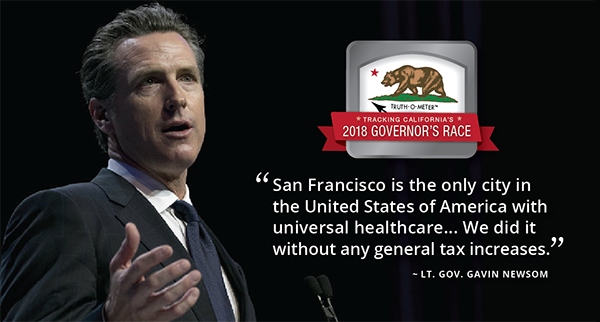
Image result for Can the State of California Afford to Provide Universal Health Care Coverage?

Perhaps no issue looms larger on both the state and national political stage than the question of universal health care coverage.

U.S. Presidential hopeful Kamala Harris (D) sent a shockwave through the national health care debate on Monday Jan. 28th by nonchalantly stating that she would eliminate private insurers as a necessary part of implementing “Medicare-for-all,” according to a CNN report.

Due to a firestorm of attention, most of it negative, the next day the Harris campaign walked back the previous day’s remarks in large part by stating that the candidate would also be open to more moderate health reform plans, which would preserve the private industry, according to the CNN report.

Newly elected California Governor Gavin Newsom (D) campaigned on the issue of single-payer health care and on his very first day in office unveiled a comprehensive package of reform proposals aimed at expanding state health care coverage subsidies and lowering its costs, which includes extending Medi-Cal to undocumented immigrants, according to a report by the LA Times.

In an interview, Gov. Newsom told the LA Times “These are not just symbolic gestures…We’re hoping to ignite a new conversation. It’s a moral imperative, not just economic,” states the LA Time report.

But as many experts, including Gov. Newsom, have pointed out, big systemic reform to the system, such as a move to a single-payer health system, would require the unlikely support of the Trump Administration.

Newsom has done a good job of tempering expectations for single-payer health care and his proposed coverage expansions and prescription cost controls demonstrate to the his supporters and the public that he is serious about expanding coverage as well containing costs.

But the 800-pound guerilla in the universal health care conversation is where will all the money come from to provide guaranteed government financed coverage to every Californian and everyone who likely to come to California once universal health care is guaranteed by the state?

“Where do you get the extra money? This is the whole question…I don’t even get it…how do you do that?,” said former California Governor Jerry Brown (D) following a universal healthcare discussion in Washington, D.C. in a 2017 interview with the LA Times.

At the time, Gov. Brown pointed out that the overall cost of medical care in California is equal to 18% of the state’s gross domestic product, which would be about $450 billion.

“You take a problem and say I’m going to solve it by something that’s an even bigger problem, which makes no sense,” then Governor Brown said at the time, according to the LA Times report.

Gov. Newsom developed some questionable rhetoric during the 2018 campaign, where he said that the State of California cannot afford not to move to a single-payer system because health care has become such a big expense in the state.

It appears that one of the major points of disagreement between former Gov. Brown and now Governor Gavin Newsom is the question of whether the State of California can afford to move to a universal health care system, specifically a single-payer system?

More recently, other high-profile liberal Democrats have come out against single-payer health care with former Mayor of New York City and billionaire Michael Bloomberg stating that Medicare-for-all “would bankrupt us for a very long time,” according to a CNN report.

“I think we could never afford that,” Bloomberg said, addressing pin factory employees in New Hampshire. “We are talking about trillions of dollars.”

“I think you could have Medicare-for-all people who are uncovered, but that’s a smaller group,” Bloomberg said.

“But to replace the entire private system where companies provide health care for their employees would bankrupt us for a very long time,” said Bloomberg according to the CNN report, which noted that Bloomberg made the comments in response to Sen. Kamala Harris calling for an end to the private health care market.

So what does all this mean for the current universal health care debate in California?

It means that California Democrats might want to heed the advice of two of the county’s most prominent liberal Democrats—former Gov. Jerry Brown and Michael Bloomberg—and proceed with great caution regarding the feasibility of California going it alone on universal health care.

There is no question that the state could choose to enact a single-payer or Obamacare-type universal health care system, but the million dollar question, or trillion dollar question rather in this case, is would such a system work and be fiscally sustainable over the long-term?

As a long-time analyst of fiscal issues in California, I believe that former Gov. Jerry Brown and Michael Bloomberg are correct to point out the major challenges and risks of moving to a universal health care system—both at the state level and the federal level.


Kamala Harris’ ‘Medicare for all’ would mean massive disruption for healthcare, and the industry is prepared to fight it

https://www.washingtonexaminer.com/policy/healthcare/kamala-harris-medicare-for-all-would-mean-massive-disruption-for-healthcare-and-the-industry-is-prepared-to-fight-it

Image result for Kamala Harris' 'Medicare for all' would mean massive disruption for healthcare, and the industry is prepared to fight it

Democratic presidential contender Sen. Kamala Harris wants to “move on” from the current healthcare system in favor of a plan that would roll everyone in the U.S. onto a government plan known as “Medicare for all,” doing away with private health insurance.

As the California Democrat and others in her party make their case, however, they will face considerable opposition not only in the insurance industry, but across the healthcare sector, which would see massive upheaval from the plan. And polling suggests that the public, roughly half of which relies on private insurance, isn’t quite on board.

Drug companies, insurers, doctors, and hospitals have united in recent months to fight national government healthcare. One healthcare industry group, called the Partnership for America’s Health Care Future, has launched a five-figure digital ad campaign arguing that “Medicare for all” would cause massive disruption, higher taxes, lower quality care, and less choice for patients. It plans to spend six figures bashing “Medicare for all” over the course of 2019.

“Whether it’s called Medicare for all, single payer, or a public option, one-size-fits-all healthcare will mean all Americans have less choice and control over the doctors, treatments, and coverage,” said Lauren Crawford Shaver, the group’s executive director.

Other candidates for the Democratic nomination, such as Sens. Elizabeth Warren of Massachusetts and Kirsten Gillibrand of New York, are, like Harris, co-sponsors of the Medicare for All Act, legislation led by Sen. Bernie Sanders, I-Vt. Although it has “Medicare” in the name, the bill would go much further than current Medicare, which covers adults 65 and older and people with disabilities. It would pay for emergency surgery, prescription drugs, mental healthcare, and eye care without a copay.

Children would be enrolled in the government plan soon after the the bill’s passage, and the rest would be gradually phased in after four years. This would mean that roughly half of the U.S. population, the 177 million people in the U.S. covered by private health insurance mostly through work, would be moved onto a government plan. Employers would pay higher taxes rather than pay for private plans.

In defending the need for a government system, Sanders has blasted insurance companies, saying upon unveiling the bill that they “make billions of dollars in profits and make industry CEOs extremely wealthy.”

But healthcare providers, not just insurers, benefit from the current fragmented system, in which insurance is purchased by employers, the government, and individuals. They charge private insurers more to make up for the gap left by patients who are uninsured or are on government programs, which pay less for their services.

If all privately insured individuals were to have Medicare instead, and if it were to pay the same rates it does now, then doctors and hospitals would see big losses caring for patients who moved from private coverage to the government plan. Healthcare providers have said that if taxes don’t go up to pay for the difference, then doctors and hospitals will face pay cuts and layoffs, leading to facility closures and long lines for care.

Hospitals serve as the main employer in many communities. For patients, that would mean losing not only a healthcare plan they might be satisfied with, but also doctors they worked with for years or hospitals they relied on in their communities.

The Medicare for All Act has not been scored by the Congressional Budget Office, but analyses from the Mercatus Center at George Mason University and the left-leaning Urban Institute found it would raise government spending over a decade by $32.6 trillion.

Overall healthcare spending, though, would actually fall by $2 trillion, as private spending on healthcare would collapse. The cut would be achieved, however, through paying 40 percent less to providers than what they were getting from private insurance.

Another obstacle to “Medicare for all” is the fact that the public isn’t fully convinced by the idea of nixing private insurance, a recent poll from the Kaiser Family Foundation shows. Initially, 56 percent of those polled favored the Medicare for All Act, but then when they learned it would do away with private health insurance, the support fell to 37 percent.

Candidates are going to face pushback within their party. House Speaker Nancy Pelosi and other Democratic leaders have not embraced government healthcare, instead pushing for adding funding to Obamacare.

But proponents of allowing the government to have a more extensive role in healthcare point out that waste is prevalent in the current system. Patients receive unnecessary medical care, such as repeated tests or surgeries that either don’t make them healthier or even make them worse.

These proponents agree with Harris that health insurance companies are unnecessary. Wendell Potter, an advocate of a government-financed healthcare system and president of the Business Initiative for Health Policy, said in a statement that polling results show the healthcare industry’s misinformation campaign to spread “fear, uncertainty, and doubt” was effective. He said that commercial health insurance companies don’t have an incentive to lower healthcare costs and make sure patients can access care.

Potter, a former health insurance executive, described how the information campaign worked, saying the goal was to “make people believe that private health insurance companies were a necessary part of the healthcare system, and to scare them into thinking that a ‘Medicare for all’ system was expensive and impractical, and that it would cause a significant drop off in the quality of care.”


KFF Health Tracking Poll – January 2019: The Public On Next Steps For The ACA And Proposals To Expand Coverage

KFF Health Tracking Poll – January 2019: The Public On Next Steps For The ACA And Proposals To Expand Coverage

Key Findings:

  • Half of the public disapproves of the recent decision in Texas v. United States, in which a federal judge ruled that the 2010 Affordable Care Act (ACA) is unconstitutional and should not be in effect. While the judge’s ruling is broader than eliminating the ACA’s protections for people with pre-existing conditions, this particular issue continues to resonate with the public. Continuing the ACA’s protections for people with pre-existing conditions ranks among the public’s top health care priorities for the new Congress, along with lowering prescription drug costs.
  • This month’s KFF Health Tracking Poll continues to find majority support (driven by Democrats and independents) for the federal government doing more to help provide health insurance for more Americans. One way for lawmakers to expand coverage is by broadening the role of public programs. Nearly six in ten (56 percent) favor a national Medicare-for-all plan, but overall net favorability towards such a plan ranges as high as +45 and as low as -44 after people hear common arguments about this proposal.

    Poll: Majorities favor a range of proposed options to expand public health coverage, including Medicare buy-in and #MedicareForAll 

  • Larger majorities of the public favor more incremental changes to the health care system such as a Medicare buy-in plan for adults between the ages of 50 and 64 (77 percent), a Medicaid buy-in plan for individuals who don’t receive health coverage through their employer (75 percent), and an optional program similar to Medicare for those who want it (74 percent). Both the Medicare buy-in plan and Medicaid buy-in plan also garner majority support from Republicans (69 percent and 64 percent­).


Figure 1: Most Americans Are Unaware Of Federal Judge’s Ruling That ACA Is No Longer Valid

Texas v. United States: The Future of the Affordable Care Act

On December 14, 2018, a federal district court judge in Texas issued a ruling challenging the future of the 2010 Affordable Care Act (ACA).The judge sided with Republican state attorneys general and ruled that, since the 2017 tax bill passed by Congress zeroed out the penalty for not having health insurance, the ACA is invalid. Democrat attorneys general have already taken actions to appeal the judge’s ruling in the case and, due to the government shutdown, the 5th Circuit Court of Appeals has paused the case. Currently, the ACA remains the law of the land. If this ruling is upheld, the consequences will be far-reaching.1 Less than half of the public (44 percent) are aware of the judge’s ruling that the ACA is unconstitutional and most (55 percent) either incorrectly say that the judge ruled in favor of the ACA (20 percent) or are unsure (35 percent).

Overall, a larger share of the public disapprove (51 percent) than approve (41 percent) of the judge’s ruling that the ACA is not constitutional. This is largely divided by party identification with a majority of Republicans (81 percent) approving of the decision while a majority of Democrats disapproving (84 percent). Independents are closely divided (49 percent disapprove v. 44 percent approve).

Figure 2: Partisans Divided On Whether They Approve Or Disapprove Of Federal Judge’s Ruling That The ACA Is No Longer Valid

The Trump administration had originally announced that as part of Texas v. United States, it would no longer defend the ACA’s protections for people with pre-existing medical conditions. While the judge’s ruling was broader than just the ACA’s pre-existing condition protections, KFF polling finds attitudes can shift when the public hears that these protections may no longer exist. Among those who originally approve of the federal judge’s ruling, about three in ten (13 percent of the public overall) change their mind after hearing that this means that people with pre-existing conditions may have to pay more for coverage or could be denied coverage, bringing the share who disapprove of the judge’s ruling to nearly two-thirds (64 percent) of the public.2

Fewer – but still about one-fifth (8 percent of total) – change their minds after hearing that as a result of this decision, young adults would no longer be able to stay on their parents’ insurance until the age of 26, bringing the total share who disapprove of the judge’s ruling to 60 percent.

Figure 3: Majorities Disapprove Of Judge’s Ruling After Hearing How It Impacts Protections For Pre-Existing Conditions And Young Adults

Overall, a slight majority of the public hold a favorable view of the ACA (51 percent) while four in ten continue to hold unfavorable views. (INTERACTIVE)

Public’s Views of Democratic Health Care Agenda

With the new Democratic majority in the U.S. House of Representatives, this month’s KFF Health Tracking Poll examines the public’s view of Congressional health care priorities including a national health plan.

Proposals to Expand Health Care Coverage

Most of the public favor the federal government doing more to help provide health insurance for more Americans and one way for lawmakers to expand coverage is by broadening the role of public programs, such as Medicare or Medicaid. The Kaiser Family Foundation has been tracking public opinion on the idea of a national health plan since 1998 (see slideshow). More than twenty years ago, about four in ten Americans (42 percent) favored a national health plan in which all Americans would get their insurance from a single government plan. In the decades that followed, there has been a modest increase in support – especially since the 2016 presidential election and Bernie Sanders’ rallying cry for “Medicare-for-all.” The most recent KFF Health Tracking Poll finds 56 percent of the public favor “a national health plan, sometimes called Medicare-for-all, where all Americans would get their insurance from a single government plan” with four in ten (42 percent) opposing such a plan.

Figure 5: Majorities Across Partisans Favor Medicare Buy-In And Medicaid Buy-In

MALLEABILITY IN ATTITUDES TOWARDS NATIONAL HEALTH PLAN AND LINGERING CONFUSION ABOUT POSSIBLE IMPACTS

This month’s KFF Health Tracking Poll finds the net favorability of attitudes towards a national Medicare-for-all plan can swing significantly, depending on what arguments the public hears.

Depending on what arguments people hear, the public’s views of #MedicareForAll can swing from 71% in favor to 70% opposed highlighting the importance of any future legislative debate 

Net favorability towards a national Medicare-for-all plan (measured as the share in favor minus the share opposed) starts at +14 percentage points and ranges as high as +45 percentage points when people hear the argument that this type of plan would guarantee health insurance as a right for all Americans. Net favorability is also high (+37 percentage points) when people hear that this type of plan would eliminate all premiums and reduce out-of-pocket costs. Yet, on the other side of the debate, net favorability drops as low as -44 percentage points when people hear the argument that this would lead to delays in some people getting some medical tests and treatments. Net favorability is also negative if people hear it would threaten the current Medicare program (-28 percentage points), require most Americans to pay more in taxes (-23 percentage points), or eliminate private health insurance companies (-21 percentage points).

Figure 8: Four In Ten Say Medicare-For-All Plan Would Not Have Much Impact On People Like Them

MEDICARE-FOR-ALL AND SENIORS

On October 10th, 2018, President Trump wrote an op-ed in USA Today arguing that a Medicare-for-all plan would “end Medicare as we know it and take away benefits they have paid for their entire lives.”3 One-fourth of adults 65 and older (26 percent) say seniors who currently get their insurance through Medicare would be “worse off” if a national Medicare-for-all plan was put into place. Four in ten Republicans, ages 65 and older, say seniors who currently get health coverage through Medicare would be “worse off” under a national Medicare-for-all plan. Overall, a larger share of the public say a Medicare-for-all plan will “not have much impact” on seniors (39 percent) or say that they would be “better off” (33 percent) than say seniors would be “worse off” (21 percent).

Figure 10: Democrats Want House Democrats To Focus On Improving And Protecting The ACA Rather Than Passing Medicare-For-All

PARTISANS HAVE DIFFERENT HEALTH PRIORITIES FOR CONGRESS, EXCEPT FOR PRESCRIPTION DRUG PRICES

A majority of the public say it is either “extremely important” or “very important” that Congress work on lowering prescription drug costs for as many Americans as possible (82 percent), making sure the ACA’s protections for people with pre-existing health conditions continue (73 percent), and protecting people with health insurance from surprise high out-of-network medical bills (70 percent). Fewer – about four in ten – say repealing and replacing the ACA (43 percent) and implementing a national Medicare-for-all plan (40 percent) are an “extremely important” or “very important” priority. When forced to choose the top Congressional health care priorities, the public chooses continuing the ACA’s pre-existing condition protections (21 percent) and lowering prescription drug cost (20 percent) as the most important priorities for Congress to work on. Smaller shares choose implementing a national Medicare-for-all plan (11 percent), repealing and replacing the ACA (11 percent), or protecting people from surprise medical bills (9 percent) as a top priority. One-fourth said none of these health care issues was their top priority for Congress to work on.

Figure 11: Continuing ACA Pre-Existing Conditions Protections And Prescription Drug Costs Top Public’s Priorities For Congress

Continuing the ACA’s pre-existing condition protections is the top priority for Democrats (31 percent) and ranks among the top priorities for independents (24 percent) along with lowering prescription drug costs, but ranks lower among Republicans (11 percent). Similar to previous KFF Tracking Polls, repealing and replacing the ACA remains one of the top priority for Republicans (27 percent) along with prescription drug costs (20 percent).

Table 1: Pre-Existing Condition Protections and Prescription Drug Costs Top Public’s Health Care Priorities for Congress; Republicans Still Focused on ACA Repeal
Percent who say the following is the top priority for Congress to work on: Total Democrats Independents Republicans
Making sure the ACA’s pre-existing condition protections continue 21% 31% 24% 11%
Lowering prescription drug costs for as many Americans as possible 20 20 20 20
Implementing a national Medicare-for-all plan 11 20 8 3
Repealing and replacing the ACA 11 3 7 27
Protecting people from surprise high out-of-network medical bills 9 4 10 8
Note: If more than one priority was chosen as “extremely important,” respondent was forced to choose which priority was the “most important.”

The Role of Independents in the Democratic Health Care Debate

One of the major narratives coming out of the 2018 midterm elections was the role that health care was playing in giving Democratic candidates the advantage in close Congressional races. Consistently throughout the election cycle, KFF polling found health care as the top campaign issue for both Democratic and independent voters. While a majority of Democrats want the new Democratic majority in the U.S. House of Representatives to focus on improving and protecting the ACA, Democratic-leaning independents have more divided opinions of the future of 2010 health care law. These individuals – who tend to be younger and male – would rather Democrats in Congress focus efforts on passing a national Medicare-for-all plan (54 percent) than improving the ACA (39 percent) – which is counter to what Democrats overall report. In addition, when asked whether House Democrats owe it to their voters to begin debating proposals aimed at passing a national health plan or work on health care legislation that can be passed with a divided Congress and a Republican President, Democrats are divided (49 percent v. 44 percent) while Democratic-leaning independents prioritize House Democrats working on bipartisan health care legislation (53 percent) over debating national health plan proposals (39 percent).


In health care, it’s still about the prices

https://www.axios.com/jp-morgan-health-care-industry-prices-1111d185-faad-4c2b-a281-d762031db433.html?utm_source=newsletter&utm_medium=email&utm_campaign=newsletter_axiosvitals&stream=top

Illustration of a price tag as an IV bag.

Health care executives gave no indication to bankers and investors at this year’s J.P. Morgan Healthcare Conference that their pricing practices would change any time soon.

Why it matters: That sentiment comes the same week when three of the original authors of an influential 2003 article — which studied why health care is so expensive in the U.S.— published an update. Their conclusion was the same: “It’s still the prices, stupid.”

The big picture: The U.S. spends far more than other industrialized countries on health care. But Americans, on a per-person basis, don’t go to the doctor or hospital more than people in other wealthy nations. There are also fewer doctors, nurses and hospital beds, per capita, in the U.S.

  • That means the U.S. spends more because hospitals, doctors, pharmaceutical companies, device manufacturers and others charge higher prices, and health insurers aren’t negotiating good enough deals.
  • “Lowering prices in the U.S. will need to start with private insurers and self-insured corporations,” the authors wrote in this week’s update, published in the journal Health Affairs.

Reality check: Health care companies, even not-for-profits like hospitals that don’t have typical investors, have prioritized meeting revenue and profitability goals, and that short-term thinking compromises reform, according to interviews with people who attended the J.P. Morgan event.

  • Many executives continue to tout different ways of getting paid, like “value-based” pricing, but there’s no evidence those models will save money.
  • Drug companies are still focused on raising prices or buying lucrative biotechs, while providers find more ways to maximize what they get paid from insurers. As a result, insurers and employers raise premiums or deductibles for taxpayers and employees, which affects everyone’s paychecks.
  • One example: Dennis Dahlen, the chief financial officer of Mayo Clinic, told attendees how his academic medical center is building its own “five-star” hotel and is expanding proton beam therapy, even though that expensive treatment has limited or no clinical benefit.
  • “This is about money and [investors] getting a return,” said Stephen Buck, founder of cancer tech app Courage Health.

Yes, but: Some in the industry realize they need to act.

  • Marc Harrison, CEO of Intermountain Healthcare, said in an interview his hospital system has lowered the “cash price” of some services, like normal vaginal childbirth, to help people who have high deductibles — although services like childbirth often cost a lot more than the deductible.
  • Intermountain also has negotiated with insurers, with the exception of one unnamed company, to hold patients harmless if they get a surprise out-of-network bill, Harrison said.
  • Stephen Ubl, CEO of the Pharmaceutical Research and Manufacturers of America, acknowledged in an interview that “the status quo is not acceptable. We understand the system needs to change.”
  • However, he continued to argue for changes in what people pay out of pocket, instead of changing the patent system or how companies price their products. Ubl described the Trump administration’s proposal to index the prices of some Medicare drugs to lower rates in other countries as “fruit of the poisonous tree of government price-setting.”

What to watch: Democrats are using “Medicare for All” and price-setting as a litmus test for 2020 candidates, and Democrats in Congress are proposing Medicare negotiation for drugs — an idea that Trump supported in the past. Regulatory or legislative changes to pricing are not completely out of the question if the industry fails to act.


The impossibility of bipartisan health-care compromise

https://theweek.com/articles/811962/impossibility-bipartisan-healthcare-compromise

People yelling at each other.

If there’s one thing political centrists claim to value, it’s compromise. It’s “the way Washington is supposed to work,” writes Third Way’s Bill Schneider. “Centrists, or moderates, are really people who are willing to compromise,” The Moderate Voice‘s Robert Levine tells Vice.

What does this mean when it comes to health care and the developing lefty push for Medicare-for-all? The fresh new centrist health-care organization, the Partnership for America’s Health Care Future (PAHCF), says it is a “diverse, patient-focused coalition committed to pragmatic solutions to strengthen our nation’s health-care system.” In keeping with the moderate #brand, PAHCF may not support Medicare-for-all. But perhaps they might support a quarter-measure compromise, like allowing people under 65 to buy into Medicare?

Haha, of course not. Their offer is this: nothing.

Valuing compromise in itself in politics is actually a rather strange notion. It would make a lot more sense to determine the optimal policy structure through some kind of moral reasoning, and then work to obtain an outcome as close as possible to that. Compromise is necessary because of the anachronistic (and visibly malfunctioning) American constitutional system, but it is only good insofar as it avoids a breakdown of democratic functioning that would be even worse.

However, “moderation” is routinely not even that, but instead a cynical veneer over raw privilege and self-interest. The American health-care system, as I have written on many occasions, is a titanic maelstrom of waste, fraud, and outright predation — ripping off the American people to the tune of $1 trillion annually.

And so, Adam Cancryn reports on the centrist Democrats plotting with Big Medical to strangle the Medicare-for-all effort:

Deep-pocketed hospital, insurance, and other lobbies are plotting to crush progressives’ hopes of expanding the government’s role in health care once they take control of the House. The private-sector interests, backed in some cases by key Obama administration and Hillary Clinton campaign alumni, are now focused on beating back another prospective health-care overhaul, including plans that would allow people under 65 to buy into Medicare. 

Behind the preposterously named “PAHCF” stands a huge complex of institutions that benefit from the wretched status quo. This includes the PhRMA drug lobby (Americans spend twice what comparable countries do on drugs, almost entirely because of price-gouging), the Federation of American Hospitals (Americans overpay on almost every medical procedure by roughly 2- to 10-fold), the American Medical Association (U.S. doctors, especially specialists, make far more than in comparable nations), America’s Health Insurance Plans, and BlueCross BlueShield (the cost of average employer-provided insurance for a family of four has increased by almost $5,000 since 2014, to $28,166).

The human carnage inflicted by this bloody quagmire of corruption and waste is nigh unimaginable. Perhaps 30,000 people die annually from lack of insurance, and 250,000 annually from medical error. America is a country where insurance can cost $24,000 before it covers anything, where doctors can conspire to attend each other’s surgeries so they can send pointless six-figure balance bills, where hospitals can charge the uninsured 10 times the actual cost of care, where gangster drug companies can buy up old patents and jack up the price by 57,500 percent, and on and on.

One might think this is all a bit risky. Wouldn’t it be more prudent to accept some sensible reforms, so these institutions don’t get completely driven out of business?

But wealthy elites almost never behave this way. John Kenneth Galbraith, explaining the French Revolution, once outlined one of the firmer rules of history: “People of privilege almost always prefer to risk total destruction rather than surrender any part of their privileges.” One reason is “the invariable feeling that privilege, however egregious, is a basic right. The sensitivity of the poor to injustice is a small thing as compared with that of the rich.”

And so we see with the Big Medical lobby. The vast ziggurat of corpses piled up every year from horrific health-care dysfunction is just a minor side issue compared to the similar-sized piles of profits these companies accumulate — which they will fight like crazed badgers to preserve.

As Paul Waldman points out, this means a big resistance to the prospect of doing anything at all, let alone Medicare-for-all. However, the political implication is clear. If compromise is impossible, then liberals and leftists who want to improve the quality and justice of American health care should write off the corrupt pseudo-centrists, and go for broke. Democrats should write a health-care reform bill so aggressive that it drastically weakens the profitability of Big Medical, and drives many of them out of business entirely. If you cannot join them, beat them.


Healthcare Triage: Medicare for All and Administrative Costs

Healthcare Triage: Medicare for All and Administrative Costs

Image result for Healthcare Triage: Medicare for All and Administrative Costs

Political talk is getting more and more serious around Medicare for All in the United States. The argument, as usual comes down to costs. One of the advantages that proponents always bring up are the very low administrative costs of Medicare. Are those low costs for real? Would they hold up if everyone was in the system? Healthcare Triage looks at the facts.


Dems Won on Health Care. Now What?


Democrats rode a health care message to their Election Day takeover of the House. Now that the election is (mostly) over, how will they follow through on that campaign focus?

The party is still figuring out its next steps on health care, and Nancy Pelosi and her colleagues will have a lot of decisions to make and details to sort out. “The new House Democratic majority knows what it opposes. They want to stop any further efforts by Republicans or the Trump administration to roll back and undermine the Affordable Care Act or overhaul Medicaid and Medicare,” writes Dylan Scott at Vox. “But Democrats are less certain about an affirmative health care agenda.”

Some big-picture agenda items are clear, though. “The top priorities for Ms. Pelosi, the House Democratic leader, and her party’s new House majority include stabilizing the Affordable Care Act marketplace, controlling prescription drug prices and investigating Trump administration actions that undermine the health care law,” reports Robert Pear in The New York Times.

House Democrats also plan to vote early next year on plans to ensure patients with preexisting medical conditions are protected when shopping for insurance, Pear reports. And they’ll likely vote to join in the defense of the Affordable Care Act and its protections for those with pre-existing conditions against a legal challenge now before a Texas federal court.

Here are a few areas where House Democrats will likely look to exercise their newly won power.

Stabilizing Affordable Care Act markets: “I’m staying as speaker to protect the Affordable Care Act,” Pelosi said in an interview with CBS’s “Face the Nation,” calling that her “main issue.” And Vox’s Scott says that “a bill to stabilize the Obamacare insurance markets would be the obvious first item for the new Democratic majority’s agenda,” adding that a bill put forth by Reps. Richard Neal (MA), Frank Pallone (NJ) and Bobby Scott (VA) is the likely starting point. Democrats may look to provide funding for the Obamacare “cost-sharing reduction” subsidy payments to insurers that President Donald Trump ended in October 2017. And they may look to restore money for Affordable Care Act outreach and enrollment programs after the Trump administration slashed that funding by 84 percent, to $10 million, Pear says. “Another idea is for the federal government to provide money to states to help pay the largest medical claims,” he adds. “Such assistance, which provides insurance for insurance carriers, has proved effective in reducing premiums in Alaska and Minnesota, and several other states will try it next year.”

Investigating the Trump administration ‘sabotage’: “Administration officials who have tried to undo the Affordable Care Act — first by legislation, then by regulation — will find themselves on the defensive, spending far more time answering questions and demands from Congress,” Pear writes.

Reining in prescription drug prices: Trump, Pelosi and Senate Majority Leader Mitch McConnell have all pointed to this as an area of potential cooperation, But Vox’s Scott calls this “another area where Democrats know they want to act but don’t know yet exactly what they can or should do.” Some options include pushing to let Medicare negotiate drug prices directly with manufacturers and requiring makers of brand-name medications to provide samples to manufacturers of generics, potentially speeding the development of less expensive competitors.

“There are a lot of levers to pull to try to reduce drug prices: the patent protections that pharma companies receive for new drugs, the mandated discounts when the government buys drugs for Medicare and Medicaid, existing hurdles to getting generic drugs approved, the tax treatment of drug research and development,” Scott writes. But it’s not clear just what policy mix would really work to bring down drug prices, and the pharmaceutical industry lobby is likely to push back hard on such efforts. Democrats may also be hesitant to give President Trump a high-profile win on the issue ahead of the 2020 election.

Medicare for all: Much of the Democratic Party may be gung-ho for some sort of Medicare-for-all legislation, but don’t expect significant progress over the next two years. “House Democratic leaders probably don’t want to take up such a potentially explosive issue too soon after finally clawing back a modicum of power in Trump’s Washington,” Scott writes. And Democrats have to forge some sort of internal consensus on just what kind of plan they want to push in order to further expand health insurance coverage.

Trends in Health Policy and the Mid-Term Elections Results

http://avalere.com/expertise/life-sciences/insights/series-trends-in-health-policy-and-the-mid-term-election-results

Image result for Series: Trends in Health Policy and the Mid-Term Elections Results

Tune in to hear Avalere experts discuss potential implications of the mid-term elections on health policy. Director Chris Sloan interviews Senior Vice President Elizabeth Carpenter on the mid-term elections results and what this could mean for the future of healthcare policy.

CS: Hello, and welcome to a special mid-term elections Avalere podcast. This is the last in a three-part series we’re doing on the health policy implications of the mid-term elections, and this time, we actually have results from the mid-term elections! My name is Chris Sloan, I’m a director with the federal and state policy group here at Avalere. Today, we’re going to discuss the results of the mid-term elections and the implications for health policy going forward.

As a reminder for those of you living under rocks, the mid-term elections ended with Democrats taking control of the House while Republicans increased their lead in the Senate. In three states, Medicaid expansion ballot initiative passed, which is likely to lead to about 325,000 new enrollees in Medicaid in Idaho, Nebraska, and Utah. Also, Democratic candidates who campaigned on Medicaid expansion won the governors races in Kansas, Maine, and Wisconsin, potentially leading to another 300,000 Medicaid enrollees in those states if they follow through with expansion.

Joining me today to talk about all of this and what we can expect in healthcare from the new Democratically-controlled House is Elizabeth Carpenter. She’s the senior vice president of our federal and state policy group, and she’s the preeminent expert at Avalere in all things health policy. Thanks for being here.

EC: Thanks for having me.

CS: The exit polling for the elections showed that healthcare again was one of the top issues for voters in the elections, eight years after the passage of the ACA. Can you talk about why this issue has continued to be such a big part of campaigns and elections in U.S. politics?

EC: I think this election marked a new high in some ways in terms of how Americans thought and voted on health care. If you had asked me this question leading up to 2016, I would have focused on Americans talking about jobs and the economy, and I would have linked healthcare to jobs and the economy. People often talk about being worried about their job because they are worried about affording their health insurance and their healthcare. This year, from a domestic policy perspective, we saw healthcare at the top of the list, and when you look under the hood, what you see is that people were focused on healthcare costs and not necessarily those costs that are predictable—premiums ranked somewhat low on the list. People were very focused on surprise medical bills and certain areas where we’ve seen increased deductibles and coinsurance that are leading people to be more exposed to system costs. It’s clear that people were focused on healthcare, but they were really focused on having a surprise or unexpected healthcare expense where they were going to have to go out of pocket quite a bit at one time. As the economy has stabilized, people seem to be zeroing on the healthcare front. What I would say is, in all of our policy discussions of healthcare costs, you have to ask yourself, what is the policy doing to address that question? In many cases, I would opine that the policy is not doing much. So it is quite likely that we may see this issue continue as we head towards 2020.

CS: In that vein, a lot of the Democratic candidates this election cycle were campaigning on expansions of public programs, like Medicare for All, Medicare for More. Do we expect that to continue now that Democrats have taken control of the House? How big of an issue do you think recent campaign promises have been?

EC: I would say the Democrats face a choice in this moment about what they want their next step of health reform to look like in advance of 2020. In general, I would very much expect Democrats to use the next year or two to offer thought leadership and position their party in advance of the presidential race. What that looks like, I don’t think we know at this moment. There were a number of candidates, interestingly at the state and federal level, who embraced a Medicare for All or Medicare for More type of approach. Some of those candidates won and some didn’t, and it’s hard to pinpoint what role their position on this circular policy had in those results. But I think it is fair to say that there will be continued debate over what role Medicare and other public programs play in covering our citizens and that Democrats will need to land on something in advance of 2020.

CS: So that was one big issue in the campaign, and another big issue that was on both sides was pre-existing conditions protections that made its way into the campaign season this year. There is still a lawsuit in Texas challenging the Affordable Care Act and the pre-existing conditions now that the individual mandate is gone. Do you see this as an option for some sort of bipartisan consensus coming out of the divided congress? What do you see happening with this issue going forward?

EC: This is another issue where when you look under the hood, even people who say the same things mean potentially very different things. We had candidates on both sides of the isle running ads that talked about their desire to protect pre-existing condition protections, despite the fact that some of those candidates voted to uphold the Affordable Care Act and others voted to repeal it. You asked what might happen if we see the core go down this path where pre-existing conditions projections will be null and void and would Congress sweep in and produce a solution. On face, you could say both parties to some degree do want to maintain protections for some pre-existing conditions. In practice, how you do that gets complicated. Once you open up this particular issue, you’re going to have people on one side of the isle wanting to use it as an opportunity to do certain kinds of reforms, and you have people on the other side of the isle who want to change the insurance market in another way. We’ve heard already from Democrats, for example, who are interested in potentially pursuing limitations on some of the short-term plans, including association health plans and other types of plans that don’t meet all Affordable Care Act requirements. People have already said they want to pursue this in this congress. So you can imagine there being a real need to do something, but at the same time, you can envision how this gets complicated and partisan really quickly. The closer we get to 2020, the more complicated any kind of healthcare debate gets.

CS: Given those realities of a divided government and partisanship, are we in a holding pattern for health policy until 2020 and the next election?

EC: I think a TBD there. Based on what we’ve seen so far, I don’t think anyone holds out a lot of hope for kumbayah and bipartisan progress. At the same time, we’ve seen over the past 24-48 hours various lawmakers on both sides of the isle talking about, for example, the drug pricing issue. The important thing to remember here is that we have a president who is non-traditional in some of his thinking and not necessarily aligned with the positions of the historic Republican party, so to the degree that Congress can reach some kind of alignment, it’s quite possible the President would sign something that another president might not. But it really is up to Congress to decide if they can and want to work together. Both sides at this point are making a calculation about working together and governing is good for them heading into the next election or if fostering gridlock and highlighting differences is a better political path.

CS: Great. Well, thank you so much for being with us. That wraps up our final episode of our three-part Avalere mid-term elections podcast series. As always, watch for more updates and analysis from Avalere over the coming weeks. Feel free to reach out to us with any questions. You are listening to Avalere Podcasts.


MID-TERM MESSAGE: DON’T MESS WITH MY HEALTHCARE!

https://www.healthleadersmedia.com/mid-term-message-dont-mess-my-healthcare

Tired of the partisanship and dithering in Congress, voters took matters into their own hands Tuesday and largely embraced initiatives and politicians who vowed to expand Medicaid and protect coverage for pre-existing conditions.


KEY TAKEAWAYS

You can’t undo an entitlement.

‘Repeal and replace’ is dead. Drug pricing reforms a likely area of bipartisan consensus.

Democrats can push Medicare For All at their own peril.

For healthcare economist Gail Wilensky, the big message that voters sent to their elected officials during Tuesday’s mid-term elections was straightforward and simple.

“Don’t mess with my healthcare,” says Wilensky, a senior fellow at Project HOPE and a former MedPAC chair.

“It’s as clear as that. There were no subtleties involved here,” she says. “That includes protections for pre-existing conditions and added coverage under Medicaid.”

Consider what happened on Tuesday:

  • Overall, Democrats wrested control of the House from Republicans in an election where healthcare was seen as the single biggest issue. Democrats ceaselessly hammered Republicans with the claim that the GOP would eliminate protections for pre-existing conditions.
  • Ballot initiatives in three bright-red Republican states all passed with healthy margins. A similar ballot initiative in Montana failed, but observers blamed the failure on an unpopular $2-per-pack tax on cigarettes that would have paid for the expansion.
  • Wisconsin Attorney General Brad Schimel, a lead plaintiff in a Texas v. Azar, was ousted by Democrat Josh Kaul, who promised to withdraw Wisconsin from the suit.
  • Three-term Wisconsin Gov. Scott Walker lost a re-election bid to Democrat Tony Evers, likely scuttling that state’s recent waiver approval for Medicaid work requirements. Evers also pledged to expand Medicaid.
  • Phil Weiser, Colorado’s Democratic Attorney General-elect, and a former Obama administration staffer, told Colorado Public Radio that one of his first actions would be to join the 17 Democratic attorneys general intervening to defend the ACA in Texas v. Azar.  

Wilensky says the mid-terms results reinforce one of the oldest truisms in politics: Once an entitlement is proffered, there’s no going back.

“There is no precedent that I’m aware of in American political history where a benefit can be taken away,” she says. “Once granted, it can be modified, it can be increased, it can be augmented in some way, but there’s no taking it away after it’s been in place.”

When Democrats took control of the House, Wilensky says, they drove a stake through the heart of the “repeal and replace” movement.

“Republicans couldn’t even get that done when they control both houses of Congress, she says. “It’s a non-issue, in part because a lot of Republicans support major provisions of the Affordable Care Act.”

With repealing the ACA off the table, Democrats and Republicans might find common ground on issues such as drug pricing.

“That’s clearly is the most obvious, in general, but the specifics of what you want to do become much more challenging,” Wilensky says. “Typically, Democrats want to use administered pricing the way that we use administer pricing in parts of Medicare. I don’t know how much Republican support there is for that.”

The two parties could reach some sort of bipartisan agreement on Medicare Part B drugs, Wilensky says, because it’s a smaller program and the drugs are generally much more expensive.

“Most members of Congress are not talking about messing around with Part D, the ambulatory prescription drug coverage,” Wilensky says. “So it really has to do either with the expensive infusion drugs that are administered in the physician’s office or maybe something about drug advertising. Even then, it’s going to be hard lift when you actually get down to the specifics.”

Besides, Wilensky says, it’s not the cost of drugs that’s at the heart of voter agitation.

“You have to unpack what they’re saying to figure out what they’re actually pushing for,” she says. “People couldn’t care less about drug prices. They only care about what it costs them. So when they talk about drug prices they mean, ‘I want to spend less for the drugs I want, and I don’t want any constraints about what I can order.’

More likely, she says, common ground could be found in arcane areas such as mandating greater transparency for pharmacy benefits managers, and changing PBMs’ rebate structure.

Wilensky warns that giddy Democrats should learn from the mistakes of Republicans in the mid-terms and not attempt to force a Medicare-For-All solution on a wary public.

“First of all, they’re going to have to define what it means,” she says. “But, you have to be very careful because historically there’s not been warm and fuzzy response to taking away people’s employer-sponsored insurance.”

“Again, historically, when candidates mess around with employer-sponsored insurance they have gotten themselves into trouble,” she says. “Most people would like to keep what they have, because keeping what you have is much safer than going with something as yet to be defined.”

“DON’T MESS WITH MY HEALTHCARE. IT’S AS CLEAR AS THAT. THERE WERE NO SUBTLETIES INVOLVED HERE,”


What the 2018 Midterm Elections Means for Health Care

https://www.healthaffairs.org/do/%2010.1377/hblog20181107.185087/full/?utm_source=Newsletter&utm_medium=email&utm_content=What+the+Midterms+Mean+For+Health+Care%3B+%22Stairway+To+Hell%22+Of+Health+Care+Costs%3B+Patient+Safety+In+Inpatient+Psychiatry&utm_campaign=HAT%3A+11-07-18

Whatever you want to call the 2018 midterm elections – blue wave, rainbow wave, or purple puddle – one thing is clear: Democrats will control the House.

That fundamental shift in the balance of power in Washington will have substantial implications for health care policymaking over the next two years. Based on a variety of signals they have been sending heading into Tuesday, we can make some safe assumptions about where congressional Democrats will focus in the 116th Congress. As importantly, there were a slew of health care-related decisions made at the state level, perhaps most notably four referenda on Medicaid expansion.

In this post, I’ll take a look at which health care issues will come to the fore of the Federal agenda due to the outcome Tuesday, as well as state expansion decisions. And it should of course be noted that, in addition to positive changes Democrats are likely to pursue over the next two years, House control will allow them to block legislation they oppose, notably further GOP efforts to repeal the Affordable Care Act (ACA).

Drug Pricing

Democrats have long signaled they consider pharmaceutical pricing to be one of their highest priorities, even after then-candidate Trump adopted the issue as part of his campaign platform and maintained his focus there through his tenure as President.

While aiming to use the issue to drive a wedge between President Trump and congressional Republicans, who have historically opposed government action to set or influence prices, Democrats will also strive to distinguish themselves by going further on issues like direct government negotiation of Medicare Part D drug reimbursement.

Relevant House committee chairs, perhaps especially likely Oversight and Investigations chair Elijah Cummings (D-MD), will also take a more aggressive tack in investigating manufacturers and other sector stakeholders for pricing increases and other practices. Democratic leaders believe it will be easier to achieve consensus on this issue than on more contentious issues like single payer (more detail below) among their diverse caucus, which will include dozens more members from “purple” districts as well as members on the left flank of the party

Preexisting Condition Protections

If you live in a contested state or district, you have probably seen political ads relating to protecting patients with preexisting conditions. As long as a Republican-supported lawsuit seeking to repeal the ACA continues, Democrats believe they can leverage this issue to demonstrate the importance of the ACA and their broader health care platform.

A three-legged stool serves under current law to protect patients with chronic conditions: (1) the ban on preexisting condition exclusions; (2) guaranteed issue; and (3) community rating. Democrats will likely seek to bolster these protections with measures to shore up the ACA exchange markets. In the same vein, they will likely strive to rescind Trump Administration proposals to expand association-based and short-term health plans, which put patients with higher medical costs at risk by disaggregating the market.

Opioids

Congressional Democrats believe that there were some stones left unturned in this year’s opioid-related legislation, especially regarding funding for many of the programs it authorized. This is a priority for likely Ways & Means Committee Chair Richie Neal (D-MA) and could potentially be a source of bipartisan compromise.

Medicare for All

While this issue could become a bugaboo for old guard party leaders, the Democratic base will likely escalate its calls for action on Medicare for All now that the party has taken the House. Because the details of what various camps intend by this term are still vague (some believe it is tantamount to single payer, others view it as a gap-fill for existing uninsured, etc.), we will likely see a variety of competing proposals arise in the coming two years. Expect less bona fide committee action and more of a public debate aired via the presidential primary season that will kick off about, oh, right now.

Surprise Bills

The drug industry is not the only health care sector that can expect heightened scrutiny of their pricing practices now that Democrats control the people’s chamber. Most notably, the phenomenon of surprise bills (unexpected charges often stemming from a hospital visit) has risen as a salient issue for the public and thus a political winner for the party. Republicans have shown interest in this issue as well, so it could be another source of bipartisanship next year.

Regulatory Oversight

Democrats believe they are scoring well with the public, and certainly their base, every time they take on President Trump. The wide range of aggressive regulation (and deregulation) the Administration has pursued will be thoroughly investigated and challenged by Democratic committee leaders, especially administration efforts to dismantle the ACA and to test the legal bounds of the hospital site neutrality policy enacted in the Bipartisan Budget Act (BBA) of 2015.

Extenders

While it instituted permanent policies for Medicare physician payments and some other oft-renewed ‘extenders’, the Medicare Access and CHIP Reauthorization Act (MACRA) of 2015 left a variety of policies in the perennial legislative limbo of needing to be repeatedly extended. While the policies in the Medicare space have dwindled to subterranean, though not necessarily cheap, affairs like the floor on geographic adjustments to physician payments, a slew of Medicaid-related and other policies are up for renewal in 2019.

For example, Medicaid Disproportionate Share Hospital (DSH) payments face a (previously delayed) cliff next year. That and the most expensive extender, ACA-initiated funding for community health centers, alone spring the cost of this package into the high single digit billions at least, driving a need for offsetting payment cuts and creating a vehicle for additional policy priorities.

A likely addition to this discussion will be the fact that Medicare physician payments, per MACRA, are scheduled to flatline for 2020-2025 before beginning to increase again, albeit in divergent ways for doctors participating in the Merit-Based Incentive Payment Program (MIPs – 0.25 percent/year) and Advanced Alternative Payment Models (APMs – 0.75 percent/year). The AMA assuredly noticed this little wrinkle in the celebrated legislation but hundreds of thousands of doctors probably did not.

Medicaid Expansion

Of the variety of state-level health policy decisions voters made on Tuesday, perhaps the most significant related to Medicaid expansion. In there states where Republican leaders have blocked expansion under the ACA – Nebraska, Idaho, and Utah – voters endorsed it via public referenda. Increasing the Medicaid eligibility level in those three states to the ACA standard will bring coverage to approximately 300,000 people.

Notably, voters in Montana rejected a proposal to continue funding the Medicaid expansion the state enacted temporarily in 2015 by an increase to the state’s tobacco tax. Their expansion is now scheduled to lapse in July 2019 if the legislature doesn’t act to maintain it. If they do not act, about 129,000 Montanans will lose Medicaid coverage.

Finally, Democratic gubernatorial wins in Maine, Kansas, and Wisconsin will make Medicaid expansion more likely in those states.

As they say, elections have consequences. While the Republican-controlled Senate and White House can block any Democratic priorities they oppose, the 2018 midterm elections assure a busy two years for health care stakeholders.