Temple University Health System’s finances improve as Epic install costs shrink

https://www.beckershospitalreview.com/finance/temple-university-health-system-s-finances-improve-as-epic-install-costs-shrink.html

Image result for temple university hospital

Philadelphia-based Temple University Health System saw its financial position improve in the 12 months ended June 30, according to recently released unaudited financial documents.

The health system reported revenues of $1.84 billion in fiscal year 2018, up from $1.75 billion in the year prior. The increase was attributable in part to higher net patient service revenue. Temple said inpatient revenue grew year over year due to increased acuity and improved payer mix at Temple University Hospital, and that higher outpatient revenue was attributable to growth of TUH’s outpatient pharmacy and higher outpatient volumes.

The health system’s operating expenses climbed 4.7 percent year over year to $1.83 billion in fiscal year 2018. Higher expenses related to supplies, pharmaceuticals, salaries and faculty support primarily drove the growth. However, those expenses were partially offset by lower costs attributed to TUH’s implementation of the Epic EHR system that took place in fiscal year 2017. The health system said it spent $15.1 million in fiscal 2017 on staffing needs related to the Epic go-live.

The health system ended the most recent fiscal year with operating income of $17.23 million, compared to operating income of $471,000 in the year prior, according to the financial documents.


Sutter’s operating income surges 806% in first half of 2018

https://www.beckershospitalreview.com/finance/sutter-s-operating-income-surges-806-in-first-half-of-2018.html

Related image

Sacramento, Calif.-based Sutter Health saw revenues and operating income increase in the six months ended June 30, according to recently released unaudited financial documents.

Here are four things to know:

1. The health system reported operating revenues of $6.3 billion in the first six months of 2018, up 6.5 percent from revenues of $5.9 billion in the same period a year earlier. Sutter said the increase was primarily attributable to higher patient service revenues and premium revenues, which climbed 5.3 percent and 11.3 percent year over year, respectively.

2. Sutter’s operating expenses climbed 4.3 percent year over year to $6.1 billion in the six months ended June 30.

3. Sutter ended the first half of 2018 with operating income of $145 million, up 806 percent from $16 million in the same period of 2017. The health system’s operating margin increased from 0.3 percent in the first half of 2017 to 2.3 percent in the first six months of 2018.

4. After factoring in investment income, which declined due to a drop in value of certain securities and debt extinguishment, Sutter’s net income was $174 million in the first six months of this year, compared to $350 million in the same period a year earlier.


Newly merged Advocate-Aurora sees 20% drop in operating income

https://www.healthcaredive.com/news/newly-merged-advocate-aurora-sees-20-drop-in-operating-income/532082/

Image result for advocate aurora health logo

Dive Brief:

  • After finalizing its merger in April, Downers Grove, Illinois-based Advocate Aurora Health released a financial report on the combined company’s year-over-year performance showing a 20% drop in operating income to $220 million for the first six months of the year. The decline is partly due to $34 million in costs related to both the merger and implementation of a new EHR.
  • Total revenue increased 3% to nearly $6 billion for the first six months of the year, while revenue increased 3.5% to about $3 billion for the quarter. Net patient service revenue grew across most service lines, excluding inpatient volumes during the quarter, according to the financial statement.
  • While revenue climbed, so did expenses. The 27-hospital system increased its spending on salaries and wages, supplies and purchased services, and contracted medical services. Total expenses grew 4% to nearly $2.87 billion during the three months ended June 30, and increased 3.5% to $5.68 billion during the first six months of the year.

Dive Insight:

In line with industry trends, inpatient volumes for what is now the 10th-largest nonprofit health system in U.S. either slightly declined or remained flat during the reporting periods. 

About 85,000 patients were discharged from Advocate Aurora during the first six months of the year while more than 3 million patients during that time were seen either during a traditional doctor’s visit or through another outpatient setting. The system’s home care unit saw the largest increases during both reporting periods. 

Meanwhile, the company is not alone in its struggles to rein in EHR rollout costs. The University of Texas MD Anderson Cancer Center in Houston and Partners HealthCare in Boston have all experienced those costs weighing down financial performance, according to a previous report from Becker’s.

The financial report of the combined companies marks a milestone in Advocate’s quest for a partner to increase its scale. The system set its sights on Aurora after it had long tried to acquire NorthShore University Health System, a deal Advocate later dropped after pushback from antitrust regulators worried about price increases.

Analysts don’t expect the frenzied pace of M&A in the healthcare sector to slow down any time soon. The Advocate-Aurora deal was the largest regional transaction, Kaufman Hall reported, amid a year that turned out blockbuster deals threatening to shake up the status quo. 

As patients seek care in lower-acuity settings and as payers and providers team up to transform access to the industry, hospitals have eyed mergers to increase scale and offerings to attract more patients.

The consolidated financial statement details the results of the quarter ended June 30 and the first six months of the year.


Dr. Patrick Soon-Shiong failed to turn around Verity Health: 7 things to know about where the system stands now

https://www.beckershospitalreview.com/finance/dr-patrick-soon-shiong-failed-to-turn-around-verity-health-7-things-to-know-about-where-the-system-stands-now.html

Image result for chapter 11 bankruptcy

El Segundo, Calif.-based Verity Health filed for bankruptcy in August, just 13 months after billionaire entrepreneur Patrick Soon-Shiong, MD, bought a majority stake in its management company with a promise to revitalize the health system.

Here are seven things to know about Verity Health’s financial situation.

1. The health system filed for bankruptcy Aug. 31. It secured a $185 million loan to remain operational during the bankruptcy, which CEO Richard Adcock told Reuters could last at least a few years.

2. Verity is still seeking a buyer for all or some of the hospitals. Mr. Adcock told Reuters the system has been contacted by more than 100 potential buyers since July 9, when it announced it was exploring strategic options due to nearly $500 million in long-term debt. “We are exploring a number of options to deleverage our balance sheet and address challenges our hospitals face after a decade of deferred maintenance, poor payer contracts and increasing costs,” said Mr. Adcock.

3. The system’s financial issues pre-date Dr. Soon-Shiong’s investment but have not improved since. Mr. Adcock told Reuters that Verity has been hemorrhaging $175 million per year on cash flow basis. Verity has operated at a loss for at the least the past three years. Executives had planned to break even in the 12 months ended June 2018, however, the system reported its operating performance compared to the budget was unfavorable by $116 million, according to a report from Politico. In the 12 months ended June 2017, the system saw losses of $37 million, and the year prior marked nearly $200 million in operating losses.

4. Prior to filing for bankruptcy, Verity stopped all capital improvement projectsPolitico reported in the same article. However, the system needs millions of dollars in updates to meet California’s seismic standards by 2019. Approximately 94 percent of California’s hospitals already comply with this major legal requirement, according to the report. Verity Health needed an estimated $66 million in improvements. Since November, the system has put $5.1 million toward compliance. If Verity does not meet deadlines for compliance in 2019, its hospitals can no longer be used for patient care.

5. The health system’s spending on charity care declined 28 percent at five of its six hospitals in the first quarter of 2018, compared to the same period the year prior. The sixth hospital reported an error in its financials. Dr. Soon-Shiong updated the health system’s financial assistance policy in December to exclude services from more than 50 hospital departments, according to Politico. Preliminary data from the second quarter of 2018 suggests this trend has continued.

6. The health system is spending millions on an Allscripts EHR implementation. Dr. Soon-Shiong served as interim CEO of Verity in 2017, during which the system signed a contract to implement a new Allscripts Sunrise EHR by 2019. Verity spent $12.8 million on the EHR through June, according to Politico. Sources told Politico the final cost could range from $20 million to $100 million.

7. The EHR investment faces scrutiny due to Dr. Soon-Shiong’s close ties to Allscripts. Dr. Soon-Shiong bought a $100 million stake in Allscripts in 2015, and Allscripts had a $200 million stake in NantHealth, his precision medicine company, Politico reported. Allscripts and NantHealth also had an agreement to work together to promote precision medicine technology. This agreement was restructured in 2017, when the value of NantHealth’s stock was down, according to the report. Allscripts returned NantHealth’s stock, and in return, NantHealth transferred ownership of some of its software to Allscripts and agreed to deliver $95 million worth of business to the EHR vendor. Allscripts President Rick Poulton told Politico the Verity Health EHR deal does not count against the $95 million in promised business, and the health system had already been considering Allscripts before Dr. Soon-Shiong assumed leadership.


6-hospital Verity Health files for bankruptcy

https://www.beckershospitalreview.com/finance/6-hospital-verity-health-files-for-bankruptcy.html

Image result for hospital bankruptcy

El Segundo, Calif.-based Verity Health, which operates six hospitals in Northern and Southern California and maintains ties to billionaire former surgeon Patrick Soon-Shiong, MD, filed for bankruptcy Aug. 31, Reuters reports.

Verity Health CEO Richard Adcock told Reuters he expects the system to remain in bankruptcy protection for at least a few years as it restructures and continues working with potential buyers.

The bankruptcy announcement comes on the heels of several deals that left the system with more than $1 billion in pension liabilities and bond debt. Verity Health reportedly secured a $185 million loan to remain operational.

Mr. Adcock added the system has been losing nearly $175 million per year on a cash flow basis.

In July, Verity Health revealed it is examining all strategic options, including a sale, of some or all of its hospitals. Mr. Adcock told Reuters the system has received a number of offers, including from several large national hospital operators.

Dr. Soon-Shiong, who has founded and sold several biotech companies and recently purchased the Los Angeles Times and other newspapers for $500 million, acquired Verity Health’s management company in 2017. At the time, he said his goal was to revitalize the health system, which has come to employ 6,000-plus people as of 2017.

Mr. Adcock said the health system is re-examining all of its contracts, including the management deal with Dr. Soon-Shiong, Reuters reports.


Nonprofit hospitals ‘on an unsustainable path,’ Moody’s says

https://www.healthcaredive.com/news/nonprofit-hospitals-on-an-unsustainable-path-moodys-says/531245/

Dive Brief:

  • Not-for-profit and public hospitals spent more than they gained in revenues for the second consecutive year in fiscal 2017, according to Moody’s Investors Service.
  • Moody’s said the widening gap leaves facilities “on an unsustainable path” and will remain the largest strain on nonprofits through next year.
  • Median annual expense growth decreased to 5.7% in 2017 from 7.1%. That’s compared to annual revenue growth, which declined to 4.6% from 6.1%, according to Moody’s analyst Rita Sverdlik.

Dive Insight:

Hospitals, especially nonprofit facilities, are facing difficult times. Morgan Stanley recently reported that about 18% of more than 6,000 hospitals studied were at a risk of closure or are performing weakly. About 8% of studied hospitals were at risk of closing and 10% were called “weak,” according to that report. 

For perspective, just 2.5% of hospitals closed over the past five years.

What’s in store for hospitals in the near term depends on the specific outlook. Moody’s this year revised its outlook for the sector from stable to negative. That move followed nonprofit hospitals seeing more credit downgrades in 2017.  

On the other hand, Fitch Ratings recently called off its “Rating Watch” for U.S. nonprofit hospitals and health systems after the organizations showed improved or stable results this year.

So, there are signs of improvement in the sector, but challenges with revenues, sagging reimbursements and lower admissions will continue to plague hospitals.

The reasons Moody’s gave for lower revenue growth came from lower reimbursements, the shift to outpatient care, increased M&A activity and additional ambulatory competition. It said the move away from inpatient to outpatient moved into its fifth year.

Reversing sluggish volume trends and growing profitable service lines will be critical to improving the sector’s financial trajectory over the near-term as most hospitals continue to operate in a fee-for-service environment,” Sverdlik said.

Moody’s added that more hospitals reported operating deficits in 2017. That coincided with lower absolute operating cash flow. It said 28.4% of nonprofit hospital experienced operating losses, an increase from 16.5% in 2016. Also, 59% of providers reported lower absolute operating cash flow, which was more than double the 24% noted in 2015. The 2017 figure was the highest percentage in five years.

Don’t expect times to get better any time soon. Moody’s said nonprofit hospital margins will continue to remain thin through this year. Margins have fallen to an all-time low of 1.6% operating and 8.1% of operating cash flow.

“Margin pressures led to softened debt coverage ratios, though the median growth rate of total debt has been negative over the last five years,” Sverdlik said. “Ongoing operating pressures will constrain the ability to reverse these trends, especially if providers turn to debt to fund capital needs.”

However, it’s not all bad news. Moody’s said the medians have shown positive signs. For instance, median unrestricted cash and investments growth rate improved to 8.9% thanks to strong market returns and steady capital spending. Also, absolute cash growth exceeded expenses growth, which caused improved median cash on hand. That trend isn’t expected to continue if hospitals spend more cash flow on capital or if equity markets fall.


Vanderbilt University Medical Center points to Epic rollout for 68% drop in operating income

https://www.beckershospitalreview.com/finance/vanderbilt-university-medical-center-points-to-epic-rollout-for-68-drop-in-operating-income-082918.html

Related image


Nashville, Tenn.-based Vanderbilt University Medical Center saw revenues increase in fiscal year 2018, but the hospital ended the period with lower operating income, according to recently released unaudited financial documents.

Here are five things to know about the hospital’s most recent financial results:

1. VUMC reported operating revenues of $4.1 billion in the 12 months ended June 30, up from $3.9 billion in the same period a year earlier. The hospital said the financial boost was largely attributable to higher net patient service revenue, which climbed 3.4 percent year over year.

2. VUMC’s operating expenses increased 8.3 percent year over year to $4 billion in fiscal year 2018. The hospital saw expenses across several categories rise, including a 7.2 percent year-over-year increase in expenses related to salaries, wages and benefits.

3. “The increase in salaries, wages and benefits is primarily due to increased staffing to meet additional demand associated with higher net patient service revenue, research contracts, along with training costs and post-live ramp up related to our EMR system implementation,” VUMC said. Higher consulting and management fees related to the Epic EMR implementation and an increase in subcontract expenses related to increased grant and contract revenue also caused the hospital’s expenses to rise.

4. VUMC ended fiscal year 2018 with operating income of $56.2 million, down 68.5 percent from $178.5 million in the same period a year earlier. The decline was largely attributable to the rollout of the new EMR system. VUMC said it had planned for future operating income reductions due to the implementation.

5. “We successfully completed our EMR implementation in November and we anticipate the new system will yield future efficiencies,” VUMC said. “However, in the year of implementation, increased operating expenses related to implementation caused a reduction in operating income. The EMR implementation put pressure on clinical volumes in the post-live period. Although we have achieved net patient services revenue in excess of our budget, the implementation has muted procedural volumes.


UnitedHealth stock hits all-time high

https://www.beckershospitalreview.com/payer-issues/unitedhealth-stock-hits-all-time-high.html

Image result for UnitedHealth stock hits all-time high

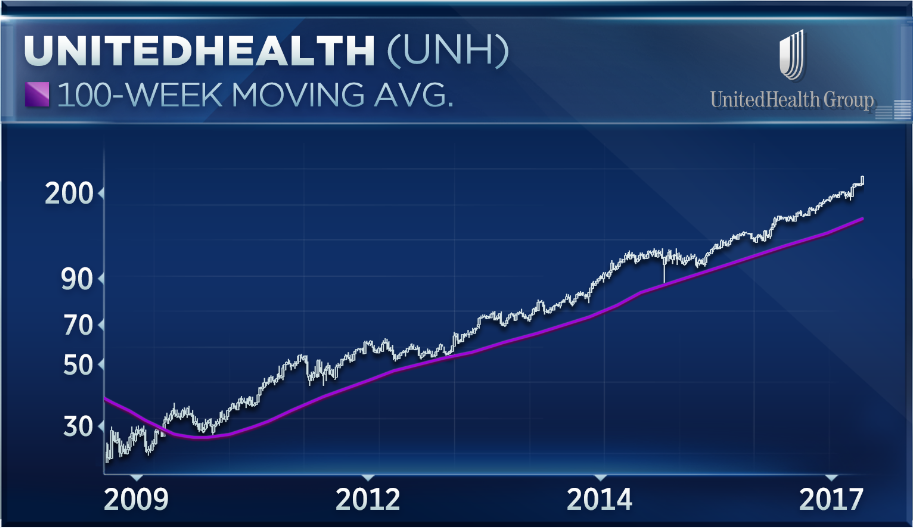
UnitedHealth Group’s stock hit a 52-week high of $269.14 on Aug. 28.

Over the past month, UnitedHealth’s stock has increased 2.8 percent, according to Zacks.com. Since the beginning of the year, the health insurer has gained 19.9 percent.

UnitedHealth’s stock has outperformed its sector due to consistently positive earnings. The health insurer has not missed Zacks.com’s earnings consensus in the last four quarters. By the end of this fiscal year, UnitedHealth is projected to record earnings of $12.72 per share on $224.86 billion in revenues.


450 hospitals at risk of potential closure, Morgan Stanley analysis finds

https://www.bloomberg.com/news/articles/2018-08-21/hospitals-are-getting-eaten-away-by-market-trends-analysts-say

Related image

More than 15 percent of U.S. hospitals have weak financial metrics or are at risk of potential closure, according to Business Insider, which cited a recent report from Morgan Stanley.

Morgan Stanley analyzed data from more than 6,000 hospitals and found 600 of the hospitals were “weak” based on criteria for margins for earnings before interest and other items, occupancy and revenue, according to Bloomberg. The analysis revealed another 450 hospitals were at risk of potential closure, according to Business Insider

Texas, Oklahoma, Louisiana, Kansas, Tennessee and Pennsylvania had the highest concentration of hospitals in the “at risk” pool, according to the report.

Industry M&A may be no savior as the pace of hospital closures, particularly in hard-to-reach rural areas, seems poised to accelerate.

Hospitals have been closing at a rate of about 30 a year, according to the American Hospital Association, and patients living far from major cities may be left with even fewer hospital choices as insurers push them toward online providers like Teladoc Inc. and clinics such as CVS Health Corp’s MinuteClinic.

Morgan Stanley analysts led by Vikram Malhotra looked at data from roughly 6,000 U.S. private and public hospitals and concluded eight percent are at risk of closing; another 10 percent are considered “weak.” The firm defined weak hospitals based on criteria for margins for earnings before interest and other items, occupancy and revenue. The “at risk” group was defined by capital expenditures and efficiency, among others.

The next year to 18 months should see an increase in shut downs, Malhotra said in a phone interview.

The risks are coming following years of mergers and acquisitions. The most recent deal saw Apollo Global Management LLC swallowing rural hospital chain LifePoint Health Inc. for $5.6 billion last month. Apollo declined to comment on the deal; LifePoint has until Aug. 22 to solicit other offers. Consolidation among other health-care players, such as CVS’s planned takeover of insurer Aetna Inc., could also pressure hospitals as payers push patients toward outpatient services.

There are already a lot of hospitals with high negative margins, consultancy Veda Partners health care policy analyst Spencer Perlman said, and that’s going to become unsustainable. Rural hospitals with a smaller footprint may have less room to negotiate rates with managed care companies and are often hobbled by more older and poorer patients.

Also wearing away at margins are technological improvements that allow patients to get more surgeries and imaging done outside of the hospital. They are also likely to be forced to pay more to attract and retain doctors in key areas, Bloomberg Intelligence analyst Jason McGorman said.

They “are getting eaten alive from these market trends,” Perlman cautioned.

Future M&A options could be too late — buyers may hesitate as debt laden operators like Community Health Systems Inc. and Tenet Healthcare Corp. focus on selling underperforming sites to reduce leverage, Morgan Stanley’s Zachary Sopcak said.

The light at the end of the tunnel is some hospitals are rising to the occasion, Perlman said. Some acute care facilities are restructuring as outpatient emergency clinics with free-standing emergency departments. “Microhospitals,” or facilities with ten beds or less, are another trend that may hold promise.


Hospital profits in Massachusetts shriveling due to financial pressure

https://www.healthcarefinancenews.com/news/hospital-profits-massachusetts-shriveling-due-financial-pressure?mkt_tok=eyJpIjoiWWpFek9EVm1ZbU5tT0RWaSIsInQiOiI2YVwvTFhvMGpzWkpHSkttMFgrS253RWU5RlNJRE51ZzF0Zkdadjd4MmRKVVwvTUpYZW5qTjF2OU1LQnJcL3hDN1l4aGRnRmo0cWxGZk9CcXBRdm9Ga21iUkNhVG9XVTQ5UFZUbGZpbHRXTUgwcng4M081S3hpQ1dQMCt2N2lCQU5VTyJ9

Image result for hospital profits


Hit especially hard were Massachusetts’ community hospitals, with median operating margins plunging to 0.9 percent.

Acute care hospitals in Massachusetts are turning a profit for the most part, but in many cases those profits are less than robust. The state’s Center for Health Care Information and Analysis found that many are in a financially precarious position.

According to the report, about 65 percent of the commonwealth’s hospitals have operating margins below three percent. Overall, hospitals’ operating margins hovered around 1.6 percent. That’s down from 2.8 percent during the previous fiscal year.

While 49 of 62 hospitals were profitable in the fiscal year ending Sept. 30, many low margins low enough not to be considered financially healthy.

Hit especially hard were Massachusetts’ community hospitals, with median operating margins plunging to 0.9 percent — down two full percentage points from the previous year.

The northeastern part of the state saw the lowest margins geographically, at 1.6 percent, with some facilities operating on negative margins and hemorrhaging cash. North Shore Medical Center in Salem was among the hardest hit, seeing $57.7 million evaporate in fiscal year 2017.

Not all Massachusetts hospitals are feeling those kinds of pressures. Northeast Hospital enjoyed a 9 percent operating margin during the past fiscal year, translating into a $33.1 million surplus.

That the state’s rural hospitals are struggling isn’t surprising, given the national trend. A recent report found that nearly half are operating at negative margins, fueled largely by a high rate of uninsured patients. Eighty rural hospitals closed from 2010 to 2016, and more have shut their doors since.

Aside from the high uninsured rate, a payer mix heavy on Medicare and Medicaid with lower claims reimbursement rates is a contributing factor. More patients are seeking care outside rural areas, which isn’t helping, and many areas see a dearth of employer-sponsored health coverage due to lower employment rates. Many markets are also besieged by a shortage of primary care providers, and tighter payer-negotiated reimbursement rates.