


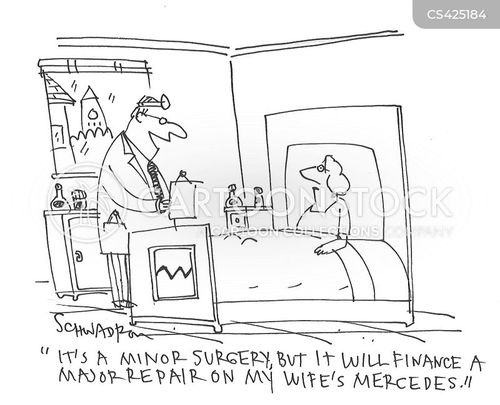
Cartoon – Fee for Service Exam

In 2020 and beyond, under the Senate’s BCRA, the working poor will have a very hard time finding primary care providers (PCP) who will schedule appointments with them. Providers, rightly, fear bad debt from high deductible plans. They will discriminate on the ability to pay upfront.
In the NEJM, Karin Rhodes, Genevieve Kenney, and Ari Friedman† looked at PCP appointment availability in the from the end of 2012 to Spring 2013. They found that appointments were usually quickly available if the person had insurance and unavailable if they were cash paying patients who could not afford the median price of services.**
The overall rate of new patient appointments for the uninsured was 78.8% with full cash payment at the time of the appointment (Figure 2). The median cost of a new patient primary care visit was $120, but costs varied across the states, as indicated in the figure legend. Only 15.4% of uninsured callers received an appointment that required payment of $75 or less at the time of the visit, because few offices had low-cost appointments and only one-fifth of practices allowed flexible payment arrangements for uninsured patients.
Why does this matter in the BCRA environment?
The baseline plan will be a plan with a $7,500 deductible for a single person. For people with means, paying $120 for a PCP visit is unpleasant but not onerous. If I had to do that this afternoon, I would grumble as I pull out a credit card. I would pay that credit card off tomorrow after I got the transaction points. Not everyone can do that.
Craig Garthwaite raises a good point this morning:
Primary care providers will seek to minimize their net bad debt.
Michael Chernew and Jonathan Bush looked at how bad debt accumulates as a function of out of pocket expenses at professional offices.
The median PCP cash visit price is a large payment in the Chernew/Bush schema. Most of it will be paid as people with means take out their credit card, their HRA debit card, or their HSA card and swipe it through the machine. But a simple PCP visit will produce significant chasing and write-downs. The study is limited as it only looked at people who were commercially insured. It excludes most low income people who are in the Medicaid gap on an income qualification basis by design. The average income in the study group is highly likely to be higher than the income of people who would move from Medicaid to benchmark plans. Even so, there is significant chasing and write downs. I would predict that applying 100% first dollar obligations on people with even less income than the study population will lead to more provider bad debt. This is because these programs are income qualified and if a person income qualifies for these programs, they probably don’t have a spare $120 floating around or easy access to cheap, revolving credit.
If we assume that some normal PCP visits will include some extra services that increase the contracted payment rate to $200 or more (very large obligations in Chernew/Bush) significant sums will be written down and off. For provider practice viability concerns, providers will very aggressively screen against people with very high deductible insurance who can’t pay the entire amount of the contracted rate price up front at the receptionist desk. This is a very patient unfriendly system.
Most payment reform models focus on delivering more primary care. The objective is to substitute cheap primary care for expensive specialist, inpatient hospital stays and post-acute rehabilitation. This is the concept behind value based insurance design. VBID is supposed to encourage the routine, low cost, regular maintenance of chronic conditions in outpatient or community settings instead of having people end up in the hospital for preventable admissions.
Yet, under the very understandable incentives of primary care physicians wanting to stay in business, access to primary care for the working poor who would have several thousand dollar deductibles that apply to all services, will be greatly restricted because of the cost barrier. If we want all members of our shared society to have decent health and decent lives, should want people to have easy and ready access to primary care. This bill creates strong business incentives to create barriers to primary care access.


Patients treated by older hospitalists are somewhat more likely to die within a month of admission than patients treated by younger physicians, suggests research published this week in the BJM.
Researchers at Harvard note that the difference in mortality rates was modest yet clinically significant—10.8% among patients treated by physicians 40 and younger, compared with 12.1% among those treated by physicians 60 and older.
That translates into one additional patient death for every 77 patients treated by physicians 60 and older, compared with those treated by doctors 40 and younger.
Study lead author Anupam B. Jena, MD, a hospitalist, and associate professor of medicine at Harvard Medical School, spoke with HealthLeaders about the findings. The following is a lightly edited transcript.

As Medicare’s reviled Sustainable Growth Rate (SGR) formula for physician reimbursement fades to extinction, its replacement, the Medicare Access and CHIP Reauthorization Act (MACRA) of 2015, is posing a new set of challenges.
This week Black Book Research identified 10 of the top MACRA challenges that physician practices are facing. The survey is based on responses from 8,845 physician practices collected from February to April.
1. MIPS compliance technology: Physician practices are seeking technological solutions to help them achieve reporting compliance, with 77% of practices that have at least three clinicians mulling the purchase of Merit-Based Incentive Payment System Compliance Technology Solutions (MIPS) software.
2. Electronic Health Record (EHR) optimization: MACRA appears to be a golden opportunity for the largest EHR vendors. For the top eight EHR companies, 83% of their physician-practice users reported working to upgrade their system for MIPS compliance. At physician practices with smaller EHR vendor partners, however, 72% reported they were not working with their vendor partner to upgrade their system for MIPS compliance.
3. Consultant opportunity: The EHR capabilities required for participation in MIPS or Alternative Payment Models (APMs) represent a business opportunity for EHR consultants. Most (80%) of physician practices report that conducting a technology inventory is key to strategic planning for a value-based payment system.
4. Data wrangling: Taming data to conform with the reporting requirements of MIPS and APMs is daunting for many physician practices. At practices with at least four clinicians, 81% of physicians report being unable to align their data with the new reporting requirements.
5. Paying for procrastination: Physician practices that have not developed an in-house strategy for participating in MIPS or an APM are looking for outsourcing options. Of these practice procrastinators, 80% are planning to find turnkey software or a MACRA-administration partner this year.
6. MACRA-induced physician-practice consolidation: Black Book found that three-quarters of independent physician practices surveyed are considering selling their practice to a health system, hospital, or large group practice because of the regulatory and capital-cost burdens of MACRA.
In an equally dour data point, 68% of independent physicians predicted that MACRA would either burden or bankrupt their practice by 2020.
7. Economic incentives: For the first five years of the Quality Payment Program, there are powerful economic incentives to beat the MIPS performance threshold.
In 2019, MIPS is set to redistribute about $199 million from physicians who perform below the performance threshold to physicians above the threshold, and this redistribution mechanism is set to expand over time.
There also is $500 million in supplemental funding available for each of the first five years of MIPS implementation. To chase these opportunities, 64% of hospital-networked physician organizations reported including incentives in physician-compensation packages to boost MIPS performance.
8. Reputation risk: A majority (54%) of those surveyed did not know that MACRA would result in performance data being reported publicly through Medicare’s Physician Compare website and other rating systems.
9. ACO appeal: Joining an accountable care organization can increase the odds of MIPS success through penalty avoidance and resource utilization bonuses. Small physician practices have taken notice, with 67% considering joining an ACO to increase the likelihood of MIPS success.
10. Cost and quality transparency: Based on its physician-practice survey and other research, Black Book Research expects MACRA to be one of the market factors driving healthcare cost and quality transparency.
One survey noted 52% of large group practices, independent practice associations, ACOs, and integrated delivery networks reported they were preparing to release cost and quality measures for individual physicians by next year.

What do you do when you know someone is going to die? I’m not talking about death when it comes at the end of a long protracted illness or a terminal diagnosis. Or the final act at the end of a “good” life, when the body and mind have ultimately given way. I’m talking about when you realize the twenty-five-year-old woman in front of you, who you met five minutes ago, has no idea she will not survive to see another sunrise.
Moonlighting during residency in the ICU of a community hospital, I was summoned to the ED to evaluate a feverish, septic young woman. In his book, Blink, Malcolm Gladwell describes the gut/reflexive first impression we make before our “thinking” brain starts getting in the way of those initial thoughts. Walking into the ER bay, all the warning bells were ringing. The mottling of her skin told me she was in shock. The visible, rapid rise and fall of her chest told me she was working hard to compensate for an acidosis. Her eyes told me she was afraid, and rightfully so. The rapid pulse and low blood pressure were punctuated by red on the monitor up in the corner of the room. She looked sick, but the reality was much worse. I had known her now all of ten seconds. But I didn’t know she was dead. Not just yet.


 HENRY KOTULA