An Estimated 52 Million Adults Have Pre-Existing Conditions That Would Make Them Uninsurable Pre-Obamacare

An Estimated 52 Million Adults Have Pre-Existing Conditions That Would Make Them Uninsurable Pre-Obamacare

Image result for pre existing conditions

In Eleven States, 3 in 10 Non-Elderly Adults Would Likely Be Denied Individual Insurance Under Medical Underwriting Practices.

A new Kaiser Family Foundation analysis finds that 52 million adults under 65 – or 27 percent of that population — have pre-existing health conditions that would likely make them uninsurable if they applied for health coverage under medical underwriting practices that existed in most states before insurance regulation changes made by the Affordable Care Act.

In eleven states, at least three in ten non-elderly adults would have a declinable condition, according to the analysis: West Virginia (36%), Mississippi (34%), Kentucky (33%), Alabama (33%), Arkansas (32%), Tennessee (32%), Oklahoma (31%), Louisiana (30%), Missouri (30%), Indiana (30%) and Kansas (30%).

States with the most people estimated to have the conditions include: California (5,865,000), Texas (4,536,000), and Florida (3,116,000).

Using data from two large government surveys, the analysis estimates the total number of nonelderly adults in each state with a health condition that could lead to a denial of coverage in the individual insurance market, based on pre-ACA field underwriting guides for brokers and agents. The results are conservative because the data don’t include some declinable conditions. The estimates also don’t include the number of people with other health conditions that wouldn’t necessarily cause a denial, but could lead to higher insurance costs based on underwriting.


The ‘Biggest Health Care News of the Year’

http://www.thefiscaltimes.com/2018/06/08/Biggest-Health-Care-News-Year

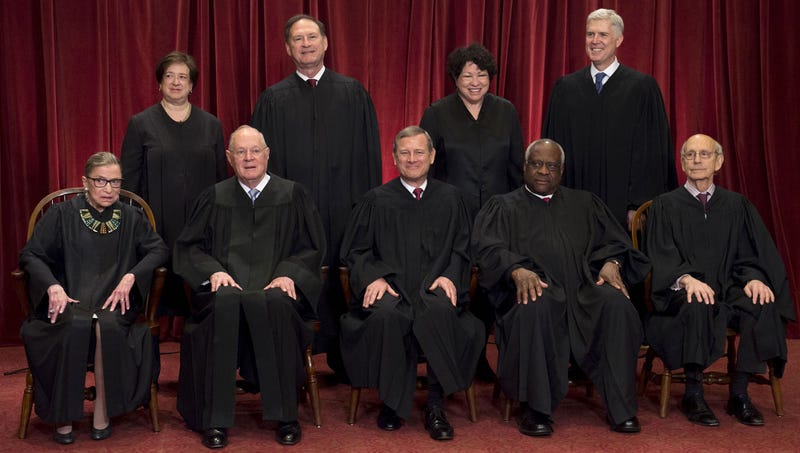
Image result for supreme court


Trump Administration Says ACA Protections for Preexisting Conditions Are Unconstitutional.

The Department of Justice said Thursday that it will not defend the constitutionality of key provisions of the Affordable Care Act in a lawsuit currently underway in Texas. Here’s what you need to know:

The background: Twenty states, led by Texas, sued the federal government in February as part of an effort to overturn the Affordable Care Act, arguing that, because the GOP tax bill eliminated the penalty for individuals who don’t buy health insurance, the law as a whole was unconstitutional. The Supreme Court’s 2012 ruling that upheld the Affordable Care Act called the individual mandate penalty a tax — and therefore legal. But the lawsuit argues that since the mandate can no longer raise any revenue, the mandate itself is now unconstitutional – and so is the entire ACA.

What they did: The Department of Justice filed a brief Thursday in support of the suit, saying “this Court should hold that the ACA’s individual mandate will be unconstitutional as of January 1, 2019,” and that some other provisions of the law – including those protecting people with pre-existing conditions being denied coverage or charged higher premiums – are inseparable from the mandate and therefore should be declared unconstitutional as well.

Why they did it: Republicans have targeted the Affordable Care Act for elimination ever since it passed, and President Trump continues to promise that it will be overturned. However, the federal support for the states’ lawsuit is unusual, since the Justice Department typically defends existing law. Attorney General Jeff Sessions wrote a letter to House Speaker Paul Ryan explaining that this is a “rare case” that warrants deviating from the Justice Department’s “longstanding tradition of defending the constitutionality of duly enacted statutes.” Tom Miller of the American Enterprise Institute told Politico that the refusal to defend key parts of the ACA shows that the Trump administration is going even further in its battle against the health care law.

What it means: If successful, the states’ lawsuit would allow insurers to charge much higher rates to people with pre-existing conditions, or deny them coverage altogether, effectively ending the ACA’s promise of providing health care for all Americans. If the Justice Department’s analysis is ultimately persuasive, however, other parts of the law, including Medicaid expansion, could stay in place. Some legal experts say the suit is weak, since it turns on the idea that if one part of a law is invalid, the whole thing is invalid, without recognizing that the Congress passed the law and is free to alter it while leaving the rest in place. But the lawsuit has been filed in a conservative court in Texas, and the Trump administration’s refusal to defend key parts of the law has likely boosted the plaintiffs’ chances.

Supporters of the health care law expressed considerable alarm on Friday. Andy Slavitt, who ran the Centers for Medicare and Medicaid Services under President Obama, tweeted that the Justice Department’s decision is the “biggest health care news of the year” and a blow to public health. Slavitt and others criticized the move as an unprecedented decision by the Justice Department to not defend the rule of law. Ultimately, the case may be heading for the Supreme Court.


Trump’s Justice Department says the ACA is unconstitutional

https://www.axios.com/trumps-justice-department-says-aca-is-unconstitutional-06f8714d-7606-4104-9982-f057786828a7.html?stream=top-stories&utm_source=alert&utm_medium=email&utm_campaign=alerts_all

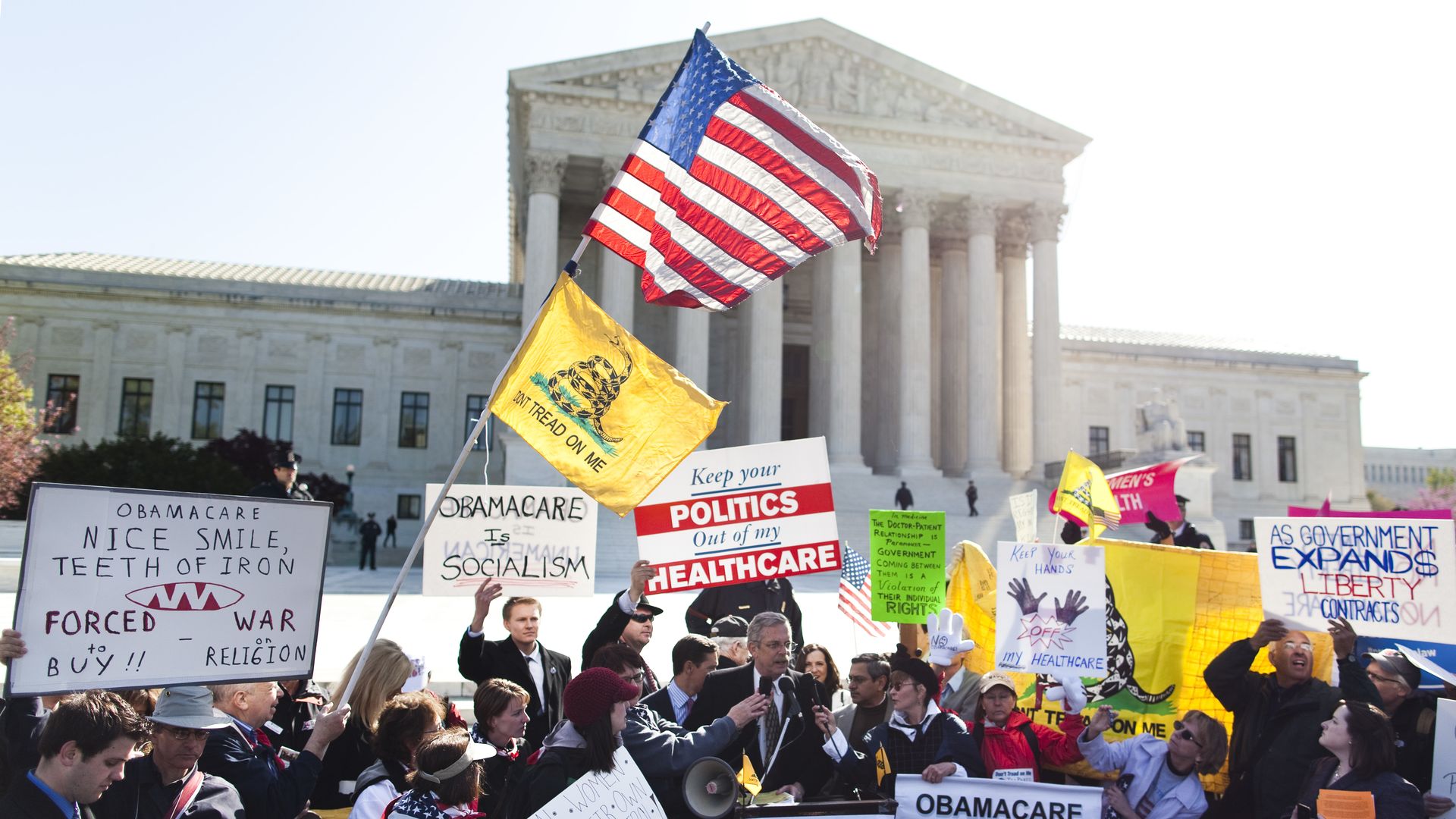
Affordable Care Act protesters in front of the Supreme Court


The Justice Department will not defend the Affordable Care Act in court, and says it believes the law’s individual mandate — the provision the Supreme Court upheld in 2012 — has become unconstitutional.

Why it matters: The Justice Department almost always defends federal laws when they’re challenged in court. Its departure from that norm in this case is a major development — career DOJ lawyers removed themselves from the case as the department announced this shift in its position.

The details: The ACA’s individual mandate requires most people to buy insurance or pay a tax penalty. The Supreme Court upheld that in 2012 as a valid use of Congress’ taxing power.

  • When Congress claimed it repealed the individual mandate last year, what it actually did was drop the tax penalty to $0.
  • So the coverage requirement itself is still technically on the books. And a group of Republican attorneys general, representing states led by Texas, say it’s now unconstitutional — because the specific penalty the Supreme Court upheld is no longer in effect.
  • The Justice Department agreed with that position in a brief filed Thursday night.
  • DOJ said the courts should strike down the coverage requirement, as well as the provision of the law that forces insurance companies to cover people with pre-existing conditions.

Between the lines: For the Justice Department to stop defending a federal law is not unprecedented — the Obama administration did it with the Defense of Marriage Act. But it is exceptionally rare.

Yes, but: A group of Democratic attorneys general has been granted permission to defend the ACA in this case, so someone will be in its corner.

What to watch: The argument against it is by no means a slam dunk. For starters, critics — now including the Justice Department — will have to prove that people are still being injured by the remaining shell of the individual mandate, even without a penalty for non-compliance.

Justice Dept. argues key parts of ObamaCare are unconstitutional

Justice Dept. argues key parts of ObamaCare are unconstitutional

Image result for aca challenge

The Department of Justice (DOJ) argued in court Thursday that key parts of ObamaCare are now unconstitutional, siding in large part with a conservative challenge to the law.

The move is a break from the norm of the DOJ to defend federal laws when they are challenged in court. Under President Trump, the department has opted not to defend a law that it strongly opposes.

Attorney General Jeff Sessions acknowledged in a letter to Speaker Paul Ryan (R-Wis.) that the DOJ has a “longstanding tradition” of defending federal laws, but argued that this is “a rare case where the proper course is to forgo defense” of the law.

The lawsuit in question was filed in February by Texas and 19 other GOP-led states, arguing that ObamaCare is unconstitutional and should be overturned.

Legal experts are deeply skeptical the challenge can succeed, and 17 Democratic-led states have already intervened to defend the law in the absence of DOJ action.

The DOJ argues that ObamaCare’s protections against people with pre-existing conditions being denied coverage or charged more should be invalidated, maintaining that the individual mandate that people have insurance or face a tax penalty is now unconstitutional.

The conservative states and DOJ point to the Supreme Court’s 2012 ruling that upheld ObamaCare’s individual mandate under Congress’s taxing power. Now that Congress has repealed the mandate penalty as part of last year’s tax bill – while technically keeping the mandate itself in place – they argue the mandate is no longer a tax and is now invalid.

They also argue that the key pre-existing condition protections cannot be separated from the mandate and should be invalidated. The DOJ argues the remainder of the law can stay.

The chances for that argument succeeding are viewed with deep skepticism by legal experts, in part because Congress itself indicated that the rest of ObamaCare could still stand without the mandate when it moved to repeal the tax penalty last year.

The case is currently before a federal district court judge in Texas, Reed O’Connor, who was appointed by former President George W. Bush.

Some supporters of ObamaCare view the DOJ’s move more as a damaging break from precedent rather than an actual serious legal threat to ObamaCare, since the lawsuit is unlikely to succeed.


Short-Term Plans Could Bring Long-Term Risks to California’s Individual Market

Short-Term Plans Could Bring Long-Term Risks to California’s Individual Market

Image result for short term health insurance risks


The Trump administration is considering changes to federal rules regulating short-term, limited-duration insurance (“short-term plans”) that could result in the expansion of these plans in California.

This report, written by Georgetown University’s Center on Health Insurance Reforms, provides an overview of short-term plans and the current market for these plans in California. It explains how changes to federal policy around short-term plans might affect California’s individual health insurance market and describes policies that various states are pursuing in response to these changes.

Key points include:

  • Short-term plans are exempt from the Affordable Care Act’s consumer protections. Insurers can deny coverage based on preexisting conditions, not cover certain services, and limit what they will pay for services. For example, many short-term plans currently available in California do not cover maternity and newborn care, mental health and substance use services, and outpatient prescription drugs. They also limit the total amount that plans will pay per day in the hospital and for particular services, such as surgeon fees, in addition to imposing a maximum the plan will spend toward claims covered by the policy.
  • Short-term plans are rare right now in California, but that could change. There is only one insurer currently selling approved short-term plans in California, and fewer than 10,000 policies in effect across the state. But if the Trump administration changes federal rules, and there is no change in California law, enrollment in short-term plans is likely to grow. Under these conditions, the Urban Institute projects that over 600,000 Californians would enroll in short-term plans in 2019.
  • Enrollment in short-term plans could contribute to destabilizing Covered California and increasing premiums. Short-term plans are likely to siphon off healthier and younger consumers from Covered California, which would increase premiums for those remaining in the ACA-compliant market.
  • States are taking action. Colorado, Massachusetts, Michigan, New Jersey, New York, and Rhode Island have taken steps to ensure that short-term plans don’t destabilize their individual health insurance markets. A bill is currently pending in the California legislature banning short-term plans altogether.

The full report is available under Related Materials below.


Let the ACA rate hikes begin

Image result for ACA Rate Hikes

Get ready for about six more months of headlines like this: Insurers in Maryland are proposing premium hikes as high as 91% for coverage sold through the Affordable Care Act.

This will keep happening, nationwide. Proposed increases have been steep in Maryland and Virginia, the first two states to release them. But all signs point to steep hikes across the country, especially in rural areas. Some insurers also will likely decide to simply quit offering coverage in some parts of the country.

The latest: Insurers in Maryland’s individual market are seeking rate hikes for next year that range from 18% (for the biggest plan in the state) to 91% (for the smallest). They average out to roughly 32%.

  • These rates are still preliminary — Maryland can approve or reject proposed increases, and it’s also pursuing a reinsurance program that would help bring these increases down.

Why you’ll hear about this again: More preliminary rates will trickle out until the summer, as will any insurers’ decisions to pull up stakes in some markets. After negotiations with state regulators, rates will be finalized a few weeks before the midterms.

  • Expect to hear Democrats making hay of these increases as they accuse Republicans of “sabotaging” the ACA.
  • There’s really no denying that the repeal of the ACA’s individual mandate, coupled with some of the Trump administration’s regulatory moves, is a big driver — though not the only driver — of these staggering increases.

The other side: Expect the Trump administration to cite these same figures as it finalizes regulations that would loosen access to options outside the ACA’s exchanges, saying they’re providing new options to people who simply can’t afford ACA coverage.

  • Don’t forget, though, that some of those options would only benefit the healthiest consumers.

Health Care’s New ‘Skinny Plans’: Winners and Losers

https://www.wsj.com/articles/health-cares-new-skinny-plans-winners-and-losers-1524654000

Image result for Health Care’s New ‘Skinny Plans’: Winners and Losers


Trump’s ‘skinny plans’ offer a cheaper alternative to the Affordable Care Act, but may have far less coverage.


New, more-limited health plans may draw consumers away from Affordable Care Act coverage and drive up prices on insurance sold in the health law’s marketplaces. These “skinny” plans offer lower premiums, making them an attractive alternative for young, healthy buyers.

New, more-limited health plans may draw consumers away from Affordable Care Act coverage and drive up prices on insurance sold in the health law’s marketplaces.

These “skinny” plans offer lower premiums, making them an attractive alternative for young, healthy buyers.

What The Health? VA Secretary Out, Privatization In?

https://khn.org/news/podcast-khns-what-the-health-va-secretary-out-privatization-in/

Image result for khn what the health

David Shulkin, the secretary of Veterans Affairs, was fired Wednesday night by President Donald Trump. To replace him, Trump will nominate his White House physician, naval Rear Adm. Ronny Jackson. Shulkin, however, is not going quietly. He took to The New York Times op-ed page to claim he was pushed out by those who want to privatize VA health services for profit.

Meanwhile, two more states, Iowa and Utah, passed legislation that would sidestep some of the requirements of the Affordable Care Act. Iowa wants to allow the sale of health plans that cover fewer benefits — or restrict coverage for people with preexisting health conditions. Utah wants to expand Medicaid to those higher up the income scale — but not as high as prescribed by the ACA.

This week’s panelists for KHN’s “What the Health?” are Julie Rovner of Kaiser Health News, Anna Edney of Bloomberg News, Sarah Kliff of Vox.com and Alice Ollstein of Talking Points Memo.

Among the takeaways from this week’s podcast:

  • If Shulkin is right that the administration is keen on privatizing the VA, would it move to something akin to the Medicaid managed-care systems that many states have set up?
  • Veterans groups haven’t yet shown their cards on whether they think Jackson is a suitable choice to replace Shulkin.
  • Iowa is poised to allow farmers groups to offer health plans that could sidestep some of the consumer protections in the federal Affordable Care Act, such as requiring that preexisting conditions be covered. Tennessee has a program similar to what Iowa is implementing, and some consumer groups have complained it pulls healthy individuals out of the ACA marketplace and drives up premiums for those who remain.
  • Utah’s request for a federal waiver so that it can offer a Medicaid expansion program to people earning up to 100 percent of the federal poverty level — and not the 138 percent included in the ACA — will show whether the Trump administration has a different standard than the Obama administration. Obama officials rejected partial Medicaid expansion requests.
  • Sen. Elizabeth Warren (D-Mass.) introduced a bill that offers provisions to help middle-income customers buying insurance on the ACA marketplace. But it suggests Democrats are still not sure what is the best health care strategy heading into the midterm elections.


The ACA at Eight: Resilient but Still at Risk

http://www.commonwealthfund.org/publications/blog/2018/mar/aca-at-eight?omnicid=EALERT1374267&mid=henrykotula@yahoo.com

Image result for The ACA at Eight: Resilient but Still at Risk


It’s Obamacare’s birthday. After eight years of relentless pounding, the Affordable Care Act (ACA) is still the law of the land. Its resilience reflects the fundamental decency of the American people who — when faced with the reality of taking coverage away from millions of their neighbors — refused to let that happen. They filled town hall meetings, they flooded the corridors of Congress, and support for the law surged to its current 54 percent.

That is not to say that the law’s future is assured. As part of its recent tax reform legislation, Congress eliminated financial penalties for not having health insurance — the teeth of the so-called individual mandate. The Congressional Budget Office (CBO) predicts that this will raise health insurance premiums in individual private markets by an average of 10 percent, and 13 million Americans could lose their health insurance. If Congress fails to enact recent bipartisan market stabilization proposals, these numbers could go even higher.

The current administration is also using executive authority to weaken the law. The U.S. Department of Health and Human Services has encouraged states to impose a range of new restrictions on Medicaid recipients — work requirements, premiums, copays — that may reduce the number of poor and near-poor Americans who enroll in this program.

The administration has also proposed new rules that would allow health insurers to sell plans that evade the ACA’s standards regarding preexisting conditions and minimum benefits. For example, the administration would permit insurers to market short-term plans — coverage limited to a year in duration — without the requirement that they accept all comers, and with various restrictions on benefits. These cheaper, less generous plans would appeal to healthier individuals, who would then likely choose not to purchase the more expensive, comprehensive insurance sold in ACA marketplaces. Only sicker individuals would buy ACA plans, raising their costs and making them unaffordable to millions who have come to depend on them. The net effect is to add choices for healthy Americans, but reduce options for the sick.

Efforts to curtail the ACA will likely increase the number of Americans without insurance, now at a historic low of 14 percent of working-age adults, according to the Commonwealth Fund’s Affordable Care Act Tracking Survey. These efforts will also likely increase health disparities between states. A number of the restrictions sought by the administration will go into effect only if states embrace them. States must request waivers to limit Medicaid benefits. So far, only Republican-led states are doing so. Similarly, states have discretion about whether to permit the sale of short-term plans. Many blue states are considering banning or regulating them.

Despite these threats, however, fundamental elements of the ACA remain in effect. Federal financial assistance for purchase of health insurance in ACA marketplaces remains available for individuals with incomes below 400 percent of the federal poverty level. This is one reason why 11.8 million people had signed up for ACA plans through the marketplaces by the end of January. Federal support for states to expand Medicaid persists. Thirty-four states and the District of Columbia have done so, resulting in 15 million more beneficiaries of that program.

Recent legislative and executive restrictions on the ACA will not totally reverse these gains. Paradoxically, some states that refused previously to expand Medicaid may decide to do so now that they may be able to impose work requirements, premiums, and copays, and thus give expansion a conservative stamp. This could actually increase the total number of Americans with some Medicaid coverage.

In fact, the continuing struggle over the ACA fits a decades-old pattern of steady, if erratic, expansion of health insurance coverage in the United States. Since the creation of Medicare and Medicaid 53 years ago, the federal government has periodically extended insurance to new populations: the disabled, those with end-stage renal disease, children. The federal government also massively expanded Medicare benefits to cover drugs. Once provided, these benefits have proved politically difficult to peel back — in a recent poll, 92 percent of Americans said they felt all of us should have the right to health care.

What does this mean for the ACA? While it will not achieve all its supporters’ goals, it will survive, and provide a new foundation upon which Americans can build if they choose, as they have in the past, to help their vulnerable neighbors deal with the scourge of illness. To paraphrase Martin Luther King, one might even say that the arc of history is long, but it bends toward health coverage.


Back to the Health Policy Drawing Board

Image result for Back to the Health Policy Drawing Board

The Affordable Care Act needs help. After scores of failed repeal attempts, Congress enacted legislation late last year that eliminated one of the law’s central features, the mandate requiring people to buy insurance.

Obamacare, as the Affordable Care Act is widely known, isn’t in imminent danger of collapse, but the mandate’s repeal poses a serious long-term threat.

To understand that threat and how it might be parried, it’s helpful to consider why the United States has relied so heavily on employer-provided insurance — and why it has not yet adopted a form of the universal coverage seen in most other countries.

First, some basics on private insurance: It works well only when many people, each with a low risk of loss, buy in. Most homeowners buy fire insurance, for example, and only a small fraction file claims annually. A modest premium can therefore cover large losses sustained by a few.

But because of what economists call the adverse-selection problem, this model can easily break down for private health insurance. People typically know more about their own health risks than insurers do, making those most at risk more likely to purchase insurance.

This drives premiums up, making insurance still less attractive to the healthiest people. That, in turn, causes many to drop out, producing the fabled “death spiral” in which only the least healthy people remain insured. But at that point, private health insurance may no longer be viable, because annual treatment costs for serious illnesses often exceed several hundred thousand dollars.

Most nations have solved this problem by adopting universal coverage financed by taxes. The United States probably would have followed this approach except for a historical anomaly during World War II. Fearing runaway inflation in tight labor markets, the American government imposed a cap on wages.

But the cap didn’t apply to fringe benefits, which employers quickly exploited as a recruiting tool. Employer health plans proved particularly attractive, since their cost was a deductible expense and they were not taxed. Before the war started, only 9 percent of workers had employer-provided insurance, but 63 percent had it by 1953.

To be eligible for favorable tax treatment, companies were required to make their plans available to all employees, which mitigated the adverse-selection problem. People would lose insurance if they lost their jobs, which inhibited labor mobility, but since employment relationships were relatively durable in the postwar years, this arrangement worked well enough.

But after peaking at almost 70 percent in the 1990s, employer coverage began declining in the face of stagnating wages and rising insurance costs. By 2010, only 56 percent of the nonelderly American population still had workplace health plans.

Even so, because more than 100 million Americans still had such plans and were reasonably satisfied with them, the Obama administration opted to build health reform atop the existing system. In addition to allowing people to keep their existing employer coverage, Obamacare expanded eligibility for Medicaid and established exchanges in which people without employer plans could buy insurance.

At the outset, Obamacare had three central features:

• Insurers could not charge higher prices to people with pre-existing conditions.

• Those without coverage had to pay a penalty to the government (the “mandate”).

• Low-income people would be eligible for subsidies.

The first two provisions were necessary to prevent the death spiral, and government couldn’t mandate insurance purchases without adding subsidies for the poor.

Despite a bumpy rollout and some frustrations over shrinking choices and rising prices at health care exchanges, Obamacare was working remarkably well by most important metrics. Program costs were much lower than expected, and the uninsured rate among nonelderly Americans fell sharply — from 18.2 percent in 2010 to only 10.3 percent in 2018.

This progress is now imperiled.

The mandate — by far the program’s least popular provision — was repealed as part of tax legislation passed in December 2017. And because economists predict that its absence will slowly rekindle the insurance death spiral, we’re forced back to the policy drawing board.

The most common response has been to call for a variant of the single-payer systems employed by most other countries, which promise dramatic reductions in health costs.

The United States spends far more on health care than any other nation, yet gets worse outcomes on most measures. In part this is because administrative and marketing expenses are much lower under single-payer plans. But by far the most important source of savings is that governments are able to negotiate much more favorable terms with service providers. Virtually every procedure, test, and drug costs substantially more here than elsewhere.

An American hospital stay, for example, costs more than twelve times as much as one in the Netherlands. The single-payer approach also sidesteps the thorny mandate objection by covering everyone out of tax revenue.

A June 2017 poll showed that 60 percent of Americans said the government should provide universal coverage, and support for single-payer insurance rose more than one-third since 2014.

Yet a move to a single-payer system faces the same hurdle that shaped Obamacare: Millions of Americans would resist any attempt to take their employer-provided plans away. And although single-payer health care would be far less costly overall, it would be paid for by taxes — the most visible form of sacrifice — rather than by the implicit levies that underwrite employer coverage.

From a purely economic standpoint, the increased tax burden is irrelevant. It’s a truism that making the economic pie larger necessarily makes it possible for everyone to get a larger slice than before. And because the gains from single-payer insurance would be so large, there must be ways to make everyone come out ahead, even in the short run.

The Yale political scientist Jacob Hacker, for example, has proposed the introduction of Medicare Part E (Medicare for Everyone), which would allow anyone to buy into Medicare, regardless of age. The program’s budget would be supported in part by levies on employers that don’t offer insurance.

The cost savings inherent in this form of single-payer coverage would lead more and more firms to abandon their current plans voluntarily. Gradually, the age for standard Medicare eligibility also would fall until the entire population was covered by it. The Center for American Progress has now introduced a similar proposal.

It’s critical to realize that there are attractive paths forward. In no other wealthy country do we see people organize bake sales to help pay for a neighbor’s cancer care. We can avoid this national embarrassment without requiring painful sacrifices from anyone.