Can States Fill the Gap if the Federal Government Overturns Preexisting-Condition Protections?

https://www.commonwealthfund.org/blog/2019/can-states-fill-gap-preexisting-condition-protections

Image result for state laws

Once again, the Affordable Care Act (ACA) is under threat, this time in the form of Texas v. Azar, a federal lawsuit challenging its constitutionality. This litigation, now under consideration by the Fifth Circuit Court of Appeals, took an unexpected turn in March when the U.S. Department of Justice (DOJ) sided with the plaintiffs, urging the Court to strike the ACA down in its entirety.

On May 1, the administration filed a brief in support of this action. But even before this suit, DOJ had refused to defend key provisions that guarantee coverage of preexisting conditions. If the courts agree with the DOJ, it would invalidate every provision of the 2010 law.

As many as 20 million people nationwide would lose their coverage, while millions more could face insurance company denials, premium surcharges, or high out-of-pocket costs because of their health status.

ACA Protections for People with Preexisting Conditions

  • Guaranteed issue. Health insurers are prohibited from denying an individual or employer group a policy based on their health status.
  • Community rating. Health insurers may not use an individual or small employer group’s health status to set premiums.
  • Preexisting condition exclusions. Health insurers and employer group plans are prohibited from refusing to cover services needed to treat a preexisting condition.
  • Essential health benefits. Health insurers selling to individuals and small employers must cover a minimum set of 10 “essential” benefits: ambulatory services; emergency services; hospitalization; maternity and newborn care; mental health and substance use disorder services; prescription drugs; rehabilitative and habilitative services and devices; laboratory services; preventive and wellness services; and pediatric services, including oral and vision care.
  • Cost-sharing protections. Health insurers and employer group plans must cap the amount enrollees pay out-of-pocket for health care services each year.
  • Annual and lifetime limits. Health insurers and employer group plans are prohibited from imposing annual or lifetime dollar limits on essential health benefits.
  • Preventive services. Health insurers and employer group plans are required to cover evidence-based preventive services without any enrollee cost-sharing.
  • Nondiscrimination. Health insurers must implement benefit designs for individuals and small employers that do not discriminate based on age, disability, or expected length of life.

To help blunt potential fallout and prevent adverse effects for millions of individuals, several states are enacting bills to ensure that federal ACA protections become part of state law (see box). However, before the ACA, state efforts to require insurers to cover people with preexisting conditions resulted in large premium spikes and, in some cases, caused insurers to exit the market.

The ACA’s premium subsidies have had a critical stabilizing effect. If those subsidies are invalidated, states will have a hard time restoring them with state dollars. In addition, state regulation of self-funded employer plans is preempted under the federal Employee Retirement Income Security Act (ERISA), meaning the 61 percent of people with this type of job-based coverage can regain their protections under the ACA only if Congress steps in to restore them.

States Are Stepping Up, but Power to Fully Protect Consumers Is Limited

In a previous post, we found that at least four states (Colorado, Massachusetts, New York, and Virginia) had laws that would preserve key ACA preexisting-condition protections if the federal law is overturned. Since that time, seven more states (Connecticut, Hawaii, Indiana, Maine, Maryland,1 New Mexico, and Washington) have acted to preserve the ACA’s protections for their residents.

These bills take different approaches. Maine, New Mexico, and Washington passed comprehensive bills that would preserve all the protections listed above. The Connecticut, Hawaii, and Indiana laws are more narrowly focused. Hawaii and Indiana prohibit insurers from imposing preexisting condition exclusions; Connecticut aligns its benefit standards with the ACA. Maryland took a different approach, creating a workgroup to recommend ways to protect residents if the ACA is struck down. The governors of New Jersey and Rhode Island have issued executive orders directing their state agencies to uphold the ACA’s principles, by guarding against discrimination based on preexisting conditions and strengthening consumer protections to ensure access to affordable coverage.

Looking Forward

The Fifth Circuit Court of Appeals is expected to hear arguments in Texas v. Azar in July. Whatever that court decides, the losing party is likely to ask the Supreme Court to hear the case, and a ruling could come as soon as June 2020. With the future of the ACA hanging in the balance, at least 14 other states are considering legislation codifying some of the federal consumer protections during their 2019 sessions.
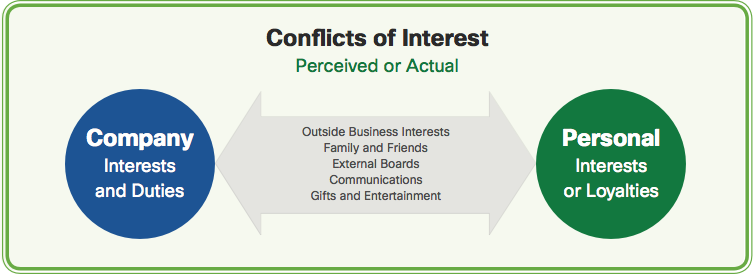


Erlanger’s board faces overhaul if conflict of interest bill becomes law

https://www.beckershospitalreview.com/hospital-management-administration/erlanger-s-board-faces-overhaul-if-conflict-of-interest-bill-becomes-law.html

Image result for conflict of interest

Chattanooga, Tenn.-based Erlanger Health System may have to upend its board of trustees if a bill targeting ties between governing bodies and public hospitals is signed into Tennessee law, according to the Times Free Press.

The bill, which passed the state’s Senate and is moving through its House, aims to protect consumers who live near a county or publicly owned hospital. It would prevent hospital authority trustees and former trustees from signing an employment agreement with an authority until at least 12 months after the trustee’s tenure of service on the board. The bill would not affect private or nonprofit hospitals.

The Times Free Press reviewed a list of current and former trustees from Erlanger to see if anyone would be affected by the bill. A hospital spokesperson told the publication “it would be premature for Erlanger to speculate who this bill impacts at this point.”

After reviewing conflict of interest disclosures trustees have to complete, the Times Free Press found current physician board members could have to choose between ending any financial ties with Erlanger or staying on the 11-member board.

Erangler’s Board Chairman Mike Griffin told the publication having physicians on the board is “a tremendous asset.” He added, “I am hopeful that the bill, in its final form, will not impact physician participation on Erlanger’s board.” 


IN SEARCH OF INSURANCE SAVINGS, CONSUMERS CAN GET UNWITTINGLY WEDGED INTO NARROW-NETWORK PLANS

https://www.healthleadersmedia.com/search-insurance-savings-consumers-can-get-unwittingly-wedged-narrow-network-plans?utm_source=silverpop&utm_medium=email&utm_campaign=ENL_181101_LDR_BRIEFING%20(1)&spMailingID=14541829&spUserID=MTY3ODg4NTg1MzQ4S0&spJobID=1520057837&spReportId=MTUyMDA1NzgzNwS2

Wedged Into Narrow-Network Plans

Despite federal rules requiring plans to keep up-to-date directories, consumers may lack access to clear information about which health plans have ‘narrow networks’ of providers or which hospitals and doctors are in or out of an insurer’s network.

As a breast cancer survivor, Donna Catanuchi said she knows she can’t go without health insurance. But her monthly premium of $855 was too high to afford.

“It was my biggest expense and killing me,” said Catanuchi, 58, of Mullica Hill, N.J.

A “navigator” who helps people find coverage through the Affordable Care Act found a solution. But it required Catanuchi, who works part time cleaning offices, to switch to a less comprehensive plan, change doctors, drive farther to her appointments and pay $110 a visit out-of-pocket — or about three times what she was paying for her follow-up cancer care.

She now pays $40 a month for coverage, after she qualified for a substantial government subsidy.

Catanuchi’s switch to a more affordable but restrictive plan reflects a broad trend in insurance plan design over the past few years. The cheaper plans offer far narrower networks of doctors and hospitals and less coverage of out-of-network care. But many consumers are overwhelmed or unaware of the trade-offs they entail, insurance commissioners and policy experts say.

With enrollment for ACA health plans beginning Nov. 1, they worry that consumers too often lack access to clear information about which health plans have “narrow networks” of medical providers or which hospitals and doctors are in or out of an insurer’s network, despite federal rules requiring plans to keep up-to-date directories.

“It’s very frustrating for consumers,” said Betsy Imholz, who represents the advocacy group Consumers Union at the National Association of Insurance Commissioners. “Health plan provider directories are often inaccurate, and doctors are dropping in and out all the time.”

These more restrictive plans expose people to larger out-of-pocket costs, less access to out-of-network specialists and hospitals, and “surprise” medical bills from unforeseen out-of-network care.

More than 14 million people buy health insurance on the individual market — largely through the ACA exchanges, and they will be shopping anew this coming month.

TREND APPEARS TO BE SLOWING

For 2018, 73 percent of plans offered through the exchanges were either health maintenance organizations (HMOs) or exclusive provider organizations (EPOs), up from 54 percent in 2015.

Both have more restrictive networks and offer less out-of-network coverage compared with preferred provider organizations (PPOs), which represented 21 percent of health plans offered through the ACA exchanges in 2018, according to Avalere, a health research firm in Washington, D.C.

PPOs typically provide easier access to out-of-network specialists and facilities, and partial — sometimes even generous — payment for such services.

Measured another way, the number of ACA plans offering any out-of-network coverage declined to 29 percent in 2018 from 58 percent in 2015, according to a recent analysis by the Robert Wood Johnson Foundation.

For example, in California, HMO and EPO enrollment through Covered California, the state’s exchange, grew from 46 percent in 2016 to 70 percent in 2018, officials there said. Over the same period, PPO enrollment declined from 54 percent to 30 percent.

In contrast, PPOs have long been and remain the dominant type of health plan offered by employers nationwide. Forty-nine percent of the 152 million people and their dependents who were covered through work in 2018 were enrolled in a PPO-type plan. Only 16 percent were in HMOs, according to the Kaiser Family Foundation’s annual survey of employment-based health insurance.

The good news for people buying health insurance on their own is that the trend toward narrow networks appears to be slowing.

“When premiums shot up over the past few years, insurers shifted to more restrictive plans with smaller provider networks to try and lower costs and premiums,” said Chris Sloan, a director at Avalere. “With premium increases slowing, at least for now, that could stabilize.”

Some research supports this prediction. Daniel Polsky, a health economist at the University of Pennsylvania, found that the number of ACA plans nationwide with narrow physician networks declined from 25 percent in 2016 to 21 percent in 2017.

Polsky is completing an analysis of 2018 plans and expects the percent of narrow network plans to remain “relatively constant” for this year and into 2019.

“Fewer insurers are exiting the marketplace, and there’s less churn in the plans being offered,” said Polsky. “That’s good news for consumers.”

Insurers may still be contracting with fewer hospitals, however, to constrain costs in that expensive arena of care, according to a report by the consulting firm McKinsey & Co. It found that 53 percent of plans had narrow hospital networks in 2017, up from 48 percent in 2014.

“Narrow networks are a trade-off,” said Paul Ginsburg, a health care economist at the Brookings Institution. “They can be successful when done well. At a time when we need to find ways to control rising health care costs, narrow networks are one legitimate strategy.”

Ginsburg also notes that there’s no evidence to date that the quality of care is any less in narrow versus broader networks, or that people are being denied access to needed care.

Mike Kreidler, Washington state’s insurance commissioner, said ACA insurers in that state “are figuring out they can’t get away with provider networks that are inadequate to meet people’s needs.”

“People have voted with their feet, moving to more affordable choices like HMOs but they won’t tolerate draconian restrictions,” Kreidler said.

The state is stepping in, too. In December 2017, Kreidler fined one insurer — Coordinated Care — $1.5 million for failing to maintain an adequate network of doctors. The state suspended $1 million of the fine if the insurer had no further violations. In March 2018, the plan was docked another $100,000 for similar gaps, especially a paucity of specialists in immunology, dermatology and rheumatology. The $900,000 in potential fines continues to hang over the company’s head.

Centene Corp, which owns Coordinated Care, has pledged to improve its network.

Pennsylvania Insurance Commissioner Jessica Altman said she expects residents buying insurance in the individual marketplace for 2019 to have a wider choice of providers in their networks.

“We think and hope insurers are gradually building more stable networks of providers,” said Altman.

NEW STATE LAWS

Bad publicity and recent state laws are pushing insurers to modify their practices and shore up their networks.

About 20 states now have laws restricting surprise bills or balance billing, or which mandate mediation over disputed medical bills, especially those stemming from emergency care.

Even more have rules on maintaining accurate, up-to-date provider directories.

The problem is the laws vary widely in the degree to which they “truly protect consumers,” said Claire McAndrew, a health policy analyst at Families USA, a consumer advocacy group in Washington, D.C. “It’s a patchwork system with some strong consumer protections and a lot of weaker ones.”

“Some states don’t have the resources to enforce rules in this area,” said Justin Giovannelli, a researcher at the Center on Health Insurance Reforms at Georgetown University. “That takes us backward in assuring consumers get coverage that meets their needs.”


Federal Appeals Court Puts Chill On Maryland Law To Fight Drug Price-Gouging

https://khn.org/news/federal-appeals-court-puts-chill-on-maryland-law-to-fight-drug-price-gouging/

States continue to battle budget-busting prices of prescription drugs. But a federal court decision could limit the weapons available to them — underscoring the challenge states face as they, in the absence of federal action, go one-on-one against the powerful drug industry.

The 2-to-1 ruling Friday by the U.S. 4th Circuit Court of Appeals invalidated a Maryland law meant to limit “price-gouging” by makers of generic drugs. The measure was inspired by cases such as that of former Turing Pharmaceutical CEO Martin Shkreli, who raised one generic’s price 5,000 percent after buying the company.

The law, which had been hailed as a model for other states, is one of a number of state initiatives designed to combat rapidly rising drug prices. It gave the state attorney general power to intervene if a generic or off-patent drug’s price increased by 50 percent or more in a single year.

If dissatisfied with the company’s justification, the attorney general could have filed suit in state court. Manufacturers would have faced a fine of up to $10,000 and potentially have to reverse the price hike. The generics industry was fiercely critical of the law.

“We are evaluating all options with regard to next steps,” said Maryland Attorney General Brian Frosh in a statement. His office would not elaborate further.

The state could appeal to have the case heard “en banc,” meaning by the full 4th Circuit, with jurisdiction over five states.

Such appeals aren’t commonly granted, but this law could be a strong candidate, suggested Aaron Kesselheim, an associate professor at Harvard Medical School who researches drug-price regulation.

The Friday ruling looms large as other state legislatures grapple with ever-climbing drug prices.

Similar price-gouging legislation has been introduced in at least 13 states this year, though none of those measures became law, according to the National Conference of State Legislatures (NCSL). Three other bills failed to gain passage.

The NCSL also cited the law in a March advisory for states seeking new approaches to regulating drug prices.

The court’s finding could have a chilling effect on such efforts, especially as more state legislatures wrap up business for 2018.

“A negative court ruling will put a damper or a pause on state activities,” said Richard Cauchi, NCSL’s health program director. “Unless this topic is your No. 1 priority of the year, your legislators are juggling multiple bills, multiple strategies. When bill three gets in trouble, they move to bill four.”

The appeals court held that Maryland’s law overstepped limits on how states can regulate commerce — specifically, a constitutional ban on states controlling business that takes place outside their borders. The majority ruling argues that since most generics manufacturers and drug wholesalers engage in trade outside Maryland, the state cannot control what prices they charge.

In a dissenting opinion, the panel’s third judge argued Maryland can regulate the drug prices charged within the state since the law is meant to affect only medications being sold to its own residents.

Kesselheim, in an article published last month in the journal JAMA, argued a similar point.

Regardless, striking down a law on constitutional grounds can be particularly discouraging, suggested Rachel Sachs, an associate law professor at Washington University in St. Louis who researches drug regulations.

“If it had been a rejection on vagueness grounds, that’s something you can cure with a more specific statute,” she said. “But the fact that they said this is unconstitutional poses real concern for other states.”

That’s important. While the federal government has talked a big game on bringing down drug prices, it has done little. Instead, states have taken the lead — spurred by the budget squeeze pricey prescriptions impose on their Medicaid programs and on state employee benefits packages.

But states have far fewer tools at their disposal than does Congress. Most state laws so far tackle only pieces of the problem — targeting a specific drug or particular practice, experts said.

“We’ll get more broad and better evolution on this issue if the federal government decides to take it seriously — which it hasn’t so far,” Kesselheim said.

To be fair, Maryland’s law is only one of a bevy of approaches.

Other states have focused on price transparency laws. In California, drug companies must disclose in advance if a price might increase by more than a set percent and that they justify the increase. Industry has sued to block the California law.

New York has limited what the state will pay for drugs, establishing a process to review if expensive drugs are priced out of step with their medical value.

A number of states have since 2017 passed laws regulating pharmacy benefit managers — the contractors who negotiate discounted drug coverage for insurance plans, but who rarely reveal what level of discount they actually pass on to consumers.

Experts expect that activity to continue, especially as escalating drug prices show little sign of letting up.

“The states are going to keep trying and experimenting,” Sachs added. “This is a problem that isn’t going away.”

Even efforts such as Maryland’s — which targeted price-gouging — will likely remain at the forefront.

“I don’t think this is the end of states trying to do something on price-gouging,” said Ellen Albritton, a senior policy analyst at the left-leaning advocacy group Families USA who consults with states on drug-pricing policy. “It’s such an issue that offends people’s sensibilities. It’s crazy people can do this.”


California Reforms Target Workers’ Compensation Fraud

California Reforms Target Workers’ Compensation Fraud

Image result for Workers’ Compensation Fraud

California is cracking down on graft in the state’s system of medical care for injured workers with two bills recently signed into law by Gov. Jerry Brown.

The reforms will prohibit medical providers who are felons from billing for workers’ compensation care and rein in a court-governed payment system that gave rise to hundreds of millions of dollars in unsanctioned treatment.

Lawmakers who introduced the bills cited an investigation by Reveal from The Center for Investigative Reporting that examined more than $1 billion in alleged fraud in the medical system for injured workers.

Reviewing more than a dozen prosecutions and analyzing state data, the investigation found that alleged scams affected more than 100,000 injured workers. Many were monolingual Latinos who were targeted in aggressive marketing efforts in Southern California. They encountered everything from kickback-fueled spinal surgeries to fraudulent providers to $1,600 tubes of pain cream.

Alleged scammers included felons and doctors banned from billing Medicare for malfeasance. Many fraud defendants exploited a feature of California’s workers’ compensations system that let them file a “lien,” or a demand for payment, for services after insurers refused to pay. They included therapies like shock wave pain treatments or unwanted drugs, such as the pricey pain creams.

The new laws would ban certain medical providers with troubled pasts from treating injured workers and also aim to limit the avalanche of liens that clog the docket in two dozen workers’ compensation courts throughout the state.

Christine Baker, director of the Department of Industrial Relations, which administers workers’ compensation, said she hopes the laws improve care for people who seek help for an on-the-job injury.

“I think both abuses and fraudulent activities prey on the most vulnerable populations and we’re hopeful that appropriate treatment will be provided to workers when needed,” Baker said. The laws “should reduce costs, because a lot of costs are tied to fraudulent activity, and that frees up dollars for the injured workers.”

Vermont becomes first state to require drug makers justify price hikes

Vermont becomes first state to require drug makers to justify price hikes

Despite opposition from the pharmaceutical industry, Vermont late last week became the first state in the country to require drug makers to justify price hikes for medicines.

Pasadena hospital broke the law by not reporting outbreak, health officials say

http://www.latimes.com/business/la-fi-huntington-scopes-20160602-snap-story.html?utm_campaign=CHL%3A+Daily+Edition&utm_source=hs_email&utm_medium=email&utm_content=30236320&_hsenc=p2ANqtz-_lm3ZAqJytoTYRP6IJ–uGS1B69RXQeIf-4x1ap_m-lNBp0yTz31E9RiGgAwb2j7q15n-l_WjlHn2a8eubwO5kihmvWw&_hsmi=30236320

Olympus scope

Pasadena’s Huntington Hospital broke state law by not quickly reporting a suspected deadly outbreak last year, according to a letter by city officials.

The hospital released the letter this week, as well as the results of the city’s investigation into the outbreak caused by dirty scopes, which sickened 16 patients, including 11 who died.

City health officials did not investigate the cause of the patients’ deaths, many of whom were seriously ill. The officials noted in the report that only one patient’s death certificate listed as a cause the dangerous drug-resistant bacteria that contaminated the scopes and sickened the patients.

Abortion down 14 percent in Texas since new restrictions closed clinics

http://www.latimes.com/nation/sns-tns-bc-texas-abortion-20160317-story.html?utm_campaign=KHN%3A+First+Edition&utm_source=hs_email&utm_medium=email&utm_content=27439261&_hsenc=p2ANqtz–P_B2qtpKG332eZBqQ6kw0MBMfELH2QtqQszxn9NirjAW0L745tm2JeQTCmTJnn-ONl_TvdQ87ZncGJbwWSaGrSTgKnQ&_hsmi=27439261

Texas

Pending Obamacare U.S. Supreme Court decision won’t affect Hawaii

http://www.bizjournals.com/pacific/news/2015/06/24/pending-obamacare-u-s-supreme-court-decision-wont.html?ana=e_du_pub&s=article_du&ed=2015-06-24&u=FAuoHGaGEPdmk4X6khnaiw045b16af&t=1435241891

The U.S. Supreme Court building in Washington, DC.