M&A, debt dampen US healthcare risk profile, report finds

https://www.healthcaredive.com/news/ma-debt-dampen-us-healthcare-risk-profile-report-finds/540922/

Image result for M&A, debt dampen US healthcare risk profile, report finds

Dive Brief:

  • Demand for healthcare products and services has helped to keep wind in the sales of U.S. healthcare companies, but continuing deal activity and increasing issuance of high-grade bonds to fund large strategic acquisitions and capital projects is causing credit ratings to trend south, Fitch Ratings reports
  • Regulatory changes, pricing pressures, pushes from activist investors and low interest rates will likely spark more horizontal mergers and acquisitions, as well as vertically integrated deals, according to the ratings agency.
  • “We view M&A and investor appetite for high quality paper, particularly during the late stages of the economic cycle, as major contributors to the risk in investment-grade bond issuance,” Fitch says. “However, prospects of enhanced cash flow generation and greater efficiencies of scale are not fully offsetting increased leverage and this is altering the long-term credit risk profile of the sector.”

Dive Insight:

Other pressures fueling healthcare M&A include technological innovation and consumer-centricity, according to a recent PwC report. The largest deal in the third quarter of 2018 was RCCH Healthcare Partner’s $5.6 billion purchase of LifePoint Health. The quarter also saw HCA Healthcare pick up Mission Health for $1.5 billion.

Overall, though, the quarter marked the fewest number of deals since the first quarter of 2017. Value of deals also declined compared to the same period the previous year.

The slowdown in M&A includes deals among hospitals and health systems. The third period saw just 18 deals, 38% fewer than the 29 in Q3 2017, according to Kaufman Hall. The turndown suggests providers are looking at options other than mergers and acquisitions to achieve strategic aims.

Over the past 10 years, the number of investment grade bonds in healthcare has been growing at an 18% compound annual growth rate, nearly tripling in size to $609 billion by the end of September, according to Fitch. Currently, 58% of those outstanding bonds in the sector have ratings in the BBB category, compared with 1% at the end of 2009.

Roughly half of all outstanding IG bonds in healthcare are held by 10 companies, including CVS Health and Cigna. CVS took out $40 billion in loans to help fund its $67.5 billion purchase of Aetna, resulting in an A/rating watch negative. Cigna issued $20 billion worth of bonds to help cover its $67 billion acquisition of Express Scripts. Cigna’s current credit rating is BBB/RWN.

Fewer than 10% of BBB-rated companies have a BBB/negative rating. Among those are two medtech companies, Becton Dickinson and Bio-Rad Laboratories.

Fitch recently lowered Cardinal Health’s rating BBB+/negative to BBB/stable over concerns of higher than usual leverage following recent deal activity.

Moody’s Investor Services this year revised its outlook for the nonprofit and public hospitals sector from stable to negative. Moody’s warned facilities are “on an unsustainable path” due to high spending and low growth of revenues. 


Managing across conflicting business models

https://us17.campaign-archive.com/?u=526c5e99ee0439b6f83f7c051&id=1f51eaa989

Recall that over the past few weeks, we’ve been sharing our framework for thinking through the path forward for traditional health systems, as they look to drive value for consumers. We began by describing today’s typical health system as “Event Health”, built around a fee-for-service model of delivering discrete, single-serve interactions with patients. We then proposed the concept of “Episode Health”, which would ask the health system to play a coordinating role, curating and managing a range of care interactions to address broader episodic needs. Finally, last week we shared our vision for Member Health, in which the system would re-orient around the goal of building long-term, loyalty-based relationships with consumers, helping them manage health over time. In this broader conception, the health system would “curate” a network of providers of episodes, and events within those episodes, and ensure that the consumer (and their information) moves seamlessly across care interactions.

As we mentioned earlier, most successful health systems will play a combination of these roles at the same time, pursuing strategies that allow them to manage episodes while moving closer to a risk-based model that gives them the ability to create a member value proposition for consumers. As the graphic below illustrates, however, that pluralistic approach will create some important tensions for the health system.

Episode Health is fundamentally a fee-for-service approach—these systems will become specialists in delivering specific episodes (e.g., joint replacement), and will seek to drive increased volume through their model. That may not be an ideal outcome on the Member Health side of the business, however, where more episode volume could mean lower profitability, given the capitation-like incentives of “owning lives”. That’s a tension that faces every health system with its own health plan—even systems that have been pursuing both strategies for years still find it challenging to manage across conflicting incentive models. (Witness Intermountain Healthcare, long a pioneer of the Member Health model, which is in the midst of a structural overhaul to allow it to better manage across the two businesses.)

Recognizing the tensions inherent in shifting away from Event Health toward more comprehensive approaches is critical for organizations looking to make the leap forward. Health systems run the risk of being doomed by their own success if they don’t take steps to realign operating structures, administrative and clinical incentive schemes, and even market-facing branding to navigate the complexity inherent in running parallel business models.


11 headwinds facing hospitals and health systems

https://www.beckershospitalreview.com/hospital-management-administration/11-headwinds-facing-hospitals-and-health-systems.html

Related image

It’s not all bleak and this is part of a larger talk on healthcare as a zero sum game. But here are 11 headwinds facing systems.

1. Pharmaceutical costs particularly non-generic.

2. Payers expanding into providers and combining with providers.

3. Payer market share.

4. Health IT and cybersecurity costs.

5. Labor costs and a labor intensive business.

6. High costs of bricks and mortar.

7. Medicare as a larger percentage of health system revenue and Medicare reimbursement softening now and over time as federal deficits rise.

8. Slowing overall healthcare inflation as hospital costs rise.

9. Siphoning off of better paying commercial patients.

10. Siphoning off of profitable ancillaries.

11. Entry of big technology firms into healthcare.

4 hospital business models of the future

https://www.beckershospitalreview.com/hospital-management-administration/pwc-4-hospital-business-models-of-the-future.html?origin=cfoe&utm_source=cfoe


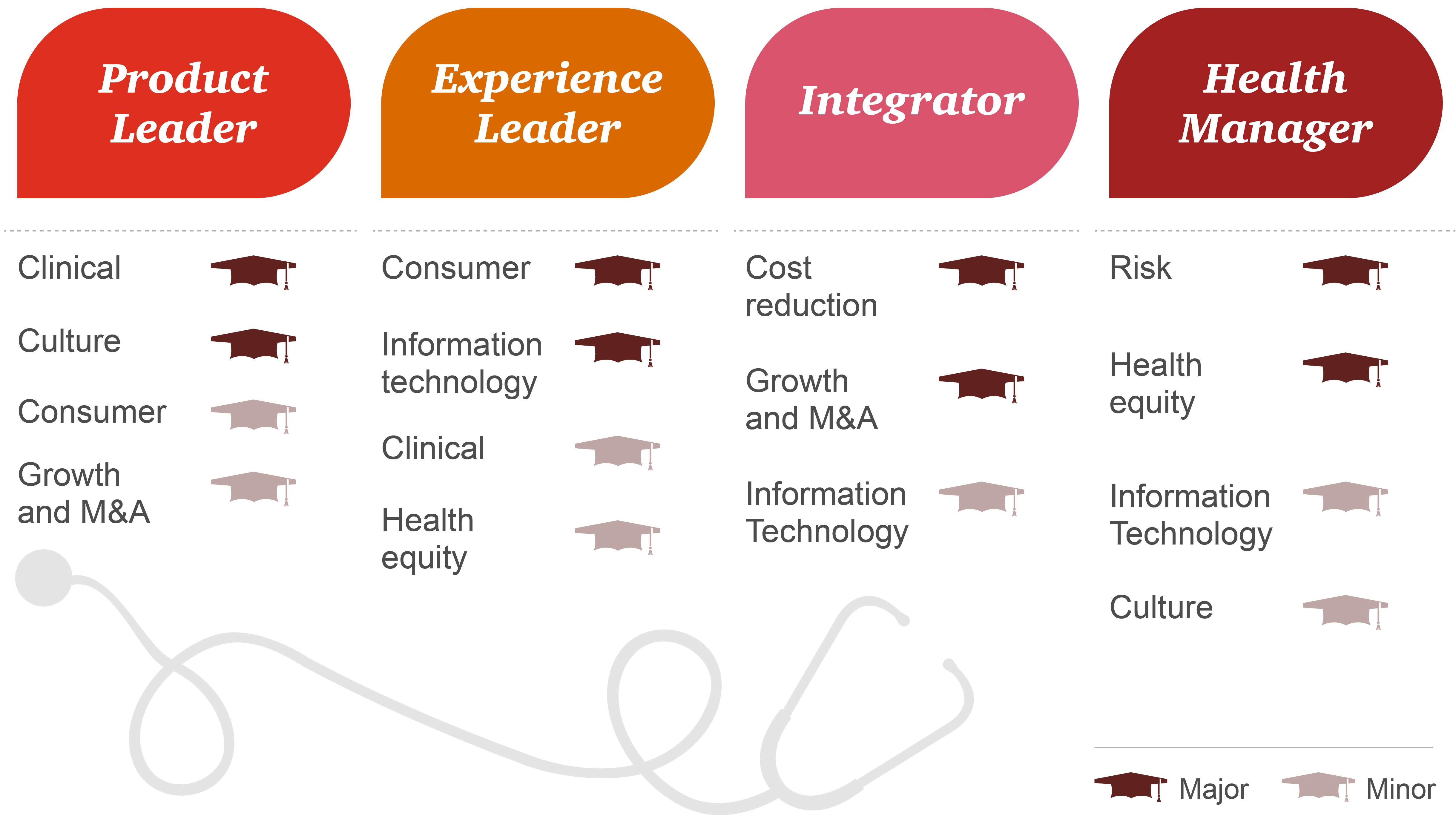
For hospitals, the million-dollar question is, “How do we adapt to the changing needs of the healthcare industry and remain fiscally stable?” PwC’s Health Research Institute articulates four potential answers to that question in a report published Oct. 4.

Here are the four business models identified by PwC’s HRI as successful strategies for hospitals over the next decade:

1. The product leader. Under this model, hospitals are focused on delivering top-notch, advanced care. Best-in-class care is the core product. This model will focus on specific healthcare needs, particularly those that may be costly or complex. Whole patient care, low-cost options and a large footprint are not the focus. This model is focused on the product and the brand and will build scale using technology like telehealth. It relies on partnerships with other provider types for referrals and new patients.

2. The experience leader. This model is focused on building the best possible customer experience. It relies on patient retention and loyalty. This is built on offering consistency and convenience. A focus on wellness, patient preferences and cost transparency is key. Offering the lowest cost option isn’t a top priority, so long as consumers understand what goes into the pricing and get what they are looking for.

3. The integrator. This business model focuses on offering the best value option to consumers via scale and scope. This is the largest of the business models and will likely require a multiregional or national presence. The top focus isn’t the brand, however. Instead, it’s about offering low-cost options, which will require working with providers outside of the hospital and aligning economic incentives to keep prices down.

4. The health manager. The last model puts a premium on the health of populations. Its focus is on keeping complex populations out of high-cost settings by addressing social determinants of health. This model requires a broad understanding of populations, a balance of risk and health equity, and partnership with the public sector. It will require hospitals to take on the broadest definition of healthcare to succeed, including mental, social and logistical supports for patients.

Learn more about PwC’s analysis here.

https://www.pwc.com/us/en/health-industries/health-research-institute/provider-systems-future.html


Readers Respond: Trinity Health’s President on Bond Ratings

Readers Respond: Trinity Health’s President on Bond Ratings

Image result for hospital bond ratings

In last week’s edition of the Weekly Gist, I shared an exchange I’d had with the CFO of one of our clients during a meeting of their health system’s board of directors. The topic was the importance of the system’s AA bond rating to the board, and the impact that maintaining that rating might have on the strategic flexibility of the system. I wrote, “As big strategic decisions loom (shifting the business model, taking on risk, responding to disruptive competitors), it’s worth at least asking whether we’ve passed the time for “keeping dry powder”, and whether systems are being held back by conservative financial management.”

One of the true pleasures of our work at Gist Healthcare is engaging in an ongoing dialogue with our clients, readers, and colleagues across the industry. Shortly after sending out the Weekly Gist last week, we heard from long-time friend Mike Slubowski at Trinity Health. He shared his somewhat different (and much more informed!) view of the importance of bond rating to hospital systems, and was kind enough to engage in a brief Q&A over email to expand on his thoughts. We hope you’ll find his perspective as enlightening as we have.


Gist Healthcare: How do you think about financial strength for a health system? What characteristics and metrics are most important?

Mike Slubowski: Financial strength is ultimately measured by strong operating cash flow—is the system generating enough cash to cover expenses including debt service, fund depreciation, and to meet capital spending requirements? Operating margin, days’ cash, and leverage ratios are also important metrics of financial strength. We compare these metrics to published ranges from Rating Agencies on rating categories. Finally, what is the organization’s profitability or loss on Medicare? Is the cost structure of the organization (as measured by cost per adjusted discharge or similar metrics) competitive and attractive to payer and purchasers, or is it a high cost organization that’s been living off high commercial payment rates because of its market relevance? That will come back to bite them at some point in the not-too-distant future.  Finally, financial strength is simply a means to an end. In the case of not-for-profit health systems, our mission is to improve the health of the people and communities we serve. Are we using that financial strength to make a measurable difference for our communities? That question has to always be pondered.

In my opinion a system’s bond rating is very important. Our organization strives to maintain an AA rating

GH: How important is the bond rating, and the broader evaluation of the system’s financial outlook by the banking community?

MS: In my opinion a system’s bond rating is very important. Our organization strives to maintain an AA rating. While it is true that the interest rate spreads between, say, an AA and an A rating are small, the reality is that a positive financial outlook and rating from the rating agencies is a “Good Housekeeping Seal of Approval” for a not-for-profit health system. In most instances, acquisitions in not-for-profit healthcare are accomplished by member substitutions, and rather than cash changing hands, the entity being acquired agrees to merge because of future capital investment commitments made by the acquiring entity and their belief that the acquirer will bring economies of scale. They aren’t going to join a system if it has a weak credit rating, because they’d be concerned that the acquiring system wouldn’t be able to fulfill the capital investment commitment.

GH: What are some considerations you’d recommend to health systems thinking about “trading off” a strong bond rating to gain strategic flexibility?

MS: A difficult question, to be sure. First of all, it depends on your starting point. There’s a lot more risk in going from an A- to BBB rating than, say, an AAA rating to an AA rating. Second, it really depends on what strategic opportunities the organization is pursuing—are they opportunities within the wheelhouse of the organization’s leadership competencies? There have been a lot of providers that have ventured into other businesses, such as insurance, long-term care, physician practices and other for-profit ventures, and they have lost a lot of money because they spread themselves too thin and didn’t know how to successfully manage these different businesses. Does the opportunity provide more market relevance? Is the new opportunity accretive? Is there a solid business plan that gives the organization confidence that the new opportunity will be accretive within a defined timeframe? There are a lot of “hockey stick” business plans (i.e., up front losses that predict large profits in later years) that never deliver the desired results. So rating agencies and investors are always wary of these wildly optimistic business plans.

I’m not suggesting that organizations become so conservative that they don’t take risks on strategic opportunities—but it’s important to go into these new ventures with eyes wide open. I think it is important for health care organizations that have been acute-care focused to develop a continuum of services that grow cost-effective home-based services, primary care and other ambulatory services, as well as consumer-focused digital health solutions. They also need to develop clinically-integrated provider networks that are positioned to assume risk for cost and outcomes as payers shift from fee-for-service to value-based payment. Otherwise they will be one-trick-pony dinosaurs while the rest of the world around them is transforming and diversifying.

I’m not suggesting that organizations become so conservative they don’t take risks…but it’s important to go into new ventures with eyes wide open

GH: As health systems take on more risk (strategic, actuarial, operational), how can they best make the case to their financial stakeholders (bondholders, shareholders, public funders) to justify increasing risk?

MS: I think that historical track records are important. Does the organization have an experienced and competent leadership team? Do they recruit leaders with needed skills for new businesses? How has the organization performed with previous new ventures? Have they been able to adjust if things go south? Do their business plans include a sensitivity analysis with upside and downside potential, along with immediate actions they would take if performance does not meet the plan?  Does the opportunity improve market relevance and create a diversified portfolio and/or a continuum of services? At the end of the day, confidence in an organization and its leadership comes from their track record.


Envisioning a range of new roles for the health system

https://gisthealthcare.com/weekly-gist/


Over the past few weeks, we’ve been sharing our framework for thinking through the path forward for traditional health systems, as they look to drive value for consumers. We began by describing today’s typical health system as Event Health”, built around a fee-for-service model of delivering discrete, single-serve interactions with patients. We then proposed the concept of Episode Health, which would ask the health system to play a coordinating role, curating and managing a range of care interactions to address broader episodic needs. Finally, last week we shared our vision for Member Health, in which the system would re-orient around the goal of building long-term, loyalty-based relationships with consumers, helping them manage health over time. In this broader conception, the health system would curate a network of providers of episodes, and events within those episodes, and ensure that the consumer (and their information) moves seamlessly across a panoply of care interactions over time.

This week we bring those three, distinct visions for the role of the health system together in one framework, shown below. A couple of points are worth mentioning here. To begin, our view is that health systems face a fundamental choice over the near term: either begin to embrace the broader aspiration of evolving toward Episode Health and Member Health or become reconciled to the reality of a future as a subcontractor of events and being part of some other organization’s curated network. There’s nothing wrong with being a subcontractor, as long as your cost and quality positions allow you to win business and thrive. You might be the best acute care hospital choice in the market, or the most efficient surgery provider, or the best diagnostic center. But competition will be intense among those subcontractors and earning the business of those who coordinate episodes and control referrals will be increasingly demanding.

Most health systems have already begun to look beyond Event Health, investing in strategies that allow them to span the full continuum of care. Other systems have pushed even further, into the “risk business”—looking to become Member Health and take on the role of managing a consumer’s care across time. But contrary to common wisdom, this evolution does not require a binary choice. Systems are not moving “from one canoe to the other”; rather, most successful systems will play a combination of all three roles at the same time, in perpetuity. While it’s always worth evaluating whether others might be more efficient providers of some Event Health services (diagnostics, rehab, and so forth), most systems will want to maintain a robust base of providing Event Health, even as they embrace a more comprehensive role.

Finally, there is a space we describe as “Beyond Health”, which comprises all of the additional components of consumer value delivery which may be beyond the ability of most systems to handle on their own. Most notably, these include services that address many of the social determinants of health—housing, nutrition, transportation, and the like. Our recommendation is that health systems look to partner with other organizations at a local and national level to address issues that, however critical, lie beyond their ability to fully solve on their own.

Next week we’ll begin to share some additional implications of our Event-Episode-Member Health framework and discuss the operational challenges that face health systems looking to make this evolution.

MARKET SHARE STILL MATTERS: 3 WAYS TO WIN

https://www.healthleadersmedia.com/strategy/market-share-still-matters-3-ways-win

Related image


For CEOs, market share is critical. But measurement of it, and tactics to grow it, are getting more complicated as patients connect with providers in more sophisticated ways.

Health system CEOs have always worked to meet their mission of caring for the poor and underserved and improving the health of their community. They often cite that mission as their top priority. But in truth, they are evaluated by how well they grow revenue and margin, both of which come through expanding market share.

Market share used to be easy to define. CEOs counted on a reliably increasing reimbursement model that exceeded inflation and an aging population that meant more hospital days every year. No longer. But even though market share growth is much more complex now, failing to achieve that growth could mean termination.

To win the market share battle, healthcare organizations must first redefine what it is (see the sidebar on new market share proxies) and then build strategies that take advantage of the shifts in healthcare delivery. Here’s how three healthcare leaders are doing it.

NORTHWELL: ‘THE CONSUMER IS THE DETERMINANT OF SUCCESS’

Michael Dowling, president and CEO of Northwell Health in Great Neck, New York, acknowledges the need to provide access, value, and convenience for consumers who are increasingly looking for a wide-ranging array of services offered by a single health system. The key to this strategy is the consumer as the focal point of healthcare decision-making.

Northwell is currently investing heavily in home health and digital care access, including a major initiative in telemedicine, but tying it all together into a seamless consumer experience is critical.

“You need hospitals as anchors, but the strategy is very consumer-focused in providing access and convenience,” Dowling says. “We’ve been doing this for 10 years, and it’s one of the reasons we’ve grown to being one of the biggest players in the New York City market. It’s the interconnection of all these pieces that makes all the difference.”

Although it’s not a perfect analogy, Dowling says Northwell wants to emulate Starbucks’ approach to market coverage. It’s not a location on every street corner, but it’s close.

“The traditional way of looking at market share isn’t valid anymore.”

—Chris Van Gorder

Also, getting critical market share mass in a variety of modalities is necessary to becoming the viable narrow network that employers and insurers are looking for. Smart health systems are spending more on smaller facilities, like micro-hospitals, or on freestanding ERs, homecare, urgent care centers, and telehealth capabilities. Such investment aims to meet the everyday health needs of consumers, not just provide for their increasingly rare inpatient stays.

This means focusing on organic growth that complements or even stands alone from the inpatient realm rather than buying hospitals, for example. Specialized areas of investment in both inpatient and outpatient care are the usual profitable service lines, such as orthopedics, neurology, and cardiac care, says Dowling.

He says he seeks two kinds of market share when it comes to reimbursement: Medicare and Medicaid, and commercial. Both kinds are needed to serve the community comprehensively, he says, but only one of the two makes a margin. Patients don’t see that distinction, though, and Northwell must serve them all.

“[Commercial] is what everyone’s going after,” he says. “So, you try to be the preferred provider. You take market share from competitors by developing the physician relationship and by the expansion of ambulatory. We’ve built a massive ambulatory network with over 650 locations. It’s a marketing and consumer experience strategy. If patients are not happy with experience, they will go somewhere else, so it’s multifaceted.”

Hospital-centric organizations used to measure market share in terms of inpatient volume or discharges, but as more services have moved outside the hospital environment, those have become less reliable measures of success.

“We’re all moving toward understanding that the consumer is the determinant of success, rather than just the patient care business,” says Dowling. “The consumer is going to be determining how they want care and where, and since more of it is not needed in the hospital, you have to create locations for cancer care and imaging and surgery where it can be done on an ambulatory basis.”

SCRIPPS: ACCENTUATE YOUR STRENGTHS

Chris Van Gorder, the longtime president and CEO of Scripps Health in San Diego, is content with a level of uncertainty around market share, and says that growing it depends partially on instinct in a time of upheaval.

“Market share’s an odd thing. Everyone still wants to gain commercial market share, of course,” he says. “But today we’re not so focused on the inpatient side. We’re doing total hips on the ambulatory side. So, the traditional way of looking at market share isn’t valid anymore.”

Even though the discharge-based methodology isn’t as relevant as it used to be, it’s still important. Rating agencies still use discharges as an important tool to measure financial health, and with the relative lack of precise alternatives, discharges can be an important factor in how they determine borrowing capacity and interest rate terms for healthcare organizations.

“As an industry, we have to figure that out,” Van Gorder says. “Rating agencies use discharges, but you could be reducing that number and getting stronger as an organization.”

Scripps went through its rating agency sessions about three months ago and has seen a small decline in those traditional market share measures, but Van Gorder says those measures don’t tell the full story anymore. Scripps’ market is dominated by three major players: itself, Kaiser Permanente, and Sharp HealthCare, so fluctuations in discharges are often small and at the edges.

Rating agencies are smart enough to recognize that healthcare is changing, Van Gorder says. For example, they know it’s the right strategy to move to ambulatory, and Scripps experienced growth in covered lives in its health plan, which is part of Scripps’ strategy to build its own narrow network. But even rating agencies are frustrated that there’s no metric to enable consistent comparisons, he says.

“We still talk about market share because I still need to make sure the hospitals are occupied enough. Half-full hospitals are the fastest way to go bankrupt,” he says.

Scripps is strong in cardiovascular services, particularly interventional cardiology. “So, we focus on maintaining our strength in that area and in ortho, which is becoming much more ambulatory than it used to be,” says Van Gorder.

One area where it’s not as strong is cancer, he says, even though Scripps is a major oncology provider in San Diego. To maintain and even buttress that market share, the health system has partnered with Houston’s MD Anderson Cancer Center to build a new comprehensive cancer program that started treating patients this summer.

“[MD Anderson] is building a network strategy, and they have 23,000 people just working on cancer, so we are taking advantage of their knowledge to make us stronger,” he says. “It was a market share play, but it’s much more than just that, with increased access to research and clinical trials.”

Facing fierce competition in ambulatory, Van Gorder says the health system is focusing on areas where it’s strongest and trying to grow there.

In all areas, he says Scripps must aggressively focus on cutting costs, because he sees cost as a proxy for quality. In fact, he notes, cost may be the major limitation for most health systems in growing market share for the foreseeable future.

“People are paying more out of pocket to come in, and insurance companies have gotten so good at narrow networks,” he says. “People tell me you can’t lead with cost, and I say no. Cost is a quality indicator.”

GRADY: INVESTING IN SPECIALTY SERVICES

Safety-net hospitals, such as Grady Health System in Atlanta, have historically been overrun by mission patients—that is, patients who do not bring margin, such as Medicaid patients. But its leadership has recognized that the health system needs to be more competitive in commercial patients.

For Grady, that hasn’t meant investment in traditional service lines, but instead investment in highly complex tertiary and quaternary services that can’t easily be found elsewhere in its market, says John Haupert, its president and CEO. With seed funding from philanthropic sources, Grady has made multimillion-dollar investments in stroke and neurological surgery, interventional cardiology, and surgical subspecialties.

“In our case, it was a matter of survival. If all your patients are Medicaid or unfunded, you’re not going to be in business. Part of Grady coming back to life 10 years ago involved developing strategies to grow in funding the mission,” says Haupert.

The complex cases that have come from Grady’s recent investments weren’t previously present in the market. Unlike many organizations, Grady needed to create additional inpatient capacity to maximize those investments in capital and talent. It will soon be operating around 700 occupied beds; 10 years ago, it was barely operating 400. It’s building new outpatient facilities as well, expanding ambulatory surgical and oncology capacity across the street to free up space in the main facility where its cancer center is now.

“In the next three years, we’ll have 750 beds in operation,” Haupert says. “We’ve gone from 9% to 20% commercial. That helps with sustainability.”