The CBO report raises five serious questions

https://www.washingtonpost.com/blogs/right-turn/wp/2017/03/14/the-cbo-report-raises-five-serious-questions/?_hsenc=p2ANqtz-8z9Sylks_wibB_-6SdY9AQGBM3g03O-yrykjFdnlayePaRf6KdLp5erCdoZM5RZvXTKhGTRTUJKrOfKMio5kAnhglcYQ&_hsmi=45675040&utm_campaign=KHN%3A%20Daily%20Health%20Policy%20Report&utm_content=45675040&utm_medium=email&utm_source=hs_email&utm_term=.86ffca0b81b7

The Congressional Budget Office report on the American Health Care Act — showing that as many as 24 million people could lose health insurance, Medicaid would be drastically cut and older, poorer Americans would suffer the most — leaves us with a number of questions:

Why did House Speaker Paul Ryan (R-Wis.) force votes in two committees and then spring the disturbing CBO score, revealing that members voted rashly (not knowing the effects) or don’t care about loss of coverage and regressive consequences? Perhaps he is so convinced that his members will vote for anything that he made no effort to spare them from votes they one day (Election Day 2018, for example, and especially in districts Hillary Clinton carried) will regret. It is far from clear what he thought he was going to “get away with.” Unlike President Trump, he cannot merely dismiss inconvenient facts and plunge forward. Well, he can, but he puts his members’ seats and his own speakership at risk.

What’s the point of passing something so obviously unacceptable to the Senate? Sen. Susan Collins (R-Maine) blasted the effort: “The CBO estimate that millions of Americans could lose their health insurance coverage if the House bill were to become law is cause for alarm. It should prompt the House to slow down and reconsider certain provisions of the bill.” Her colleague and Trump supporter Sen. David Perdue (R-Ga.) echoed Sen. Tom Cotton’s advice on Sunday to “get this right.” Sen. Lindsey Graham (R-S.C.) argued, “[L]et’s say the CBO is half-right. That should be cause for concern. So, rather than attacking the CBO as the exclusive way of moving forward, I would think the prudent thing for the party to do is to look at the CBO report and see if we can address some of the concerns raised.” Sen. Bill Cassidy (R-La.) scoffedat the notion the bill would really save money. “Society is going to pay for health care whether it’s through insurance or not,” he remarked.

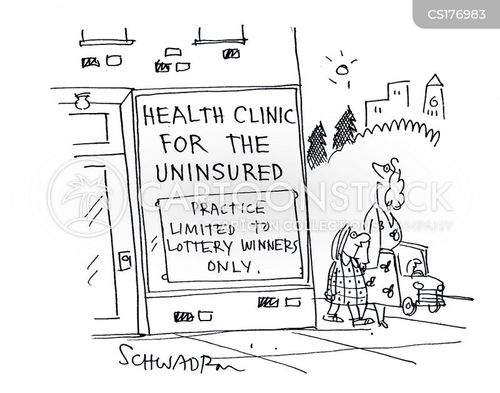
 

Repealing the Affordable Care Act

https://www.brookings.edu/blog/unpacked/2017/03/08/repealing-the-affordable-care-act/?utm_campaign=Economic%20Studies&utm_source=hs_email&utm_medium=email&utm_content=45259936

Image result for brookings institute

THE ISSUE: If Congress rejects the new House Republican-backed replacement for the Affordable Care Act (ACA), the full repeal long advocated for by many Republicans could be their next option.

A straight ACA repeal would leave an estimated 20+ million people without health coverage.

THE THINGS YOU NEED TO KNOW

  • Republicans have long advocated for repealing the ACA and if their new replacement isn’t approved, that plan could soon be put into motion.
  • The ACA provides coverage, and subsidies towards coverage, to people who previously couldn’t get health insurance through the individual market.
  • A straight ACA repeal would leave an estimated 20+ million people without health coverage.
  • If the ACA is repealed, many lower-income Americans (earning a maximum family income of about $33,000) participating in Medicaid, which was expanded under the ACA, would lose health coverage.
  • Many individuals with pre-existing medical conditions, previously unable to get health insurance, would also lose coverage.
  • The ACA also benefits health insurance industry by stabilizing coverage, and provides assurance to state hospitals that patients have coverage of some kind.
  • It is incumbent upon Republicans to provide a clear plan and implement it quickly in order to stabilize the markets and assure Americans that whatever replaces the ACA will be at least as good and at least as affordable as their current plans.
  • Polling on repeal shows that people are unhappy with the ACA, but not with their coverage. They most frequently criticizes the cost and the availability of coverage.
  • Republicans are faced with a challenge: Americans don’t just want repeal, they want a replacement that is comprehensive and affordable.

CBO: Republican healthcare bill would cover millions fewer than ACA but reduce federal deficit

http://www.fiercehealthcare.com/aca/cbo-republican-healthcare-bill-would-cover-millions-fewer-than-aca-but-reduce-federal-deficit?mkt_tok=eyJpIjoiTW1OaFl6TXlZVFF6WldKayIsInQiOiI3eHNMN1ZraGpJWHJ0eUFFRmdzaDRjVFVsOXBpV0VKVzdtWlU1UmxTbVZWRkpnMDhEN0Rrb3cyZlwvM0NmZnFJMXZTOG1KYXlLRHc0YWNUQzA3MmhpOVNQRFN4WmNsNUZVQmNQTGdPWE5UNUczUGppRUFGZ2dwelltaldGXC9IM3pWIn0%3D&mrkid=959610&utm_medium=nl&utm_source=internal

capitol

The Congressional Budget Office on Monday released its highly anticipated score of House Republicans’ healthcare bill, finding that it would increase the number of uninsured individuals by millions, but also lower individual market premiums in the long run and decrease the federal deficit.

Congress uses the CBO’s cost estimates to evaluate the effects of any major legislation, and policymakers were particularly eager to get its estimate for the American Health Care Act given the high political stakes associated with the bill.

Here’s a brief rundown of the CBO’s estimates (PDF):

  • In 2018, 14 million more people would be uninsured under the GOP bill than under the Affordable Care Act—mostly due to the repeal of the individual mandate penalties. By 2026, that number would swell to 24 million because of changes to subsidies in the individual market and in the Medicaid program.
  • Relative to projections for the ACA, the Republicans’ bill would lead to higher average premiums in the individual market before 2020—15% in 2018 and 20% in 2019—and lower average premiums after that. The CBO notes, though, that premium changes under the new proposal would differ “significantly” for people of different ages, given the bill’s provision that allows insurers to charge older customers up to five times more for coverage.
  • Enacting the legislation would reduce federal deficits by $337 billion from 2017 to 2026, with the largest savings coming from reductions in Medicaid spending and eliminating the ACA’s subsidies for individual market customers. The largest costs, on the other hand, would come from the bill’s elimination of many of the ACA’s taxes and its creation of a new tax credit for health insurance.
  • The CBO estimates that the individual market would probably be stable in most areas under either the ACA or the AHCA. While tax credits under the newly proposed bill would be less generous than the ACA’s subsidies, other changes such as grants to states from the Patient and State Stability Fund would lower average premiums enough “to attract a sufficient number of relatively healthy people to stabilize the market,” the agency said.

Before the score emerged, the Trump administration had already cast doubt on the merits of the CBO’s projections. White House Press Secretary Sean Spicer pointed out during a press briefing Monday that the agency had originally projected 24 million people would be enrolled through the Affordable Care Act exchanges as of 2016, but the number ended up being only about 10.4 million.

“The CBO was off by more than half last time,” he said.

Later, he acknowledged that some senators are likely to look at the CBO’s score when evaluating the American Health Care Act, and it’s important to remind them of the agency’s past track record.

Previously, The Commonwealth Fund issued an analysis that sought to dispel such criticism of the agency’s estimates about the ACA. It concluded that while the CBO overestimated marketplace enrollment and costs and underestimated Medicaid enrollment, overall its projections were “reasonably accurate,” and closer to realized experience than the estimates of many other prominent forecasters.


CBO report predicts 24 million would lose coverage by 2026 under American Health Care Act

http://www.healthcarefinancenews.com/news/cbo-report-predicts-24-million-would-lose-coverage-2026-under-american-health-care-act

Image result for CBO report predicts 24 million would lose coverage by 2026 under American Health Care Act

An estimated 14 million people would lose coverage under the American Health Care Act, a number that would rise to 24 million by 2026, according to a Congressional Budget Officer report released Monday afternoon.

Most of the initial loss would be due to repeal of the federal mandate for individuals to buy coverage, due to lack of a financial penalty and higher premiums.

Uninsured numbers would rise due to the bill’s repeal of Medicaid expansion. Some states would discontinue the expansion. Also per beneficiary spending caps would affect coverage, the CBO said.

Due to a lack of subsidies for insurance purchased in the nongroup market and to the Medicaid program, the increase in the number of uninsured people relative would rise to 21 million in 2020 and then to 24 million in 2026, the CBO said.

“In 2026, an estimated 52 million people would be uninsured, compared with 28 million who would lack insurance that year under current law,” the CBO said.

Premiums are expected to rise 15 to 20 percent in 2018 and 2019.

Older Americans would pay five times the amount on their premiums as compared to younger enrollees.


CBO ignites firestorm with ObamaCare repeal score

http://thehill.com/policy/healthcare/323652-cbo-millions-would-lose-coverage-under-gop-healthcare-plan

Image result for congressional budget office

The Congressional Budget Office (CBO) on Monday projected that the number of people without health insurance would grow by 14 million in 2018 under the Republican ­ObamaCare replacement bill, with that number rising to 24 million in a decade.

The bombshell estimate was larger than even many analysts had predicted, stirring fresh doubts about whether the legislation can pass ahead of a possible vote in the House next week.

Democrats highlighted President Trump’s campaign promises to provide “insurance for everybody,” saying the bill falls woefully short.

“The CBO’s estimate makes clear that TrumpCare will cause serious harm to millions of American families,” Senate Democratic Leader Charles Schumer (N.Y.) said in a statement.

“Tens of millions will lose their coverage, and millions more, particularly seniors, will have to pay more for health care. The CBO score shows just how empty the president’s promises, that everyone will be covered and costs will go down, have been.”

The CBO estimated that 24 million people would become uninsured by 2026 under the bill, largely due to the proposed changes to Medicaid. Seven million fewer people would be insured through their employers over that same time frame because some people would choose not to get coverage and some employers would decline to offer it.

The CBO calculated that premiums would decrease an average of 10 percent by 2026 after an initial increase of 15 percent to 20 percent due to the repeal of ­ObamaCare’s requirement that everyone buy coverage. Costs would rise for older people but fall for younger people, it said.

Out-of-pocket costs, including deductibles, “would tend to be higher” under the GOP plan than under ­ObamaCare because of looser requirements on insurers. High deductibles have been one of the GOP’s main lines of attack against ­ObamaCare.


Federalism and the End of American Healthcare Act

http://www.yalelawjournal.org/forum/federalism-and-the-end-of-obamacare

Federalism and the American Health Care Act

Image result for federalism and the american healthcare act

Republicans may talk the talk of devolving health care policy to the states, but that’s not what the American Health Care Act does. Instead, it starves health reform of the funding upon which it depends.

Most significantly, Republicans intend to phase out the Medicaid expansion and to impose a hard cap on federal contributions. If a recession forces a state to exceed its cap in a given year, any overruns will come out of its Medicaid payments the following year. With that kind of shortfall, the states will have to make savage Medicaid cuts to make ends meet.

Republicans also want to slash the subsidies that make insurance affordable in the private market. Under the ACA, no one making less than four times the poverty level has to devote more than 10 percent of her income toward private coverage; most pay much less. The American Health Care Act would erase that affordability guarantee and, instead, extend age-based subsidies that would be much too meager for most people to afford coverage.

If federal money is withdrawn, states will be stuck. Because of the countercyclical trap and ERISA, they won’t be able to enact and sustain coverage expansions on their own. The end result will not be the diversity that federalism celebrates. It will be a uniformly crappy system that leaves millions of the sick and poor without coverage.

It doesn’t have to be this way. A group of Republican senators led by Bill Cassidy (R-LA) and Susan Collins (R-ME) has floated an alternative, the Patient Freedom Act of 2017, that retains the ACA’s funding streams while giving the states more room to choose how to use that money. That’s a model that deserves serious attention from both Republicans and Democrats. It might enable partisans on both sides move past the rancorous debate over the ACA.

For now, however, the Republicans seem intent on dismantling coverage gains across the entire United States. Their proposals trade on the rhetoric of states’ rights, but they would have the perverse effect of inhibiting state power. That’s bad for federalism — and bad for the country.


Fitch: Changes to Medicaid in ACA repeal bill pose risks for hospitals

http://www.beckershospitalreview.com/finance/fitch-changes-to-medicaid-in-aca-repeal-bill-pose-risks-for-hospitals.html

Image result for hospital credit ratings

House Republicans’ proposed ACA repeal and replacement plan, known as the American Health Care Act, calls for changes to Medicaid that expose states and hospitals to new fiscal risks, according to a Fitch Ratings report.

The AHCA would eliminate Medicaid’s entitlement structure and restructure the program’s federal funding to a per-capita cap system on Jan. 1, 2020. This change is intended to slow Medicaid spending growth. The Kaiser Commission on Medicaid and the Uninsured estimates switching to a per-capita cap system would reduce federal spending on Medicaid by $1 trillion (or 26 percent) over 10 years. This reduction would require states to make significant budgetary changes and could result in reduced reimbursement for hospitals, according to the report.

The AHCA calls for the government to freeze expanded Medicaid programs on Jan. 1, 2020, and restrict funding only to people who were enrolled in the expanded programs as of Dec. 31, 2019. Under the ACHA, states that expanded Medicaid “will be faced with a unique policy predicament of denying Medicaid access to individuals who would otherwise qualify beginning in 2020, or taking on significant costs they had anticipated would be bored largely by the federal government,” according to Fitch.

Moody’s: GOP’s American Health Care Act is credit negative for nonprofit hospitals

http://www.beckershospitalreview.com/finance/moody-s-gop-s-american-health-care-act-is-credit-negative-for-nonprofit-hospitals.html

OR Efficiencies

If House Republicans’ proposed ACA repeal and replacement plan, known as the American Health Care Act, were to become law in its current form it would be credit negative for nonprofit hospitals, according to Moody’s Investors Service.

The components of the AHCA most likely to negatively affect hospitals are transitioning federal Medicaid payments to a per-capita payment to the states, the Medicaid expansion freeze in 2020 and how subsidies are calculated for individuals who purchase insurance on the exchanges, according to Moody’s.

Under the legislation, the uninsured rate would rise, which would cause hospitals’ bad debt and uncompensated care costs to increase, according to Moody’s.

The AHCA’s retention of Medicaid expansion and elimination of scheduled disproportionate share cuts for states that did not expand Medicaid would have a positive impact on nonprofit hospitals, according to Moody’s. However, the rating agency said the positive effects are not enough to compensate for the credit negative components of the AHCA.

Getting the Brush-off on Health

http://otherwords.org/getting-the-brush-off-on-health/

health-care-obamacare

Someone recently asked me whether I consider myself a liberal or a conservative on healthcare. But what does that even mean?

We all want the same thing: affordable coverage we can actually use, lower costs, and a healthier population. I don’t think the ACA achieved all of these goals, but getting coverage for over 20 million people was a huge step in the right direction.

Why tear down years of progress and start from scratch when we can simply fix what we have?