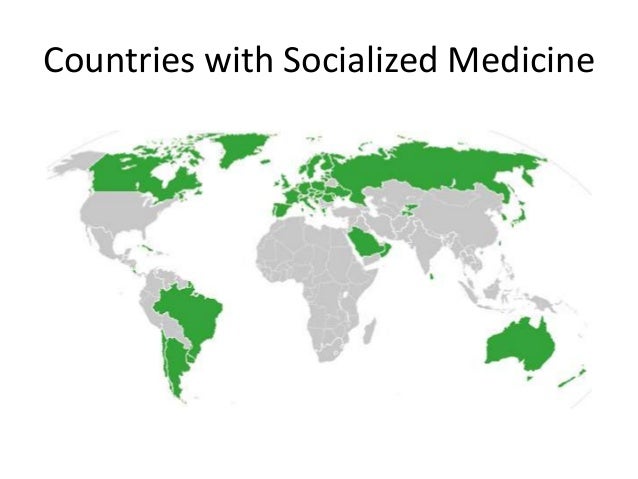
QUICK: WHAT’S THE DIFFERENCE BETWEEN MEDICARE-FOR-ALL AND SINGLE-PAYER?

https://www.healthleadersmedia.com/quick-whats-difference-between-medicare-all-and-single-payer?utm_source=silverpop&utm_medium=email&utm_campaign=ENL_181106_LDR_BREAKING_election-polls-6pm%20(1)&spMailingID=14571750&spUserID=MTY3ODg4NTg1MzQ4S0&spJobID=1520469279&spReportId=MTUyMDQ2OTI3OQS2

What's The Difference Between Medicare-For-All and Single-Payer?

Most voters approached for this article declined to be interviewed, saying they didn’t understand the issue.

Betsy Foster and Doug Dillon are devotees of Josh Harder. The Democratic upstart is attempting to topple Republican incumbent Jeff Denham in this conflicted, semi-rural district that is home to conservative agricultural interests, a growing Latino population and liberal San Francisco Bay Area refugees.

To Foster’s and Dillon’s delight, Harder supports a “Medicare-for-all” health care system that would cover all Americans.

Foster, a 54-year-old campaign volunteer from Berkeley, believes Medicare-for-all is similar to what’s offered in Canada, where the government provides health insurance to everybody.

Dillon, a 57-year-old almond farmer from Modesto, says Foster’s description sounds like a single-payer system.

“It all means many different things to many different people,” Foster said from behind a volunteer table inside the warehouse Harder uses as his campaign headquarters. “It’s all so complicated.”

Across the country, catchphrases such as “Medicare-for-all,” “single-payer,” “public option” and “universal health care” are sweeping state and federal political races as Democrats tap into voter anger about GOP efforts to kill the Affordable Care Act and erode protections for people with preexisting conditions.

Republicans, including President Donald Trump, describe such proposals as “socialist” schemes that will cost taxpayers too much. They say their party is committed to providing affordable and accessible health insurance, which includes coverage for preexisting conditions, but with less government involvement.

Voters have become casualties as candidates toss around these catchphrases — sometimes vaguely and inaccurately. The sound bites often come across as “quick answers without a lot of detail,” said Gerard Anderson, a professor of public health at the Johns Hopkins University Bloomberg School Public Health.

“It’s quite understandable people don’t understand the terms,” Anderson added.

For example, U.S. Sen. Bernie Sanders (I-Vt.) advocates a single-payer national health care program that he calls Medicare-for-all, an idea that caught fire during his 2016 presidential bid.

But Sanders’ labels are misleading, health experts agree, because Medicare isn’t actually a single-payer system. Medicare allows private insurance companies to manage care in the program, which means the government is not the only payer of claims.

What Sanders wants is a federally run program charged with providing health coverage to everyone. Private insurance companies wouldn’t participate.

In other words: single-payer, with the federal government at the helm.

Absent federal action, Democratic gubernatorial candidates Gavin Newsom in California, Jay Gonzales in Massachusetts and Andrew Gillum in Florida are pushing for state-run single-payer.

To complicate matters, some Democrats are simply calling for universal coverage, a vague philosophical idea subject to interpretation. Universal health care could mean a single-payer system, Medicare-for-all or building upon what exists today — a combination of public and private programs in which everyone has access to health care.

Others call for a “public option,” a government plan open to everyone, including Democratic House candidates Antonio Delgado in New York and Cindy Axne in Iowa. Delgado wants the public option to be Medicare, but Axne proposes Medicare or Medicaid.

Are you confused yet?

Sacramento-area voter Sarah Grace, who describes herself as politically independent, said the dialogue is over her head.

“I was a health care professional for so long, and I don’t even know,” said Grace, 42, who worked as a paramedic for 16 years and now owns a holistic healing business. “That’s telling.”

In fact, most voters approached for this article declined to be interviewed, saying they didn’t understand the issue. “I just don’t know enough,” Paul Her of Sacramento said candidly.

“You get all this conflicting information,” said Her, 32, a medical instrument technician who was touring the state Capitol with two uncles visiting from Thailand. “Half the time, I’m just confused.”

The confusion is all the more striking in a state where the expansion of coverage has dominated the political debate on and off for more than a decade. Although the issue clearly resonates with voters, the details of what might be done about it remain fuzzy.

A late-October poll by the Public Policy Institute of California shows the majority of Californians, nearly 60 percent, believe it is the responsibility of the federal government to make sure all Americans have health coverage. Other state and national surveys reveal that health care is one of the top concerns on voters’ minds this midterm election.

Democrats have seized on the issue, pounding GOP incumbents for voting last year to repeal the Affordable Care Act and attempting to water down protections for people with preexisting medical conditions in the process. A Texas lawsuit brought by 18 Republican state attorneys general and two GOP governors could decimate protections for preexisting conditions under the ACA — or kill the law itself.

Republicans say the current health care system is broken, and they have criticized the rising premiums that have hit many Americans under the ACA.

Whether the Democratic focus on health care translates into votes remains to be seen in the party’s drive to flip 23 seats to gain control of the House.

The Denham-Harder race is one of the most watched in the country, rated too close to call by most political analysts. Harder has aired blistering ads against Denham for his vote last year against the ACA, and he sought to distinguish himself from the incumbent by calling for Medicare-for-all — an issue he hopes will play well in a district where an estimated 146,000 people would lose coverage if the 2010 health law is overturned.

Yet Harder is not clinging to the Medicare-for-all label and said Democrats may need to talk more broadly about getting everyone health care coverage.

“I think there’s a spectrum of options that we can talk about,” Harder said. “I think the reality is we’ve got to keep all options open as we’re thinking towards what the next 50 years of American health care should look like.”

To some voters, what politicians call their plans is irrelevant. They just want reasonably priced coverage for everyone.

Sitting with his newspaper on the porch of a local coffee shop in Modesto, John Byron said he wants private health insurance companies out of the picture.

The 73-year-old retired grandfather said he has seen too many families struggle with their medical bills and believes a government-run system is the only way.

“I think it’s the most effective and affordable,” he said.

Linda Wahler of Santa Cruz, who drove to this Central Valley city to knock on doors for the Harder campaign, also thinks the government should play a larger role in providing coverage.

But unlike Byron, Wahler, 68, wants politicians to minimize confusion by better defining their health care pitches.

“I think we could use some more education in what it all means,” she said.


California confronts the complexities of creating a single-payer healthcare system

http://www.latimes.com/business/hiltzik/la-fi-hiltzik-singlepayer-20180209-story.html

California confronts the complexities of creating a single-payer healthcare system

California Assembly Speaker Anthony Rendon may have expected to torpedo the idea of a statewide single-payer healthcare system for the long term last June, when he blocked a Senate bill on the issue from even receiving a hearing in his house.

He was wrong, of course. His shelving of the Senate bill created a political uproar (including the threat of a recall effort), forcing him to create a special committee to examine the possibility of achieving universal health coverage in the state. On Monday and Wednesday, the Select Committee on Health Care Delivery Systems and Universal Coverage held its final hearings.

The panel ended up where it started, with the recognition that the project is hellishly complex and politically daunting but still worthwhile — yet can’t happen overnight. “I’m anxious to see what it is that we can actually be working on this year,” committee Co-Chair Jim Wood (D-Healdsburg) said toward the end of Wednesday’s seven-hour session. “Some of the logistics and the challenges we have to deal with are multiyear challenges.”

The No. 1 experience missing from the American healthcare system is peace of mind.

Little has changed since last year, when a measure sponsored by the California Nurses Assn., SB 562, passed the Senate in June and was killed by Rendon (D-Paramount) in the Assembly. The same bill, aimed at universal coverage for all residents of the state, including undocumented immigrants, is the subject of the select committee’s hearings and the template for statewide reform.

Backers of the Healthy California program envisioned by the bill feel as if they’re in a race with federal officials intent on dismantling healthcare reforms attained with the Affordable Care Act, and even those dating from the 1960s with enactment of Medicare and Medicaid.

In just the last few weeks, the U.S. Department of Health and Human Services has approved adding a work requirement to Medicaid in Kentucky and begun considering a plan to place lifetime limits on Medicaid benefits — profound changes in a program traditionally aimed at bringing healthcare to needy families.

The Republican-controlled Congress effectively repealed the individual mandate in the Affordable Care Act. That is likely to drive up premiums for unsubsidized middle-income insurance buyers and has prompted California and other states to consider implementing such a mandate on their own. (Idaho is moving distinctly in the opposite direction from California, proposing to allow “state-based health plans” that allow insurers to discriminate against applicants with pre-existing conditions.

Healthy California would be the most far-reaching single-state project for universal health coverage in the nation. That’s to be expected, since the state’s nation-leading population (39 million) and gross domestic product ($2.6 trillion) provide the impetus to solve big social and economic issues on its own.

The program would take over responsibility for almost all medical spending in the state, including federal programs such as Medicare and Medicaid, employer-sponsored health plans, and Affordable Care Act plans. It would relieve employers, their workers and buyers in the individual market of premiums, deductibles and co-pays, paying the costs out of a state fund.

All California residents would be eligible to obtain treatment from any licensed doctor in the state. Dental and vision care and prescription drugs would be included. Insurance companies would be barred from replicating any services offered by the program.

Doctors and hospitals would be paid rates roughly analogous to Medicare reimbursements, and the program would be expected to negotiate prices with providers and pharmaceutical companies, presumably by offering them access to more than 39 million potential patients.

Wood stressed that the goal of reform is to lower healthcare prices, or at least to slow the rate of growth. Yet that may mean focusing on the wrong challenge.

The mechanics of cost reduction aren’t much of a mystery. As several witnesses at the latest hearings observed, the key is reducing unit prices — lower prices per dose of drug, lower reimbursements for physicians and hospitals, all of which are higher in the U.S. than the average among industrialized countries. It will also help to remove insurance industry profit and overhead (an estimated 15% of healthcare spending), not to mention the expenses they impose on billing departments at medical offices and hospitals, from the system.

The real challenge, however, lies in the politics of transitioning to a new healthcare system. Advocates of reform often overlook an important aspect of how Americans view the existing system. Although it’s roundly cursed in the abstract, most people are reasonably satisfied with their coverage.


That’s because most people seldom or never experience difficult or costly interactions with the healthcare system. Horror stories of treatments denied and astronomical bills charged are legion. But the truth is that annual healthcare spending is very heavily concentrated among a small number of people.

The top 5% of spenders account for half of all spending, the top 20% of spenders for about 80%. According to the National Institute for Health Care Management, the bottom 50% of spenders account for only about 3% of all spending.

These are annual figures, so over a lifetime any person may have more contacts with the system. But that may explain why it’s hard to persuade Americans to abandon a system many consider to be just good enough for something entirely new, replete with possibilities that it could turn out to be worse.

The nurses association is pegging its reform campaign to the uncertainties built into the existing system. “The experience of most Americans is that they’re satisfied with what they’re getting, but there’s a great deal of anxiety,” says Michael Lighty, the group’s director of public policy. “The No. 1 experience missing from the American healthcare system is peace of mind. People are not afraid that what they have will be taken away, but that what they have will not be adequate for what they need.”

In terms of funding, the idea is for the state to take over the $370 billion to $400 billion a year already spent on healthcare in California. (The higher estimate is from the state Legislative Analyst’s Office, the lower from the nurses association.) That includes $200 billion in federal funds, chiefly Medicare, Medicaid, and Obamacare subsidies; and an additional $150 billion to $200 billion in premiums for employer insurance and private plans and out-of-pocket spending by families.

University of Massachusetts economist Robert Pollin, the nurses’ program consultant, estimates that the program will be about 18% cheaper than existing health plans, thanks to administrative savings, lower fees for drugs, physicians, and hospitals, and a step up in preventive services and a step down in unnecessary treatments.

That would leave about $106 billion a year, as of 2017, needed to replace the employer and private spending that would be eliminated. Pollin suggests doing so through an increase of 2.3% in the sales tax and the addition of a 2.3% gross receipts tax on businesses (or a 3.3% payroll tax, shared by employers and workers), instead of the gross receipts tax. Each levy would include exemptions for small businesses and low-income families.

Anyone with experience in California tax politics knows this is a potential brick wall. Taxes of this magnitude will generate intense opposition, despite the nurses’ argument that relief from premiums and other charges means that families and business will come out ahead.

But that’s not the only obstacle. A workaround would have to be found for California Constitution requirements that a portion of tax revenues be devoted to education. A California universal coverage plan would require “a high degree of collaboration between the federal government and the state,” Juliette Cubanski of the Kaiser Family Foundation told the committee Monday. Waivers from Medicare and Medicaid rules would have to be secured from the Department of Health and Human Services; redirecting Medicare funds to the state might require congressional approval.

A federal law that preempts state regulations of employee health benefits might limit how much California could do to force employer plans into a state system.

Obtaining the legal waivers needed from the federal government to give the state access to federal funds would take two to three years “with a friendly administration,” Wood said. “We don’t have a friendly administration now.”

Advocates of change are understandably impatient in the face of rising healthcare costs and the federal government’s hostility to reform. Shocked gasps went up from the hearing audience Wednesday when Wood casually remarked, “It is absolutely imperative that we slow this down.” Startled by the reaction, he quickly specified that he meant “slow the costs down.”

The desire to pursue the goal of universal coverage, whether through a single-payer model or a hybrid, plainly remains strong in Sacramento, in the face of the vacuum created by the Republican Congress and Trump White House.

As Betsy Estudillo, a senior policy manager for the California Immigrant Policy Center put it at Wednesday’s hearing, “The nation needs California’s leadership, now more than ever.”


Socialized Medicine Has Won the Health Care Debate

https://newrepublic.com/article/145067/socialized-medicine-won-health-care-debate

Image result for socialized medicine


“It’s coming down to a choice between Federalism vs Socialism,” Senator Lindsey Graham proclaimed on Twitter earlier this week. “I chose Federalism of #GrahamCassidy.” His tweet echoed his words at a press conference days earlier, where he framed his Affordable Care Act repeal bill as the only way “to stop a march toward socialism.”

It’s unclear if the Republican senator realized that he was cribbing from socialist revolutionary Rosa Luxemburg. In a pamphlet composed a century ago while in prison, Luxemburg wrote: “Bourgeois society stands at the crossroads, either transition to socialism or regression into barbarism.” Graham, presumably, didn’t mean to liken his bill to barbarism. But increasingly, those are the terms in which Americans view the health care debate—as a choice between socialism and regression. Republicans have used “socialized medicine” as a bogeyman—and they’ve steadily lost ground on the issue. Despite Graham’s attempts to portray the idea of caring for sick people regardless of their income level as a “nightmare” scenario, just 7 percent of those polled thought Graham-Cassidy would help them.

The repeated rebukes of attempts to undo Obamacare have shown that the average American is no longer moved by the threat of the “S-word.” If we are on a slippery slope toward socialized medicine, it appears that Americans are just fine with that. For the left, there’s a lot to learn from the successful battles against going backward on health care—lessons about how Trump-era politics can be used to push “socialist” policies that move Democrats, and the American public, forward in unexpected ways.

Introduced after the Bernie Sanders Medicare for all bill made its debut with 16 co-sponsors in the Senate, the Graham-Cassidy bill looked all the worse by comparison. Both bills arrived at the end of a summer of activism, a summer that has treated us repeatedly to the sight of people in wheelchairs carted out of the Senate chanting, “No cuts to Medicaid! Save our liberty!” The health care movement has been led by the people directly affected—people with disabilities, in many cases, along with veterans of the AIDS movement. They understood the power of spectacle, initiating those dramatic clashes at the Capitol. They also know better than anyone the inequalities baked into the existing system. Their fighting skills were honed fighting for decades against those who say, implicitly or explicitly, that they don’t deserve care.

Of course, politicians have long been disconnected from the American public on the issue of health care. But the movement to defend Obamacare has drawn into stark relief the difference between what people want and what politicians want to offer. Republicans like Graham banked on the attachment Americans have to the class system we like to pretend doesn’t exist. They played on the idea, honed through decades of dog-whistles, that government programs are always giveaways for the undeserving poor and people of color. As one law professor and conservative columnist complained on Twitter, “Years from now, when your child is denied a liver transplant bc of transplant diversity goals, you’ll be sorry you allowed single-payer.”

In the U.S., we tend to either deny the existence of class or treat it like a set of characteristics divorced from power relations. A Make America Great Again baseball cap, a taste for Budweiser and NASCAR—those, rather than income level or accumulated wealth, are the signifiers of class that we understand. Meritocracy is supposed to be the thing we have instead of class; you can hear it in the endless bipartisan odes to the ability to work hard and achieve anything—including, apparently, a liver transplant if necessary.

Barack Obama and Ben Carson are both heroes of the meritocratic tale, though with a different partisan inflection. Even Sanders falls victim to the meritocratic narrative at times, with his refrain that “No one who works 40 hours a week should be living in poverty.” The implication that comes with Sanders’s qualifier is that there are some people who may, in fact, deserve to be living in poverty. If class is just about some personal preferences rather than structures that maintain inequality, then it’s fine to maintain a healthcare system that treats only those who can afford it. After all, if they just worked harder, they’d have earned that liver.

Graham’s single most tone-deaf argument to sell his bill was drawing an analogy to welfare reform. Welfare reform, of course, was sold to the country by Reagan, Gingrich, and Bill Clinton through fearmongering about undeserving black mothersand “young bucks.” Graham’s rhetoric about the size of the Medicaid budget leaned hard on this analogy, hoping that Americans resented Medicaid as much as they were taught to resent welfare.

Like welfare reform, Graham-Cassidy would have turned Medicaid and the subsidies in the ACA into block grants for the states to manage as they see fit. But the problem with health insurance is that it is designed to be used. The goal of welfare reform was to kick people off of welfare; the goal of healthcare reform was theoretically to get more people onto health insurance plans. Welfare reform increased poverty; Graham and Cassidy didn’t want to admit their bill would do the same. The analogy failed, though it told us a lot about what Republicans think of the people who use Medicaid.

The ham-handed Republican attempts to dismantle the health care system—the “socialism” warnings, the appeals to the selfishness of privileged white folks—have only reinforced the public’s support for government taking care of its citizens. It was telling how, in Monday night’s televised debate between Graham and Cassidy and Senators Sanders and Amy Klobuchar, Graham fell right into a trap, unintentionally proving his opponents’ point about what Americans want. When Sanders asked, “Do you know what the most popular health insurance program in America is? It’s not the private insurance industry,” Graham jumped in like an overeager schoolchild: “It’s Medicare,” he said.


Both Republicans and Democrats have badly misunderstood what makes Obamacare unpopular. What people don’t like are the inequities that still prevail in our health care system, not the fact that “government is too involved.” When Vox’s Sarah Kliff visited Whitley County, Kentucky, to talk to Trump voters who benefited from the ACA, she heard complaints from those buying private insurance with their subsidies that their deductibles were still too high for them to access care. Others, not surprisingly, were angry that the very poor got Medicaid, while they had to pay monthly premiums for care they rarely used. But that anger hasn’t turned them against the program. Medicaid expansion—the “socialized” part of the ACA—remains wildly popular, with 84 percent of those polled by Kaiser Family Foundation saying it’s important to keep the expansion.

The ACA’s means-testing sets up a hierarchy of plans that at times seem calculated to fuel resentment of those getting “free stuff.” It also requires hours of work—I write from personal experience, as a freelancer who has attempted to explain repeatedly that my income varies from month to month and year to year—to prove to the system that you are not getting away with something you haven’t qualified for.

The ways that people have tried to patch the gaps that remain in Obamacare, through charities and crowdfunding, have also highlighted its inequities. As Helaine Olen recently wrote in The Atlantic, charities, too, are often means-testing applicants, while crowdfunding introduces a new kind of means-testing—“means-testing for empathy,” as writer Patrick Blanchfield told me recently. Most GoFundMe or YouCaring campaigns for medical bills don’t go viral; only around 10 percent of them met their stated goals. For those who have a big social media audience, or whose particularly compelling story takes off, crowdfunding might work. But the glut of such campaigns leaves people weighing story against story, deciding who is going to get their donations. It’s health care by popularity contest.

By focusing on the not-good poll numbers for Obamacare, politicians and pundits have missed the whole point: The law didn’t go too far for Americans to get behind. It didn’t go far enough. And while single-payer opponents continue to evoke rationed carelong lines and wait times, and other problems that supposedly plague England or Canada, the public seems well aware that the reality for many Americans is far worse. By their very complaints, the pundits and politicians continually highlight the inequality in the system; the complainers are those who can afford the kind of carethat comes with personal attention, privacy, shorter waits, and avoidance of rubbing elbows with undesirables.

To move forward, then, the single-payer movement should double down on what we learned through this fight: that expanding Medicaid made it harder, not easier, to claim that the program is a “giveaway” to undeserving poor. The willingness of people with disabilities to claim and hold the spotlight—as the New Republic’s Sarah Jones has written—has helped to challenge our preconceptions about who relies on Medicaid ,and to make politicians confront those who will not be served by a market-based program. And the willingness, finally, of politicians to fight publicly for single-payer—rather than mournfully shake their heads and say it will never happen—expands the range of policies that even establishment media is willing to discuss.

Most important, we have learned that the old fearmongering tropes about socialism are no longer enough to whip Republican votes for a major plank of their own platform. If anything, the successful fight should help progressives shed their fears of boldly advocating for what they know is right and working to change public sentiment without endlessly obsessing over potential political pitfalls.

It seems that barbarism, to Graham and his ilk, is the idea that they would lose their right to segregated, high-end care to some undeserving, poor person of color. To the rest of us, however, barbarism is a system that decides who deserves to live or die by the color of their skin, the money in their bank account, the hours that they work, or their ability to work at all. This is now an American consensus. And if socialism is the medicine our system needs, the country is ready to embrace it—even by name.

Obamacare Repeal Bills, Like ‘Game of Thrones’ White Walkers, Are Very Difficult to Kill

https://www.americanprogress.org/issues/healthcare/news/2017/09/21/439380/obamacare-repeal-bills-like-game-thrones-white-walkers-difficult-kill/

Image result for game of thrones white walkers

Michele and Igor speak with Andy Slavitt, former acting administrator at the Centers for Medicare and Medicaid Services under former President Barack Obama—and Twitter hero—about the latest efforts in Congress to repeal the Affordable Care Act in the form of the Graham-Cassidy bill. He reminds listeners why health care is far more personal and significant than partisan politics and how to work toward universal coverage.


4 Health Care Lessons the U.S. Can Learn from Top-Performing Countries

http://www.commonwealthfund.org/publications/lists/2017/4-health-care-international-lessons?omnicid=EALERT1254143&mid=henrykotula@yahoo.com

The recent Commonwealth Fund report, Mirror, Mirror 2017: International Comparison Reflects Flaws and Opportunities for Better U.S. Health Care, compared health care system performance in the United States with that of 10 other high-income countries. The U.S. ranked last in overall health system performance, yet as a nation we spend the most per person on health care. What can we learn from the top-performing countries? Report coauthors Eric C. Schneider, M.D., and David Squires discuss areas where the U.S. can improve in a New England Journal of Medicine “Perspective.” Here are four takeaways:

1

The best-performing health systems use universal coverage to ensure that everyone has access to care.

The United Kingdom, Australia, and the Netherlands provide universal coverage and very low out-of-pocket costs for both preventive and primary care.

2

Strengthening primary care is key to high performance.

Top-performing countries make primary care widely available, so that patients can get health services when they need them. Primary care services are available not just during regular business hours, but also at night and on weekends.

3

Streamlined payment and electronic record systems help patients and doctors.

In the U.S., health professionals and patients spend countless hours trying to sort out what benefits and services are covered by insurance and tracking down payments. The payment systems in other high-income nations use approaches such as paying providers a fee for comprehensive care of patients and standardizing lists of covered benefits and prescription drugs to make choices easier for both patients and doctors.

4

Spending more on the social safety net can reduce disparities in the delivery of care.

Compared to other countries, the United States spends relatively less on social services like affordable housing and transportation and more on medical services, even though research shows that social spending can improve the health of low-income patients, potentially reducing use of costly medical services.

The Meaning of ‘Access’ to Health Care

https://www.theatlantic.com/health/archive/2017/01/price-access/514262/

Related image

Why Republicans like HHS nominee Tom Price are emphasizing “universal access” over “universal coverage”

The Myth of a Cheap Obamacare Replacement

http://www.latimes.com/business/hiltzik/la-fi-hiltzik-trump-paul-20170117-story.html?utm_campaign=CHL%3A+Daily+Edition&utm_source=hs_email&utm_medium=email&utm_content=41037755&_hsenc=p2ANqtz-8pBWi30RdOLslYQ89FMuSTb8hSonUKKpIqWGUR6-WRPjXZJxVIUiM49YQ6dDiBROgviwVLxtxSEKFVcIPLyvnTm-UpMQ&_hsmi=41037755

The 10 essential health benefits required of any qualifying Obamacare plan: Which would you want to do without?

News on the Obamacare-replacement front was dominated this past weekend by Donald Trump and Sen. Rand Paul (R-Ky.), who both touted their Obamacare replacement plans.

To be absolutely precise, they touted the claim that they had Obamacare replacement plans. They didn’t go into any great detail about what would be in those plans. (That didn’t stop CNN from captioning its interview with Paul, “Rand Paul Releases Obamacare Replacement Details.”)

The few details, or guideposts, or guidelines that they did disclose only underscored how difficult it will be for Trump, Paul and the the Republicans on Capitol Hill to fashion a replacement that meets all their stated goals. For Trump, according to an interview with the Washington Post published Sunday, this includes “insurance for everybody” that will encompass “great health care … in a much simplified form. Much less expensive and much better.” He promised “lower numbers, much lower deductibles.”

Paul, speaking on CNN’s Sunday morning “State of the Union” program, said his plan would “insure the most amount of people, give access to the most amount of people, at the least amount of cost.” That sounds like a set of concrete goals, but actually they’re ambiguous. “Most people” compared to what? “Least cost” compared to what?

Before we get into the details, such as they are, we should recognize that if one takes as the goal of healthcare policy to provide universal coverage in which everyone is “beautifully covered,” as Trump promised, then a few limitations immediately appear. Health coverage is the product of three factors: How many people are covered; the benefits provided; and the cost of those benefits. Since the 1940s, U.S. politicians and policymakers have tried to find a balance among these factors. Every effort has been confounded by the immutable facts that treating the sick costs money and treating more people costs more money. One can save money by treating fewer people, or giving the same number of people less treatment. So any politician who says he can do more for less money is almost certainly blowing smoke.

How do the Trump and Paul “details” stack up?

Universal Access And Delegation To States: Examining Two Currents In ACA Replacement Plans

http://healthaffairs.org/blog/2017/01/20/universal-access-and-delegation-to-states-examining-two-currents-in-aca-replacement-plans/

As we draw nearer to the time when the Trump administration may unveil its proposals for reforming the Affordable Care Act and the Republicans in Congress may coalesce around a single repeal and replace proposal, two ideas are surfacing that should be addressed and explored—setting a goal of “universal access” rather than “universal coverage” and shifting responsibility for ACA replacement to the states. This post looks at the challenges involved in operationalizing these concepts.