Healthcare spending will make up 20% of U.S. economy within a decade

http://www.fiercehealthcare.com/finance/healthcare-spending-will-make-up-20-u-s-economy-within-a-decade?utm_medium=nl&utm_source=internal&mrkid=959610&mkt_tok=eyJpIjoiTXpVMk1HRm1NRE5pWW1JMSIsInQiOiIrM3BwTVBRRXorTzl3NjQxOWNPOUh1UUxUT0ZcL2xNTGdleWQzKzRFRzIwZzhHYTg2T0c3TWlZV1BjUEsxd0JBRmNJaGk0WU9NMTRvWmFyZndPVit2SzZmUDFxM1dWSm1OV2l4Rnd1YlBMWTQ9In0%3D

Bar graph with arrow showing upward growth

Healthcare spending will comprise 20 percent of the U.S. economy by the middle of next decade, according to new data from the Office of the Actuary of the Centers for Medicare & Medicaid Services and published in Health Affairs.

Expenditures on healthcare services will grow at an average rate of 5.8 percent per year between 2015 and 2025, about 1.3 percent higher than projected annual growth in the U.S. gross domestic product, CMS concluded. By 2025, healthcare spending will comprise 20.1 percent of the U.S. economy, up from 17.5 percent in 2014. Expenditures totaled $3.2 trillion last year.

Despite the seemingly robust spending growth, it remains lower than the 8 percent annual growth clip that occurred in the two decades before the Great Recession of 2008, which helped to slow expenditures significantly. In 2015, spending grew at a 5.5 percent rate. This year, it is projected to be 4.8 percent, attributable in part to the slower expansion of newly insured under the Affordable Care Act.

“The Affordable Care Act continues to help keep overall health spending growth at a modest level and at a lower growth rate than the previous two decades. This progress is occurring while also helping more Americans get coverage, often for the first time,” said CMS Acting Administrator Andy Slavitt in a statement.

Health Sector Economic Indicators – Spending Brief

Click to access CSHS-Spending-Brief_July_2016.pdf

National health spending in May 2016 was 5.0% higher than in May 2015. Spending on prescription drugs dropped to 5.2% growth, continuing its decline from the 12.2% spike in 2014. The health spending share of gross domestic product (GDP) stood at 18.1% in April as moderate health spending growth of 5.2% still far outpaced anemic GDP growth of 3.3%.  Official government projections released on July 13 anticipate spending growth of 4.8% for all of 2016, the lowest rate since 2013.

U.S. Health Care from a Global Perspective

http://www.commonwealthfund.org/publications/issue-briefs/2015/oct/us-health-care-from-a-global-perspective

Cross-national comparisons allow us to track the performance of the U.S. health care system, highlight areas of strength and weakness, and identify factors that may impede or accelerate improvement. This analysis is the latest in a series of Commonwealth Fund cross-national comparisons that use health data from the Organization for Economic Cooperation and Development (OECD), as well as from other sources, to assess U.S. health care system spending, supply, utilization, and prices relative to other countries, as well as a limited set of health outcomes.1,2 Thirteen high-income countries are included: Australia, Canada, Denmark, France, Germany, Japan, Netherlands, New Zealand, Norway, Sweden, Switzerland, the United Kingdom, and the United States. On measures where data are widely available, the value for the median OECD country is also shown. Almost all data are for years prior to the major insurance provisions of the Affordable Care Act; most are for 2013.

Health care spending in the U.S. far exceeds that of other high-income countries, though spending growth has slowed in the U.S. and in most other countries in recent years.3 Even though the U.S. is the only country without a publicly financed universal health system, it still spends more public dollars on health care than all but two of the other countries. Americans have relatively few hospital admissions and physician visits, but are greater users of expensive technologies like magnetic resonance imaging (MRI) machines. Available cross-national pricing data suggest that prices for health care are notably higher in the U.S., potentially explaining a large part of the higher health spending. In contrast, the U.S. devotes a relatively small share of its economy to social services, such as housing assistance, employment programs, disability benefits, and food security.4 Finally, despite its heavy investment in health care, the U.S. sees poorer results on several key health outcome measures such as life expectancy and the prevalence of chronic conditions. Mortality rates from cancer are low and have fallen more quickly in the U.S. than in other countries, but the reverse is true for mortality from ischemic heart disease.

How Ohio Hospitals Are Tackling Sepsis

http://www.healthleadersmedia.com/community-rural/how-ohio-hospitals-are-tackling-sepsis?spMailingID=9166254&spUserID=MTMyMzQyMDQxMTkyS0&spJobID=960513787&spReportId=OTYwNTEzNzg3S0#

Last year Ohio’s hospitals began a campaign to reduce sepsis encounters and related deaths by 30% by 2018. Nine months into the initiative, the OHA is reporting an 8% reduction in mortality.

Mr. Trump, Here’s Some Health Policy Advice — From a Physician

http://www.medpagetoday.com/Blogs/KevinMD/57318?xid=fb_o_

hospital-money

Free-market healthcare won’t last long in modern society, says Saurabh Jha, MD

The Fundamentally Different Goals of the Affordable Care Act and Republican ‘Replacement’ Plans

http://blogs.wsj.com/washwire/2016/06/07/the-fundamentally-different-goals-of-the-affordable-care-act-and-republican-replacement-plans/?utm_campaign=KFF-2016-June-Drew-ACA-GOP-alternatives&utm_medium=email&_hsenc=p2ANqtz-9Uqf60gdSQ_FC57uSLNkYvFicHfqEALEVvadSgR8xY01bL5QFOrYsCgcl6KB_N5PVHy5G8fwynf8MEywb7m1kUxPljFQ&_hsmi=30331935&utm_content=30331935&utm_source=hs_email&hsCtaTracking=7825060e-e865-4738-ba5a-68a31a8904b6%7C192993c0-5763-4c2a-b289-c32fd7a5274a

Rep. Pete Sessions and Sen. Bill Cassidy introduced legislation last month calling for replacing elements of the Affordable Care Act. A House task force established by SpeakerPaul Ryan is expected to follow with more health-care proposals. These Republican health plans are generally referred to as “replacements” for the ACA–in the spirit of “repeal and replace”–as though they would accomplish the same objectives in ways that conservatives prefer. But the proposals are better understood as alternatives with very different goals, trade-offs, and consequences. Whether they are “better” or “worse” depends on your perspective.

To boil down to the most basic differences: The central focus of the Affordable Care Act is expanding coverage and strengthening consumer protections in the health insurance marketplace through government regulation. By contrast, the primary objective of Republican plans is to try to reduce health-care spending by giving people incentives to purchase less costly insurance with more “skin in the game,” with the expectation that they will become more prudent consumers of health services. They also aim to reduce federal spending on Medicare and Medicaid and the federal government’s role in both programs. Elements of the ACA were designed to reduce costs, such as the law’s Medicare payment reforms, and elements of Republican plans such as tax credits aim to expand access to insurance, but the primary aims of the ACA and the Republican plans differ.

4 forces that will influence medical cost trends in 2017

http://www.healthcaredive.com/news/4-forces-that-will-influence-medical-cost-trends-in-2017/421162/

Binoculars

The healthcare industry is in a transformational period. The rising use of retail clinics, MACRA, population health efforts and the Medicare Part B demonstration are but a few examples of disruptive conversations being had in board rooms. Yet, all of these discussions are underscored by the one topic underlying most business conversations: the almighty dollar.

There’s a push and pull between healthcare services utilization and narrow networks focusing on value that could shift the medical cost growth rate in future years. “When medical growth outpaces general inflation, a flat trend is not good enough,” the report states.

“As a result, 2017 will be a tough balancing act for the health industry,” the report states, adding, “Healthcare organizations must simultaneously increase access to consumer friendly services while decreasing unit cost. Employers, worried that this current trend is at an inflection point that could turn back up, will demand more value from the health industry.”

Health care spending: some room for optimism

http://blog.academyhealth.org/health-care-spending-some-room-for-optimism/

This chart, produced by the Bipartisan Policy Center based on CBO data from 2011, shows the projected spending on health care, social security, discretionary, and mandatory by the federal government, as a percentage of GDP. As you can see, for all our hyperventilation about social security, it’s relatively stable once we get about 20 years out. Discretionary and other mandatory spending are similarly flat over time. But healthcare… that’s what’s going to get us.


CERTIFICATE OF NEED: STATE HEALTH LAWS AND PROGRAMS

http://www.ncsl.org/research/health/con-certificate-of-need-state-laws.aspx

Map of 50 states with or without CON programs, 2015


Certificate of Need (C.O.N.) programs are aimed at restraining health care facility costs and allowing coordinated planning of new services and construction.  Laws authorizing such programs are one mechanism by which state governments seek to reduce overall health and medical costs.  Many “CON” laws initially were put into effect across the nation as part of the federal “Health Planning Resources Development Act” of 1974.  Despite numerous changes in the past 30 years, about 36 states retain some type of CON program, law or agency as of 2016.

Questions to Ask About the House Republican Health Reform Proposal

http://blogs.wsj.com/washwire/2016/06/20/questions-to-ask-about-the-house-republican-health-reform-proposal/?utm_campaign=KFF-2016-Drew-WSJ-Jun20-HouseGOP&utm_medium=email&_hsenc=p2ANqtz-_NbfoCIZCQG6kGUv8vUld3vokzSuvVI9VWa9kHidYn8XYKLqHjC9eueS2Fqt39v_03tgl-QzorxDZgvw5Gkw7Fo5VqJA&_hsmi=30791782&utm_content=30791782&utm_source=hs_email&hsCtaTracking=092901de-a8d1-4b84-8ccf-2a923a6826ad%7C85e450b8-093a-4acd-840b-c16aa780d05c

Paul+Ryan21

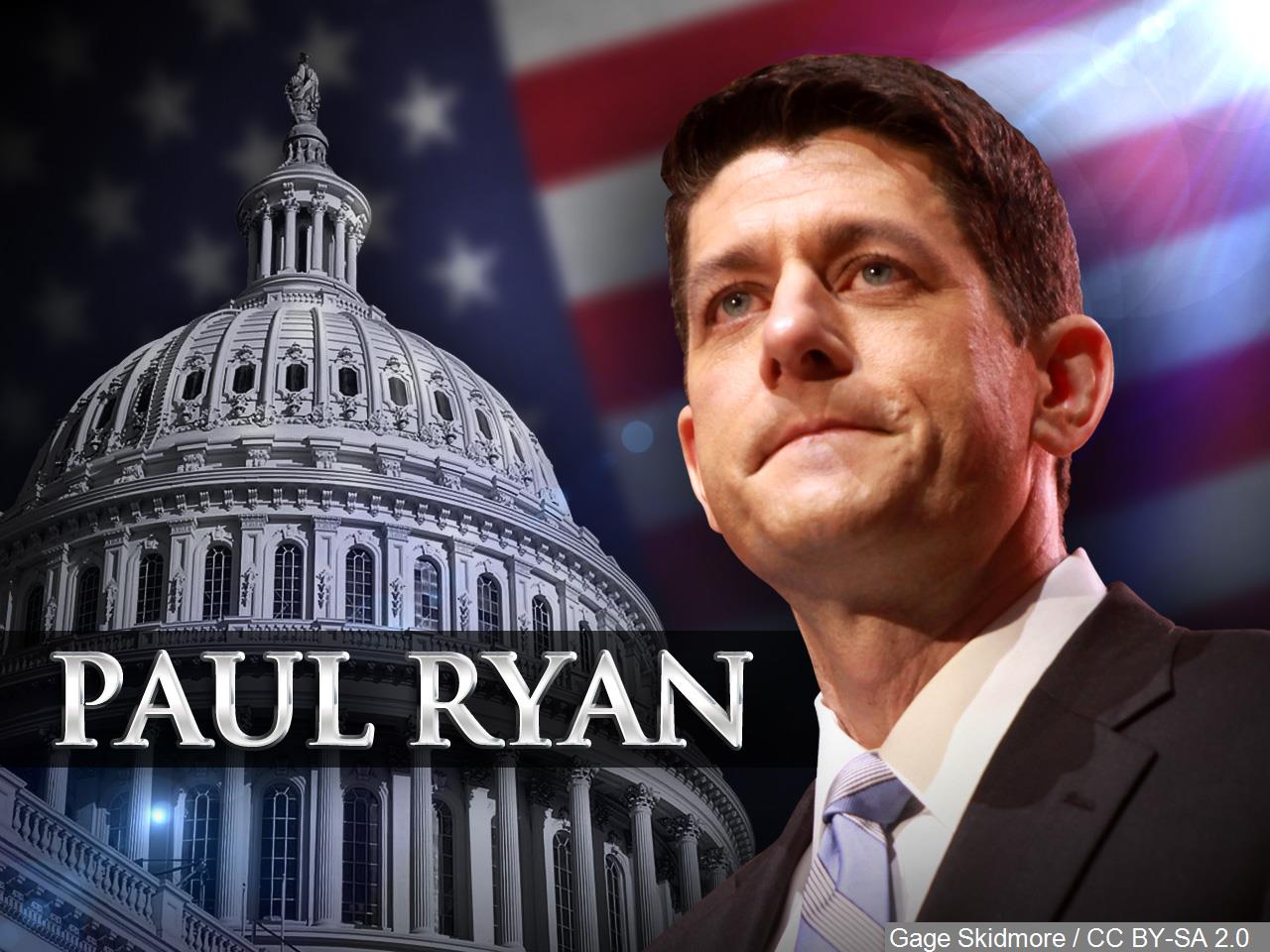
House Speaker Paul Ryan’s health-care task force is expected to outline its alternative to Obamacare this week. The outline reportedly will not include the level of detail that would allow much external analysis of its impact by health-care experts and the media, though Democrats are likely to attack its concepts, most of which will be familiar proposals that Republicans favor and that Democrats have opposed in the past. The outline is part of Mr. Ryan’s effort to add Republican policy ideas to the election debate, in particular to the presidential campaign, and seems aimed at helping down-ticket Republicans as a part of an agenda that can appeal to their base. Details will be needed to understand whether the plan is more progressive or regressive and how many uninsured people would be covered. Another big question is how Donald Trump will respond.