

Monthly Archives: October 2017
Cartoon – People Who Think They Know It All

New competitor poses big risk for Community Health Systems
Posted on by henrykotula •
Posted in Uncategorized
•
Tagged Adversarial Environment, Community Health Systems (CHS), Competition, Credit Ratings, For Profit Providers, Health System, Hospital, Hospital Divestiture, Market Expansion, Operating Performance
•
Leave a comment

IU Health is getting into the Fort Wayne market.
The News-Sentinel in Fort Wayne, Indiana, is reporting Indiana University Health, the dominant not-for-profit health system in the state, is expanding into the city. Brian Bauer — the former CEO of Lutheran Health Network in Fort Wayne who was fired by Lutheran’s for-profit parent, Community Health Systems — will lead the IU Health region.
Why it matters: This is not just a small regional deal in Indiana. CHS is on the brink of collapse. And now Lutheran, one of CHS’ most profitable hospital systems, faces a powerful competitor that likely will nab Lutheran’s patients as well as doctors, nurses and other employees.
Inside Fort Wayne: Two sources familiar with Lutheran told me the environment is “toxic” and “adversarial.” Lutheran already has lost employees to a separate nearby system, Parkview Health, the sources said. They also said Lutheran’s profitability has dwindled this year. IU Health did not respond to inquiries.
- IU Health plans to build hospitals and outpatient centers in the Fort Wayne area, and that would be a giant blow to Lutheran, which many Wall Street analysts say is the “crown jewel” of CHS. One source said Lutheran’s earnings before interest, tax, depreciation and amortization last year were around $280 million.
- That will make it even tougher for CHS to pay down its mountain of debt if profits get sucked out of its most lucrative region.
- CHS, which is in the process of selling off hospitals, turned down a buyout offer of Lutheran last year.
What to watch: CHS will report third-quarter earnings after markets close Nov. 1, and the investor call will be the following morning.
The individual market will thrive in the long run
Posted on by henrykotula •
Posted in Uncategorized
•
Tagged ACA, ACA Enrollment, CBO, Health Insurance Exchanges, Health Insurance Individual Market, Health Insurance Market Uncertainty, Health Policy, Out of Pocket Expenses
•
Leave a comment
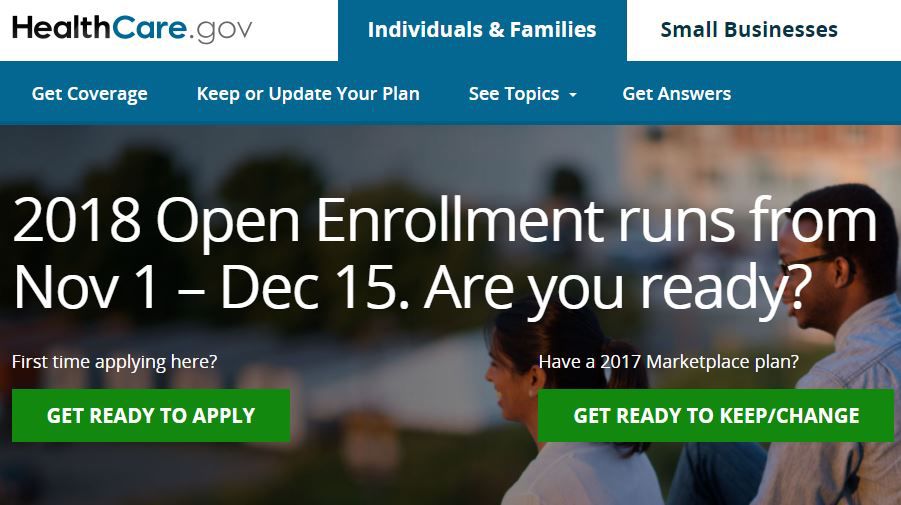
Not since the first year of the Affordable Care Act has there been so much uncertainty at the start of an open enrollment period. How many Americans will sign up for health coverage? As experts weigh the uncertain impact of the Trump administration’s last-minute policy moves, estimates from the Congressional Budget Office and Urban Institute range from nearly one million fewer Americans with coverage to at least 600,000 more.
As co-founders of Oscar Health, an insurance startup that will be signing up Americans for individual plans across six states this year, we anticipate the Trump administration’s actions will simultaneously aid and undermine enrollment, thanks to the mixed impact of its political and policy changes.
The bottom line: It will be hard — after four years where tens of millions of Americans have gained access to health insurance — for the administration to erase the virtues of an individual market where consumers choose their health plan and no one is discriminated against based on health status. In fact, we project that Oscar will enroll significantly higher membership across our six states this year.
Here’s why we believe the administration’s actions will both help and hurt enrollment:
- Plans will be more affordable for millions of Americans due to the seesaw impact of cuts to cost-sharing reduction subsidies, which will actually increase subsidies for many low-income consumers. And for the first time, the IRS will be aggressively enforcing the individual mandate.
- On the other hand, the administration’s cuts to outreach and sporadic lip service to repealing the ACA do nothing to stanch growing confusion among shoppers.
The biggest threat to a strong open enrollment period is consumer confusion. That’s why our outreach this year, themed “Get Covered,” is so focused on educating Americans on the importance of health insurance. We were the first to launch our open enrollment ads six weeks ago. And when HealthCare.gov is down for maintenance every Sunday, Oscar will be up — consumers in our states will be able to get subsidized coverage on our website.
The big picture: Our optimism about the individual market, both this year and beyond, stems from our conviction that the near-term regulatory turbulence will pass and that the individual market will thrive in the long run.
That’s because health care costs are spiraling out of control across the board, even for Americans who get coverage through their jobs. This year, premium contributions for workers increased by 8.2%, while the employer’s share increased hardly at all: 1.4%.
But Americans see the full sticker price of care in the individual market alone. To ensure that consumers who are paying out of their own pockets can still afford coverage, it’s actually the insurers and providers in the individual market who are working hardest to control costs.
The details: Indeed, we are seeing signs that sustainable strategies to keep health care costs down for all Americans are being accelerated and proven out in the individual market.
- Our health care system, for example, must move away from expensive emergency room visits and embrace virtual care. Prices to treat many of the same exact conditions in emergency rooms — where half of all care is delivered in the U.S. — can be orders of magnitude higher than telemedicine. In the first year of the ACA, Oscar introduced the first health insurance plan in the country with free, 24/7 access to telemedicine — and today, one in four Oscar members use it.
- The individual market has also accelerated the shift away from big hospital networks in health insurance plans that drive prices up for all Americans. Narrow networks — which most ACA plans have — can result in lower premiums for consumers without impacting their quality of care.
- The true innovation unlocked by the smaller networks, however, is one of integration by design. By making the insurer and hospital more dependent on each other, we can finally begin to remove the friction between your doctor and insurer to result in better, more coordinated care. For example, more than one third of all first-time doctor visits for our members are routed through our Oscar app and Concierge teams, to doctors that we partner with.
- Hospitals are now looking to become your insurance company, too. Indeed, the Cleveland Clinic, a world-renowned hospital, is offering its own jointly-run plan with Oscar next year — in the individual market.
What’s next: There is no doubt that the individual market under the ACA has stumbled out of the gate, and is in need of some fixes. But America has seen rocky private insurance markets recover before.
Between 1998 and 2002, the number of private Medicare+Choice plans — what are now known as Medicare Advantage plans — was cut in half, to less than 150. After a legislative fix in 2003, the market recovered and matured, and seniors this year will have over 3,000 Medicare Advantage plans to choose from.
We’re confident the same can and will happen with the individual market.
What’s next for the ACA after Trump’s executive order
Posted on by henrykotula •
Posted in Uncategorized
•
Tagged ACA, Cost Sharing Reduction Payments, Essential Health Benefits, Health Insurance Coverage Adequacy, Health Policy, High Deductible Health Plans, Individual Mandate, Out of Pocket Expenses, Preexisting Conditions, Presidential Executive Orders, Underinsured
•
Leave a comment

President Trump couldn’t get Congress to repeal the Affordable Care Act, so he signed an executive order to encourage cheaper, less regulated insurance options — a change that critics fear will remove patient protections and undermine insurance markets. In response, Senators Lamar Alexander and Patty Murray have put forward a bipartisan bill designed to stabilize the ACA markets.
With the future of the ACA so fiercely contested, what impact will Trump’s executive order have on health insurance, and what action should Congress now take?
We asked five experts:
- James Capretta, resident fellow at the American Enterprise Institute and former associate director for health programs at the OMB: Alexander-Murray deal a flawed first attempt at bipartisanship
- John McDonough, professor at the Harvard T.H. Chan School of Public Health and former Senate adviser on health reform: Obamacare is dead. Long live the Affordable Care Act.
- Jeanne Lambrew, senior fellow at the Century Foundation and deputy assistant to the president for health policy in the Obama White House: Health care fix today could be undone tomorrow
- Tevi Troy, CEO of the American Health Policy Institute and former deputy secretary of HHS: Expanding HRAs would bolster individual market
- Christopher Condeluci, principal at CC Law and Policy and former tax and benefits counsel to the Senate Finance Committee: Clearing the air on AHPs
What Trump’s opioids plan will — and won’t — accomplish
Posted on by henrykotula •
Posted in Uncategorized
•
Tagged Addiction-Recovery Resources, Alternative Pain Treatments, Health Policy, Opioid Addiction Epidemic, Opioid Crisis, Public Health Crisis, Public Health Funding, Strategy, Telemedicine
•
Leave a comment

“We can be the generation that ends the opioid epidemic,” President Trump said yesterday. But there’s broad agreement among public health experts that the plan Trump released isn’t enough to get there.
The bottom line: The steps Trump announced yesterday will help, experts say. At a minimum, they won’t hurt. But they’re not enough. To tackle this public health crisis, the administration will need a more complete strategy and a lot of money.
What they’re saying:
- “What’s missing is a comprehensive plan,” Georges Benjamin, the executive director of the American Public Health Association, told me in an interview. “We’ve got to understand what success means.”
- And with such a sprawling problem — one that reaches into health care, law enforcement, border control, labor and beyond — it would help to have someone focused on, and accountable for, the opioid response as a whole, Benjamin said.
- “President Trump ran a business based on results. And so far, when it comes to the opioid epidemic, we have seen no results,” Shatterproof, a non-profit focused on addiction recovery, said in a statement.
- Democrats and outside experts also emphasized that tackling the opioid epidemic will require more money — a lot of it.
The bright side: Trump’s actions might not be enough to tame the opioid crisis, but some of them could make a real difference.
- Benjamin singled out expanded access to telemedicine, which could help people in rural areas gain quicker access to alternative pain treatments and addiction-recovery resources.
- Loosening some regulatory restrictions will also help, according to public health experts, who said states’ hands have been tied as they try to redirect some of their own resources toward the problem.
CVS considers acquiring Aetna
Posted on by henrykotula •
Posted in Uncategorized
•
Tagged Aetna, Antitrust, Bargaining Power, Behemoth, Competition, CVS, Health Insurance Industry, Health System, Hospital, M&A, Market Consolidation, Pharmaceutical Industry, Pharmacy, Pharmacy Benefits Management
•
Leave a comment


CVS has reportedly put in an offer to buy Aetna.
CVS Health has proposed buying Aetna for $200 per share, the Wall Street Journal reports. That would value the transaction at more than $66 billion.
Why it matters: This would be a gigantic buyout offer, one of the biggest of the year, if it goes through. CVS and Aetna, which already have a pharmacy contract together, would create a behemoth health care company with roughly $240 billion in annual revenue and substantial bargaining power over hospitals, drug makers and employers. The deal also would displace UnitedHealth Group as the largest health insurer and pharmacy benefits manager.
Cartoon – Let’s Begin this Meeting with a Prayer
Posted on by henrykotula •
Posted in Uncategorized
•
Tagged Cartoon, Destroying the Competition, Laughing All the Way to the Bank, Meeting, Prayer, Screwing Our Customers
•
Leave a comment

Cartoon – Working Towards a Common Goal
Posted on by henrykotula •
Posted in Uncategorized
•
Tagged Cartoon, Common Goal, Lunch, Meeting
•
Leave a comment

Cartoon – The Little Merger Mogul
Posted on by henrykotula •
Posted in Uncategorized
•
Tagged Cartoon, Little Merger Mogul, Monopoly, Restraining Trade, Rigging Markets, Suppressing Competition
•
Leave a comment

 HENRY KOTULA