

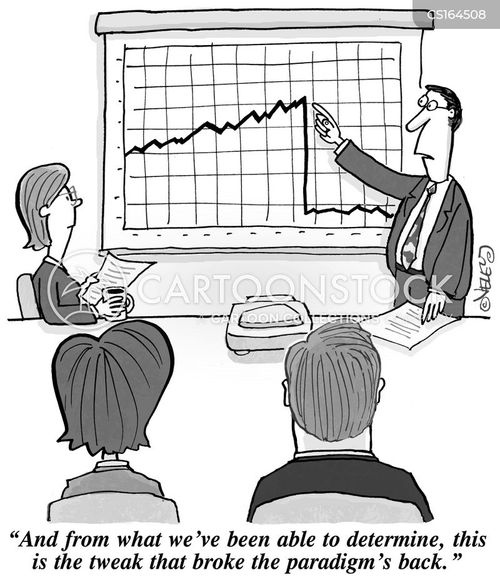
Cartoon – The Tweak that Broke the Paradigm’s Back

Federal prosecutors in California and Florida have sued to stop two companies from providing stem cell treatments, alleging the clinics marketed their procedures as remedies for ailments including cancer and heart disease without proof of safety and efficacy.
The Justice Department says in court filings Wednesday that the firms put consumers at risk by promising benefits from treatments never approved by the Food and Drug Administration.
The complaints involve treatments derived from cells taken from patients’ own fat tissue.
The lawsuits target Southern California’s Stem Cell Treatment Center and U.S. Stem Cell Clinic of Sunrise, Florida. Mark Berman, director of the California clinics, says he stands by his treatments and looks forward to fighting the lawsuit.
U.S. Stem Cell said in a statement it would vigorously defend itself in court.
Children’s Hospital Oakland doctors revolt against UCSF partnership

Doctors in Oakland are revolting against the much-hyped partnership that combined UCSF Benioff Children’s Hospital and Children’s Hospital Oakland, saying the four-year-old deal is turning the world-renowned East Bay hospital into a second-class facility to its San Francisco sibling.
Doctors are fleeing the East Bay hospital, claiming UCSF has prioritized San Francisco, locating most of its specialists and leadership at its new Mission Bay campus over the Oakland facility.
Fewer kids are being hospitalized in Oakland, down about 11 percent since the 2014 merger, according to doctors. Currently, no new patients can get routine psychiatric appointments or can see a lung specialist in Oakland, a community with the highest rate of asthma in Alameda County, the doctors say.
The doctors say a new 89,000-square-foot outpatient clinic opening this month predated the affiliation and hides the problems.“There’s a lot of anger. The anger is palpable,” said Dr. Stephen Long, a pediatric anesthesiologist who has worked at the Oakland hospital for four years and has represented his colleagues in communication with UCSF executives. “At the time (of the affiliation), it was sold to us in a different way. We were told we’d be stronger not weaker. They sold it to us like a healthy marriage, but where it is now feels like a Cinderella adoption.”
Hospital officials dispute the claim saying the Oakland facility is a valued partner and the deal has improved the care and finances.
“There’s a strong commitment in the entire organization to keep a strong presence in the East Bay,” said David Durand, Oakland’s chief medical officer. “We’ve been here for 100 years and we anticipate being here another 100 years.”
Durand said hospital care is shifting to outpatient care rather than treating people inside a hospital, and the Oakland facility saw a 12 percent increase in outpatient care from two years ago, treating about 220,000 kids last year and sending them home.
The new outpatient clinic will increase capacity to 99 exam and treatment rooms, he said, adding that surgical services in the East Bay increased 7 percent over the last two years.
“If UCSF truly values outpatient care, then why are there no (lung specialist) or psychiatry appointments?” Long said, speaking of two departments that have been integrated, others are in the works. “Why has it become so difficult to retain doctors in Oakland or recruit new ones to serve our community?”
Durand said there’s a national shortage in pediatric lung specialists and far fewer mental health providers than patients need in any community. The hospital has about 60 mental health providers, and last year Oakland handled about 60,000 outpatient mental health visits, he said, but there’s always more need.
He added that the Oakland doctor uprising may also be tied to contract negotiations.
Kristof Stremikis, director of market analysis and insight for the California Health Care Foundation, said the UCSF integration is not unique.
“It’s something happening not only across Northern California, but across the state and country,” he said.
Stremikis said the consolidation can create more efficiency and allow the joint venture to command a market and leverage that into higher prices.
The long simmering unrest reached a head on March 6 when Oakland doctors sent a letter, signed by 120 physicians, to UCSF Chancellor Sam Hawgood, addressing their concerns.
The doctors declared “no confidence” in the integration plan and expressed concerns the changes would increase a “health disparity.”
Hawgood wrote back, saying change can be “difficult,” but that the Oakland hospital plans to improve its finances, the facility and the care to the area’s most needy children.
“Our combined mission of service to all children is not — and will not — be compromised,” Hawgood wrote.
Juan Luis Chavez was frustrated that his 2-year-old son Juan Pablo needed an emergency to get required surgery for his lung condition because he had to wait four months to see a lung specialist in Oakland.
The boy, diagnosed with a lung disease called bronchopulmonary dysplasia, was scheduled for surgery in March to close a hole that had developed between his stomach and his skin, but his surgery was canceled when there were no available appointments, his father said.
“We were concerned,” Chavez said. “We had planned for it for quite awhile … when he leaked it was messing up his skin pretty badly.”
Meanwhile, continued meetings between UCSF management and Oakland doctors have not assuaged concerns.
Dr. Julie Saba, a senior cancer scientist at the Research Institute, said the research arm of the Oakland facility has suffered “catastrophically” since the transition. She said so many researchers have left that there is a 30 percent occupancy in available research space, which has led to a major funding drop.
“It has devastated our ranks,” she said. “Our scientific environment is at a catastrophic level.”
She’s worried with insured patients funneled to San Francisco and poorer patients seen at Oakland, the East Bay facility will suffer financially, which will impact the type of care those kids get in Oakland.
“I don’t want to put any intention behind it, all I know is without a significant change with the current plans, this will end up being a second class hospital with poor physician retention and no paying patients,” Saba said. “Like something out of the 1950s.”
It wasn’t that long ago that the cost of DNA sequencing was measured in the millions of dollars.
Even a few years ago, when the cost fell closer to a few thousand dollars, it was largely used for research purposes or reactively as a tool for patients who’d already fallen ill.
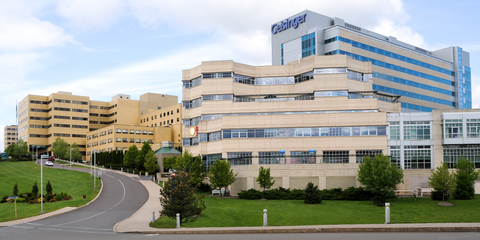
Now, Geisinger President and CEO David Feinberg, M.D., said the time and cost is finally right to make whole exome sequencing a “routine” part of screening for patient diseases.
“We didn’t want to wait,” Feinberg said, adding the sentiment was shared by doctors.
On Sunday, he announced the company would expand the testing, starting with a pilot of about 1,000 patients within the next six months before scaling the service to all patients in its facilities across Pennsylvania and southern New Jersey. “We just thought there would be too many lives lost if we waited until we really wrapped it all up in a neat bow in a research capacity.”
And, Feinberg said in a call with reporters on Monday, Geisinger will pay for the tests.
“We believe, but we have not yet proven, that this is cost-effective meaning the cost of the test is going to be offset by catching people earlier in their disease course or eliminating a disease,” Feinberg said.
Officials estimate the cost per patient per test are between $300 and $500.
About half of the $7.5 billion health system’s business involves its integrated care model involving its own doctors and insurance, but officials said it will cover the cost of the test no matter who insures the patient.
In all, Geisinger said it has set aside a few million dollars from both donors and its insurance arm to scale the use of the tests.
“Our gut feeling is that we’ll be able to show that it’s sustainable and actually a decrease in costs overall,” Feinberg said.
So far, in a research collaboration with Regeneron Pharmaceuticals that involved amassing data from 200,000 people, Feinberg said the organization found it could identify medically actionable findings in the genome before patients became sick in about 3.5% of patients. Officials said they eventually expect as many as 10% to 15% of patients might benefit from testing.
Just how will it actually work? Currently, when a patient goes into their doctor’s office and their cholesterol is checked, they are asked if they’ve had a colonoscopy or mammogram.
“We just want to add to that list: ‘Well, I think it makes sense to do whole exome sequencing on you so we can understand your genes and prevent something,” Feinberg said.
The cost of the wraparound services to this sequencing such as the cost of all the genetic counseling, the analytics, the return of results to patients is expected to be covered by insurance coverage in the same way as if a patient who has a positive test finding and requires a follow-up visit with a doctor, he said.
“We think we’ve worked out the process so that when those mutations do become discovered when we see them in our patients and population, we have a process of getting that information back to the doctor and back to the patient and really sophisticated ways of doing genetic counseling, so that we can scale it,” Feinberg said.
… One said, “I cannot get my head above water to breathe during the week.” Another described stabbing her leg with a pencil to stop from screaming during a particularly torturous staff meeting. Such complaints are supported by research showing that meetings have increased in length and frequency over the past 50 years, to the point where executives spend an average of nearly 23 hours a week in them, up from less than 10 hours in the 1960s. And that doesn’t even include all the impromptu gatherings that don’t make it onto the schedule.
Read the rest of “Stop the Meeting Madness” at Harvard Business Review.
https://hbr.org/2017/07/stop-the-meeting-madness

In my experience, and some I learned the hard way, there are a few killers of good leadership.
I decided to compile a list of some of the most potent killers I’ve observed over the years. Any one of these can squelch good leadership. It’s like a wrecking ball of potential. If not addressed, they may even prove to be fatal.
It’s not that the person can’t continue to lead, but to grow as a leader – to be successful at a higher level or for the long-term – they must address these killers.
Defensiveness – Good leaders don’t wear their feelings on their shoulders. They know other’s opinions matter and aren’t afraid to be challenged. They are confident enough to absorb the wounds intended to help them grow.
Jealousy – A good leader enjoys watching others on the team excel – even willing to help them.
Revenge – The leader that succeeds for the long-term must be forgiving; graceful – knowing that “getting even” only comes back to harm them and the organization.
Fearfulness – A good leader remains committed when no one else is and takes risks no one else will. Others will follow. It is what leaders do.
Favoritism – Good leaders don’t have favorites on the team. They reward for results not partiality.
Ungratefulness – Good leaders value people – genuinely – knowing they cannot attain success without others.
Small-mindedness – Good leaders think bigger than today. They are dreamers and idea people.
Pridefulness – Pride comes before the fall. Good leaders remain humbled by the position of authority entrusted to them.
Rigidity – There are some things to be rigid about, such as values and vision, but for most issues, the leader must be open to change. Good leaders are welcome new ideas, realizing that most everything can be improved.
Laziness – One can’t be a good leader and not be willing to work hard. In fact, the leader should be willing to be the hardest worker on the team.
Unresponsiveness – Good leaders don’t lead from behind closed doors. They are responsive to the needs and desires of those they attempt to lead. They respond to concerns and questions. They collaborate more than control. Leaders who close themselves off from those they lead will limit the places where others will follow.
Dishonesty – Since character counts highest, a good leader must be above reproach. When a leader fails, he or she must admit their mistake and work towards restoration.
A leader may struggle with one or more of these, but the goal should be to lead “killer-free”. Leader, be honest, which of these wrecking balls do you struggle with most?
What would you add to my list?

Nursing and physician shortages aren’t the only staff challenges providers are facing. According to a new STAT poll from the Medical Group Management Association, a majority of healthcare organization leaders said their group can’t find enough qualified applicants for non-clinical positions either.
The poll was conducted on May 1, 2018 with 1,299 applicable responses.
More than 60 percent of respondents said their organizations had a hard time recruiting non-clinical staff. The reasons include larger organizations offering better pay, low unemployment rates and difficulty recruiting in rural areas. One respondent said “recruiting millennials is a completely different game” and another cited lack of future career advancements in the billing and coding field.
“Lack of medical training in colleges and technical schools and reliance on ‘on the job training’ means less qualified non-clinical applicants,” MGMA said.
Other reasons include competition from other medical groups, hospitals and health systems as well as competitive pay from other industries that trigger turnover.
One-third responded they haven’t experienced this shortage, citing low turnover. Those respondents also said they had increased wages to retain staff, MGMA said.
A past poll has shown this high-turnover is prevalent in front-office staff, which some experts have argued are the face of a practice and the first ones to interact with patients, often setting a tone for the care episode making it a crucial influence of patient satisfaction.
When there is high turnover, new employees are often not as well-versed in office policies and procedures because they likely haven’t been there very long. This can lead to mistakes, inaccuracies and bumpy interactions with patients who expect staff to know operations inside and out. It can also lead to costly errors not just on the part of new employees, but veteran staff who are busy training and juggling multiple tasks at any given moment. The trickle down effect could mean patients wait longer to be seen, appointments go longer and collections and claims may be riddled with mistakes.
Medical group leaders know that it isn’t just doctors and nurses who make their practices successful and run smoothly, so they would be well-advised to treat retention of non-clinical staff with urgency.
Since a third of respondents reported lower turnover after raising wages for non-clinical staff, decision-makers for practices may want to consider researching current competitive rates for these positions and potentially raising wages such that staff would be less inclined to seek higher-paying employment elsewhere.
Practices also might consider how else to boost employee benefits and the workplace environment so that employees experience greater satisfaction. Turnover leads to operational hiccups, less efficient service for patients and lower satisfaction rates.
“While finding qualified candidates is a challenge for medical groups, practice leaders can begin by assessing how they are approaching retention of their best employees and mitigating turnover before it becomes an issue,” MGMA said.

Gubernatorial Hopefuls Look To Health Care For Election Edge

California’s leading gubernatorial candidates agree that health care should work better for Golden State residents: Insurance should be more affordable, costs are unreasonably high, and robust competition among hospitals, doctors and other providers could help lower prices, they told California Healthline.
What they don’t agree on is how to achieve those goals — not even the Democrats who represent the state’s dominant party.
“Health care gives them the perfect chance to crystalize that divide” between the left-wing progressives and the “moderate pragmatists” of the Democratic Party, said Thad Kousser, a political science professor at the University of California-San Diego.
Consider the top two Democratic candidates, who both aim to cover everyone in the state, including immigrants living here without authorization.
Lt. Gov. Gavin Newsom — billed as a liberal Democrat — supports a single-payer health care system. That means gutting the health insurance industry to create one taxpayer-funded health care program for everyone in the state.
But former Los Angeles Mayor Antonio Villaraigosa has called single-payer “unrealistic.” He advocates achieving universal health coverage through incremental changes to the current system.
Under California’s “top-two” primary system, candidates for state or congressional office will appear on the same June 5 ballot, regardless of party affiliation. The top two vote-getters advance to the November general election.
A poll in late April by the University of California-Berkeley Institute of Governmental Studies puts Newsom in first place with the support of 30 percent of likely voters, followed by Republicans John Cox, with 18 percent, and Travis Allen with 16 percent. Trailing behind were Democrats Villaraigosa, with 9 percent, John Chiang with 7 percent and Delaine Eastin with 4 percent. Thirteen percent of likely voters remained undecided.
Health care is in the forefront of this year’s gubernatorial campaign because of recent federal attempts to repeal the Affordable Care Act, which would have threatened the coverage of millions of Californians, said Kim Nalder, professor of political science at California State University-Sacramento. California has pushed back hard against Republican efforts in Congress to dismantle the law.
“There’s more energy in California around the idea of universal coverage than you see in lots of other parts of the country,” Nalder said. Democrats and those who indicate no party preference make up almost 70 percent of registered voters. Those voters care more about health coverage than Republicans, she said.
“Whoever is most supportive [of universal health care] is likely to win the votes,” she said.
The top Republican candidates, Cox and Allen, are not fans of increased government involvement, however. They favor more market competition and less regulation to lower costs, expand choice and improve quality.
“Governments make everything more expensive,” said Cox, a former adviser to former House Speaker Newt Gingrich during his presidential run. “The private sector looks for efficiencies.”
California Healthline reached out to the top six candidates based on the institute’s poll, asking about their positions on health insurance, drug prices, the opioid epidemic and hospital consolidation.

 HENRY KOTULA