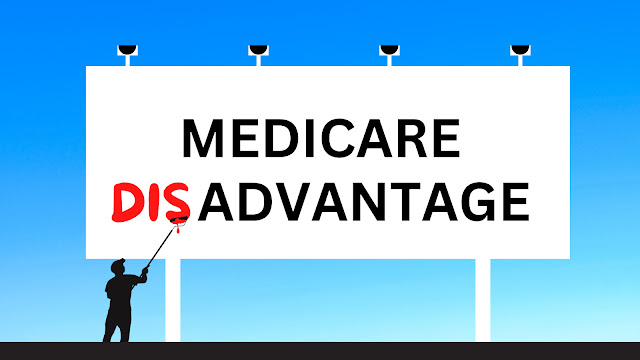
Medicare Advantage struggling under low payment, high utilization

Medicare Advantage is in an awkward place.

On the one hand, the alternative to traditional Medicare is still popular among consumers, who have been lured by the promises of lower out-of-pocket costs and increased supplemental benefits. 

On the other hand, Medicare Advantage profitability is on the decline, as shown in recent quarterly reports from the large insurers. The headwinds, executives said during recent earnings calls, have been due to greater than expected utilization of benefits and lower than expected reimbursement from the government. 

Adding to MA’s margin challenges are providers who are making the decision to cut their ties with MA plans rather than deal with delays in prior authorization and claims payments.

Moody’s Investors Service said this year, and an HFMA survey from March indicates 19% of health systems have discontinued at least one Medicare Advantage plan, while 61% are planning to or considering dropping Medicare Advantage payers.

Until recently, the story of Medicare Advantage was one of ascendancy. Just last year it hit a milestone: More than half of eligible Medicare beneficiaries are now in MA plans. So why is business taking a step back?

WHY THIS MATTERS

There are many factors at play, but a big one is the 3.7% rate increase for 2025 that Medicare Advantage plans will receive from the Centers for Medicare and Medicaid Services. The federal government is projected to pay between $500 and $600 billion in Medicare Advantage payments to private health plans, according to the 2025 Advance Notice for the Medicare Advantage and Medicare Part D Prescription Drug Programs released in April. 

The payment rate was considered inadequate by insurers, who were also troubled over other key factors, including a 0.16% reduction in the Medicare Advantage benchmark rate for 2025, which represents a 0.2% decrease.

“AHIP has strong concerns that the estimated growth rate in the Advance Notice – an average of 2.44% – will lead to benchmark changes that are insufficient to cover the cost of caring for 33 million MA beneficiaries in 2025,” AHIP president and CEO Mike Tuffin said in April. “The estimate does not reflect higher utilization and cost trends in the healthcare market that are expected to continue into 2025.”

According to Karen Iapoce, vice president Government Programs at ZeOmega, the cost of running an MA business is increasing due to the burdens being placed on health plans.

“If you sit inside with a health plan, they’re asked to do a lot with not as much bandwidth as they had before,” said Iapoce. “For example, health equity requires plans to have new regulatory guidance they need to meet. There’s a host of measures around health equity. Our plans are not in the business of really understanding how to manage transportation, how to manage housing, so they’re working with other entities. This requires an expert to sit in with the health plan … and then track and report. On the business end, they want to show an ROI, but that could be six months or a year down the line.”

Because of that, she said, the benchmark rate is likely insufficient to cover the projected increase in administrative and other costs. Iapoce said the benchmark rates represent the maximum amount that will be paid to a person in a given county; this is used as a reference point for calculation. If a plan is higher than the benchmarks, the premiums end up going to the beneficiary. More commonly, the plans bid below the benchmark, and the difference represents the rebate plans will receive. But they also factor into risk adjustment.

“The plans are getting into these contract negotiations, so they have to know what goes into that benchmark,” said Iapoce. “I might not be a high utilizer, but you may be. If we’re bringing in a community of high utilizers, there’s no one offsetting that. There’s no balance.”

Richard Gundling, senior vice president, content and professional practice guidance at HFMA, said MA plans started running into these issues when the program crossed over the threshold of more than 50% of beneficiaries.

“When a Medicare Advantage plan comes in, then all the extra administrative burdens come into play,” said Gundling. “So you have prior authorizations, all the issues around lack of payment and denials. Patients get caught in the middle, and in particular elderly patients think they’re still on traditional Medicare.

“It used to be that healthier beneficiaries went into Medicare Advantage,” he added. “Sicker beneficiaries tended to stay in traditional Medicare. That’s not the case anymore, and so there’s a higher spend.”

Gundling said beneficiaries are likely flocking to MA with visions of lower costs and increased benefits such as eyeglasses and hearing aids, and many don’t realize the tradeoffs, such as prior authorizations and network restrictions.

MA remains popular with seniors, but studies show the plans cost the government more money than original Medicare.

A 2023 Milliman report showed annual estimated healthcare costs per beneficiary are $3,138, compared to $5,000 for traditional fee-for-service Medicare, and over $5,700 if a traditional Medicare beneficiary also buys a Medigap plan.

MA membership has grown nationally at an annual rate of 8% to approximately 32 million, while traditional Medicare has declined at an average annual rate of 1%. As that has happened the percentage of people choosing MA has grown to 49% from 28%, data shows.

Yet Medicare Advantage profitability is on the declineMoody’s found in February. That’s largely because of a significant spike in utilization for most of the companies, which Moody’s expects will result in lower full-year MA earnings for insurers. Adding to that is lower reimbursement rates for the first time in years that are likely to remain weaker in 2025 and 2026, which is credit negative.

Moody’s analysts contend that MA may have “lost its luster,” citing as evidence Cigna’s efforts to sell its MA business, even after a failed merger with Humana. Cigna this past winter announced it had entered into a definitive agreement to sell its Medicare Advantage, Supplemental Benefits, Medicare Part D and CareAllies businesses to Health Care Service Corporation (HCSC) for about $3.7 billion.

Iapoce said Medicare Advantage may be a victim of its own success.

“Because of all this great promotion about what a Medicare Advantage plan can do for you, you’re seeing an increase in enrollment, or more people moving over, and the demographics are starting to change,” she said. 

For many consumers, the appeal of an MA plan is the same as that of an online retailer like Amazon, said Iapoce. Such retailers offer one-stop shopping for a variety of goods, and the perception is that MA essentially offers one-stop shopping for a variety of healthcare services and benefits.

But while this massive shift is happening, it puts providers in an awkward position, said Iapoce.

“Their reimbursement is almost being dictated, in essence, by a health plan,” she said. “It almost feels like the payer has the upper hand over the provider. Think: I’m a provider. It’s my job to get this female with this particular age and condition a mammogram, and the health plan has told me to get her a mammogram. But you, as the health plan, get the money for it. I, as the provider … what am I getting? What’s it doing for me? It becomes this very tense situation, and the provider is probably the entity that is running on the thinnest of staff.”

Gundling expects that despite some “growing pains,” MA will remain viable and continue to grow.

“Nobody’s going to stay still,” said Gundling. CMS has to consider, ‘Are we paying the health plans appropriately for the types of patients they have?’ And then health plans will need to look at their medical utilization rules – ‘Are we overdoing pre-authorization or denying things appropriately?’ And providers need to say, ‘This is a market we need to continue to grow.’

“There’s still going to be a role for it,” he said. “It’s just that we’ve introduced a larger population into it, and I think that’s where a lot of the surprises come in.”

THE LARGER TREND

CVS reported earlier this month that healthcare-benefits medical costs, primarily due to higher-than-expected Medicare Advantage utilization, came in approximately $900 million above expectations. 

Last month, Humana said it expected membership may take a hit from future Medicare Advantage pricing resulting from the CMS payment rate notice. Humana is actively evaluating plan level pricing decisions and the expected impact to membership, president and COO James Rechtin said on the call.

Elevance Health, formerly Anthem, reported a 12.2% earnings increase for Q1, but company margins have not been as affected as those insurers that are heavily invested in the MA market. Fewer of its members are in MA plans compared to other large insurers Humana, CVS Health or UnitedHealth Group, executives said.

A ‘disturbance’ in the force

Speaking of Andrew Witty, the UnitedHealth chief spurred a freakout last week on Wall Street after he said the company was beginning to see a “disturbance” in its Medicaid medical costs. More people on Medicaid are going to the doctor and hospital, which eats into the insurance company’s profits. 

The biggest insurers that run state Medicaid programs — UnitedHealth, Elevance Health, Centene, and Molina Healthcare — all saw their stocks take a dive after Witty’s disclosure. For the past year, the surge in medical services has mostly been confined to older adults in Medicare Advantage plans.

Wall Street largely did not account for that trend creeping into Medicaid, which covers low-income people.

This switch is largely a function of the government’s Medicaid “redeterminations” process, Centene CEO Sarah London said at a banking conference Friday. During the pandemic, states didn’t have to kick people off Medicaid if they no longer were eligible. But over the past year, states had to redetermine if someone still qualified for coverage, and to boot those that no longer did. As fewer people remain enrolled in Medicaid, the ones who have stayed are sicker and are getting more care. 

Looking ahead, London told investors not to worry. That’s because Centene and other insurers will get more money from state Medicaid programs (translation: taxpayers) over the next several months, through routine payment updates, to match how sick its enrollees are. The explanation worked: The stocks of all the Medicaid insurers rose on Friday.

“We know how to do this,” London said. “This dynamic of redeterminations is unprecedented right now because of the scale. But matching rates to acuity in Medicaid is normal course.”

What’s next for Risant?


Kaiser Permanente stock
Permanente grabbed everyone’s attention last year when it said it was creating Risant Health, a new and vague entity that acquired Geisinger and had plans to scoop up at least four more health systems that are focused on “value-based care.”

Well, nothing has happened since then, at least publicly. Instead, everyone has been playing the parlor game of guessing who those next systems could be. There are some rumblings that the next deal could be announced in the near future. After reading some recent hospital financial reports, it’s clear there are a handful of systems that mirror Geisinger’s shaky trajectory and could find themselves in Kaiser’s crosshairs

But Kaiser is being very deliberate in its next targets. “The old phrase, ‘Measure twice, cut once’ — Kaiser will measure four or five times before they cut,” said Kevin Holloran, a senior director at Fitch Ratings who leads the company’s nonprofit health care group.

By picking Geisinger as its first acquisition, Kaiser has established some criteria for future Risant targets. Read my story to learn which health systems could fit the mold.

Handicapping the Players in the Quest for Healthcare Affordability

As campaigns for November elections gear up for early voting and Congress considers bipartisan reforms to limit consolidation and enhance competition in U.S. healthcare, prospective voters are sending a cleat message to would-be office holders:

Healthcare Affordability must be addressed directly, transparently and now.

Polling by Gallup, Kaiser Family Foundation and Pew have consistently shown healthcare affordability among top concerns to voters alongside inflation, immigration and access to abortion. It is higher among Democratic-leaning voters but represents the majority in every socio-economic cohort–young and old, low and middle income and households with/without health insurance coverage., urban and rural and so on.  

It’s understandable: household economic security is declining: per the Federal Reserve’s latest household finances report:

  • 72% of US adults say they are doing well financially (down from 78% in 2021)
  • 54% say they have emergency savings to cover 3 months expenses ($400)—down from high of 59% in 2015.
  • 69% say their finances deteriorated in 2023. They’re paying more for groceries, fuel, insurance premiums and childcare.
  • Renters absorbed a 10% increase last year and mortgage interest spike has put home ownership beyond reach for 6 in 10 households

Thus, household financial security is the issue and healthcare expenses play a key role. Drug prices, hospital consolidation, price transparency and corporate greed will get frequent recognition in candidate rhetoric. “Reform” will be promised. And each sector in the industry will offer solutions that place the blame on others.

Granted, the U.S. health system lacks a uniform definition of healthcare affordability. It’s a flaw. In the Affordable Care Act, it was framed in the context of an individual’s eligibility for government-subsidized insurance coverage (8.39% adjusted gross income for households between 100% and 400% of the federal poverty level). But a broader application to the entire population was overlooked. Nonetheless, economists, regulators and consumers recognize the central role healthcare affordability plays in household financial security.

Handicapping the major players potential to win the hearts and minds of voters about healthcare affordability is tricky:

  • Each major sector has seen the ranks of its membership decrease and the influence (and visibility) of its bigger players increase. They’re easy targets for industry critics.
  • Each sector is seeing private equity and non-traditional players play bigger roles. The healthcare landscape is expanding beyond the traditional players.
  • Each sector is struggling to make their cases for incremental reforms while employers, legislators and consumers want more. Bipartisan support for anything is a rarity: an exception is antipathy toward healthcare consolidation and lack of price transparency.
  • All recognize that affordability is complicated. Unit cost and price increases for goods and services are the culprit: excess utilization is secondary.

Against this backdrop, here’s a scorecard on the current state of preparedness as each navigates affordability going into Campaign 2024:

SectorAdvantagesDisadvantagesHandicap Score1=Unprepared to5=Well Prepared
HospitalsCommunity presence (employer, safety net)
Economic impact
Influence in Congress
Scale: 30% of spending + direct employment of 52% of physicians
Access to capital
Lack of costs & price transparency Unit costs inflation due to wage, supply chain & admin
Shifting demand for core services.
Low entry barriers for key services
Regulator headwind (state, federal).
Operating, governing culture
Value proposition erosion with employers, pre-Medicare populations
Consumer orientation 
3
PhysiciansConsumer trust
Influence in Congress
Shared savings
(Medicare)
Essentiality
Specialization
Access to technology 
Care continuity
Inadequacy of primary care
Disorganization (fragmentation)
Value of shared savings to general population (beyond Medicare)
Culture: change-averse (education, licensing performance measurement, et al)
Data: costs, outcomes 
2
Drug ManufacturersIncreasing product demand
Influence in Congress
Public trust in drug efficacy
Insurance structure that limits consumer price sensitivity to OOP
Potential for AI -enabled discovery, market access
Access to private capital
Congress’ constraint on PBMs
Unit cost escalation
Lack of price transparency
Growing disaffection for FDA
Long-term Basic Research Funding
State Price Control Momentum
Market access
Restrictive Formulary Growth
Transparency in Distributor-PBM business relationships
Public perception of corporate greed 
2
Health InsurersAvailability of claims, cost data
Employer tax exemptions
Growing government market
Plan design: OOP, provider access
Public association: coverage = financial security
Access to private capital  
Escalating premiums
Declining group market
Growing regulatory scrutiny (consolidation, data protection)
Tension with health systems
Value proposition erosion among government, employers, consumers   
4
Retail HealthNon-incumbrance of restrictive regulatory framework
Consumer acceptance
Breadth of product opportunities
Access to private capital
Opportunity for care management (i.e. CVS- Epic)
Operational orientation to consumers (convenience, pricing, et al)
Potential with employers,  
Lack of access, coordination with needed specialty care
Threat of regulatory restraint on growth
Risks associated with care management models   
3

The biggest, investor-owned health insurers own the advantage today. As in other sectors, they’re growing faster than their smaller peers and enjoy advantages of scale and private capital access to fund their growth. A handful of big players in the other sectors stand-out, but their affordability solutions are, to date, not readily active.

In each sector above, there is consensus that a fundamental change in the structure, function and oversight of the U.S. health is eminent. In all, tribalism is an issue: publicly-owned, not for profits vs. investor-owned, independent vs. affiliated, big vs. small and so on.

Getting consensus to address affordability head on is hard, so not much is done by the sectors themselves. And none is approaching the solution in its necessary context—the financial security of a households facing unprecedented pressures to make ends meet. In all likelihood, the bigger, more prominent organizations in their ranks of these sectors will deliver affordability solutions well-above the lowest common denominators that are comfortable for most Thus, health care affordability will be associated with organizational brands and differentiated services, not the sectors from which their trace their origins. And it will be based on specified utilization, costs, outcome and spending guarantees to consumers and employers that are reasonable and transparent.