

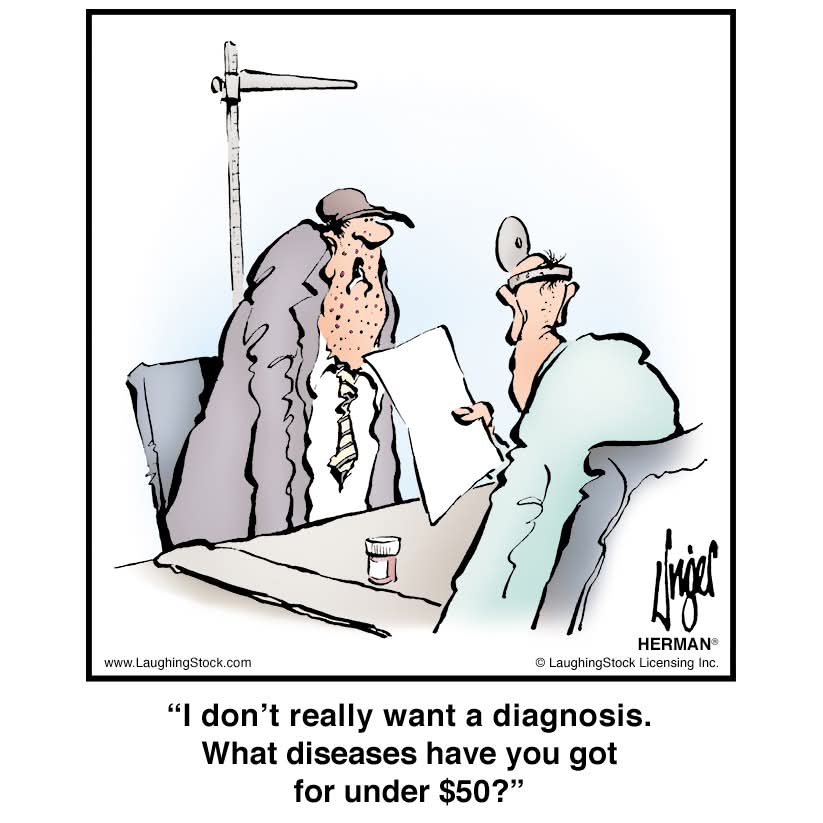
Cartoon – Affordable Healthcare

Hospitals in rural and underserved areas could lose out on billions of dollars in federal funding if the government shutdown drags on.
Why it matters:
Many hospitals already run on tight margins and are bracing for fallout from Medicaid cuts and other changes in the One Big Beautiful Bill Act.
The big picture:
The immediate concern is health policies that expired when government funding lapsed at midnight Tuesday. Health providers and their lobbyists expect Congress will make providers whole in an eventual funding deal and reimburse claims made during the shutdown.
State of play:
Safety-net hospitals face an $8 billion cut to Medicaid add-on payments in the absence of a government funding package.
The add-on payments are made quarterly, so hospitals may not feel immediate effects, even if Congress doesn’t further delay the cuts, according to the American Hospital Association. But state Medicaid agencies could let the cuts take place if they think lawmakers’ standoff will continue indeterminately, per AHA.
Additionally, two long-running programs that give pay bumps to rural hospitals expired on Wednesday.
Zoom out:
Hospital industry groups have also been urging Congress to extend enhanced Affordable Care Act tax credits, which have become a flashpoint in the shutdown fight. Democrat lawmakers have so far refused to pass GOP-led funding proposals that don’t include a full extension of the subsidies.
What they’re saying:
AHA is urging Congress to find a bipartisan solution and reopen the government, a spokesperson told Axios.
https://www.healthcarefinancenews.com/news/hospital-expense-growth-outpacing-revenue

Hospital financial and operational performance could be threatened by a trend showing a growth in the cost of expenses outpacing that of revenue, according to a Kaufman Hall National Hospital Flash Report.
“While performance has generally been strong this year, profitability has decreased slightly over the past few months. Bad debt and charity care also continue to rise. In addition, operating margins for health systems are about one percent lower than hospital margins. This points to potential challenges for hospitals and health systems to weather future uncertainty,” said Erik Swanson, managing director and group leader, Data and Analytics, at Kaufman Hall.
WHY THIS MATTERS
What the report shows is that hospital performance has softened in recent months.
While patient volumes and revenues are trending upward, bad debt and charity care are also elevated.
Expense growth is outpacing revenue growth, with non-labor expenses putting pressure on hospitals. Supplies are up 26% compared to 2022, and drugs costs are up 31% compared to 2022.
Margins have improved over prior years, though there has been some softening in recent months. Given an uncertain future outlook, many hospitals are taking steps to build long-term resiliency, the report said.
Operating margins in August 2024 were 4.6% but fell to 5% in December 2024. Starting in January, margins jumped to 6.9% and remained in the 6.2% range until this past June, when they fell to 5.5% and in July, 5.3%.
Profitability is down from 48% in July 2024 to 27% this year.
THE LARGER TREND
Data for the report came from more than 1,300 hospitals sampled on a monthly basis from Strata Decision Technology.
The sample of hospitals for the report represents all types of hospitals in the United States, from large academic to small critical access hospitals, geographically and by bed size.
Kaufman Hall, a Vizient company, provides advisory services and management consulting.
https://www.healthcarefinancenews.com/news/cvs-healths-omnicare-files-chapter-11-bankruptcy

The financial challenges are linked to a lawsuit charging the PBM with filing more than 3.3 million false claims from 2010 to 2018.
CVS Health subsidiary Omnicare has filed for Chapter 11 bankruptcy due to issues related to its recent litigation in the U.S. District Court for the Southern District of New York, the company said this week.
A federal judge in July determined that Omnicare had illegally charged the U.S. government for prescription drugs and ordered it to pay more than $948 million in damages and penalties. Omnicare filed more than 3.3 million false claims between 2010 and 2018, in violation of the False Claims Act, according to court documents.
The original lawsuit had been filed by a former Omnicare pharmacist, who had accused the pharmacy benefit manager (PBM) of improperly billing Medicare, Medicaid and the Tricare military program for more than $135 million in drugs that weren’t covered.
The Chapter 11 agreement is for $110 million in debtor-in-possession (DIP) financing. Once the court gives the go-ahead, the company expects the financing to provide enough liquidity for it to meet its ongoing business obligations during the process.
Omnicare said it will use the Chapter 11 process to address other financial challenges facing the long-term care pharmacy industry and will potentially mull restructuring options. That could include anything from standalone restructuring to outright sale.
The company said it will seek authorization from the court to continue its operations during the Chapter 11 proceedings. To that end, it said it would meet its commitment to stakeholders, including continuing to pay for employee wages and benefits.
Omnicare said it also expects to pay vendors and suppliers in full, under normal terms, for goods and services.
The Trump 2.0 administration is 8-months into its MAGA agenda. Summer has passed. Schools are open. Congress is in session. Campaign 2026 is underway. The economy is slowing and public sentiment is dropping.
For U.S. healthcare, it’s more bad news than good. The challenges are unprecedented. Most organizations—hospitals, medical groups, drug and device makers, infomediaries and solution providers, insurers, et al—are defaulting to lower risk bets since the long-term for the health system is unclear.
The good news is that the health system in the U.S. is big, fragmented, complex, expensive (5% CAGR spending increases thru 2034) and slow to change. It is highly regulated at local, state and federal levels, labor intense (20 million) and capital-dependent (government funding, private investment)—a trifecta nightmare for operators and goldmine for private investors who time the system for shareholders effectively. And it operates opaquely: business practices are hidden from everyday users and bona-fide measures of its effectiveness not widely applied or accepted.
The bad news is its long-term sustainability in its current form is suspect and its short-term success is dependent on adapting to key tenets in Trump Healthcare 2.0:
In the administration’s posturing for the mid-term election November 3, 2026, it’s assumed the economy and prices will be THE major issues to voters: healthcare affordability, housing costs and food prices will get heightened attention as a result. Thus, every healthcare organization board and leadership team should revisit short and long-term strategies, since traditional lag indicators re: utilization, regulations, structure, roles, responsibilities and funding are decreasingly predictive of the future.
Though every organization is different, there are 6 takeaways that merit particular attention as C suites and Boards re-evaluate strategies and timing:
As I head back to DC today, the FY26 federal budget is in suspense as the GOP-controlled Senate and House debate a final version to avoid a shutdown next week. Physicians, public health and state officials will digest last week’s ACIP vaccine advisory recommendations and issue their own directives and insurers will file their plan revisions for 2026. That’s what lawmakers and trade groups will be watching.
But at the kitchen tables in at least 40% of America’s households, unpaid healthcare bills from hospitals, labs, doctor offices and set-aside cash for over-the-counter remedies and prescription drug co-pays are on the agenda. Student loan payments, escalating costs for groceries, housing, rent and child care and an unstable employment market are squeezing families. Budgeting for healthcare is more problematic for them than anything else because price are not accessible and charges are not known until after services are performed.
Trump Healthcare 2.0 is not transformational: it is transactional. It aims to simplify the system and facilitate changes certain to disrupt the status quo. Its locus of control, is Main Street USA. not Pennsylvania Ave, in DC.
Lawmakers weigh extending enhanced subsidies that keep plans affordable while grappling with calls to curb hidden costs and insurer abuses.
There’s some real political drama brewing in Washington, and the outcome will determine whether millions of Americans will be able to keep their health insurance. I’m not talking about Medicaid or Medicare but the 24 million Americans who are not eligible for either of those programs or even for coverage through an employer.
As the federal government barrels toward its Sept. 30 shutdown deadline, Democrats say they won’t vote to keep the government open unless Republicans agree to extend the subsidies that make coverage available through the Affordable Care Act (ACA) marketplace more affordable for individuals and families who get their health insurance there. At the heart of the debate are the so-called “enhanced” subsidies that were put in place during the Covid pandemic. Those subsidies are set to expire at the end of this year. If they do, more than 90% of people who buy coverage in the ACA marketplace will have to pay a whole lot more for it next year.
Republicans, who control Congress, are split. Hardliners want the subsidies to disappear, but a growing faction of GOP lawmakers see the political peril staring them in the face: Millions of their constituents will receive marketplace renewal notices with eye-popping premium hikes as open enrollment begins Nov. 1, and they likely will blame Republicans for those hikes.
Virginia Republican Rep. Jen Kiggans has even taken the lead on a one-year extension bill, warning that “people will get a notice that their health care premiums are going to go up by thousands of dollars” if Congress doesn’t act. A July GOP poll found that letting the subsidies lapse could tank Republicans’ midterm prospects.
As Senate Majority Leader Chuck Schumer put it:
“The Republicans have to come to meet with us in a true bipartisan negotiation to satisfy the American people’s needs on health care or they won’t get our votes, plain and simple”.
Why extending the subsidies matters — but why it shouldn’t be a blank check
When I was an insurance executive, I used to champion high deductible health plans and steep out-of-pocket costs, arguing Americans needed to have “more skin in the game.” The industry sold Congress on that logic during the ACA debates – and it worked. Lawmakers not only set the law’s out-of-pocket (OOP) maximum high from the start, they also – at the insurance industry’s insistence – let it rise to new heights every year.
The result? That cap ballooned 67% between 2014 and 2025. And in 2026, the max will reach $10,600 for an individual and $21,200 for a family. That means most ACA plans leave people exposed to thousands of dollars in medical bills even after they’ve paid their premiums. And the people who get burned the most are those with chronic illnesses or sudden serious diagnoses – or even an accident.
If the subsidies vanish, the nonpartisan Congressional Budget Office projects about 4 million people will drop out of ACA plans in the first year. People will get sicker. Some will die sooner.
But let’s not kid ourselves: Simply shoveling more taxpayer money into insurers’ coffers is not a solution. These same companies are already awash in tax dollars through their private Medicare Advantage plans, Medicaid contracts, and even the VA.
Here’s the tradeoff Congress should demand: Insurers can get the subsidies (which go straight to them), but only if they agree to put some of their own skin in the game. And they have plenty of it. Just the seven largest for-profit health insurers reported more than $71 billion in profits last year.
Specifically, lawmakers should:
My former Big Insurance colleagues will howl and launch a massive propaganda campaign when these ideas gain traction, claiming they’ll have to jack up premiums even more than they usually do if they have to be even slightly more patient-friendly. I know because I used to plan and execute the industry’s fear-mongering campaigns. Don’t fall for it this time or ever again. Those seven giant insurers took in more than 1.5 trillion dollars and shared more than $71 billion of their windfall with their already rich shareholders last year alone. Yes, the industry’s lobbying will be intense. But if members of Congress do the right thing, they won’t just preserve coverage for millions, they will finally start forcing insurers to compete on value, not just premium retention.
If Democrats are going to play hardball by threatening a government shutdown if Republicans don’t extend these ACA subsidies, they should make it count. Americans need relief not just on premiums, but on the crushing costs hidden behind their insurance cards.
Republicans, meanwhile, should recognize the political reality. Roughly 45% of people who buy their own insurance (most through the ACA marketplace) identify as Republican or lean Republican. Letting their premiums spike by more than 75% next year would be political malpractice.
We can extend these subsidies without simply enriching insurers. We can make coverage both affordable and usable.

Republicans’ sweeping Medicaid overhaul has left a lot of the heavy lifting to governors and state health officials as the program launches the biggest package of changes in its 60-year history.
Why it matters:
States working with hospitals, clinics and other providers will have to do more with less as they face about $1 trillion in program cuts and the likelihood of 10 million or more newly uninsured people from new work rules and other changes.
State of play:
Medicaid typically accounts for about 30% of a state’s budget each year. Spending goes up during tough economic times, and states are required to cover a set of mandatory benefits.
The biggest changes from the law will arrive in 2027. But states have already started planning for how they’ll implement work requirements, decide who’s eligible more frequently and cope with new restrictions on how they draw down federal funds.
The other side:
The new dynamic will force states to think more critically about how taxpayer dollars are being spent in Medicaid, said Brian Blase, president of Paragon Health Institute and a White House official during the first Trump administration.
Zoom in:
Many states were already preparing austerity moves before President Trump signed the law. States faced with Medicaid budget crunches often cut or limit benefits they aren’t required to offer, like dental care or home- and community-based services.
Between the lines:
Congress authorized $200 million in federal funds to help states modernize their infrastructure for determining whether people are eligible for Medicaid.
States are still waiting for guidance and regulations from Medicaid administrators on some of the policy changes, and what kinds of technology they can use to ease the burden of reporting work hours and verifying who’s eligible.
What we’re watching:
What role health systems and Medicaid advocates have in states’ decision-making processes — and whether they can persuade state lawmakers to make up for some of the federal cuts with state funds.


If Trump and RFK Jr. want to crack down on deceptive health care ads, they should start with the avalanche of misleading Medicare Advantage commercials blanketing seniors every fall.
The Trump administration announced last week it plans to crack down on prescription drug advertising. In reporting on the news, the New York Times quoted former Food and Drug Administrator David Kessler as saying that what the administration is proposing “would in essence remove direct-to-consumer advertising from television.”
In a press release, Health and Human Services Secretary Robert F. Kennedy Jr. said the intent is to “shut down that pipeline of deception and require drug companies to disclose all critical safety facts in their advertising.”
You’ll get no argument from me that companies of any kind, especially those that make money in health care, should not be allowed to deceive the public by withholding critical facts.
What I do argue – and hope this administration and Democrats in Congress will agree on – is that this crackdown should also include so-called Medicare Advantage ads.
As we get close to “open enrollment” season, the period of time every fall when seniors and people with qualifying disabilities can choose between Traditional Medicare and one of many private health insurance plans, we already are beginning to see deceptive ads by Big Insurance to once again lure Medicare beneficiaries into their often deadly money machine.
You’ve seen the ads: happy, smiling seniors playing tennis or pickleball and gabbing about “free” groceries and dental benefits they presumably get because of the generosity of their MA plans. Nowhere – ever – have you seen or heard anything in any of those ads about the potentially lethal side effect of signing up for those plans. But the terrifying truth is that an untold number of MA enrollees have gone to early graves because their insurers delayed or outright denied a test, treatment or medication their doctors said they needed. Or because they couldn’t even find a high-quality doctor, hospital or skilled nursing facility close to their home – or even far away for that matter. Many centers of excellence – hospitals and clinics that are renowned for things like cancer and cardiac care – are not in many MA plans’ “networks.”
Seniors need to be told how limited MA networks can be – and that Traditional Medicare, by contrast, doesn’t even have networks. Traditional Medicare doesn’t restrict you to certain providers. That’s because almost all doctors, labs, clinics and hospitals participate in Traditional Medicare.
And seniors need to be told explicitly in ads what prior-authorization is and how it can affect them. And they need to be told about how much money they’ll have to pay out of their own pockets if they knowingly or unknowingly get care from an out-of-network provider. They also need to be told that their MA plans can and do drop doctors and hospitals from their networks during the course of a given year and that more and more physician practices and hospitals – including world-class facilities like Johns Hopkins and M.D. Anderson and the Cleveland Clinic – have dropped out of many MA networks. And they need to be told that their MA plan could very well dump them next year by “exiting” the community they live in, as Humana, Aetna, UnitedHealth and other plans did this year and plan to do next year.
Why, Mr. Trump and Mr. Kennedy, are MA insurers not held to the same standards as pharmaceutical companies? And how fast can you put standards in place to assure us that MA ads don’t omit “critical facts?” You know as well as anyone that between October 15 and December 7 (the open enrollment period) you won’t be able to turn on your TV or scroll through your social media feeds without seeing multiple MA ads that blatantly lie by omission.
Researchers at the nonpartisan KFF found TV ads hawking MA plans ran 650,000 times during the 2022 open enrollment period. You can expect that number will be surpassed this year because Medicare Advantage has become such a cash cow for Big Insurance. As just one example, UnitedHealthcare, a division of the biggest health care conglomerate in the world, got more than 75% of its revenue last year from Medicare and other taxpayer-supported programs. Now you know why those deceptive ads are so ubiquitous, and why private insurers lie with impunity.
Speaking of UnitedHealthcare, it co-brands its MA plans with AARP, which gives that corporation a kind of good seal of approval. AARP has received billions of dollars from UnitedHealthcare over the years as part of the relationship. To its credit, AARP called attention to that KFF study on its website just before the 2023 open enrollment season started. That’s notable, but AARP needs to do much more. So I am hereby calling on AARP to join us in demanding that both the Trump administration and Congress take immediate action to make sure MA ads cannot leave out essential information. Truthful MA ads are just as important as drug company ads. Maybe even more so when you consider all the potential harms MA plans inflict on seniors and people with disabilities every single year.

