More choices and stable premiums for ‘Obamacare’ next year

https://apnews.com/2843740a7cb84d8f8e0df0307abe5dde

Image result for More choices and stable premiums for ‘Obamacare’ next year

Consumers will have more health insurance choices next year under the much-debated Obama health care law and premiums will dip slightly for many, the Trump administration announced Tuesday.

President Donald Trump was elected on a promise to repeal “Obamacare.” But despite his repeated efforts the program has stabilized three years into his administration. That may be short-lived.

The administration is asking a federal appeals court in New Orleans to overturn the entire Affordable Care Act as unconstitutional, an overhang of uncertainty clouding its future.

For now, the Department of Health and Human Services is touting a second consecutive year of positive-sounding numbers. An additional 20 insurers will participate for 2020, expanding consumer choice in many states, officials said. Nearly 70 percent of customers will have three or more insurers from which to pick a plan.

About 10 million people are covered through the health law’s insurance markets, which offer taxpayer-subsidized private plans for people who aren’t covered on the job. Former President Barack Obama’s namesake law will be 10 years old next year.

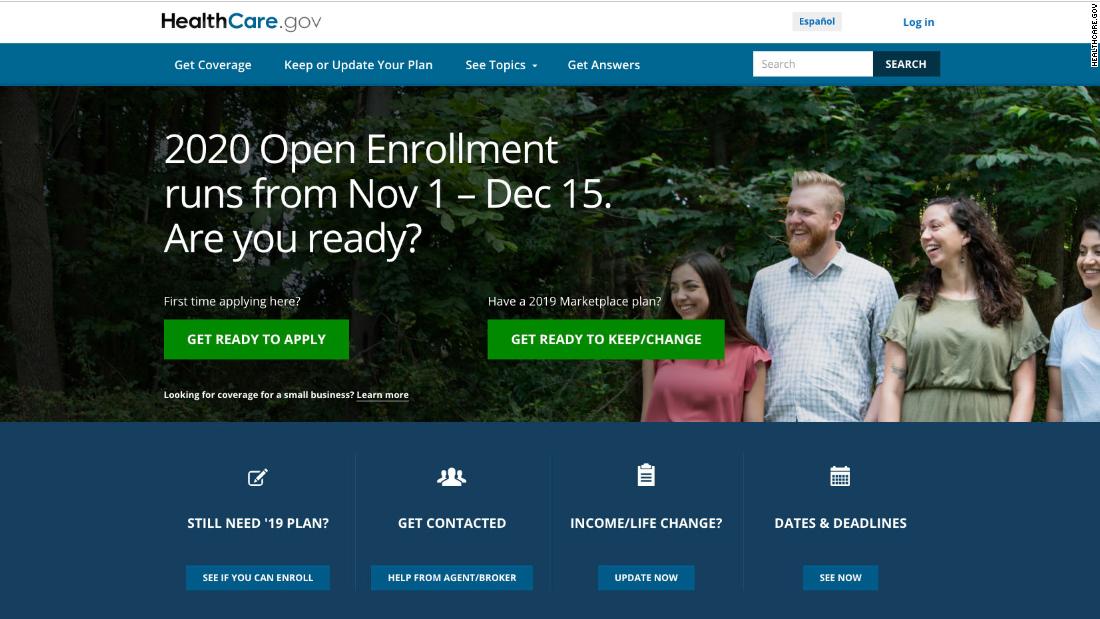
Premiums for a hypothetical 27-year-old choosing a standard plan will decline 4% on average in 2020 for states served by the federal HealthCare.gov website, the Trump administration said. About a dozen states run their own sign-up websites, but most rely on HealthCare.gov.

A low-cost midrange plan for that hypothetical 27-year-old will charge monthly premiums of $374 next year, officials said. The law’s income-based subsidies can drop that to around $50.

However, people who don’t qualify for income-based assistance must pay full price, and that’s before any deductibles and copays. Unsubsidized customers may just decide to go uninsured, particularly if they’re healthy.

A previous Republican Congress repealed the law’s unpopular penalty to get more people signed up — fines for going without coverage.

Six states will see premiums decline by 10% or more, officials said. They are Delaware, Montana, Nebraska, North Dakota, Oklahoma and Utah.

Three states — Indiana, Louisiana and New Jersey — will see premiums increase 10% or more.

Even as it pursues “Obamacare’s” demise in the courts, the Trump administration is trying to take credit for the program’s current stability.

“Until Congress gets around to replacing it, the president will do what he can to fix the problems created by this system for millions of Americans,” HHS Secretary Alex Azar said. “The president who was supposedly trying to sabotage this law has been better at running it than the guy who wrote it.”

Independent experts say it’s more complicated than that.

They credit the Trump administration for working with a dozen states to approve waivers that can bring down premiums by setting up a backstop system to pay bills from the costliest patients.

However, experts say the original design of the law’s subsidies is probably the major stabilizing force. People eligible for financial assistance are insulated from price spikes because they pay only a fixed percentage of their income. Because their own costs didn’t change much, customers with subsidies kept coming back to the market through years of double-digit increases in list-price premiums.

“As long as the subsidies are in place the changes that are happening … are not going to push this market off a cliff,” Standard & Poor’s director and lead analyst Deep Banerjee said.

Experts say yet another factor is that insurers that have stuck with the program have learned over time how to operate profitably.

Although the program is stable, enrollment has been slowly eroding since Trump took office, from 12.2 million in 2017 to 11.4 million this year. The slippage has come mainly in the HealthCare.gov states, where the federal government runs sign-up season. Slashing the ad budget was one of the Trump administration’s early actions.

The nonpartisan Government Accountability Office has recommended that the administration follow standard federal practices by setting sign-up goals and actively managing the program to meet enrollment targets. Seema Verma, head of the Centers for Medicare and Medicaid Services said the administration doesn’t believe such targets are needed and instead her agency has focused on keeping the HealthCare.gov website running smoothly and improving the enrollment experience for customers.

Verma also disclosed that the administration has made some “minor” changes in how it reports data about the program. While those tweaks appear to be in the weeds, they’re likely to get close attention from Democrats who accuse Trump of “sabotage” of the health law.

Sign-up season starts Nov. 1 in most states and runs through Dec. 15. States that run their own open enrollment may have different dates. Coverage starts Jan. 1.

The appeals court in New Orleans could issue its ruling during this time, but Azar said he’s not concerned even if the judges say the whole program should be tossed.

“Our messaging would be to keep calm and carry on,” he said, noting that the case is expected to go to the Supreme Court. “There will be no immediate disruption to anyone.”




Advocates submit signatures to get Medicaid expansion on Oklahoma ballot in 2020

https://thehill.com/policy/healthcare/467382-advocates-submit-signatures-to-get-medicaid-expansion-on-oklahoma-ballot-in

Advocates submit signatures to get Medicaid expansion on Oklahoma ballot in 2020

Supporters of Medicaid expansion in Oklahoma said they submitted more than enough signatures on Thursday to get the measure on the ballot in 2020.

The “Yes on 802” campaign said it submitted more than 313,000 signatures, far more than the roughly 178,000 it needed, to qualify to get Medicaid expansion on the ballot in Oklahoma next year. 

Campaign manager Amber England said in a statement that her group had “a mandate from a record-breaking number of Oklahoma voters who want the chance to bring more than a billion of our tax dollars home from Washington every single year to deliver healthcare to our neighbors, keep our rural hospitals open, and boost our economy.”

Oklahoma is one 14 GOP-controlled states that have not accepted the expansion of Medicaid under ObamaCare. Republicans have traditionally raised concerns about the cost of the program. 

More states have been expanding recently, however. Utah, Idaho and Nebraska voters approved ballot measures approving Medicaid expansion in last year’s elections. 

The Yes on 802 campaign estimates almost 200,000 people in Oklahoma would gain coverage if expansion were adopted in next year’s election.

The Oklahoma Council of Public Affairs, a conservative think tank in the state, has vowed an opposition effort.

“There will obviously be significant opposition once it gets to the campaign stage,” the group’s president, Jonathan Small, told The Oklahoman earlier this month.


Feds owe health insurers $1.6 billion in unpaid subsidies, judge rules

https://www.modernhealthcare.com/legal/feds-owe-health-insurers-16-billion-unpaid-subsidies-judge-rules

Image result for Feds owe health insurers $1.6 billion in unpaid subsidies

A federal judge this week ordered HHS to pay about 100 health insurance plans a total of $1.6 billion in unpaid subsidies.

While the federal government will likely appeal the case, the judgment illustrates the sheer magnitude of the funds the Trump administration could be forced to pay.

The insurers are part of a class action brought by Wisconsin-based Common Ground Healthcare Cooperative, which challenged the federal government’s failure to pay cost-sharing reduction subsidies that were intended to lower healthcare costs for certain people who bought coverage on the Affordable Care Act exchanges.

The amounts owed to each insurer range from tens of thousands to hundreds of millions of dollars. Kaiser Foundation Health Plan is owed the largest amount—$220.3 million for 2017 and 2018 across its plans in several states, according to Modern Healthcare’s analysis of damages outlined in the order.

The federal government owes $159 million to Blue Shield of California and $132.1 million to Blue Cross and Blue Shield of South Carolina to make up for the unpaid cost-sharing reduction subsidies. Utah-based SelectHealth, Dayton, Ohio-based CareSource and Oscar Health, headquartered in New York, are also owed some of the largest amounts.

Judge Margaret Sweeney in the U.S. Court of Federal Claims in February 2019 ruled in favor of Common Ground and other insurers that brought similar lawsuits, finding that the government violated its obligation to pay the cost-sharing reduction subsidies when the Trump administration abruptly cut them off at the end of 2017. The government argued that Congress never appropriated the payments.

Insurers responded by hiking premiums to make up for the absence of those subsidies. Because of the way ACA premium tax credits are structured, the federal government ended up paying higher premium tax credits as a result.

But Sweeney said the lack of an appropriation and the insurers’ strategy for mitigating the loss of the cost-sharing reduction subsidies by hiking premiums doesn’t get rid of the government’s liability. Sweeney ordered the insurers to file a report indicating the amounts they each were owed for 2017 and 2018 and entered judgment on the claims on Tuesday.

Katie Keith, a health law professor at Georgetown University and ACA expert, said the judgment, while big, is less than the $2.4 billion that insurers initially estimated they were owed.

Nicholas Bagley, law professor at the University of Michigan Law School, said the government will likely appeal now that a judgment has been entered; the merits of that appeal will likely be resolved by some consolidated cases related to the cost-sharing reduction payments already pending in the U.S. Court of Appeals for the Federal Circuit, which has not yet set a date for oral arguments.


Premiums for ACA Health Plans Drop in 2020

https://www.realclearhealth.com/2019/10/23/premiums_for_aca_health_plans_drop_in_2020_279468.html?utm_source=morning-scan&utm_medium=email&utm_campaign=mailchimp-newsletter&utm_source=RC+Health+Morning+Scan&utm_campaign=dfd654c92e-MAILCHIMP_RSS_EMAIL_CAMPAIGN&utm_medium=email&utm_term=0_b4baf6b587-dfd654c92e-84752421&mc_cid=dfd654c92e&mc_eid=cb200f8a98

Image result for Premiums for ACA Health Plans Drop in 2020

Premiums for the most popular health plans sold under the Affordable Care Act will drop for the second consecutive year, the Trump administration said Tuesday, as the law enters its 10th year and shows further signs of stabilizing.


A group of Republicans has unveiled its healthcare plan. Here is what’s new and what isn’t

https://www.fiercehealthcare.com/payer/a-group-republicans-have-a-new-healthcare-plan-here-what-new-and-what-isn-t?mkt_tok=eyJpIjoiT0RZNE4yTm1PV1psTmpNeSIsInQiOiJ5R3gxMEwrdUhPWUdZVlBTZ3NWWkdMV08xOCtObDdFaGdHaE1hN0o4Z2p5WnBaN3hjd2lDVm5ybnBhWUtUNFdlTW1LcndtaTN1WUtNVzg1NmUrQjJmWEhqTWpJR3BkUmVuZmVNS2FzdmRWdENuMEtNT0tJMXozUW93N0lVQmZ5WSJ9&mrkid=959610

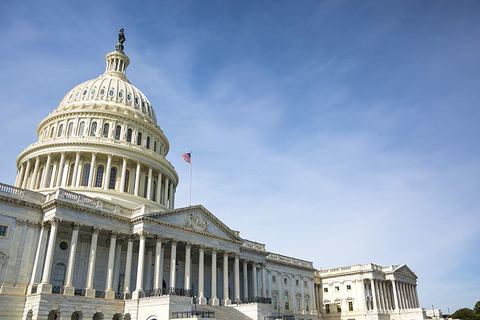
Capitol building in Washington

The Republican Study Committee (RSC), a group of 145 House GOP lawmakers, rolled out a new healthcare plan to counter Democrats’ call for “Medicare for All.”

However, the plan itself closely resembles the Affordable Care Act (ACA) repeal bill called the American Health Care Act (AHCA) that the House passed in 2017 and contributed greatly to the loss of the GOP House majority in 2018.

For the plan to become law, Republicans would have to retake the House in 2020, and President Donald Trump would need to be reelected. However, if those victories happen, the plan could be a blueprint for how a GOP-controlled Congress would move forward on healthcare, as the committee counts among its members both GOP leadership and rank and file.

Here are three takeaways from the plan:

Shifting to high-risk pools

The plan would retain the ACA’s requirement that individual market plans cover pre-existing conditions. However, it takes out provisions that ensure patients with pre-existing conditions get affordable coverage such as requirements that prevent plans from charging sicker people higher premiums than healthy customers.

The plan does introduce high-risk pools that would be used by people with high healthcare costs, a commonly deployed tactic by states for the individual market before the ACA. The high-risk pools would be funded by repackaging the funding used for the ACA’s subsidies and the Medicaid expansion.

However, the plan doesn’t identify the full amount that should be devoted to high-risk pools, which segregate high-cost customers on the individual market.

The plan cites a 2017 report from consulting firm Milliman that estimated a federally supported high-risk pool could require $3.3 billion to $16.7 billion a year. The AHCA also called for high-risk pools but only gave $2.5 billion a year to help states fund them.

While the “$17 billion annual price tag may not seem ideal, it sets up a sustainable path for the individual market,” the RSC report said.

The desire for more funding for high-risk pools is likely a nod to Democratic attacks during the 2018 midterms that the AHCA threatened pre-existing condition protections. The nonpartisan Congressional Budget Office said the AHCA, which let states waive pre-existing condition protections, would lead to people in those states not getting affordable coverage for their pre-existing conditions.

While the AHCA had funding for high-risk pools, experts across the healthcare spectrum said that it wasn’t enough. It would remain to be seen how much more funding would be needed.

Doubling down again on health savings accounts

Bolstering health savings accounts has been a very popular reform idea among Republicans, and that enthusiasm is clear in the RSC plan.

The plan proposes to increase how much an employee can contribute to a health savings account. Currently, an individual can contribute $3,500 and a family can contribute $7,000.

A 2018 bill that passed out of the House but didn’t make it through Congress increased the contribution cap to $6,650 for an individual and $13,300 for a family.

Now, the RSC plan wants to increase the figures again, this time to $9,000 per individual and $18,000 for families, in line with a proposal from libertarian think tank Cato Institute.

“The RSC plan would also expand health savings accounts so that they could be used for a number of health services and products that currently must be paid for with after-tax dollars,” the plan said.

Replace Medicaid expansion with a block grant

This is another common reform in ACA repeal plans. The bill would phase out the enhanced federal matching rate for the Medicaid expansion to pre-expansion levels.

In addition, the bill would replace the existing open-ended federal match with a fixed amount in a block grant.

But the plan has a new twist in a new “flex-grant” that would give more funding to states that adopt a work requirement. However, half of the funding for any flex-grant must go toward supporting the purchase of private plans for low-income individuals.

So far, 12 states have gotten approval from the Trump administration to install work requirements for their Medicaid expansion population. But of those 12 states, three have had their work requirement programs struck down by legal challenges.

Some states are also considering installing their own block grants. Tennessee has released a draft proposal for a block grant but has yet to get federal approval.


How Pending Decision on Obamacare Could Upend 2020 Campaign

Supporters of expanding Medicare at a town hall meeting this summer in Forked River, N.J.  Health care registers as a top priority for voters in poll after poll.

A federal appeals court’s ruling on the Affordable Care Act could be a huge headache for the president and take Democrats’ focus off Medicare for all.

 A federal appeals court in New Orleans is preparing a ruling on the Affordable Care Act that could put the law’s future front and center in the presidential race, overwhelming the current Democratic debate over Medicare for all and reigniting the health care-driven worries that helped Democrats win back the House last year.

Three judges on the Fifth Circuit Court of Appeals are weighing whether to uphold a Texas judge’s ruling that the law’s requirement for most Americans to have health insurance is unconstitutional, and that the rest of the sprawling law cannot function without it. It is hard to imagine a thornier domestic issue for President Trump, whose administration not only refused to defend the law in the case filed by Texas and 19 other states but sided with the plaintiffs, asking the court to invalidate it.

A ruling against Barack Obama’s signature domestic achievement as president, which provides health coverage for about 24 million Americans, would almost certainly be stayed pending further appeal.

But if it comes in the next few weeks, it could create significant confusion during open enrollment for the Obamacare plans offered through the law’s online marketplaces. And it would open a huge vulnerability for Mr. Trump, whose health care platform largely consists of attacking as socialism Democratic plans to expand government health care, either through Medicare for all or a government-run health care option that would be offered through the Affordable Care Act’s marketplaces.

A ruling against the health law would probably reframe the Democratic conversation on health policy away from moving beyond the Affordable Care Act toward Republican efforts to take health care away. That message, a driving force in the 2018 midterm campaigns, could resonate more broadly than the party’s current arguments over expanding coverage.

“Democrats will do better talking about what Trump can take away than about their new policy visions,” said Chris Jennings, a longtime Democratic adviser on health care. “The Texas case may reframe discourse around health policy more toward that type of discussion, which of course Republicans will hate.”

The law’s most popular provision is protections for people with pre-existing medical conditions, but it includes much more, such as health insurance exchanges where people can buy private coverage with subsidies, an expansion of Medicaid and requirements for what insurance must cover, from emergency services to prescription drugs.

The appeals court panel could decide to partly reverse Judge Reed O’Connor of the Federal District Court in Fort Worth, affirming that the mandate that most Americans have health insurance is unconstitutional but rejecting Judge O’Connor’s ruling that the rest of the law cannot stand without it. That would cause barely a ripple, because the tax penalty for not having insurance was reduced to zero in the 2017 tax overhaul and the effects have been negligible.

But a ruling that upheld his decision in full, or even one that said the mandate and pre-existing condition protections had to go, would send shock waves through the health care and political systems. Either outcome would probably play into Democratic hands, especially in contests against vulnerable Republicans like Senators Martha McSally of Arizona, Cory Gardner of Colorado, Susan Collins of Maine and Thom Tillis of North Carolina.

Republicans are not conceding that possibility. Asked how a ruling against the law might affect members of the party seeking re-election, the spokesman for the House Republican campaign arm, Chris Pack, said: “Both Democrats and Republicans oppose Obamacare. The only difference is that Democrats want to replace it with socialized single-payer health care that makes private health insurance illegal.”

In fact, most Democrats would welcome a renewed debate over the Affordable Care Act. Many Democrats in Congress have resisted Medicare for all; instead they have sought to shore up the existing health law and trap Republicans on pre-existing conditions. Senator Chuck Schumer of New York, the Democratic leader, intends to force a floor vote as soon as next week on a resolution to overturn a Trump rule that lets states promote skimpy-but-inexpensive insurance plans that do not meet the law’s coverage standards.

The vote, Mr. Schumer said Tuesday on the Senate floor, “will present our Republican colleagues with a choice: whether to protect Americans with pre-existing conditions or not to protect them.”

Mr. Trump is in a box on health care, the issue that registers as a top priority for voters in poll after poll. He wants deals on ending surprise medical bills and lowering prescription drug prices, but the Senate and House are far apart on what drug price legislation they would agree to, and impeachment proceedings could derail any chance of bipartisan measures.

Public support for the health law remains high, driven in part by swing voters. And few Americans believe Mr. Trump will offer details of a new health care plan before the end of the year, according to a Kaiser poll released this week. They also doubt any plan he releases would offer “better care at lower costs,” as he has promised.

Alex M. Azar II, the secretary of health and human services, has repeatedly played down the importance of expanding coverage to the remaining uninsured; instead, he has said, Mr. Trump wants to improve the health care system for all Americans. His efforts thus far have mostly been directed at discrete groups of patients: a plan to reduce new H.I.V. infections by 75 percent over five years, for example, and another to move people with advanced kidney disease to home-based, instead of clinic-based, dialysis.

At oral arguments before the appeals court panel in July, a lawyer from the Justice Department indicated the Trump administration would seek a stay if the panel upheld Judge O’Connor’s decision. The losing side could appeal directly to the Supreme Court, increasing the chances of a ruling or at least oral arguments before that court in the final months of the presidential campaign. Alternatively, it could first ask for a hearing by the full appeals court, which would slow down the process.

The appeals panel could also send the case back to Judge O’Connor to reconsider, an option that August Flentje, a lawyer for the Justice Department, embraced during oral arguments. That would also draw out the court fight.

When the six-week open enrollment period starts next month, there will be more insurers offering plans through the Affordable Care Act markets. Premiums have stabilized, too, after a few years of price increases. But it will be a much lower-profile effort than in past years; the Trump administration has cut the budget for both advertising and enrollment help. As a result, a court ruling against the law would paralyze open enrollment if people assume there is no use buying or renewing coverage under a law that was ruled unconstitutional, and if no effort is mounted to counter that misunderstanding.

“It will require a doubling down, a dramatic increase in education — which is exactly the opposite of what this administration has done,” said Leslie Dach, executive director of Protect Our Care, a consumer advocacy group aligned with Democrats. “Someone will need to educate people that low-cost, quality health insurance is still available to them.”


Other countries show Medicare for All doesn’t have to mean getting rid of private insurance

https://www.cnn.com/2019/10/15/politics/private-health-insurance-medicare-for-all-international-comparison/index.html?utm_source=The+Fiscal+Times&utm_campaign=27ee43ca78-EMAIL_CAMPAIGN_2019_10_16_09_52&utm_medium=email&utm_term=0_714147a9cf-27ee43ca78-390702969

Image result for Other countries show Medicare for All doesn't have to mean getting rid of private insurance

Bernie Sanders often points to Canada and Europe as models for universal health care coverage.

But the Vermont independent senator’s “Medicare for All” plan differs substantially from the insurance systems that exist up north and across the pond. Canadians and most European countries have private insurance industries alongside their government programs.
One of the most controversial provisions of Sanders’ Medicare for All proposal is that it essentially eliminates private insurance — allowing the industry to only offer benefits for services that are not covered by the federal program, such as cosmetic surgery. More than 150 million Americans buy private policies through their employers, and tens of millions more purchase private insurance through Medicare Advantage or on the individual market exchanges.
Sanders has made Medicare for All a centerpiece of his 2020 presidential campaign. Rivals ranging from President Donald Trump to former Vice President Joe Biden, who is also seeking the Democratic nomination, have gone the other way and argue that Americans should not be forced to give up policies they like. Sanders has defended his stance, slamming the private insurance industry for putting profits over patients.
But public and private insurance co-exist in Canada and many European countries. These developed nations require that everyone have coverage — with private insurance typically providing additional benefits, helping to pay out-of-pocket costs or allowing faster and broader access to medical providers. In some nations, such as the Netherlands and Switzerland, residents satisfy their coverage mandate with policies from private carriers.
In many developed nations outside of the US, residents expect a lot from their health systems but they are conscious of the cost, said Chris James, an economist specializing in health care for the Organisation for Economic Co-operation and Development, a consortium of 36 developed countries.
“It becomes a tricky political balance between those competing sets of demands,” James said. “They want more generous public provisions but they don’t want to pay too much more tax.”
How health care coverage works in other countries varies widely.
Canada, for instance, has a regionally administered public health insurance program, which is paid for by provincial and federal tax revenue, according to a 2017 report from The Commonwealth Fund. Patients don’t pay for hospital care and doctors’ visits. However, the universal program, known as Canadian Medicare, doesn’t cover outpatient prescription drugs, rehabilitation, home care, dental benefits, vision care and some other services. Some two-thirds of Canadians are covered by private plans, often through their employers, to cover these treatments. The insurers are mostly for profit.
England, meanwhile, has the very comprehensive National Health Service, paid for by taxes. Services are generally free, though there are some copayments for prescription drugs and some services, including dental care for most adults. Still, about 11% of residents sign up for private health insurance plans, which provide faster access to care, particularly elective hospital procedures, according to The Commonwealth Fund.
“They use it to jump the queue,” said Robin Osborn, senior adviser with The Commonwealth Fund.
The system is very different in other countries, however.
In the Netherlands, residents are required to buy private insurance, which is heavily regulated and paid for by payroll taxes paid by employers, premiums paid by enrollees, annual deductibles, copayments and general taxes. Lower-income folks receive government subsidies to help them afford the cost, James said. Some 84% of the Dutch also buy additional private coverage to pay for dental care, eyeglasses, physical therapy and other services, mostly from non-profit insurers, according to The Commonwealth Fund.
Germans are also mandated to have coverage. They can choose from more than 100 non-profit “sickness funds,” which covers a wide array of services, including drugs, physical therapy and dental work. Most are funded through payroll contributions that are split between workers and companies. About 11% of residents, mainly younger workers with higher incomes, opt out of this program and buy private coverage, which may offer a wider range of services with lower premiums, according to The Commonwealth Fund. Some of the private insurers are non-profit, while most are for profit.
Denmark, meanwhile, has a national health care system paid for mainly by income taxes, but 42% of residents buy additional coverage to help pay for prescription drugs, dental care and physical therapy, mainly from the non-profit Danmark, according to The Commonwealth Fund. Additionally, 30% have supplemental policies from for-profit insurers to give them expanded access to private providers.
“These systems each have carved out a role for private insurance,” Osborn said. “The universal coverage provides a comprehensive package of benefits that is generous. The private insurance, depending on the system, often enables people to get care that is either faster, has a slightly higher level of amenities or additional benefits.”
The Sanders campaign says that private insurers in other countries are very different from the American companies Sanders is fighting against.
“For the most part, for-profit, private insurance companies do not play a large role in other countries’ health care systems and, to the extent that they do play a role, they are tightly managed and kept in line by the government,” said Warren Gunnels, senior adviser to the campaign.


Don’t Confuse Changes in Federal Health Spending with National Health Spending

https://www.urban.org/urban-wire/dont-confuse-changes-federal-health-spending-national-health-spending?utm_source=The+Fiscal+Times&utm_campaign=27ee43ca78-EMAIL_CAMPAIGN_2019_10_16_09_52&utm_medium=email&utm_term=0_714147a9cf-27ee43ca78-390702969

There has been confusion over estimates, like ours, that measure the effect of single-payer (i.e., Medicare for All) proposals on both federal spending and total national health spending.

The two are not the same, and too frequently, people use estimates of both and make misleading apples-to-oranges comparisons.

Federal spending versus national spending

Federal health care spending is the money the federal government spends on health care, whereas national health spending includes all health spending, regardless of who pays for it.

Federal health care spending includes spending on Medicare, Medicaid, the Children’s Health Insurance program, Affordable Care Act Marketplace premium subsidies, the Veterans Administration, US Department of Defense health care programs, support for health care professionals and hospitals providing uncompensated care, as well as other federal programs.

Changes in federal health spending represent amounts that would either need to be added to the federal budget (and funded through tax increases or additional government debt) or which would lead to cuts in other federal programs to free up sufficient federal funds.

National health care spending includes spending by the federal government, state and local governments, households, and employers. National health expenditures (NHE) are estimated annually by the Centers for Medicare and Medicaid Services (CMS) as the National Health Expenditure Accounts. Using our models’ projections and extending the CMS’s estimate for spending categories we do not model, we estimate that NHE for the 10-year period from 2020 to 2029 will total approximately $52 trillion dollars under current law.

What increases or decreases in these estimates mean

It is possible, for example, for federal spending to increase while national health spending decreases, if new federal programs take over some of the expenses currently paid for by employers and households and do it at a lower cost.

But if a federal program takes over some of the private spending and ends up providing more generous benefits, total national spending could still increase. Regardless, it is important to separate changes in federal spending from changes in national spending to understand the implications of any health care reform approach.

In our most recent report, we estimate that a broad single-payer reform (referred to as Reform 8: Enhanced Single Payer in the report) would increase federal government spending by $34 trillion over the 2020–29 period, $34 trillion beyond what the federal government already spends on health care.

However, this reform would shift almost all of the spending currently done by households, employers, and state governments over to the federal government. All people, regardless of whether they have insurance coverage today, would be covered by the new federal program.

How single-payer reform would affect federal and national spending

Under the single-payer enhanced reform, the new federal government program would provide more covered benefits than typical insurance offers today (including typical medical benefits but adding a new home- and community-based long-term services and supports benefit and adult dental, vision, and hearing benefits). All the costs would be covered by the federal government; no one would pay premiums or out-of-pocket costs (i.e., no deductibles and no copayments or coinsurance), including undocumented residents.

As a result, many people would get insurance for the first time, and many others would get significantly more generous insurance than they currently have. And with their new or improved insurance, many people would use more medical care than they do today.

The federal government would limit the fees paid to doctors, hospitals, and prescription drug manufacturers, which would help lower the program’s costs, compared with what it would be otherwise. In addition, the system would be simpler than our current “patchwork” system, so the administrative costs of running the program would be lower than in most private insurance plans; this also helps offset some of the new costs.

However, by our estimates, the increase in spending for people with this new generous coverage would outweigh the savings from lower prices for health care providers and lower administrative costs. As a result, total national spending would increase, even taking into account greatly reduced household, employer, and state government spending.

For this approach to reform, federal spending would increase by $34 trillion over 10 years, but health spending by individuals, employers, and state governments would decrease by $27 trillion, so national health spending would increase by $7 trillion over the same 10-year period, from $52 to $59 trillion.

The figure below illustrates our estimates. In the first bar, we divide the $52 trillion estimated current-law spending on health care over 2020–29 into three pieces: $17 trillion in federal spending; $27 trillion in private spending and state and local government spending for medical care and dental care that would be subsumed into the new single-payer program; and $8 trillion in spending (a mix of government and private spending) that would not be affected by a single-payer program.

figure 1

The $8 trillion includes costs associated with an array of expenses, such as medical care for members of the military and their families while military members are deployed, services provided to foreign visitors, acute care provided to people living in institutions (e.g., prisons and nursing homes), and the value of new construction and equipment put in place by the medical sector. This spending also includes long-term services and supports by states and individuals that would continue under reform. For our purposes here, we refer to this $8 trillion in spending as “spending not affected by single-payer.”

The taller second bar shows that the total national spending under a single-payer program would be higher than under current law. The $17 trillion in federal spending under current law would be shifted to help fund the new program, and the federal government would take over the $27 trillion in current health care spending by employers, households, and state and local governments.

Fully funding a new single-payer program would require an additional $7 trillion in federal spending beyond that repurposed $44 trillion. The $8 trillion in spending not affected by the  single-payer program would continue to be funded by a mix of government and private sources.

Thus, it is not appropriate to compare an estimated increase in federal spending of $34 trillion over 10 years with a current-law level of national health spending of $52 trillion over the same period and conclude these are savings in national health spending.

And although many advocates believe that a single-payer system would increase federal spending but with the benefit of reducing national health spending, our estimates contradict that. According to our analysis, a broad single-payer reform, similar to current Medicare for All bills, would increase federal spending and increase national spending.

But as our full report also shows, a single-payer program can be designed to decrease national health spending, as can other approaches to achieving universal coverage.


The Case for the Public Option Over Medicare for All

https://hbr.org/2019/10/the-case-for-the-public-option-over-medicare-for-all?utm_source=The+Fiscal+Times&utm_campaign=27ee43ca78-EMAIL_CAMPAIGN_2019_10_16_09_52&utm_medium=email&utm_term=0_714147a9cf-27ee43ca78-390702969

How can the United States better control its health care costs and quality and still achieve universal coverage? The strongest choice is not Medicare for All, which would eliminate private insurance; it’s the public option, which would allow people to choose from Medicare or private insurers. But the public option can only succeed in controlling costs and quality and achieving universal coverage if it is implemented without the financing gimmicks that characterize Medicare.

In this article, we define the principles that can make the public option the legitimate and powerful competitor to private insurance firms and how this competition would expand access and improve cost and quality. But first we’ll clarify how extremely important the universal coverage is.

Universal Health Care Coverage: Life and Death Politics

Universal health care coverage is central to the physical, fiscal, and political well-being of a nation. Nowhere is that more evident than in the United States, the wealthiest nation in the world, which  still has 28.3 million people without health insurance. Americans have literally died, gone bankrupt, become disabled, and stayed in dead-end jobs that offer insurance. And yet, despite the lack of universal coverage, the United States spends more as a percentage of GDP than any other nation and its quality of care is erratic. Even with its world-class resources and medical technology, it ranks the lowest among developed nations in avoiding preventable deaths.

Universal coverage has a long history in other developed countries. It began as primarily employer-based health insurance coverage in the 1880s in Germany, morphed into government-backed universal coverage in England in 1948, marched across Western and Eastern Europe in the ensuing 25 years, and then into Latin America, Africa, Asia, and Canada, making the United States the exception among developed countries. Finally, after 65 years and 12 presidents, the United States passed the Affordable Care Act (ACA) in 2010 to significantly reduce the 45 million Americans who did not have insurance.

The passage of the legislation was hard fought and its results, nine years later, are mixed. On the plus side, the ACA insured more than 20 million additional Americans, lowering the percentage of the U.S. population that was uninsured from 17% in 2008 to 10% in 2016, and fewer people have suffered financial shocks since being insured through the ACA. Although the data are early, it may help make Americans healthier.

But there are negatives too. The ACA’s slogan, “if you like your plan or doctor, you can keep it,” proved to be false for many. And 14.7 million of the more than 20 million were insured through Medicaid, the U.S. health insurance for the indigent, which the important Oregon Health Insurance Experiment found had no effect on health status (but it did have a positive effect on self-reported mental health status). Health care remains unaffordable to millions: Premiums for insurance purchased on ACA-related exchanges rose by a staggering 26%, which helps explain why unsubsidized enrollment declined by 2.5 million people between 2017 and 2018. Those newly insured who were not covered by Medicaid faced ACA policies with substantial deductibles of at least $1,400 for an individual or $2,800 for a family. Finally, the small numbers of insurers that agreed to participate in the ACA had little incentive to compete on price, lower out-of-pocket costs, or by offering a broad choice of providers.

So what the United States needs, and Americans want, are lower premiums and out-of-pocket costs for health care, a sufficient number of competitive private insurers to honor the promise “if you like your plan or doctor, you can keep it,” and, as surveys reveal, no  exclusion for pre-existing conditions, no lifetime limits on benefits, and coverage for children up to age 26 on parents’ insurance.

The Medicare for All option, which would eliminate all private insurers, is clearly not the answer Americans want. They do not want to lose their private health insurance to a public bureaucracy or to pay its $3.2 trillion annual price tag in the form of higher taxes.

How the Public Option Can Cure the U.S. Health Care System

The aim of improving health care affordability, continued private insurance, and better access to quality providers can be achieved with the public option, but only if it is implemented with rates that reflect realistic underwriting and accurate and fair cost accounting.

The Medicare component of the public option is wildly popular: 85% of Medicare beneficiaries are satisfied with the federal program. And why not? Many doctors accept it, and the beneficiaries pay only a fraction of the cost, passing the rest onto future generations. The U.S. Congress, Democrats and Republicans alike, gives away benefits to users whose value substantially exceeds what they pay. Each beneficiary on average receives $310,000 more in benefits than they paid. The unpaid bills — $37 trillion at last count — have been kicked down the road to future generations in the form of bigger federal deficits. The Galen Institute reports that Medicare’s annual deficits are responsible for one-third of U.S. federal debt.

Yet, Medicare’s enormous scale confers genuine administrative and purchasing efficiencies. Medicare spends up to seven times less than private insurers on administrative costs. It also pays hospitals 40% less and providers 2 to 3.5 times less than private insurers do for the same services. Some contend that providers merely shift Medicare and Medicaid’s unpaid charges to private insurers, but that charge has been refuted. Rather, it is plausible that these payments appropriately help to squeeze out the one-third of health care expenditures that many experts view as sheer waste.

The public option can take advantage of these efficiencies but only if it is implemented without the financing gimmicks that have artificially lowered the costs of Medicare at the expense of our progeny and that would allow it to unfairly compete with private insurers.

To assure that all insurers play on a level playing field, public-financing principles must conform to those of private insurers. For one, the public option’s expenses must be financed by current users, not future generations. In other words, it should be pay as you go, just like private insurance. The public option’s accounting also should include all its expenses, such as the unfunded liability for Medicare employees’ post-retirement benefits, which are often buried in some fund other than Medicare’s. It must also account for the cost of the money that American taxpayers and debt holders have invested in building Medicare’s infrastructure, including its buildings, equipment, and workers. After all, private insurers incur costs to build the infrastructure that allows them to market their products; yet, under current accounting practices, Medicare gets these assets for free. To keep it real, expert accountants would routinely audit the public option’s financial statements to certify that its expenses are accurately stated, just as they do for private insurers.

Private insurers will be forced to compete with the public option’s lower costs through improved pricing, service, and quality. They can offer, for example, low-cost policies that transport enrollees from high-cost states to high-quality, low-cost ones such as Utah. Or they can emulate Ashley Furniture’s sending an enrollee to low-cost Mexico for an orthopedic procedure, replete with an American surgeon who was paid three times Medicare’s rate payments to the patient of $5,000 plus all her travel and out-of-pocket costs. (For political reasons, Medicare cannot emulate policies that favor certain states or send its enrollees out of the United States.) To help the private insurers to compete, new legislation should allow bundling of health, life, casualty, disability, and any other products, as well as the ability to sell across state lines. This enhanced competition among insurers and providers would lower costs, thereby increasing access to coverage and likely improving the quality of care.

We personally believe that the United States would be better off emulating three European countries — Germany, Switzerland, and The Netherlands — which are lauded for the quality of their universal coverage health care systems and yet spend far less on them than the United States. These countries are fiscally much healthier than nations with government-run health insurance systems akin to Medicare for All. But the reality is this model is politically untenable in the United States because it relies entirely on private insurers and would require eliminating highly popular Medicare and giving people vouchers for buying private-insurance policies.

Americans generally like both private insurance and Medicare but universally deplore their costs. Medicare for All eliminates private insurers and increases taxpayers’ burden. The public option keeps private insurers and controls health care costs.  However, it will require legislative and governmental administrative backbone and independent oversight to assure that the public option achieves these goals legitimately — without resorting to Medicare’s financing gimmicks.


Americans already pay a ‘gigantic’ hidden health-care tax, economists say

https://www.washingtonpost.com/business/2019/10/16/americans-already-pay-gigantic-hidden-health-care-tax-economists-say/?fbclid=IwAR1dG0uH1k6nZ8hC3UL7z8pDZtyTQa55NAWxM1Nni1uh7CLsD0sEaGjqie8

Image without a caption


The topic of Medicare-for-all was front and center — again — during Tuesday night’s Democratic presidential debate. Moderators were particularly interested in how its supporters, like Sen. Elizabeth Warren (D-Mass.), would pay for it. Specifically, would it require raising taxes on the middle class?

To some economists, the question is moot: Americans already pay a massive “tax” to fund health care, they say. It just happens to go to private insurance companies, rather than the federal government.

That’s the argument put forth in Emmanuel Saez and Gabriel Zucman’s new book,The Triumph of Injustice.” The economists at the University of California at Berkeley, who have advised Warren and Sen. Bernie Sanders (I-Vt.) on the creation of a wealth tax, call private health insurance costs “taxes in everything but name.” They are automatically deducted from workers’ paychecks. And they are essentially mandatory for families who don’t want to be crippled by long-term health-care costs or unexpected illnesses.

“Whether insurance premiums are paid to a public monopoly (the government) or to a private monopoly (the notoriously uncompetitive US private health insurance system) makes little difference,” the economists write. “Both payments reduce the take-home pay of workers; and although it’s always possible to evade taxes or to refuse to pay one thin dime to insurance companies, in practice almost everyone abides.”

The issue sparked a spirited discussion during Tuesday’s debate in Ohio for the 12 Democrats vying to take on President Trump in 2020, with Warren and Sanders’s plans getting blasted as being overly expensive and unworkable. Warren was specifically called out for refusing to say whether her proposal would result in higher taxes for the middle class or get into how it would eliminate employer-sponsored coverage for 160 million Americans. Although she vowed that her plan would not raise overall costs for the middle class, she notably evaded the specific issue of taxes.

Saez and Zucman have produced an estimate of just how much we’re already paying for health insurance and find it’s a little north of $1 trillion per year: “close to 6% of national income in 2019 — the equivalent of one-third of all federal income tax payments!” Health insurance costs raise the average effective tax rate on American labor from 29 percent to 37 percent, they said.

Thinking about health-care costs in this way is useful, Saez and Zucman write, because it allows for better tax comparisons between the United States and other wealthy countries, most of which fund health care via their tax codes. “Americans on average keep about the same fraction of their pretax income as their European brethren,” they write.

One of the key uncertainties about transitioning to a Medicare-for-all plan like the ones proposed by Warren and Sanders is whether doing so would raise or lower total health-care costs. Preliminary estimates have so far yielded wildly divergent outcomes, in part, because the financing specifics behind various candidates’ plans are largely still up in the air. How the change would affect the wallet of the typical middle-class tax payer relative to other groups also remains an open question.

But the Saez and Zucman data underscore that Americans already are paying a large health-care levy that is for all intents and purposes mandatory. If you consider health insurance costs as a tax on labor, as they do, it means the extremely rich, who derive most of their income from capital, are carrying a disproportionately light share of the total health cost load.