House Republicans press HHS to end COVID-19 emergency, but hospitals want extension

House Republicans are demanding the Biden administration starts winding down the COVID-19 public health emergency, while hospital lobbying groups are pressing it to do the opposite.

A group of more than 70 House Republicans wrote Thursday to Department of Health and Human Services (HHS) Secretary Xavier Becerra asking to start the process to wind down the COVID-19 public health emergency (PHE), which was recently extended until April. At the same time, several hospital advocacy groups are hoping the agency keeps the PHE beyond this spring and wants a 60-day notice as to when it will end.

“Although the PHE was certainly necessary at the outset of the pandemic, it was always meant to be temporary,” according to the GOP letter led by Rep. Cathy McMorris Rodgers, R-Washington, ranking member of the House Energy and Commerce Committee.

Republicans want HHS to release a concrete timeline for when the agency plans to exit the PHE.

“We recognize that the PHE cannot end overnight, and that certain actions must be taken to avoid significant disruption to patients and healthcare providers, including working with Congress to extend certain policies like maintaining access to telehealth services for our nation’s seniors,” the letter added.

The PHE granted major flexibilities for providers to get reimbursed by Medicare for telehealth, but those powers will go away after the PHE. It also gave flexibility on several reporting requirements and eased other regulatory burdens.

Another major issue is that states are going to be able to start eligibility redeterminations for Medicaid, which have been paused since the PHE went into effect in January 2020. State Medicaid directors are seeking a heads-up on when the emergency will go away, as states can start to disenroll ineligible beneficiaries after the PHE expires.

Republicans also want Becerra to cite any programs that should be made permanent, and they want “swift action” to lift all COVID-19 vaccine mandates.

The Supreme Court upheld the Biden administration’s healthcare worker vaccine mandate, overturning a lower court’s stay that affected half of the country. The Centers for Medicare & Medicaid Services has deadlines for states to comply with the vaccination mandate, and facilities that don’t fully comply could risk losing participation in Medicare and Medicaid.

The Republicans charge that the mandates have not “stopped the spread of COVID-19 but have alienated many Americans and have caused staff shortages at hospitals and other healthcare facilities.”

Key drivers of the staff shortages, however, have been a massive surge of the virus overwhelming facilities caused by the omicron variant along with increased expenses facilities have faced for temporary nursing staff. Those lingering expenses are the reason hospital groups are pressing for HHS to do the opposite and extend the PHE beyond April.

The Federation of American Hospitals (FAH) also wrote to Becerra Thursday (PDF) seeking to continue to extend the PHE “well beyond its current expiration date in April 2022.” Even though the omicron surge appears to be easing, the virus is still creating major operational challenges for providers, FAH said.

It also wants the administration to give hospitals a 60-day heads-up when it plans to end the PHE.

“Unwinding the complex web of PHE waiver-authorized operations, programs and procedures—which will have been in place and relied on for more than two years—is a major undertaking that, if rushed, risks destabilizing fragile healthcare networks that patients rely on for care,” the letter said.

The American Hospital Association also wrote to congressional leaders Tuesday seeking for more relief from Congress to help systems overcome staffing shortages that have exacerbated due to the omicron surge.

“The financial pressures hospitals and health systems faced at the beginning of the public health emergency continue, with, for example, ongoing delays in non-emergent procedures, in addition to increased expenses for supplies, medicine, testing and protective equipment,” the letter said.

FAH President Chip Kahn told Fierce Healthcare on Friday that the issues Republicans address in the letter are different from the priorities of the FAH, namely that the association doesn’t focus on mask or vaccine mandates.

“What we are saying is that the PHE has many aspects to it, and so … we think [it] should be extended, but if you don’t then we need to have a lengthy or carefully thought through transition,” Kahn said.

He added that Becerra’s predecessor, acting Secretary Eric Hargan, told providers that they would get a 60-day notice before the end of the PHE. That deadline for such a 60-day notice is Feb. 15.

Kahn said he understands the administration may be under political pressure to end the emergency, but prior notice is absolutely needed.

“I don’t know how they will respond but if they do choose to pull out, we just want to make sure that it doesn’t leave anything behind,” he said.

4 possible scenarios for the pandemic’s next act

As COVID-19 cases fall and hospitals tiptoe out from yet another surge, the nation is left collectively asking one major question: What comes next?

By now, health experts have made it clear COVID-19 will always be around in some capacity but have stressed uncertainty about the potential scope and severity of future surges.

While difficult to predict what the pandemic’s next act could look like, several potential scenarios have emerged in recent months. 

Below are four possible paths the pandemic could take in the future, as outlined by physicians, epidemiologists and global health officials: 

1. Delta rebound. Delta has seemingly fallen out of the collective pandemic lingo amid omicron’s dominance in recent months, though there is still a chance delta — thought to be the deadliest strain thus far — makes a comeback. 

In a Jan. 24 op-ed for The Washington Post, Ashish Jha, MD, dean of Brown University’s School of Public Health in Providence, R.I., said “It is possible, though unlikely, that the delta variant returns and co-circulates with omicron in different populations, contributing to ongoing infections and hospitalizations.” 

It’s important to note that delta is still dominant in some parts of the world, health experts told The Atlantic, adding that while unlikely, there is a chance it could morph into something that catches up with omicron, allowing the two to tag-team — a dangerous combination given delta’s brutality and omicron’s transmissibility. 

2. COVID-19 may become a seasonal virus. Dr. Jha said this scenario is likely, whether delta makes a comeback or not. 

“That means we are likely to see surges in Southern states this summer (as people there spend more time indoors) and in Northern states next fall and winter as the weather turns cold again,” he wrote in a Jan. 24 op-ed for The Washington Post. 

Emerging evidence suggests COVID-19 may be a seasonal disease, though the research is still preliminary. A July 2021 study from the University of Pittsburgh projected a seasonal COVID-19 pattern in North America with three repeating waves: one starting in New England in the spring, the second starting in the South in the summer, and the third kicking off in the Dakotas in the fall. Based on these findings, researchers predicted the U.S. would see a summer 2021 wave in the South and a fall 2021 wave in North-Central states, which is similar to what happened with the delta and omicron surges. As of November 2021, the study had not been peer reviewed. 

3. A new variant emerges. If there’s one thing on this list that’s near certain, it’s that there will be new variants in the future. Global health officials have said they expect future variants to be even more transmissible than omicron.

“Omicron will not be the last variant that you will hear us talking about,” Maria Van Kerkhove, PhD, the World Health Organization’s technical lead on COVID-19, said Jan. 25. “The next variant of concern will be more fit, and what we mean by that is it will be more transmissible, because it will have to overtake what is currently circulating.” 

Health officials aren’t so much concerned about the emergence of new variants themselves but whether they will cause more or less disease severity. WHO officials have warned against assuming the virus will become milder as it continues to mutate.

“There is no guarantee of that,” Dr. Van Kerkhove said. “We hope that is the case, but there is no guarantee of that and we can’t bank on it,” she added, emphasizing the importance of interventions such as ramping up global vaccination coverage to prevent the emergence of new variants. 

Health experts are also concerned white-tailed deer may become a reservoir for the virus to mutate and spread to other animals or back to humans in the form of a new variant. 

“This is a top concern right now for the United States,” said Casey Barton Behravesh, who directs the CDC’s One Health Office, which focuses on connections among human, animal and environmental health. “If deer were to become established as a North American wildlife reservoir — and we do think they’re at risk of that — there are real concerns for the health of other wildlife species, livestock, pets and even people,” she told The New York Times. 

Preliminary findings recently found white-tailed deer on New York’s Staten Island infected with omicron, the first time the strain has been detected in wild animals in the U.S. Scientists are still exploring a number of questions regarding the virus’s spread among deer, such as how they contract the virus, how the pathogen might mutate inside the host, and whether deer could pass the virus back to humans.

4. The omicron subvariant may spread globally, prolonging the current COVID-19 surge in some parts of the world. 

Research shows BA.2 is more transmissible than BA.1, the original omicron strain, though there is no evidence to suggest the subvariant causes more severe illness. The WHO said it expects cases of the omicron subvariant to increase globally due to its growth advantage over BA.1. 

“We expect to see BA.2 increasing in detection around the world,” Dr. Kerkhove said during a Feb. 8 media briefing. 

In late January, Nathan Grubaugh, PhD, an epidemiologist at the Yale University School of Public Health in New Haven, Conn., told The New York Times he was “fairly certain” the subvariant will become dominant in the U.S. but is unclear on “what that would mean for the pandemic.”

The BA.2 variant could spur a new surge, but it’s more likely that U.S. cases will continue to decrease, according to Dr. Grubaugh. If anything, the variant may simply slow the decline.  

Overall, most experts told the Times that BA.2’s presence would not significantly alter the course of the pandemic, and so far, data backs this up. COVID-19 cases have been falling nationwide since peaking in mid-January, and modeling from Rochester, Minn.-based Mayo Clinic predicts this trend will continue over the next 14 days.

The weekly number of BA.2 sequences identified in the U.S. has also fallen since mid-January, according to a Feb. 11 U.K. Health Security Agency’s report. The U.S. confirmed 191 BA.2 sequences in the week of Jan. 17, which fell to 116 in the week of Jan. 24. In the week of Jan. 31, just four sequences were confirmed, according to supplemental data from the report. 

US approaches end of ‘full-blown’ pandemic, Fauci says

Fauci: US exiting 'full-blown' pandemic phase of coronavirus crisis

The U.S. may see an end to all pandemic restrictions, including mandatory mask-wearing, in the coming months, Anthony Fauci, MD, director of the National Institute of Allergy and Infectious Diseases, told the Financial Times Feb. 8. 

He said he hopes that the end to these restrictions will come soon and explained that the response to the pandemic going forward will be concentrated at a local level. 

“As we get out of the full-blown pandemic phase of COVID-19, which we are certainly heading out of, these decisions will increasingly be made on a local level rather than centrally decided or mandated. There will also be more people making their own decisions on how they want to deal with the virus,” he told the FT

The National Institute for Allergy and Infectious Diseases is preparing for the next pandemic by monitoring viruses that are known to cause severe illness.

How likely is COVID-19 hospitalization for vaccinated Americans?

CDC Charts Show Hospitalization Rates for Unvaxxed, 2 Doses, 3 Doses

Data from federal, state, and local health agencies show COVID-19 case, hospitalization, and death rates are much lower for vaccinated Americans than they are for the unvaccinated.

The first week of December 2021, when Omicron was first detected in the US, unvaccinated adults were nearly 25 times more likely to be hospitalized than vaccinated adults. While Omicron caused a big spike in COVID-19 cases, vaccinated people continued to be less likely to be hospitalized than the unvaccinated.

In King County, Wash., which includes Seattle, unvaccinated people were 13 times more likely to be hospitalized for coronavirus since December than people who were fully vaccinated.

New York City was one of the first areas in the US to get hit with Omicron. During the week ending January 15, 0.6% of all unvaccinated people were hospitalized with COVID-19 , compared with 0.02% of all vaccinated people.

These two areas have some of the most up-to-date data that illustrates the differences in susceptibility and severity of coronavirus based on vaccination status. But other state and local health agencies as well as the Centers for Disease Control and Prevention (CDC) also provide data that shows vaccine effectiveness.

As of January 26, 210 million Americans, or 64% of the population, were considered fully vaccinated after completing the initial series of COVID-19 shots. Twenty-six percent of Americans had received a booster dose.

National data isn’t as recent but shows lower hospitalization risks among the boosted.

CDC data compiled from hospitals in 12 states shows that, in the week before Christmas, unvaccinated people ages 50 to 64 were 32 times more likely to be hospitalized with COVID-19 than people in the age range who got a booster shot. They were eight times more likely to be hospitalized with COVID-19 than fully vaccinated people without a booster.

Unvaccinated people 65 and older were about 50 times more likely to be hospitalized than those who were fully vaccinated and received a booster.

More recent data from across the country suggests vaccinated people continue to experience lower hospitalization rates.

Georgia and North Dakota are two states publishing recent data on hospitalizations for people who have received a booster shot.

These comparisons do not account for age, so they don’t directly show the effectiveness of boosters. But the available data suggests vaccinated people are hospitalized at lower rates than unvaccinated people, just like before the Omicron wave.

In the first week of December, the combination of Georgia’s unvaccinated population and those receiving only one dose of the vaccine were 10 times more likely to be in a hospital with COVID-19 than the boosted population.

Georgia counts anyone in a hospital who tests positive for COVID-19 as a COVID-19 hospitalization.

Hospitalization rates in the state increased for everyone regardless of vaccination status during the Omicron wave. But the gap between the boosted population and the unvaccinated or partially vaccinated remained.

As of mid-January, the weekly hospitalization rate for Georgia’s booster group was a third of the rate for the combined unvaccinated and not fully vaccinated population. As of January 31, 48% of Georgians were not fully vaccinated, while 17% had received a booster.

During the same period in North Dakota, unvaccinated and partially vaccinated people were about twice as likely to be hospitalized with COVID-19 compared with the vaccinated. The hospitalization gap was three times greater for those with boosters.

Several other states published data on hospitalizations through mid-January. They all show vaccinated Americans at much lower risk.

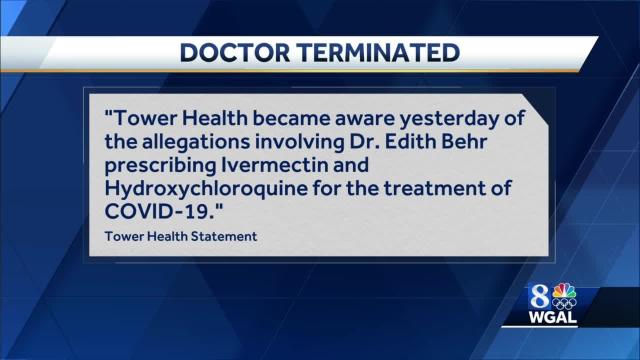
Tower Health fires physician accused of prescribing ivermectin, hydroxychloroquine to treat COVID-19

Tower Health doctor fired for allegedly prescribing ivermectin,  hydroxychloroquine to treat COVID

A Pennsylvania physician accused of prescribing ivermectin and hydroxychloroquine to treat and prevent COVID-19 has been terminated from Tower Health, PennLive reported Feb. 4.

Edith Behr, MD, is allegedly linked to Christine Mason, a woman who used a Facebook account to connect people to a physician for hydroxychloroquine and ivermectin prescriptions. A social media user claimed Dr. Behr was the source of the prescriptions and reported her to authorities and her employer, according to PennLive

West Reading, Pa.-based Tower Health officials became aware of the allegations against Dr. Behr Feb. 2 and took immediate action. 

“Tower Health became aware yesterday of the allegations involving Dr. Edith Behr prescribing ivermectin and hydroxychloroquine for the treatment of COVID-19,” Tower Health said in a Feb. 3 statement to PennLive. “We investigated the matter and, as a result, Dr. Behr’s employment with Tower Health Medical Group has been terminated effective immediately.”

Dr. Behr was a surgeon at Phoenixville (Pa.) Hospital, which is owned by Tower Health, according to the report. 

Ivermectin and hydroxychloroquine have not been approved by the FDA for prevention or treatment of COVID-19.

Why is America’s Covid-19 death rate so high?

Death Rates In The U.S. During Pandemic Far Higher Than Other Countries :  Shots - Health News : NPR

Covid-19 death rates in the United States are “eye-wateringly” high compared with other wealthy nations—a problem that several health experts say underscores the shortfalls of the country’s pandemic response.

U.S. Covid-19 death rates exceed those of other wealthy nations

According to CDC data, over 880,000 Americans have died from Covid-19 since the beginning of the pandemic—a death toll greater than that of any other country. And during the current omicron wave, Covid-19 deaths are now greater than the peak number seen during the delta wave and more than two-thirds as high as record numbers seen last winter before vaccines were available, the New York Times reports.

Moreover, since Dec. 1, when omicron was first detected in the United States, the proportion of Americans who have died from Covid-19 has been at least 63% higher than other large, wealthy countries, including Britain, Canada, France, and Germany, according to a Times analysis of mortality figures.

Currently, the daily Covid-19 death rate in the United States is nearly double that of Britain and four times that of Germany. The only large European countries to surpass the United States’ Covid-19 death rates have been the Czech Republic, Greece, Poland, Russian, and Ukraine—all of which are less wealthy nations where the most effective treatments may be limited.

“Death rates are so high in the States—eye-wateringly high,” said Devi Sridhar, head of the global public health program at the University of Edinburgh. “The United States is lagging.”

Similarly, Joseph Dieleman, an associate professor at the University of Washington, said the United States “stands out” with its high Covid-19 death rate. “There’s been more loss than anyone wanted or anticipated,” he said. 

Vaccination shortfalls plague the U.S.

Lagging Covid-19 vaccination rates among Americans likely contributed to the country’s outsized death toll compared with other nations, several health experts said.

Currently, around 64% of the U.S. population has been fully vaccinated. However, several peer countries, including Australia (80%), Canada (80%), and France (77%), have achieved higher vaccination rates.

Unvaccinated people make up the majority of hospitalized Covid-19 patients, according to the Times, but lagging vaccination and booster rates among vulnerable groups, such as older Americans, has also led to increased hospitalizations.

Around 12% of Americans ages 65 and older are not fully vaccinated, and among those who are fully vaccinated, 43% still have not received a booster shot, leaving them with waning immunity against the omicron variant. In comparison, only 4% of Britons ages 65 and older are not fully vaccinated, and only 9% have not had a booster shot.

“It’s not just vaccination—it’s the recency of vaccines, it’s whether or not people have been boosted, and also whether or not people have been infected in the past,” said Lauren Ancel Meyers, director of the University of Texas at Austin’s Covid-19 modeling consortium.

Similarly, former FDA Commissioner Scott Gottlieb said that the United States‘ lagging vaccination rates compared to the U.K.’s, particularly for boosters, may be due to “protracted wrangling” that “may have sowed confusion, sapping consumer interest.”

How the U.S. could fare in future Covid-19 waves

According to some scientists, the gap between the United States and other wealthy nations may soon begin to narrow. Although U.S. vaccination rates have been slow, the delta and omicron waves have infected so many people that overall immunity against the coronavirus has increased—which could potentially help blunt the effect of future waves.

“We’ve finally started getting to a stage where most of the population has been exposed either to a vaccine or the virus multiple times by now,” said David Dowdy, an epidemiologist at the Johns Hopkins Bloomberg School of Public Health. “I think we’re now likely to start seeing [American and European Covid-19 death rates] be more synchronized going forward.”

However, other experts noted that the United States has other disadvantages that could make future Covid-19 waves difficult. For example, many Americans have chronic health problems, such as diabetes and obesity, that increase the risk of severe Covid-19 outcomes.

Overall, health experts said the impact of future Covid-19 waves will depend on what new variants emerge, as well as what level of death people decide is tolerable.

“We’ve normalized a very high death toll in the U.S.,” said Anne Sosin, who studies health equity at Dartmouth University. “If we want to declare the end of the pandemic right now, what we’re doing is normalizing a very high rate of death.”

FDA fully approves Moderna’s COVID vaccine

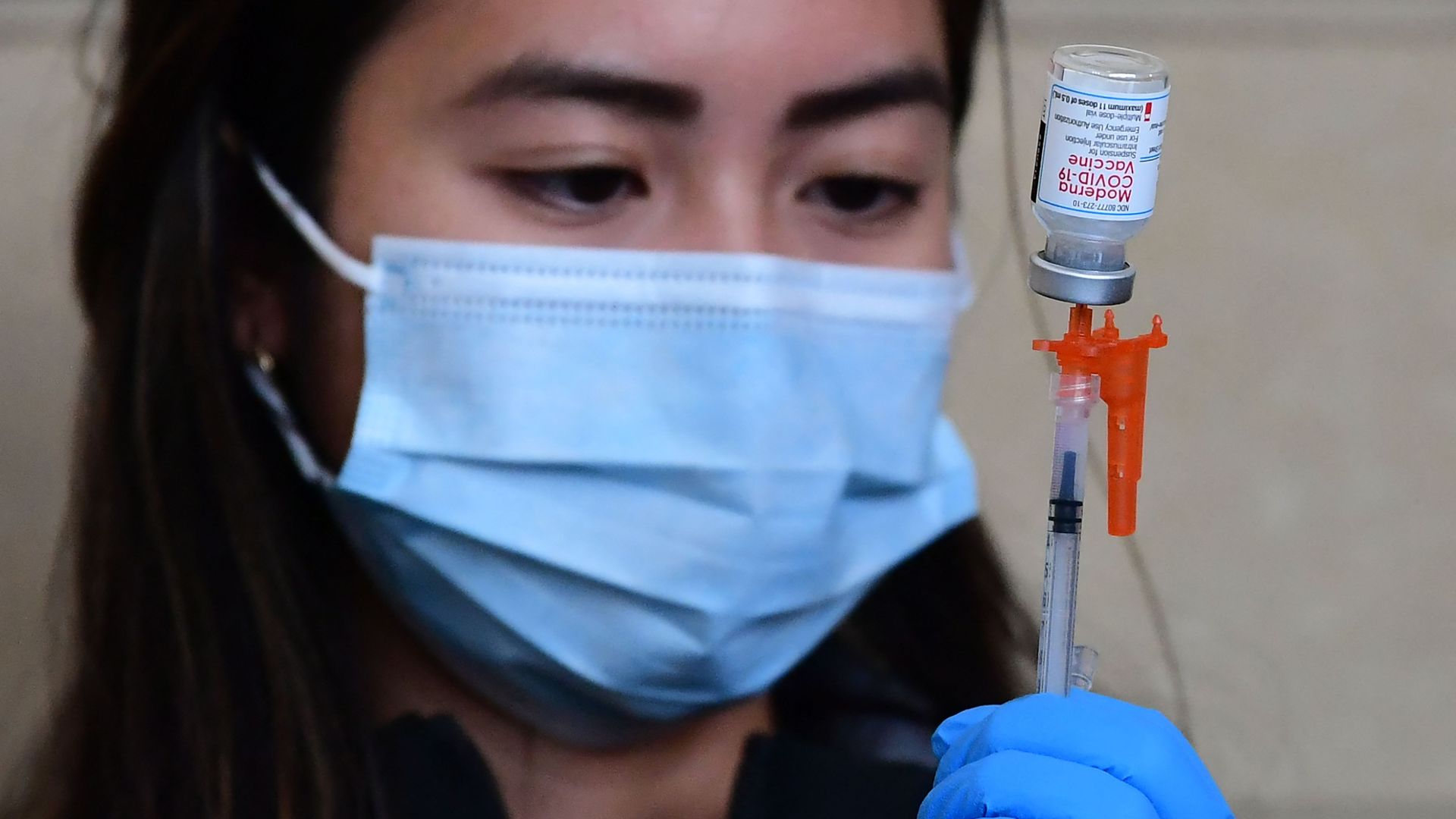
A health care worker preparing a dose of  Moderna's coronavirus vaccine.

The Food and Drug Administration fully approved Moderna’s mRNA COVID-19 vaccine on Monday, saying it meets its safety and manufacturing requirements.

Why it matters: Moderna’s vaccine, which will now be marketed as Spikevax, is the second coronavirus vaccine to receive full approval after the FDA approved Pfizer-BioNTech’s vaccine in August.

What they’re saying: “The public can be assured that Spikevax meets the FDA’s high standards for safety, effectiveness and manufacturing quality required of any vaccine approved for use in the United States,” acting FDA Commissioner Janet Woodcock said in a statement.

  • “The totality of real-world data and the full [Biologics License Application] for Spikevax in the United States reaffirms the importance of vaccination against this virus,” Moderna CEO Stéphane Bancel said.

The big picture: The rise of the Omicron variant forced vaccine makers to reevaluate the effectiveness of their vaccines, which were developed based on eaarlier forms of the virus.

  • Studies show that Moderna and Pfizer-BioNTech’s vaccines still overwhelmingly prevent severe disease and hospitalizations, especially when the first two doses are reinforced with a booster shot.

‘Stealth’ omicron: What you need to know about the subvariant

What you need to know about the 'stealth omicron' subvariant | 13newsnow.com

Scientists and health officials around the world are tracking the BA.2 subvariant of omicron, which has been referred to as “stealth omicron” because it cannot easily be identified via PCR tests.

What is the omicron BA.2 subvariant?

The BA. 2 omicron subvariant is a descendant of the original BA.1 omicron variant that has caused massive global Covid-19 surges. On Monday, the World Health Organization (WHO) urged researchers to prioritize the investigation of BA.2’s characteristics to determine whether it poses new challenges for areas already overwhelmed by the pandemic.

“The BA. 2 descendant lineage, which differs from BA. 1 in some of the mutations, including in the spike protein, is increasing in many countries,” WHO said. “Investigations into the characteristics of BA. 2, including immune escape properties and virulence, should be prioritized independently (and comparatively) to BA. 1.”

Currently, there is no evidence that BA. 2 is more transmissible or evades immunity better than BA. 1, the Washington Post reports.

In fact, experts still know very little about the transmissibility of BA.2 compared with BA.1, said Jeremy Luban, a professor of molecular medicine, biochemistry, and molecular pharmacology at UMass Medical School. And according to Luban, it is too early to determine whether vaccines and existing medications will provide adequate protection against BA.2.

Like the original omicron variant, BA.2 has many mutations, including roughly 20 found in the area targeted by most vaccines. BA.2 also has unique mutations that are not found in BA.1, which could limit the effectiveness of monoclonal antibodies, Luban said.

Further, scientists have found that BA.2 is harder to detect with PCR tests than BA.1. Although researchers were able to quickly differentiate BA.1 from the delta variant using a PCR test, the BA.2 subvariant does not possess the same “S gene target failure” seen in BA.1. As a result, BA.2 looks like the delta variant on the test, according to Wesley Long, a pathologist at Houston Methodist Hospital.

“It’s not that the test doesn’t detect it; it’s just that it doesn’t look like omicron,” Long said. “Don’t get the impression that ‘stealth omicron’ means we can’t detect it. All of our PCR tests can still detect it.”

Where is BA.2 circulating?

So far, BA.2 has been identified in 40 countries, including the United States. Although there are few reported cases of BA.2 in the United States, the subvariant is widely circulating in Asia and Europe

Throughout Europe, BA.2 seems to be the most widespread in Denmark—but experts said that could be because of the country’s robust program of sequencing the virus’s genome, the Post reports. On Jan. 20, health officials said that the BA.2 cases made up more than 50% of the country’s omicron cases.

In the United States, at least three cases have been found at Houston Methodist Hospital in Texas, which is currently studying the genetic makeup of virus samples from its patients, the Post reports.

“The good news is we have only three,” said James Musser, director of the Center for Molecular and Translational Human Infectious Diseases Research at Houston Methodist. “We certainly do not see the 5% and more that is being reported in the U.K. now and certainly not the 40% that is being reported in Denmark.”

In addition, a spokesperson for the Washington Department of Health on Monday told Fox News, “Two cases of BA.2 … were detected earlier this month in Washington.”

BA.2 remains ‘an open question’

Although BA.2 is now on at least four continents, experts say this new subvariant shouldn’t be a cause for panic, as it is expected to be relatively mild, USA Today reports.

“I don’t think it’s going to cause the degree of chaos and disruption, morbidity and mortality that BA.1 did,” said Jacob Lemieux, an infectious disease specialist at Massachusetts General Hospital. “I’m cautiously optimistic that we’re going to continue to move to a better place and, hopefully, one where each new variant on the horizon isn’t news.”

Similarly, Robert Garry, a virologist at Tulane University School of Medicine, said, “Variants have come, variants have gone.” He added, “I don’t think there’s any reason to think this one is a whole lot worse than the current version of omicron.”

Still, Musser argued that BA.2 deserves close attention until scientists can learn more about it.

“We know that omicron … can clearly evade preexisting immunity” from both vaccines and exposure to other variants of the virus, he said. “What we don’t know yet is whether son-of-omicron does that better or worse than omicron. So that’s an open question.”

COVID-19 deaths pass peak from delta surge

https://click1.email.thehill.com/ViewMessage.do;jsessionid=69623F0C51A9AD108D92583CE78B74C7

Welcome to Wednesday’s Overnight Health Care, where we’re following the latest moves on policy and news affecting your health. Subscribe here: thehill.com/newsletter-signup

Masks come to the Super Bowl: Fans attending the big game next month will be given KN95 masks.  

Despite omicron being less severe on average, the sheer number of cases has driven deaths past the peak from last year’s delta surge.  

The average number of U.S. COVID-19 deaths this week surpassed the height of the delta surge earlier this fall and is at its highest point since last winter, when the nation was coming out of the peak winter surge. 

The seven-day average of deaths hit 2,166 on Monday, according to the latest data from the Centers for Disease Control and Prevention (CDC). Average daily deaths in mid-September before the omicron variant was discovered peaked at around 1,900. 

While increasing evidence shows omicron may be less likely to cause death or serious illness than delta, the sheer infectiousness and the speed at which it spreads has overwhelmed hospitals, primarily with people who have not been vaccinated. 

The U.S. saw the highest numbers of deaths in the pandemic just over a year ago, before vaccines were widely available, when the daily average reached 3,400. The last time the U.S. topped 2,000 deaths was last February, as the country was slowly coming down from the January peak. 

Caution urged: Infections are falling in states that were hardest hit earlier, as well as broadly across the nation. Hospitalizations are also falling, but deaths are a lagging indicator and are still increasing. CDC Director Rochelle Walsenky said deaths have increased about 21 percent over the past week. 

The fact that the omicron variant tends to cause less severe disease on average also helped avoid an even greater crisis that would have occurred if it was as severe as the delta variant.  

Long COVID-19: Study author explains four factors that can predict how you get it

https://thehill.com/policy/healthcare/591528-long-covid-study-author-explains-four-factors-that-can-predict-how-you-get?userid=12325

Long COVID-19: Study author explains four factors that can predict how you  get it | KFOR.com Oklahoma City

Long COVID-19 has had an air of mystery around it for months. Doctors have struggled to explain or understand why some people who contract COVID-19 end up having lingering symptoms like fatigue, difficulty thinking clearly, or shortness of breath weeks or even months later.  

A new study published in the journal Cell helps shed some light on the condition, for the first time identifying four factors that can help predict whether someone will develop long COVID-19.  

“Being able to identify the factors that can cause the disease, cause the chronic condition, is the first step towards defining that it actually is a condition that can be treatable,” Jim Heath, president of the Institute for Systems Biology in Seattle, and an author of the study, said in an interview. “And then some of these factors also are in fact the kind of things one can imagine developing treatments for.” 

The most important factor the study identified in predicting long COVID-19 is the presence of certain kinds of antibodies called autoantibodies, which mistakenly attack healthy parts of the body. Autoantibodies are associated with autoimmune diseases, like lupus, where your immune system attacks your own body.  

But someone does not have to have an autoimmune disease to have autoantibodies present and be at higher risk for long COVID-19, Heath said.  

“Most people that have autoantibodies don’t really know it,” he said. “They’re what you call subclinical … maybe you have a risk of some autoimmune disease but it hasn’t developed.” 

Still, he said one practical application of the study is that lupus treatments could be “worth exploring” as treatments for long COVID-19.  

The second factor that can lead to long COVID-19 is the reactivation of a different virus called Epstein-Barr Virus (EBV), which is extremely common, infecting up to 90 percent of people at some point, and often causes only mild symptoms. 

The virus usually becomes inactive in the body following the initial infection, but it can be reactivated when someone gets COVID-19, helping lead to long COVID-19 symptoms.  

Heath said EBV could become reactivated when the immune system is distracted by fighting COVID-19.  

“It could be that the large distraction that’s COVID-19 infection is taking that attention away,” he said.  

The third factor identified is how much of the virus that causes COVID-19, officially called SARS-Cov-2, is present in the blood, known as the “viral load.” 

This factor along with the role of EBV suggests that new antiviral drugs that fight the immediate effects of COVID-19 infection, like the Pfizer pill Paxlovid, might also be useful in treating long COVID-19.  

“Two of these predictive factors are virus levels that are in the blood,” Heath said. “So that suggests that these antivirals that are being used to treat acute disease probably have a role for long COVID as well.” 

The final of the four factors that can predict long COVID-19 is more easily identifiable: if a patient has Type 2 diabetes.  

While these four factors are a step forward in understanding what causes long COVID-19 and helping develop treatments, the mechanism for why they are associated with long COVID-19 is still not fully clear.  

“They have a flavor of mechanistic factors,” Heath said. “The actual mechanism is not clear.” 

The study followed 309 COVID-19 patients, taking blood and swab samples at different points in time.  

In addition, one way to likely cut the risk of long COVID-19 is vaccination. A separate study from the United Kingdom found that vaccinated people were 41 percent less likely to develop long COVID-19.