The Summer of 2025 for U.S. Healthcare: What Organizations should Expect

Last Thursday, the Make America Healthy Again Commission released its 68-page report “Making America’s Children Healthy Again Assessment” featuring familiar themes—the inadequacy of attention to chronic disease by the health system, the “over-medicalization” of patient care vis a vis prescription medicines et al, the contamination of the food-supply by harmful ingredients, and more.

HHS Secretary Kennedy, EPA Administrator Zeldin and Agriculture Secretary Rollins pledged war on the corporate healthcare system ‘that has failed the public’ and an all-of-government approach to remedies for burgeoning chronic care needs.

Also Thursday, the House of Representatives passed its budget reconciliation bill by a vote of 215-214. The 1000-page bill cuts federal spending by $1.6 trillion (including $698 billion from Medicaid) and adds $2.3 trillion (CBO estimate/$3.4 to $5 trillion per Yale Budget Lab) to the national deficit over the next decade. It now goes to the Senate where changes to reduce federal spending to pre-pandemic level will be the focus.

With a 53-37 advantage and 22 of the 36 Senate seats facing mid-term election races in November, 2026, the Senate Republican version of the “Big Beautiful Bill” will include more spending cuts while pushing more responsibility to states for funding and additional cuts. The gap between the House and Senate versions will be wider than currently anticipated by House Republicans potentially derailing the White House promise of a final Big Beautiful Bill by July 4.

And, over the last week and holiday weekend, the President announced a new 25% tariff on Apple devices manufactured in India and new tariffs targeting the EU; threatened cuts to federal grants to Harvard and cessation of its non-citizen student enrollment, a ‘get-tougher’ policy on Russia to pressure an end of its Ukraine conflict, and a pledge to Americans on Memorial that it will double down on ‘peace thru strength’  in its Make America Great Again campaign.

These have 2 things in common:

1-They’re incomplete. None is a finished product.

The MAHA Commission, working with the Departments of Health & Human Services, Interior and Agriculture, is tasked to produce another report within 90 days to provide more details about a plan. The FY26 budgeting process is wrought with potholes—how to satisfy GOP deficit hawks vs. centrist lawmakers facing mid-term election, how to structure a bill that triggers sequestration cuts to Medicare (projected $490 billion/10 yrs. per CBO), how to quickly implement Medicaid work requirements and marketplace enrollment cuts that could leave insurance coverage for up to 14 million in limbo, and much more.  And the President’s propensity to “flood the zone” with headline-grabbing Truth Social tweets, Executive Orders and provocative rhetoric on matters at home and abroad will keep media occupied and healthcare spending in the spotlight.

2-They play to the MAGA core.

The MAGA core is primarily composed of older, white, Christian men driven by a belief that the United States has lost its exceptionalism through WOKE policies i.e. DEI in workplaces and government, open borders, globalization and excessive government spending and control. In the 2024 Presidential election, the MAGA core expanded incrementally among Black, Hispanic, and younger voters whose concerns about food, energy and housing prices prompted higher-than expected turnout. The MAGA core believes in meritocracy, nationalism, smaller government, lower taxes, local control and free-market policies that encourage private investment in the economy. The core is price sensitive.

The health system per se is not a concern but it’s the affordability and lack of price transparency are. They respect doctors and frontline caregivers but think executives are overpaid and prone to self-promotion. And the MAGA core think lawmakers have been complicit in the system’s lack of financial accountability largely beneficial to elites.

Looking ahead to the summer, a “Big Beautiful Bill” will pass with optics that allow supporters to claim fiscal constraint and lower national debt and opponents to decry insensitive spending cuts and class warfare against low-and-middle-class households.

Federal cuts to Medicaid and SNAP (Supplemental Nutrition Assistance Program) will be prominent targets in both groups—one a portrayal of waste, fraud and abuse and the other tangible evidence of societal inequity and lack of moral purpose. Each thinks the other void of a balanced perspective. Each thinks the health system is underperforming and in need of transformational change but agreement about how to get there unclear.

As MAHA promotes its agenda, Congress passes a budget and MAGA advances its anti-establishment agenda vis a vis DOGE et al, healthcare operators will be in limbo. The dust will settle somewhat this summer, but longer-term bets will be modified for most organizations as compliance risks change, state responsibilities expand, capital markets react and Campaign 2026 unfolds.

And in most households, concern about the affordability of medical care will elevate as federal and state funding cuts force higher out of pocket costs on consumers and demand for lower prices.

The summer will be busy for everyone in healthcare.

PS: Changes in the housing market are significant for healthcare: 36% of the CPI is based on shelter vs. 8% for medical services & products, 14% for food and 6% for energy/transportation. While the overall CPI increased 2.3% in the last 12 months, medical services prices increased 3.1%. contributing to heightened price sensitivity and delayed payments.

It has not escaped lawmaker attention: revenue cycle management business practices (debt collection) are being scrutinized in hospitals and community benefit declarations by not-for-profit hospitals re-evaluated. The economics of healthcare are not immune to broader market trends nor is spending for healthcare in households protected from day-to-day fluctuations in prices for other goods and services.

Federal Reserve delivers super-sized half-point rate cut

The Federal Reserve cut its target interest rate Wednesday by an extra-large half-percentage point and projected more rate cuts this year and next, as its period of trying to put brakes on the economy to fight inflation comes to a close.

Why it matters: 

The move lowers borrowing costs for consumers and businesses, as the central bank aims to keep the economy’s expansion going strong amid warning signs on the outlook.

What they’re saying: 

“The labor market is actually in solid condition — and our intention with our policy move today is to keep it there,” Fed chair Jerome Powell told reporters at a press conference on Wednesday.

  • “The U.S. economy is in good shape. It’s growing at a solid pace,” Powell added. “We want to keep it there.”

Zoom in: 

The rate cut reflects the U.S. entering a new phase where the softening job market is the predominant economic risk — rather than elevated inflation.

  • By going with an aggressive half-point cut instead of its more traditional quarter-point adjustment, the Fed moved to get ahead of some evident faltering in the job market.
  • However, new projections imply the Fed will shift toward smaller quarter-point rate cuts from here.
  • The cut also thrusts the Fed into election-year politics, as former President Trump has said the central bank should not ease monetary policy mere weeks before the election. Some Democrats have called for even more aggressive rate cuts.

Driving the news: 

The policy-setting Federal Open Market Committee lowered its target range for the federal funds rate to 4.75%–5%, from the 5.25–5.5% range in place since last July.

  • The central bank also released new projections that anticipated the rate will be cut an additional half-point by December — implying a quarter-point cut at each of its two remaining 2024 meetings.
  • The median Fed officials anticipated their target rate will be down to 3.4% by the end of 2025, which implies four quarter-point rate cuts next year.
  • “Job gains have slowed,” the Fed’s policy statement noted, adding that the committee “has gained greater confidence that inflation is moving sustainably toward 2 percent.”

Of note: 

The Fed policy meeting marked the first dissent from a board member in more than two years. Michelle Bowman, a Trump-appointed governor who focuses on community banking issues, preferred to cut by only a quarter point.

  • Bowman’s dissent is also the first by a member of the Fed’s seven-member Board of Governors — as opposed to a regional Fed bank president — since 2005.
  • Christopher Waller, the other Trump-appointed governor on the board, supported the action.

By the numbers: 

The median official saw inflation for the full year coming in at 2.3%, not far from the Fed’s 2% target. By contrast, in June, officials saw 2.6% inflation this year.

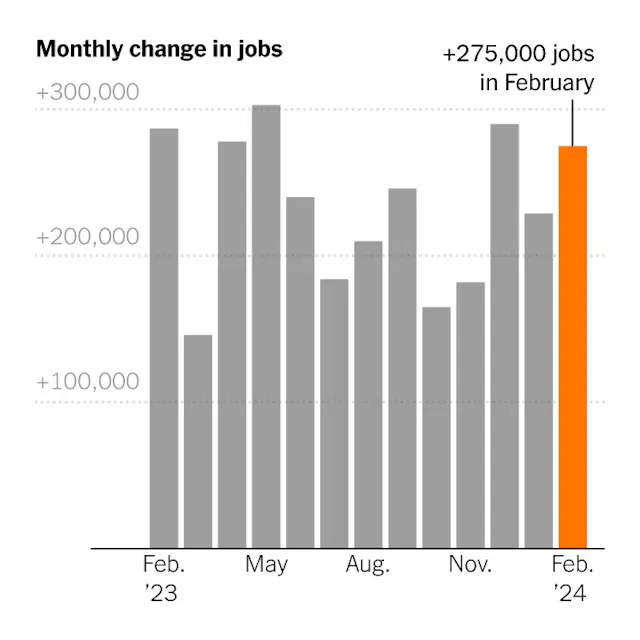
  • They also anticipate slightly higher unemployment. The projections listed a 4.4% unemployment rate in the final quarter of the year. That rate was 4.2% in August, up from 3.7% at the start of the year.
  • However, the Fed officials’ forecasts also imply the jobless rate leveling out at that point and being flat at 4.4% in the final months of 2025.

The bottom line: 

Powell and his colleagues elected to take more aggressive action Wednesday in hopes that it will be enough to forestall any further deterioration in the job market of the sort seen over the last few months — and is betting that the Fed can move to a more gradualist approach from here.

  • Speaking about the larger-than-anticipated rate cut, Powell said he was pleased the Fed made a strong start in lowering interest rates.
  • “The logic of this — both from an economic standpoint and also from a risk management standpoint — was clear,” Powell said.
  • He added: “We’re gonna take it meeting by meeting. … There’s no sense that the committee feels it’s in a rush to do this.”

Inflation can take the back seat

https://www.axios.com/newsletters/axios-macro-c2d8fcc0-5a3d-11ef-82b9-fbe82e04f95e.html?utm_source=newsletter&utm_medium=email&utm_campaign=newsletter_axiosmacro&stream=business

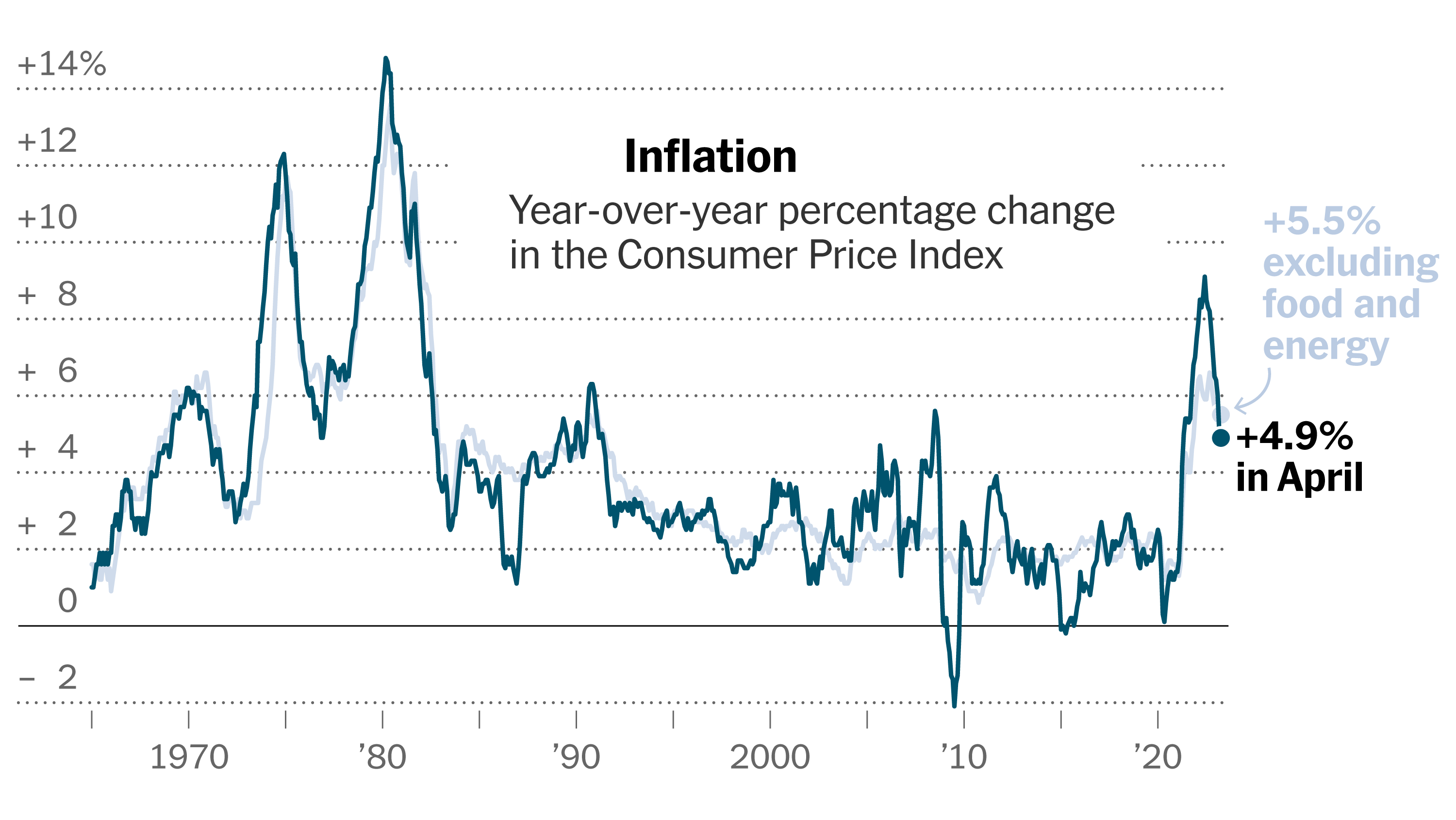
For more than two years, the economy’s big problem was inflation — it was the key irritant for policymakers, the White House and American consumers.

  • Today’s Consumer Price Index report confirms that is no longer the case: Prices are no longer rising rapidly, which means the battle to kill inflation appears all but over.

Why it matters: 

Inflation looked to be coming down alongside a still-flourishing economy — until recently. The string of upbeat inflation data is all but certain to allow Fed officials to more comfortably shift their attention to the weakening labor market and lower interest rates.

What they’re saying: 

“[T]he cumulative improvement in the overall inflation data over the past year now gives the Federal Reserve cover to move into risk management mode with the intent of protecting and preserving the soft landing,” Joe Brusuelas, chief economist at accounting firm RSM, wrote today.

By the numbers: 

Overall CPI rose 2.9% in the 12 months ending in July, dropping below 3% for the first time since 2021.

  • Core CPI, which excludes food and energy prices, rose 3.2% — the smallest increase in three years.
  • By a different measure, inflation looks more benign. Over the last three months, core CPI rose 1.6% on an annualized basis, down from 2.1% in June.

Zoom in: 

Prices for many key items increased more slowly — or, in some cases, got cheaper over the month.

  • Grocery costs have been rising at a mild pace since February, including a 0.1% increase in July. Prices are up just 1% compared to the same time last year.
  • Used vehicle costs fell 2.3% in July, a bigger drop than that seen the previous month. New vehicle prices fell 0.2%, the sixth-straight month of price decreases.

The intrigue: 

The bad news was in the housing sector, where prices have kept upward pressure on inflation.

  • The shelter index is a huge component. It accounted for over 70% of core CPI’s 12-month increase through July, the government said.
  • The sector is “solely responsible for core inflation remaining above the Fed’s 2% target,” Preston Caldwell, senior U.S. economist at Morningstar, wrote today.

In the CPI report, the rent index rose 0.5%, up from 0.3%. Owner’s equivalent rent, which the government uses to account for inflation in homes that people own, rose 0.4% after slowing in June.

What to watch: 

The question in recent weeks has been how drastic of a cut the Fed will make at the conclusion of its next policy meeting in September — rather than whether it will do so at all.

  • The odds that the Fed would cut by a quarter of a percentage point rose to 54% after the inflation report, according to CME’s FedWatch tool.
  • As of yesterday, odds of a half-percentage point cut looked slightly more likely.

The bottom line: 

The incoming data about the health of the labor market will ultimately determine that call.

  • “This is now a labor data-first Fed, not an inflation data-first Fed, and the incoming labor data will determine how aggressively the Fed pulls forward rate cuts,” economists at Evercore wrote in a note this morning.