The Summer of 2025 for U.S. Healthcare: What Organizations should Expect

Last Thursday, the Make America Healthy Again Commission released its 68-page report “Making America’s Children Healthy Again Assessment” featuring familiar themes—the inadequacy of attention to chronic disease by the health system, the “over-medicalization” of patient care vis a vis prescription medicines et al, the contamination of the food-supply by harmful ingredients, and more.

HHS Secretary Kennedy, EPA Administrator Zeldin and Agriculture Secretary Rollins pledged war on the corporate healthcare system ‘that has failed the public’ and an all-of-government approach to remedies for burgeoning chronic care needs.

Also Thursday, the House of Representatives passed its budget reconciliation bill by a vote of 215-214. The 1000-page bill cuts federal spending by $1.6 trillion (including $698 billion from Medicaid) and adds $2.3 trillion (CBO estimate/$3.4 to $5 trillion per Yale Budget Lab) to the national deficit over the next decade. It now goes to the Senate where changes to reduce federal spending to pre-pandemic level will be the focus.

With a 53-37 advantage and 22 of the 36 Senate seats facing mid-term election races in November, 2026, the Senate Republican version of the “Big Beautiful Bill” will include more spending cuts while pushing more responsibility to states for funding and additional cuts. The gap between the House and Senate versions will be wider than currently anticipated by House Republicans potentially derailing the White House promise of a final Big Beautiful Bill by July 4.

And, over the last week and holiday weekend, the President announced a new 25% tariff on Apple devices manufactured in India and new tariffs targeting the EU; threatened cuts to federal grants to Harvard and cessation of its non-citizen student enrollment, a ‘get-tougher’ policy on Russia to pressure an end of its Ukraine conflict, and a pledge to Americans on Memorial that it will double down on ‘peace thru strength’  in its Make America Great Again campaign.

These have 2 things in common:

1-They’re incomplete. None is a finished product.

The MAHA Commission, working with the Departments of Health & Human Services, Interior and Agriculture, is tasked to produce another report within 90 days to provide more details about a plan. The FY26 budgeting process is wrought with potholes—how to satisfy GOP deficit hawks vs. centrist lawmakers facing mid-term election, how to structure a bill that triggers sequestration cuts to Medicare (projected $490 billion/10 yrs. per CBO), how to quickly implement Medicaid work requirements and marketplace enrollment cuts that could leave insurance coverage for up to 14 million in limbo, and much more.  And the President’s propensity to “flood the zone” with headline-grabbing Truth Social tweets, Executive Orders and provocative rhetoric on matters at home and abroad will keep media occupied and healthcare spending in the spotlight.

2-They play to the MAGA core.

The MAGA core is primarily composed of older, white, Christian men driven by a belief that the United States has lost its exceptionalism through WOKE policies i.e. DEI in workplaces and government, open borders, globalization and excessive government spending and control. In the 2024 Presidential election, the MAGA core expanded incrementally among Black, Hispanic, and younger voters whose concerns about food, energy and housing prices prompted higher-than expected turnout. The MAGA core believes in meritocracy, nationalism, smaller government, lower taxes, local control and free-market policies that encourage private investment in the economy. The core is price sensitive.

The health system per se is not a concern but it’s the affordability and lack of price transparency are. They respect doctors and frontline caregivers but think executives are overpaid and prone to self-promotion. And the MAGA core think lawmakers have been complicit in the system’s lack of financial accountability largely beneficial to elites.

Looking ahead to the summer, a “Big Beautiful Bill” will pass with optics that allow supporters to claim fiscal constraint and lower national debt and opponents to decry insensitive spending cuts and class warfare against low-and-middle-class households.

Federal cuts to Medicaid and SNAP (Supplemental Nutrition Assistance Program) will be prominent targets in both groups—one a portrayal of waste, fraud and abuse and the other tangible evidence of societal inequity and lack of moral purpose. Each thinks the other void of a balanced perspective. Each thinks the health system is underperforming and in need of transformational change but agreement about how to get there unclear.

As MAHA promotes its agenda, Congress passes a budget and MAGA advances its anti-establishment agenda vis a vis DOGE et al, healthcare operators will be in limbo. The dust will settle somewhat this summer, but longer-term bets will be modified for most organizations as compliance risks change, state responsibilities expand, capital markets react and Campaign 2026 unfolds.

And in most households, concern about the affordability of medical care will elevate as federal and state funding cuts force higher out of pocket costs on consumers and demand for lower prices.

The summer will be busy for everyone in healthcare.

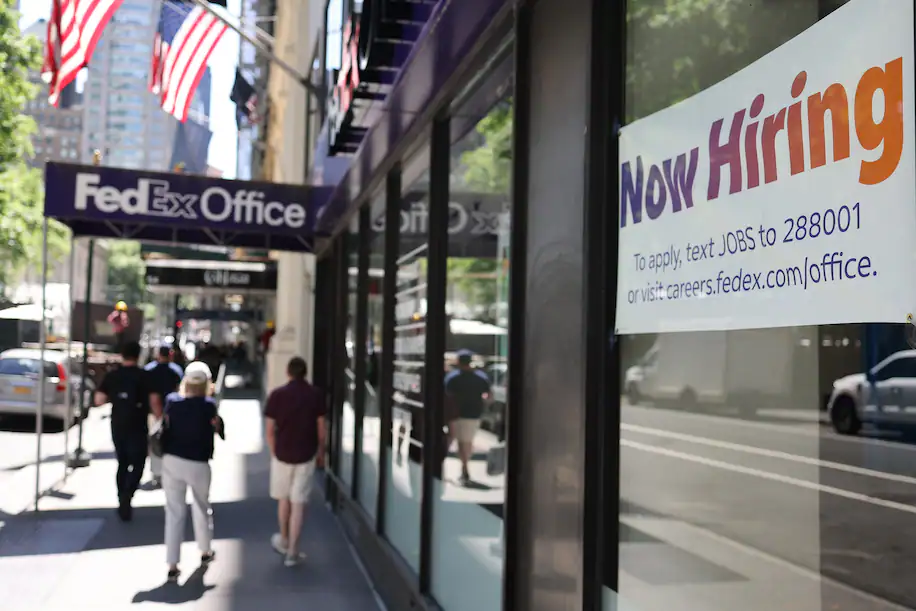
PS: Changes in the housing market are significant for healthcare: 36% of the CPI is based on shelter vs. 8% for medical services & products, 14% for food and 6% for energy/transportation. While the overall CPI increased 2.3% in the last 12 months, medical services prices increased 3.1%. contributing to heightened price sensitivity and delayed payments.

It has not escaped lawmaker attention: revenue cycle management business practices (debt collection) are being scrutinized in hospitals and community benefit declarations by not-for-profit hospitals re-evaluated. The economics of healthcare are not immune to broader market trends nor is spending for healthcare in households protected from day-to-day fluctuations in prices for other goods and services.
The slowdown that wasn’t

Economists anticipated lackluster economic growth last quarter. Instead, growth surged, a sign of the still-resilient economy.

Why it matters: 

The soft landing was very much intact this spring: Price pressures eased, but not at the expense of the strong economy and labor market.

What they’re saying: 

“While these estimates will be revised a few times, they do point to the continued strength of the U.S. economy despite the high interest rate environment we’ve been in for over a year,” NerdWallet senior economist Elizabeth Renter wrote this morning.

The big picture: 

The economy grew at an annualized 2.8% in the second quarter, up from the modest gain of 1.4% at the start of 2024.

  • The consumer was the key driver of last quarter’s strong economic growth. Personal consumption expenditures increased at a 2.3% annualized rate, gaining from the 1.5% pace in the prior period. That category contributed 1.6 percentage point to the increase in GDP figure.
  • Another big contributor to growth: Businesses stocked up inventories at a strong rate, adding 0.8 percentage point to GDP. Given that consumer spending was so brisk last quarter, the stocking was likely to keep up with current demand — not to make up for prior shortfalls.

Capital spending rose at a 5.2% annualized rate, reflecting a surge in spending on equipment (+11.6%) and continued investment in intellectual property (+4.5%).

  • The jump in spending on equipment and intellectual property “affirms our conjecture that the American economy is in the midst of a productivity boom that in turn will result in an improved standard of living across the economy for all cohorts,” RSM economist Joe Brusuelas wrote in a note.

Between the lines: 

A narrower measure of growth affirms the economy’s resiliency in the second quarter.

  • Final domestic private sector sales — which strips out volatile categories like inventory shift, government spending and trade — increased at a 2.6% annualized rate, the same as the previous quarter.

The intrigue: 

The second quarter saw strong growth alongside lower inflation — a reversal of dynamics observed in the January to March period, when inflation resurged and headline GDP moderated.

  • Still, other indicators point to potential risks for the economy. The unemployment rate has risen in recent months to 4.1%, the highest since 2021. Should the labor market lose steam, that could slow consumer spending and crimp the economy.

What to watch: 

The Federal Reserve holds a policy meeting next week. No rate changes are expected, though officials look likely to lay the groundwork for a rate cut in the fall.

U.S. economy surprises with strong 2.8% growth rate in second quarter

The U.S. economy grew at a 2.8% annualized rate in the second quarter—a faster rate than economists expected as consumer spending increased and businesses built up inventories, the Commerce Department said on Thursday.

Why it matters:

The new data raises confidence the economy has achieved a “soft landing” — healthy economic growth alongside cooling inflation.

  • Economists expected an annualized growth rate of 1.9% last quarter. The economy grew at a 1.4% rate in the first three months of the year.

Driving the news:

The accelerated growth stemmed from a jump in inventory investment and consumer spending.

  • Companies also increased spending on equipment and intellectual property. That was partly offset by a slump in housing, the government said.
  • Personal consumption expenditures rose at a 2.3% annualized rate last quarter, up from the 1.4% in the first quarter.
  • Consumer spending contributed 1.6% to the rise in GDP, while private inventories added 0.82 percentage point.

The big picture:

Gloomy forecasts of a recession over the past year have not come to pass.

  • The Federal Reserve raised interest rates to the highest in two-decades to restrain growth and bring down inflation—raising expectations those actions would tip the economy into a sharp slowdown.
  • Fed officials have cautiously suggested the economy has achieved a soft landing as inflation dissipates.
  • The central bank is expected to keep rates on hold at the policy meeting next week and set the table for a rate cut in September.

The bottom line:

The economy continues to defy expectations of a slowdown.

Surprising U.S. economy is powering better global outlook, World Bank says

The global economy is in better shape than it was at the start of the year, thanks largely to the performance of the United States, the World Bank said in its latest forecast Tuesday. But the sunnier outlook could cloud over if major central banks — including the Federal Reserve — keep interest rates at elevated levels.

Global growth is expected to reach an annual rate of 2.6 percent this year, up from a January forecast of 2.4 percent, the bank said. The global economy is drawing closer to a “soft landing” after recent price spikes, with average inflation dropping to a three-year low amid continuing growth, bank economists said.

While Americans’ unhappiness with high prices remains a key vulnerability for President Biden’s reelection bid, the World Bank now expects the U.S. economy to grow at an annual rate of 2.5 percent, nearly a full percentage point higher than it predicted in January.

The United States is the only advanced economy growing significantly faster than the bank anticipated at the start of the year.

“Globally, overall things are better today than they were just four or five months ago,” said Indermit Gill, the World Bank’s chief economist. “A big part of this has to do with the resilience of the U.S. economy.”

The bank credited “U.S. dynamism” with helping stabilize the global economy, despite the highest interest rates in years and wars in Ukraine and the Middle East. Employers added 272,000 jobs in May, topping analysts’ estimates, the Labor Department reported last week.

Expected global growth this year and next, however, will remain below the pre-pandemic average of 3.1 percent. Three out of four developing countries are now expected to grow more slowly than the bank forecast in January, leaving them little hope of narrowing the income gap with richer nations.

Despite their mostly upbeat tone, bank officials warned that central banks including the Fed are likely to move slowly to begin reversing the past two years of interest rate increases. That means global interest rates will remain high, averaging around 4 percent over the next two years, roughly twice the average recorded during the two decades before the pandemic.

Global inflation should ease to 3.5 percent this year, before dropping to 2.9 percent next year. But the decline is proving more gradual than the bank anticipated. And any deterioration that causes monetary authorities to delay cuts in borrowing costs could strip 0.3 percentage points from the forecast growth rates.

“This is a major risk confronting the global economy — interest rates remaining higher for longer and an already weak growth outlook becoming weaker,” Gill said.

Bank officials also flagged global trade — which is on course this year to complete its weakest half-decade since the 1990s — as a concern. Trading nations in 2024 have implemented more than 700 restrictions on merchandise trade and nearly 160 barriers to services trade.

“Trade restrictive measures have skyrocketed. They have more than doubled since the pre-pandemic period,” Gill said.

Rising protectionism risks becoming a drag on the global economy’s already modest pace of growth. Popular support in many countries for tariffs on imported goods and industrial subsidies that favor domestic production could further constrict trade flows that are already under pressure from the U.S.-China rivalry and other geopolitical risks.

“The world might become stuck in the slow lane,” said Ayhan Kose, the bank’s deputy chief economist.

Among those likely to suffer if key interest rates stay higher for longer are the 40 percent of developing countries at risk of a debt crisis. Many borrowed heavily to fund pandemic-related health care and subsequently to cover food and fertilizer bills that soared following the war in Ukraine.

They have little immediate prospect of securing debt relief and now risk losing out on trade gains as larger economies turn inward, Gill said.

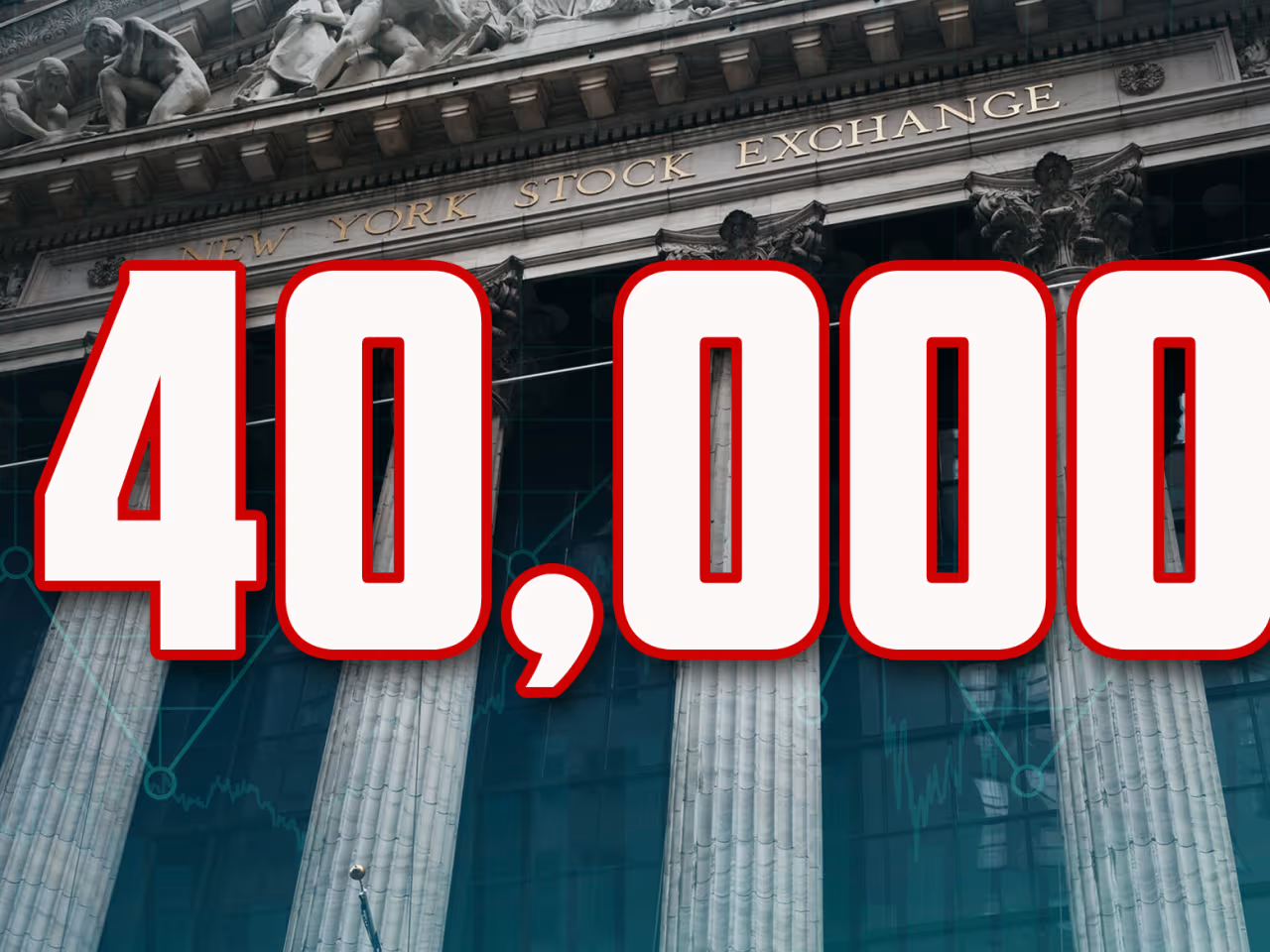
Dow Jones Industrial Average hits 40,000 for the 1st time

The Dow Jones Industrial Average crossed 40,000 for the first time in history on Thursday.

This is a significant and symbolic milestone for the index that tracks 30 of the most valuable publicly traded companies in the U.S.

The Dow is now up about 6% so far this year.

The recent rally in the Dow, S&P 500 and Nasdaq has been fueled by data showing inflation is cooling, which would allow the Federal Reserve to begin its long-awaited interest rate cuts.

Inflation data released on Wednesday showed that price increases slowed slightly from the annual rate recorded in the previous month, ending a surge of inflation that stretches back to the beginning of 2024.

In recent months, the Fed had all but abandoned its previous forecast of three quarter-point rate cuts this year. But the slowdown of price hikes offered hope of rekindling those plans.

“The combination of the Fed likely to be lowering interest rates because inflation is moderating with a resilient economy is a beautiful scenario for a bull market,” Ed Yardeni, the president of market advisory firm Yardeni Research and former chief investment strategist at Deutsche Bank’s U.S. equities division, told ABC News.

“It’s more enjoyable to say the market is going to these nice, round numbers in record-high territory than coming back down to them,” Yardeni added.

The inflation news on Wednesday sent each of the major stock indexes up more than 5% for the day, propelling all of them to record highs. In early trading on Thursday, the Dow had ticked up a quarter of a percentage point.

Observers have also attributed this year’s stock market rally to the rise in value of some major tech firms, driven largely by enthusiasm about artificial intelligence.

Inside the very good GDP report

Forget the much-discussed prospect of a soft landing for the U.S. economy. In 2023, there was no landing at all.

Why it matters: 

Big economic rules broke last year. The latest data to confirm that is the new GDP report showing very strong economic growth to conclude 2023, even amid a big cooldown in inflation.

  • Mainstream economists and policymakers believed a period of below-trend growth would be necessary to make progress on inflation.
  • Instead, above-trend growth in 2023 coincided with inflation falling sharply, reflecting improvement in the economy’s supply potential.

Driving the news: 

The economy expanded at a 3.3% annualized rate in the fourth quarter, well above the 2% forecasters expected. That followed the previous quarter’s blockbuster 4.9% growth.

  • GDP was 3.1% higher in the fourth quarter than a year earlier.
  • That represents an acceleration from 0.7% GDP growth in 2022, and trounced the growth rates of most other advanced countries — and the 1.8%-ish rate that economists consider the United States’ long-term trend.

Details: 

The fourth quarter’s hot growth resulted from bustling activity across the economy.

  • Consumers spent more on goods and services, with personal consumption expenditures rising at a 2.8% annualized pace. That was responsible for nearly 2 percentage points of the fourth quarter’s GDP rise.
  • Businesses spent on equipment, factories and intellectual property at a solid pace, with nonresidential fixed investment increasing at 1.9% — up from the previous quarter.

The intrigue: 

For two years now, Fed officials have spoken of the need for a period of below-trend growth to bring inflation into line. Now, they face the decision of whether to cut rates — to essentially declare victory on inflation — even as below-trend growth is nowhere to be seen.

  • A flourishing labor market, strong productivity gains and supply-side improvements — more workers joining the workforce, for instance — has (at least so far) meant the economy can keep growing at a solid pace without risking a pickup in price pressure.
  • [W]e had significant supply-side gains with strong demand,” Fed chair Jerome Powell said in his December press conference, adding that potential growth may have been higher than usual “just because of the healing on the supply side.”
  • “So that was a surprise to just about everybody,” Powell said.

What they’re saying: 

“This report feels like a supersonic Goldilocks: very strong GDP reading with cool inflation,” Beth Ann Bovino, chief economist at U.S. Bank, tells Axios. “Good news is good news.”

  • “With high productivity levels, we can have strong growth with less inflation. That was the case during the last soft landing in the 90s,” Bovino adds.

Health Sector Economic Indicators Briefs

https://mailchi.mp/altarum/health-sector-economic-indicators-briefs-august-2023?e=b4c24e7e20

The latest Altarum Health Sector Economic Indicators show that health spending as a percent of GDP has stabilized near 17.5%, health care price growth and economywide inflation recently converged, and the health sector added over 60,000 jobs in July. See the highlights below.

Health spending as a percent of GDP has stabilized at 17.5%

  • In June 2023, national health spending grew by 5.0%, year over year, and now represents 17.5% of GDP, equal to the average percent of GDP for the previous 12 months.
  • Nominal GDP in June 2023 was 5.8% higher than in June 2022, and grew 0.8 percentage points faster than health spending.
  • Neglecting government subsidies, spending on personal health care in June increased by 8.1%, year over year, and by 7.3% when subsidies are included, exceeding the GDP growth rate for the fifth consecutive month.
  • Neglecting government subsidies, year-over-year spending on home health care (12.2%) and nursing home care (12.0%) grew fastest in June, while physician and clinical services spending increased the least (6.9%) among major categories.
  • Personal health care growth (neglecting government subsidies), which continues to be dominated by growth in utilization rather than price increases, has slowed somewhat in the past 4 months.

Health care price growth and economywide inflation finally converge

  • The overall Health Care Price Index (HCPI) increased by 2.7% year over year in July, slowing 0.1 percentage points from the slightly revised rate in June (2.8%).
  • For the first time in over two years, health care price growth exceeded overall inflation as economywide price growth (measured by the GDP Deflator) fell to 2.6% in June, its lowest growth rate since March 2021.
  • In new data for July, overall year-over-year CPI growth actually increased slightly to 3.2%, the first increase in its growth rate since June 2022, driven primarily by changes in commodities price growth.
  • Among the major health care categories, prices for nursing home care (5.5%) and dental care (5.1%) grew fastest, while physician and clinical services (0.7%) price growth was the slowest in July.
  • Year-over-year growth in hospital prices paid by private payers fell nearly 2.5 percentage points over the past two months (from 6.1% in May to 3.7% in July), beginning to converge with public payer price growth. In July, growth in Medicare and Medicaid hospital prices reached 2.6% and 2.3% growth respectively.
  • Our implicit measure of health care utilization growth declined in June, up 4.5% year over year, and down somewhat from slightly revised data (4.9% growth) a month prior.

Health care adds 63,000 jobs in July, the largest increase since July 2022

  • Health care added 63,000 jobs in July 2023, exceeding the average of 43,700 jobs added per month for the first 6 months of the year and the largest monthly increase in the past year.
  • July’s health sector job growth was led by growth in ambulatory care settings, which added 35,400 jobs, followed by hospitals, which added 16,100 jobs.
  • Nursing and residential care facilities added 11,500 jobs in July, with growth occurring in both nursing homes (6,300 jobs) and other nursing and residential care settings (5,200 jobs).
  • The economy added 187,000 jobs in July, somewhat below the 12-month average of 280,200 jobs. The unemployment rate, at 3.5%, changed little in July.
  • Health care wage growth in June 2023 was 3.7% year over year, somewhat below the total private sector wage growth of 4.4%.
  • Wage growth in health care settings is now highest in nursing and residential care, at 4.8% year over year in June 2023. Wage growth in hospitals was 4.3%, while wage growth in ambulatory care settings was 3.0% in June.

Inflation’s big cooldown

The latest CPI was a crowd-pleaser: Inflation has plunged from its peak, helping provide relief for consumers.

  • Beyond the headline, an underlying measure closely watched by economists and the Fed finally began to cool.

Why it matters: 

The worst of the inflation crisis looks to be firmly behind us. Price gains appear to be on a path to returning to normal, but there is huge uncertainty around how long that will take, with plenty of hurdles still ahead.

What they’re saying: 

“After a punishing stretch of high inflation that eroded consumer’s purchasing power, the fever is breaking,” Bill Adams, chief economist at Comerica Bank, wrote in a note.

  • While the Fed appears to be on track to tighten by a quarter percentage point two weeks from today, the promising news lowers the odds of further hikes this year.

Details: 

Headline CPI rose 3% (or 2.97%, unrounded) in the 12 months through June, the smallest increase since March 2021. That reflects milder price gains for a slew of goods, including food — and outright deflation for other items consumers buy, like airline fares, which fell 8% in June.

The intrigue: 

At the same time last year, headline prices skyrocketed by 9%. Now we’re lapping that period, which makes the comparison much more favorable.

  • Then, commodity prices soared on disruptions from Russia’s invasion of Ukraine. Those prices are sharply lower now, helping the headline figure cool rapidly. Gasoline, for instance, is down nearly 27%.
  • Those favorable effects will fade in the year-on-year numbers, so don’t be surprised if the headline CPI figure rebounds some in the coming months.

The most encouraging aspect was the core figure, which strips out volatile food and energy costs and is closely followed by policymakers. That rose by just 0.2% in June, the slowest monthly pace since February 2021.

  • In the past three months, core inflation has risen at a 4.1% annualized pace — down almost a full percentage point from May.
  • Under the hood, there was notable disinflation across a key sector of the economy monitored by the Fed: core services, excluding shelter. Prices in that category were flat last month, compared to a 0.2% rise in May.
  • That cooling is happening alongside a still-healthy labor market and solid wage gains (more on this below), which officials worried could stoke inflation in this category.

The Biden administration is eager to tout the progress. “The economy is defying predictions that inflation would not fall absent significant job destruction,” top White House economic adviser Lael Brainard is expected to say this afternoon at the Economic Club of New York, according to prepared remarks.

  • “Annual inflation has now declined every month for 12 months in a row,” she will say, “and inflation in the United States is now the lowest among G-7 nations … even as our economic recovery from the pandemic has been the strongest.”

The bottom line: 

We have been head-faked before by what appeared to be remarkable progress on inflation, notably in the summer of 2001.

  • With expected cooling in other areas (including shelter, which makes up a big chunk of the index), there is reason to be hopeful this progress could be here to stay.

U.S. economy adds whopping 517,000 jobs in January

The U.S. economy added 517,000 jobs in January, and the unemployment rate fell to 3.4% — the lowest level in over a half-century, the government said on Friday.

Why it matters: 

Employers added jobs at an unexpectedly rapid pace, the latest sign of a hot labor market despite aggressive moves by the Federal Reserve to cool it down.

  • The numbers are more than double the 190,000 forecasters anticipated.

Details:

The extraordinary report comes as the Fed continues to dial back its pace of interest rates and prepares to raise rates further to restrain the economy and chill still-high inflation.

  • Fed chair Jerome Powell has acknowledged progress on slowing inflation in recent months while noting risks lie ahead. Among them is wage growth, which is rising at a pace still too swift for the Fed’s comfort.
  • In January, average hourly earnings rose 0.3% — or 4.4% over the previous year, according to Friday’s data.

The big picture:

The data also showed that employment in 2023 was even stronger than initially thought, with roughly 568,000 more jobs than previously reported.

  • The update was part of the Labor Department’s annual revisions, which incorporate more complete data from insurance records and updated seasonal adjustments.

U.S. economy expands at 2.9% annual rate in fourth quarter

The U.S. economy grew at an annualized 2.9% rate in the final months of 2022, the Commerce Department said on Thursday.

Why it matters:

Economists are bracing for a significant slowdown in economic activity as the Federal Reserve’s interest rates hikes take hold, but that certainly wasn’t the case in the final months of last year.

  • Economists expected the Gross Domestic Product figures to show the economy grew at a 2.6% annualized rate last quarter, after expanding at a 3.2% pace in the prior quarter.

Details:

Consumer spending and businesses built up private inventories gave GDP the biggest boost. Among the biggest drags: fixed investment, a category that includes housing.

By the numbers:

Over the calendar year, GDP grew by 2.1% in 2022 — a decent pace, especially considering the historically aggressive rate hikes by the Federal Reserve that sought to restrain economic activity to contain inflation.

  • Those rate hikes hit the housing sector particularly hard, which dragged down overall growth earlier last year.

Catch up quick:

The first half of 2022 was dogged by fears that the economy had entered a recession, after back-to-back quarters of contractions. But by the second half of the year, the economy had returned to growth mode.

  • The growth over 2022 was an expected slowdown from the 5.9% achieved in 2021, when the economy bounced back from the pandemic shock.