


Value of the Day – On Success with Honor
https://www.kaufmanhall.com/insights/blog/steward-files-bankruptcy-and-it-feels-all-too-familiar
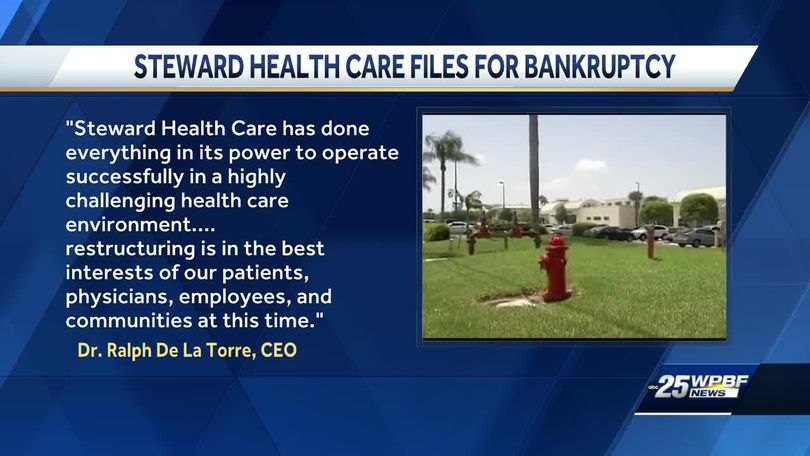
Steward Health Care’s Chapter 11 bankruptcy filing on May 6, 2024, brought back bad memories of another large health system bankruptcy.
On July 21, 1998, Pittsburgh-based Allegheny Health and Education Research Foundation (AHERF) filed Chapter 11. AHERF grew very rapidly, acquiring hospitals, physicians, and medical schools in its vigorous pursuit of scale across Pennsylvania. Utilizing debt capacity and spending cash, AHERF quickly ran out of both, defaulted on its obligations, and then filed for bankruptcy. It was one of the largest bankruptcy filings in municipal finance and the largest in the rated not-for-profit hospital universe.
Steward Health Care is a for-profit, physician-owned hospital company, but its long-standing roots were in faith-based not-for-profit healthcare. Prior to the acquisition by Cerberus Capital Management in 2010, Caritas Christi Health Care System was comprised of six hospitals in eastern Massachusetts. Caritas was a well-regarded health system, providing a community alternative to the academic medical centers in downtown Boston. Over the next 14 years, Steward grew rapidly to 31 hospitals in eight states, most recently bolstered through an expansive sale-leaseback structure with a REIT. Per the bankruptcy filings, the company reported $9 billion in secured debt and leases on $6 billion of revenue.
Chapter 11 bankruptcy filings in corporate America are a means to efficiently sell assets or a path to re-emergence as a new streamlined company. A quick glance at Steward’s organizational structure shows a dizzying checkerboard of companies and LLCs that will require a massive untangling. Further, its capital structure includes both secured debt for operations and a separate and distinct lease structure for its facilities, and in bankruptcy, that signals significant complexity. Bankruptcy filings in not-for-profit healthcare are less common, although it is surprising that the industry did not see an increase after the pandemic. Not-for-profit hospitals that are in distress seem to hang on long enough to find a buyer, gain increased state funding, attain accommodations on obligations, or find some other escape route to avoid a payment default or filing.
Details regarding Steward’s undoing will unfold in the coming weeks as it moves through an auction process. But there are some early takeaways the not-for-profit industry can learn from this:
When the case studies are written about Steward, a fact pattern will be revealed that includes the inability or unwillingness to attain synergies as a system, underspending on facility capital needs given a severe liquidity crunch, labor challenges, and a rapid payer mix shift.
Underlying all of this will undoubtedly be a failure of governance and leadership as we saw with AHERF. It will also likely indicate that one of the most precious assets healthcare providers may have is the management bandwidth to ensure strategic plans are appropriately made, tested, monitored, and executed.
While Steward and AHERF may be held up as extreme cases, not-for-profit hospital governance must continue to focus on checks-and-balances of management resources. Likewise, management must utilize benchmarks, data, and strong financial planning, given the challenges the industry faces.


https://mailchi.mp/73102bc1514d/the-weekly-gist-may-19-2023?e=d1e747d2d8

Published last Sunday in TheTimes of London,
this article traces how the once-darling Babylon Health became an “unmitigated disaster”, for which the UK’s National Health Services (NHS) has paid a significant price.
Babylon used its vision for a privatized NHS with slashed wait times and AI-powered treatment to boost its public offering, via a special-purpose acquisition company, with a $4.2B valuation in June 2021. Many of its promises have been revealed to be overly ambitious, if not doomed from the start, with its AI-powered diagnostics and funding model proving especially flawed.
A pivot to managed care in the US failed to stem a tide of mounting losses, and the company announced plans to go private last week.
The Gist: There are myriad lessons from the demise of Babylon, a marquis example of a “digital-first” healthcare startup that burned through capital and crashed with the end of the era of cheap money:
virtual care isn’t a magic wand to reduce wait times, and healthcare startups (and their investors) should think as much about the path to profitability as they do about rapid growth.
While Babylon did have its finger on the pulse of promising technologies, it applied them irresponsibly: for patients, inaccurate AI diagnoses could be worse than no care at all.
Amid the current AI frenzy, healthcare would benefit from more “slow AI”, developed with clinical and scientific collaboration and rigorous academic study design and testing, over “fast AI”, with pressure to generate returns for private investors pushing entrepreneurs to rapidly develop and deploy technology.





 HENRY KOTULA