The latest on US health insurance coverage, income and poverty

https://www.politifact.com/truth-o-meter/article/2019/sep/11/latest-health-coverage-income-and-poverty-us/

Protesters gather across the Chicago River from Trump Tower to rally against the repeal of the Affordable Care Act on March 24, 2017. (AP)

New numbers from the U.S. Census Bureau show an uptick in Americans who are uninsured but modest progress on poverty and income — handing Democrats and Republicans data for talking points.

Overall, the percentage of Americans lacking health coverage at any point in the year rose from 7.9% in 2017 to 8.5% in 2018. That’s according to annual numbers released Sept. 10.

The rise in the uninsured spanned demographic groups. Uninsured rates rose between 2017 and 2018 for whites, African-Americans, Hispanic Americans, Asian Americans, native-born Americans, foreign-born Americans, people with disabilities, people without high school degrees, and those under 18.

The 2017 and 2018 figures are not directly comparable with previous years due to changes in how the data is calculated. But a different data set showed that the small rises in the uninsured rate for 2017 and 2018 marked a change for a number that had improved every year since its peak in 2010, when the Affordable Care Act was passed. The law created a national marketplace for individual insurance and allowed states to expand Medicaid to more people.

Democrats pounced on the data release, with House Speaker Nancy Pelosi, D-Calif., blaming “President Trump’s cruel health care sabotage,” including his efforts to pare back the Affordable Care Act through regulations and in court.

But the Trump administration could point to modest gains in other statistics reported by the Census Bureau.

“Americans of all backgrounds are experiencing economic success in the Trump economy,” the White House said in a statement that cited media coverage of the new numbers on income and poverty.

The U.S. poverty rate fell for the fourth consecutive year, from 12.3% in 2017 to 11.8% in 2018. The national poverty rate is currently lower than it has been in any year since 2000, as this chart indicates.

Meanwhile, median household income rose for the fourth consecutive year after adjusting for inflation. It was a small rise, however, from $62,626 in 2017 to $63,179 in 2018, or an increase of less than 1%. And the pace of growth has slowed somewhat since the middle of this decade.

A leading measure of income inequality known as the GINI coefficient dipped slightly between 2017 and 2018. But its decades-long rise toward greater inequality was not greatly slowed.

Under this measurement, a score of 0.0 represents total income equality, while a score of 1.0 represents total inequality.

The overall statistics for poverty and income also mask significant differences by race and ethnicity.

In 2018, for instance, the poverty rate for whites was 8.1%. But it was much higher for African-Americans (20.8%) and Hispanic-Americans (17.6%) and modestly higher for Asian-Americans (10.1%).

The poverty rate fell slightly in 2018 for whites, African-Americans and Hispanic-Americans, while rising slightly for Asian-Americans.


Many Americans clueless about out-of-pocket medical costs, study finds

https://www.beckershospitalreview.com/finance/many-americans-clueless-about-out-of-pocket-medical-costs-study-finds.html?origin=cfoe&utm_source=cfoe

Image result for cartoon clueless on out-of-pocket medical costs

When it comes to out-of-pocket medical costs, many people are unaware of their potential financial burden, according to a new study released by Discover Personal Loans, a provider of banking tools and resources across various financing options.

For the study, researchers examined the average cost of certain medical procedures and compared them to perceptions of costs from 969 surveyed U.S. residents.

Four takeaways from the study:

1. Researchers found that a three-day hospitalization, knee replacement surgery and an appendectomy had the greatest variation of average actual costs compared to average perceived costs.

2. For example, surveyed Americans perceived the average cost of a three-day hospitalization to be $11,013, while the actual average cost posted on Healthcare.gov is about $30,000. That’s a variation of 63 percent.

3. The variation between average actual cost and average perceived cost for a knee replacement surgery and an appendectomy were 34 percent and 32 percent, respectively.

4. Surveyed Americans anticipate spending $2,016 for an emergency room visit, up 5 percent from the average actual cost from the Health Care Cost Institute and cited by CNN, $1,917.

Read more about the study here.


Recession could come in 6 to 9 months, Morgan Stanley says

https://www.beckershospitalreview.com/strategy/recession-could-come-in-6-to-9-months-morgan-stanely-says.html?origin=cfoe&utm_source=cfoe

Image result for cartoon recession

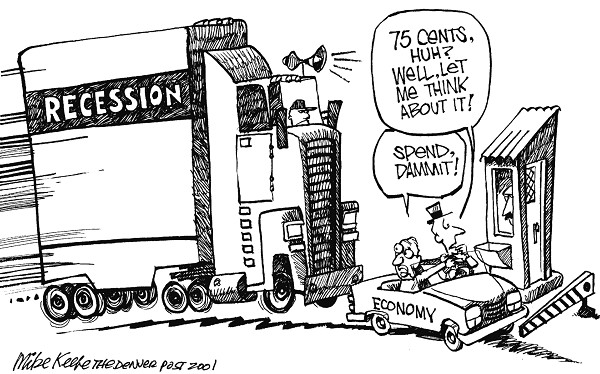
Recent moves from President Donald Trump to raise tariffs on Chinese goods are leading the global economy closer to the brink of recession, according to a Morgan Stanley note cited by Newsweek.

In a recent research note, Morgan Stanley said if President Trump goes through with proposals to raise existing tariffs and China responds, the global economy would fall into recession in the next six to nine months. Specifically, Morgan Stanley’s U.S. public policy lead, Michael Zezas, said the tariffs would be what pushes the global economy into recession.

“Friday’s escalation of tariffs between the U.S. and China suggests they’ve not moved any closer on the key negotiation points that have separated them since May 5,” he said, according to Newsweek. “Neither side sees the benefit to cooperating as better than hanging tough. … We expect that tensions will continue to escalate at least until the costs of doing so are too big to ignore.”

The president said Aug. 23 that he plans to raise existing tariffs to 30 percent from 25 percent on $250 billion of Chinese goods starting Oct. 1. Additionally, he proposed tariffs on another $300 billion of Chinese imports to increase from 10 percent to 15 percent over the coming months. The president’s proposals come after China said it will impose tariffs on another $75 billion of U.S. imports, and that it would reinstate tariffs on auto products that were previously suspended.

Read more here.


The plight of America’s rural health care

https://www.axios.com/the-plight-of-americas-rural-health-care-a34b6c66-7674-4f78-abdc-33f8e711a601.html

Illustration of a tractor plowing a field in the shape of a heart monitor that is petering out

Rural America is stuck in a cycle of increasingly vulnerable patients with declining access to health care.

Why it matters: Rural patients often can’t afford care, are being hounded by hospitals and collection agencies over their unpaid bills, and are facing the reality of life in communities where the last hospital has closed.

Rural Americans tend to be older, sicker and lower-income than urban Americans. They suffer from higher rates of obesity, mental health issues, diabetes, cancer and opioid addiction, as my colleagues Stef Kight and Juliet Bartz reported.

  • They’re also more likely to be uninsured or covered by Medicare or Medicaid, which pay doctors and hospitals less than private insurance does.
  • A small and shrinking population, mostly covered by insurance plans that don’t pay very much, many of whom need a lot of care, puts more financial pressure on providers, especially hospitals. Physician shortages are common.

What they’re saying: “Rural hospitals have long been right there on the edge on average, and we’re seeing more and more of them flip over to red,” said Mark Holmes, a professor at UNC-Chapel Hill and director of the Cecil G. Sheps Center for Health Services Research.

And hospital closures often exacerbate the problems communities were already facing.

  • Hospitals are often the largest or second-largest employer in a rural community.
  • 113 rural hospitals have closed since 2010, according to the Sheps Center.
  • These are disproportionately located in the South — the region with the nation’s worst health outcomes, and where most states haven’t expanded Medicaid — leaving hospitals with more uninsured patients.
  • A 2018 study in Health Affairs found that Medicaid expansion is “associated with improved hospital financial performance and substantially lower likelihoods of closure, especially in rural markets.”

The bottom line: “What we have here is not one root cause; there’s multiple things going on here,” Holmes said. “All these sort of modest kind of trends are adding up to something that’s quite considerable.”

Go deeper:

  • Bloomberg Businessweek reported on eastern Montana’s sole psychiatrist, despite being the state with the nation’s highest suicide rate.
  • The Washington Post detailed a hospital in Missouri’s practice of suing its patients for payment — money that the hospital needed but patients generally don’t have.
  • Kaiser Health News and NPR have profiled the fallout in a rural community in Kansas after its sole remaining hospital closed, which included a 2-week lapse in nearby emergency care.


Health care costs as much as a new car

https://www.axios.com/health-care-costs-insurance-premiums-deductibles-car-580fa6c8-0dd2-427b-8dda-c898d568e51e.html

Illustration of a car key with a health plus on the unlock button.

Buying a new car every year would be a very impractical expense. It would also be cheaper than a year’s worth of health care for a family.

Why it matters: The cost-shifting and complexity of health insurance can hide its high cost, which crowds out families’ other needs and depresses workers’ wages.

By the numbers: Health care for a family covered by a large employer cost, on average, $22,885 last year.

  • That’s $2,000 more than the sticker price for a brand-new Volkswagen Beetle.
  • If the iconic Beetle isn’t your style, $22,885 would also be more than enough to get you a Ford Focus ($17,950), a Toyota Corolla ($18,600) or a Hyundai Sonata ($22,050).

Between the lines: Roughly $15,000 of that $22,885 comes from employers’ contribution to their workers’ premiums. That share alone is enough to buy a basic sedan.

  • Workers chip in an average of $4,706 per year premiums, and then spend an additional of $3,020 out of pocket. Combined, that’s almost 4 times more than the average family spends on gas in a year.

The Beetle is being discontinued in the U.S. after this year. But as health care costs continue to rise, they’ll be comparable to even fancier cars. They’re already inching up toward the cheapest Cadillac — a familiar car metaphor.

  • The Affordable Care Act’s “Cadillac tax” was intended to put downward pressure on prices by taxing the most generous health plans. But it actually affects a broad range of plans, and Congress has delayed the tax until 2022. The House has voted to repeal it altogether.


The fight over the future of our most expensive drugs

https://www.axios.com/the-fight-over-the-future-of-our-most-expensive-drugs-034b6e4d-b596-4f48-9b53-6e2c267e01e3.html

An illustration of a hammer and a concrete pill.

The market designed to create competition for biologics — typically our most expensive drugs — has been slow to take off, but some experts say that even its best-case scenario doesn’t do enough to lower drug prices.

Why it matters: While wonks debate the future of biosimilars in policy journals and on editorial pages, the argument is reflected in the political divide over whether enhanced drug competition or price regulation is the best way to address drug prices.

The big picture: Congress created the pathway for biosimilars to come to market knowing that they’d look different than small-molecule generics, and even their most ardent supporters say biosimilars will never achieve the steep discounts that generics do.

  • That’s because biosimilars are much harder to make than normal generics, meaning that drug companies have to charge enough to make their endeavor worthwhile.
  • Nevertheless, the Biosimilars Council says on its website that biosimilars could lead to more than $54 billion in savings over the next decade. A recent analysis by the Pacific Research Institute found that biosimilars could save $7.2 billion a year under the most optimistic modeled scenario.

Yes, but: Some experts are arguing that that’s not enough, and that biosimilars aren’t the best way to control biologic prices.

  • Last week, Memorial Sloan Kettering Cancer Center’s Peter Bach and MIT’s Mark Trusheim published an editorial in the Wall Street Journal arguing that biosimilars don’t produce enough savings and that the resources spent developing them would be better used to bring new, innovative drugs to market.
  • Bach and Trusheim proposed that the government instead regulate the price of older biologics after they’ve been on the market for a certain period of time, which they wrote could save around $50 billion a year.

The other side: Former FDA Commissioner Scott Gottlieb wrote an editorial in the WSJ yesterday in response, arguing that Congress should speed up the use and development of biosimilars instead of regulating prices.

  • “Among other dangers, [price regulation] could trigger shortages of the drugs. It would also discourage investment in manufacturing, as few drugmakers would want to produce complex drugs in perpetuity for little profit,” Gottlieb writes.

The bottom line: This argument isn’t just for the academics. The leading Democratic presidential candidates are also arguing for drug price regulation, a major shift left for the party.

  • “Price regulation may be a tough sell in some quarters, but it’s the best way to keep the promise of America’s extraordinary pharmaceutical industry alive,” Bach and Trusheim write.


What Does Medicare Actually Cover?

What Does Medicare Actually Cover?
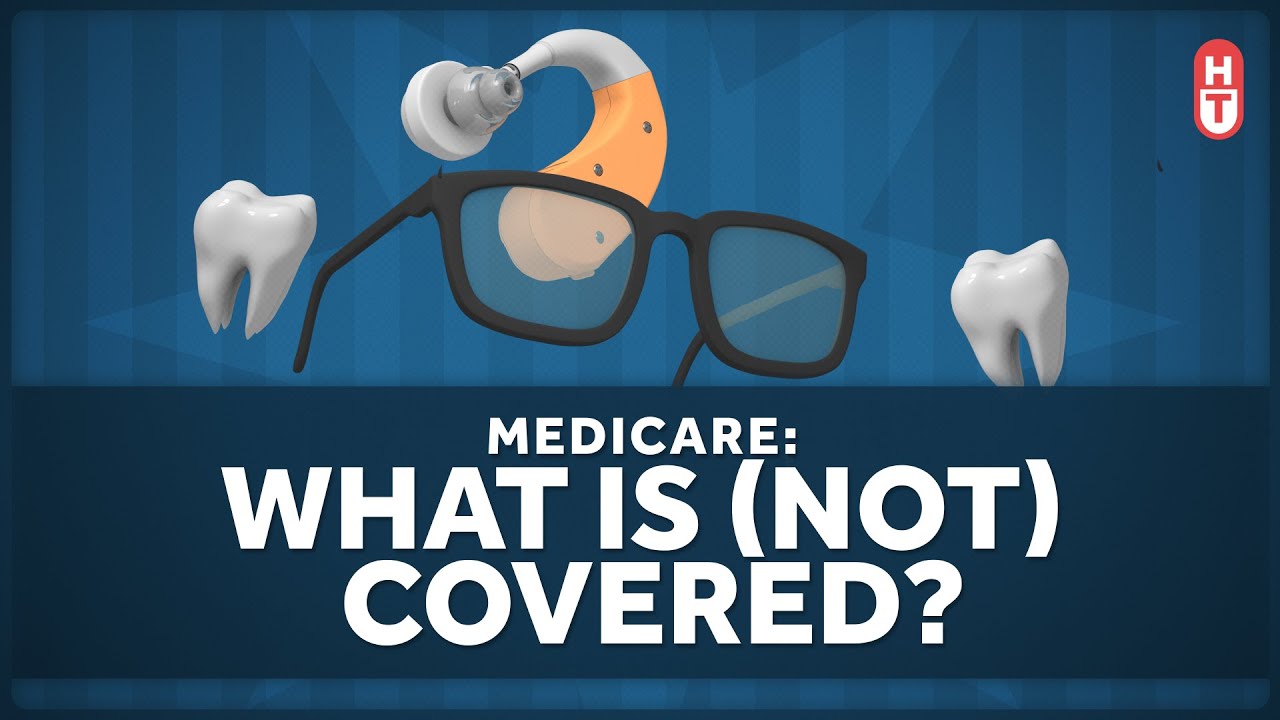
Image result for What Does Medicare Actually Cover?

If it followed the path of traditional Medicare, it would end up paying for a lot of coverage that has little medical value.

In the first congressional hearing held on “Medicare for all” in April, Michael Burgess, a Republican congressman from Texas and a physician, called such a proposal “frightening” because it could limit the treatments available to patients.

The debate over Medicare for all has largely focused on access and taxpayer cost, but this raises a question that hasn’t gotten much attention: What treatments would it cover?

A good starting place for answers is to look at how traditional Medicare currently handles things. In one sense, there are some important elements that Medicare does not cover — and  arguably should. But a little digging into the rules governing treatments also reveals that Medicare allows a lot of low-value care — which it arguably should not.

Many countries don’t cover procedures or treatments that have little medical value or that are considered too expensive relative to the benefits. American Medicare has also wrestled with the challenge of how to keep out low-value care, but for political reasons has never squarely faced it.

You might remember the factually misguided “death panel” attack on the Affordable Care Act, which preyed on discomfort with a governmental role in deciding what health care would or would not be paid for. (This discomfort also extends to private plans, exemplified by the backlash against managed care in the 1990s.)

Perhaps as a result, Americans don’t often talk about what treatments and services provide enough value to warrant coverage.

You can divide current Medicare coverage into two layers.

The first is relatively transparent. Traditional Medicare does not cover certain classes of care, including eyeglasses, hearing aids, dental or long-term care. When the classes of things it covers changes, or is under debate, there’s a big, bruising fight with a lot of public comment. The most recent battle added prescription drug coverage through legislation that passed in 2003.

Over the years, there have also been legislative efforts to add coverage for eyeglasses, hearing aids, dental and long-term care — none of them successful. Some of these are available through private plans. So a Medicare for all program that excluded all private insurance coverage and that resembled today’s traditional Medicare would leave Americans with significant coverage gaps. Most likely, debate over what Medicare for all would cover would center on this issue.

But there is a second layer of coverage that receives less attention. Which specific treatments does Medicare pay for within its classes of coverage? For instance, Medicare covers hospital and doctor visits associated with cancer care — but which specific cancer treatments?

This second layer is far more opaque than the first. By law, treatments must be reasonable and necessary” to be approved for Medicare coverage, but what that means is not very clear.

We think of Medicare as a uniform program, but some coverage decisions are local. What people are covered for in, say, Miami can be different from what people are covered for in Seattle.

Many treatments and services are covered automatically because they already have standard billing codes that Medicare recognizes and accepts. For treatments lacking such codes, Medicare makes coverage determinations in one of two ways: nationally or locally.

Although Medicare is a federal (national) program, most coverage determinations are local. Private contractors authorized to process Medicare claims decide what treatments to reimburse in each of 16 regions of the country.

In theory, this could allow for lots of variation across the country in what Medicare pays for. But most local coverage determinations are nearly identical. For example, four regional contractors have independently made local coverage determinations for allergen immunotherapy, but they all approve the same treatments for seasonal allergy sufferers.

There are more than 2,000 local coverage determinations like these. National coverage decisions, which apply to the entire country, are rarer, with only about 300 on the books.

When Medicare makes national coverage decisions, sometimes it does so while requiring people to enter clinical trials.

It has been doing this for over a decade. The program is called coverage with evidence development, and its use is rare. Fewer than two dozen therapies have entered the program since it was introduced in 2006. But it allows Medicare to gather additional clinical data before determining if the treatment should be covered outside of a trial. To be considered, the treatment must already be deemed safe, and it must already be effective in some population. The aim is to test if the treatment “meaningfully improves” the health of Medicare beneficiaries.

Only one therapy (CPAP, for sleep apnea) that entered this process has ever emerged to be covered as a routine part of Medicare. The others are in a perpetual state of limbo, neither fully covered nor definitively not covered. CAR-T cell therapy, a type of cancer immunotherapy, which appears to be very successful but is also very expensive, is one of the most recent to enter this process.

Despite the complexity of all these coverage determination methods — local, national, contingent on clinical trials — the bottom line is that very few treatments are fully excluded from Medicare, so long as they are of any clinical value. And this suggests that it’s not very likely that Medicare for all would deny coverage for needed care.

A 2018 study in Health Affairs found only 3 percent of Medicare claims were denied in 2015. And traditional Medicare doesn’t limit access to doctors or hospitals either, as it is accepted by nearly every one. (This is in contrast with Medicare Advantage.)

Medicare has a troubled history in considering cost-effectiveness in its coverage decisions. Past efforts to incorporate it have failed. For example, regulations proposed in 1989 were withdrawn after a decade of internal review.

As a result, Medicare covers some treatments that are extremely expensive for the program and that offer little benefit to patients. The Medicare Payment Advisory Commission recently studied this in detail. In a 2018 report to Congress, it noted that up to one-third of Medicare beneficiaries received some kind of low-value treatment in 2014, costing the program billions of dollars. If Medicare for all followed in traditional Medicare’s path, it could be wastefully expensive.

The United States has had a historical unwillingness to face cost-effectiveness questions in health care decisions, something many other countries tackle head-on. Some Americans favor Medicare for all because it would make the system more like some overseas. And yet, in choosing not to consider the value of the care it covers, Medicare remains uniquely American.