Federal Reserve – Semiannual Monetary Policy Report to the Congress

https://www.federalreserve.gov/newsevents/testimony/powell20200616a.htm
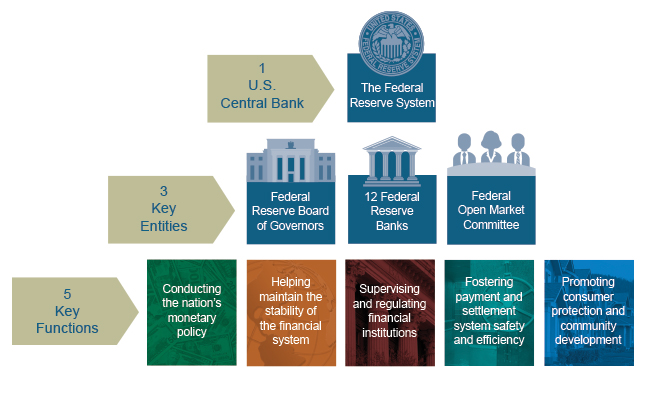
Federal Reserve Board - Structure of the Federal Reserve System

Chair Powell submitted identical remarks to the Committee on Financial Services, U.S. House of Representatives, Washington, D.C., on June 17, 2020.

Chairman Crapo, Ranking Member Brown, and other members of the Committee, thank you for the opportunity to present the Federal Reserve’s semiannual Monetary Policy Report.

Our country continues to face a difficult and challenging time, as the pandemic is causing tremendous hardship here in the United States and around the world. The coronavirus outbreak is, first and foremost, a public health crisis. The most important response has come from our health-care workers. On behalf of the Federal Reserve, I want to express our sincere gratitude to these dedicated individuals who put themselves at risk, day after day, in service to others and to our nation.

Current Economic Situation and Outlook
Beginning in mid-March, economic activity fell at an unprecedented speed in response to the outbreak of the virus and the measures taken to control its spread. Even after the unexpectedly positive May employment report, nearly 20 million jobs have been lost on net since February, and the reported unemployment rate has risen about 10 percentage points, to 13.3 percent. The decline in real gross domestic product (GDP) this quarter is likely to be the most severe on record. The burden of the downturn has not fallen equally on all Americans. Instead, those least able to withstand the downturn have been affected most. As discussed in the June Monetary Policy Report, low-income households have experienced, by far, the sharpest drop in employment, while job losses of African Americans, Hispanics, and women have been greater than that of other groups. If not contained and reversed, the downturn could further widen gaps in economic well-being that the long expansion had made some progress in closing.

Recently, some indicators have pointed to a stabilization, and in some areas a modest rebound, in economic activity. With an easing of restrictions on mobility and commerce and the extension of federal loans and grants, some businesses are opening up, while stimulus checks and unemployment benefits are supporting household incomes and spending. As a result, employment moved higher in May. That said, the levels of output and employment remain far below their pre-pandemic levels, and significant uncertainty remains about the timing and strength of the recovery. Much of that economic uncertainty comes from uncertainty about the path of the disease and the effects of measures to contain it. Until the public is confident that the disease is contained, a full recovery is unlikely.

Moreover, the longer the downturn lasts, the greater the potential for longer-term damage from permanent job loss and business closures. Long periods of unemployment can erode workers’ skills and hurt their future job prospects. Persistent unemployment can also negate the gains made by many disadvantaged Americans during the long expansion and described to us at our Fed Listens events. The pandemic is presenting acute risks to small businesses, as discussed in the Monetary Policy Report. If a small or medium-sized business becomes insolvent because the economy recovers too slowly, we lose more than just that business. These businesses are the heart of our economy and often embody the work of generations.

With weak demand and large price declines for some goods and services—such as apparel, gasoline, air travel, and hotels—consumer price inflation has dropped noticeably in recent months. But indicators of longer-term inflation expectations have been fairly steady. As output stabilizes and the recovery moves ahead, inflation should stabilize and then gradually move back up over time closer to our symmetric 2 percent objective. Inflation is nonetheless likely to remain below our objective for some time.

Monetary Policy and Federal Reserve Actions to Support the Flow of Credit
The Federal Reserve’s response to this extraordinary period is guided by our mandate to promote maximum employment and stable prices for the American people, along with our responsibilities to promote the stability of the financial system. We are committed to using our full range of tools to support the economy in this challenging time.

In March, we quickly lowered our policy interest rate to near zero, reflecting the effects of COVID-19 on economic activity, employment, and inflation, and the heightened risks to the outlook. We expect to maintain interest rates at this level until we are confident that the economy has weathered recent events and is on track to achieve our maximum-employment and price-stability goals.

We have also been taking broad and forceful actions to support the flow of credit in the economy. Since March, we have been purchasing sizable quantities of Treasury securities and agency mortgage-backed securities in order to support the smooth functioning of these markets, which are vital to the flow of credit in the economy. As described in the June Monetary Policy Report, these purchases have helped restore orderly market conditions and have fostered more accommodative financial conditions. As market functioning has improved since the strains experienced in March, we have gradually reduced the pace of these purchases. To sustain smooth market functioning and thereby foster the effective transmission of monetary policy to broader financial conditions, we will increase our holdings of Treasury securities and agency mortgage-backed securities over coming months at least at the current pace. We will closely monitor developments and are prepared to adjust our plans as appropriate to support our goals.

To provide stability to the financial system and support the flow of credit to households, businesses, and state and local governments, the Federal Reserve, with the approval of the Secretary of the Treasury, established 11 credit and liquidity facilities under section 13(3) of the Federal Reserve Act. The June Monetary Policy Report provides details on these facilities, which fall into two categories: stabilizing short-term funding markets and providing more-direct support for credit across the economy.

To help stabilize short-term funding markets, the Federal Reserve set up the Commercial Paper Funding Facility and the Money Market Liquidity Facility to stem rapid outflows from prime money market funds. The Fed also established the Primary Dealer Credit Facility, which provides loans against good collateral to primary dealers that are critical intermediaries in short-term funding markets.

To more directly support the flow of credit to households, businesses, and state and local governments, the Federal Reserve established a number of facilities. To support the small business sector, we established the Paycheck Protection Program Liquidity Facility to bolster the effectiveness of the Coronavirus Aid, Relief, and Economic Security Act’s (CARES Act) Paycheck Protection Program. Our Main Street Lending Program, which we are in the process of launching, supports lending to both small and midsized businesses. The Term Asset-Backed Securities Loan Facility supports lending to both businesses and consumers. To support the employment and spending of investment-grade businesses, we established two corporate credit facilities. And to help U.S. state and local governments manage cash flow pressures and serve their communities, we set up the Municipal Liquidity Facility.

The tools that the Federal Reserve is using under its 13(3) authority are appropriately reserved for times of emergency. When this crisis is behind us, we will put them away. The June Monetary Policy Report reviews the implications of these tools for the Federal Reserve’s balance sheet.

Many of these facilities have been supported by funding from the CARES Act. We will be disclosing, on a monthly basis, names and details of participants in each such facility; amounts borrowed and interest rate charged; and overall costs, revenues, and fees for each facility. We embrace our responsibility to the American people to be as transparent as possible, and we appreciate that the need for transparency is heightened when we are called upon to use our emergency powers.

We recognize that our actions are only part of a broader public-sector response. Congress’s passage of the CARES Act was critical in enabling the Federal Reserve and the Treasury Department to establish many of the lending programs. The CARES Act and other legislation provide direct help to people, businesses, and communities. This direct support can make a critical difference not just in helping families and businesses in a time of need, but also in limiting long-lasting damage to our economy.

I want to end by acknowledging the tragic events that have again put a spotlight on the pain of racial injustice in this country. The Federal Reserve serves the entire nation. We operate in, and are part of, many of the communities across the country where Americans are grappling with and expressing themselves on issues of racial equality. I speak for my colleagues throughout the Federal Reserve System when I say, there is no place at the Federal Reserve for racism and there should be no place for it in our society. Everyone deserves the opportunity to participate fully in our society and in our economy.

We understand that the work of the Federal Reserve touches communities, families, and businesses across the country. Everything we do is in service to our public mission. We are committed to using our full range of tools to support the economy and to help assure that the recovery from this difficult period will be as robust as possible.

Thank you. I am happy to take your questions.


These Charts Put the Historic U.S. Job Losses in Perspective

These Charts Put the Historic U.S. Job Losses in Perspective

These Charts Put the Historic U.S. Job Losses in Perspective

These Charts Put the Historic U.S. Job Losses in Perspective

When recessions hit, it’s not unusual to see millions of jobs lost.

Such episodes are a regular part of the business cycle and when they occur, most businesses do their best to tough things out. Then, as time progresses, it gradually becomes clear that spending must be curtailed, budget cuts must be made, and workers must unfortunately be sent home.

This economic process normally takes months, or even years, to unwind.

But, the COVID-19 pandemic has thrown a wrench into the economic status quo, creating a situation that is incomparable to any previous downturn. Instead of a gradual economic transition to slower growth prospects, business operations have suddenly screeched to a halt with no clear window to resume.

Beyond Comparison

The Great Lockdown of the economy has been completely unprecedented, both in terms of the speed of the shutdown and its impact on jobs.

As a result, the statistics being released are completely surreal. Perhaps the best example of this is number for initial jobless claims in the U.S., which tops 22 million over the last four weeks.

Worst U.S. Job Losses on Record (Four Week Period)

Year Description Peak Jobless claims (4-wk total) % of U.S. Population
1975 Stagflation 2.24 million 1.0%
1980 Fed tightening (Volcker) 2.52 million 1.1%
1982 Double-dip recession 2.70 million 1.2%
1991 Early 1990s recession 2.00 million 0.8%
2001 Dotcom Bust 1.96 million 0.7%
2009 Great Recession 2.64 million 0.9%
2020 The Great Lockdown 22.03 million 6.7%

As you can see above, the number is 10x higher than many of the worst four-week job losses on record, so historical comparisons don’t come close.

In other words, if you were using recent recessions as a potential barometer of how bad things could get for jobless claims, the numbers coming from COVID-19 crisis just blew up your model.

The Recession Time Machine

To get further context on the numbers above, it’s worth jumping in a time machine to revisit what happened to job numbers in previous recessions:

  • Stagflation and Oil Shocks (1973-75)
    This recession put an end to the Post WWII global economic expansion, and was characterized by the 1973 oil embargo, the aftermath of the Nixon Shock, and the collapse of the Bretton Woods system of international finance. Unemployment and inflation were both high (stagflation), and the unemployment rate in the U.S. reached 9.0% in May 1975.
  • The Double-Dip Recession (1980, 1981-1982)
    This “W-shaped” recession saw economic contraction first in 1980, only to return again in 1981. This corresponded with the Iranian Revolution, as well as Fed chair Paul Volcker’s aggressive policy to rein in inflation with high interest rates. Unemployment peaked at 10.8% in 1982 — the highest rate seen since the Great Depression.
  • The Great Recession (2009)
    The most recent recession in memory peaked with 10.0% in unemployment in October 2009. It took until 2016 for unemployment to fall back to pre-recession levels.

Finally, it’s worth noting that during the Great Depression (1929-1933), unemployment reached a historic high of 24.9%. To get to a comparable equivalent in modern times, there would need to be 41 million Americans out of work permanently.

Room for Optimism

Although the initial jobless claims are staggering and clearly without modern precedent, there is a case to be made for cautious optimism.

Many of the aforementioned recessions took months or years to culminate, with peak job losses occurring at the tail end of each recession. The current crisis, now being called “The Great Lockdown”, caused many businesses to shut doors suddenly and against their will. It also corresponded with unexpected closures of national borders and the halting of regular trade activity around the world.

When and if normal economic activity resumes, it’ll be interesting to see how much of the damage is temporary.


PENNSYLVANIA HOSPITALS MADE $136.1B IMPACT IN FY 2018

https://www.healthleadersmedia.com/finance/pennsylvania-hospitals-made-1361b-impact-fy-2018?spMailingID=16742301&spUserID=MTg2ODM1MDE3NTU1S0&spJobID=1781321594&spReportId=MTc4MTMyMTU5NAS2

Image result for PENNSYLVANIA HOSPITALS MADE $136.1B IMPACT IN FY 2018

The Hospital and Healthsystem Association of Pennsylvania report found that hospitals also supported more than one in every 10 jobs.

Hospitals in Pennsylvania made a total economic impact of $136.1 billion in Fiscal Year (FY) 2018, according to a Hospital and Healthsystem Association of Pennsylvania (HAP) report released Tuesday.

Of the total economic impact, $60.5 billion were the result of “direct impact,” such as employee salaries, benefits, as well as goods and services for hospital operations. Another $75.6 billion were the result of “ripple impact,” such as additional economic effects of a hospital in a community.

HHAP also found that hospitals supported more than 650,000 jobs, accounting for more than one in every 10 jobs in the state and providing $32.3 billion in total wages. Nearly 300,000 jobs were directly associated with hospitals while 363,000 jobs were associated with “ripple effects” of health systems.

The study’s findings point to the significant economic impact provider organizations have in the Keystone State and the need to promote policies that foster continued growth, according to Sari Siegel, PhD, vice president of healthcare research at HAP.

“While overall growth projections are strong, some hospitals remain financially stressed. Our work illustrates that hospitals often are the backbones of their communities and closure could cause devastating economic ripples throughout a region,” Siegel said in a statement. “The findings of this report underscore the need for policies that bolster hospitals’ long-term sustainability.”

Pennsylvania hospitals have contributed significantly to the state’s economy in recent years and have also made headlines throughout 2019.

Hahnemann University Hospital, a Pennsylvania-based hospital, filed for bankruptcy and closed over the summer. A group of six Philadelphia-based health systems won the hospital at auction for $55 million in early August. 

The report was also released days after two Pennsylvania-based health systems, Tower Health and Drexel University, finalized a $50 million acquisition of St. Christopher’s Hospital for Children, a 188-bed pediatric medical center in Philadelphia.

There are 253 hospitals in Pennsylvania, according to HAP, with more than 37,600 staffed beds. The report also found that hospitals are among the 10 largest employers in 85% of counties across the state.

The total economic impact of Pennsylvania hospitals in FY 2018 grew by nearly $50 billion over the past decade, according to a HAP analysis of data collected from the Department of Health and Human Services (HHS).

Additionally, Pennsylvania hospitals received nearly $2 billion in research allocations from HHS and Patient-Centered Outcomes Research Institute in FY 2018.


The Presidential Campaign, Policy Issues and the Public

https://news.gallup.com/opinion/polling-matters/269717/presidential-campaign-policy-issues-public.aspx

The Presidential Campaign, Policy Issues and the Public

The U.S. presidential campaign is ultimately a connection between candidates and the people of the country, but the development of the candidates’ policies and positions is largely asymmetric. Candidates develop and announce “plans” and policy positions that reflect their (the candidates’) philosophical underpinnings and (presumably) deep thinking. The people then get to react and make their views known through polling and, ultimately, through voting.

Candidates by definition assume they have unique wisdom and are unusually qualified to determine what the government should do if they are elected (otherwise, they wouldn’t be running). That may be so, but the people of the country also have collective wisdom and on-the-ground qualifications to figure out what government should be doing. That makes it useful to focus on what the people are telling us, rather than focusing exclusively on the candidates’ pronouncements. I’m biased, because I spend most of my time studying the public’s opinions rather than what the candidates are saying. But hopefully most of us would agree that it is worthwhile to get the public’s views of what they want from their government squarely into the mix of our election-year discourse.

So here are four areas where my review of public opinion indicates the American public has clear direction for its elected officials.

1. Fixing Government Itself.

I’ve written about this more than any other topic this year. The data are clear that the American people are in general disgusted (even more than usual) with the way their government is working and perceive that government and elected leaders constitute the most important problem facing the nation today.

The people themselves may be faulted here because they are the ones who give cable news channels high ratings for hyperpartisan programming, keep ideological radio talk shows alive, click on emotionally charged partisan blogs, and vote in primaries for hyperpartisan candidates. But regardless of the people’s own complicity in the problem, there isn’t much doubt that the government’s legitimacy in the eyes of the people is now at a critically negative stage.

“Fixing government” is a big, complex proposition, of course, but we do have some direction from the people. While Americans may agree that debate and differences are part of our political system, there has historically been widespread agreement on the need for elected representatives to do more compromising. Additionally, Americans favor term limitsrestricting the amount of money candidates can spend in campaigns and shifting to a 100% federally funded campaign system. (Pew Research polling shows that most Americans say big donors have inordinate influence based on their contributions, and a January Gallup poll found that only 20% of Americans were satisfied with the nation’s campaign finance laws.) Americans say a third major party is needed to help remedy the inadequate job that the two major parties are doing of representing the people of the country. Available polling shows that Americans favor the Supreme Court’s putting limits on partisan gerrymandering.

Additionally, a majority of Americans favor abolishing the Electoral College by amending the Constitution to dictate that the candidate who gets the most popular votes be declared the winner of the presidential election (even though Americans who identify as Republicans have become less interested in this proposition in recent years because the Republican candidate has lost the popular vote but has won in the Electoral College in two of the past five elections).


2. Fix the Backbone of the Nation by Initiating a Massive Government Infrastructure Program.

I have written about this at some length. The public wants its government to initiate massive programs to fix the nation’s infrastructure. Leaders of both parties agree, but nothing gets done. The failure of the Congress and the president to agree on infrastructure legislation is a major indictment of the efficacy of our current system of representative government.


3. Pass More Legislation Relating Directly to Jobs.

Jobs are the key to economic wellbeing for most pre-retirement-age Americans. Unemployment is now at or near record lows, to be sure, but there are changes afoot. Most Americans say artificial intelligence will eliminate more jobs than it creates. The sustainability of jobs with reasonably high pay in an era when unionized jobs are declining and contract “gig” jobs are increasing is problematic. Our Gallup data over the years show clear majority approval for a number of ideas focused on jobs: providing tax incentives for companies to teach workers to acquire new skills; initiating new federal programs to increase U.S. manufacturing jobs; creating new tax incentives for small businesses and entrepreneurs who start new businesses; providing $5.5 billion in federal monies for job training programs that would create 1 million jobs for disadvantaged young Americans; and providing tax credits and incentives for companies that hire the long-term unemployed.

My read of the data is that the public generally will support almost any government effort to increase the availability of high-paying, permanent jobs.


4. Pass Legislation Dealing With All Aspects of Immigration.

Americans rate immigration as one of the top problems facing the nation today. The majority of Americans favor their elected representatives taking action that deals with all aspects of the situation — the regulation of who gets to come into the country in the first place and the issue of dealing with individuals who are already in the country illegally. As I summarized in a review of the data earlier this year: “Americans overwhelmingly favor protecting the border, although with skepticism about the need for new border walls. Americans also overwhelmingly favor approaches for allowing undocumented immigrants already living in the U.S. to stay here.”

Recent surveys by Pew Research also reinforce the view that Americans have multiple goals for their elected representatives when it comes to immigration: border security, dealing with immigrants already in the country, and taking in refugees affected by war and violence.


More Direction From the People

What else do the people want their elected representatives to do? The answer can be extremely involved (and complex), but there are several additional areas I can highlight where the data show clear majority support for government policy actions.


Americans See Healthcare and Education as Important but Don’t Have a Clear Mandate

There are two areas of life to which the public attaches high importance, but about which there is no clear agreement on what the government should be doing. One is healthcare, an issue that consistently appears near the top of the list of most important problems facing the nation, and obviously an issue of great concern to presidential candidates. But, as I recently summarized, “Healthcare is clearly a complex and often mysterious part of most Americans’ lives, and public opinion on the issue reflects this underlying messiness and complexity. Americans have mixed views about almost all aspects of the healthcare system and clearly have not yet come to a firm collective judgment on suggested reforms.”

Education is another high priority for Americans, but one where the federal government’s role in the eyes of the public isn’t totally clear. Both the American people and school superintendents agree on the critical importance of teachers, so I presume the public would welcome efforts by the federal government to make the teaching profession more attractive and more rewarding. Americans also most likely recognize that education is a key to the future of the job market in a time of growing transition from manual labor to knowledge work. But the failure of the federal government’s massive effort to get involved in education with the No Child Left Behind legislation underscores the complexities of exactly what the federal government should or should not be doing in education, historically a locally controlled part of our American society.


Healthcare jobs grow at rapid clip, but wages lag amid consolidation boom

https://www.healthcaredive.com/trendline/labor/28/#story-4

Image result for Healthcare jobs grow at rapid clip, but wages lag amid consolidation boom

Healthcare employment is growing at a record pace, but wages remain stagnant, which some experts say likely results in part from the trend of consolidating health systems.

The latest Bureau of Labor Statistics numbers show the industry gained 49,000 jobs in March and 398,000 over the past 12 months. Analysts at Jefferies say the month-to-month growth is the second largest increase on record for the sector. Healthcare job growth has surpassed non-healthcare job growth and nudging the share of total jobs to an all time high, according to consulting firm Altarum.

Hospital employment grew by 14,000 jobs in March, adding up to a total of 120,000 for the combined first quarter of 2019. BLS tallied ambulatory jobs at 27,000 and home health and skilled nursing jobs at 9,000.

At the same time, real average weekly earnings for production and non-supervisory employees across sectors grew 0.1% over the month according to BLS. That growth in earnings is due to an increase in average weekly hours.

For nurses and pharmacists working in hospitals in heavily concentrated markets, annual wage growth has been lagging behind national rates by as much as 1.7 times. That’s according to researchers Elana Prager and Matt Schmitt, of Kellogg and UCLA, respectively, whose working paper compares wage growth rates in markets where mergers have occurred.

The paper drew the ire of the American Hospital Association.

“Among the many serious concerns about the study are its lack of rigor in the definitions and assumptions it used, and absence of data on total compensation and the recognition of other obvious factors that could affect wage growth,” an AHA spokesperson said in a statement criticizing media coverage of the research.

Academics researching the impacts of consolidation have asked the Federal Trade Commission to look at the impact horizontal mergers have on labor and consumers before they become difficult to challenge. FTC green-lit hundreds of horizontal hospital mergers over the past decade, maxing out at 115 in 2017, according to the National Institute for Health Care Management. In 2009, there were 50 such deals.

A Penn Law paper on mergers and labor markets published last year found employer consolidation has had a direct impact on wages and productivity in concentrated labor markets in the past. Wages, the authors write, tend to dilute when competition is scarce and labor concentration is “very high, as high or higher overall than product market concentration.”

Jason Plagman, a healthcare analyst at Jefferies, agreed, telling Healthcare Dive it becomes an “oligopsony situation where there are only a handful of buyers of a product” — in this case, labor — “you tend to see [employers] exert more control.”

As AHA noted, hospital and health systems tend to offer non-wage benefits, “such as employer-sponsored insurance, time off and education benefits” rather than increase wages. That’s an important caveat, said Dennis Shea, a health policy professor at Penn State.


Labor push

The debate comes as nurses unions have been pushing hard for additional staff and higher wages for hospital workers in consolidated states like California, New York, Massachusetts and Pennsylvania. Hospital consolidation has raised prices as much as 20% to 40% when they occur in the same market, according to National Institute for Health Care Management, with some prices reaching as much as 55%.

Unions argue hospitals can afford to pay extra to hire more nurses. Jefferies analyst Plagman said it’s not that easy. About 50% of hospital revenue goes to salary, wages and benefits, he said, and half of that chunk of revenue goes to nurses. “If they give a 3% raise to all nurses, that’s a big impact on their overall expense line,” Plagman said.

The lack of competition bars labor from seeking work elsewhere. A nurse in a concentrated labor market can’t quit their job to work for the hospital down the street, because it’s probably owned by the same health system, Shea said.

Shea and Plagman agreed that movement of labor away from concentrated markets is one way to break the wage slump. But lack of mobility was one of the consequences of concentration found in a National Bureau of Economic Research published in February 2018. The paper suggests a negative relationship between consolidated markets and wages that becomes more pronounced with higher levels of concentration and only increases over time.

Pay raises have historically been pushed by labor unions, and though some hospitals have already raised wages, few have been inclined to raise staffing levels as well.

“Strikes are picking up,” Shea said. “That’s always an indicator that wage and salary growth will pick up a little bit.”

While labor disruption has been on the rise over the past year, Plagman ​said he expects employment and wage growth to continue at the current pace. At some point, he said the market will have to resolve itself.

“What we’re seeing is hospitals and healthcare providers are hiring, but they’ve been very disciplined over the past few years giving raises to nurses and therapists,” Plagman said.

In testimony to the FTC in October, economist Alan Kreuger alleged employers in concentrated markets “collude to hold wages to a fixed, below-market rate,” even when the economy is booming. Union membership has plummeted 25% since 1980, and without a counterweight to balance the power of a monopsony, he argued, employers are free to set wages at will — even if they lag behind inflation rates.

Pressures to contain costs and move from volume to value is forcing health system executives to be extra delicate with their labor expenses. When nurses strike, hospitals have temps at the ready. That’s a boon for staffing agencies like AMN Healthcare Services and Cross Country Healthcare.

Cost control in healthcare is a bit like “pushing on a balloon,” Shea said.

Slow growth or declines in one sector means business is booming for another. In this case, ambulatory added 27,000 jobs month-to-month in March, up from 22,000 in February, and Jefferies analysts are looking favorably at temporary staffing agencies.

While “all indicators” say healthcare wages should be pushed up, Shea said, he wouldn’t be surprised if the growth rate continued to limp along for a little while longer.


Hospitals hit bump, but healthcare jobs showed steady growth in July

https://www.healthcaredive.com/trendline/labor/28/#story-1

Image result for hospital job growth

Dive Brief:

  • A total of 30,000 healthcare jobs were added to the U.S. labor rolls in July, representing 18% of all new jobs added during the month, according to the Department of Labor.
  • Virtually all of the healthcare job growth occurred in ambulatory care — that segment accounted for 29,000 new jobs alone.
  • The weak spot was in hospital job growth, which was down by 2,000 jobs from the month before.

Dive Insight:

Hospitals are often the biggest employers in many towns and medium-sized cities, but their job creation has been uneven at best in recent months. According to an analyst note from Jefferies, employment by hospitals dropped by 2,000 on a seasonally adjusted basis, although that grew to a net 1,000 new jobs on an unadjusted basis.

By comparison, hospitals added a seasonally adjusted 9,000 new jobs in June, 25,000 on an unadjusted basis. However, much of that boost was created by the minting of new residents who just graduated from medical schools.

Hospital employment is still growing at a 1.8% annual clip (compared to 1.4% as of July 2018), although that’s down from the 2.1% rate reported in April.

“Overall, healthcare employment growth continues to demonstrate strong momentum, but hospital jobs growth appears to be moderating,” the analysts said. Inpatient providers account for more than 5.2 million jobs nationwide.

However, Jefferies’ analysts believe that healthcare will continue to be a big job engine for the foreseeable future.

“We believe the supply of clinical labor continues to struggle to keep pace with solid demand growth, resulting in tight clinician labor markets and strong demand for healthcare temp staffing services,” they said.

Although healthcare job growth has been extremely robust, wages have been stagnant in recent years, a phenomenon attributed in part to continued consolidation among industry players.

The ambulatory care segment has been growing rapidly in recent years. Its addition of 29,000 new jobs was up from 17,000 in June, and significantly outpaced the year-to-date average monthly growth of 22,000.

Home healthcare services added 11,000 new jobs last month alone — the highest rate since 2017. The segment’s annual growth rate is currently 5.3%, up from 3.2% in July 2018.

The nursing home segment added another 1,000 jobs.