Wisconsin Votes Tomorrow. In Person.

Wisconsin Votes Tomorrow. In Individual. - Hindi2News

The state’s Supreme Court ruled against the governor’s last-minute effort to delay the election.

The Summer Olympics are delayed. March Madness was canceled. Even the pope celebrated Palm Sunday Mass before a nearly empty St. Peter’s Basilica.

But in Wisconsin, there could still be an election tomorrow.

Yes, you read that correctly: A state that has been under a stay-at-home order for nearly two weeks is about to hold an in-person election amid the coronavirus pandemic.

Just over an hour ago — and with just hours to go before the polls are scheduled to open — the Wisconsin Supreme Court ruled against a last-minute effort by Gov. Tony Evers to postpone the election until June 9, siding with a Republican-controlled State Legislature that has resisted making nearly any changes to voting during the worldwide crisis.

The last-minute fighting over whether it is safe for people to vote tomorrow injects even more chaos into an election already rife with legal challenges and public safety concerns.

It’s a situation that could foreshadow the kind of politically toxic battles over voting that the country may face this fall, if the virus lingers into the November election. (Wisconsin has more than 2,000 reported coronavirus cases and at least 80 deaths.)

Mr. Evers, a Democrat, had previously said that he lacked the legal authority to move the election, but today he argued that a postponement was necessary to protect voters and slow the spread of the virus.

Within minutes of his order, Republican legislative leaders called his move unconstitutional, instructing clerks to move forward with the election and challenging the order in the State Supreme Court, which has a conservative majority.

Already, 15 other states and one territory had either pushed back their presidential primaries or switched to voting by mail with extended deadlines.

Dysfunctional politics kept Wisconsin from doing the same. On Saturday, state lawmakers rejected Mr. Evers’s proposals for holding an all-mail election and extending voting to May, gaveling out a special legislative session within seconds. That prompted Mr. Evers and his team to reassess what authority he might have to postpone the election with an executive order.

Even with voters’ very lives at stake, Wisconsin’s politicians were unable to come to an agreement — a fight that mirrors the dynamics of battles over voting access already underway at the national level.

As Democrats push for billions of dollars in federal funds to bolster voting by mail and other absentee options, Republicans say those kinds of options would increase the risk of electoral fraud. Some, including President Trump, also argue it would harm the electoral prospects of Republican candidates.

“The things they had in there were crazy,” Mr. Trump said of the Democratic proposal. “They had things — levels of voting that, if you ever agreed to it, you’d never have a Republican elected in this country again.”

While Wisconsin Republicans have not made that argument explicitly, they do have a competitive State Supreme Court election on the ballot on Tuesday (along with the presidential primary and thousands of local offices).

Wisconsin, one of the most gerrymandered states in the country, has a long history of electoral shenanigans. Two years ago, the Republicans in charge tried to move Tuesday’s State Supreme Court election to a different date to help their candidate.

Even if in-person voting does happen tomorrow, the legitimacy of the election will most likely be thrown into question. Turnout is expected to be dismal, given the warnings about contracting the virus and confusion over the actual elections.

Already, more than 100 municipalities have said they lack enough staff members to run even one polling place. Milwaukee typically has about 180 sites; this election the city will have five open. The head of the state elections commission has raised the possibility that some voters may have to head to a different town because no one will be staffing the polls in their hometowns.

The poll workers who remain are overwhelmingly older. Some have serious health conditions. Many have been waiting to receive protective equipment.

In Wisconsin, it seems, maintaining democracy means risking your health — to both toxic politics and a deadly virus.


The Navy Fired the Captain of the Theodore Roosevelt. See How the Crew Responded.

The Navy Fired Captain Crozier After His Letter on the Coronavirus ...

The rousing show of support provided another gripping scene to emerge from the coronavirus pandemic: the rank and file cheering a boss they viewed as putting their safety ahead of his career.

It was a send-off for the ages, with hundreds of sailors aboard the aircraft carrier Theodore Roosevelt cheering Capt. Brett E. Crozier, the commander who sacrificed his naval career by writing a letter to his superiors demanding more help as the novel coronavirus spread through the ship.

The rousing show of support provided the latest gripping scene to emerge from the coronavirus pandemic: the rank and file shouting their admiration for a boss they viewed as putting their safety ahead of his career.

The memes were quick to sprout on social media. On Reddit, one depicted Captain Crozier forced to choose between rescuing his career or his sailors from a burning building; he chooses his sailors. On Twitter, a slew of videos showed Captain Crozier’s walk down the gangway in Guam, most of them depicting him as a hero struck down by his superiors for trying to save the lives of his crew. “Wrongfully relieved of command but did right by sailors,” wrote Twitter user Dylan Castillo, alongside a video of Captain Crozier leaving his ship.

But in removing Captain Crozier from command, senior Navy officials said they were protecting the historic practice that complaints and requests have to go up a formal chain of command. They argued that by sending his concerns to 20 or 30 people in a message that eventually leaked to news organizations, Captain Crozier showed he was no longer fit to lead the fast-moving effort to treat the crew and clean the ship.

His removal from prestigious command of an aircraft carrier with almost 5,000 crew members has taken on an added significance, as his punishment is viewed by some in the military as indicative of the government’s handling of the entire pandemic, with public officials presenting upbeat pictures of the government’s response, while contrary voices are silenced.

The cheering by the sailors is the most public repudiation of military practices to battle the virus since the pandemic began. At the Pentagon, officials expressed concern about the public image of a Defense Department not doing enough to stay ahead of the curve on the virus.

Notably, the defense of the firing offered by senior Pentagon officials has centered around Captain Crozier not following the chain of command in writing his letter, which found its way to newspapers. In a circuitous explanation, Thomas B. Modly, the acting Navy secretary, said that Captain Crozier’s immediate superior did not know that the captain was going to write the letter, offering that act as an error in leadership and one of the reasons the Navy had lost confidence in the Roosevelt captain.

But a Navy official familiar with the situation but not authorized to speak publicly about it said that the captain had repeatedly asked his superiors for speedy action to evacuate the ship. His letter, the official said, came because the Navy was still minimizing the risk.

Mr. Modly insisted that his firing the captain for writing a letter asking for more help does not mean that subordinate officers are not allowed to raise criticisms and ask for assistance. “To our commanding officers,” Mr. Modly told reporters on Thursday, “it would be a mistake to view this decision as somehow not supportive of your duty to report problems, request help, protect your crews, challenge assumptions as you see fit.”

But the removal of Captain Crozier will likely have a chilling effect on the willingness of commanders to bring bad news to their superiors.

“There’s no question they had the authority to remove him,” Kathleen H. Hicks, a former top Pentagon official in the Obama administration, said in an email. “The issue is one of poor judgment in choosing to do so. They are fueling mistrust in leader transparency, among service members, families, and surrounding/hosting communities.”


Nurses Die, Doctors Fall Sick and Panic Rises on Virus Front Lines

Nurses Die, Doctors Fall Sick and Panic Rises on Virus Front Lines ...

The pandemic has begun to sweep through New York City’s medical ranks, and anxiety is growing among normally dispassionate medical professionals.

A supervisor urged surgeons at Columbia University Irving Medical Center in Manhattan to volunteer for the front lines because half the intensive-care staff had already been sickened by coronavirus.

“ICU is EXPLODING,” she wrote in an email.

A doctor at Weill Cornell Medical Center in Manhattan described the unnerving experience of walking daily past an intubated, critically ill colleague in her 30s, wondering who would be next.

Another doctor at a major New York City hospital described it as “a petri dish,” where more than 200 workers had fallen sick.

Two nurses in city hospitals have died.

The coronavirus pandemic, which has infected more than 30,000 people in New York City, is beginning to take a toll on those who are most needed to combat it: the doctors, nurses and other workers at hospitals and clinics. In emergency rooms and intensive care units, typically dispassionate medical professionals are feeling panicked as increasing numbers of colleagues get sick.

“I feel like we’re all just being sent to slaughter,” said Thomas Riley, a nurse at Jacobi Medical Center in the Bronx, who has contracted the virus, along with his husband.

Medical workers are still showing up day after day to face overflowing emergency rooms, earning them praise as heroes. Thousands of volunteers have signed up to join their colleagues.

But doctors and nurses said they can look overseas for a dark glimpse of the risk they are facing, especially when protective gear has been in short supply.

In China, more than 3,000 doctors were infected, nearly half of them in Wuhan, where the pandemic began, according to Chinese government statistics. Li Wenliang, the Chinese doctor who first tried to raise the alarm about Covid-19, eventually died of it.

In Italy, the number of infected heath care workers is now twice the Chinese total, and the National Federation of Orders of Surgeons and Dentists has compiled a list of 50 who have died. Nearly 14 percent of Spain’s confirmed coronavirus cases are medical professionals.

New York City’s health care system is sprawling and disjointed, making precise infection rates among medical workers difficult to calculate. A spokesman for the Health and Hospitals Corporation, which runs New York City’s public hospitals, said the agency would not share data about sick medical workers “at this time.”

William P. Jaquis, president of the American College of Emergency Physicians, said the situation across the country was too fluid to begin tracking such data, but he said he expected the danger to intensify.

“Doctors are getting sick everywhere,” he said.

Last week, two nurses in New York, including Kious Kelly, a 48-year-old assistant nurse manager at Mount Sinai West, died from the disease; they are believed to be the first known victims among the city’s medical workers. Health care workers across the city said they feared many more would follow.

Mr. Riley, the nurse at Jacobi, said when he looked at the emergency room recently, he realized he and his colleagues would never avoid being infected. Patients struggling to breathe with lungs that sounded like sandpaper had crowded the hospital. Masks and protective gowns were in short supply.

“I’m swimming in this,” he said he thought. “I’m pretty sure I’m getting this.”

His symptoms began with a cough, then a fever, then nausea and diarrhea. Days later, his husband became ill. Mr. Riley said both he and his husband appear to be getting better, but are still experiencing symptoms.

Like generals steadying their troops before battle, hospital supervisors in New York have had to rally, cajole and sometimes threaten workers.

“Our health care systems are at war with a pandemic virus,” Craig R. Smith, the surgeon-in-chief at NewYork-Presbyterian Hospital, wrote in an email to staff on March 16, the day after New York City shut down its school system to contain the virus. “You are expected to keep fighting with whatever weapons you’re capable of working.”

“Sick is relative,” he wrote, adding that workers would not even be tested for the virus unless they were “unequivocally exposed and symptomatic to the point of needing admission to the hospital.”

“That means you come to work,” he wrote. “Period.”

Arriving to work each day, doctors and nurses are met with confusion and chaos.

At a branch of the Montefiore hospital system in the Bronx, nurses wear their winter coats in an unheated tent set up to triage patients with symptoms, while at Elmhurst Hospital Center in Queens, patients are sometimes dying before they can be moved into beds.

The inviolable rules that once gave a sense of rhythm and harmony to even the busiest emergency rooms have in some cases been cast aside. Few things have caused more anxiety than shifting protocols meant to preserve a dwindling supply of protective gear.

When the pandemic first hit New York, medical workers changed gowns and masks each time they visited an infected patient. Then, they were told to keep their protective gear on until the end of their shift. As supplies became even more scarce, one doctor working on an intensive care unit said he was asked to turn in his mask and face shield at the end of his shift to be sterilized for future use. Others are being told to store their masks in a paper bag between shifts.

“It puts us in danger, it puts our patients in danger. I can’t believe in the United States that’s what’s happening,” said Kelley Cabrera, an emergency room nurse at Jacobi Medical Center.

An emergency room doctor at Long Island Jewish Medical Center put it more bluntly: “It’s literally, wash your hands a lot, cross your fingers, pray.”

Doctors and nurses fear they could be transmitting the virus to their patients, compounding the crisis by transforming hospitals into incubators for the virus. That has happened in Italy, in part because infected doctors struggle through their shifts, according to an article published by physicians at a hospital in Bergamo, a city in one of the hardest-hit regions.

Frontline hospital workers in New York are now required to take their temperature every 12 hours, though many doctors and nurses fear they could contract the disease and spread it to patients before they become symptomatic.

They also say it is a challenge to know when to come back to work after being sick. All medical workers who show symptoms, even if they are not tested, must quarantine for at least seven days and must be asymptomatic for three days before coming back to work.

But some employers have been more demanding than others, workers said.

Lillian Udell, a nurse at Lincoln Medical Center, another public hospital in the Bronx, said she was still weak and experiencing symptoms when she was pressured to return to work. She powered through a long shift that was so chaotic she could not remember how many patients she attended. By the time she returned home, the chills and the cough had returned.

“I knew it was still in me,” she said. “I knew I wasn’t myself.”

Christopher Miller, a spokesman for the Health and Hospitals Corporation, said the agency could not comment on Ms. Udell’s claim, but said its hospitals had “never asked health care workers who are sick and have symptoms of Covid-19 to continue to work or to come back to work.”

There is also the fear of bringing the disease home to spouses and children. Some medical workers said they were sleeping in different rooms from their partners and even wearing surgical masks at home. Others have chosen to isolate themselves from their families completely, sending spouses and children to live outside the city, or moving into hotels.

“I come home, I strip naked, put clothes in a bag and put them in the washer and take a shower,” one New York City doctor at a large public hospital said.

Because the pathogen has spread so widely, even medical workers not assigned directly to work with infected patients risk contracting the disease.

A gynecologist who works for the Mount Sinai hospital system said she had begun seeing women in labor who were positive for the coronavirus. Because she is not considered a front-line worker, she said, restrictions on protective gear are even more stringent than on Covid-19 units. She said she was not aware of any patients who had tested positive after contact with doctors or nurses, but felt it was only a matter of time.

“We’re definitely contaminating pregnant mothers that we’re assessing and possibly discharging home,” said the doctor, who spoke on condition on anonymity because her hospital had not authorized her to speak.

Mount Sinai said in a statement that it had faced equipment shortages like other hospitals, but added the issues had been solved in part by a large shipment of masks that arrived from China over the weekend. The hospital “moved mountains” to get the shipment, the statement said.

This week, the Health and Hospitals Corporation recommended transferring doctors and nurses at higher risk of infection — such as those who are older or with underlying medical conditions — from jobs interacting with patients to more administrative positions.

But Kimberly Marsh, a nurse at Westchester Medical Center outside New York City, said she has no intention of leaving the fight, even though she is a 53-year-old smoker with multiple sclerosis and on a medication that warns against getting near people with infections.

“It almost feels selfish,” she said, though she acknowledged that with two years before retirement she could not afford leave if she wanted to.

Even so, she said, the fear is palpable each time she steps into the emergency room. A nurse on her unit has already contracted the virus and one doctor is so scared he affixes an N95 mask to his face with tape at the beginning of each shift. Ms. Marsh said she sweats profusely in her protective gear because she is going through menopause and suffers from hot flashes.

“We all think we’re screwed,” she said. “I know without any doubt that I’m going to lose colleagues. There’s just no way around it.”


Walmart to discontinue sales of some ammunition, ban open carry in stores

https://thehill.com/business-a-lobbying/459749-walmart-to-discontinue-sales-of-some-ammunition-ban-open-carry-in-stores?userid=12325

Walmart to discontinue sales of some ammunition, ban open carry in stores

Walmart announced on Tuesday that it would formally end handgun sales, discontinue sales on certain types types of ammunition and ban customers from openly carrying firearms after last month’s mass shooting at an El Paso, Texas, store.

Doug McMillon, president and CEO of Walmart Inc., detailed the move in a letter to associates one month after a gunman with an assault-style rifle “launched a hate-filled attack in our store,” killing 22 people and injuring dozens more.

“We’ve also been listening to a lot of people inside and outside our company as we think about the role we can play in helping to make the country safer,” McMillon wrote. “It’s clear to us that the status quo is unacceptable.”

The company will discontinue sale of short-barrel rifle ammunition, such as .223 caliber and 5.56 caliber. McMillon, a gun owner who grew up hunting, wrote that while the ammunition is often used for hunting rifles, it can also be used in large capacity clips on military-style weapons.

Walmart will also sell through the remaining inventory of handgun ammunition, as well as discontinue handgun sales in Alaska — the last state where the company still sells handguns. 

The retail giant will continue to sell long-barrel deer rifles and shotguns, as well as most of the ammunition and accessories they require. 

“We believe these actions will reduce our market share of ammunition from around 20% to a range of approximately 6 to 9%,” McMillon wrote. “We believe it will likely drift toward the lower end of that range, over time, given the combination of these changes.”

McMillon noted that there have been “multiple incidents” of individuals wanting to “test our response” to the El Paso shooting by bringing weapons into stores, leading the company to change its open carry policy.

“These incidents are concerning and we would like to avoid them, so we are respectfully requesting that customers no longer openly carry firearms into our stores or Sam’s Clubs in states where ‘open carry’ is permitted — unless they are authorized law enforcement officers,” the statement said.

Dmitriy Andreychenko, 20, faces up to four years in prison and a $10,000 fine after he brought more than 100 rounds of ammunition to a Walmart in Springfield, Mo., as part of a “social experiment.”

Walmart, the largest firearm retailer in the country, stopped selling assault-style rifles in 2015 and in 2018 raised the age to purchase guns from 18 to 21.

McMillon wrote that Walmart believes “reauthorization of the Assault Weapons ban should be debated to determine its effectiveness” and called on lawmakers to strength background checks.

“As we’ve seen before, these horrific events occur and then the spotlight fades. We should not allow that to happen,” the CEO’s statement read. “Congress and the administration should act. Given our decades of experience selling firearms, we are also offering to serve as a resource in the national debate on responsible gun sales.”

The change in some ammunition sales comes after the company initially said that it has issued no directives to alter policy. 

As many as 40 employees walked out of the company’s e-commerce office in California to protest inaction in the retail giant’s gun sales. 


6 DEFINING VALUES OF A LEADERSHIP CULTURE

http://www.leadershipdigital.com/edition/daily-innovation-leadership-2019-06-16?open-article-id=10712652&article-title=6-defining-values-of-a-leadership-culture&blog-domain=n2growth.com&blog-title=n2growth-blog

Twelve years after launching culture change consulting services, I am finally sitting down to write about six defining values of a leadership culture. These are factors I’ve learned that define whether an organization can improve their Culture or not. No surprise that all six values rise and fall on leadership.

Before I unpack the six values, let me paint the backdrop of how it all began. In 2006, one of my CEO clients in Sarasota, FL shared with me his annual employee engagement survey. Most Type A leaders are charming, demanding, and unlovable, but not Steve. He had a caring heart just below the surface of his Type A layer. Even in his frustration, he oozed care and concern for people. We sat in his office while he shared his most recent employee engagement survey, and because he cared so much, he was frustrated. He didn’t like the pre-formulated questions, and he didn’t know what to do with the report results. He was delivered a canned report with no clear direction. “David,” he asked, “can you build me an employee engagement survey that we can customize around the kind of culture I want to create?” Like all good consultants, I said, “probably, let me do a little research and get back to you.” After I flew home from my monthly trip to sunny Sarasota, I did as I said and began to research and evaluate his request. As I dug around the internet, three data points came to light.

The first data point revealed that most employee engagement surveys were un-customizable. Surveys were built for mass production, not carefully and strategically customized for unique cultures. Why should the 8-year old, first generation, 88-person software development company in San Diego expect to have the same desired culture as the 48-year old, 3rd generation, 268-person manufacturing company in Rochester, NY? To me, that made no sense for the client, but all the sense to the vendors who mass-produced their expertise to increase profit over quality. Their research determined that one of the most important questions that define a good corporate culture is “Do you have a best friend at work.” Really? How does that define one’s culture? I am quite blessed to have had many best friends over the years, but none of them worked with me. Whether my best friend worked in Chicago or with me in Allentown never impacted my like or dislike of corporate culture.

The second data point was that most employee engagement surveys and the firms that employed them were extremely heavy on reporting data overload, but weak on meaningful implementation. Before starting Walton Consulting, Inc. in 2001, I worked for a boutique strategy consulting firm out of Princeton, NJ that developed and delivered high-cost elaborate strategic plans. The client would outwardly applaud the mountain-sized strategic planning document full of analysis, logic, and recommendations. However, inside I am sure they were asking themselves, “what the hell do I do now, and why did I pay so much for something I don’t know what to do with…maybe I should hide it on the bookshelf and refer to it in ‘name’ whenever I want to drive a random point home to my employees.” It is the same way with employee engagement surveys. The client gets a pretty report, but without the creator of the report, the expert on the topic to help with implementation, the report becomes an article of affection or dissatisfaction (depending on the results of course). As with many consultants, the implementation phase becomes an afterthought, a monumental chore that gets swept under the carpet and ignored.

The third data point was an epiphany that corporate culture was the missing cog. At this juncture of Walton, I had been focused on delivering consulting services to CEOs and business owners to help them grow healthy organizations. I was already delivering strategic planning, sales and marketing strategy and leadership recruiting services, all of which helped grow organizations, but the culture cog was missing. As I pondered on the importance of corporate culture, I intuitively understood that the culture cog acted as a fuel valve that could either spur on growth or squelch it. I reflected on how much corporate culture was really the vineyard soil that determined the environment’s capability and capacity for growing good fruit and producing a rich yield.

Wow, I must build this tool for my client I thought. It is not only critical as a foundation for successful organizational growth, but it also fits neatly into my core service offerings focused on “healthy” growth. In 2006 I launched the Culture offering. Now, 13 years later, with over 3,000 employees surveyed, and a marketplace foaming at the mouth about culture with quotes like Peter Drucker’s, “Culture Eats Strategy for Breakfast,” I am ready to share six values that leadership needs to employ if they plan on truly Changing Culture. Check back next issue where I will reveal what they are and why they are so important to growing a healthy organization.

Here are six leadership values that impact culture:

  1. Leadership Cares
  2. Leadership Alignment
  3. Leadership Listens
  4. Leadership Commitment
  5. Leadership Implementation
  6. Leadership Flexibility

For the purposes of this article, leadership is defined as the CEO and his or her executive team. Let’s deep dive into each factor…

LEADERSHIP CARES

There are different reasons why leaders care.  I had one client who cared because he was experiencing an employee revolt.  He was truly concerned that if he did not get his arms wrapped around his dysfunctional corporate culture that he would have a mass exodus on his hands.  Some leaders care because they understand that improved culture leads to improved profitability.  Other leaders care because they want to enrich the lives of their employees.  Bottom line, the leadership needs to care.  A friend and colleague of mine who was the President of a mid-market global firm told me flat out; he just didn’t care.  The employees to him were a means to an end.  Another human resource colleague of mine cares deeply about changing their culture, but she isn’t the CEO, and without the CEO caring, it will never get the attention it needs.

LEADERSHIP ALIGNMENT

When beginning a culture change endeavor, the likelihood that the CEO and all of the executive team really cares, views culture impact with the same gravity, and has the same cultural values is rare.  For successful culture change to occur, leadership needs to be aligned.  This is not an easy task, but my pill for the cure is training.  With each culture change engagement I deliver, I interview and train the leadership team together.  We review how it impacts their business, and we talk about what kind of culture they have and want.  We even design the employee engagement survey together for aligned executive level buy-in.  People own what they help to create, so in this manner, the leadership team owns their culture and shifts into alignment.

LEADERSHIP LISTENS

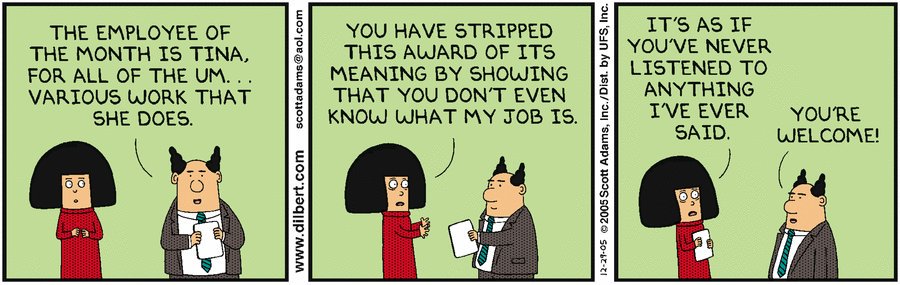
One of the most important messages you can send to people that follow you is that you listen.  That means you ask for opinions and give others an opportunity to influence.  When you incorporate a strong feedback mechanism in your employee engagement survey, you create a pathway for communication that fuels employees’ personal value.  The key though is to listen.  The biggest mistake to corporate culture change is to ask and not act.  Essentially communicating that you are not listening.  I encourage my clients to respond to culture change feedback even if the ideas cannot be adopted—this reinforces that you have listened.

LEADERSHIP COMMITMENT

As a leader of your organization, if you are not ready to commit to the adventure of change, then don’t get off the porch.  I mean that—do not start unless you are committed to finish!  I have seen firsthand companies that have turned culture change into an organizational minefield.  The CEO will tell me it didn’t work, and unfortunately, I have to remind them that they weren’t committed to change and that the entire initiative turned into a hollow promise.  Yes, it will backfire if there is a lack of commitment.

LEADERSHIP IMPLEMENTATION

As a 20-year consultant veteran, I differentiate myself by emphasizing implementation.  When an organization begins culture change, the transformation will only occur through implementation.  I do not stop with a report and recommendations. I help my clients build actionable implementation plans.  I work with the leadership team to identify and select employees who can play a role in helping the execution of those plans.  This spreads the implementation buy-in throughout the company and ensures greater success of implementation.  Leadership’s role is to coach and facilitate implementation.

LEADERSHIP FLEXIBILITY

When a company embarks on transforming their corporate culture, they are embarking on a journey into the unknown.  Culture is fluid, ever-changing, impacted by the daily weather, disruptive, moody and explosive.  During culture change implementation, leaders need to be flexible, understanding that the environment will shift actions and initiative throughout the process.  Leaders need to use their corporate values as the compass, to ensure they are going in the right direction, yet be flexible to allow deviations.

The bottom line is simple. Culture change rises and falls on leadership, but a strong culture can make the difference between winning and losing, so I encourage leaders to embrace the challenge and lead their organizations toward a healthy corporate culture.