The United States on Friday surpassed 300,000 daily coronavirus cases, the second alarming record this week. The number, which roughly equates to the population of St. Louis, Pittsburgh or Cincinnati, comes about two months after the country reported 100,000 coronavirus cases a day for the first time, and one day after more than 4,000 people died from the virus, also a record.
The United States has reported 21.8 million infections and 367,458 deaths.
People with COVID-19 who don’t exhibit symptoms may transmit 59 percent of all virus cases, according to a model developed by CDC researchers and published Jan. 7 in JAMA Network Open.
Since many factors influence COVID-19 spread, researchers developed a mathematical approach to assess several scenarios, varying the infectious period and proportion of transmission for those who never display symptoms according to published best estimates.
In the baseline model, 59 percent of all transmission came from asymptomatic transmission. That includes 35 percent of new cases from people who infect others before they show symptoms and 24 percent from people who never develop symptoms at all. Under a broad range of values for each of these assumptions, at least 50 percent of new COVID-19 infections were estimated to have originated from exposure to asymptomatic individuals.
The more contagious variant first identified in the U.K. and since found in six states underscores the importance of the model findings, said Jay Butler, MD, CDC deputy director for infectious diseases and a co-author of the study.
“Controlling the COVID-19 pandemic really is going to require controlling the silent pandemic of transmission from persons without symptoms,” Dr. Butler told The Washington Post. “The community mitigation tools that we have need to be utilized broadly to be able to slow the spread of SARS-CoV-2 from all infected persons, at least until we have those vaccines widely available.”
Whether vaccines stop transmission is still uncertain and was not a scenario addressed in the model.
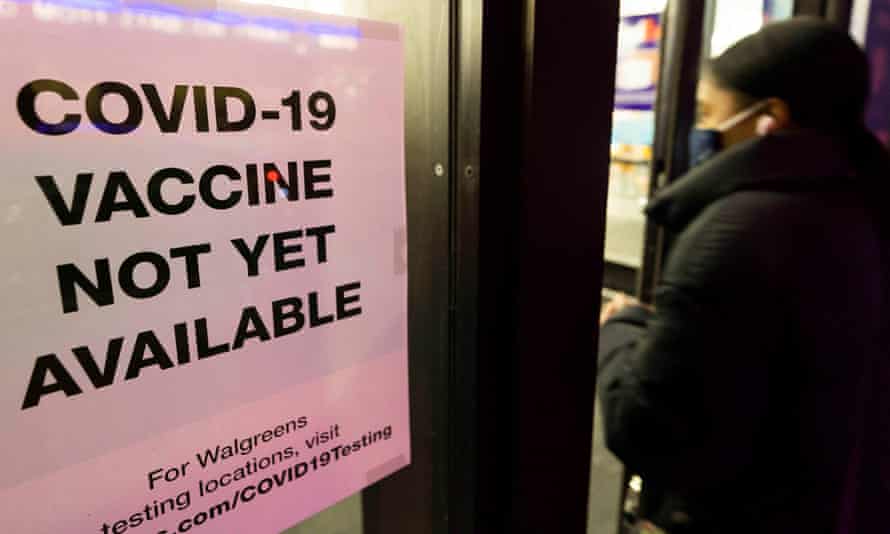
North Dakota has administered the highest percentage of COVID-19 vaccines it has received, according to the CDC’s COVID-19 vaccine distribution and administration data tracker.
The CDC’s data tracker compiles data from healthcare facilities and public health authorities. It updates daily to report the total number of COVID-19 vaccines that have been distributed to each state and the total number each state has administered.
As of 9 a.m. ET Jan. 7, a total of 21,419,800 vaccine doses have been distributed in the U.S. and 5,919,418 have been administered, or 27.64 percent. That means about 1.8 percent of the U.S. population has been vaccinated.
Below are the states ranked by the percentage of COVID-19 vaccines they’ve administered of those that have been distributed to them.
North Dakota Doses distributed to state: 43,950 Doses administered: 27,289 Percentage of distributed vaccines that have been administered: 62.09
West Virginia Doses distributed to state: 126,275 Doses administered: 74,016 Percentage of distributed vaccines that have been administered: 58.61
South Dakota Doses distributed to state: 59,900 Doses administered: 33,389 Percentage of distributed vaccines that have been administered: 55.74
New Hampshire Doses distributed to state: 77,075 Doses administered: 37,369 Percentage of distributed vaccines that have been administered: 48.48
Connecticut Doses distributed to state: 219,125 Doses administered: 100,889 Percentage of distributed vaccines that have been administered: 46.04
Nebraska Doses distributed to state: 132,800 Doses administered: 53,548 Percentage of distributed vaccines that have been administered: 40.32
Montana Doses distributed to state: 69,025 Doses administered: 27,693 Percentage of distributed vaccines that have been administered: 40.12
Tennessee Doses distributed to state: 454,800 Doses administered: 179,811 Percentage of distributed vaccines that have been administered: 39.54
Iowa Doses distributed to state: 191,675 Doses administered: 74,224 Percentage of distributed vaccines that have been administered: 38.72
Kentucky Doses distributed to state: 244,350 Doses administered: 94,443 Percentage of distributed vaccines that have been administered: 38.65
Vermont Doses distributed to state: 48,550 Doses administered: 18,740 Percentage of distributed vaccines that have been administered: 38.6
Maine Doses distributed to state: 96,475 Doses administered: 37,128 Percentage of distributed vaccines that have been administered: 38.48
Rhode Island Doses distributed to state: 72,175 Doses administered: 27,696 Percentage of distributed vaccines that have been administered: 38.37
New Mexico Doses distributed to state: 133,125 Doses administered: 48,306 Percentage of distributed vaccines that have been administered: 36.29
Colorado Doses distributed to state: 361,375 Doses administered: 130,445 Percentage of distributed vaccines that have been administered: 36.1
Utah Doses distributed to state: 191,075 Doses administered: 62,662 Percentage of distributed vaccines that have been administered: 34.8
Oklahoma Doses distributed to state: 264,000 Doses administered: 85,978 Percentage of distributed vaccines that have been administered: 32.57
Texas Doses distributed to state: 1,676,925 Doses administered: 545,658 Percentage of distributed vaccines that have been administered: 32.54
New York Doses distributed to state: 1,134,800 Doses administered: 353,788 Percentage of distributed vaccines that have been administered: 31.18
Massachusetts Doses distributed to state: 449,025 Doses administered: 137,858 Percentage of distributed vaccines that have been administered: 30.7
Ohio Doses distributed to state: 576,250 Doses administered: 175,681 Percentage of distributed vaccines that have been administered: 30.49
Indiana Doses distributed to state: 409,625 Doses administered: 123,835 Percentage of distributed vaccines that have been administered: 30.23
Florida Doses distributed to state: 1,355,775 Doses administered: 402,802 Percentage of distributed vaccines that have been administered: 29.71
Illinois Doses distributed to state: 737,125 Doses administered: 213,045 Percentage of distributed vaccines that have been administered: 28.9
Missouri Doses distributed to state: 401,050 Doses administered: 113,369 Percentage of distributed vaccines that have been administered: 28.27
New Jersey Doses distributed to state: 572,250 Doses administered: 155,458 Percentage of distributed vaccines that have been administered: 27.17
Maryland Doses distributed to state: 371,425 Doses administered: 100,049 Percentage of distributed vaccines that have been administered: 26.94
Delaware Doses distributed to state: 64,375 Doses administered: 16,677 Percentage of distributed vaccines that have been administered: 25.91
Hawaii Doses distributed to state: 95,200 Doses administered: 24,558 Percentage of distributed vaccines that have been administered: 25.80
South Carolina Doses distributed to state: 225,850 Doses administered: 58,044 Percentage of distributed vaccines that have been administered: 25.7
Minnesota Doses distributed to state: 378,425 Doses administered: 97,098 Percentage of distributed vaccines that have been administered: 25.66
Pennsylvania Doses distributed to state: 789,250 Doses administered: 202,498 Percentage of distributed vaccines that have been administered: 25.66
Wisconsin Doses distributed to state: 322,775 Doses administered: 82,170 Percentage of distributed vaccines that have been administered: 25.46
Alaska Doses distributed to state: 87,325 Doses administered: 21,830 Percentage of distributed vaccines that have been administered: 25
Virginia Doses distributed to state: 556,625 Doses administered: 136,924 Percentage of distributed vaccines that have been administered: 24.60
Oregon Doses distributed to state: 262,100 Doses administered: 61,672 Percentage of distributed vaccines that have been administered: 23.53
Washington Doses distributed to state: 518,550 Doses administered: 121,354 Percentage of distributed vaccines that have been administered: 23.40
Wyoming Doses distributed to state: 40,400 Doses administered: 9,324 Percentage of distributed vaccines that have been administered: 23.08
California Doses distributed to state: 2,314,350 Doses administered: 528,173 Percentage of distributed vaccines that have been administered: 22.82
Idaho Doses distributed to state: 104,925 Doses administered: 22,822 Percentage of distributed vaccines that have been administered: 21.75
Louisiana Doses distributed to state: 298,825 Doses administered: 64,664 Percentage of distributed vaccines that have been administered: 21.64
North Carolina Doses distributed to state: 647,450 Doses administered: 139,474 Percentage of distributed vaccines that have been administered: 21.54
Nevada Doses distributed to state: 187,375 Doses administered: 39,761 Percentage of distributed vaccines that have been administered: 21.22
Michigan Doses distributed to state: 662,450 Doses administered: 137,887 Percentage of distributed vaccines that have been administered: 20.81
Alabama Doses distributed to state: 245,100 Doses administered: 48,888 Percentage of distributed vaccines that have been administered: 19.95
Arizona Doses distributed to state: 453,275 Doses administered: 88,266 Percentage of distributed vaccines that have been administered: 19.47
Arkansas Doses distributed to state: 212,700 Doses administered: 40,899 Percentage of distributed vaccines that have been administered: 19.23
Kansas Doses distributed to state: 191,225 Doses administered: 36,538 Percentage of distributed vaccines that have been administered: 19.11
Mississippi Doses distributed to state: 159,625 Doses administered: 28,356 Percentage of distributed vaccines that have been administered: 17.76
Georgia Doses distributed to state: 619,250 Doses administered: 103,793 Percentage of distributed vaccines that have been administered: 16.76
Anthony Fauci, the nation’s top infectious diseases expert, said Sunday he did not expect the death toll from the coronavirus to be so high in the U.S.
“There is no running away from the numbers,” Fauci told guest host Martha Raddatz on ABC’s “This Week.”
“It’s something that we absolutely have got to grasp and get our arms around and turn that, turn that inflection down by very intensive adherence to the public health measures uniformly throughout the country with no exceptions,” he added.
Statistics held by John Hopkins University show that 350,215 deaths have been recorded in the United States so far, a number that has been quickly growing over the last two months.
“I did not” expect the death toll to reach the recent milestone of 350,000 in the U.S., Fauci said.
“But, you know, that’s what happens when you’re in a situation where you have surges related to so many factors inconsistent adhering to the public health measures, the winter months coming in right now with the cold allowing people or essentially forcing people to do most of their things indoors as opposed to outdoors.”
Raddatz asked Fauci how effective he thought proposals by President-elect Joe Biden would be, such as a 100-day mask mandate and a target of 100 million vaccinations.
“The goal of vaccinating 100 million people in the first 100 days is a realistic goal. We can do 1 million people per day,” Fauci said. “You know we’ve done massive vaccination programs, Martha, in our history. There’s no reason why we can’t do it right now.”
More than 350,000 people have died of the coronavirus in the U.S., with another surge of cases and deaths expected in the coming weeks as a result of smaller holiday gatherings.
The country reached the grim milestone early Sunday morning, according to data compiled by Johns Hopkins University. More than 20 million people have been infected since the pandemic began nearly one year ago, according to the tally.
Public health experts attributed a nationwide spike in cases, hospitalizations and deaths in early December to a large number of Americans traveling over the Thanksgiving holiday, and pleaded with citizens to stay home for Christmas and New Year’s celebrations.
Multiple states have reported a record number of cases, including North Carolina and Arizona, according to the Associated Press. New York hit 1 millions cases total as of Saturday, becoming the fourth state to do so along with Texas, Florida and California.
Last month, federal officials approved two vaccines by Pfizer and Moderna for emergency use. The first round of doses have been administered to doctors, nurses and other front line healthcare workers as well as nursing home residents.
The elderly and other patients deemed “high risk” are the next group of Americans slated to receive vaccines with public health officials estimating younger and healthy citizens can expect to be eligible for vaccination toward the middle to end of spring.
The Centers of Disease Control and Prevention last week reported more than 2 million people in America have been vaccinated, far short of the 20 million figure the federal government initially said it hoped to top by this time. That number has since grown to 4.2 million as of Sunday.
“We would have liked to have seen it run smoothly and have 20 million doses into people today by the end of the 2020, which was the projection,” saidDr. Anthony Fauci, the nation’s leading infectious disease doctor. “Obviously, it didn’t happen, and that’s disappointing.”
Fauci said a targeted approach in assisting local governments in vaccine rollout programs is the best way for the federal government to make up for lost time.
“There really has to be a lot more effort in the sense of resources for the locals, namely, the states, the cities, the counties, the places where the vaccine is actually going into the arms of individuals,” Fauci said.
Atul Gawande is outlandishly accomplished. The son of Indian immigrants, he grew up in Athens, Ohio, and was educated at Athens High School, Stanford, Oxford, and Harvard, where he studied issues of public health. Before working as a surgeon at Brigham and Women’s Hospital, in Boston, he advised such politicians as Jim Cooper and Bill Clinton. He teaches at Harvard and is the chairman of Ariadne Labs, which works on innovation in health-care delivery and solutions, and he recently spent two years as the C.E.O. of a health-care venture called Haven, which is co-owned by Amazon, JPMorgan Chase, and Berkshire Hathaway.
Gawande is also a writer, and he has been publishing in The New Yorker for more than two decades. In 2009, heading into the debate over the Affordable Care Act, President Obama told colleagues that he had been deeply affected by Gawande’s article in the magazine called “The Cost Conundrum,” a study conducted in McAllen, Texas. Obama made the piece required reading for his staff. Gawande’s most recent book, a Times No. 1 best-seller, is “Being Mortal: Medicine and What Matters in the End.”
Since the beginning of the coronavirus pandemic, Gawande has been sharp in his criticism of the Trump Administration and, like Anthony Fauci and other prominent figures in public health, insistent on clear, basic measures to reduce levels of disease. After the election in November, President-elect Biden formed a covid-19 advisory board and included Gawande among its members. Earlier this week, I spoke with Gawande for The New Yorker Radio Hour. In the interview, which has been edited for length and clarity, Gawande says that President Trump’s relative silence on the issue after the election might be a blessing (considering the alternative). He suggests that the development of vaccines promises great things down the line, a return to relative normalcy some months from now. But, before that happens, he says, we may not only see terrible rates of illness and death—we will also experience an almost inevitably contentious rollout of the vaccine. Questions of who gets the vaccine and when will test a deeply divided society. As Gawande put it, “The bus drivers never came before the bankers before.”
We currently have one of the highest death and transmission rates of covid-19 in the world. What went wrong?
There’s so many things that went wrong, but you can boil it down to the difficulty of pulling together. One of the most critical things you have in the toolbox in public health is communications. It’s your ability to have clear priorities and communication about those priorities to your own public and to all of the players who get stuff done. We didn’t get testing started early. We weren’t calling the laboratories together to get testing built and created right from the get-go. And then fast-forward to where we are today. We still are in a world where we have not had clear communications from the top of the government around whether we should be wearing masks and having an actual national strategy to fight the virus. I would boil down what went wrong to not committing to communicating clearly and with one voice about the seriousness of what we’re up against and what the measures are to solve it.
When this began, I read “The Great Influenza,” John M. Barry’s book about 1918 and the horrendous flu that killed millions worldwide, and many hundreds of thousands in the United States. I thought to myself, Well, it’s not possible that we would repeat these mistakes, because, after all, we learn from history, even if the President of the United States does not. How is it possible that we made these same mistakes on such a mass scale? Do you lay it all at the feet of the President?
There’s a big part of this that I lay at the feet of the President. Imagine Pearl Harbor happened, and then we spent seven or eight months deciding whether or not we were going to fight back. And then, seven or eight months into it, a new President is going to come in who says, O.K., we are going to fight now. But you now have substantial parts of the country already arrayed against the idea that fighting it is worthwhile. In the meantime, some states have fought the attack and other states have not, and they’ve had to compete with each other for supplies. That’s the mess we have.
In May, I got to write about this in The New Yorker: the hospitals learned how to bring people to work and have them succeed. It was a formula that included masks, included some basic hygiene, some basic distancing, and testing. That’s been the formula, and is the formula still, for making it possible for people to resume a normal life. But we did not have a commitment from the very top to make this happen on a national basis. And we are continuing to litigate that issue to this very day.
You are now on President-elect Biden’s advisory board on covid-19, and I wonder what kind of coöperation you’re getting from the Trump Administration’s own advisory board.
Well, remember: up until just a few days ago, there was no contact allowed at all between any Administration officials and the Biden-Harris transition team. So only in the last few days have there started to be the contacts that would allow for basic information to be passed. I think it’s too early to say how well those channels of communication are turning out.
I’m sorry to interrupt, Atul, but, just to be clear here: we’re in a public-health emergency. Are you saying that the President’s theories, ill-founded and fantastical theories about the election, held up any communication whatsoever between President Trump’s advisory board and President-elect Biden’s board?
Absolutely. And I want to put a pin in what that means, in concrete fact. Here, we had a vaccine trial that came out three weeks ago showing a successful, effective vaccine, followed, just a few days later, by another vaccine trial. We did not have access to the information they were getting about the status of those trials. We did not have access to information about supplies. So, at the beginning of the year, with Operation Warp Speed, the target was three hundred million vaccines produced by the end of the year. Instead, what we’re seeing is reportedly thirty million or so by the end of [December]. We’re seeing in the press some backtracking from that as well. What were the bottlenecks that meant that this couldn’t be done? Is it a shortage of raw ingredients? Are they having stockpile problems? Is it a problem with the actual production processes?
Here’s another one when I’m talking to colleagues around the country who are going to be involved in distributing the vaccine: We hear about everything from shortages of gloves, uncertainty about supplies of needles and syringes for three hundred and thirty million people to get two rounds of doses. There’s no information yet on how many vaccines will be allocated to a given state or a given big pharmacy company like CVS or Walgreens—places that are an important part of the distribution chain. So there’s a lot of basic information that hasn’t been known. That discovery process is just starting.
The Biden Administration-to-be’s covid-19 task force has got a seven-point plan to stop the pandemic. What are the crucial elements of that plan?
It’s the same story that we’ve known since April: It’s mandating masks—that’s one of the most important tools we have for driving transmission down. It’s testing and being able to make sure that there’s widespread availability of testing. It’s supplies for the places that are going to need proper gloves, masks, et cetera. It’s continuing, based on the level of spread in a given community, to tune how much capacity restriction you have on indoor environments, whether it’s bars and restaurants or weddings or other gatherings that are seen to be currently driving transmission. Those are all critical elements. I’m firmly in agreement with where the President-elect is going on heeding the advice from public-health people that schools can be opened. But, in order for kids to be back in schools, especially elementary and middle schools, there’s still a lot of work to do to insure they have the supplies that they need to maintain distancing, to have the right ventilation.
Thanksgiving was a week ago. Anthony Fauci says that what he fears is a spike on top of a spike, a leap on top of a leap. Do you share that fear?
I do. A lot of people heeded the C.D.C. advice to not travel during Thanksgiving and to limit the size of family get-togethers. And I think that will help a great deal. But clearly large numbers of people did not heed that advice. And that’s the reason for the fear of the spike on top of a spike. We saw that, during the Thanksgiving weekend, we had the highest level of hospitalizations at any time in this pandemic, including the darkest days of spring. That’s going to have consequences in the days to come. I’m concerned that we’ll go into the Christmas holiday week with even higher spikes that will make that holiday all that much more challenging. Spike upon spike upon spike is the fear in this six-week-long period.
One of the signal disasters, as you said earlier, in the Trump Administration was communications, both what the President said about the pandemic and how he said it, the language he couched it in and the attitude he took toward it. Since the election, Trump doesn’t even talk about it on a daily basis.
No, he’s, he’s been awol. He had said in his statements: You know, it’s covid, covid, covid; all they want to talk about is covid. But watch, he said, the news will go away the day after the election. Instead, he’s the one who went away the day after the election. He has hardly spoken on what we’re up against, how bad things are, and what is going to be required. It’s interesting, however. In some ways, that is preferable to his coming in and constantly undermining the public-health messaging. So you have seen the C.D.C. and F.D.A. be able to step up. I can only surmise that what he’s clearly been focussed on is figuring out how to hold on to power. The irony is it’s left the field clear.
President-elect Biden is saying very clearly that this should be thought of as a war. We have to be on a war footing and understand how grave this is. Now you’re getting a unified message that’s coming across, and it’s coming from the President-elect on down and from the career scientists. In the face of the rising levels of disease in the country, you now have some Republican governors who had [opposed] a mask mandate now implementing the mask mandate. And they’re not getting contradicted by the President in that process. So, ironically, look, if I have to have President Trump on the airwaves contradicting everybody, or being awol, I’d rather have him be awol.
Thankfully, we can look forward to a vaccine, but that presents enormous logistical challenges. What are the challenges, and how do you view that rolling out?
Well, this is an undertaking on another scale from anything we’ve been doing in the last year. We have deployed north of a hundred and twenty million coronavirus tests in the course of eight months.This is going to be three hundred and thirty million vaccinations, done twice, and hoping to accomplish it in the course of six months or less. This is with vaccines that are new and that haven’t been produced at this volume before. Their clinical data is just undergoing review for approval by the F.D.A. The task is muddied by the fact that we don’t have a clear understanding of what the supply situation is that we have inherited from the Trump Administration. We also don’t know even what the prioritization is.
I’m concerned that what will happen when the new Administration starts is that they will inherit a lot of public confusion, because each state is now coming to its own conclusion about how they’re going to prioritize things. There’s going to be such demand. People are going to clamor for this vaccine. And, if they think that the system is rigged, we will have even more trouble.
After health-care workers and nursing homes, who gets the vaccine next? It’s almost like some terrible philosophical, moral, ethical conundrum that philosophers are faced with all the time. What are your discussions like when it comes to those next levels?
There are eighty-seven million essential workers who are at heightened risk of exposure. They are, say, meatpackers who are exposed to co-workers, or grocery-store workers or bus drivers who are exposed. You’ll be able to go to your local pharmacy and get a vaccine, but what they need to know is, how do they identify who’s the bus driver and who’s not?
Will the government be able to guarantee us that wealthy people, connected people, won’t be able to jump the line?
I think this is one of the critical tests—and an opportunity. The chance to prove that the system is not rigged should not be underestimated. It’s hard. Think about it. The bus drivers never came before the bankers before. You’re going to have Zoom workers who want to go back to normal, and I cannot blame the number of people who will say, You know, thank God I can finally not be in fear. Let me get the vaccine. What do you mean, I have to wait five months? I can imagine a million ways [of jumping the line], people paying someone twenty-five hundred bucks to get your work I.D. tag. This is all about rallying people together. It can’t just be about the rules. It has to be about how we all understand this and work together to say, These are the folks most at risk. They make our subways work. They make our buses work. They get our food supply to us. They make it possible for me to go grocery shopping, and I’ll just have to wait three or four months for my turn.
What you’re talking about is community and common interest and fairness. Many people are very good about that on the level of rhetoric, but, when it comes to their health and their children’s health or their parents’ health, that’s where rubber meets the road.
The mass debate and antagonism we’ve had over the last few months is nothing compared to the splits we will see over “I want my family to be vaccinated.” You know, one person in the family might get vaccinated. Another person might not because they have an illness profile or they have a job that fits in that way. You’ll have children who some families will want to have vaccinated and others will not want to have vaccinated. Pediatric clinical trials have only just gotten under way, and we won’t see those results for a while.
I have a child with severe autism, and so I pay very close attention to the anti-vaxxer movement. And the statistics, the numbers of people who say they will not be vaccinated, is enormous. Doesn’t that have serious implications not only for them but for our over-all effort?
It does. It seems, if we can get around seventy per cent or so of people vaccinated, that would stop the transmission just through vaccination alone. Now if, once people start getting vaccinated, they start throwing their masks away and you can’t get them to do anything else like distancing, then you’re really relying on vaccination as the sole prong of the strategy come three, four months from now. I think there are lots of things that are pushing in the direction of keeping the numbers of people who resist vaccination smaller than those surveys indicate.
What are the numbers?
The numbers suggest that it’s up to as much as forty per cent, even up to fifty per cent, who have said that they are not ready to take the vaccine [even] if the F.D.A. approves it. Part of the reason it’s good that health-care workers would go first is just demonstrating that we ourselves are willing to get vaccinated. Health-care workers are everywhere, which means we’re all going to know people who got vaccinated, and we’re going to see that they did all right.
The reality is that there are memes around anti-vaccination, like: the vaccine will change your D.N.A., or people are injecting a location transmitter into you, a conspiracy to be tagging everybody in the country. We’ll have to be able to combat crazy conspiracy theories. I’ll just summarize by saying this will be contentious, but I’m quite hopeful that we will get to large enough levels of vaccination so that we will be able to get this under control and return to a significant degree of normalcy.
Has there ever been any kind of distribution effort like this in American history?
I draw on things like the polio campaigns, which, you know, took polio from being an annual summer pandemic, in the early fifties, that left kids paralyzed, to essentially being gone a few years after the vaccines came out. Then you had H1N1, where we were in position to vaccinate seventy-million-plus people. So I think there is some precedent. We have not tried to say, Let’s eradicate this disease in one year. Smallpox took a couple of decades. I think we can get [the coronavirus] under control without necessarily eradicating it.
What would it take to eradicate it—or are we never going to eradicate it?
You don’t have to vaccinate every single human being in order to eradicate it. You need to get enough people vaccinated so that the disease stops spreading and dies out. I’m hopeful that we can get it under control here, but, to get eradication, to go back to global travel like before, you would have to get the whole world vaccinated. And that will take years. If we are well vaccinated here, we will feel comfortable over time lifting our restrictions on travel in the United States. And we will become freer to travel to many places around the world. And we will begin to realize what a lot of public-health people like me have been saying, which is that this can’t just be about distribution of vaccine in the United States. This is also going to need to be about enabling global vaccination.
At what point do you think you will be comfortable eating in crowded restaurants, flying on planes, living the life that you lived a year ago?
I think it will be after I get vaccinated [and we have enough data to know the vaccines are stopping transmission]. I’m actually a trial participant. One of the things that’s running through my brain is when I’m going to feel comfortable—when I find out whether I got a placebo or I got the vaccine.
What trial are you in?
I’m in the Moderna trial. After the booster shot, I got a fever, and I had the whole reaction that you would have expected. So I’m going to guess that I got the vaccine. But I won’t feel comfortable that I got it until I actually get that confirmation. But this isn’t about me. I want to see the evidence that the vaccine is lasting. What is the story three months from now? Are the antibodies showing indications that it lasts? I suspect that we’ll really feel comfortable, that we’re able to largely return to normal, maybe in about six months’ time. But, you know, we’re going to go through this gray-zone period where a lot of people have been vaccinated, and I will feel among them. I’m so desperate to go to a concert! Live music is the thing I’ve missed the absolute most.
Dr. Fauci has been a paragon. At the same time, he said, it could be a year and a half for a vaccine to be deployable. Why was the timeline so much faster in the end?
It was insane, some of the timelines that the scientists hit. For example, from the moment that the genome for the virus got sequenced to the moment when the N.I.H.-Moderna team actually was producing the vaccine, it was days. I think it was like a week or something like that. That’s just beyond belief.
What was the science, the discoveries, that made that possible?
Well, it was years of work to build the platform that could deliver the genetic information. Those first few days of success were built on years of work that folks like Dr. Fauci get credit for, because he’s been contributing to the creation of that kind of platform for some years now, as have many biotech companies and many university labs and the government.
Atul, we’re sitting here and watching the year 2020 end—and not a moment too soon. What do you expect will be our situation in December, 2021?
Well, for one thing, I think we’ll be having normal holiday experiences. We’ll be able to get together with our families and spend time. It’s harder for me to predict from my vantage point with as much confidence, but I think that if that’s happening, we will be on better economic terms as well. Right now, airlines, hotels, and any face-to-face service industry—bars, restaurants, child care, health care—I think all of those things are coming back.
The Centers for Disease Control and Prevention reported on Monday that 2.1 million doses of coronavirus vaccines have been administered in two weeks. While this might sound like an impressive number, it should set off alarms.
Let’s start with the math. Anthony S. Fauci, the government’s top infectious-disease doctor, estimates that 80 to 85 percent of Americans need to be vaccinated to reach herd immunity. Both the Pfizer and Moderna vaccines require two doses. Eighty percent of the American population is around 264 million people, so we need to administer 528 million doses to achieve herd immunity.
At the current rate, it would take the United States approximately 10 years to reach that level of inoculation. That’s right — 10 years. Contrast that with the Trump administration’s rosy projections: Earlier this month, Health and Human Services Secretary Alex Azar predicted that every American will be able to get the vaccine by the second quarter of 2021 (which would be the end of June). The speed needed to do that is 3.5 million vaccinations a day.
There’s reason to believe the administration won’t be able to ramp up vaccination rates anywhere close to those levels. Yes, as vaccine production increases, more will be available to the states. And Brett Giroir, assistant secretary for health at HHS, argued on Sunday that the 2.1 million administered vaccines figure was an underestimate due to delayed reporting. So let’s be generous and say the administration actually administered 4 million doses over the first two weeks.
But even that would still fall far short of the 3.5 million vaccinations needed per day. In fact, it falls far short of what the administration had promised to accomplish by the end of 2020 — enough doses for 20 million people. And remember, the first group of vaccinations was supposed to be the easiest: It’s hospitals and nursing homes inoculating their own workers and residents. If we can’t get this right, it doesn’t bode well for the rest of the country.
Here’s what concerns me most: Instead of identifying barriers to meeting the goal, officials are backtracking on their promises. When states learned they would receive fewer doses than they had been told, the administration said its end-of-year goal was not for vaccinations but vaccine distribution. It also halved the number of doses that would be available to people, from 40 million to 20 million. (Perhaps they hoped no one would notice that their initial pledge was to vaccinate 20 million people, which is 40 million doses, or that President Trump had at one point vowed to have 100 million doses by the end of the year.) And there’s more fancy wordplay that’s cause for concern: Instead of vaccine distribution, the administration promises “allocation” in December. Actual delivery for millions of doses wouldn’t take place until January, to say nothing of the logistics of vaccine administration.
The vaccine rollout is giving me flashbacks to the administration’s testing debacle. Think back to all the times Trump pledged that “everyone who wants a test can get one.” Every time this was fact-checked, it came up false. Instead of admitting that there wasn’t enough testing, administration officials followed a playbook to confuse and obfuscate: They first attempted to play up the number of tests done. Just like 2 million vaccines in two weeks, 1 million tests a week looked good on paper — until they were compared to the 30 million a day that some experts say are needed. The administration then tried to justify why more tests weren’t needed. Remember Trump saying that “tests create cases” or the CDC issuing nonsensical testing guidance?
When that didn’t work, Trump officials deflected blame to the states. Never mind that there should have been a national strategy or that states didn’t have the resources to ramp up testing on their own. It was easier to find excuses than to admit that they were falling short and do the hard work to remedy it.
Instead of muddying the waters, the federal government needs to take three urgent steps. First, set up a real-time public dashboard to track vaccine distribution. The public needs to know exactly how many doses are being delivered, distributed and administered. Transparency will help hold the right officials accountable, as well as target additional resources where they are most needed.
Second, publicize the plan for how vaccination will scale up so dramatically. States have submitted their individual plans to the CDC, but we need to see a national strategy that sets ambitious but realistic goals.
Third, acknowledge the challenges and end the defensiveness. The public will understand if initial goals need to be revised, but there must be willingness to learn from missteps and immediately course-correct.
I remain optimistic that vaccines will one day end this horrific pandemic that has taken far too many lives. To get there, we must approach the next several months with urgency, transparency and humility.
Colorado officials on Tuesday reported the first known case in the United States of a person infected with the coronavirus variant that has been circulating rapidly across much of the United Kingdom and has led to a lockdown of much of southern England.
Scientists have said the variant is more transmissible but does not make people sicker.
The Colorado case involves a man in his 20s, who is in isolation in Elbert County, about 50 miles southeast of Denver, and has no travel history, according to a tweet from the office of Gov. Jared Polis (D).
“The individual has no close contacts identified so far but public health officials are working to identify other potential cases and contacts through thorough contact tracing interviews,” the statement said.
A federal scientist familiar with the investigation said the man’s lack of known travel — in contrast with most confirmed cases outside the United Kingdom — indicates this is probably not an isolated case. “We can expect that it will be detected elsewhere,” said the official, who spoke on the condition of anonymity to discuss the broader context of the announcement.
The Centers for Disease Control and Prevention confirmed as much in a statement Tuesday afternoon, saying additional cases with the new variant will be detected in the United States in coming days. The variant’s apparent increase in contagiousness “could lead to more cases and place greater demand on already strained health care resources,” the agency said in a statement.
Researchers have detected the more transmissible variant in at least 17 countries outside the United Kingdom, including as far away as Australia and South Korea, as of Tuesday afternoon. Officials in Canada had previously said they had identified two cases.
Although the U.K. variant appears more contagious, it is not leading to higher rates of hospitalizations or deaths, according to a report from Public Health England, a government agency. Nor is there any sign that people who were infected months ago with the coronavirus are more likely to be reinfected if exposed to the variant, according to the report. All available evidence indicates that vaccines, and immunity built up in the population, should be protective against this variant.
The Colorado case occurred in a county of about 27,000, which is currently classified, along with much of the state, in the “red” level for the virus, denoting serious but not extreme risk.
Two weeks ago, several hundred people gathered at a community church in the county seat of Kiowa to consider whether to pursue legal actions against Polis and other state officials for imposing coronavirus-related restrictions, according to the Elbert County News. County commissioners and the county sheriff have declined to enforce restrictions emanating from Denver.
“I was expecting to see it in ski country first because those areas are where people from across Colorado, the U.S. and internationally, gather,” said Elizabeth Carlton, an assistant professor of environmental and occupational health at the Colorado School of Public Health. The absence of any apparent travel history associated with the infected person, she said, suggests he “can’t be the only case in Colorado.”
Polis, in his statement, called on Coloradans to do everything they could to prevent transmission by wearing masks, standing six feet apart when gathering with others, and interacting only with members of their immediate households.
The arrival of the new variant “doesn’t fundamentally change the nature of the threat,” said Justin Lessler, an epidemiologist at Johns Hopkins Bloomberg School of Public Health. “It’s no more deadly than the virus was before, and it doesn’t look like it infects people who are immune.”
Lessler echoed others, saying he would be “astounded” if this was the only chain of transmission of the new variant in the United States. “We know that the virus spreads easily and quickly between countries,” he said, and the fact that the infected person had no travel history indicates “this strain has gotten here sometime in the past, and there are chains of transmission ongoing.”
The variant has a higher attack rate, according to the U.K. report, which bolsters the hypothesis that the variant has out-competed other versions of the coronavirus and is now the dominant variant across much of the United Kingdom. Among people known to have been exposed to someone already infected with the variant, 15.1 percent became infected. People exposed to someone infected with the non-variant version had a 9.8 percent infection rate.
That difference suggests the variant is more transmissible, though Public Health England said more investigation is needed to bolster the hypothesis.
The working theory among many scientists is that the increased transmissibility of the variant, known as B.1.1.7, is driven by mutations that have altered the spike protein on the surface of the virus. The variant has 17 mutations — eight of which alter the spike protein.
Precisely how those changes are leading to more infections is unknown. The virus may be binding more easily to receptor cells in the human body, or replicating more easily and driving higher viral loads, enhancing viral shedding by someone who is infected. Another possibility is that people are shedding the virus for a longer period, increasing the chances of passing it along.
“Preliminary evidence suggests that the new variant does not cause more severe disease or increased mortality,” Susan Hopkins, a senior medical adviser to Public Health England, said in a statement released Tuesday.
The newly published data echo the findings in a separate study published last week, based on modeling and hospitalization data — and not yet peer-reviewed — that estimated that the variant is 56 percent more transmissible but does not appear to alter the lethality of the virus.
“The good news is that B.1.1.7 does not seem to cause much more severe disease, and there’s no evidence that it is managing to evade the immune system, which means vaccines are expected to protect against it,” William Hanage, an epidemiologists at the Harvard T.H. Chan School of Public Health, said Tuesday after reviewing the new report. “The bad news is that B.1.1.7 does appear to be much more transmissible.”
Officials in the United States have been signaling since last week that the new variant was probably already present in this country.
“I’m not surprised,” Anthony S. Fauci, director of the National Institute of Allergy and Infectious Diseases, said Tuesday. “I think we have to keep an eye on it, and we have to take it seriously. We obviously take any kind of mutation that might have a functional significance seriously. But I don’t think we know enough about it to make any definitive statements, except to follow it carefully and study it carefully.”
Research findings on coronavirus variants have been ambiguous at times, and scientists say they are still trying to extract reliable signals from noisy data. There have been several false alarms sounded about virus mutations in the past. A major challenge is discerning whether a virus variant is spreading rapidly because it has a competitive advantage based on genetic and structural differences, or because it is simply lucky, having arrived early to a location or leveraged a few superspreader events to gain dominance.
But with the United Kingdom seeing a severe winter surge of infections, public officials are taking no chances and have effectively locked down southern England, including London. Other countries have banned travelers from the United Kingdom.
The United States, despite having the world’s highest number of documented infections, has a weak track record in publishing genomic sequences, the process that enables researchers to track changes in the virus. Most sequences have been published by academic or private research institutions. By comparison, the United Kingdom has a national health system with a robust surveillance system.
“The U.K. made the decision in the spring to do this. The U.S. has sequencing equipment and infrastructure. As with many things in this pandemic, it was not executed the way it should have been,” said Neville Sanjana, a geneticist at New York University.
All viruses mutate randomly, and over time some of those mutations appear to confer some kind of advantage to the virus as it adapts to the human species. The novel coronavirus, SARS-CoV-2, mutates at a slow rate, and scientists do not think the genetic changes seen in the variant so far are sufficient to allow it to elude the vaccines now being administered to millions of people in many countries. But the coronavirus is a moving target and these mutations require surveillance.
Many scientists call the arrival of more transmissible mutations a wake-up call. “The lack of virus sequencing and case tracking in the USA is a scandal,” said Jeremy Luban, a virologist at the University of Massachusetts Medical School.
Francois Balloux, who directs the Genetics Institute at University College London, on Twitter predicted that within two weeks, enough data will accumulate to determine whether this new variant is indeed more transmissible. Previously, Balloux and his colleagues combed through genome sequences, looking for evidence that common variants had increased transmissibility.
“We don’t see much,” he said, referring to a report published in the journal Nature in November that found no signs of mutations that helped the virus to spread more easily. However, he said he “wouldn’t underestimate the evolutionary potential of SARS-CoV-2.”
With bubble-enclosed Santas and Zoom-enhanced family gatherings, much of the United States played it safe over Christmas while the coronavirus rampaged across the country.
But a significant number of Americans traveled, and uncounted gatherings took place, as they will over the New Year holiday.
And that, according to the nation’s top infectious disease expert, Anthony S. Fauci, could mean new spikes in cases, on top of the existing surge.
“We very well might see a post-seasonal — in the sense of Christmas, New Year’s — surge,” Dr. Fauci said on CNN’s “State of the Union.”
“We’re really at a very critical point,” he said. “If you put more pressure on the system by what might be a post-seasonal surge because of the traveling and the likely congregating of people for, you know, the good warm purposes of being together for the holidays, it’s very tough for people to not do that.”
On “Fox News Sunday,” Adm. Brett P. Giroir, the administration’s testing coordinator, noted that Thanksgiving travel did not lead to an increase of cases in all places, which suggested that many people heeded recommendations to wear masks and limit the size of gatherings.
“It really depends on what the travelers do when they get where they’re going,” Admiral Giroir said. “We know the actual physical act of traveling in airplanes, for example, can be quite safe because of the air purification systems. What we really worry about is the mingling of different bubbles once you get to your destination.”
Still, U.S. case numbers are about as high as they have ever been. Total infections surpassed 19 million on Saturday, meaning that at least 1 in 17 people have contracted the virus over the course of the pandemic. And the virus has killed more than 332,000 people — one in every thousand in the country.
Two of the year’s worst days for deaths have been during the past week. A number of states set death records on Dec. 22 or Dec. 23, including Alabama, Wisconsin, Arizona and West Virginia, according to The Times’s data.
And hospitalizations are hovering at a pandemic height of about 120,000, according to the Covid Tracking Project.
Against that backdrop, millions of people in the United States have been traveling, though many fewer than usual.
About 3.8 million people passed through Transportation Safety Administration travel checkpoints between Dec. 23 and Dec. 26, compared with 9.5 million on those days last year. Only a quarter of the number who flew on the day after Christmas last year did so on Friday, and Christmas Eve travel was down by one-third from 2019.
And AAA’s forecast that more than 81 million Americans would travel by car for the holiday period, from Dec. 23 to Jan. 3, which would be about one-third fewer than last year.
For now, the U.S. is no longer seeing overall explosive growth, although California’s worsening outbreak has canceled out progress in other parts of the country. The state has added more than 300,000 cases in the seven-day period ending Dec. 22. And six Southern states have seen sustained case increases in the last week: Tennessee, Alabama, Georgia, South Carolina, Florida and Texas.
Holiday reporting anomalies may obscure any post-Christmas spike until the second week of January. Testing was expected to decrease around Christmas and New Year’s, and many states said they would not report data on certain days.
On Christmas Day, numbers for new infections, 91,922, and deaths, 1,129, were significantly lower than the seven-day averages. But on Saturday, new infections jumped past 225,800 new cases and deaths rose past 1,640, an expected increase over Friday as some states reported numbers for two days post-Christmas.
If you decided to read the names of every American who is known to have died of covid-19, the disease caused by the novel coronavirus, at a rate of one per second starting at 5 p.m. Tuesday, you would not finish until a bit after 10 a.m. Saturday. Except, of course, that’s only including the deaths known as of writing; by then, we can expect 8,000 more deaths, pushing the recitation past noon.
Preliminary federal figures indicate that more than 3.2 million Americans will die over the course of 2020, the highest figure on record. It’s just a bit shy of 1 percent of the total population as of July 1, and about 1 in 10 of those deaths will be a result of covid-19.
That’s the primary context in which any discussion about how the pandemic has affected the United States should occur. Secondarily, we should consider how the number of new coronavirus infections correlates to that figure. At the moment, nearly two people are dying of covid-19 each minute, a function of a massive surge in the number of new infections that began in mid-September.
The surge and the deaths are inextricable. For months, the number of new deaths on any given day has been about 1.8 percent of new cases several weeks prior. Allowing the virus to spread wildly means allowing more Americans to die.
In an opinion piece for the Wall Street Journal, one of the architects of the decision to let the virus spread, former White House adviser Scott Atlas, blames the scale of the pandemic on the media. It’s the “politicization” of the virus, he argues, that has led to the dire outcomes we see, and that’s largely due to “media distortion.”
It’s hard to overstate both how dishonest Atlas’s argument is and how ironic it is that he should point the blame elsewhere. He makes false assertions about where states have been successful and suggests that mitigation efforts that weren’t 100 percent effective shouldn’t be used. He boasts that the effort to combat the spread of the virus was left to states — which is precisely the criticism aimed at President Trump’s administration. When Trump (and Atlas) undercut efforts to slow the spread of the virus, Trump supporters — including state leaders — picked up on that approach, contributing to the current spread.
Trump and Atlas shared the view that allowing the virus to spread was beneficial, as doing so increased population immunity. That another result would be surging deaths was met with a shrug or silence.
At the end of March, Trump offered one of his only forceful endorsements of slowing the spread of the virus. Having been presented with research indicating that as many as 2.2 million Americans would die of the virus if no effort was taken to limit its spread, he endorsed stay-at-home measures aimed at preventing new infections. His team suggested that implementing such mitigation efforts would keep the death toll under 240,000, with the added benefit of preventing hospitals from being overwhelmed.
This was one of Atlas’s arguments, too: Let the virus spread but backstop hospitals to prevent them from being flooded. The government accomplished the first goal, at least.
So we’ve raced past the 240,000-death mark, passing 300,000 deaths this month.
It’s important to remember, too, how often Trump himself promised this wasn’t going to be the country’s future. As the virus was spreading without detection — in part thanks to the Centers for Disease Control and Prevention’s failure to develop a working test — Trump repeatedly downplayed how bad things would get. There were thousands of deaths around the world, he noted in early March, but less than a dozen in the United States. He compared the coronavirus to the seasonal flu and to the H1N1 pandemic in 2009, an event that had the politically useful characteristic of having occurred while Trump’s eventual opponent in the presidential election was vice president.
Over and over, Trump predicted a high-water mark for coronavirus deaths. Over and over, the country surged past his predictions. As the election approached, he began simply comparing the death toll to that 2.2-million-death figure he’d first introduced in March.
The United States will not reach 2.2 million coronavirus deaths over the course of the pandemic. We probably won’t reach 500,000, assuming that the national vaccination effort — the far-safer way to spread immunity — progresses without significant problems.
Right now, though, thousands of people are dying every day and tens of thousands more are on an inevitable path to the same result. More robust efforts to prevent new infections could have reduced these numbers, as robust efforts did elsewhere (contrary to Atlas’s theories). A consistent, forceful message from a president whose base is devoutly supportive of him would unquestionably have reshaped the virus’s spread. Had Trump embraced the expertise of government virologists, instead of a radiologist he saw on Fox News, it would have perhaps pushed the curve depicting the number of deaths each day back down instead of driving it higher.
This was the deadliest year in American history. Perhaps it would inevitably have been, given the size of the population (particularly the elderly population) and the emergence of covid-19. But it unquestionably didn’t have to be as deadly as it was.








 HENRY KOTULA