Only 10 days after a racially motivated mass shooting that killed 10 in a Buffalo, NY grocery store, 19 children and two teachers were murdered on Tuesday at an elementary school in Uvalde, TX. The Uvalde shooting was the 27th school shooting, and one of over 212 mass shootings, that have occurred this year alone.
Firearms recently overtook car accidents as the leading cause of childhood deaths in the US, and more than 45,000 Americans die from gun violence each year.
The Gist: Gun violence is, and has long been, a serious public health crisis in this country. It is both important to remember, yet difficult for some to accept, that many mass shootings are preventable.
Health systems, as stewards of health in their communities, can play a central role in preventing gun violence at its source, both by bolstering mental health services and advocating for the needed legislative actions—supported by a strong majority of American voters—to stem this public health crisis.
As Northwell Health CEO Michael Dowling said this week, “Our job is to save lives and prevent people from illness and death. Gun violence is not an issue on the outside—it’s a central public health issue for us. Every single hospital leader in the United States should be standing up and screaming about what an abomination this is. If you were hesitant about getting involved the day before…May 24 should have changed your perspective. It’s time.”
Douglas MacArthur was one of the finest military leaders the United States ever produced. John Gardner, in his book On Leadership described him as a brilliant strategist, a farsighted administrator, and flamboyant to his fingertips. MacArthur’s discipline and principled leadership transcended the military. He was an effective general, statesman, administrator and corporate leader.
William Addleman Ganoe recalled in his 1962 book, MacArthur Close-up: An Unauthorized Portrait, his service to MacArthur at West Point. During World War II, he created a list of questions with General Jacob Devers, they called The MacArthur Tenets. They reflect the people-management traits he had observed in MacArthur. Widely applicable, he wrote, “I found all those who had no troubles from their charges, from General Sun Tzu in China long ago to George Eastman of Kodak fame, followed the same pattern almost to the letter.”
Do I heckle my subordinates or strengthen and encourage them?
Do I use moral courage in getting rid of subordinates who have proven themselves beyond doubt to be unfit?
Have I done all in my power by encouragement, incentive and spur to salvage the weak and erring?
Do I know by NAME and CHARACTER a maximum number of subordinates for whom I am responsible? Do I know them intimately?
Am I thoroughly familiar with the technique, necessities, objectives and administration of my job?
Do I lose my temper at individuals?
Do I act in such a way as to make my subordinates WANT to follow me?
Do I delegate tasks that should be mine?
Do I arrogate everything to myself and delegate nothing?
Do I develop my subordinates by placing on each one as much responsibility as he can stand?
Am I interested in the personal welfare of each of my subordinates, as if he were a member of my family?
Have I the calmness of voice and manner to inspire confidence, or am I inclined to irascibility and excitability?
Am I a constant example to my subordinates in character, dress, deportment and courtesy?
Am I inclined to be nice to my superiors and mean to my subordinates?
Is my door open to my subordinates?
Do I think more of POSITION than JOB?
Do I correct a subordinate in the presence of others?
It’s not just you, and it’s not just in healthcare: Poor behavior ranging from the impolite to the violent is having a moment in society right now.
The Atlantic’s Olga Khazan spoke with more than a dozen experts on crime, psychology and social norms to suss out contributing factors to the spike in poor behavior, which she details in her piece, “Why People Are Acting So Weird,” published March 30.
Stress is one likely explanation for the bad behavior. Keith Humphreys, PhD, a psychiatry professor at Stanford, told Ms. Khazan the pandemic has created a lot of “high-stress, low-reward” situations, in which someone who has experienced a lot of loss due to the pandemic may be pushed over the edge by an inoffensive request.
Not only are people encountering more provocations — like staff shortages or mask mandates — but their mood is worse when provoked.
“Americans don’t really like each other very much right now,” Ryan Martin, PhD, a psychology professor at the University of Wisconsin at Green Bay who studies expressions of anger, told Ms. Khazan.
It doesn’t help that rudeness can be contagious. At work, people can spread negative emotions to colleagues, bosses and clients regardless of whether those people were the source of the negativity.
“People who witness rudeness are three times less likely to help someone else,” Christine Porath, PhD, a business professor at Georgetown University, said in the report.
Just as the pandemic has reaped high-stress, low-reward moments, it has brought on a level of isolation that has affected how people behave.
“We’re more likely to break rules when our bonds to society are weakened,” Robert Sampson, PhD, a Harvard sociologist, told Ms. Khazan. “When we become untethered, we tend to prioritize our own private interests over those of others or the public.”
Richard Rosenfeld, PhD, a criminologist at the University of Missouri at St. Louis, went one step further to describe society operating with “a generalized sense that the rules simply don’t apply.”
Ms. Khazan makes a point to distinguish mental health in the broader conversation about poor behavior.
“People with severe mental illness are only a tiny percentage of the population, and past research shows that they commit only 3 to 5 percent of violent acts, so they couldn’t possibly be responsible for the huge surge in misbehavior,” she said.
For a quantified look at how problematic behavior — including crime, dangerous driving, unruly passenger incidents and student disciplinary problems — has spiked, turn to journalist Matthew Yglesias’ deep dive, born from his observation that “the extent to which we seem to be living through a pretty broad rise in aggressive and antisocial behavior” is underdiscussed.
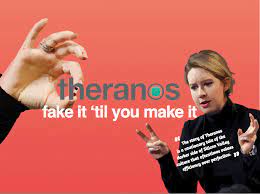
A San Jose jury convicted Theranos founder Elizabeth Holmes on four counts of fraud, deciding that she lied to investors while raising more than $700M in funds for the company. Holmes was found not guilty on four other counts relating to defrauding patients, though Theranos ended up voiding tens of thousands of erroneous test results. Each conviction carries a maximum twenty-year sentence, although Holmes is widely expected to appeal.
The Gist: It’s rare that tech executives are convicted of fraud. Investors, including many health systems, have been flooding healthcare startups with large sums of cash in hopes of big returns. But the Theranos debacle is a reminder that Silicon Valley’s “fake it till you make it culture” is not always the best fit for healthcare. Providers must continue to hold new medical technologies to high standards, regardless of how much promise they hold to “revolutionize” aspects of patient care.
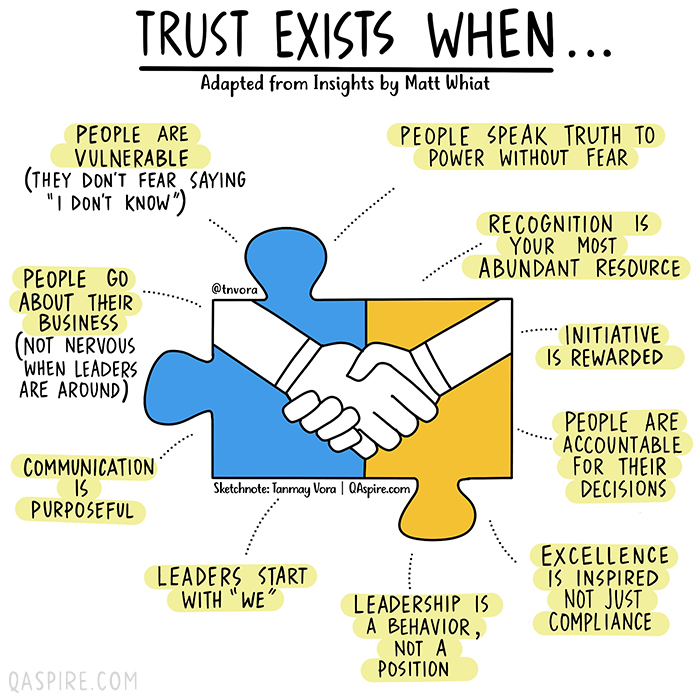
In the era of great awakening, leaders have to step up and be conscious about building trust with people they work with.
The old rules and hierarchies, that were already becoming obsolete, have now been thrown out of the window. People look for integration of work and well-being knowing that work is what you do, not a place you go to.
Opportunities are abound and excellent people have ample choices (they always had). It is high time that organizations and leaders think this through carefully to first align their own mindset to this new reality and then take conscious actions to build teams, practices and processes that are not just high-performing but also have a strong fabric of trust woven in.
Employees, after all, are volunteers who exercise their choice of working with you. Effective leadership is about making it worth for them.
Building high-trust environment means putting the human back at the center of how a business functions and building everything – purpose, culture, processes, structures, rituals, systems, tools and mindsets – around it.
How would we know if we are working in an environment where we can trust others and that we are trusted? We can always answer this based on our intrinsic feeling but if you are a leader who is working hard to build trust, here are a few vital signs that you need to look for.
Edward Karlovich serves as the executive vice president and CFO for UPMC, a $23 billion provider and insurer based in Pittsburgh.
Since joining UPMC in 1990, Mr. Karlovich has served in several financial leadership roles. Most recently, he was vice president, CFO and chief of staff for UPMC’s Health Services Division. He became CFO of the entire integrated system with 40 hospitals in October 2020, after serving on an interim basis for about a year.
Here, Mr. Karlovich shares with Becker’s the skills he thinks CFOs need to succeed today, some key capital projects in the works at UPMC and his organization’s top financial priorities.
Editor’s note: Responses were lightly edited for length and clarity.
Question: What is the most pressing issue facing hospital CFOs due to COVID-19?
Edward Karlovich: I would say the most pressing issue for me is disruption. COVID-19 has done many things to disrupt the way we think about our organization and business. Some disruptions we faced in the last year include staffing and supply chain challenges. UPMC did a great job weathering through the supply disruptions and labor challenges. We always had adequate personal protective equipment for our folks here. We also really made a conscientious decision last year to keep our workforce intact; we didn’t lay off workers, and we took care of people who needed time off because of COVID-19. We also made sure employees knew they had the support of our executive leadership team. In summary, COVID-19 has created a disruption, and we must think about how things are different now coming out of the disruption.
Q: What are some things you are doing to work through the change/disruption?
EK: From an organizational perspective, we embarked on what we call the “UPMC experience” a few years ago. We looked at the way we are doing things to understand the experience of our employees and patients. This prepared us to be more creative in our thinking as to how we address challenges and disruption. We also learned through this the importance of interdependencies. Our business, both provider and insurance side, discussed a need to tackle the disruptions in an integrated way and discussed a need to communicate changes effectively. This year, we provided about 40 news conferences to get the standard message out across all of our regions. We also have a 90,000-plus employee organization which allows you to move around resources to deal with some challenges and disruptions.
Q: What are UPMC’s top financial priorities for 2022?
EK: From a financial perspective, we want to maintain a positive margin to support our capital investments and employees. To do this, we are focused on a few things. First, supporting our operating employees to ensure they can perform to the best of their ability. They are the ones who make the difference each and every day. Second, we want to make sure we, as a finance team, can provide the things that the organization needs to be successful. This includes, but is not limited to, making sure supply chain folks can get all needed supplies and ensuring we have the cash collections needed to fund our organization. Another priority is making sure we provide the advice and guidance needed to invest our dollars effectively so we can prepare for the next challenge.
Q: What are a few key capital projects UPMC has in the works?
EK: UPMC is a premier provider in our community, and we operate a number of specialty hospitals in the area. We are the primary pediatric, psychiatric, women’s health and oncology provider in the region. Over the past couple of years, we’ve embarked on a journey to provide new facilities in western Pennsylvania for these major programs. We are also investing heavily in a vision and rehabilitation institute, which is a $500 million project that will put our clinicians, researchers and other providers together to drive breakthroughs in vision care and rehabilitation.
We also are going to embark on a new tower for UPMC Presbyterian Oakland Campus [in Pittsburgh]. It is going to be the largest capital project we’ve embarked on since I’ve been here. This project will be more than $1 billion and is so important to the community.
The third thing we are looking at is enhancing our oncology services and product at UPMC Shadyside [in Pittsburgh]. What we’ve recognized is that we are the provider and insurer of choice in western Pennsylvania, and we have to invest in this community for the next 50 to 100 years.
Q: What skills are essential for hospital and health system CFOs to thrive in today’s healthcare landscape?
EK: The technical skills are given as CFO. To get in that leadership position, you have to be able to perform the necessary tasks. However, to make your organization better, I could boil it down to four things. First, you have to be a partner to your other senior leaders. Finance doesn’t exist in a vacuum. You have to be in the room with those folks, helping them manage and drive the business. The second thing is flexibility. If you think about what we experienced as an industry over the last two years, if you weren’t flexible, you were going to be seriously challenged. Flexibility is such an important attribute because the pace of change is going to accelerate in our industry. Third, I’d say talent recognition is a key skill. It is important to be able to find talent as well as mentor and develop them as employees who can provide a great service to the organization. Fourth, you have to embody integrity. There is no doubt in my mind that integrity is a core value that is essential to everything you do as a finance leader. You have to maintain your integrity at all times. Those are essential skills. If you’re going to be a successful CFO now, you have to have those skills outside of the technical.
Q: What is one piece of advice you would offer to another healthcare CFO, and why?
EK: I’d say, look beyond the challenges of today. It’s not just about what you can actually see and envision in front of you. Try to look at the implications that are not necessarily top of mind. What the future holds is uncertain for all of us in healthcare now. You need to be thinking about what things might be coming down the road that will change our business and commitment to our communities dramatically. Try to brainstorm around that. Trying to think forward and speculate about what might happen is very valuable.








 HENRY KOTULA