Large majorities want Medicare to negotiate drug prices, poll finds

https://www.healthcarefinancenews.com/news/large-majorities-want-medicare-negotiate-drug-prices-poll-finds

Large majorities of American voters across all political stripes favor letting Medicare negotiate drug prices, and most don’t buy into the argument that high drug prices are needed for drug companies to invest in new research, according to a new poll from the Kaiser Family Foundation.

About 83% of all voters favor letting the federal government negotiate drug prices. Broken down by political ideology, that translates to 95% of Democrats, 82% of independents and 71% of Republicans.

About eight in 10 adults (83%) and adults 65 and older (78%) say they think the cost of prescription drugs is “unreasonable.”

WHAT’S THE IMPACT?

The Democrats’ budget reconciliation package includes a proposal to allow the federal government to negotiate prescription drug prices on behalf of Medicare beneficiaries and people enrolled in private plans. The proposal, which has been part of previous legislative proposals and estimated by the Congressional Budget Office to result in about $450 billion in savings to Medicare, has met strong opposition from the pharmaceutical industry, as well as some lawmakers. 

Yet the proposal is largely popular among the public across parties, as well as among seniors, the group most directly impacted by such legislation.

The poll finds that when the public is presented with the main arguments being made by advocates on both sides of the debate, the shift in opinion is modest and support for negotiation remains high.

The argument against negotiation is that the government would be too involved, and would lead to fewer new drugs being available in the future. The argument for negotiation is that Americans pay higher prices than people in other countries, many can’t afford their prescriptions and drug company profits are too high.

After hearing the arguments for and against the proposal to allow the federal government to negotiate prices with drug companies, attitudes remained relatively unchanged with a majority continuing to favor the proposal.

Neither President Joe Biden nor members of either party in Congress have gained the full confidence of the public to do what’s right for the country on prescription drug pricing. Slightly less than half of the public say they have “a great deal” or “a fair amount” of confidence in President Biden (46%) or Democrats in Congress (48%) to recommend the right thing for the country on prescription drug prices.

One-third of the public (33%) say they have at least a fair amount of confidence in Republicans in Congress, and few are confident that pharmaceutical companies will recommend the right thing (14%).

THE LARGER TREND

In August, President Biden called on Congress to pass solutions to lower prescription drug prices and hold brand-name drug manufacturers accountable, and said Medicare should have the ability to negotiate lower drug prices.

The president called for Medicare to cap yearly out-of-pocket drug costs for beneficiaries, as well as backing Food and Drug Administration efforts to accelerate the development of generic medicines, which typically have far lower costs to consumers. The negotiation push was part of a $3.5 trillion budget proposal that narrowly passed the House in August. 

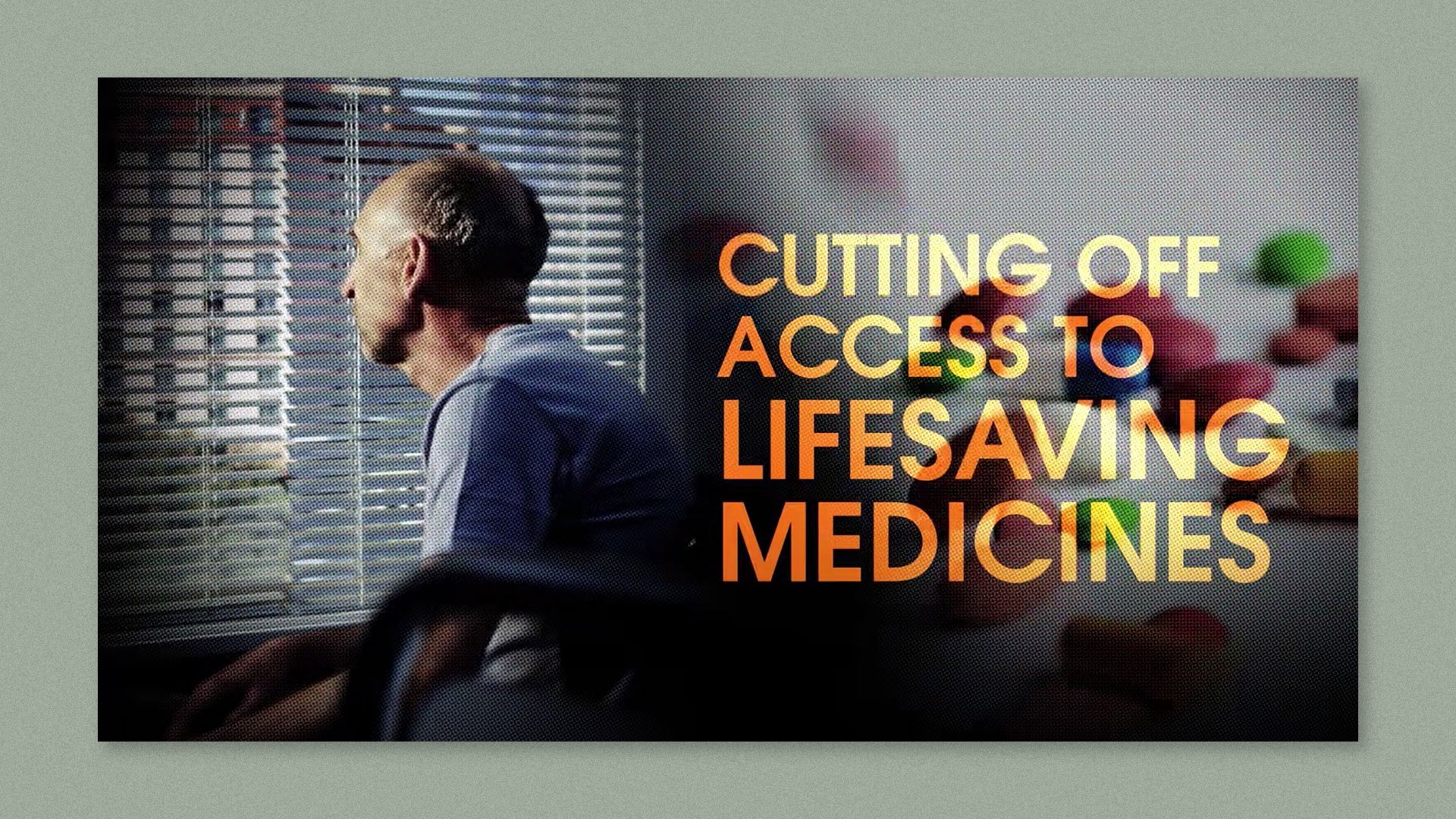
This met with opposition from the Pharmaceutical Research and Manufacturers of America, which aired television ads saying the move to have Medicare negotiate drug prices would take away consumer choice.

PhRMA CEO and president Stephen Ubl said by statement after Biden’s August speech: “Unfortunately, the policies the president outlined today would undermine access to life-saving medicines and fail to address an insurance system that shifts the cost of treatments onto vulnerable patients. Many in Congress know that access to medicine is critical for millions of patients and Medicare is not a piggy bank to be raided to fund other, unrelated government programs. This is a misguided approach.”

Ubl was referring to HR 3, the Elijah Cummings lower Drug Costs Now Act, which would use the money saved in Part D negotiations to help offset the $3.5 trillion spending bill. HR 3 passed the House in 2019 but was never voted on by the Senate.

It wasn’t the first time Biden has proposed having Medicare negotiate drug prices. In May, Biden called on Congress to lower prescription drug prices as part of his administration’s Fiscal Year 2022 Budget. During a joint address to Congress in April, the president called for lawmakers to work toward bipartisan solutions to lower prescription drug prices, including giving Medicare the ability to negotiate.
GOP targets Dems with “Medicscare” ads

https://www.axios.com/gop-targets-dems-with-medicscare-ads-abc27c8c-f2d2-4e3d-9d4b-40a5552d4444.html

Conservative and industry groups are trying to whip up opposition to President Biden’s massive social spending plan by warning it will imperil Medicare benefits, Axios has learned.

Why it matters: “Medicscare” is a well-worn political tactic precisely because it can be effective. For Democrats, there’s zero room for defections against the $3.5 trillion proposal if they want to pass the bill.

What’s happening: Senior citizens in Arizona, represented by Sen. Kyrsten Sinema (D-Ariz.), potential Democratic holdout, have started receiving large boxes labeled “Medical Shipment. Please open immediately.”

  • Inside, they find an empty prescription drug bottle and literature warning of Democratic plans to “ration Medicare Part D.” That’s a reference to a budget reconciliation bill provision that would allow the government to negotiate Medicare reimbursement rates for prescription drugs.
  • The mailers are the work of the Common Sense Leadership Fund, a Republican-aligned advocacy group. The mailers in Arizona specifically target Sen. Mark Kelly (D-Ariz.), who’s up for re-election next year.
  • CSLF spokesman Colin Reed told Axios the group is mailing the packages to seniors and unaffiliated voters in Arizona and New Hampshire, where the group is targeting Sen. Maggie Hassan (D-N.H.), who’s also up for re-election.

Another nonprofit advocacy group, A Healthy Future, is targeting the prescription drug portions of the bill in a digital ad campaign aimed at key Democratic votes.

  • The group has spent nearly $300,000 on GoogleFacebook and Instagram ads aimed at Reps. Frank Pallone, Tom Malinowski and Andy Kim, all Democrats from New Jersey — where the drug industry has a huge economic footprint.
  • “This is a prescription for disaster,” its ads say. They urge calls to Congress to “oppose cutting Medicare to pay for the $3.5 trillion spending plan.”
  • It’s not clear who’s behind A Healthy Future — the group did not respond to inquiries from Axios — but its messaging on reconciliation and past policy fights track with drug industry priorities.

The big picture: Democrats have turned to drug pricing reforms to offset part of the legislation’s massive price tag, potentially paying for as much as $600 billion in new spending.

  • That’s drawn intense opposition from the pharmaceutical industry — and lawmakers who enjoy the industry’s backing.
  • If it’s included in the final version of the legislation, it could be a major sticking point for groups looking to peel off wobbly Democratic votes.
  • Sinema has already said she opposes the effort.

Yes, but: The Mediscare tactic is larger than just the drug pricing fight. Americans for Prosperity, the Koch-backed conservative advocacy group, is running its own ads warning of much larger impending Medicare cuts.

  • It says the spending bill’s efforts to expand Medicare will imperil the program itself.
  • “Medicare is set to go bankrupt in about four years,” the ads claim. “Congress is acting irresponsibly and putting the program in jeopardy.”
  • AFP’s ads have touched on drug pricing as well, which it’s dubbed “a 95% drug tax to fund $3.5 trillion in wasteful spending.”

Drug companies on verge of sinking longtime Democratic priority

https://thehill.com/business-a-lobbying/business-a-lobbying/572841-drug-companies-on-verge-of-sinking-longtime

The pharmaceutical industry is on the verge of defeating a major Democratic proposal that would allow the federal government to negotiate drug prices.

Speaker Nancy Pelosi (D-Calif.) can afford only three defections when the House votes on a sweeping $3.5 trillion spending package, but Reps. Scott Peters (D-Calif.), Kurt Schrader (D-Ore.) and Kathleen Rice (D-N.Y.) last week voted to block the drug pricing bill from advancing out of the Energy and Commerce Committee. Rep. Stephanie Murphy (D-Fla.) voted against advancing the tax portion of the legislation in the House Ways and Means Committee.

All told, the number of House Democrats who have concerns about the drug pricing bill is in the double digits, and several Democrats in the 50-50 Senate would not vote for the measure in its current form, according to industry lobbyists.

The holdouts mark a sharp contrast to just two years ago, when every House Democrat voted for the same drug pricing bill, underscoring the inroads pharmaceutical manufacturers have made with the caucus on a measure that would narrow corporate profit margins.

“The House markups on health care demonstrate there are real concerns with Speaker Pelosi’s extreme drug pricing plan and those concerns are shared by thoughtful lawmakers on both sides of the aisle,” the Pharmaceutical Research and Manufacturers of America (PhRMA), the industry’s top trade group, said in a statement following the committee votes.

The reversal follows the industry’s multimillion-dollar ad campaigns opposing the bill, timely political donations and an extensive lobbying effort stressing drugmakers’ success in swiftly developing lifesaving COVID-19 vaccines.

The bill at the center of the fight, H.R. 3, would allow Medicare to negotiate the price of prescription drugs by tying them to the lower prices paid by other high-income countries. The measure is projected to free up around $700 billion through the money it saves on drug purchases — covering a big chunk of the Democrats’ $3.5 trillion spending plan.

Drugmakers say the measure would reduce innovation, pointing to a Congressional Budget Office estimate that found it would lead to nearly 60 fewer new drugs over the next three decades.

Peters and other Democrats have proposed an alternative bill that would limit price negotiation to a fraction of the prescription drugs included in H.R. 3, focusing instead on drugs like insulin, the diabetes treatment that has seen its price rise dramatically over the last decade. The alternative measure also would set a yearly out-of-pocket spending limit for lower-income Medicare recipients.

The proposal foreshadows a less aggressive drug pricing compromise that uneasy Senate Democrats are more likely to get behind.

“You’re going to see something pass, but it probably won’t be H.R. 3,” said a lobbyist who represents pharmaceutical companies.

Pharmaceutical manufacturers oppose any efforts to control the price of prescription drugs, but the alternative bill is more favorable to the industry than the broader Democratic bill.

“Any kind of artificial price controls will have an impact on both new scientific investment as well as access to medicines,” said Rich Masters, chief public affairs and advocacy officer at the Biotechnology Innovation Organization, a trade group that represents pharmaceutical giants such as Sanofi, Merck and Johnson & Johnson.

“We appreciate the focus on patient out of pocket costs, which we know is a critical component to any reform efforts and something that BIO and our member companies have long supported,” he added.

Progressive lawmakers, who have long bemoaned rising drug prices, blasted the three House Democrats who voted to block H.R. 3, saying they succumbed to industry donations and lobbying efforts.

“What the pharmaceutical industry has done, year after year, is pour huge amounts of money into lobbying and campaign contributions … the result is that they can raise their prices to any level they want,” Sen. Bernie Sanders (I-Vt.) said in a video message Friday.

The pharmaceutical industry spent $171 million on lobbying through the first half of the year, more than any other industry, to deploy nearly 1,500 lobbyists, according to money-in-politics watchdog OpenSecrets. That’s up from around $160 million at the same point last year, when the industry broke its own lobbying spending record.

Peters announced his opposition to Pelosi’s drug pricing proposal in May and shortly after was showered with donations from pharmaceutical industry executives and lobbyists, STAT News reported.

Peters is the No. 1 House recipient of pharmaceutical industry donations this year, bringing in $88,550 from pharmaceutical executives and PACs, according to OpenSecrets. Over his congressional career, Peters has received in excess of $860,000 from drugmakers, more than any other private industry.

The California Democrat told The Hill last week that accusations of his vote being guided by donations are “flat wrong” and noted that his San Diego congressional district employs roughly 27,000 pharmaceutical industry workers consisting mostly of researchers.

“It’s always going to be the attack because it’s simple and it’s easier than engaging on the merits,” he said.

Schrader received nearly $615,000 from the industry. He inherited a fortune from his grandfather, a former top executive at Pfizer, and had between $50,000 and $100,000 invested in Pfizer, in addition to other pharmaceutical holdings as of last year, according to his most recent annual financial disclosure.

Schrader tweeted last week that he is “committed to lowering prescription drug costs,” while arguing that the House bill would not pass the Senate in its current form.

Rep. Lou Correa (D-Calif.) another supporter of Peters’s more industry friendly bill, received an influx of pharmaceutical donations in recent months, including a $2,000 check from Pfizer’s PAC in mid-August, according to Federal Election Commission filings.

In meetings with lawmakers, lobbyists have argued that now is not the time to go after drugmakers, which developed highly effective COVID-19 vaccines and are developing booster shots and other treatments to fight the virus.

The U.S. Chamber of Commerce, which represents several major pharmaceutical manufacturers, said last month that Democratic drug pricing efforts will leave the U.S. “unprepared for the next public health crisis.”

PhRMA last week launched a seven-figure ad campaign to oppose H.R. 3. That’s after pharmaceutical groups and conservative organizations bankrolled by drugmakers spent $18 million on ads attacking the proposal through late August, according to an analysis from Patients for Affordable Drugs, a group that launched its own ads backing H.R. 3 last week.

The ad buys are meant to sway both lawmakers and the general public. A June Kaiser Family Foundation poll found that 90 percent of Americans approve of the drug pricing measure, but that support dropped to 32 percent when they were told that the proposal “could lead to less research and development of new drugs.”

Democrats’ competing health care priorities

The Democrats’ reconciliation bill includes several major health care pieces backed by different lawmakers and advocates, setting up a precarious game of policy Jenga if the massive measure needs to be scaled back.

Between the lines: Health care may be a priority for Democrats. But that doesn’t mean each member values every issue equally.

Why it mattersAs the party continues to hash out the overall price tag of its giant reconciliation bill, it’s worth gaming out which policies are on the chopping block — and which could potentially take the entire reconciliation bill down with them.

There are clear winners of each pillar of Democrat’s health plan:

  • Seniors benefit from expanding Medicare to cover dental, vision and hearing benefits.
  • Low-income people — primarily in the South and disproportionately people of color — in non-expansion states benefit if the Medicaid gap is closed, giving them access to health coverage.
  • Affordable Care Act marketplace enrollees benefit if the increased subsidy assistance that Democrats enacted earlier this year is extended or made permanent.
  • Elderly and Americans with disabilities benefit from an expansion of their home-based care options, and their caretakers benefit from a pay bump.
  • Seniors — and potentially anyone facing high drug costs — benefit if Medicare is given the authority to negotiate drug prices, although the drug industry argues it will lead to fewer new drugs.

Yes, but: Each of these groups face real problems with health care access and affordability. But when there’s a limited amount of money on the table — which there is — even sympathetic groups can get left in the dust.

Each policy measure, however, also has powerful political advocates. And when Democrats have a razor-thin margin in both the House and the Senate, every member has a lot of power.

  • Seniors are disproportionately powerful on their own, due to their voting patterns. But expanding what Medicare covers is extremely important to progressives — including Sen. Bernie Sanders.
  • Closing the Medicaid gap is being framed as a racial justice issue, given that it disproportionately benefits people of color. And although many Democrats hail from expansion states — particularly in the Senate — some very powerful ones represent non-expansion states.
  • These members include Sen. Raphael Warnock, who represents Georgia and is up for re-election next year in an extremely competitive seat, and Rep. Jim Clyburn, who arguably is responsible for President Biden winning the 2020 primary.
  • The enhanced ACA subsidies are scheduled to expire right before next years’ midterm elections. Democrats’ hold on the House is incredibly shaky already, making extending the extra help a political no-brainer.
  • Expanding home-based care options was one of the only health care components of Biden’s original framework for this package. But aside from the president’s interest in the issue, unions care a lot about it as their members stand to gain a pay raise — and Democrats care a lot about what unions care about.
  • And finally, giving Medicare the power to negotiate drug prices has the most powerful opponents, theoretically making it vulnerable to the chopping block. But it also polls very highly, and perhaps even more importantly, produces enough government savings to help pay for these other health care policies.

The bottom line: From a political perspective, none of these health care proposals seem very expendable,” said KFF’s Larry Levitt.

  • Most — if not all of them — can be scaled to save money.
  • But there are also powerful constituencies for the other components of the bill that address issues like child care and climate change, meaning these health care measures aren’t only competing against one another.
  • And, Levitt points out, “there’s always a difference between members of Congress staking out positions and being willing to go to nuclear war over them.”