Administration’s new pandemic adviser pushes controversial ‘herd immunity’ strategy, worrying public health officials

https://www.washingtonpost.com/politics/trump-coronavirus-scott-atlas-herd-immunity/2020/08/30/925e68fe-e93b-11ea-970a-64c73a1c2392_story.html?utm_campaign=wp_post_most&utm_medium=email&utm_source=newsletter&wpisrc=nl_most


One of President Trump’s top medical advisers is urging the White House to embrace a controversial “herd immunity” strategy to combat the pandemic, which would entail allowing the coronavirus to spread through most of the population to quickly build resistance to the virus, while taking steps to protect those in nursing homes and other vulnerable populations, according to five people familiar with the discussions.

The administration has already begun to implement some policies along these lines, according to current and former officials as well as experts, particularly with regard to testing.

The approach’s chief proponent is Scott Atlas, a neuroradiologist from Stanford’s conservative Hoover Institution, who joined the White House earlier this month as a pandemic adviser. He has advocated that the United States adopt the model Sweden has used to respond to the virus outbreak, according to these officials, which relies on lifting restrictions so the healthy can build up immunity to the disease rather than limiting social and business interactions to prevent the virus from spreading.

Sweden’s handling of the pandemic has been heavily criticized by public health officials and infectious-disease experts as reckless — the country has among the highest infection and death rates in the world. It also hasn’t escaped the deep economic problems resulting from the pandemic.

But Sweden’s approach has gained support among some conservatives who argue that social distancing restrictions are crushing the economy and infringing on people’s liberties.

That this approach is even being discussed inside the White House is drawing concern from experts inside and outside the government who note that a herd immunity strategy could lead to the country suffering hundreds of thousands, if not millions, of lost lives.

“The administration faces some pretty serious hurdles in making this argument. One is a lot of people will die, even if you can protect people in nursing homes,” said Paul Romer, a professor at New York University who won the Nobel Prize in economics in 2018. “Once it’s out in the community, we’ve seen over and over again, it ends up spreading everywhere.”

Atlas, who does not have a background in infectious diseases or epidemiology, has expanded his influence inside the White House by advocating policies that appeal to Trump’s desire to move past the pandemic and get the economy going, distressing health officials on the White House coronavirus task force and throughout the administration who worry that their advice is being followed less and less.

Atlas declined several interview requests in recent days. After the publication of this story, he released a statement through the White House: “There is no policy of the President or this administration of achieving herd immunity. There never has been any such policy recommended to the President or to anyone else from me.”

White House communications director Alyssa Farah said there is no change in the White House’s approach toward combatting the pandemic.

“President Trump is fully focused on defeating the virus through therapeutics and ultimately a vaccine. There is no discussion about changing our strategy,” she said in a statement. “We have initiated an unprecedented effort under Operation Warp Speed to safely bring a vaccine to market in record time — ending this virus through medicine is our top focus.”

White House officials said Trump has asked questions about herd immunity but has not formally embraced the strategy. The president, however, has made public comments that advocate a similar approach.

“We are aggressively sheltering those at highest risk, especially the elderly, while allowing lower-risk Americans to safely return to work and to school, and we want to see so many of those great states be open,” he said during his address to the Republican National Convention Thursday night. “We want them to be open. They have to be open. They have to get back to work.”

Atlas has fashioned himself as the “anti-Dr. Fauci,” one senior administration official said, referring to Anthony S. Fauci, the nation’s top infectious-disease official, who has repeatedly been at odds with the president over his public comments about the threat posed by the virus. He has clashed with Fauci as well as Deborah Birx, the White House coronavirus response coordinator, over the administration’s pandemic response.

Atlas has argued both internally and in public that an increased case count will move the nation more quickly to herd immunity and won’t lead to more deaths if the vulnerable are protected. But infectious-disease experts strongly dispute that, noting that more than 25,000 people younger than 65 have died of the virus in the United States. In addition, the United States has a higher number of vulnerable people of all ages because of high rates of heart and lung disease and obesity, and millions of vulnerable people live outside nursing homes — many in the same households with children, whom Atlas believes should return to school.

“When younger, healthier people get the disease, they don’t have a problem with the disease. I’m not sure why that’s so difficult for everyone to acknowledge,” Atlas said in an interview with Fox News’s Brian Kilmeade in July. “These people getting the infection is not really a problem and in fact, as we said months ago, when you isolate everyone, including all the healthy people, you’re prolonging the problem because you’re preventing population immunity. Low-risk groups getting the infection is not a problem.”

Atlas has said that lockdowns and social distancing restrictions during the pandemic have had a health cost as well, noting the problems associated with unemployment and people forgoing health care because they are afraid to visit a doctor.

“From personal communications with neurosurgery colleagues, about half of their patients have not appeared for treatment of disease which, left untreated, risks brain hemorrhage, paralysis or death,” he wrote in The Hill newspaper in May

The White House has left many of the day-to-day decisions regarding the pandemic to governors and local officials, many of whom have disregarded Trump’s advice, making it unclear how many states would embrace the Swedish model, or elements of it, if Trump begins to aggressively push for it to be adopted.

But two senior administration officials and one former official, as well as medical experts, noted that the administration is already taking steps to move the country in this direction.

The Department of Health and Human Services, for instance, invoked the Defense Production Act earlier this month to expedite the shipment of tests to nursing homes — but the administration has not significantly ramped up spending on testing elsewhere, despite persistent shortages. Trump and top White House aides, including Atlas, have also repeatedly pushed to reopen schools and lift lockdown orders, despite outbreaks in several schools that attempted to resume in-person classes.

The Centers for Disease Control and Prevention also updated its testing guidance last week to say that those who are asymptomatic do not necessarily have to be tested. That prompted an outcry from medical groups, infectious-disease experts and local health officials, who said the change meant that asymptomatic people who had contact with an infected person would not be tested. The CDC estimates that about 40 percent of people infected with covid-19, the disease caused by the coronavirus, are asymptomatic, and experts said much of the summer surge in infections was due to asymptomatic spread among young, healthy people.

Trump has previously floated “going herd” before being convinced by Fauci and others that it was not a good idea, according to one official.

The discussions come as at least 5.9 million infections have been reported and at least 179,000 have died from the virus this year and as public opinion polls show that Trump’s biggest liability with voters in his contest against Democratic nominee Joe Biden is his handling of the pandemic. The United States leads the world in coronavirus cases and deaths, with far more casualties and infections than any other developed nation.

The nations that have most successfully managed the coronavirus outbreak imposed stringent lockdown measures that a vast majority of the country abided by, quickly ramped up testing and contact tracing, and imposed mask mandates.

Atlas meets with Trump almost every day, far more than any other health official, and inside the White House is viewed as aligned with the president and White House Chief of Staff Mark Meadows on how to handle the outbreak, according to three senior administration officials.

In meetings, Atlas has argued that metropolitan areas such as New York, Chicago and New Orleans have already reached herd immunity, according to two senior administration officials. But Birx and Fauci have disputed that, arguing that even cities that peaked to potential herd immunity levels experience similar levels of infection if they reopen too quickly, the officials said.

Trump asked Birx in a meeting last month whether New York and New Jersey had reached herd immunity, according to a senior administration official. Birx told the president there was not enough data to support that conclusion.

Atlas has supporters who argue that his presence in the White House is a good thing and that he brings a new perspective.

“Epidemiology is not the only discipline that matters for public policy here. That is a fundamentally wrong way to think about this whole situation,” said Avik Roy, president of the Foundation for Research on Equal Opportunity, a think tank that researches market-based solutions to help low-income Americans. “You have to think about what are the costs of lockdowns, what are the trade-offs, and those are fundamentally subjective judgments policymakers have to make.”

It remains unclear how large a percentage of the population must become infected to achieve “herd immunity,” which is when enough people become immune to a disease that it slows its spread, even among those who have not been infected. That can occur either through mass vaccination efforts, or when enough people in the population become infected with coronavirus and develop antibodies that protect them against future infection.

Estimates have ranged from 20 percent to 70 percent for how much of a population would need to be infected. Soumya Swaminathan, the World Health Organization’s chief scientist, said given the transmissibility of the novel coronavirus, it is likely that about 65 to 70 percent of the population would need to become infected for there to be herd immunity.

With a population of 328 million in the United States, it may require 2.13 million deaths to reach a 65 percent threshold of herd immunity, assuming the virus has a 1 percent fatality rate, according to an analysis by The Washington Post.

It also remains unclear whether people who recover from covid-19 have long-term immunity to the virus or can become reinfected, and scientists are still learning who is vulnerable to the disease. From a practical standpoint, it is also nearly impossible to sufficiently isolate people at most risk of dying due to the virus from the younger, healthier population, according to public health experts.

Atlas has argued that the country should only be testing people with symptoms, despite the fact that asymptomatic carriers spread the virus. He has also repeatedly pushed to reopen schools and advocated for college sports to resume. Atlas has said, without evidence, that children do not spread the virus and do not have any real risk from covid-19, arguing that more children die of influenza — an argument he has made in television and radio interviews.

Atlas’s appointment comes after Trump earlier this summer encouraged his White House advisers to find a new doctor who would argue an alternative point of view from Birx and Fauci, whom the president has grown increasingly annoyed with for public comments that he believes contradict his own assertions that the threat of the virus is receding. Advisers sought a doctor with Ivy League or top university credentials who could make the case on television that the virus is a receding threat.

Atlas caught Trump’s attention with a spate of Fox News appearances in recent months, and the president has found a more simpatico figure in the Stanford doctor for his push to reopen the country so he can focus on his reelection. Atlas now often sits in the briefing room with Trump during his coronavirus news conferences, even as other doctors do not. He has given the president somewhat of a medical imprimatur for his statements and regularly helps draft the administration’s coronavirus talking points from his West Wing office as well as the slides that Trump often relies on for his argument of a diminishing threat.

Atlas has also said he is unsure “scientifically” whether masks make sense, despite broad consensus among scientists that they are effective. He has selectively presented research and findings that support his argument for herd immunity and his other ideas, two senior administration officials said.

Fauci and Birx have both said the virus is a threat in every part of the country. They have also put forward policy recommendations that the president views as too draconian, including mask mandates and partial lockdowns in areas experiencing surges of the virus.

Birx has been at odds with Atlas on several occasions, with one disagreement growing so heated at a coronavirus meeting earlier this month that other administration officials grew uncomfortable, according to a senior administration official.

One of the main points of tension between the two is over school reopenings. Atlas has pushed to reopen schools and Birx is more cautious.

“This is really unfortunate to have this fellow Scott Atlas, who was basically recruited to crowd out Tony Fauci and the voice of reason,” said Eric Topol, a cardiologist and head of the Scripps Research Translational Institute in San Diego. “Not only do we not embrace the science, but we repudiate the science by our president, and that has extended by bringing in another unreliable misinformation vector.”


 

US surpasses 6 million coronavirus cases nationwide

https://thehill.com/policy/healthcare/public-global-health/514364-us-passes-6-million-coronavirus-cases-nationwide

US surpasses 6 million coronavirus cases nationwide | TheHill

The United States has passed six million confirmed cases of the coronavirus since the beginning of the pandemic, according to Johns Hopkins University.

The country has also passed 183,000 deaths nationwide.

President Trump and his 2020 Democratic opponent, former Vice President Joe Biden, have battled for months over the U.S.’s coronavirus response, with allies of the Democratic nominee hammering the administration over the U.S.’s status as the country with the most confirmed COVID-19 cases in the world.

In July, Biden accused Trump of giving up on the U.S.’s efforts to control the disease’s spread, claiming that the president “raised the white flag.”

“He has no idea what to do. It’s zero. It’s only one thing he has in mind — how does he win reelection? And it doesn’t matter how many people get COVID and or die from COVID because he fears that if the economy is strapped as badly as it is today that, in fact, he is going to be in trouble,” the former vice president told MSNBC.

Trump, meanwhile, has struck an optimistic tone on the virus when addressing it in recent months and claimed that he believes a vaccine could be available before the election. He also claimed in a recent Axios interview that the virus is “under control as much as you can control it” in the U.S.

“They are dying, that’s true. And you have — it is what it is,” Trump said earlier in August. “But that doesn’t mean we aren’t doing everything we can. It’s under control as much as you can control it. This is a horrible plague.”


Cartoon – Covid Dining

Political Cartoon on Twitter: "Dave Brown's @Independent cartoon...  #RishiSunak #SummerStatement #EatOutToHelpOut #COVID19 #Coronavirus # SuperSpreader - political cartoon gallery in London  https://t.co/dePcTdnXF6… https://t.co/XDxWE1jDGh"

Cartoon – Sheep will be Sheep

Covid Lemmings

Cartoon – Talk About Super Spreaders

6-02 cartoon | Cartoons | heraldandnews.com

Cartoon – Coronavirus Mask Fashions

5-27 cartoon | Cartoons | heraldandnews.com

Cartoon – Social Distancing

What Should We Do with These Super Spreader Bozos? | The Tyee

Top U.S. Officials Told C.D.C. to Soften Coronavirus Testing Guidelines

The Centers for Disease Control and Prevention abruptly changed its recommendations, saying people without Covid-19 symptoms should not get tested.

 Trump administration officials on Wednesday defended a new recommendation that people without Covid-19 symptoms abstain from testing, even as scientists warned that the policy could hobble an already weak federal response as schools reopen and a potential autumn wave looms.

The day after the Centers for Disease Control and Prevention issued the revised guidance, there were conflicting reports on who was responsible. Two federal health officials said the shift came as a directive to the Atlanta-based C.D.C. from higher-ups in Washington at the White House and the Department of Health and Human Services.

Adm. Brett P. Giroir, the administration’s coronavirus testing czar, called it a “C.D.C. action,” written with input from the agency’s director, Dr. Robert R. Redfield. But he acknowledged that the revision came after a vigorous debate among members of the White House coronavirus task force — including its newest member, Dr. Scott W. Atlas, a frequent Fox News guest and a special adviser to President Trump.

“We all signed off on it, the docs, before it ever got to a place where the political leadership would have, you know, even seen it, and this document was approved by the task force by consensus,” Dr. Giroir said. “There was no weight on the scales by the president or the vice president or Secretary Azar,” he added, referring to Alex M. Azar II, the secretary of health and human services.

Regardless of who is responsible, the shift is highly significant, running counter to scientific evidence that people without symptoms could be the most prolific spreaders of the coronavirus. And it comes at a very precarious moment. Hundreds of thousands of college and K-12 students are heading back to campus, and broad testing regimens are central to many of their schools’ plans. Businesses are reopening, and scientists inside and outside the administration are growing concerned about political interference in scientific decisions.

Democratic governors who were weighing how to keep the virus contained as their economies and schools come to life said limiting testing for asymptomatic citizens would make the task impossible.

“The only plausible rationale,” Gov. Andrew M. Cuomo of New York told reporters in a conference call from Albany, N.Y., “is that they want fewer people taking tests, because as the president has said, if we don’t take tests, you won’t know the number of people who are Covid-positive.”

Over the weekend, the Food and Drug Administration, under pressure from Mr. Trump, gave emergency approval to expand the use of antibody-rich blood plasma to treat Covid-19 patients. The move came just days after scientists, including Dr. Anthony S. Fauci, the nation’s top infectious disease expert, and Dr. Francis S. Collins, the director of the National Institutes of Health, intervened to stop the practice because of lack of evidence that it worked.

The move echoed a decision by the Food and Drug Administration to grant an emergency use waiver for hydroxychloroquine, a malaria drug repeatedly sold by Mr. Trump as a treatment for Covid-19. The agency revoked the waiver in June, when clinical trials suggested the drug’s risks outweighed any possible benefits.

The testing shift, experts say, was a far more puzzling reversal. Dr. Giroir said the move was “discussed extensively by” members of the White House coronavirus task force, and he named Dr. Redfield, Dr. Atlas, Dr. Fauci and Dr. Stephen M. Hahn, the commissioner of food and drugs. Notably, he did not name Dr. Deborah L. Birx, the White House coronavirus response coordinator. But he said Dr. Fauci was among those who had “signed off.”

In a brief interview, Dr. Fauci said he had seen an early iteration of the guidelines and did not object. But the final debate over the revisions took place at a task force meeting on Thursday, when Dr. Fauci was having surgery under general anesthesia to remove a polyp on his vocal cord. In retrospect, he said, he now had “some concerns” about advising people against getting tested, because the virus could be spread through asymptomatic contact.

“My concern is that it will be misinterpreted,” Dr. Fauci said.

The newest version of the C.D.C. guidelines, posted on Monday, amended the agency’s guidance to say that people who had been in close contact with an infected individual — typically defined as being within six feet of a person with the coronavirus and for at least 15 minutes — “do not necessarily need a test” if they do not have symptoms.

Exceptions might be made for “vulnerable” individuals, the agency noted, or if health care providers or state or local public health officials recommended testing.

Dr. Giroir said the new recommendation matched existing guidance for hospital workers and others in frontline jobs who have “close exposures” to people infected with the coronavirus. Such workers are advised to take proper precautions, like wearing masks, socially distancing, washing their hands frequently and monitoring themselves for symptoms.

He argued that testing those exposed to the virus was of little utility, because tests capture only a single point in time, and that the results could give people a false sense of security.

“A negative test on Day 2 doesn’t mean you’re negative. So what is the value of that?” Dr. Giroir asked, adding, “It doesn’t mean on Day 4 you can go out and visit Grandma or on Day 6 go out without a mask on in school.”

The guidelines come amid growing concern that the C.D.C., the agency charged with tracking and fighting outbreaks of infectious disease, is being sidelined by its parent agency, the Department of Health and Human Services, and the White House. Under ordinary circumstances, administering public health advice to the nation would fall squarely within the C.D.C.’s portfolio.

Experts have called the revisions alarming and dangerous, noting that the United States needs more testing, not less. And they have expressed deep concern that the C.D.C. is posting guidelines that its own officials did not author. A former C.D.C. director, Dr. Thomas R. Frieden, railed against the move on Twitter on Wednesday:

Dr. Tom Frieden
@DrTomFrieden
Two unexplained, inexplicable, probably indefensible changes, likely imposed on CDC’s website. * Dammit, if you come from a place with lots of Covid, quarantine for 14 days * If you’re a contact, get tested. If +, we can trace your contacts and stop chains of spread. A sad day.

Later, in an interview, Dr. Frieden elaborated. He noted that the C.D.C. had recently dropped its recommendation that people quarantine for 14 days after traveling from an area with a high number of cases to one where the virus was less prevalent. And he reiterated that testing the contacts of those infected was an important means of curbing the spread of the virus.

“We don’t know the best protocol for testing of contacts: Should you test all contacts? That’s the kind of study that frankly needs to get done,” Dr. Frieden said. But absent the answer to that question, he added, “I certainly wouldn’t say, ‘Don’t test contacts.’”

Democrats, including Speaker Nancy Pelosi and two governors — Mr. Cuomo and Gavin Newsom of California — were outraged by the changes. Mr. Newsom said California would not follow the new guidelines, and Mr. Cuomo blamed Mr. Trump.

Representative Frank Pallone Jr. of New Jersey, a Democrat and the chairman of the House Energy and Commerce Committee, also chimed in on Twitter: “The Trump Admin has a lot of explaining to do. #COVID19 testing is essential to stopping the spread of the pandemic. I’m concerned that CDC is once again caving to political pressure. This simply cannot stand.”

Mr. Trump has suggested that the nation should do less testing, arguing that administering more tests was driving up case numbers and making the United States look bad. But experts say the true measure of the pandemic is not case numbers but test positivity rates — the percentage of tests coming back positive.

As Dr. Giroir denied that politics was involved, he encouraged the continued testing of asymptomatic people for surveillance purposes — to determine the prevalence of the virus in a given community — and said such “baseline surveillance testing” would still be appropriate in schools and on college campuses.

“We’re trying to do appropriate testing, not less testing,” he said.

Still, the revisions left many public health officials scratching their heads. They might have made sense when the United States was experiencing a shortage of tests, some experts said, but that no longer appears to be the case. Dr. Frieden, however, said it was possible the administration was trying to conserve testing in case of another surge.

“The problem is we have too many cases, so there is basically no way to keep up the testing if you have a huge outbreak,” he said.

Jennifer Nuzzo, an epidemiologist at Johns Hopkins Bloomberg School of Public Health, said she was “not as up in arms about the content of the guidelines” as she was about the idea that the C.D.C.’s own experts did not write them — and that C.D.C. officials were referring all questions about them to the health department in Washington.

“These guidelines are clearly controversial, and many are calling on C.D.C. to explain its rationale for them, but C.D.C. is unable to comment,” she said in an email. “This is really dangerous precedent, and I fear it will erode public trust in C.D.C.”


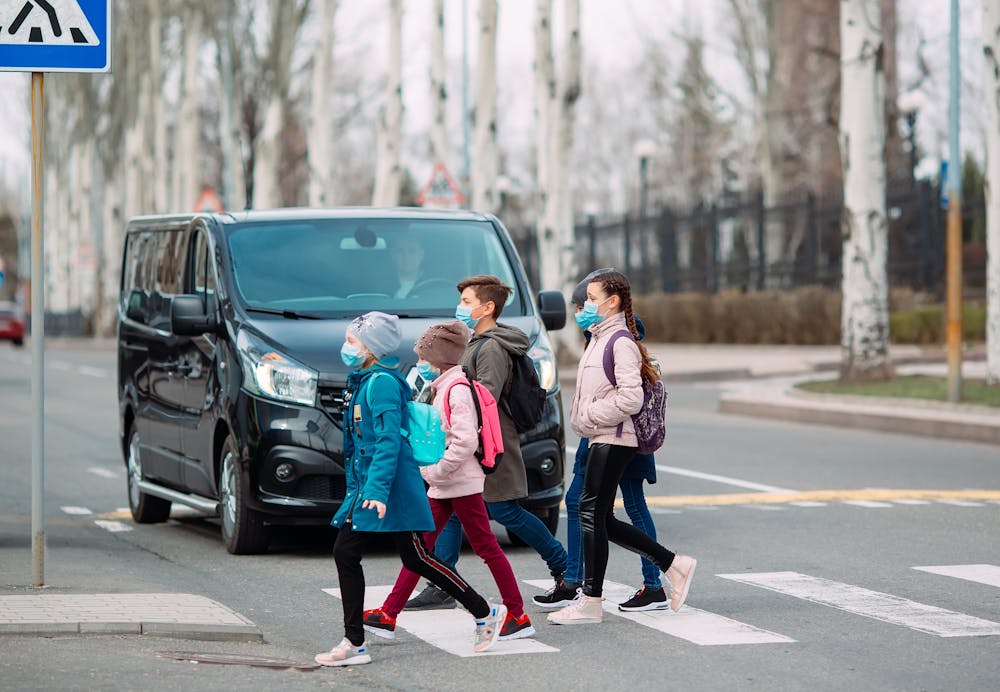
Children might play a bigger role in COVID transmission than first thought. Schools must prepare

https://theconversation.com/children-might-play-a-bigger-role-in-covid-transmission-than-first-thought-schools-must-prepare-144947?utm_medium=email&utm_campaign=Latest%20from%20The%20Conversation%20for%20August%2028%202020%20-%201715916573&utm_content=Latest%20from%20The%20Conversation%20for%20August%2028%202020%20-%201715916573+Version+A+CID_8719e3ecf842bc9762e48ce42f2ba6ad&utm_source=campaign_monitor_us&utm_term=Children%20might%20play%20a%20bigger%20role%20in%20COVID%20transmission%20than%20first%20thought%20Schools%20must%20prepare

Children might play a bigger role in COVID transmission than first thought—schools  must prepare

Over the weekend, the World Health Organisation made an announcement you might have missed.

It recommended children aged 12 years and older should wear masks, and that masks should be considered for those aged 6-11 years. The German Society for Virology went further, recommending masks be worn by all children attending school.

This seems at odds with what we assumed about kids and COVID-19 at the start of the pandemic. Indeed, one positive in this pandemic so far has been that children who contract the virus typically experience mild illness. Most children don’t require hospitalisation and very few die from the disease. However, some children can develop a severe inflammatory syndrome similar to Kawasaki disease, although this is thankfully rare.

This generally mild picture has contributed to cases in children being overlooked. But emerging evidence suggests children might play a bigger role in transmission than originally thought. They may be equally as infectious as adults based on the amount of viral genetic material found in swabs, and we have seen large school clusters emerge in Australia and around the world.

How likely are children to be infected?

Working out how susceptible children are has been difficult. Pre-emptive school closures occurred in many countries, removing opportunities for the virus to circulate in younger age groups. Children have also missed out on testing because they typically have mild symptoms. In Australia, testing criteria were initially very restrictive. People had to have a fever or a cough to be tested, which children don’t always have. This hindered our ability to detect cases in children, and created a perception children weren’t commonly infected.

One way to address this issue is through antibody testing, which can detect evidence of past infection. A study of over 60,000 people in Spain found 3.4% of children and teenagers had antibodies to the virus, compared with 4.4% to 6.0% of adults. But Spain’s schools were also closed, which likely reduced children’s exposure.

Another method is to look at what happens to people living in the same household as a known case. The results of these studies are mixed. Some have suggested a lower risk for children, while others have suggested children and adults are at equal risk.

Children might have some protection compared to adults, because they have less of the enzyme which the virus uses to enter the body. So, given the same short exposure, a child might be less likely to be infected than an adult. But prolonged contact probably makes any such advantage moot.

The way in which children and adults interact in the household might explain the differences seen in some studies. This is supported by a new study conducted by the Centers for Disease Control and Prevention. Children and partners of a known case were more likely to be infected than other people living in the same house. This suggests the amount of close, prolonged contact may ultimately be the deciding factor.

How often do children transmit the virus?

Several studies show children and adults have similar amounts of viral RNA in their nose and throat. This suggests children and adults are equally infectious, although it’s possible children transmit the virus slightly less often than adults in practice. Because children are physically smaller and generally have more mild symptoms, they might release less of the virus.

In Italy, researchers looked at what happened to people who’d been in contact with infected children, and found the contacts of children were more likely to be infected than the contacts of adults with the virus.

Teenagers are of course closer to adults, and it’s possible younger children might be less likely to transmit the virus than older children. However, reports of outbreaks in childcare centres and primary schools suggest there’s still some risk.

What have we seen in schools?

Large clusters have been reported in schools around the world, most notably in Israel. There, an outbreak in a high school affected at least 153 students, 25 staff members, and 87 others. Interestingly, that particular outbreak coincided with an extreme heatwave where students were granted an exemption from having to wear face masks, and air conditioning was used continuously.

At first glance, the Australian experience seems to suggest a small role for children in transmission. A study of COVID-19 in educational settings in New South Wales in the first half of the year found limited evidence of transmission, although a large outbreak was noted to have occurred in a childcare centre.

This might seem reassuring, but it’s important to remember the majority of cases in Australia were acquired overseas at the time of the study, and there was limited community transmission. Also, schools switched to distance learning during the study, after which school attendance dropped to 5%. This suggests school safety is dependent on the level of community transmission.

Additionally, we shouldn’t be reassured by examples where children have not transmitted the virus to others. Approximately 80% of secondary COVID-19 cases are generated by only 10% of people. There are also many examples where adults haven’t transmitted the virus.

As community transmission has grown in Victoria, so has the significance of school clusters. The Al-Taqwa College outbreak remains one of Australia’s largest clusters. Importantly, the outbreak there has been linked to other clusters in Melbourne, including a major outbreak in the city’s public housing towers.

Close schools when community transmission is high

This evidence means we need to take a precautionary approach. When community transmission is low, face-to-face teaching is probably low-risk. But schools should switch to distance learning during periods of sustained community transmission. If we fail to address the risk of school outbreaks, they can spread into the wider community.

While most children won’t become severely ill if they contract the virus, the same cannot be said for their adult family members or their teachers. In the US, 40% of teachers have risk factors for severe COVID-19, as do 28.6 million adults living with school-aged children.

Recent recommendations on mask-wearing by older and younger children mirror risk-reduction guidelines for schools developed by the Harvard T. H. Chan School of Public Health. These guidelines stress the importance of face masks, improving ventilation, and the regular disinfection of shared surfaces.

The changing landscape

As the virus has spread more widely, the demographic profile of cases has changed. The virus is no longer confined to adult travellers and their contacts, and children are now commonly infected. In Germany, the proportion of children in the number of new infections is now consistent with their share of the total population.

While children are thankfully much less likely to experience severe illness than adults, we must consider who children have contact with and how they can contribute to community transmission. Unless we do, we won’t succeed in controlling the pandemic.


History tells us trying to stop diseases like COVID-19 at the border is a failed strategy

https://theconversation.com/history-tells-us-trying-to-stop-diseases-like-covid-19-at-the-border-is-a-failed-strategy-145016?utm_medium=email&utm_campaign=Latest%20from%20The%20Conversation%20for%20August%2028%202020%20-%201715916573&utm_content=Latest%20from%20The%20Conversation%20for%20August%2028%202020%20-%201715916573+Version+A+CID_8719e3ecf842bc9762e48ce42f2ba6ad&utm_source=campaign_monitor_us&utm_term=History%20tells%20us%20trying%20to%20stop%20diseases%20like%20COVID-19%20at%20the%20border%20is%20a%20failed%20strategy

History tells us trying to stop diseases like COVID-19 at the border is a failed  strategy

To explain why the coronavirus pandemic is much worse in the U.S. than anywhere else in the world, commentators have blamed the federal government’s mismanaged response and the lack of leadership from the Trump White House.

Others have pointed to our culture of individualism, the decentralized nature of our public health, and our polarized politics.

All valid explanations, but there’s another reason, much older, for the failed response: our approach to fighting infectious disease, inherited from the 19th century, has become overly focused on keeping disease out of the country through border controls.

As a professor of medical sociology, I’ve studied the response to infectious disease and public health policy. In my new book, “Diseased States,” I examine how the early experience of outbreaks in Britain and the United States shaped their current disease control systems. I believe that America’s preoccupation with border controls has hurt our nation’s ability to manage the devastation produced by a domestically occurring outbreak of disease.

Germ theory and the military

Though outbreaks of yellow fever, smallpox, and cholera occurred throughout the 19th century, the federal government didn’t take the fight against infectious disease seriously until the yellow fever outbreak of 1878. During that same year, President Rutherford B. Hayes signed the National Quarantine Act, the first federal disease control legislation.

By the early 20th century, a distinctly American approach to disease control had evolved: “New Public Health.” It was markedly different from the older European concept of public health, which emphasized sanitation and social conditions. Instead, U.S. health officials were fascinated by the newly popular “germ theory,” which theorized that microorganisms, too small to be seen by the naked eye, caused disease. The U.S. became focused on isolating the infectious. The typhoid carrier Mary Mallon, known as “Typhoid Mary,” was isolated on New York’s Brother Island for 23 years of her life.

Originally, the military managed disease control. After the yellow fever outbreak, the U.S. Marine Hospital Service (MHS) was charged with operating maritime quarantine stations countrywide. In 1912, the MHS became the U.S. Public Health Service; to this day, that includes the Public Health Service Commissioned Corps led by the surgeon general. Even the Centers for Disease Control and Prevention started as a military organization during World War II, as the Malaria Control in War Areas program. Connecting the military to disease control promoted the notion that an attack of infectious disease was like an invasion of a foreign enemy.

Germ theory and military management put the U.S. system of disease control down a path in which it prioritized border controls and quarantine throughout the 20th century. During the 1918 influenza pandemicNew York City held all incoming ships at quarantine stations and forcibly removed sick passengers into isolation to a local hospital. Other states followed suit. In Minnesota, the city of Minneapolis isolated all flu patients in a special ward of the city hospital and then denied them visitors. During the 1980s, the Immigration and Naturalization Service denied HIV-positive persons from entering the country and tested over three million potential immigrants for HIV.

Defending the nation from the external threat of disease generally meant stopping the potentially infectious from ever entering the country and isolating those who were able to gain entry.

Our mistakes

This continues to be our predominant strategy in the 21st century. One of President Trump’s first coronavirus actions was to enforce a travel ban on China and then to limit travel from Europe.

His actions were nothing new. In 2014, during the Ebola outbreakCaliforniaNew York and New Jersey created laws to forcibly quarantine health care workers returning from west Africa. New Jersey put this into practice when it isolated U.S. nurse Kaci Hickox after she returned from Sierra Leone, where she was treating Ebola patients.

In 2007, responding to pandemic influenza, the Department of Homeland Security and the CDC developed a “do not board” list to stop potentially infected people from traveling to the U.S.

When such actions stop outbreaks from occurring, they are obviously sound public policy. But when a global outbreak is so large that it’s impossible to keep out, then border controls and quarantine are no longer useful.

This is what has happened with the coronavirus. With today’s globalization, international travel, and an increasing number of pandemics, attempting to keep infectious disease from ever entering the country looks more and more like a futile effort.

Moreover, the U.S. preoccupation with border controls means we did not invest as much as we should have in limiting the internal spread of COVID-19. Unlike countries that mounted an effective response, the U.S. has lagged behind in testingcontact tracing, and the development of a robust health care system able to handle a surge of infected patients. The longstanding focus on stopping an outbreak from ever occurring left us more vulnerable when it inevitably did.

For decades, the U.S. has been underfunding public health. When “swine flu” struck the country in 2009, the CDC said 159 million doses of flu shots were needed to cover “high risk” groups, particularly health care workers and pregnant women. We only produced 32 million doses. And in a pronouncement that now looks prescient, a Robert Wood Johnson Foundation report said if the swine flu outbreak had been any worse, U.S. health departments would have been overwhelmed. By the time Ebola appeared in 2014, the situation was no better. Once again, multiple government reports slammed our response to the outbreak.

Many causes exist for the U.S.‘s failed response to this crisis. But part of the problem lies with our past battles with disease. By emphasizing border controls and quarantine, the U.S. has disregarded more practical strategies of disease control. We can’t change the past, but by learning from it, we can develop more effective ways of dealing with future outbreaks.