Governors across the country are grappling with an alarming surge of coronavirus cases and hospitalizations, so far putting forward a fractured response.
Despite the escalating public health crisis, many governors have taken only modest actions; most states still allow major sources of spread such as bars and indoor restaurants to remain open.
President Trump on Friday touted progress on a vaccine but did not announce any major new steps aimed at slowing the spread of the virus in the short term, and he is leaving most of those decisions to states.
Experts are urging governors to impose stronger measures such as closing bars and gyms, prohibiting indoor dining, mandating masks, and advising people to limit in-person gatherings.
“There are many very troubling warning signs in outbreaks across the U.S.,” said Anita Cicero, deputy director of the Johns Hopkins Center for Health Security. “I do feel that more immediate action is required.”
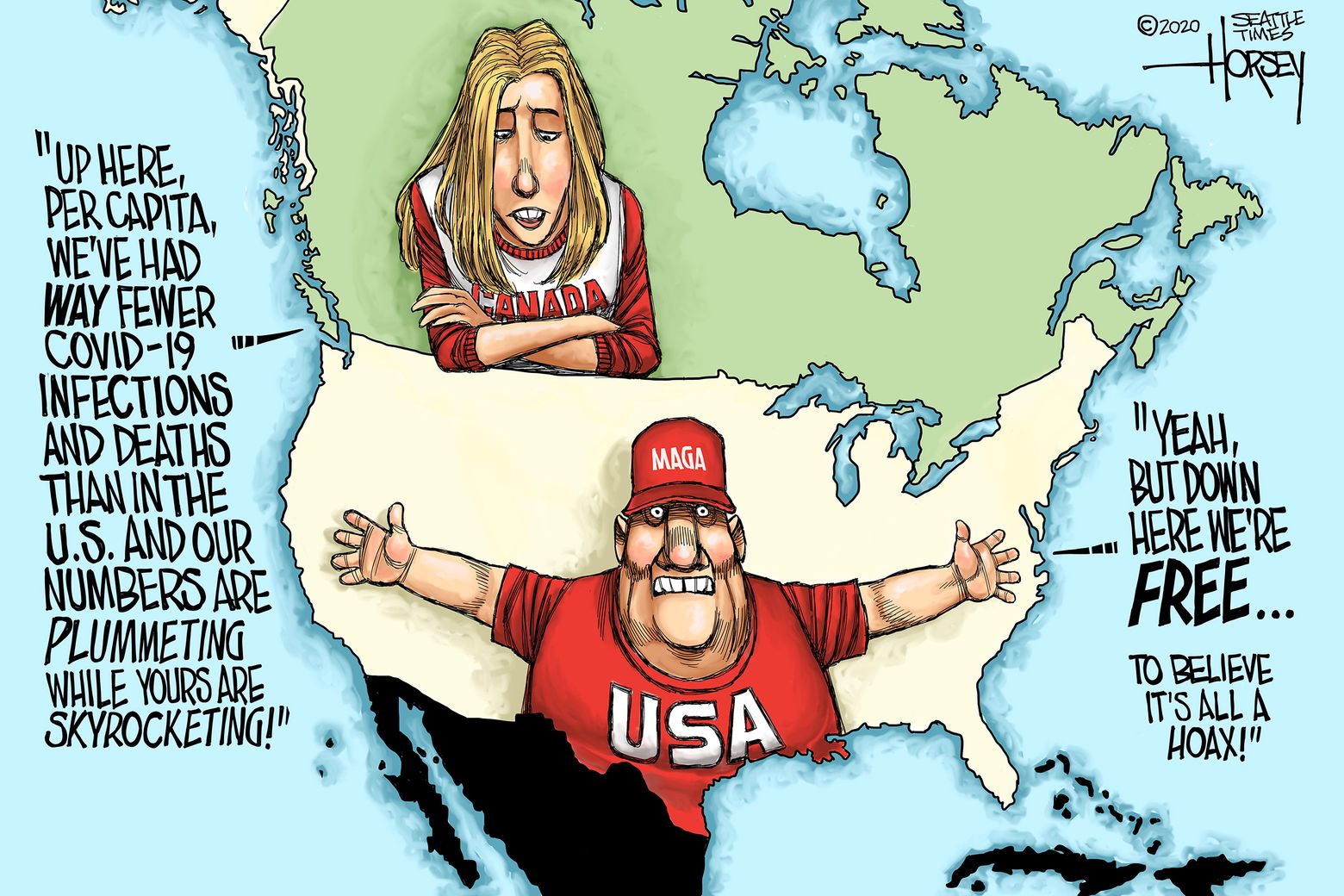
While most state actions have been relatively minor, stricter rules are starting to pop up, particularly from states with Democratic officials, underscoring the red versus blue divide on public health measures reminiscent of earlier this year.
New Mexico Gov. Michelle Lujan Grisham (D) on Friday instructed residents to stay home except for essential business, and Chicago Mayor Lori Lightfoot (D) issued a similar advisory. More such orders could be coming as the situation worsens.
Experts for the most part are not calling for a return to full-scale lockdowns, saying much has been learned since the spring about how the virus spreads, and there is little reason to stop low-risk activities such as curbside pickup from a store.
But significant sources of spread such as bars, indoor restaurants and gyms should be closed in hard-hit areas, they said.
Many states have not taken those steps, despite the ever-mounting case counts.
The country is now recording an unprecedented 150,000 new cases every day, with hospitalizations at record levels of more than 60,000 and deaths at around 1,000 per day and starting to rise. Hospitals in some areas are reaching capacity and becoming overwhelmed.
These trends show no signs of slowing as temperatures get colder and more activity moves indoors.
Just 13 states have closed their bars, according to a tracker from the Kaiser Family Foundation.
But there’s bipartisan pressure for states to do more.
A Washington Post op-ed on Wednesday — authored by Richard Danzig, Navy secretary under former President Clinton; James Lawler, an infectious disease doctor at the University of Nebraska; and Tom Bossert, a former homeland security adviser to President Trump —called on states to take three specific actions: limit indoor gatherings to no more than 10 people, close indoor restaurants and bars, and require masks in public.
The authors said those steps should be taken in any region where there are more than 20 new cases per 100,000 people per day. Forty states are already above that threshold, according to the COVID Exit Strategy tracking site.
Still, governors in some of the hardest-hit states have resisted actions such as statewide mask mandates and bar closures.
Iowa Gov. Kim Reynolds (R) has long opposed a statewide mask mandate, but amid the worsening outbreak, she issued an order last week requiring masks at businesses such as barbershops and at large gatherings.
At the same time, she emphasized that she did not want to close businesses.
“You can still eat in a restaurant, you can still go to a movie and work out at a gym, and in many states you can’t do that,” she said at a press conference on Tuesday. “Iowa is open for business, and we intend to keep it that way.”
Mississippi Gov. Tate Reeves (R) struck a similar note in an address on Thursday.
“We’re trying to open things up but to do it in a safe, responsible way,” he said. “We’re not going to shut down businesses. We’re not going to have long term mandates with no end in sight.”
On Capitol Hill, congressional leaders have been deadlocked over a new round of economic aid, which could provide relief for businesses such as bars and restaurants and allow them to temporarily close to slow the spread of the virus without taking a major financial hit.
“There needs to be a policy lever to help support and maintain those small businesses,” said Preeti Malani, chief health officer and professor of medicine at the University of Michigan.
In New York City, bars and restaurants are still open, with a new 10 p.m. curfew. But the prospect of schools closing has sparked criticism about the city’s priorities.
“If NYC closes schools and continues to allow indoor dining our priorities are totally backwards,” tweeted New York City Council member Mark Levine.
Malani said schools have been a “good-news situation” and have not been a significant source of transmission.
“If the balance is between keeping the bars open and keeping the schools open, that’s an easy decision in my mind,” she said.
Celine Gounder, a coronavirus adviser to President-elect Joe Biden, made a similar point on Friday.
“Some of those higher-risk places are, for example, restaurants, bars and gyms, whereas schools are not zero risk, but they’re much much lower risk, and they’re an essential service really,” she told CNBC. “So I think we need to close only those things that really are contributing to the spread and really try to let as much as possible remain open, like schools, if they’re not contributing to spread.”
Anthony Fauci, the government’s top infectious disease expert, said at an event hosted by the think tank Chatham House on Thursday that the news that Pfizer’s vaccine candidate was more than 90 percent effective in an interim analysis provides something of a light at the end of the tunnel.
That promising news, he said, should encourage people to take some tough steps for a few months until the vaccine is widely available.
“Ever since it became clear a few days ago that we have a really quite effective vaccine getting ready to deploy, [the message] is rather than ‘Hey. Don’t worry. You’re OK,’ it’s ‘Don’t stop shooting. The cavalry is coming. But don’t put your weapons down. You better keep fighting because they’re not here yet,'” Fauci said.
The U.S. recorded 184,514 new COVID-19 infections Nov. 13, a 20 percent increase from the new case count one day prior, according to data compiled by Johns Hopkins University.
The country also hit a 10-day high in daily deaths, with 1,431 reported Nov. 13.
The COVID Tracking Project reported more 68,516 hospitalizations for Nov. 13, with 19 percent of those patients in intensive care units and 6 percent on ventilators.
Here are several other noteworthy developments related to COVID-19 in the U.S. over the past 24 hours:
1. Several governors rolled out measures Nov. 13 to mitigate the virus’s spread, according to the Wall Street Journal.
New Mexico Gov. Michelle Lujan Grisham issued a two-week shutdown of all nonessential activities effective Nov. 16. COVID-19 hospitalizations in the state tripled in the past four weeks.
Oregon Gov. Kate Brown tightened capacity restrictions for restaurants, gyms, retail stores and places of worship, effective Nov. 18.
Virginia Gov. Ralph Northam expanded a mask mandate and restricted public and private gatherings in the state to 25 people, effective Nov. 15. Masks are now required for everyone age 5 and older, rather than age 10 and older.
New York‘s court system issued plans to indefinitely halt most in-person proceedings, including jury duty.
North Dakota Gov. Doug Burgum issued a mask mandate effective Nov. 14 through Dec. 13, as well as capacity limitations for bars, restaurants and event venues.
Vermont Gov. Phil Scott issued an executive order to close bars and clubs and ban multihousehold gatherings of any size, according to The Boston Globe.
2. Massachusetts Gov. Charlie Baker is reopening the state’s field hospital after it went inactive roughly five months ago, according to The Boston Globe. The 240-bed facility at the DCU Center in Worcester should be primed to accept patients the first week of December.
3. The recent widespread surge of COVID-19 cases across most of the U.S. is prompting several states to adjust plans for schooling. Detroit, Boston and Baltimore have shut down or scaled back in-person learning because of increases in coronavirus cases, the Wall Street Journalreports. New York City’s mayor warned parents Nov. 13 that the schools could be closed as soon as Monday if COVID-19 cases continued their climb.
4. Wisconsin’s field hospital, which opened Oct. 14 on the state fairgrounds in West Allis, currently has 15 patientsunder its roof, Wisconsin Public Radio reports. The site could accommodate 50 patients upon opening; as operations ramped up it could take up to 530. WPR reports that the facility is too far for some patients from central and Northern Wisconsin, while others have refused to go to the field hospital even after education about how the alternate care site could free up hospital beds for those who are critically ill.
5. Fewer systems and clinician communities have the option to send help. The geographic distribution of COVID-19 activity means it is less likely that hospitals could deploy a similar strategy to the first and second surges earlier this year, in which medical professionals traveled to reinforce care teams in cities and areas that were in the height of crisis. “We haven’t extended the request, but I’m confident that there’s no one that could come to help,” Jeff Jensen, MD, a critical care physician who splits his time between Mayo Clinic Rochester and Mayo Clinic Health System in La Crosse, Wis., told Bloomberg. “They would be busy taking care of the local issues in their community.”
More people in the US are hospitalized with the coronavirus than at any other time.
More Americans are currently hospitalized with Covid-19 than at any other point in the pandemic, a grim indicator that the third big wave of cases in the US may be the worst wave to date.
On November 11, 65,368 people across the United States were in the hospital after testing positive for the novel coronavirus, according to data reported by the Covid Tracking Project. That’s significantly higher than the last peak of 59,940 recorded on April 15, when the New York City area was the epicenter of the US outbreak. (As the Covid Tracking Project notes, the national and state hospital data have been erratic and incomplete, and reported totals may continue to shift.)
What’s clear from the data is that Covid-19 migrated across the country to new hot spot regions this fall. In the spring, hospitalizations were overwhelmingly concentrated in the Northeast. In the summer, more than half of hospitalized Covid-19 patients were in the South and West: states like Arizona, California, Florida, Georgia, and Texas.
Now the Midwest, Great Plains, and Mountain West are the new hot spots, but some former hot spots are warming back up as well, with cases and hospitalizations surging again. “There’s so many places, with so many people, that the numbers are just drastically higher,” said Daniel McQuillen, an assistant professor of medicine at Tufts and a senior physician in the division of infectious diseases at Beth Israel Lahey Health, at a Wednesday Infectious Diseases Society of America briefing.
As of November 11, Texas had the highest number of hospitalizations of any state (6,779), and Illinois was in second place with 5,042 people in the hospital; other Midwestern states like Michigan, Indiana, and Wisconsin have seen record spikes in cases in recent weeks and now have more than 2,000 people hospitalized each.
“The hospitalization number is the best indicator of where we are,” Eric Topol, a professor of molecular medicine and director of the Scripps Research Translational Institute, told Vox this summer. That’s because it’s a better measurement of the severity of the pandemic than Covid-19 testing, which only finds a fraction of cases and includes more mild cases. “We’re going to go to new heights in the pandemic that we haven’t seen before. Not that what we saw before wasn’t horrifying enough.”
Some states like Utah and North Dakota have lower total hospitalizations but also fewer hospitals and hospital beds — and they’re now reaching a woeful tipping point of hospitals stretched to maximum capacity.
“Here in Salt Lake City, we provide a lot of [specialized infectious disease and ICU care] to people in four states as far away as Montana, Arizona, and Wyoming … and our hospitals and caregivers are extraordinarily stressed,” Andrew Pavia, the chief of pediatric infectious diseases at the University of Utah School of Medicine, said at the IDSA briefing. “Our ICUs are full, but that includes overflow ICUs that have been purpose-built, taking advantage of the time we’ve had to plan.”
This was, unfortunately, to be expected (although it wasn’t inevitable). As the weather has turned cooler and states failed to fully control their outbreaks, transmission picked up when people moved indoors. Nearly all the states currently experiencing an increase in new cases and hospitalizations also did not experience major outbreaks in the spring or summer, so residents were less fearful and took less action to prevent the spread of the virus.
“There was a political climate where there’s distrust of government and reluctance to take harsh measures,” in places like Utah, said Pavia. “Many of these states did not have mask mandates until very recently, and some don’t even have them today and have very limited restrictions on mass gatherings.”
Deaths are ticking up again too, reaching 1,592 on November 11, reversing a steady decline that had begun in early May after the first wave and in August after the second wave.
Cumulatively, 10.2 million Americans have tested positive for Covid-19 since the pandemic began, and more than 233,000 of them have died. With hospitalizations surging and several states reporting thousands of new cases a day, experts say we are in for a difficult late fall and winter.
The new hospitalizations, and the untenable pressure they’re putting on the health care system, are also a reminder of how critical it is for states to implement and enforce measures like mandatory face masks, restrictions on bars and restaurants, and for the federal government to fix testing and contact tracing problems. “It should be an all-points bulletin to really bear down on this, because otherwise there’s no limit on where this might go,” said Topol.
Hospitals are running out of staff and beds for Covid-19 patients
The good news is that infectious disease experts think many hospitals are better prepared to handle surges in Covid-19 patients than they were in the spring. For the most part, they have the equipment they need and they know how to deploy it. They also have more standardized protocol for treating the sickest patients.
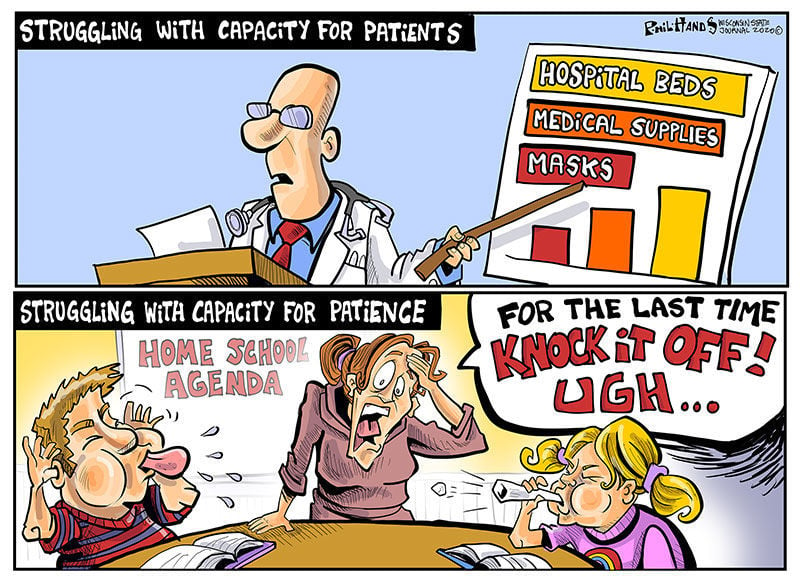
Yet hospitals in hot spots across the country are maxing out their staff, equipment, and beds, with doctors and nurses warning that the worst-case scenario of hospital resources being overwhelmed is on the horizon if their states don’t get better control of the coronavirus.
“The surge of Covid-19 patients takes away from our ability to care for the sick patients that are already in Arkansas,” said a nurse at a major health system in Little Rock, who asked to go unnamed fearing retaliation from her employer. “We have so many nurses quarantined that we’re not able to staff our oncology unit appropriately, and our patients are being negatively affected. Covid-19 is right now overburdening our healthcare system in Arkansas.”
Hospitals in several states are also straining to find enough specialists to treat the very sick Covid-19 patients. “ICU beds don’t take care of people — you need staff,” said Pavia of the University of Utah School of Medicine. “And one of the things that many of the Western states have in common is a relative shortage of the people we need to take care of very sick people during a pandemic like this: ICU doctors, probably most importantly ICU nurses, and infectious disease physicians, respiratory therapists. These folks have been working flat out for eight or nine months, and three months into the surge, they’re exhausted, they’re stressed.”
Staffing is a universal problem in hot spots. Gov. Gary Herbert of Utah said the state will have to bring in out-of-state nurses to help with the surge, and officials and health care providers in South Dakota, Tennessee, Arizona, and Wisconsin are requesting them too:v
In Texas, officials are setting up medical tents in El Paso and Lubbock in response to the rapid rise in hospitalized Covid-19 patients and a dwindling number of hospital beds. “El Paso, Texas, is almost completely out of ICU beds; Lubbock, the same thing,” said McQuillen.
“We are the 11th-largest city in the state of Texas and we have two field hospitals on their way to town,” Jarrett Atkinson, Lubbock’s city manager, told KCBD on Tuesday. “I can absolutely assure you that never in my career did I think we would be deploying field hospitals to Lubbock, Texas.”
According to McQuillen, both El Paso and Lubbock have been “much less stringent with their populations [mandating] simple things like wearing masks, and socially distancing.” He compared that to Massachusetts and other Northeast states where he says strict measures during the spring surge made a big difference in reversing the steep climb in cases and hospitalizations. Yet too many states ignored that critical lesson, and now are paying the price.
Daily deaths are creeping up again but are still far below the earlier peak
While daily Covid-19 hospitalizations are surging, another key metric, daily deaths, reached 1,562 on November 11, the highest it has been since May during the first surge, according to the Covid Tracking Project. It’s an ominous sign that deaths could reach unprecedented levels in the coming weeks and months, given that cases and hospitalizations are now at new highs.
It’s possible, experts say, that fewer people who are hospitalized will end up dying in this winter stage of the pandemic as compared to the spring. As Vox’s Julia Belluz reported, there have been significant improvements in mortality in the US and Europe in the past several months, as doctors’ understanding of Covid-19 and how to treat it has improved:
Though there’s still a lot of progress to be made, the treatment approach has become more standardized over time, said Jen Manne-Goehler, an infectious disease doctor at Brigham and Women’s and Massachusetts General hospitals. When she started treating Covid-19 patients in the spring, it felt like practice was changing every few days. Now it’s more streamlined — and that’s undoubtedly helping with survival, too.
That said, if hospitals in the hard-hit states run out of beds and staff to treat the incoming flow of patients, more people who could have been saved may die. When ICU staff were stretched in the spring, “ICU patients just didn’t get the same attention,” intensive care doctor Lakshman Swamy, who works with the Cambridge Health Alliance, told Belluz.


/cloudfront-us-east-1.images.arcpublishing.com/sltrib/N2O6A445TNBPTN7OGAFQO4ONLY.jpg)



:format(webp):no_upscale()/cdn.vox-cdn.com/uploads/chorus_asset/file/22032257/third_wave_hosp_covid_chart_nov11.jpg)
:format(webp):no_upscale()/cdn.vox-cdn.com/uploads/chorus_asset/file/22030735/GettyImages_1229570053t.jpg)
:no_upscale()/cdn.vox-cdn.com/uploads/chorus_asset/file/22030756/GettyImages_1216851013t.jpg)
:no_upscale()/cdn.vox-cdn.com/uploads/chorus_asset/file/22030769/GettyImages_1264685606t.jpg)
 HENRY KOTULA