

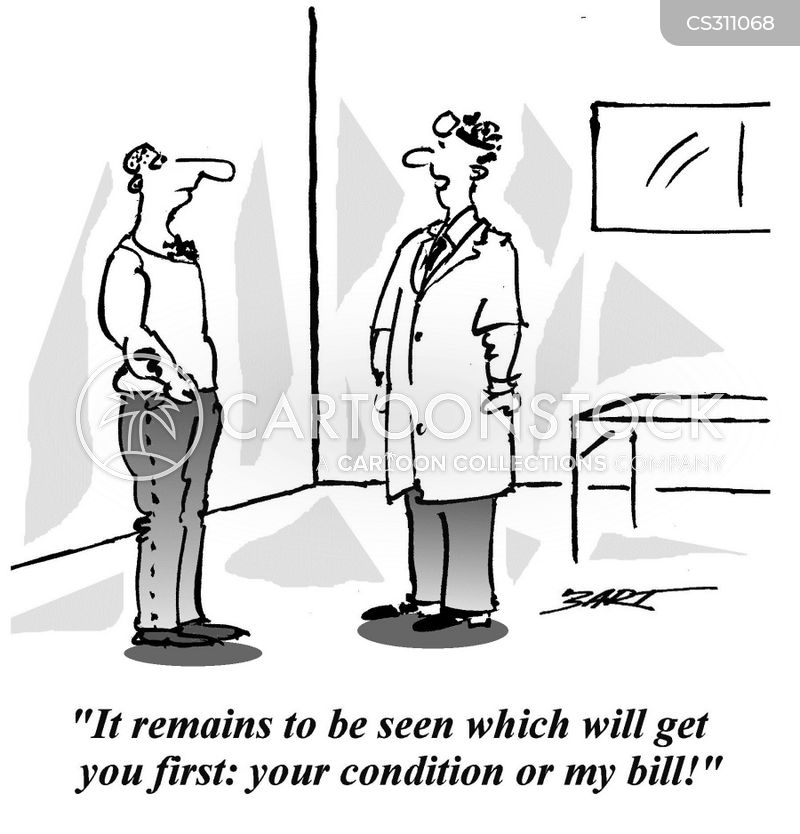
Cartoon – It remains to be seen which will get you first


https://mailchi.mp/7788648545f0/the-weekly-gist-february-25-2022?e=d1e747d2d8

A recent New Yorker article details the history of the American Medical Association’s (AMA) opposition to single-payer healthcare, and the grassroots movement that nearly changed its position in 2019.
Since its founding in the 1840s, the largest association of the nation’s doctors has wielded significant influence over healthcare policy, and has been the most effective opponent of several waves of progressive healthcare reform proposals across the last century. More recent changes in the demographic makeup of its physician constituents have begun to mirror the US population. A quarter of today’s practicing physicians graduated from foreign medical schools, and gender and racial gaps in medical schools have been reduced. Today, half of medical students are female, and half are people of color.
The Gist: The perspectives, needs, and politics of the physician community are changing. Younger physicians tend to be more left-leaning, and more are employees, rather than entrepreneurial business owners. While physician pocketbook issues historically dominated the AMA’s policy positions, today’s younger physicians are increasingly motivated by social justice concerns, leading to advocacy positions that would have been unimaginable a few decades ago.
Physician societies continue to move closer to endorsing more extensive healthcare reform policies, over trying to ensure economic protection for the profession—and in the long run, this shift in physician support could prove a key driver in increasing public approval of “Medicare for All” and other coverage reforms.

A Florida physician was convicted Feb. 10 for his role in a healthcare fraud scheme that involved billing health insurance companies for $110 million in medically unnecessary services, according to the Justice Department.
Mark Agresti, MD, of Palm Beach, Fla., unlawfully billed insurers for $110 million of drug testing services that were medically unnecessary. The patients who received the unnecessary drug tests were residents of Good Decisions Sober Living in West Palm Beach. Dr. Agresti was the medical director of the facility, according to the Justice Department.
“Patients at GDSL were required to submit to excessive, medically unnecessary urine drug tests as a condition of residency approximately three or four times per week,” the Justice Department said. “These [urinalysis] drug tests cost as much as $6,000 to $9,000 per test.”
According to evidence presented at trial, Dr. Agresti also had Good Decisions Sober Living patients sent to his own medical practice to fraudulently bill for services.
Dr. Agresti was convicted of 11 counts of healthcare fraud and one count each of conspiracy to commit healthcare fraud and wire fraud. He is scheduled to be sentenced April 21.


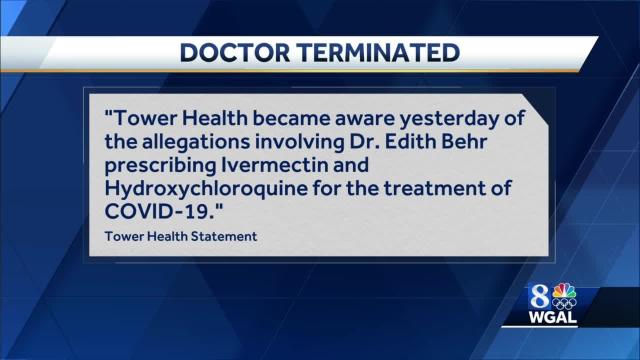
A Pennsylvania physician accused of prescribing ivermectin and hydroxychloroquine to treat and prevent COVID-19 has been terminated from Tower Health, PennLive reported Feb. 4.
Edith Behr, MD, is allegedly linked to Christine Mason, a woman who used a Facebook account to connect people to a physician for hydroxychloroquine and ivermectin prescriptions. A social media user claimed Dr. Behr was the source of the prescriptions and reported her to authorities and her employer, according to PennLive.
West Reading, Pa.-based Tower Health officials became aware of the allegations against Dr. Behr Feb. 2 and took immediate action.
“Tower Health became aware yesterday of the allegations involving Dr. Edith Behr prescribing ivermectin and hydroxychloroquine for the treatment of COVID-19,” Tower Health said in a Feb. 3 statement to PennLive. “We investigated the matter and, as a result, Dr. Behr’s employment with Tower Health Medical Group has been terminated effective immediately.”
Dr. Behr was a surgeon at Phoenixville (Pa.) Hospital, which is owned by Tower Health, according to the report.
Ivermectin and hydroxychloroquine have not been approved by the FDA for prevention or treatment of COVID-19.
A top Medicare advisory board did not recommend any new payment hikes for acute care hospitals or doctors for 2023, stating that targeted relief funding has helped blunt the impact of the COVID-19 pandemic.
The Medicare Payment Advisory Commission (MedPAC), which makes recommendations to Congress and the federal government on Medicare issues, voted on the payment changes to Congress during its Thursday meeting. The panel decided against recommending any pay hikes.
The commission unanimously voted to update 2023 rates for acute care hospitals by the amounts determined under current law. The Centers for Medicare & Medicaid Services will publish its update to the current law payment rates this summer.
MedPAC estimated that the rates will increase 2% and that there would be 3.1% growth in hospital wages and benefits, but these “may be higher or lower by the time this is finalized,” said MedPAC staff member Alison Binkowski.
She added there will be another estimated 0.5% increase in inpatient rates.
MedPAC decided not to recommend any pay rates beyond current law after looking at the financial picture for hospitals and found the indicators of payment adequacy are generally positive.
“Hospitals maintained strong access to capital thanks to substantial federal support, including targeted federal relief funds to rural hospitals which raised their all-payer total margin to a near-record total high,” Binkowski said.
She added fewer hospitals closed, and facilities continued to have positive marginal Medicare profits.
It was also difficult to interpret changes in quality that traditionally would determine whether a payment boost would be needed.
“For example, mortality rates increased in 2020, but this reflects the tragic effects of the pandemic on the elderly rather than a change in the quality of care provided to Medicare beneficiaries or the adequacy of Medicare payments,” Binkowski said.
Even though commission members agreed with the recommendation for hospitals, they were concerned whether it was enough to help facilities meet drastic increases in labor expenses.
“With labor, it is more than just a salary increase these hospitals are seeing,” said commission member Brian DeBusk.
He noted that hospitals haven’t just seen an increase in rates for contract or temporary nurses, but in nursing education as well.
MedPAC also recommended no changes to the statutory payment update for dialysis facilities and shouldn’t give a payment update to ambulatory surgery centers (ASCs) due to confidence in payment adequacy for the facilities.
“Despite the public health emergency, the number of ASCs increased by 2% in 2020,” said MedPAC staff member Daniel Zabinski. “The growth that we saw in the number of ASCs also suggests access to capital remains adequate.”
The commission decided to take a similar estimate with the physician fee schedule, calling for any update to be tied to current law, which is estimated to have no change in spending.
Medicare payments to clinicians declined by $9 billion in 2020 but were offset thanks to congressional relief funds. Physicians also got a 4% bump to payments through 2022 compared to prior law.
The temporary rate hike is expected to go away at the start of 2023, but physician groups are likely to lobby Congress to keep the pay bump intact.
Physician groups already blasted the recommendation from MedPAC.
Anders Gilberg, senior vice president of government affairs for the Medical Group Management Association, tweeted that the recommendation was out of touch, especially after new reports of inflation.
“Hard to conceive of a more misguided recommendation to Congress at a time when practices face massive staffing shortages and skyrocketing expenses,” he tweeted.
 HENRY KOTULA