Coronavirus updates: State Department urges Americans not to travel abroad

https://www.axios.com/coronavirus-latest-developments-8b8990c4-6762-494a-8ee0-5091746bda9b.html?utm_source=newsletter&utm_medium=email&utm_campaign=newsletter_axiosvitals&stream=top

Image result for Johns Hopkins Confirmed cases of COVID-19

The State Department issued a global level 3 health advisory late Wednesday advising Americans to “reconsider travel abroad due to the global impact” of the novel coronavirus pandemic.

The big picture: President Trump announced hours earlier European travel to the U.S. will be restricted for 30 days, with some exemptions, and the NBA suspended its season. There are more than 126,000 cases in over 100 countries and territories and more than 4,600 deaths. There are over 1,300 cases in the U.S.

LAST 48 HOURS
  • Travel restrictions: The Trump administration’s new rules affect European member states of the Schengen Area, which includes most but not all of the EU. The United Kingdom and Ireland are not in the zone and are not affected by the restrictions.
    • In Israel, all travelers entering from any country — including Israeli citizens — are required to self-quarantine for 14 days.
  • Travel advisory: “Many areas throughout the world are now experiencing COVID-19 outbreaks and taking action that may limit traveler mobility, including quarantines and border restrictions,” the State Department advisory reads. “Even countries, jurisdictions, or areas where cases have not been reported may restrict travel without notice.”


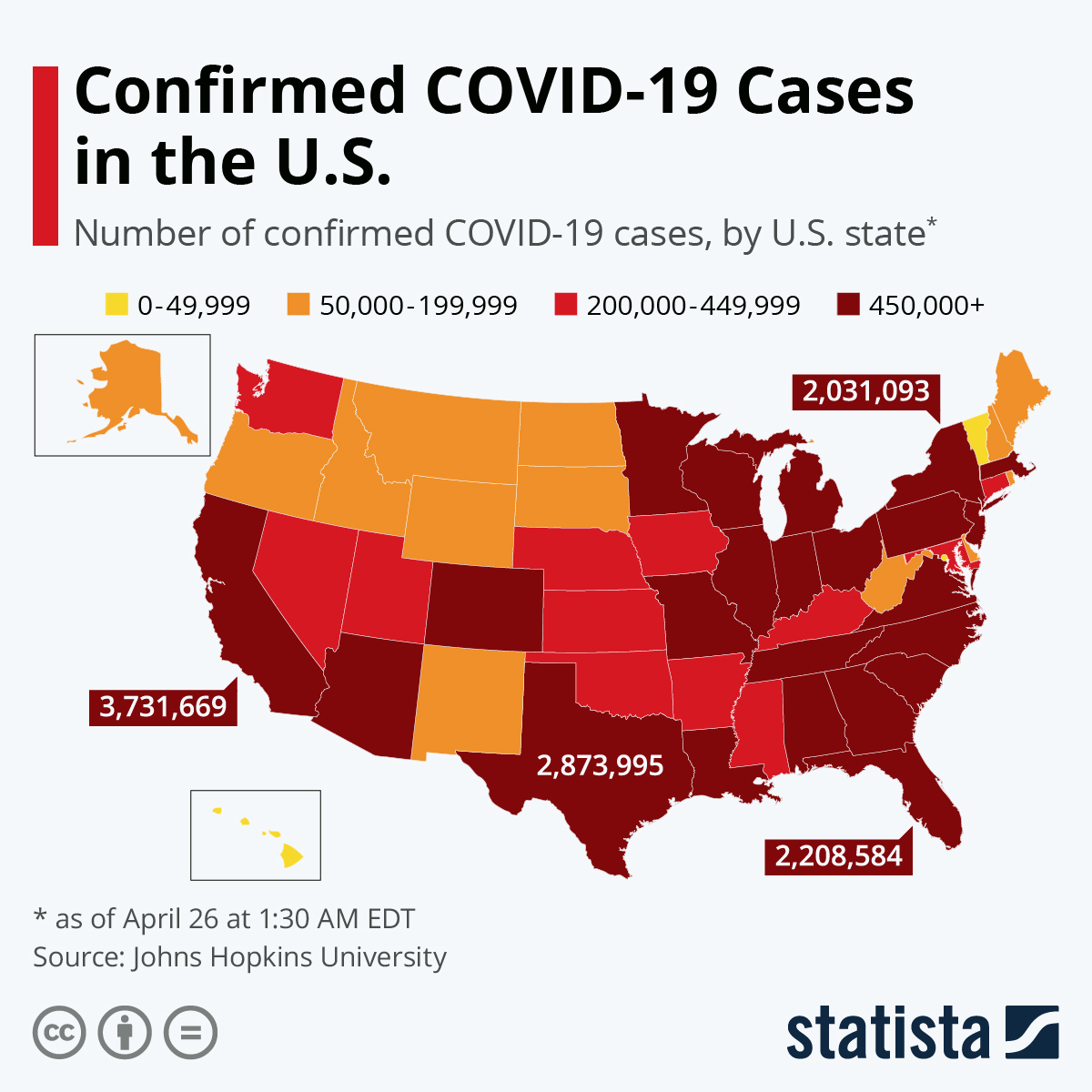
  • U.S. cases: Nearly 40 states reported at least 1,220 cases as of Wednesday, and roughly two dozen have declared a state of emergency. The novel coronavirus has now killed at least 30 Americans in five states.
    • Washington, D.C., Mayor Muriel Bowser announced a state of emergency Wednesday, as well as six new COVID-19 cases. There are now 10 presumptive cases in D.C. — including person-to-person transmission and at least two individuals who contracted the virus from unknown causes.
    • A staffer in the D.C. office of Sen. Maria Cantwell (D-Wash.) has tested positive to the virus — the first known case of a congressional staffer becoming infected with the virus.
    • California’s Los Angeles County announced six additional cases on Wednesday — including one that health officials presume is the county’s second case of community spread transmission.
    • The state’s health officials now recommend that events larger than 250 people be canceled.
    • There are now four deaths in California after Los Angeles County announced Wednesday the death of an “older adult” who “traveled extensively over the past month,” including to South Korea.
    • Virginia announced that a teenager in the Chickahominy Health District, who recently traveled internationally, has tested positive for COVID-19 on Wednesday, marking 9 current cases in the state. The affected teen did not attend school.
    • The states with the most cases as of Wednesday are: WashingtonNew York and California — where three TSA officers at Mineta San Jose International Airport were confirmed to have tested positive for the virus Tuesday night.
    • Maryland now has 9 confirmed cases after a 70-year-old Montana resident who was visiting Anne Arundel County came in close contact with someone who had contracted the virus, Maryland Gov. Larry Hogan said Wednesday.
    • New York Gov. Andrew Cuomo said he planned to deploy the National Guard to the New York City suburb New Rochelle on Tuesday to establish a one-mile “containment zone” and help contain the spread of the novel coronavirus.


  • Pandemic classification: The World Health Organization classified the outbreak as a pandemic Wednesday.
  • Global impact: Cases continue to surge in Spain, Germany, France and Italy, which is on complete lockdown with more than 12,000 cases — second-highest to China.
  • Business: Twitter announced Wednesday night that it instructed all employees globally to work from home.
  • Google recommended Tuesday that all its employees in North America work from home until at least April 10 amid the novel coronavirus outbreak, one of the most sweeping cautionary edicts.
    • The Securities and Exchange Commission is the first federal agency to direct its staff at its D.C. office to work remotely after an employee with respiratory problems was told they may have the virus.
    • IBM is encouraging its employees who live or work in New York City and Westchester County to work from home. Amazon, Facebook, Microsoft and Salesforce have similar practices in place.
    • Deloitte has recommended its staff return from areas impacted by COVID-19 to work from home for 14 days from their return date. The consulting firm has asked workers to defer nonessential international and domestic travel.


  • Australia: Actor Tom Hanks confirmed Wednesday he and his wife, Rita Wilson, tested positive for the virus while in Australia, which now has 128 cases.
  • Federal aid: The Department of Health and Human Services announced Wednesday it is allocating over $560 million to states and local areas to assist with COVID-19 response.
  • Cruise ship: Nearly 300 people left the docked Grand Princess ship in Oakland, Calif. on Tuesday, with more than half sent to Travis Air Force base and 98 to Lackland Air Force base in Texas, Gov. Gavin Newsom said Tuesday.
  • Community spread warning: Some areas in the U.S. have passed the point of containment and communities should focus on mitigation plans, such as canceling events, CDC director Robert Redfield said Tuesday.
  • Conferences and events: Music festival Coachella has been postponed until October. Many international and domestic conferences affecting all businesses, trades and entertainment are being either postponed or canceled.


  • Financial impact: U.S. stocks have taken a toll with various dips and corrections all week. Worries are growing that the outbreak could shrink global GDP and perhaps sink the U.S. dollar.
  • Oil: Already struggling with mounting debt and falling market valuations, energy companies are at serious risk for mass bond defaults.
  • Diagnostics: Health insurers and regulators are working to ensure coronavirus diagnostic tests are covered — but that doesn’t necessarily mean COVID-19 treatment will be affordable. Concerns linger as to how the health care system can meet the demands of high-volume testing.
  • Universities: As colleges cancel classes and boot students off campus because of the coronavirus, they’re creating logistical and financial nightmares that could leave many students in a bind.
  • Tourism: White House advisers are looking at policy changes to help relieve the travel and hospitality industry. Tourism and travel operators have had to reprice globally, as airlines, hotels and travel operators see major declines in bookings and revenue.
  • Social media: A large part of the problem is the “infodemic,” as stories get shared that are designed to drive fear rather than build understanding about the illness, according to NewsWhip data provided to Axios.


WHO declares the coronavirus outbreak a pandemic

WHO declares the coronavirus outbreak a pandemic

Image result for WHO declares the coronavirus outbreak a pandemic

The World Health Organization on Wednesday declared the rapidly spreading coronavirus outbreak a pandemic, acknowledging what has seemed clear for some time — the virus will likely spread to all countries on the globe.

Director General Tedros Adhanom Ghebreyesus said the situation will worsen.

“We expect to see the number of cases, the number of deaths, and the number of affected countries climb even higher,” said Tedros, as the director general is known.

As of Wednesday, 114 countries have reported that 118,000 have contracted Covid-19, the disease caused by the virus, known as SARS-CoV2. In the United States, where for weeks state and local laboratories could not test for the virus, just over 1,000 cases have been diagnosed and 29 people have died. But authorities here warn continuing limits on testing mean the full scale of spread in this country is not yet known.

The virus causes mild respiratory infections in about 80% of those infected, though about half will have pneumonia. Another 15% develop severe illness and 5% need critical care.

“Describing the situation as a pandemic does not change WHO’s assessment of the threat posed by this coronavirus,” Tedros said at the WHO’s headquarters in Geneva, in making the announcement. “It doesn’t change what WHO is doing, and it doesn’t change what countries should do.”

At the same time, Tedros said: “This is not just a public health crisis, it is a crisis that will touch every sector — so every sector and every individual must be involved in the fight.”

The virus, which probably originated in bats but passed to people via an as yet unrecognized intermediary animal species, is believed to have started infecting people in Wuhan, China, in late November or early December. Since then the virus has raced around the globe.

While China appears on the verge of stopping its outbreak — it reported only 24 cases on Tuesday — outbreaks are occurring and growing in a number of locations around the world including Italy, Iran and the United States.

South Korea, which has reported nearly 8,000 cases, also appears poised to bring its outbreak under control with aggressive measures and widespread testing. But other countries have struggled to follow the leads of China and South Korea — a reality that has frustrated WHO officials who have exhorted the world to do everything possible to end transmission of the virus.

“The bottom line is: We’re not at the mercy of the virus,” Tedros said on Monday. “The great advantage is that the decisions we all make as governments, businesses, communities, families and individuals can influence the trajectory of this epidemic.”

“The rule of the game is: Never give up,” he insisted.

The WHO has been criticized and second-guessed for not declaring the outbreak a pandemic sooner. Mike Ryan, head of the agency’s health emergencies program, admitted in a press conference on Monday that the agency fears that countries may interpret a pandemic declaration as a sign efforts to contain the virus have failed and they no longer need to try.

“For me, I’m not worried about the word. I’m more concerned about that the world’s reaction will be to that word. Will we use it as a call to action? Will we use it to fight? Or will we use it to give up?” Ryan asked.


The latest on the coronavirus

https://www.axios.com/newsletters/axios-vitals-f4216088-ea87-4fb4-ae0b-ab76f9368c8d.html?utm_source=newsletter&utm_medium=email&utm_campaign=newsletter_axiosvitals&stream=top

Image result for united states Confirmed U.S. cases of COVID-19

In less than three months, the novel coronavirus has spread from an unknown pathogen located in a single Chinese city to a global phenomenon that is affecting nearly every part of society.

U.S. stocks closed more than 7% lower on Monday, after a wild day that saw a rare halt in trading, Axios’ Courtenay Brown reports.

  • Why it matters: The sell-off reflects serious fears that the coronavirus could help drive the economy into a recession.

Italy’s prime minister announced that the government has extended internal travel restrictions to the entire country until April 3 and that all public gatherings and sporting events would be banned.

  • Why it matters: It’s an extreme measure that effectively locks down 60 million people in one of the most populated countries in Europe, where more people have tested positive for the coronavirus than in any country outside of China.

Hospitals are reporting that their supplies of critical respirator masks are quickly dwindling, the New York Times reports.

  • Why it matters: Keeping health care workers healthy will be critical as hospitals and other facilities see a surge in patients as the coronavirus spreads.


Coronavirus Update

Coronavirus Update

Image result for incidental economist Coronavirus Update

The spread of the new Coronavirus has continued, with a number of cases showing up in countries like Iran, Italy, and South Korea. Coronavirus information is changing by the minute, so we’re back with another update.


Anxiety over coronavirus grows on Capitol Hill

Anxiety over coronavirus grows on Capitol Hill

Anxiety over coronavirus grows on Capitol Hill

Pressure is mounting on congressional leaders to cancel votes and restrict activity in the Capitol to avert a coronavirus outbreak.

Several lawmakers appearing at the recent American Israel Public Affairs Committee (AIPAC) and Conservative Political Action Conference (CPAC) gatherings in the Washington, D.C., area interacted with individuals who have since tested positive for the highly contagious virus.

Both Sen. Ted Cruz (R-Texas) and Rep. Paul Gosar (R-Ariz.) said over the weekend they would self-quarantine after coming into contact with a person at CPAC who had tested positive.

Cruz, who had a brief interaction and shook hands with the individual, said he is not showing any symptoms of coronavirus, but would remain in Texas “out of an abundance of caution.”

Gosar, a dentist, said both he and his staff came in contact with the individual. The congressman said he would shut down his Washington office this week and follow Congress’s “tele-commute plan.”

Over the weekend, Congress’s medical office sent lawmakers an update on the CPAC encounters that supported the self-quarantines and suggested the chances of transmission were low.

“The public health authorities assessed each person’s contact with the ill individual,” reads the notice, which was obtained by The Hill. “The overall findings are considered to be a “low risk” to acquire SARS-Cov-2 (coronavirus) infection and they were advised on courses of action specific to their unique level of exposure.”

Others are taking self-imposed precautions, as well.

Rep. Liz Cheney (R-Wyo.), the third-ranking House Republican, opted to skip a leadership retreat on the Eastern Shore of Maryland over the weekend, with a spokesperson citing a need to protect “people in our families who are particularly vulnerable,” Politico reported.

As of Monday morning, more than 500 patients in the United States had been diagnosed with the virus across 34 states, according to a tally being kept by The New York Times.

Senate and House lawmakers were expected to travel back to Washington, with votes still scheduled for Monday afternoon and evening. And lawmakers across the country were boarding planes Monday morning to return to the nation’s capital, including those from coronavirus hot-spots like Seattle.

But a sense of anxiety permeated Capitol Hill, where many lawmakers — including the top three Democratic leaders — are in their 70s and 80s, travel constantly around the country for district visits and campaign events, and meet regularly with constituents and other interest groups.

“I don’t see how you keep asking a large group of elderly folks to fly on planes back and forth over the next few weeks,” said one House aide who’s been monitoring the situation on Capitol Hill.

Added a GOP lawmaker: “The most vulnerable population are people over 70 … which is all of the Democrat leadership and most chairman, and a third of the U.S. Senate.”

Still, many leaders and rank-and-file lawmakers believe closing the Capitol at this moment could send the wrong message to an already jittery public, setting off a wave of panic. On Monday, the Dow Jones industrial average tumbled more than 1,600 points on falling oil prices related to the coronavirus outbreak.

“Business should carry on,” the GOP lawmaker said.

A second staffer said that while leaders have given no signal of shuttering the Capitol, individual lawmakers are making their own contingency plans.

“Many offices including ours are preparing for some kind of total office building shutdown, shifting to telework, etc.,” the aide said.

Last week, the top congressional leaders received a partially classified briefing on the threat to the Capitol complex.

Afterward, Speaker Nancy Pelosi (D-Calif.) said the Capitol Police assured the lawmakers that the Capitol is well-secure, while the message from the Capitol physician’s office largely related to simple precautions related to personal hygiene, like washing hands and sneezing into tissues. Around the Capitol, illustrated signs have popped up in the bathrooms instructing visitors on proper hand-washing procedures.

“It’s not about testing everybody who comes into the building. That’s not realistic,” Pelosi said last Thursday. “But it is also, hopefully, that the message that goes out more globally is that people will be more responsible about their own preventative measures.”

She added: “Some of that sounds very basic and mundane, but it does prevent the spread.”

House Democratic leaders are expected to huddle Monday afternoon, ahead of the evening’s votes, where the coronavirus issue will almost certainly be front and center. Meanwhile, leadership offices are reaching out to members to encourage preparations in the event the Capitol is closed down.

“Offices are putting together emergency telework plans … and assessing IT needs, and encouraging off site meetings or phone calls,” said a third staffer.


Coronavirus and Healthcare Reform

Coronavirus and Healthcare Reform

2020.03.07 coronavirus_structure

At this writing, the number of COVID-19 cases worldwide has reached 100,000 with 3,500 deaths.  These numbers will be higher by tomorrow.

What does this have to do with U.S. healthcare reform? A lot.

Two current background articles drive home the point that a well-functioning public health system is critical for responding to a pandemic like 2019 coronavirus disease (COVID-19), especially in its early phases. And it means that the healthcare system – including a robust public health infrastructure — should be about health, not just about profit and greed.

Let’s Put This in Context:  Is COVID-19 “Just Another Flu”?

WHO reports that annual cases of influenza A and B worldwide range from 3 to 5 million, causing 290,000 to 650,000 respiratory deaths.  That’s a lot more than COVID-19, at least so far. So what’s the big deal?

The big deal is that, This Is Not a Competition, not an either-or between influenza virus and coronavirus. Otherwise this would be like asking, Would you rather be killed by an airplane crash, by tobacco-related cancer, or by pollution-related pneumonia? The answer is, of course, none of the above.

What these types of deaths and illness have in common is being in part preventable by known public health measures, with different interventions needed for each one. Likewise, influenza A and B deaths are in part preventable. Prevention relies on the elaborate and sophisticated worldwide influenza vaccine program. It includes monitoring influenza strains alternating between Northern and Southern hemispheres, annual adjustment of vaccine components, production, distribution, and public messaging.

But unlike influenza, currently COVID-19 is not preventable, since vaccine development and testing will take a year or more.  And WHO is modeling that COVID-19 is at best only partially containable by general non-pharmaceutical measures. For example, one worst-case model of the pandemic estimates that two-thirds of the world’s population could be infected, once it runs its course.  This has epidemiologists scrambling to calculate the actual transmissibility and actual mortality rates so as to refine predictions more accurately and to help plans for mitigating its spread.

So, no, COVID-19 is not “just another flu,” as the President implied in a March 4 off-the-cuff interview. COVID-19 is to be sure, a “flu-like illness,” but it has unique (as yet not fully characterized) epidemiologic characteristics, and it requires a completely different public health strategy, at least in the short- and medium-term. The President is reckless to minimize either disease – both diseases are widespread and lethal — especially since proper public messaging is a key to rallying a coherent response by individuals, communities, and nations.

How Bad Could It Be? Comparison to 1918 Spanish Flu

Could the COVID-19 pandemic wreak the same devastation as the 1918 Spanish flu? Spanish flu eventually infected 500 million people worldwide, effectively 25 percent of the total global population. And it killed up to 100 million of them. “It left its mark on world history,” according to University of Melbourne professor James McCaw, a disease expert who mathematically modelled the biology and transmission of the disease, and who was quoted today by the Australian Broadcasting Company (ABC).

What SARS-CoV2 (severe acute respiratory syndrome-corona virus strain 2), the agent that causes COVID-19 disease, has in common with the H1N1/Spain agent  is novelty, transmissibility, and lethality. Novelty means that it is antigenically new, so that no one in the world is already immune or even partially cross-immune. Transmissibility means it’s easily spread by aerosol (coughing) or surface contact (hand to nose). Lethality means its significant death rate.

On the one hand, Dr. McCaw hopes that public health measures against COVID-19 will be more effective than in 1918. For one, experts and the general public now know about viruses. In 1918, virology was in its infancy.

“We’re not going to see that sort of level of mortality, that mortality was driven by the social context of the outbreak,” predicts Dr. Kirsty Short, a University of Queensland virologist, also quoted by the ABC. “We had a viral outbreak, at the same time as the end of a world war.”

In addition, modern medicine means much better care is available now than it was then. “We’ve already got a lot of scientists working on novel therapies and novel vaccines to try to protect the general population,” Dr Short says.

Professor McCaw points to an apparent initial success in Wuhan Province. “What’s happened in China gives very clear evidence that we can get what’s called the ‘reproduction number’ under one. So at the moment in China, on average, each person infected with coronavirus is passing that infection on to fewer than one other person. If people hadn’t changed their behaviour, we would have expected somewhere around the millions of cases in China by now instead of the comparatively small number of around 100,000.” So, he says, it looks like the transmissibility of coronavirus can be significantly modified through social distancing and good hygiene.

On the other hand, best-case calculations from these Australian epidemiologists appear to discount other factors that could actually worsen the pandemic in 2020 compared with 1918 – rapid international travel and higher concentration of people in urban centers.

Both Dr. Short and Professor McCaw admit that in the early days of a pandemic accurate predictions remain difficult to make.

Nevertheless, they both make clear that in battling the coronavirus, the national and international public health systems – and the public’s trust in them – will be key.

Public Health Approach Is the Key

The importance of public health actions is underscored by a second report today by two experts from the Center for Strategic and International Studies, a Washington think tank.

Samuel Brannen and Kathleen Hicks write in Politico.com,

Last October, we convened a group of experts to work through what would happen if a global pandemic suddenly hit the world’s population. The disease at the heart of our scenario was a novel and highly transmissible coronavirus. For our fictional pandemic, we assembled about 20 experts in global health, the biosciences, national security, emergency response and economics at our Washington, D.C., headquarters. The session was designed to stress-test U.S. approaches to global health challenges that could affect national security. As specialists in national security strategic planning, we’ve advised U.S. Cabinet officials, members of Congress, CEOs and other leaders on how to plan for crises before they strike, using realistic but fictional scenarios like this one.

Here are their conclusions:

  • Early and preventative actions are critical. They praise bipartisan Congressional support, including $50 million allocated to the CDC Infectious Diseases Rapid Response Reserve Fund, the passage of the 2019 Pandemic and All-Hazards Preparedness and Advancing Innovation Act, and the continuation of the Global Health Security Agenda.
  • Communication is vital—but a decline in trust makes it harder. A critical ingredient for addressing pandemics is public order and obedience to protocols, rationing, and other measures that might be needed. Today, public trust in institutions and leaders is fragile, with routine evidence of intentional disinformation by foreign actors and elected officials alike. Misstatements about science are particularly damaging to the credibility of scientists and health officials seeking to guide response to the pandemic. Amid the hyperpartisanship of the current U.S. political environment in a presidential election year, politicization of the coronavirus outbreak could undermine public health efforts.
  • International cooperation is also key. A virus knows no borders, as we have already seen with the real-world outbreak, and here a concerning change is heightened mistrust among countries. In the midst of trade tensions, fraying of international relationships, increased meddling by one country in the internal politics of another, and growing military tensions in hot spots around the globe, organizations such as the World Health Organization are increasingly caught in the middle, unable to play their intended neutral function.
  • The private sector will be vital to managing the outbreak. There’s a good reason the President gathered pharmaceutical executives on Monday, March 2. The U.S. federal government is rightly at the center of the response to this likely pandemic, but it is the private sector that holds the bulk of the technological innovation to producing treatments and cures. One bit of good news on this front: There is already in place a highly effective public-private partnership structure in the Coalition for Epidemic Preparedness Innovations, which is making important contributions in the current race for a vaccine.
  • The principal conclusion of our scenario was that leaders simply don’t take health seriously enough as a U.S. national security issue. Congress holds few hearings on the topic, especially in the defense committees, and the White House last year eliminated a top National Security Council position focused on the issue.

Healthcare Reform:  We’re All in This Together

The impending epidemic of coronavirus in the U.S. also brings up important practical questions in the whole healthcare system, as reported in, for example, the New York Times and Kaiser Family Foundation.

Who will have access to testing?  Who will pay? Will copays designed to keep patients with trivial illnesses from overutilizing the health system now backfire by delaying their testing and care?  These kinds of questions are not at issue in countries with universal access.

However, even those countries will struggle to cope with the pandemic. For example, the United Kingdom faces a shortage of intensive care unit beds after a decade of downsizing its bed capacity.

This drives home the point that public health infrastructure is necessary but not sufficient for managing a pandemic. Namely, the U.K.’s bed shortage shows that public health is but one component of the broader task of maintaining a nation’s strategic risk preparedness. Calculating the surge capacity of inpatient beds for an unexpected pandemic emergency should not be left just to hospital administrators. This is also why the President should restore both bio-preparedness positions dropped by him in 2018 from the National Security Council and the Homeland Security Department.

Conclusion:  Right, Privilege or, Rather, Social Contract?

Is healthcare a right or a privilege? The coronavirus tells us, Neither. Instead, this virus reminds us that healthcare is better framed as part of the social contract, the fundamental duty of governments to their citizens to defend them from clear threats, both currently present and foreseeable, not only military, but also economic, cyber, and in this case biological. Can Americans and their leaders put aside petty polemical bickering over healthcare reform and recognize the healthcare system for what it is, part of the backbone of a healthy, resilient nation?


Settling in for a long fight against coronavirus

https://mailchi.mp/9e118141a707/the-weekly-gist-march-6-2020?e=d1e747d2d8

Image result for Settling in for a long fight against coronavirus

As of Friday, the number of confirmed cases of the novel coronavirus, or COVID-19, has surpassed 100,000 worldwide, with over 3,400 deaths. In the US, there have been 250 confirmed cases and 14 deaths reported so far—although the actual number of cases is certainly many times higher, with testing yet to be widely available and many patients exhibiting only mild to moderate symptoms.

Vice President Mike Pence, who was put in charge of federal response efforts last week, conceded Thursday that the country does not yet have enough coronavirus tests to meet demand, and the administration will not meet its goal of having 1M tests ready by the end of the week; perhaps the $8B emergency funding package approved by Congress will help expedite efforts.

Public worry and concern among officials hit new levels, with the Director-General of the World Health Organization warning that time to contain the virus may be running out, and expressing concern that countries may not be acting fast enough. New levels of containment effort have begun to take shape. Schools shut down in areas of the country most affected by the virus, including Seattle and some New York City suburbs. All told, the New York Times reports that 300M students are out of school around the world. Companies began to cancel conferences and other large gatherings—next week’s Health Information and Management Systems Society (HIMSS) conference was called off despite a planned appearance by President Trump, given rising cancellations and vendor exits.

Hospitals around the nation have rallied to prepare for a growing wave of patients that has yet to hit. Experts expressed concerns about whether hospitals have enough open capacity, but even more critical will be gaps in the supply of staff and equipment—especially the ICU beds and ventilators necessary for critically ill patients, and the nurses and respiratory therapists needed to care for them.

The vast majority of hospitals report having a coronavirus action plan in place; however, a recent survey of nurses suggests that critical information may not be making its way to frontline clinicians. Only 44 percent of nurses reported that their organization gave them information on how to identify patients with the virus, and just 29 percent said there is a plan in place to isolate potentially infected patients.

Worries about patient financial exposure to the costs of diagnosis and treatment intensified, with fears that individuals could be held accountable for the cost of government-mandated isolation. Most patients with high-deductible plans saw their deductibles “reset” at the beginning of the year, raising concerns that individuals might refrain from seeking treatment.

The heightened worry is palpable as we connect with hospital and physician leaders around the country, and we are deeply grateful for their around-the-clock efforts, and the willingness of doctors, nurses and other caregivers to put their own safety at risk to provide the best possible care to patients under increasingly difficult circumstances.


Is COVID-19 really any worse than normal seasonal flu?

https://bigthink.com/politics-current-affairs/covid-19-vs-flu

  • Many are suggesting coronavirus is just flu-season business as usual. It’s not.
  • No sensible comparison can be made anyway, for a few reasons.
  • The one that’s less bad — whichever that is — can still kill you.

A lot of people are trying to get a sense of whether COVID-19 is any more dangerous than normal seasonal flu strains. Unfortunately, making meaningful comparisons between them is just not possible yet. From a “what should I do/worry about?” point of view, though, it’s pretty pointless to compare the two.

Whichever one you select as the ultimate Big Bad, they’re both out there: You have a decent chance of contracting either illness, and they both can be fatal for certain demographic segments. Trying to choose which one is worse is like trying to choose whether you’d rather be hit by a bus or a truck.

At this point, the best advice remains the same for both: Start washing those hands well and frequently, and follow the CDC’s recommendations for avoiding infection.

Here’s why we can’t know which is worse

There are some fundamental differences between the statistics available on seasonal flu and COVID-19, and they make a direct comparison impossible.

  • Seasonal flu is an annual phenomenon (even though strains change). There’s lots of multi-year data on rates of infection and mortality in the hands of numerous national health authorities. COVID-19, on the other hand, has been around for only about two months, and most of the available data comes from just one country, China, where it first emerged.
  • Related to this is that it’s impossible to calculate the spread of COVID-19 from such a limited amount of data, both in terms of time and geography. The disease is now apparently racing around the globe outside China, but how fast will it circulate and what will be its final infection rate? It’s impossible to know.
  • There are remedies and vaccines for seasonal flu strains — neither exist for COVID-19. While existing therapies are being tested for their efficacy against coronavirus, no silver bullet has yet been found and there’s no way to know when/if one will. Hilary Marston, a medical officer and policy advisor at the National Institute of Allergy and Infectious Diseases says of a coronavirus vaccine, “If everything moves as quickly as possible, the soonest that it could possibly be is about one-and-a-half to two years. That still might be very optimistic.” This makes a comparison of the death rates between seasonal flu and COVID-19 unfair: One has a cure, the other doesn’t.

Things people are saying, and what’s real

You’re more likely to get the seasonal flu.

Um, maybe, at the moment. Be aware that COVID-19 is being found in new areas pretty much every day. Harvard epidemiologist Mark Lipstich says, “I think the likely outcome is that it will ultimately not be containable.”

On top of that, we don’t know how fast it will spread in the wild. If it continues to travel at the rate it has in the last two months, hoo boy. However, contagion doesn’t usually remain linear. So it could get better. Or worse. Will seasons affect it? Proper sanitation? Other factors? With only two months of data, we can’t possibly know, but Lipstich predicts 40% to 70% of us will get it.

COVID-19 is 20 times more deadly than seasonal flu.

Sorry. It’s likely a lot worse than that. Last week, COVID-19’s mortality rate was thought to be 2.3%. Now it’s considered to be 3.4%, or .034 of the total number of infections. The CDC estimates the seasonal flu mortality rate this year is .001% — the number of deaths divided by the number of total infections. So, as of March 4, the latest figure for COVID-19’s mortality rate is 34 times greater than seasonal flu, nearly double what you’ve been hearing.

Of course, the lack of effective treatment is a key factor in COVID-19’s mortality rate. When/if one is identified, that rate will go down.

Most people get through COVID-19 just fine.

This is true, However, while in one sense it’s great that the vast majority of people who contract COVID-19 get over it easily, it also means that a lot of people have the coronavirus without realizing it and are continuing to spread the infection. In stark — and tragic — contrast, one of the reasons Ebola eventually stopped infecting people was that most of its victims typically died before they could spread the disease. COVID-19, on the other hand, can travel quite invisibly far and wide before being recognized.

Epidemiologist Jennifer Nuzzo tells The Washington Post that the recent U.S. diagnoses confirm “what we have long suspected — that there is a good chance there already are people infected in this country and that the virus is circulating undetected. It points to the need for expanded surveillance so we know how many more are out there and how to respond. It’s also likely that person-to-person spread will continue to occur, including in the United States.”

So stop comparing and just be safe

Regardless of which disease is worse, they’re both potentially dangerous, so be safe and follow safety guidelines. Take hand-washing seriously: Rub your hands together with soap and water for at least 20 seconds. (Sing the alphabet at a moderate speed and you’ll be about right.)


Americans with coronavirus were flown home over CDC objections: report

https://thehill.com/policy/healthcare/483925-americans-with-coronavirus-flown-home-over-cdc-objections-report?utm_source=&utm_medium=email&utm_campaign=27749

Image result for Americans with coronavirus were flown home over CDC objections: report

More than a dozen Americans who had tested positive for coronavirus and were flown home alongside others without the virus were transported despite objections from the Centers for Disease Control and Prevention (CDC), The Washington Post reported on Thursday.

The 14 Americans who tested positive were among more than 300 who arrived back in the United States earlier this week after being evacuated from the Diamond Princess cruise ship in Japan, which has been the center of scrutiny over a coronavirus outbreak on board.

When those individuals tested positive for the virus, U.S. officials had to make a choice as to whether to let them fly home alongside the other passengers.

The State Department and some Department of Health and Human Services (HHS) officials decided to allow it while the CDC objected, warning of the risk of the disease spreading on the plane, the Post reported.

The plane did have a plastic-lined enclosure that allowed the 14 people with the virus to be separated from the others, according to the newspaper.

The State Department and HHS explained the decision to allow the flights with sick passengers in a statement earlier this week, without mentioning the CDC objections.

The Post reported that the CDC asked to be taken off the press release.

“These individuals were moved in the most expeditious and safe manner to a specialized containment area on the evacuation aircraft to isolate them in accordance with standard protocols,” the departments said in the earlier statement.

“Every precaution to ensure proper isolation and community protection measures are being taken, driven by the most up-to-date risk assessments by U.S. health authorities,” they added.

All of the Americans evacuated from the cruise ship will be quarantined on military bases for 14 days to ensure they do not spread the disease to others.


Seattle Children’s sues to block release of health records; top official resigns

https://www.beckershospitalreview.com/infection-control/seattle-children-s-sues-to-block-release-of-health-records-top-official-resigns.html?utm_medium=email

Image result for seattle children's hospital

Seattle Children’s Hospital has filed a lawsuit to block the release of health department records regarding mold at its facility, according to court documents cited by King 5. 

The hospital’s legal team filed an amended complaint in an attempt to block the release of state and county health records.

Documents previously released to the media through a public records request revealed a nearly 20-year history of Aspergillus mold in the air handling system of the hospital’s operating rooms.

Most recently, an infant at Seattle Children’s Hospital died Feb. 12 after she developed a mold-related infection acquired at the facility, the seventh mold-related death since 2001.

The health records sought by the media are “confidential and sensitive,” Adrian Urquhart Winder, attorney for Seattle Children’s, said, according to King 5. The attorney cited a state law that says records produced for quality improvement purposes cannot be publicly disclosed.

On Jan. 10, Mark Del Beccaro, MD, former CMO and senior vice president of Seattle Children’s Hospital, resigned, according to a hospital spokesperson. King 5 could not reach Dr. Del Beccaro for comment.