Decentralized leadership raises questions about Trump coronavirus response

https://thehill.com/homenews/administration/491093-decentralized-leadership-raises-questions-about-trump-coronavirus

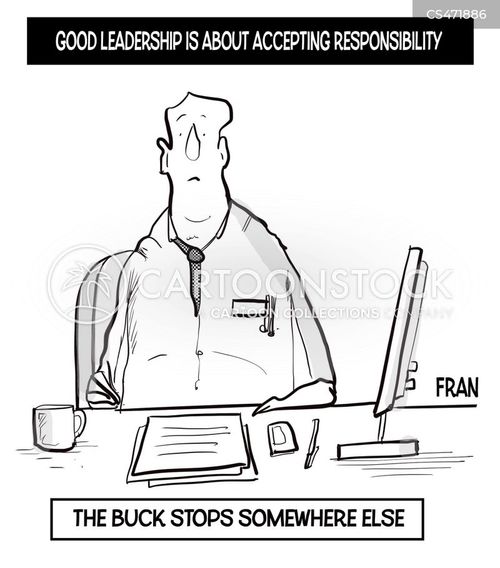
The rotating cast of officials appearing behind President Trump to detail the government’s response to the coronavirus are leading to new criticisms that they reflect a scattered approach from the White House that too often leaves states fending for themselves.

Top Trump administration officials say the appearances by a broad range of administration officials shows the “all of government” undertaken to combat the coronavirus.

But some current and former government officials see a disconnected strategy where it can be unclear who’s in charge of what or whether there is a coordinated long-term plan.


Great Leaders Are Thoughtful and Deliberate, Not Impulsive and Reactive

https://hbr.org/2019/04/great-leaders-are-thoughtful-and-deliberate-not-impulsive-and-reactive?utm_source=facebook&utm_medium=social&utm_campaign=hbr&fbclid=IwAR15xBzRuRJsKxkITe-z0wa1AwDMc_gwJmhM5r6ONnL7bw3s9zP8qRxYiEE

You set aside the first hour of your day to work on a strategy document that you’ve been putting off for a week. You haven’t been disciplined about getting to it, but you’ve had one crisis after another to deal with in the past week. Now, finally, you’ve carved out 90 early morning minutes to work on it.

First, however, you take a quick peek at the email that has piled up in your inbox overnight. Before you know it, you’ve used up the whole 90 minutes responding to emails, even though none of them were truly urgent.

By the time you walk into your next meeting, you’re feeling frustrated that you failed to stick by your plan. This meeting is a discussion with a direct report about the approach he’ll be taking in a negotiation with an important client. You have strong views about how best to deal with the situation, but you’ve promised yourself that you will be open and curious rather than directive and judgmental. You’re committed, after all, to becoming a more empowering manager.

Instead, you find yourself growing even more irritable as he describes an approach that doesn’t feel right to you. Impulsively, you jump in with a sharp comment. He reacts defensively. You worry for a moment — and rightly so — that you cut him off too quickly, but you tell yourself that you’ve worked with this client for years, the outcome is critical, and you don’t have time to hear your direct report’s whole explanation. He leaves your office looking hurt and defeated.

Welcome to the invisible drama that operates inside us all day long at work, mostly outside our consciousness. Most of us believe we have one self. In reality, we have two different selves, run by two separate operating systems, in different parts of our brain.

The self that we’re most aware of — the one that planned to work diligently on the strategy document and listen patiently to your direct report — is run by our pre-frontal cortex and mediated through our parasympathetic nervous system. This is the self we prefer to present to the world. It’s calm, measured, rational, and capable of making deliberate choices.

The second self is run by our amygdala, a small almond-shaped cluster of nuclei in our mid-brain and it is mediated by our sympathetic nervous system. Our second self seizes control any time we begin to perceive threat or danger. It’s reactive, impulsive, and operates largely outside our conscious control.

This second self serves us well if a lion is coming at us, but the threats we experience today are mostly to our sense of worth and value. They can feel nearly as terrifying as those to our survival, but the danger we experience isn’t truly life-threatening. Responding to them as if they are only make things worse.

It’s in these moments that we often use our highest cognitive capacities to justify our worst behaviors. When we feel we’ve fallen short, we instinctively summon up our “inner lawyer” — a term coined by author Jonathan Haidt — to defend us.

Our inner lawyer is expert at rationalizing, avoiding, deflecting, dissembling, denying, disparaging, attacking, and blaming others for our missteps and shortcomings. The inner lawyer works overtime to silence our own inner critic, and to counter criticism from others. All this inner turmoil narrows and consumes our attention and drains our energy.

The problem is that most organizations spend far more time focused on generating external value than they do attending to people’s internal sense of value. Doing so requires navigational skills that most leaders have never been taught, much less mastered. The irony is that ignoring people’s internal experience leads them to spend more energy defending their value, leaving them less energy to create value.

In our work with leaders, we’ve discovered that the antidote to reacting from the second self is to develop the capacity to observe our two selves in real time. You can’t change what you don’t notice, but noticing can be a powerful tool for shifting from defending our value to creating value.

A well-cultivated self-observer allows us to watch our dueling selves without reacting impulsively. It also makes it possible to ask our inner lawyer to stand down whenever it rises up to argue our case to our inner and outer critics. Finally, the self-observer can acknowledge, without judgment, that we are both our best and our worst selves, and then make deliberate rather than reactive choices about how to respond in challenging situations.

To improve your capacity to self-observe, begin with negative emotions such as impatience, frustration, and anger. When you feel them arising, it’s a strong signal that you’re sliding into the second self. Simply naming these emotions as they arise is a way to gain some distance from them.

Also, watch out for times when you feel you’re digging in your heels. The absolute conviction that you’re right and the compulsion to take action are both strong indicators that you‘re feeling a sense of threat and danger.

In our work, we provide leaders with small daily doses of support — reminders to pay attention to what they’re feeling and thinking.  We’ve also found it helpful to build small groups that meet at regular intervals so leaders can share their experiences. A blend of support, community, connection and accountability helps offset our shared impulse to stop noticing, push away discomfort, and revert to survival behaviors in the face of perceived threats to our value. A good starting place is to find a colleague you trust to be your accountability partner, and to seek regular feedback from one another.

Finally, it’s important to ask yourself two key questions in challenging moments: “What else could be true here?” and “What is my responsibility in this?” By regularly questioning your conclusions, you’re offsetting your confirmation bias — the instinct to look for evidence that supports what you already believe. By always looking for your own responsibility, you’re resisting the instinct to blame others and play victim and focusing instead on what you have the greatest ability to influence — your own behavior.

A deceptively simple premise lies at the heart of this deliberate set of practices: see more to be more. Rather than simply getting better at what they already do, transformational leaders balance courage and humility in order to grow and develop every day.


The Dalai Lama on Why Leaders Should Be Mindful, Selfless, and Compassionate

https://hbr.org/2019/02/the-dalai-lama-on-why-leaders-should-be-mindful-selfless-and-compassionate?utm_source=facebook&utm_medium=social&utm_campaign=hbr&fbclid=IwAR1V6SVujsniYZwOQMFJNIeg9po7ojuHG6NBaMJ_qtcwNOaUeJ3LYj86qog

Over the past nearly 60 years, I have engaged with many leaders of governments, companies, and other organizations, and I have observed how our societies have developed and changed. I am happy to share some of my observations in case others may benefit from what I have learned.

Leaders, whatever field they work in, have a strong impact on people’s lives and on how the world develops. We should remember that we are visitors on this planet. We are here for 90 or 100 years at the most. During this time, we should work to leave the world a better place.

What might a better world look like? I believe the answer is straightforward: A better world is one where people are happier. Why? Because all human beings want to be happy, and no one wants to suffer. Our desire for happiness is something we all have in common.

But today, the world seems to be facing an emotional crisis. Rates of stress, anxiety, and depression are higher than ever. The gap between rich and poor and between CEOs and employees is at a historic high. And the focus on turning a profit often overrules a commitment to people, the environment, or society.

I consider our tendency to see each other in terms of “us” and “them” as stemming from ignorance of our interdependence. As participants in the same global economy, we depend on each other, while changes in the climate and the global environment affect us all. What’s more, as human beings, we are physically, mentally, and emotionally the same.

Look at bees. They have no constitution, police, or moral training, but they work together in order to survive. Though they may occasionally squabble, the colony survives on the basis of cooperation. Human beings, on the other hand, have constitutions, complex legal systems, and police forces; we have remarkable intelligence and a great capacity for love and affection. Yet, despite our many extraordinary qualities, we seem less able to cooperate.

In organizations, people work closely together every day. But despite working together, many feel lonely and stressed. Even though we are social animals, there is a lack of responsibility toward each other. We need to ask ourselves what’s going wrong.

I believe that our strong focus on material development and accumulating wealth has led us to neglect our basic human need for kindness and care. Reinstating a commitment to the oneness of humanity and altruism toward our brothers and sisters is fundamental for societies and organizations and their individuals to thrive in the long run. Every one of us has a responsibility to make this happen.

What can leaders do?

Be mindful

Cultivate peace of mind. As human beings, we have a remarkable intelligence that allows us to analyze and plan for the future. We have language that enables us to communicate what we have understood to others. Since destructive emotions like anger and attachment cloud our ability to use our intelligence clearly, we need to tackle them.

Fear and anxiety easily give way to anger and violence. The opposite of fear is trust, which, related to warmheartedness, boosts our self-confidence. Compassion also reduces fear, reflecting as it does a concern for others’ well-being. This, not money and power, is what really attracts friends. When we’re under the sway of anger or attachment, we’re limited in our ability to take a full and realistic view of the situation. When the mind is compassionate, it is calm and we’re able to use our sense of reason practically, realistically, and with determination.

Be selfless

We are naturally driven by self-interest; it’s necessary to survive. But we need wise self-interest that is generous and cooperative, taking others’ interests into account. Cooperation comes from friendship, friendship comes from trust, and trust comes from kindheartedness. Once you have a genuine sense of concern for others, there’s no room for cheating, bullying, or exploitation; instead, you can be honest, truthful, and transparent in your conduct.

Be compassionate

The ultimate source of a happy life is warmheartedness. Even animals display some sense of compassion. When it comes to human beings, compassion can be combined with intelligence. Through the application of reason, compassion can be extended to all 7 billion human beings. Destructive emotions are related to ignorance, while compassion is a constructive emotion related to intelligence. Consequently, it can be taught and learned.

The source of a happy life is within us. Troublemakers in many parts of the world are often quite well-educated, so it is not just education that we need. What we need is to pay attention to inner values.

The distinction between violence and nonviolence lies less in the nature of a particular action and more in the motivation behind the action. Actions motivated by anger and greed tend to be violent, whereas those motivated by compassion and concern for others are generally peaceful. We won’t bring about peace in the world merely by praying for it; we have to take steps to tackle the violence and corruption that disrupt peace. We can’t expect change if we don’t take action.

Peace also means being undisturbed, free from danger. It relates to our mental attitude and whether we have a calm mind. What is crucial to realize is that, ultimately, peace of mind is within us; it requires that we develop a warm heart and use our intelligence. People often don’t realize that warmheartedness, compassion, and love are actually factors for our survival.

Buddhist tradition describes three styles of compassionate leadership: the trailblazer, who leads from the front, takes risks, and sets an example; the ferryman, who accompanies those in his care and shapes the ups and downs of the crossing; and the shepherd, who sees every one of his flock into safety before himself. Three styles, three approaches, but what they have in common is an all-encompassing concern for the welfare of those they lead.


THE NUMBER ONE FACTOR IN EMPLOYEE SATISFACTION

The Number One Factor in Employee Satisfaction

you could use carrots and sticks to energize performance but showing respect is simpler and less expensive

Respectful treatment of all employees at all levels was rated as very important by 67% of employees in 2015, making it the top contributor to overall employee job satisfaction for the second year in a row.

8 out of 10 employees who feel disrespected are less committed.

You could use carrots and sticks to energize performance but showing respect is simpler and less expensive.

How to show respect:

I was asked during an interview, “How do you respect your customers when all you need is for them to make a purchase?” My thoughts went beyond customers to respect in general. The word ‘compassion’ came to mind.

Compassion feels like respect.

#1. Show respect by acknowledging personal struggle. Some team members have wayward children, others have financial stress, still others struggle with their marriage.

When you learn of a person’s struggle:

  1. Resist the urge to solve struggles for people. You disrespect the struggle when you offer off-handed solutions.
  2. Listen with interest.
  3. Express compassion. “I’m sorry you’re going through this difficult situation.”
  4. Express empathy. “It must be tough to face this challenge.”
  5. Offer kindness. “I can’t pay your bills, but is there anything I can do to make today a little better?”
  6. Show appreciation. “I appreciate your contributions while you’re carrying these personal concerns.”

#2. Show respect by acknowledging responsibility. Employees carry important responsibilities. Leading is tough and often under-appreciated.

You show respect when you:

  1. Appreciate the burden, even if you don’t feel it yourself.
  2. Realize that easy for you may be heavy to another.
  3. Notice strengths. “You’re really good at … .”
  4. Acknowledge progress. “I believe you’re an important factor in the way our meetings are improving.”

Research adds 5 ways to show respect:

  1. Delegate important tasks.
  2. Receive advice.
  3. Provide freedom to pursue creative ideas.
  4. Take an interest in someone’s nonwork life.
  5. Stand with people during critical situations.

What makes you feel disrespected?

How might you show respect to team members? Leaders?