House panel advances bill that would temporarily halt ObamaCare’s employer mandate

http://thehill.com/policy/healthcare/396770-house-panel-passes-bill-that-would-repeal-obamacares-employer-mandate

House panel advances bill that would temporarily halt ObamaCare's employer mandate

The House Ways and Means Committee on Thursday approved legislation that would chip away at ObamaCare, including a measure that would temporarily repeal the law’s employer mandate.

The bill sponsored by GOP Reps. Devin Nunes (Calif.) and Mike Kelly (R-Pa.) would suspend penalties for the employer mandate for 2015 through 2019 and delay implementation of the tax on high-cost employer-sponsored health plans for another year, pushing it back to 2022.

Congress repealed the penalty associated with the individual mandate last year, but it doesn’t take effect until 2019.

“I think it’s fair, if we relieve the burden for individuals, that we stand with our small and mid-sized companies,” Kelly said.

Powerful lobbying groups like the U.S. Chamber of Commerce have pushed for a repeal of the employer mandate.

The other measure, sponsored by Reps. Peter Roskam (R-Ill.) and Michael Burgess (R-Texas), would allow the use of ObamaCare’s tax credits for plans outside of the exchanges in the individual market. It would also allow anyone to purchase a catastrophic plan — plans that are cheaper but cover fewer services and are currently only available for those under the age of 30.

The bill “provides a much needed offramp for pressure people are feeling right no in terms of premiums increases and limited choices,” Roskam said.

Both measures advanced on party-line votes.

Democrats opposed the bills, saying they would cost too much and destabilize ObamaCare.


‘What The Health?’ ACA Under Fire. Again.

https://khn.org/news/podcast-khns-what-the-health-aca-under-fire-again/

Image result for ‘What The Health?’ ACA Under Fire. Again.

Democrats in the Senate are gearing up to fight President Donald Trump’s nominee to the Supreme Court, U.S. Circuit Judge Brett Kavanaugh. They argue he is not only a potential threat to abortion rights, but also to the Affordable Care Act.

Meanwhile, the Trump administration continues its efforts to undermine the workings of the Affordable Care Act. This week, officials announced a freeze on payments to insurers who enroll large numbers of sicker patients, and another cut to the budget for “navigators” who help people understand their insurance options and enroll for coverage.

This week’s panelists for KHN’s “What the Health?” are:

Julie Rovner of Kaiser Health News

Margot Sanger-Katz of The New York Times

Anna Edney of Bloomberg News

Julie Appleby of Kaiser Health News

Among the takeaways from this week’s podcast:

  • One reason Democrats are rallying around the health issue rather than the abortion issue is that there is more unity in their caucus over health than abortion. Also, the two key Republican senators who support abortion rights — Sen. Susan Collins (R-Maine) and Sen. Lisa Murkowski (R-Alaska) — also voted against GOP efforts to repeal the Affordable Care Act last year.
  • The Trump administration’s action on risk-adjustment payments sent yet another signal to insurers that the federal government does not necessarily have their backs and is willing to change the rules along the way.
  • The Trump administration says it wants to cut to payments for navigators because they are not cost-effective. But the navigator money does not come from taxpayers or government sources. It is paid from insurance industry user fees. These funds also go to support ACA advertising — which has also been cut. However, the user fees have not been reduced. In theory, reducing these fees could provide savings that could be passed on to consumers.
  • After being called out on Twitter by Trump, drugmaker Pfizer this week announced it would delay some already-announced price increases on about 100 of its drugs. It is worth noting that the president used his bully pulpit and gained some success. The six-month delay will mean that consumers will not experience an increase in cost at the pharmacy for at least that time period. But it still raises questions.
  • The Trump administration worked to block a World Health Organization resolution to promote breastfeeding. But while this seemed a clear case of promoting the interests of infant formula companies over public health experts, there was pushback from some women who say they are unable to breastfeed and feel stigma when they opt for formula instead. On the other hand, formula can be dangerous in developing countries without easy access to clean water.


Forty Years of Winning Friends and Influencing People

Forty Years of Winning Friends and Influencing People

An interview with former US Representative Henry Waxman of California.

Of the more than 12,000 Americans who have served in Congress since it convened in 1789, few have had careers as fruitful as Henry Waxman’s. Representing west Los Angeles and its surrounding areas for 40 years, Waxman, 78, left a remarkable imprint on US health policy. His manifold accomplishments were capped by the passage of the Affordable Care Act (ACA) in 2010. A son of south-central Los Angeles, he worked at his father’s grocery store, earned a law degree at the University of California, Los Angeles, and in 1968 won a seat in the State Assembly. He was elected to the US House in 1974 in an era when bipartisanship was ordinary and health care had yet to become an overwhelming economic and political force in American life. Waxman was known in Congress for his persistence at wearing down opposition. Republican Senator Alan Simpson of Wyoming famously called him “tougher than a boiled owl” after negotiating the landmark Clean Air Act amendments of 1990. Waxman led efforts to ban smoking in public places and to require nutrition labels on food products. I talked with him recently about his experiences, the future of health policy, and the changing language of health reform. The transcript has been lightly edited for length and clarity.

Q: In 1974, when Los Angeles voters first sent you to Washington, health policy wasn’t the ticket to political influence. You are a lawyer, not a doctor. What drew you to health care?

A: When I was first elected to the California State Assembly in 1968, I believed that if I specialized in a policy area I would have more impact than if I tried to be an expert on everything. Health policy fit my district in Los Angeles, and I could see that government needed to be involved in a whole range of decisions, from health care services to biomedical research to public health. I was chairman of the Assembly Committee on Health. I was elected to Congress in 1974 in a Democratic wave election. I wanted to get on a health policy committee, which was Energy and Commerce. Democrats picked up so many seats and there were so many committee vacancies that year that it was easy to claim one, and I got on that committee. Within four years there was a vacancy for chair of the health and environment subcommittee, and I stepped up to that. It gave me a lot more impact.

Q: What role do you think health care will play in the upcoming elections?

A: If the Democrats do as well as I expect and hope, it will be more because of what Trump was doing in the health area than anything else. Even though people value health care services and insurance, the idea that the president and the GOP wanted to take away health insurance and reduce benefits for people who needed it — that was something they didn’t expect and were angry about.

Q: Is it feasible to provide health coverage to everyone?

A: I have always felt we needed access to universal health coverage. It wasn’t until we got the ACA under Obama that we were able to narrow the gap of the uninsured — those who couldn’t get insurance through their jobs, who weren’t eligible for Medicare and Medicaid, who had preexisting conditions, or who couldn’t afford the premiums. The ACA helped people have access to an individual health policy by eliminating insurance company discrimination and giving a subsidy to those who couldn’t afford coverage. It wasn’t a perfect bill, but it was important. The idea that Republicans would come along and bring back preexisting conditions as a reason to deny people coverage is what drove enough GOP senators to stop the GOP repeal bill from going forward last year. We’ll see what they do by way of executive orders or through the courts to try to frustrate people’s ability to buy insurance.

The Republican ACA repeal bill last year was a real shock because they also wanted to repeal the Medicaid program and allow states to cut funds for people in nursing homes, people with disabilities, and low-income patients who rely so heavily on that program. And they had proposals to hurt Medicare that House Speaker Paul Ryan had been advancing. The American people do not want to deny others insurance coverage and access to health services.

Q: Bipartisanship has gone out of style. Can it be revived?

A: It doesn’t look very likely now, but I built my legislative career on the idea that there could be bipartisan consensus to move forward on legislation. All the big bills had bipartisan support. The only bill that got through on a strictly partisan basis was the Obamacare legislation, and I regretted that. The Republicans just wanted to denigrate it and scare people into believing the ACA would provide for death panels, hurt people, take away their insurance, and keep them from getting access to care. None of that was true.

Q: A growing number of Democrats want to establish a single-payer health care system for the state. Do you agree with them?

A: A lot of people mistake the phrase “single payer” with universal health coverage. While I share the passion of people who want to cover everybody, single payer is not a panacea. My goal is universal health coverage. The Republican attempt last year to repeal the ACA and send 32 million Americans into the ranks of the uninsured was an albatross around their necks.

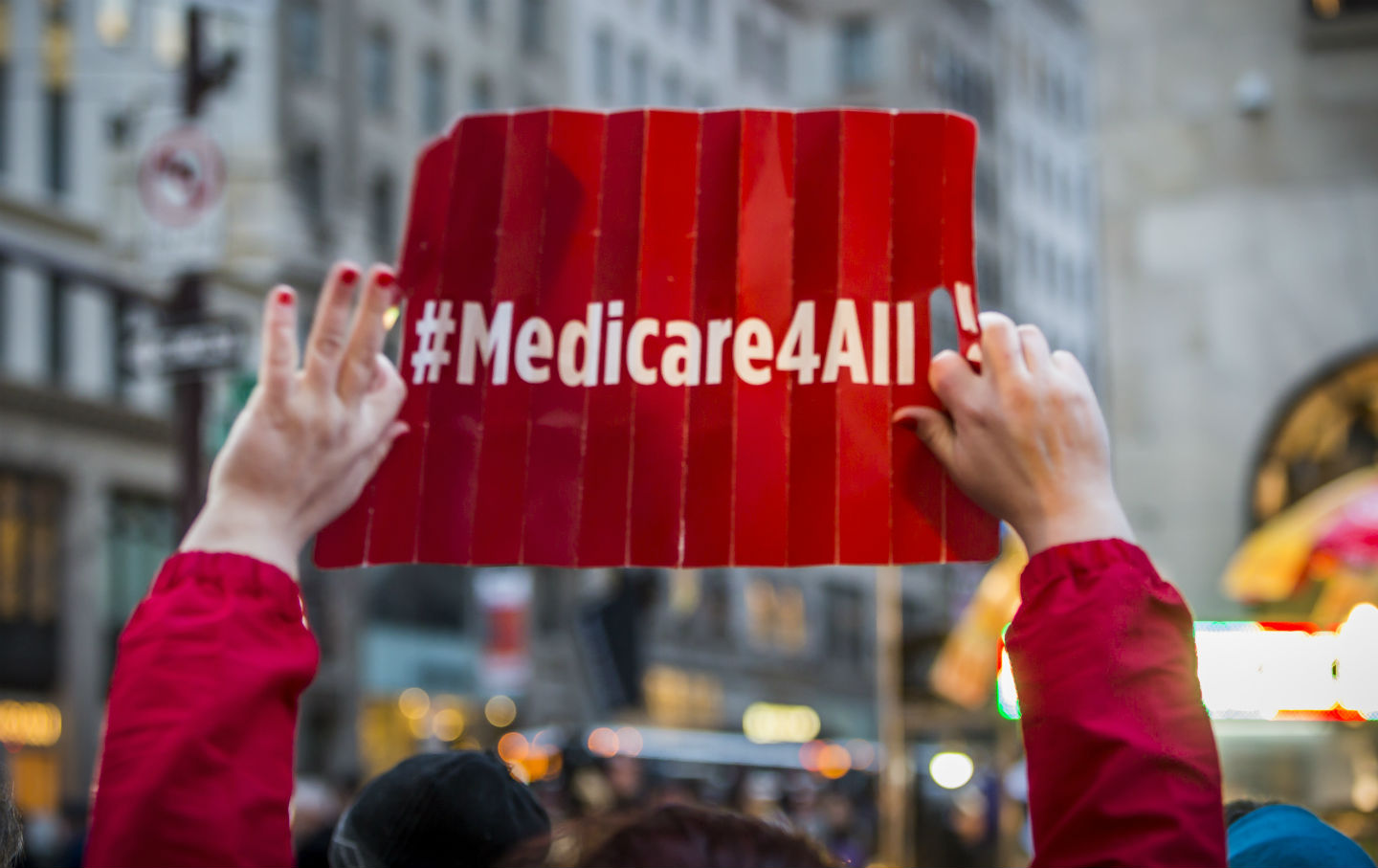
But the Democrats could turn this winning issue into a loser if some make a single-payer bill such as Medicare for All into a litmus test. I cosponsored single-payer legislation in Congress with Senator Ted Kennedy, and I always sought to bring the nation closer to universal coverage. I authored laws to bring Medicaid to more children and to establish the Children’s Health Insurance Program, and I led the fight to enact the ACA. These bills were very important. If we passed something like a single-payer bill, which would be extremely hard to do, we would be passing up opportunities to make progress. A lot of people who want a Medicare for All bill don’t realize that those of us on Medicare have to pay for supplemental insurance, because Medicare doesn’t cover everything. Medicare doesn’t generally cover certain services like nursing home care, so to get help you have to impoverish yourself to qualify for Medicaid.

One organization is sending out letters telling voters to support a single-payer bill and you won’t have to pay anything anymore. We can’t afford something like that. Democrats can embrace a boundless vision for a health care future without being trapped by a rigid model of how to get there. We should increase the number of people with comprehensive health insurance and focus on lowering costs. People with Medicare don’t want to give it up. People have health insurance on the job.

I would rather expand on what we have and build it out to cover everybody.

People don’t seem to remember that Democrats could barely muster the votes for the ACA when we had 60 votes in the Senate and a 255–179 majority in the House. Even if we recapture Congress and the presidency, I don’t think we would get a Medicare for All bill passed. It would require such a high tax increase that people would be absolutely shocked.

Q: What would be the national impact of California adopting a universal coverage plan?

A: Californian progress would be a model for the rest of the country, and we would be doing what’s right for the people of California who don’t have access to coverage. I think California is a trendsetter — for good and for bad. Proposition 13 and term limits started in California and spread to other states, and I think they have been a disservice. We’ve also done a lot of good things in California, and the rest of the country follows those things as well.

People who try to marginalize California do so at their own risk. People around the country look at California as a leader. California embraced the ACA, expanded Medicaid, and has been moving forward on making sure our public health care system is reforming itself to represent the needs for population health care and to ensure that uninsured low-income patients get access to decent, good-quality health care.

Q: More states are adopting work requirements in Medicaid. Do you think that will become the standard nationwide?

A: Work requirements are inconsistent with the Medicaid law. We’re talking about making people go to work to get health care when they’re sick. I just don’t think it makes sense. The courts may throw it out, and if not, at some point there will be a reaction against it, and it will be repealed by a future Congress.

Q: Some see parallels between the conduct of tobacco companies and opioid makers. Do you think “Big Pharma” will be held to account like “Big Tobacco?”

A: In the difficult fight against big tobacco, one of the lessons we learned was that even an extremely powerful group like the tobacco industry could be beaten if you keep pushing back. Even though there was overwhelming public support for regulation of tobacco, it took until 2009 before we could enact tobacco regulation by giving the Food and Drug Administration (FDA) authority to act. In the meantime, there were lawsuits by states to recover money they spent under Medicaid programs to cope with the harm from smoking. With opioids, there will be more and more lawsuits against distributors and manufacturers whose actions resulted in deaths of people from opioid addiction. Congress now is grappling with many bills to help people who are addicted, to prevent addiction from spreading further, and to restrict the ability to get the drug product. I’m optimistic we can come to terms with this crisis.

Q: What have you been doing since retiring from Congress?

A: I wanted to stay in the DC area near my son, Michael Waxman, and his family. He had a traditional public relations firm and he asked me to join him. In the health area, we represent Planned Parenthood in California, public hospitals in California, community health centers at the national level, and hospitals that get 340b drug discounts because they serve many low-income patients. We have foundation grants to work on problems of high pharmaceutical prices, and foundation grants to have a program to make sure women know about the whole range of health services available to them for free under the ACA. I enjoy working with my son and pursuing causes I would have pursued as a member of Congress.


Proposed changes to 340B program would cut DSH eligibility by half

https://www.beckershospitalreview.com/hospital-management-administration/proposed-changes-to-340b-program-would-cut-dsh-eligibility-by-half.html

Image result for 340b program changes 2018

A new congressional proposal would raise the minimum disproportionate share hospital adjustment percentage that DSH hospitals must meet to qualify for the 340B drug discount program, eliminating 340B eligibility for over half the participating hospitals, according to a study by 340B Health.

Under the bill, proposed by Rep. Joe Barton, R-Texas, 573 of the 1,115 DSH hospitals enrolled in the 340B program would no longer be eligible for the drug discounts. Under the current rules, DSH hospitals are eligible for the 340B program if their Medicare DSH adjustment percentage is greater than 11.75 percent. The proposal would raise the qualifying rate to 18 percent.

Here are the 10 states with the most DSH hospitals that would lose 340B eligibility under the proposal:

  1. California (39)
  2. Texas (35)
  3. North Carolina (33)
  4. Georgia (31)
  5. Ohio (29)
  6. Michigan (23)
  7. New York (21)
  8. Illinois (19)
  9. Alabama (19)
  10. Pennsylvania (18)


The No. 1 priority for hospital CEOs? Cost control

https://www.beckershospitalreview.com/hospital-management-administration/the-no-1-priority-for-hospital-ceos-cost-control.html

Image result for highest priority


Cost control surpassed revenue growth as the top priority for hospital and health system CEOs in 2018, according to the Advisory Board’s Annual Health Care CEO Survey.

The nationwide survey, conducted between December 2017 and March 2018, included the responses of 146 C-suite executives from hospitals and health systems. Sixty-two percent of those surveyed identified preparing their organization for sustainable cost control as their foremost priority — the most for any concern outlined in the survey during the past four years.

“Health system CEOs recognize that any effective growth or financial-sustainability strategy must be built on a competitive cost structure in order for their enterprises to deliver high-quality, cost-effective care to the patients they serve,” Christopher Kerns, executive director of research at the Advisory Board, said in the organization’s July 11 statement. “The entrance of nontraditional healthcare providers … adds to the urgency of health systems improving cost structures.”

The survey analyzed executives’ responses and level of concern for 33 topics. Here are the top five areas of extreme interest hospital and health system CEOs selected as their No. 1 priority:

1. Preparing the enterprise for sustainable cost control — 62 percent
2. Innovative approaches to expense reduction — 56 percent
3. Exploring diversified, innovative revenue streams — 56 percent
4. Boosting outpatient procedural market share — 50 percent
5. Meeting rising consumer demands for service — 50 percent