IBM Watson slashed workforce this week

http://www.healthcareitnews.com/news/updated-ibm-watson-slashed-workforce-week?mkt_tok=eyJpIjoiT0dKak9HTXdOek5pT0dNeSIsInQiOiJxb2grV2V6TVJnOHdCaThQZlRLOUxmcEJjTllCcytqVmhzc2JOc25GRWQ3bXBnT25NUTJCekJlTTJMZ1djUWNZQ0tlRmkxVVlFMVNUZjg0WE1tdm9cL3VEN1ZHamFmMTd0Y1Qxa3RLeDdFcmhKSEZZNmM4ZEYyOFUxdzJXeHlWMGQifQ%3D%3D

IBM Watson slashed workforce this week

With one employee describing the layoffs as a cost-cutting measure, estimates say Big Blue may have cut as much as 70 percent of its employees.

After multiple press reports said IBM Watson laid off 50-70 percent of its workforce, a research note published by investment banking company Morgan Stanley on May 31 pushed back on that percentage. IBM, for its part, said the layoffs were small.

“First, any layoffs come on the back of IBM’s reported $613 million restructuring announced on the April 17th earnings call – of which, about $100 million related to the Cognitive business division,” according to Morgan Stanley. “IBM management, as recently as the March 8th, 2018 investor day, discussed aggressive hiring in strategic areas, including Oncology within Watson Health.”

“IBM is continuing to reposition our team to align with our focus on the high-value segments of the IT market,” the company said in a statement. “We’re not discussing specific numbers of employees affected, but it’s a small percentage of our global Watson Health workforce, as we move to more technology-intensive offerings, simplified processes and automation to drive speed.”

That said, the cuts appear to run deep enough to affect some of IBM’s stellar acquisitions: Explorys, Phytel, Merge Healthcare and Truven Health Analytics.

IBM announced at HIMSS15, it would be acquiring population health company Phytel and Cleveland Clinic spinoff Explorys, a cloud-based data analytics vendor. Both Phytel and Explorys would become part of IBM’s new Watson Health unit.

IBM officials also announced then, the establishment of IBM Watson Health, a new business unit that would be headquartered in the Boston area, and a new partnership with leading companies, including Apple, Johnson & Johnson and Medtronic to help optimize consumer and medical devices for data collection, analysis and feedback.

In February 2016, IBM announced it would pay $2.6 billion to acquire Truven Health Analytics for its Watson Health unit. IBM Watson paid $1 billion for Merge in December 2015.

Then in February 2017, MD Anderson, which is part of the University of Texas, ended what had appeared to be a promising partnership with MD Anderson Cancer Center, However, auditors at the University of Texas noted the work cost MD Anderson more than $62 million, without achieveing any of its goals.

With reports suggesting that Big Blue laid off up to 70 percent of the workforce at its Watson Health operation, one former employee wrote on The Layoff.com that

“Watson Health went from 7000 employees to less than 4000 in the last 5 days. All in the Provider business and WH Cloud GONE. The Simpler Provider team will be next month.”

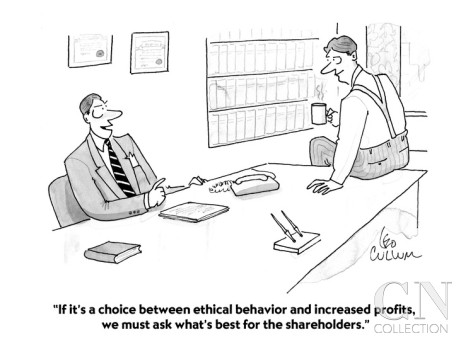


Cartoon – Second Option Sounds Festive

Image result for cartoon out of control leadership

Plan to Cut $15B in Spending Squeaks Through House

https://www.usnews.com/news/politics/articles/2018-06-07/house-takes-up-trump-sponsored-plan-to-cut-15b-in-spending

Image result for CHIP Spending Cuts

The House on Thursday only narrowly passed a White House plan to cut almost $15 billion in unused government money, a closer-than-expected tally on legislation that’s designed to demonstrate fiscal discipline in Washington even though it wouldn’t have much of an impact on spiraling deficits.

The measure, which passed 210-206, would take a mostly symbolic whack at government spending because it would basically eliminate leftover funding that wouldn’t have been spent anyway. The bill now goes to the Senate, where it faces long odds.

The deficit is on track to exceed $800 billion this year despite a strong economy. Republicans controlling Congress are not attempting to pass a budget this year.

The package of so-called rescissions has been embraced by GOP conservatives upset by passage in March of a $1.3 trillion catchall spending bill that they say was too bloated. More pragmatic Republicans on Capitol Hill’s powerful Appropriations panels aren’t keen on the measure since it would eliminate accounting moves they routinely use to pay for spending elsewhere.

The measure includes $4 billion in cuts to a defunct loan program designed to boost fuel-efficient, advanced-technology vehicles, rescissions of various agriculture grant programs, and cuts to conservation programs at the Department of Agriculture, among others.

While Democrats blasted the cuts, the real objection to some of them, such as $7 billion from popular Children’s Health Insurance Program funding, is that it would take that money off the table so it couldn’t be used later as it was in the earlier spending bill. The CHIP cuts wouldn’t affect enrollment in the program, which provides health care to children from low-income families that don’t qualify for Medicaid.

“Targeting CHIP for a rescission prevents Congress from reinvesting in other priorities like child and maternal health, early childhood education, biomedical research and our community health centers,” said New York Rep. Nita Lowey, the top Democrat on the Appropriations Committee.

Some GOP moderates also worry that they’re casting a difficult-to-explain vote to cut CHIP funding in the run-up to November’s midterm elections.

“I don’t think the vote’s intended for people in swing districts,” said Rep. Ryan Costello, R-Pa. Nineteen Republicans, mostly moderates, opposed the bill. No Democrats voted for it.

President Donald Trump is the first President to employ the so-called rescissions tool since the Clinton administration. The obscure process is one of the few ways around the Senate filibuster, though other parliamentary problems could await in that chamber — even if resistance from moderates and Republicans on the Appropriations Committee can be overcome.

The nonpartisan Congressional Budget Office weighed in Thursday to estimate that the measure — pushed largely by White House budget director Mick Mulvaney and No. 2 House Republican Kevin McCarthy of California — would only cut the deficit by $1.1 billion over the coming decade. That’s because most of the cuts wouldn’t affect the deficit at all since CBO doesn’t give deficit credit for cutting money that would never have been spent.

Trump proposed the measure last month, but it was slow to come to a vote because some Republicans came out against it.

The White House submitted a revised package of cuts Tuesday, removing politically troublesome proposals to cut money to fight Ebola funds and to rebuild watersheds damaged by Superstorm Sandy. Trump weighed in soon after to urge Republicans to pass the plan.

It’s still unclear whether it will pass in the Senate, where pragmatic-minded Republicans are focusing on trying to get the troubled process for handling annual appropriations back on track on a bipartisan basis.

The White House and tea party lawmakers upset by the budget-busting “omnibus” bill have rallied around the plan, aiming to show that Republicans are taking on out-of-control spending.

“If this body cannot be trusted to reclaim money that will not or cannot be used for its intended purpose, can we really be trusted to save money anywhere else?” McCarthy said.

While some Democrats opposed the spending cuts as heartless, others mostly mocked the legislation.

“After spending nearly $2 trillion on tax cuts for the super-rich and blowing up the deficit, the Majority’s bill is like putting a Band-Aid on a gaping wound,” said Rep. Jim McGovern, D-Mass. “Republicans are trying to trick the American people into thinking they care about fiscal responsibility. They’re not fooling anyone.”


KHN’s ‘What The Health?’ Health Care Politics, Midterm Edition

https://khn.org/news/podcast-khns-what-the-health-health-care-politics-midterm-edition/

Image result for KHN’s ‘What The Health?’ Health Care Politics, Midterm Edition

The 2018 midterm elections were supposed to be a referendum on President Donald Trump, not about issues such as health care. Still, voters, Democrats and, to a lesser extent, Republicans seem to be keeping health care on the front burner.

The news from Medicare’s trustees that its hospital trust fund is on shakier financial footing than it was last year, hefty premium increases being proposed in several states and activity on Medicaid expansion all take on a political tinge as the critical elections draw closer.

Also this week, an interview with Matt Eyles, president and CEO of America’s Health Insurance Plans, the health insurance industry trade group.

This week’s panelists for KHN’s “What the Health?” are Julie Rovner of Kaiser Health News, Stephanie Armour of The Wall Street Journal, Alice Ollstein of Talking Points Memo and Rebecca Adams of CQ Roll Call.

Among the takeaways from this week’s podcast:

  • Outside Washington, concerns about health care accessibility and prices remain a big issue.
  • Democrats, looking toward the midterm elections in the fall, think that health care can be a potent issue for them. But many also believe that they can’t just run on complaints that the Republicans are sabotaging the Affordable Care Act. They are seeking to find a message that looks to the future.
  • Republicans see the plans by the White House to implement new regulations that allow expansion of association health plans and short-term health plans as a strong action that will thwart complaints that they haven’t fixed the ACA.
  • The states are beginning to release the initial requests from health insurers for premium increases. They vary substantially, but many appear to be partly attributed to the decision last year by Congress to repeal the penalty for people who don’t get insurance.
  • The report this week by the Medicare trustees that the hospital trust fund is closer to insolvency has ignited Democratic criticism of changes in health care law that were part of the GOP tax cut last year.
  • Arkansas has begun implementing its work requirements for healthy adults covered by the Medicaid expansion. It’s the first state to do that. But critics point out that those adults will have to register their work hours online only — and many do not have access to computers.


The ‘Biggest Health Care News of the Year’

http://www.thefiscaltimes.com/2018/06/08/Biggest-Health-Care-News-Year

Image result for supreme court


Trump Administration Says ACA Protections for Preexisting Conditions Are Unconstitutional.

The Department of Justice said Thursday that it will not defend the constitutionality of key provisions of the Affordable Care Act in a lawsuit currently underway in Texas. Here’s what you need to know:

The background: Twenty states, led by Texas, sued the federal government in February as part of an effort to overturn the Affordable Care Act, arguing that, because the GOP tax bill eliminated the penalty for individuals who don’t buy health insurance, the law as a whole was unconstitutional. The Supreme Court’s 2012 ruling that upheld the Affordable Care Act called the individual mandate penalty a tax — and therefore legal. But the lawsuit argues that since the mandate can no longer raise any revenue, the mandate itself is now unconstitutional – and so is the entire ACA.

What they did: The Department of Justice filed a brief Thursday in support of the suit, saying “this Court should hold that the ACA’s individual mandate will be unconstitutional as of January 1, 2019,” and that some other provisions of the law – including those protecting people with pre-existing conditions being denied coverage or charged higher premiums – are inseparable from the mandate and therefore should be declared unconstitutional as well.

Why they did it: Republicans have targeted the Affordable Care Act for elimination ever since it passed, and President Trump continues to promise that it will be overturned. However, the federal support for the states’ lawsuit is unusual, since the Justice Department typically defends existing law. Attorney General Jeff Sessions wrote a letter to House Speaker Paul Ryan explaining that this is a “rare case” that warrants deviating from the Justice Department’s “longstanding tradition of defending the constitutionality of duly enacted statutes.” Tom Miller of the American Enterprise Institute told Politico that the refusal to defend key parts of the ACA shows that the Trump administration is going even further in its battle against the health care law.

What it means: If successful, the states’ lawsuit would allow insurers to charge much higher rates to people with pre-existing conditions, or deny them coverage altogether, effectively ending the ACA’s promise of providing health care for all Americans. If the Justice Department’s analysis is ultimately persuasive, however, other parts of the law, including Medicaid expansion, could stay in place. Some legal experts say the suit is weak, since it turns on the idea that if one part of a law is invalid, the whole thing is invalid, without recognizing that the Congress passed the law and is free to alter it while leaving the rest in place. But the lawsuit has been filed in a conservative court in Texas, and the Trump administration’s refusal to defend key parts of the law has likely boosted the plaintiffs’ chances.

Supporters of the health care law expressed considerable alarm on Friday. Andy Slavitt, who ran the Centers for Medicare and Medicaid Services under President Obama, tweeted that the Justice Department’s decision is the “biggest health care news of the year” and a blow to public health. Slavitt and others criticized the move as an unprecedented decision by the Justice Department to not defend the rule of law. Ultimately, the case may be heading for the Supreme Court.


Geisinger CEO forgoes chief exec role at Amazon, Berkshire, JPMorgan health company

https://www.beckershospitalreview.com/hospital-management-administration/geisinger-ceo-forgoes-chief-exec-role-at-amazon-berkshire-jpmorgan-health-company.html

Image result for geisinger

Geisinger President and CEO David T. Feinberg, MD, who was reportedly one of the top contenders for the chief executive role at the Amazon, Berkshire Hathaway and JPMorgan Chase healthcare venture, said he will remain at the Danville, Pa.-based health system, CNBC reports.

People close to the hiring process told CNBC Dr. Feinberg was at one time highly considered for the position. However, Dr. Feinberg confirmed to the publication through a spokesperson he would not be leaving the health system.

“I appreciate being part of the conversation, which I believe reflects the accomplishments of the entire Geisinger team. I personally remain 100 percent committed to Geisinger and remain excited about the work we are doing and the opportunities ahead as we continue to deliver exceptional care to our patients, our members and our communities,” he said.

Berkshire Hathaway Chairman and CEO Warren Buffett told CNBC June 7 the companies have selected a CEO for the venture and will publicly name the individual within two weeks. Sources familiar with the matter told CNBC the organizations did not announced the appointment June 7 because Dr. Feinberg declined the job.

Sources said the top 10 candidates for the position were asked to write a white paper detailing how they would fix the healthcare system, according to the report. From there, the companies narrowed down the candidate pool to three individuals. All three reportedly spoke with Jamie Dimon, chairman and CEO of JPMorgan, who referred his top two choices to Mr. Buffett, who passed along his top choice to Amazon Chairman, Founder and CEO Jeff Bezos.

One of the three finalists was Owen Tripp, co-founder and CEO of healthcare company Grand Rounds.

Sources told CNBC Dr. Feinberg had been advising the group since the companies announced the venture in January, and emerged as a top contender for the role. He has led the 13-hospital Geisinger Health System since 2015.

Berkshire Hathaway Investment Manager Todd Combs has been the lead recruiter on the venture, CNBCpreviously reported. Other candidates who have been approached for the role include former CMS Acting Administrator Andy Slavitt, former U.S. Chief Technology Officer Todd Park, and Gary Loveman, former senior vice president of Aetna.

To access the CNBC report, click here.