Cartoon – I hate being Team Leader
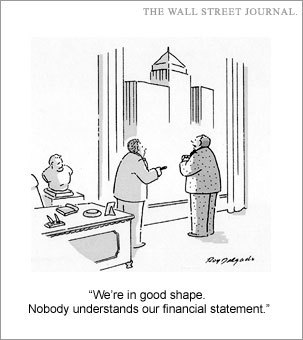
Corporate profits have dramatically outpaced wages and health benefits since the turn of the century, leaving workers on the hook for more of their health care costs even as their purchasing power falls, according to a review of federal data.
Key quote: “If I were a middle-class American, I’d be outraged,” said Regina Herzlinger, a professor at Harvard Business School. “I’d demand much greater transparency about how much I’m getting in health insurance and wages.”

Most voters think President Trump‘s first State of the Union address should focus on improving the health-care system, according to a new Morning Consult–Politico poll.
According to the poll, 82 percent of voters say it’s important for Trump to address improving the health-care system in the speech, followed closely by the 81 percent who said it’s important for him to talk about the economy and creating jobs.
Providing direction and leadership and reducing poverty in the U.S. came in third, while fighting terrorism followed.The poll surveyed 1,994 registered voters from Jan. 18 to 20 and has a margin of error of 2 percentage points.
It’s unlikely Trump will put a large focus on health care during his speech Tuesday evening.
Congress failed to repeal and replace ObamaCare multiple times last year, though lawmakers did repeal the law’s unpopular individual mandate that most people have insurance or pay a fine.
Trump will likely pressure Congress on immigration as it works to find a deal on the Deferred Action for Childhood Arrivals program.
Trump is also going to focus on laying out an trillion-dollar infrastructure plan and the recently passed tax-reform bill.

As CEO incentive pay packages bring attention to transparency issues in executive compensation, a group of directors and chief risk officers from The Directors and Chief Risk Officers Group published a set of guiding principles for compensation committees around the governance of risk related to pay and performance.
The report aims to give a company’s board of directors and board-level compensation committees guidelines for the governance of risks linked to an organization’s compensation culture.
Here are 10 guidelines for compensation committees to best guide executive pay and performance, according to the report.
1. Compensation committees must fulfill both direct and indirect pay governance responsibilities to define the best compensation culture for the company. Under direct governance responsibilities, CEOs must establish and continually review company-wide compensation philosophy. To fulfill indirect pay governance responsibilities, a company’s executives must ensure adequate resources and processes are in place for the organization’s incentive plans.
2. Committees should emphasize incentive pay for corporate performance when designing and communicating the company’s compensation philosophy. Incentive pay for an individual’s performance must be carefully applied when it is appropriate to fulfilling the individual’s role.
3. A CEO’s total compensation should be driven by how they impact the long-term interests of the company, which includes how effectively the organization takes risk.
4. A company should minimize use of external benchmarking, or the comparison of its statistical data with other organizations in the same industry, for executive pay. Instead, companies should work to incorporate internally-focused pay evaluation for executive pay.
5. Incentive-based compensation should always be considered to be “at risk,” subject to deferral periods and influenced by the company’s long-term performance.
6. Compensation committees must continually use discretion in determining an executive’s final incentive pay package. In this way, committees must make rules for determining these pay packages subject to discretionary override when the compensation culture of the organization appears to be violated.
7. When considering performance reviews and compensation design for an organization’s CEO and individuals in the succession plan, the compensation committee must provide complete transparency to the entire board. This includes the board’s approval of full details of the CEO’s performance and any final awards given to the executive.
8. Compensation committees should obtain public certification that ensures their processes of governing pay risk and compensation philosophy are “fit for purpose,” which entails executing a statement that verifies a company has performed due diligence on its pay governance processes.
9. The members of a company’s compensation committee should have diverse backgrounds and experience, expertise in risk, finance, and management and should cross-populate the company’s risk and audit committees.
10. To ensure proper compensation risk governance, companies must incorporate collaboration, feedback and review among board committee’s and the firm’s social network to maintain a properly established compensation culture.

We had a chance to moderate and participate in a webinar with leading colleagues John Harig, Tim Fry, David Pivnick and Brett Barnett regarding key Anti-Kickback Statute and Stark Law issues facing health systems, surgery centers, dialysis providers and other healthcare providers and investors. Below are 10 key thoughts discussed during the webinar as to fraud and abuse issues in play in 2018.
1. The reading and implementation of the “Yates Memo” issued by the U.S. Department of Justice will influence how the government aims to prosecute individuals in addition to companies.
2. The reading of the U.S. Supreme Court’s Escobar decision will influence whether defendants in false claims cases will receive some relief from technical billing violations that are not fundamental or material to the government’s paying of a claim.
3. Regulators and potential buyers are focused on “creative marketing arrangements” by physician practices, often related to laboratory and/or pharmacy arrangements.
4. Government enforcement agencies and potential buyers are focused on physician compensation arrangements, particularly their compliance with the Stark Law.
5. Potential buyers face a challenge in determining how deeply to examine targets’ past practices through billing and coding audits, as well as how to handle the results of billing and coding audits in negotiation of transactions.
6. Private equity buyers face challenges in their evaluation of risk posed by regulatory issues and how to address regulatory risks in a seller’s market.
7. Sellers present the historical legal analysis of fraud and abuse issues during the due diligence process, particularly when the legal analysis is positive, but assumptions underlying the legal analysis do not align with the sellers’ actual operations.
8. The turnover in the U.S. Department of Justice may impact the timing of fraud and abuse prosecutions and settlements.
9. Recoveries by the government resulting from fraud and abuse prosecutions have increased in magnitude. Furthermore, there are more recoveries coming from cases in which the government has not joined in the case with the relator.
10. The wide array of laboratory arrangements and businesses hold implications for fraud and abuse laws.

Amazon, Berkshire Hathaway and JPMorgan Chase & Co. are launching a new company aimed at cutting healthcare costs for their U.S. employees.
Here are six things to know about the partnership.
1. In addition to reducing healthcare costs, the companies are aiming to improve employee satisfaction through the new venture. Amazon, Berkshire Hathaway and JPMorgan are hoping the sheer size of each company and their complementary areas of expertise will help them tackle these issues.
2. “Our people want transparency, knowledge and control when it comes to managing their healthcare,” said Jamie Dimon, chairman and CEO of JPMorgan. “The three of our companies have extraordinary resources, and our goal is to create solutions that benefit our U.S. employees, their families and, potentially, all Americans.”
3. The companies said the project, which is in the early planning stage, will initially focus on technology solutions.
4. “The healthcare system is complex, and we enter into this challenge open-eyed about the degree of difficulty,” said Jeff Bezos, Amazon founder and CEO. “Hard as it might be, reducing healthcare’s burden on the economy while improving outcomes for employees and their families would be worth the effort. Success is going to require talented experts, a beginner’s mind, and a long-term orientation.”
5. The new venture will be jointly spearheaded by Todd Combs, an investment officer of Berkshire Hathaway; Marvelle Sullivan Berchtold, a managing director of JPMorgan Chase; and Beth Galetti, a senior vice president at Amazon.
6. “The ballooning costs of healthcare act as a hungry tapeworm on the American economy,” said Berkshire Hathaway Chairman and CEO Warren Buffett. “Our group does not come to this problem with answers. But we also do not accept it as inevitable. Rather, we share the belief that putting our collective resources behind the country’s best talent can, in time, check the rise in health costs while concurrently enhancing patient satisfaction and outcomes.”