


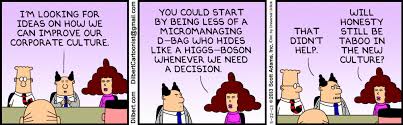
Cartoon – Transformational Change


Registered nurses at Hartford HealthCare’s Backus Hospital in Norwich, Conn., are launching a two-day strike Oct. 13 over alleged unfair labor practices, according to the union that represents them.
Backus Federation of Nurses, AFT Local 5149, which represents approximately 415 registered nurses at Backus Hospital and its partner medical facilities, and the hospital have been negotiating since June to resolve contract issues around patient care, workplace safety, and recruitment and retention, according to the union.
AFT Local says members want a fair contract that protects workers and patients, provides better access to personal protective equipment and allows the hospital to retain skilled registered nurses. However, the union contends the hospital has failed to bargain for a fair contract.
“We’d rather be at the bedside caring for our patients and hope a mutual resolution can be reached; but we cannot allow unfair labor practices to stand,” union President Sherri Dayton, RN, said in a statement shared earlier this month with Becker’s Hospital Review. “That’s why we marched on Hartford HealthCare’s executives to announce that we’re on strike if a settlement is not reached by Oct. 13.”
Nurses authorized a strike in September over these issues and issued a strike notice on Oct. 9.
Backus Hospital President Donna Handley, BSN, RN, said in a statement that the hospital has tried to avoid a strike and, over 23 bargaining sessions and using federal mediators, has continually addressed issues such as personal protective equipment, staffing and additional accommodations for breastfeeding.
The hospital’s offer includes wage increases for registered nurses amounting to 12.5 percent over three years, additional paid time off for 82 percent of registered nurses, and a 2 percent reduction to the cost of healthcare premiums.
Ms. Handley said the hospital has also offered to retain daily overtime for registered nurses and provided staff with additional paid time off during the pandemic and other support.
“In all of these and other ways, Backus Hospital has shown that we respect our nurses, we are prepared to find common ground, and we want to reach agreement on a fair contract,” she said. “The union, unfortunately, is prepared to strike, causing an unprecedented degree of disruption during an unprecedented health crisis.”
She said Backus Hospital will remain open during the strike and programs and services will remain accessible to community members.

After spending a May day preparing her classroom to reopen for preschoolers, Ana Aguilar was informed that the tots would not have to wear face masks when they came back. What’s more, she had to sign a form agreeing not to sue the school if she caught COVID-19 or suffered any injury from it while working there.
Other teachers signed the form distributed by the Montessori Schools of Irvine, but Aguilar said she felt uncomfortable, although it stipulated that staff members would be masked. At 23, she has a compromised immune system and was also worried that she could pass the coronavirus on to her fiancé and other family members.
Aguilar refused to sign, and a week later she was fired. “They said it was my choice to sign the paper, but it wasn’t really my choice,” said Aguilar, who’s currently jobless and receiving $276 a week in unemployment benefits. “I felt so bullied.”
As employers in California and across the country ask employees to return to the workplace, many have considered and some are requiring employees to sign similar waivers, employment lawyers say. And many employees, mostly lower-wage and minority workers in essential jobs, are calling lawyers to complain about the waivers.
“These are illegal agreements that are totally unfair to workers,” said Christian Schreiber, a San Francisco lawyer who represents Aguilar and other employees.
The California State Legislature last year passed a law, AB-51, prohibiting employers from requiring employees or job applicants to sign away their right to pursue legal claims or benefits under state law. The law, which also prohibits firing any employee for refusing to sign, is being challenged in court by business groups.
Only a few employers have forced employees to sign liability waivers, at least partly because these waivers likely would be held unenforceable by courts, lawyers who represent employers say.
“Courts don’t recognize them because of the unequal bargaining power between employers and employees,” said Isaac Mamaysky, a partner at the Potomac Law Group in New York City. “With so many unemployed, people would sign just about anything to get a job.”
Another reason they are considered unenforceable: Workers who get sick or injured on the job generally are compensated through state workers’ compensation systems rather than through the courts, and state laws don’t allow employers to force employees to sign away their right to pursue workers’ comp claims, Mamaysky said.
Companies may have the right to require nonemployees working on their premises to sign COVID waivers. When the New York Stock Exchange reopened in late May, it made floor traders sign a form clearing the exchange of liability if they contracted COVID-19. That was legally permissible because the traders were not exchange employees, an NYSE spokesman said. He declined to say whether any traders have become infected with the virus.
The Las Vegas-based restaurant chain Nacho Daddy, which did require employees to surrender their right to sue over COVID-19, reportedly fired some who refused. Following negative media coverage, Nacho Daddy removed the language that waived legal rights and instead had employees agree to follow safety rules such as masking and social distancing. The company did not respond to a request for comment.
Having employees agree to comply with safety rules is a more common and legally acceptable approach than waivers.
“I suggest my clients go to this reasonable middle ground: Here’s what we promise to you, here’s what we want you to promise to us,” said David Barron, an employment lawyer with Cozen O’Connor in Houston.
Business groups hope Senate Majority Leader Mitch McConnell will make liability waivers unnecessary. He has proposed a Senate bill with broad liability protection for employers for five years against a range of coronavirus-related claims, and says he won’t back any COVID relief bill that doesn’t include such protections. President Donald Trump has said he supports the liability protection.
At least 10 states already have enacted laws providing some form of immunity for businesses from lawsuits brought by employees and others who contract COVID-19. Similar bills are pending in about 10 more states, according to the National Employment Law Project. The California Assembly is considering a liability protection bill for public K-12 schools.
Federal legislation to provide COVID liability relief for employers should protect only those that follow applicable health and safety guidelines, said John Abegg, executive vice president of the U.S. Chamber Institute for Legal Reform, which supports McConnell’s proposal.
But even if McConnell is able to overcome Democratic opposition and pass liability protection as part of a new pandemic economic relief bill, that still wouldn’t shield employers from lawsuits claiming gross negligence or reckless or intentional conduct in failing to implement COVID-19 safety precautions.
Across the country, hospitals and nursing homes, as well as companies like McDonald’s, Walmart and Safeway, have been hit with wrongful death lawsuits filed by families of employees who died from the virus. They typically cite egregious conduct that goes beyond ordinary negligence, potentially erasing any statutory liability relief.
Nearly 50 COVID-related lawsuits have been filed relating to conditions of employment, including exposure to the coronavirus or the lack of protective equipment, according to data collected by the law firm Hunton Andrews Kurth.
In many states, alleging intentional misconduct also may allow workers harmed by COVID-19, and their families, to file lawsuits rather than go through the workers’ compensation system, and thus seek bigger damage awards.
For instance, a suit filed in Alameda County Superior Court in June by the widow of a longtime employee of Safeway’s distribution center in Tracy, California, alleged that the company had concealed a COVID-19 outbreak from workers and informed them that personal protective equipment was not recommended, contrary to guidelines from federal and state authorities.
“I don’t know of any jurisdiction that would allow a waiver against intentional misconduct,” said Louis DiLorenzo, head of the labor and employment practice for Bond Schoeneck & King in New York, who represents employers. “That would encourage misconduct.”
Worker advocates argue that lawsuits like the one against Safeway should be encouraged — rather than blocked by waivers or immunity laws — to bring to light serious public safety problems. Cases against McDonald’s in Oakland and Chicago — in which workers claimed the restaurants had created a “public nuisance” by not taking steps to adequately protect workers and customers from COVID-19 — resulted in court orders in late June for those McDonald’s restaurants to implement safety measures such as masks, social distancing and temperature checks.
“A very tiny number of cases are being filed by workers, and those cases are valuable,” said Hugh Baran, a staff lawyer at the National Employment Law Project. “These are the kinds of claims we should want workers to bring.”
Schreiber said he contacted the Montessori school about Aguilar’s firing, and it offered to reinstate her without having her sign the waiver. But Aguilar declined, saying the school was putting teachers at risk by not requiring pupils to wear masks. The school then offered her six weeks of severance pay, which she is considering.
By refusing to sign the waiver or accept her job back, she said, she was standing up for all the teachers at the school, many of whom have children and can’t afford to lose their job.
“I liked my job and I needed the paycheck,” Aguilar said. “But making you sign these papers is telling you that whatever happens, they really don’t care.”



In a blog post Wednesday, American Hospital Association (AHA) General Counsel Melinda Hatton rebuked Politico’s characterization of a recent Moody’s report on nonprofit hospital financials in 2018.
Hatton charged that Politico “cherry-picked” metrics from the report, homed in on a “single measure of financial viability,” and “ignored much of the medians data that tell a more complete story.”
Writing that the story “does not accurately capture financial pressures facing hospitals,” Hatton continued that the Moody’s report only represents a mid-year glimpse at nonprofit hospital finances.
The public back and forth began with the May 13 edition of Politico’s Pulse newsletter, which described the state of U.S. hospitals as “OK,” citing data from Moody’s that indicated nonprofit hospital revenues grew faster than costs for the first time since 2015.
While mentioning that the average operating margin of nonprofit hospitals was 1.7% last year, Politico also noted that average operating cash flow margins finished at 8%.
Politico stated that industry observers regard operating cash flow margin as a better reflection of “how much money a hospital is actually collecting” than the operating margin.
Politico’s description tied into the push for greater accountability from hospitals regarding high prices, specifically referencing a recent RAND Corp. study that found private insurers paid more than twice what Medicare paid to hospitals in 2017.
Hospital groups like the AHA and the Federal of American Hospitals pushed back on the RAND study from last week, taking issue with its sample size and reliance on Medicare payment rates as the benchmark for hospital prices.
Writing about the Moody’s report, Hatton wrote that while hospitals did experience a “modest uptick” in revenue growth last year, such growth trailed historical levels as hospitals faced challenging patient volumes, low reimbursement rates, and shifting payer mixes.
She also noted that the Moody’s report found that inpatient services remained flat in 2018, widespread provider consolidation has offered “stability in light of downward financial pressures,” and that hospitals are continuing to put “efficiency improvements” into place.
“Many of the expenses hospitals’ are experiencing now, and will likely experience in the future, are beyond their control,” Hatton wrote. “Wages and benefits are the single largest cost for hospitals, and are likely to increase in the future as the nation experiences a robust labor market, and a nursing shortage persists in many communities. The high cost of specialty drugs is also a driver of the cost of care.”
“These complexities make for a nuanced story, but any story worth telling is worth telling well,” Hatton wrote.
 HENRY KOTULA