California’s Drug Price Initiative: Will Voters ‘Send A Signal To Washington’?

California’s Drug Price Initiative: Will Voters ‘Send A Signal To Washington’?

mary_voterguide_770

This year, Mary O’Connor and her father made voting a family affair.

O’Connor’s father is a Vietnam veteran, so she was especially interested in his views on Proposition 61, a California ballot measure that would peg the state’s payments for prescription drugs to prices paid by the Department of Veterans Affairs. It’s widely believed the federal program for military personnel gets some of the deepest discounts in the country.

“We researched it a lot,” said O’Connor, a 24-year-old from Sacramento. Both decided to vote yes because drug prices are “ridiculous” and need to be reined in, she said. “We have seen that things cannot remain the way they are.”

The measure faces strong opposition from the pharmaceutical industry, which has poured at least $109 million into defeating it. In addition, some state policy experts and consumer advocates say the measure may not save taxpayers or patients any money, and could even do more harm than good. Many veterans’ groups have voiced opposition as well, saying the initiative will raise VA drug spending, but proponents have support from some veterans as well.

But these warnings haven’t swayed — or reached — voters who want lawmakers to just do something to lower drug prices.

Former Democratic presidential candidate Bernie Sanders has taken up their cause, suggesting passage of Proposition 61 is important to the nation as a whole.

Deadly Superbug Linked To Four Deaths In The U.S.

Deadly Superbug Linked To Four Deaths In The U.S.

Candida auris (C. auris) is a serious and sometimes fatal fungal infection that is emerging globally. (Courtesy of the Centers for Disease Control and Prevention)

A deadly new drug-resistant fungus has been linked to the deaths of four hospital patients in the U.S., according to a report released Friday from the Centers for Disease Control and Prevention.

The fungus, called Candida auris, preys on the sickest patients and can spread in hospitals. Although doctors have been concerned about the spread of antibiotic-resistant bugs for many years, this fungus is relatively new on the world scene. It was first identified in Japan in 2009 and has since spread around the globe, emerging in South America, the Middle East, Africa and Europe, according to the CDC.

The CDC first identified the fungus as a potential threat in 2013, based on a possible case in the U.S., and has been on the lookout for the fungus since June. In its new report, the CDC said the fungus has been detected in a total of 13 patients since May 2013; the agency provided details on the first seven cases, which were reported in New York, Illinois, Maryland and New Jersey.

All of the patients had serious underlying medical conditions, including cancer, and had been hospitalized an average of 18 days when they tested positive for the fungus. Two patients had been treated in the same health care facility and had nearly identical fungal strains. Doctors can’t say for sure if the patients died from the fungus or their underlying health problems.

But health officials say the nation’s hospitals need to be on alert.

“We need to act now to better understand, contain and stop the spread of this drug-resistant fungus,” said Thomas Frieden, director of the CDC. “This is an emerging threat, and we need to protect vulnerable patients and others.”


When You Feel Pressured to Do the Wrong Thing at Work

https://hbr.org/2016/11/when-you-feel-pressured-to-do-the-wrong-thing-at-work?utm_source=feedburner&utm_medium=feed&utm_campaign=Feed%3A+harvardbusiness+%28HBR.org%29

nov16-02-50405307

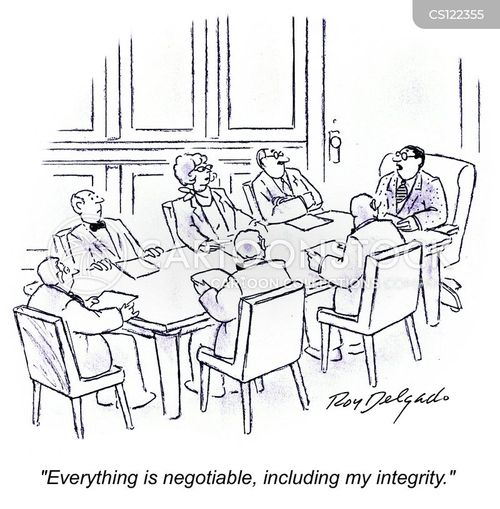
By now you’ve probably heard the story of the fraudulent business practices at Wells Fargo – the bank that pressured employees to create false credit card and deposit accounts. Have you asked yourself what you would do if you were an employee facing that kind of pressure? In other words, how do you handle a situation in which the incentives seem to be telling you to do something you believe is bad for your customers and clients, or maybe even illegal? And what if it’s clear your boss wants you to get with the program – and your bonus, a promotion, or even your job are on the line?

It’s easy to think that these situations are black and white. Either you go along or suffer the consequences. But sometimes these situations are gray, which I write about in Managing in the Gray. My central guidance is this: When you face a really tough problem, work through it as a manager and resolve it as a human being. This approach can help you avoid stark choices between getting ahead and doing something you believe is wrong.

Here’s how that advice applies to dealing with a situation where you think you are potentially being incentivized to do the wrong thing:

An ACA primer: Much more than insurance

http://www.healthcaredive.com/news/an-aca-primer-much-more-than-insurance/429497/

Remember the Affordable Care Act? Enacted in 2010, it expanded healthcare insurance to millions of uninsured Americans and increased access to care. But the ACA is much more than expanded coverage; it set in motion a variety of reforms in the healthcare delivery systems aimed at lowering costs and improving quality of care.

That fact was lost on presidential candidate Donald Trump, who told Fox News recently, “I don’t use much Obamacare, I must be honest with you, because it is so bad for the people and they can’t afford it.” Trump’s comments imply Obamacare is an insurance plan people can buy, which is not the case. As we wrap up year six since the ACA was enacted, here‘s what the law is really about and how it impacts providers.

Why selling insurance across state lines is an unlikely solution

http://www.healthcaredive.com/news/why-selling-insurance-across-state-lines-is-an-unlikely-solution/429610/

Proposals to sell insurance across state lines have been floating around for a while. In 2005, Congress considered the first proposal to sell insurance across state lines at the federal level. Many of the candidates running in the recent Republican presidential primary endorsed the idea, including Scott Walker, Marco Rubio, Ted Cruz and Rand Paul. A proposal to sell insurance across state lines is a core component of Republican presidential nominee Donald Trump’s healthcare agenda.

With election day approaching and attention returning to plans that would allow the sale of insurance across state lines, it is worth asking whether these proposals would be effective.