

Policy Talk V: My Plan for a Better Healthcare System

America’s health care system is neither healthy, caring, nor a system.

– Walter Cronkite

Healthcare policy in America is too short-sighted and vulnerable to party-politics. We need a system that’s built to last.

As open enrollment through the ACA marketplace begins November 1, millions of Americans will soon discover their health insurance rates going up in 2026 as the direct result of ACA tax subsidies expiring because party politicians in charge of the Senate refuse to budge. If you know how much your rates will be increasing in 2026, please share so I can see the impact that this inaction will have on regular folks.

Career politicians like my opponent Mike Rounds aren’t willing to stray from the party line to make sure Americans and their families get affordable healthcare, and in the process they are causing innumerable harm to not just those Americans on ACA, but also all the furloughed federal employees and families on SNAP. Something needs to change.

As an Independent candidate who supports pragmatic solutions, I will not claim my proposals are the best or only choices, but I will claim just about anything will be overall less expensive and more effective than the status quo. The bottom line is that our dysfunctional politics have us fighting over half-measure solutions to today’s problems instead of complete solutions to tomorrow’s.

Overhauling American healthcare is a complex challenge, but that cannot let it deter us. Americans deserve access to affordable, quality care. According to a KFF analysis, healthcare accounted for 27% of federal spending in fiscal year 2024. The U.S. spends far more per person on healthcare than any of the other 37 members of the Organization for Economic Co-operation and Development (OECD). Despite spending nearly twice as much per person as similar wealthy countries, we still rank poorly on key health outcomes.

America does, however, hold a commanding lead in medical debt, accounting for between 50% and 66% of annual personal bankruptcies. Other wealthy countries clearly understand better how to set up a healthcare system that is both less expensive and produces the same or better outcomes.

Considering the immense costs and mediocre outcomes, I am reminded of the famous observation from Dr. Amos Wilson: “If you want to understand any problem in America, you need to look at who profits from that problem, not at who suffers from that problem.” Having done so, I support an incremental reinvention of the American healthcare system that doesn’t just solve immediate problems such as premium hikes, expiring ACA subsidies, or Medicare cuts, but also secures a stable and healthy future for the American people.

My plan for America’s healthcare system has three basic steps, ensuring folks can get the care they need, now and in the future.

Stage 1Fixing the Supply Side: Regulate Healthcare Companies, Lower Drug Prices, & Encourage Preventive Care

The healthcare industry (from insurers to providers) is a functional monopoly, especially at the local/regional level, similar to electric, gas, and telecommunications companies. It deserves to be treated the same way. Drawing from how the South Dakota Public Utilities Commission (and similar entities in other states) regulate utility companies to ensure that they provide “reliable service” and “reasonable rates,” creating a regulatory framework for healthcare companies (including insurers) is a good first step in adapting our current system into one that considers the needs of regular folks. Providers shouldn’t have to butt heads with insurers to provide the services that patients need, so creating a more transparent and regulated system would benefit every level of the process.

Pharmaceutical companies have the highest profit margins in the healthcare industry. According to a RAND report, Americans pay 278% higher prescription drug prices than similar countries where the government negotiates drug pricing. The common-sense solution is for the federal government to negotiate pricing for all drugs. Doing so will yield much greater savings for both the government and consumers.

To offset reduced pharmaceutical company profits and also help more consumers, the U.S. should negotiate a treaty with the European Union and other G7 countries to establish a pharmaceutical common market based on uniform drug development/approval standards enabling the elimination of trade barriers for drugs.

RFK Jr.’s “Make America Healthy Again” (MAHA) agenda includes multiple nonsensical proposals that are likely to do the opposite, but there are a handful of beneficial ideas. A MAHA focus on preventive care that strengthens primary care, expands access to screenings, and incentivizes healthy lifestyles will lower long-term healthcare spending the same way that keeping up routine maintenance on your car prevents big repair bills in the future.

Investing in community health centers, mobile clinics, and telehealth services will make preventive care more accessible, particularly in underserved rural and urban areas. Similarly, reducing reliance on highly processed foods and ensuring government nutrition assistance programs incentivize and enable healthy foods would also pay dividends.

Many states approve the rates that insurers charge consumers, but these rates increase as the base cost of providing healthcare services increases. Holding healthcare companies, providers and insurers alike, to uniform standards and making information transparently available for comparison will remove the various pressures driving up the cost of care, keeping rates down for consumers.

Stage 2: Fixing the Demand Side: Create a Public Option, Streamline Administration, Increase Residency Slots

Profits are up 230% for the top 5 health insurance companies since the Affordable Care Act (ACA) was adopted, while family premiums have also skyrocketed. While I think it was a step in the right direction to provide folks with healthcare, it isn’t a viable permanent solution. Creating a broadly available public option would enable Americans to buy into a health insurance plan administered by the government.

A public option like this wouldn’t have a profit motive, so it would be able to offer lower-cost plans, creating a baseline for other companies to compete with. Increased competition would drive down premiums and improve quality of service across the market, even amongst private for-profit insurers.

Technology can also help lower costs by reducing the complicated bureaucracy healthcare administrators must navigate. Healthcare providers currently spend enormous time and money dealing with insurance paperwork, eligibility verification, and billing disputes. Universally interoperable electronic health records (EHRs) and streamlined billing systems would significantly reduce costs. Uniform standards for these processes and better technology infrastructure would free up providers’ time to focus more on patient care.

By 2036, the U.S. is projected to need 86,000 more physicians than it will have. The primary cause of the growing shortage is a 1997 law freezing federal support for Medicare-funded residency positions. Limiting the number of doctors in training also fosters misallocation of training slots across the country, creating a mismatch between where they train and where they are needed most. Correcting this self-inflicted shortage is essential to maximizing access.

On the subject of innovative approaches to providing healthcare, fee-for-service payment models reward volume over value, encouraging unnecessary tests and procedures. Transitioning to value-based care, where providers are paid based on patient outcomes, can lead to better health outcomes at a lower cost. Accountable Care Organizations (ACOs), bundled payments, and capitation models (in which providers receive a fixed fee per patient for a specific time period regardless of services delivered) have shown promise in reducing spending while maintaining or improving quality.

Stage 3: Use The Foundation To Build a Better System

While I believe that our leaders today should be looking towards the future with long-lasting solutions rather than scrambling for band-aid policies, I also know that we shouldn’t put the cart before the horse. I believe that Stages 1 and 2 lay the foundation for a healthier America and a more streamlined healthcare system. Stage 3 of my plan is geared towards keeping our options open for the future of American healthcare.

All OECD countries with lower per-person healthcare spending provide universal or near-universal coverage to their citizens. Various universal healthcare systems seem to be an effective way to improve access and reduce systemic costs. In particular, I think that looking to our allies such as Canada (with a single-payer system) and Germany (with a multi-payer system) would be a good place to start. In both systems, the government negotiates prices directly with providers and pharmaceutical companies, leading to significant cost savings for consumers.

Conclusion

In summary, the American healthcare system doesn’t suffer from a lack of resources but rather anti-competitive profit-seeking, inefficiency, and a lack of imagination. Creative solutions lie in addressing the supply and demand side of the healthcare industry, continuously blending technological innovation, community-based delivery, and incentivizing healthier living.

No single policy will fix the U.S. healthcare system overnight, but a combination of reforms can dramatically improve access and lower costs. Providing a public option is a foundational step that keeps options open for other innovations. In tandem, reforms such as drug price negotiation, investment in preventive care, value-based payments, and administrative simplification can deliver a more efficient and equitable healthcare system. Political will and public support are crucial, but the long-term benefits for individuals, businesses, and the broader economy make these changes not only possible but necessary.

The path forward is not and cannot be a purely partisan choice of public versus private. It must be guided solely by a simple question: What is most effective at making healthcare cheaper, faster, and more accessible for everyone? At this point, I believe a robust public option is essential, but I remain unsure whether a single-payer or a refined version of a multi-payer universal system is warranted. I’m keeping an open mind.

I am sure that Washington politicians shouldn’t be screwing over regular Americans by making their healthcare inaccessible or more expensive. As South Dakota’s Independent senator, I would be empowered to break through party-first politics to make sure people always come first.

The American healthcare is complicated, so this article leans on the longer side to try and do it justice. Thank you for reading.

Rising Health Care Costs Are the Real Reason for the Government Shutdown

https://time.com/7312361/obamacare-marketplace-health-insurance-cost-increase/

For four years, people buying health care on the Affordable Care Act (ACA) marketplace have benefited from government subsidies that made their plans more inexpensive, and thus more accessible.

Now, those subsidies have become a key point of contention between Democrats and Republicans in a government shutdown that went into effect on Oct. 1 after both sides failed to reach a deal.

Democrats want Congress to extend the enhanced premium tax credits first added in 2021; without an extension, the tax credits expire at the end of 2025 and experts say premium prices could double in 2026.

“They know they’re screwed if this debate turns into one about healthcare. And guess what? That’s just what we’re doing. We are making this debate a debate on healthcare,” said U.S. Senator Chuck Schumer, a Democrat from New York, hours before the government shut down. 

Republicans say that Democrats want to extend free health care for unauthorized immigrants, a talking point that is not true but that has nevertheless been repeated many times by GOP politicians. (Democrats want to reverse health policy changes that the GOP’s tax law enacted, including limits to federal funding for health care for “lawfully present” immigrants.) 

Neither side appears ready to budge, which means that as of right now, people who buy health care on the Affordable Care Act (ACA) marketplace are about to be in for some sticker shock. Monthly out-of-pocket costs are set to jump as much as 75% for 2026 because of the disappearance of federal subsidies and higher rates from insurers.

“Most enrollees are going to be facing a double whammy of both higher insurance bills and losing the subsidies that lower much of the cost,” says Matt McGough, a policy analyst at KFF for the Program on the ACA and the Peterson-KFF Health System Tracker. 

KFF recently calculated that the median rate increase proposed by insurers is 18%, more than double last year’s 7% median proposed increase. But the actual blow to patients is going to be much higher. That’s because enhancements to premium tax credits are set to expire at the end of 2025.

Around 93% of marketplace enrollees—19.3 million people—received the enhanced premium tax credits, according to the Center on Budget and Policy Priorities, saving them $700 yearly on average. For some people, the tax credits meant that they wouldn’t have to pay an insurance premium if they chose certain plans. For others, it meant getting hundreds of dollars off a health plan they otherwise wouldn’t have been able to afford.

Premium tax credits helped people afford plans on the Affordable Care Act marketplaces between 2014 and 2021. Then, in 2021, enhancements to those premium tax credits went into effect with the American Rescue Plan. Before 2021, premium tax credits were only available to people making between 100-400% of the federal poverty limit—so between $25,8200 and $103,280 for a family of three in 2025. The enhanced tax credits were expanded to households with incomes over 400% of the federal poverty limit, and were also made more generous for everyone. That wide range meant they subsidized coverage for people who otherwise would not have gotten any break on their premiums.

The enhancements to the premium tax credits, which are set to expire at the end of 2025, significantly boosted enrollment in Affordable Care Act marketplace plans. More than 20 million people enrolled in marketplace coverage in 2024, according to the Center on Budget and Policy Priorities, up from 11.2 million in February 2021, before the enhancements to the tax credits.

With costs being lowered by half, individuals and families decided, ‘OK, maybe this is financially worthwhile,’” says McGough. “Whereas previously, they thought that they didn’t utilize that much health care, so it wasn’t worth it to purchase health care on the marketplaces.”

Why insurers want to increase rates

Every year, health insurers submit filings to state regulators that detail how much they need to change rates for their ACA-regulated health plans. KFF analyzed 312 insurers across 50 states and the District of Columbia; they found that insurers are requesting the largest rate changes since 2018. 

They are requesting the median 18% increase for a few reasons, including rising health care costs, tariffs, and the expiration of the premium tax credit enhancements, KFF found. Health care costs have been rising for years, but insurers say that the cost of medical care is up about 8% from last year. They say that tariffs may put upward pressure on the costs of pharmaceuticals and that growing demand for GLP-1 drugs such as Ozempic and Wegovy is driving up their expenses.

Worker shortages are also driving health care costs up, according to the KFF analysis. It also found that consolidation among health care providers was leading to higher prices because those providers had more market power. 

Everyone’s bottom line could be affected 

When they went into effect, the enhanced premium tax credits pushed some people into the marketplace who might otherwise have been uncertain about whether to get health insurance. The tax credits were graduated so that people with the lowest incomes got the most help, but they also reached people with slightly higher incomes.

Many people don’t know that those enhancements to the premium tax credits are going away, says Jennifer Sullivan, director of health coverage access for the Center on Budget and Policy Priorities (CBPP). Her organization has been talking to people across the country about how they may be affected if Congress does not extend the enhancements, and has found that even increases of $100 or $200 a month may be enough to force some people out of the marketplace.

“It’s a huge increase in anyone’s budget, particularly at a time when groceries are up and the cost of housing is up and so is everything else,” Sullivan says. 

There are other reasons the ACA marketplace may see fewer enrollees, she says. A handful of policies passed by Congress require more verification to enroll in ACA plans and cut immigrant eligibility, for example.

Fewer enrollees are bad news for everyone else. The people who are likely to drop coverage are those who don’t need it for lifesaving treatment or medicine. That means the pool of people who are still covered by ACA plans will be sicker and more expensive to care for. 

“The people who are left are statistically more likely to be people with higher health care needs,” says Sullivan, with CBPP. “Those are the folks that are going to jump through extra hoops, whether it’s more paperwork or higher premiums or higher out-of-pocket costs, because they absolutely know they need the coverage.” 

There are other society-wide effects to people dropping their health insurance coverage. Many uninsured people end up in emergency rooms for care because that’s their only option, and sometimes, they can’t pay. That increases the cost of health care for everyone else, says Sullivan. 

Amy Bielawski, 60, is one of the people who is going to look at her options when rates for marketplace plans are listed in October and decide whether or not to enroll. Bielawski, an entrepreneur and entertainer who performs belly dancing at parties, has spent much of her life without health care. 

She finally signed up for an ACA plan in 2019, and was able to go to a doctor and diagnose her hypothyroidism and uterine fibroids. Last year, because of the enhanced premium tax credits, she paid $0 a month in premiums—which will almost certainly go up.

“I’m afraid, I’m very afraid,” says Bielawski, who lives in Georgia. “I can’t wrap my head around it because there are so many things that can go wrong with my health.”

Where politicians stand now

Addressing this uncertainty is one key reason the Affordable Care Act passed in the first place in 2010. It has dramatically improved health coverage for Americans; nearly 50 million people, or one in seven U.S. residents, have been covered by health insurance plans through ACA marketplaces since they first launched in late 2013.

But it has also faced numerous challenges, and Republicans have long said that weakening or revamping the law is a high priority.

It’s unclear if the hassle of a government shutdown will make them change their tune. In September, Senate Majority Leader John Thune, a Republican from South Dakota, said he was open to addressing the expiration of the subsidies, but that he did not want to tie any of those policy changes to government funding measures. Sen. Mike Rounds, also a Republican of South Dakota, has suggested a one-year extension to the subsidies, after which the tax credits return to pre-pandemic levels. 

Many Republicans appear determined to end the subsidies eventually, and their insistence on scaling back spending on health care policy seems to be having an impact. 

Sullivan, with the CBPP, says that the changes to the Affordable Care Act and looming cuts to Medicaid have the potential to dramatically reduce the number of people able to afford regular medical care in the country. These cuts come at a time when key indicators like infant mortality rates and life expectancy rates are worsening. 

“We are seeing a real weakening of that safety net that we spent the last 10-15 years fortifying,” she says.

How Fake Health Insurance Is Luring People In

After a long career as a nurse, Lisa Bower, now 61, retired, started working as a part-time nanny, and, in 2021, realized she needed health insurance. The Illinois resident took to the Internet to sign up for a plan on the Affordable Care Act (ACA) marketplace.

But something went wrong and she somehow ended up on another website that looked a lot like a health insurance marketplace. She entered her phone number and soon started getting calls and texts from people who wanted to help her get health insurance. 

Within a few minutes, she was registered for a plan that she thought was ACA-compliant. But Bower had instead signed up for what’s called a fixed indemnity plan, which is not actually health insurance and which just pays a small amount for covered services. She didn’t realize that she didn’t have proper health insurance until the fall of 2025, when her son was looking for a tax form that proved she had marketplace insurance and, unable to find it, started digging into her health care paperwork.

Over three years, he found, she’d paid about $16,000 to the fixed indemnity company while receiving very little benefit. During this time, she’d paid out of pocket for costs like doctor’s appointments and medications. Had she gotten an ACA-compliant plan, she probably wouldn’t have had to pay much in premiums at all, her son says, because her low income would have qualified her for subsidies. 

“I did think at the time that it was less painful to sign up than I thought it would be,” says Bower. “I just chose what I thought was a cheap plan and didn’t think much about it.” 

Bower’s son, Jack, says that Illinois’s real health care marketplace found evidence of Lisa starting to sign up in 2021, but says that she did not complete the application. Instead, he guesses, she got lured away by Google ads and ended up somewhere else. 

“I think she holds a third of the blame, and another third of the blame goes to this company that knowingly does this marketing to get people to pay for things they don’t actually want,” Jack says. “But the other third of the blame goes to our health care system, which is so complicated that companies just thrive in the confusion and an astute person can’t make heads or tails of it.” 

The Bowers’ experience is not particularly unusual. Confusion about navigating insurance writ large and the Affordable Care Act marketplace in particular has led many people to end up with plans that they think are health insurance which in fact are not health insurance. They mistakenly click away from healthcare.gov, the website where people are supposed to sign up for ACA-compliant plans, and end up on a site with a misleading name that may provide them with an ACA-compliant plan but also might not.

Experts are predicting that this will happen to a larger degree when ACA open enrollment begins in most states on November 1. Because Congress did not extend enhanced premium tax credits, prices for ACA plans are going up an average of 75%. This may spur more people to search for less expensive plans and end up with something that is not health insurance, whether they know it or not.

“There’s no question that more people will end up with these kinds of plans if the premium tax credits are not extended,” says Claire Heyison, senior policy analyst for health insurance and marketplace policy at the Center on Budget and Policy Priorities, a research and policy institute.

Under the Affordable Care Act, health insurance must cover 10 essential benefits, including outpatient services, emergency services, maternity and newborn care, behavioral health treatment, prescription drugs, and pediatric services. But if people stray from the ACA marketplace, they can end up with plans that don’t cover some—or any—of these essential health benefits. People may end up with short-term plans that don’t last for a full year, or with the type of fixed indemnity plan that Bower got. Others may end up in health care sharing ministries, in which people pitch in for other peoples’ medical costs, but which sometimes do not cover preexisting conditions. 

These non-insurance products “have increasingly been marketed in ways that make them look similar to health insurance,” Heyison says. To stir further confusion, some even deploy common insurance terms like PPO (preferred provider organization) or co-pay in their terms and conditions. But people will pay a price for using them, Heyison says, because they can charge higher premiums than ACA-compliant plans, deny coverage based on pre-existing conditions, impose annual or lifetime limits on coverage, and exclude benefits like prescription drug coverage or maternity care. 

Often, the websites where people end up buying non-ACA compliant insurance have the names and logos of insurers on them. Sometimes, they are lead-generation sites—like the one Lisa Bower mistakenly visited—that ask for a person’s name and phone number and then share that information with brokers who get a commission for signing up people for plans, whether they are health insurance or not. 

“This can definitely happen if someone starts Googling and clicks on the first thing they see,” says Louise Norris, health policy analyst at healthinsurance.org, an independent site providing information about insurance plans. “People might not realize that what they’re seeing isn’t real health insurance.” 

These mistakes are enabled by a legal gray area in which websites can imply that they can help people sign up for health insurance and then actually sign them up for something else. Brokers, who often work for particular health insurance companies, can often sign people up for both ACA-compliant plans and non-ACA compliant plans. But they typically get more money signing up someone for a non-ACA compliant plan than an ACA-compliant plan, says Heyison. 

Non-ACA compliant plans can spend more on administration costs like brokers and marketing because they aren’t regulated in the same way as ACA-compliant plans and have more cash to spare.

Health insurance is complicated, and brokers exist to help walk people through the process of signing up for health insurance. But they sometimes don’t have consumers’ best interest at heart, says Emma Freer, senior policy analyst for the American Economic Liberties Project. “It’s just very predatory because people clearly want information and guidance,” she says, “but many middlemen are incentivized to operate with their own financial interest in mind, not the consumer’s.” 

There has been some legal action against companies who have represented what they’re selling as health insurance, even though it’s not. In May 2025, the U.S. Attorney’s Office for the Eastern District of Pennsylvania charged four businessmen and two companies with conspiracy and wire fraud offenses, alleging they had executed a national telemarketing fraud scheme in which they collected tens of millions of dollars by “systematically deceiving and misleading consumers seeking health insurance through bait-and-switch sales tactics.” And in August 2025, two companies agreed to pay a total of $145 million to settle Federal Trade Commission charges that they deceived consumers into purchasing health care plans that did not provide the comprehensive coverage that was promised. 

But because many of these companies are actually offering products that are legal—they just aren’t comprehensive health insurance—it can usually be difficult for people to recover any money, or to even get out of the plans. People who discover they signed up for the wrong plan during their state’s open enrollment period should still be able to cancel the plan and sign up for real health insurance, says Heyison, of CBPP. But those who don’t find out for months—or years—that they signed up for non-ACA compliant plans may have a harder time.

“It is definitely a situation where people need to pay close attention now, because in most cases you don’t get a do-over,” says Norris, of healthinsurance.org.

Brandon A., a 27-year-old Maryland resident, didn’t have a lot of experience signing up for health insurance because he’d been in the military and gotten health insurance there. When he went to research plans on the ACA marketplace in mid-October, he searched online for Maryland Health Connection, the state’s marketplace, but ended up on marylandhealthcoverage.org instead. 

After entering his zip code and some personal information like his social security number, he got a quote for a plan. He also started getting bombarded with texts and phone calls from people who wanted to sign him up for health insurance. He chose a plan that was just a $300 deposit and $100 a month afterwards. After a few days, and checking with some friends, something seemed off to him, so he called the company back to cancel. They argued with him, telling him it was “the best healthcare nationwide,” he says, but eventually allowed him to cancel the plan. 

In retrospect, Brandon, who didn’t want his last name used because he’s embarrassed about his error, saw that in the website’s fine print at the very bottom, in very small text, it says it is not a federal or state health insurance marketplace. “It seems too easy for these sites to pose as real marketplaces,” he says. 

Marylandhealthcoverage.org is operated by NextGen Leads, a lead-generation site that collects the information of people looking for health insurance and then charges companies for that information. It has more than 100 complaints on the Better Business Bureau of San Diego, where the company’s website says it is based. Many of the people filing these complaints say that they thought they were signing up for marketplace health insurance in states like Maryland and Georgia, entered their personal information on a site owned by NextGen Leads—often with a domain name ending in .org— and then got spammed with hundreds of calls and texts from people trying to sell them health insurance products. “Their fraudulent website to mimic a health marketplace for [redacted] resulted in selling my information where now I received so many calls from spammers that I literally can not use my phone due to the insane amount of calls,” one person wrote, in January 2025. The company did not reply to TIME’s request for comment.

Experts recommend that people who are stuck in plans that they didn’t mean to buy contact their state insurance commissioner to report the problem. They should also contact a health care navigator or assister—federally funded individuals who exist solely to provide unbiased information—to see if they might qualify to sign up for a comprehensive health insurance plan through a special enrollment period because of a qualifying life event. 

Navigators and assisters are also helpful for those seeking new insurance, rather than engaging with brokers. Healthcare.gov is the best place for people to sign up for health insurance who want to do it on their own. Though about 20 states run their own marketplaces that use a different URL, healthcare.gov will direct them to the state marketplaces. It can also direct them to local assisters and navigators.

Signing up for a plan on the true ACA marketplace should not lead consumers to get bombarded with texts or calls—if this happens to you, it probably means you ended up on a lead-generation site instead of on the real marketplace.

Heyison, of CBPP, recommends that consumers never rely on verbal promises that someone selling health insurance gives over the phone, they should instead ask for the plan documents. They should avoid companies offering an upfront gift for signing up, and ones that say that a certain price will only last a few days. Consumers should also spend a few days researching a plan, rather than buying the first thing they see, Heyison says. They should be looking for a plan on healthcare.gov and one that is ACA-compliant. 

Some states are attempting to further regulate brokers and non-ACA compliant plans, Heyison says. In California, for instance, agents and brokers are required to assess people for Medicaid and the ACA’s premium tax credit because they enroll them in health care sharing ministries, which could save them money by signing them up for government health insurance instead of a product that is not health insurance. And some states, including California, Illinois, and Massachusetts, prohibit the underwriting of short-term health insurance coverage, making it nearly impossible to sell non-ACA compliant plans in those states. 

But most other states haven’t taken action, leaving people like Lisa Bower out of luck. Her son Jack tried to call the company that issued her indemnity plan and get a refund, but he knows he likely has no legal recourse. She should have read the paperwork more closely, they both admit. This year, they’re ready for open enrollment—and are determined not to look anywhere but healthcare.gov, the official Affordable Care Act marketplace.

In-home elder care cost is rising more than three times faster than inflation

https://www.axios.com/2025/10/30/trump-immigration-elder-care

The cost of hiring help to care for an elderly or a sick person at home is skyrocketing.

Why it matters: 

A labor shortage and surging demand from an aging population was already driving up prices, and now the White House’s crackdown on immigration and funding cuts are making things worse.

By the numbers: 

So far this year, the price of in-home care for the elderly, disabled or convalescent at home is up 10%, compared with a rise of 3% for prices overall, according to government data.

  • From just August to September, prices for home health care spiked a staggering 7%.

Zoom in: 

Rising prices and the limited availability of people who do this work are pushing families to make hard choices. Some will put relatives and loved ones into institutions, a more expensive and often less desirable option than staying at home.

  • Others will drop out of the workforce or cut back their hours to care for parents, relatives or partners.
  • The supply of workers is not keeping up with demand, Matthew Nestler, senior economist at KPMG, writes in a post. “That hurts workers and their families, employers and the overall U.S. economy.”

Friction point: 

Last year, employment was surging in home health care, with an average of 13,500 jobs added each month.

  • But after the Trump administration immigration crackdown began in January, employment dropped off, falling into negative territory for three consecutive months in the spring, Nestler noted this summer.
  • This isn’t a matter of demand falling, but a cutoff in supply, he explained.

How it works: 

Immigrants make up 1 in 3 workers in home care settings, per data from KFF, a health care research organization.

  • The severe crackdown this year on undocumented immigrants and the Trump administration’s removal of legal status from workers who are here from Venezuela and other countries are making it hard to find workers, says Mollie Gurian, vice president of policy and government affairs at LeadingAge, an aging-services nonprofit.
  • The supply of workers was already so low,” she says. With fewer folks available, the companies that provide these service are raising prices to put pressure on demand. Others are raising prices in anticipation of cuts to Medicaid funding, she says.

The big picture: 

At the same time that the supply of people to do this work is falling, the number of Americans who need care is rising, as a silver tsunami of baby boomers ages.

The bottom line: 

We are only at the very beginning of a dramatic demographic shift, Nestler says.

  • Elder care is a “ticking time bomb that no one’s talking about.”

Here are 6 ways the government shutdown could get worse for Americans

The government shutdown has left many federal workers furloughed, caused nationwide flight delays, left small businesses unable to access loans and put nonprofit services in jeopardy. It’s only expected to get worse.

As Congress remains deadlocked over passing a stopgap measure to reopen the government, thousands of Americans are at risk of losing benefits from the Supplemental Nutrition Assistance Program (SNAP); the Special Supplemental Nutrition Program for Women, Infants, and Children (WIC); and other programs at the beginning of November.

An additional burden on Americans is the start of open enrollment for the Affordable Care Act (ACA), also known as ObamaCare, on Nov. 1, where they will see more costly health insurance premium plans unless lawmakers act. 

Democrats and Republicans have spent weeks pointing fingers at each other, with no deal in sight. The Senate on Tuesday failed to advance a Republican stopgap measure to end the shutdown for the 13th time, while the House was out of session and President Trump was traveling abroad. 

With uncertainty around the shutdown’s timeline growing day by day, here are six ways Americans will start to feel more of the shutdown’s impact.

Federal employees

At least 670,000 federal workers have been furloughed while about 730,000 are working without pay as of Oct. 24, according to data from the Bipartisan Policy Center, a think tank based in Washington, D.C. The center estimates that if the shutdown continues through the beginning of December, federal civilian employees will miss roughly 4.5 million paychecks.

The American Federation of Government Employees (AFGE), the nation’s largest federal workers union, urged Congress to pass a “clean” funding measure known as a continuing resolution to reopen the government. AFGE President Everett Kelley said in an Oct. 27 statement, “No half measures, and no gamesmanship. Put every single federal worker back on the job with full back pay — today.” 

However, House and Senate Democrats have resisted pressure from the union.

“I get where they’re coming from. We want the shutdown to end too. But fundamentally, if Trump and Republicans continue to refuse to negotiate with us to figure out how to lower health care costs, we’re in the same place that we’ve always been,” Sen. Tina Smith (D-Minn.) told The Hill on Tuesday.

SNAP and WIC

The U.S. Department of Agriculture (USDA) said benefits won’t be issued on Nov. 1 for SNAP, a program that helps low-income families afford food. Nearly 42 million Americans rely on SNAP benefits every month, according to data from the USDA.

Though the USDA formed a plan earlier this year that said the department is obligated to use contingency funds to pay out benefits during a shutdown, it has since been deleted. The USDA wrote in a memo this month that the contingency fund is only designed for emergencies such as “natural disasters like hurricanes, tornadoes, and floods, that can come on quickly and without notice.” 

Democratic officials in more than two dozen states sued the Trump administration this week, arguing the USDA is legally required to tap into those funds. But House Speaker Mike Johnson (R-La.) has claimed those funds are not “legally available.”

Families who rely on WIC, a program that provides food aid and other services to low-income pregnant and postpartum women, infants, and children younger than 5 years old, could also face trouble. The White House had provided $300 million to WIC to keep the program afloat in early October. But 44 organizations signed on to an Oct. 24 letter from the National WIC Association to the White House requesting an additional $300 million in emergency funds, warning that “numerous states are projected to exhaust their resources for WIC benefits” on Nov. 1. 

Military pay

Payday is coming up at the end of this week for members of the military. 

Earlier this month, Trump directed Defense Secretary Pete Hegseth to “use all available funds” to pay troops. Officials ended up reallocating $8 billion in unspent funds meant for Pentagon research and development efforts toward service members’ paychecks. The administration also received a $130 million donation from a private donor to help cover military members’ paychecks.

Vice President Vance said he believes active-duty service members will get paid this Friday. But Treasury Secretary Scott Bessent told CBS News’s Margaret Brennan on Sunday that troops could go without pay on Nov. 15 if the shutdown continues.

Senate Democrats blocked a bill sponsored by Sen. Ron Johnson (R-Wis.) earlier this month to pay active-duty members and other essential federal workers.

ACA subsidies

At the center of the shutdown fight is the ACA subsidies, which are set to expire at the end of this year. Democrats have been urging Republicans to extend the subsidies, arguing that ACA health insurance premium costs will increase if no action is taken. 

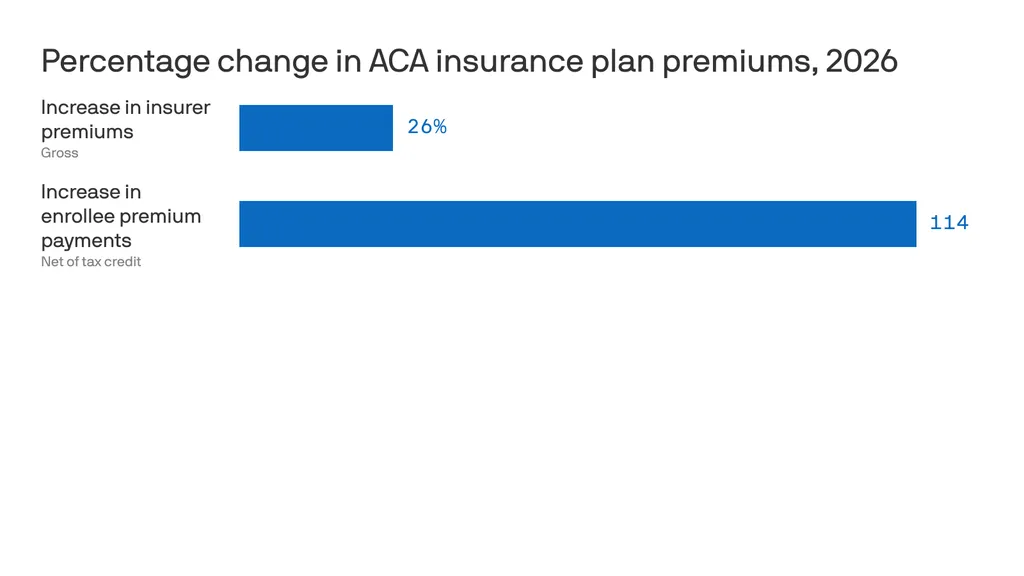
Americans can choose their insurance plans for next year on the federal Affordable Care Act exchange website starting Saturday. An analysis from KFF found that without the subsidies extended, Americans will see their marketplace premium payments increase by 114 percent.

Republicans have been firm in their position of reopening the government first before discussing the ACA subsidies.

“The expiring ObamaCare subsidy at the end of the year is a serious problem. If you look at it objectively, you know that it is subsidizing bad policy. We’re throwing good money at a bad, broken system, and so it needs real reforms,” Speaker Johnson said at a Monday press conference.

Head Start

About 140 Head Start programs across 41 states and Puerto Rico serving more than 65,000 children could go dark if the shutdown goes past Nov 1., according to a joint statement from more than 100 national, state and local organizations focused on childhood education and development. 

“Without funding, many of these programs will be forced to close their doors, leaving children without care, teachers without pay, and parents without the ability to work,” the statement says.

Head Start programs are designed to help low-income families and their children from birth to age 5 with a focus on health and wellness services, family well-being and engagement and early learning, according to its website.

Nonprofits

Diane Yentel, president and CEO of the National Council of Nonprofits, told The Hill in a statement that the shutdown has forced many nonprofits to halt their operations because of frozen federal reimbursements and grants. 

The nonprofits include those handling wildfire recovery in Colorado, housing vulnerable youth in Utah and helping with conservation work in Montana, Yentel said. Many federal workers without pay have also turned to their local food banks, further putting a financial strain on nonprofits.

“With the November 1 cutoff of SNAP and WIC looming, the situation will get even worse. Nonprofit food banks are already facing rising grocery costs and increased demand, including from federal workers and military families,” Yentel said. “If millions of Americans suddenly lose access to these life-saving nutrition programs, local nonprofits will be overwhelmed, and far too many seniors, children, and families will go without help.”