Nurse sues UPMC over alleged labor abuses

The lawsuit filed in federal court seeks to represent thousands of other UPMC employees.

Dive Brief:

  • A nurse is suing the University of Pittsburgh Medical Center for allegedly leveraging its monopoly control over the employment market in Pennsylvania to keep wages down and prevent workers from leaving for competitors, all while increasing their workload.
  • The lawsuit, filed late last week in a federal court, seeks class action status to represent other staff at the nonprofit health system. Plaintiff Victoria Ross, who worked as a nurse at UPMC Hamot in Erie, Pennsylvania, seeks damages and is asking the judge to enjoin UPMC from continuing its unfair business practices.
  • If granted class action status, the lawsuit could represent thousands of current and former UPMC workers, including registered nurses, medical assistants and orderlies. UPMC has denied the allegations in statements to other outlets but did not respond to a request for comment by time of publication.

Dive Insight:

UPMC has grown steadily over the past few decades into the largest private employer in Pennsylvania, employing 95,000 workers overall.

From 1996 to 2018, the system acquired 28 competing healthcare providers, greatly expanding its market power, according to the lawsuit. The acquisitions also shrunk the availability of healthcare services. Over the same period, UPMC closed four hospitals and downsized operations in three other facilities, eliminating 1,800 full- and part-time jobs, the lawsuit said.

UPMC relied on “draconian” mobility restrictions and labor law violations to lock employees into lower pay and subcompetitive working conditions, according to the 44-page complaint.

Specifically, the system enacted restraints like noncompete clauses and “do-not-rehire blacklists” to stop workers from leaving. Meanwhile, UPMC allegedly suppressed workers’ labor law rights to prevent them from unionizing.

“Each of these restraints alone is anticompetitive, but combined, their effects are magnified. UPMC wielded these restraints together as a systemic strategy to suppress worker bargaining power and wages,” the lawsuit said. “As a result, UPMC’s skilled healthcare workers were required to do more while earning less — while they were also subjected to increasingly unfair and coercive workplace conditions.”

According to the complaint, UPMC has faced 133 unfair labor practice charges since 2012, and 159 separate allegations. Roughly 74% of the violations were related to workers’ efforts to unionize, the lawsuit said.

Meanwhile, UPMC workers’ wages have fallen at a rate of 30 to 57 cents per hour on average compared to other hospital workers for every 10% increase in UPMC’s market share, said the lawsuit, citing a consultant’s economic analysis.

The lawsuit also noted that UPMC’s staffing ratios have been decreasing, even as staffing ratios on average have increased at other Pennsylvania hospitals.

The alleged labor abuses and UPMC’s market power are linked, according to the complaint.

“Had UPMC been subject to competitive market forces, it would have had to raise wages to attract more workers and provide higher staffing levels in order to avoid degrading the care it provided to its patients, and in order to prevent losing patients to competitors who could provide better quality care,” the lawsuit said.

UPMC is facing similar labor allegations. In May, two unions filed a complaint asking the Department of Justice to investigate labor abuses at the nonprofit.

Hospitals were plagued by staffing shortages during the COVID-19 pandemic. Many facilities still bemoan the difficulty of hiring and retaining full-time workers, and point to shortages (of nurses in particular) as the reason for overworked employees and poor staffing ratios.

Yet some studies suggest that’s not the case. One recent analysis of Bureau of Labor Statistics data found employment in hospitals — including registered nurses — is now slightly higher than it was at the start of the pandemic.

Despite the controversy, UPMC — which now operates 40 hospitals with annual revenue of $26 billion — continues to try and expand its market share. Late last year, the system signed a definitive agreement to acquire Washington Health Care Services, a Pennsylvania system with more than 2,000 employees and two hospitals. The deal faces pushback from local unions.
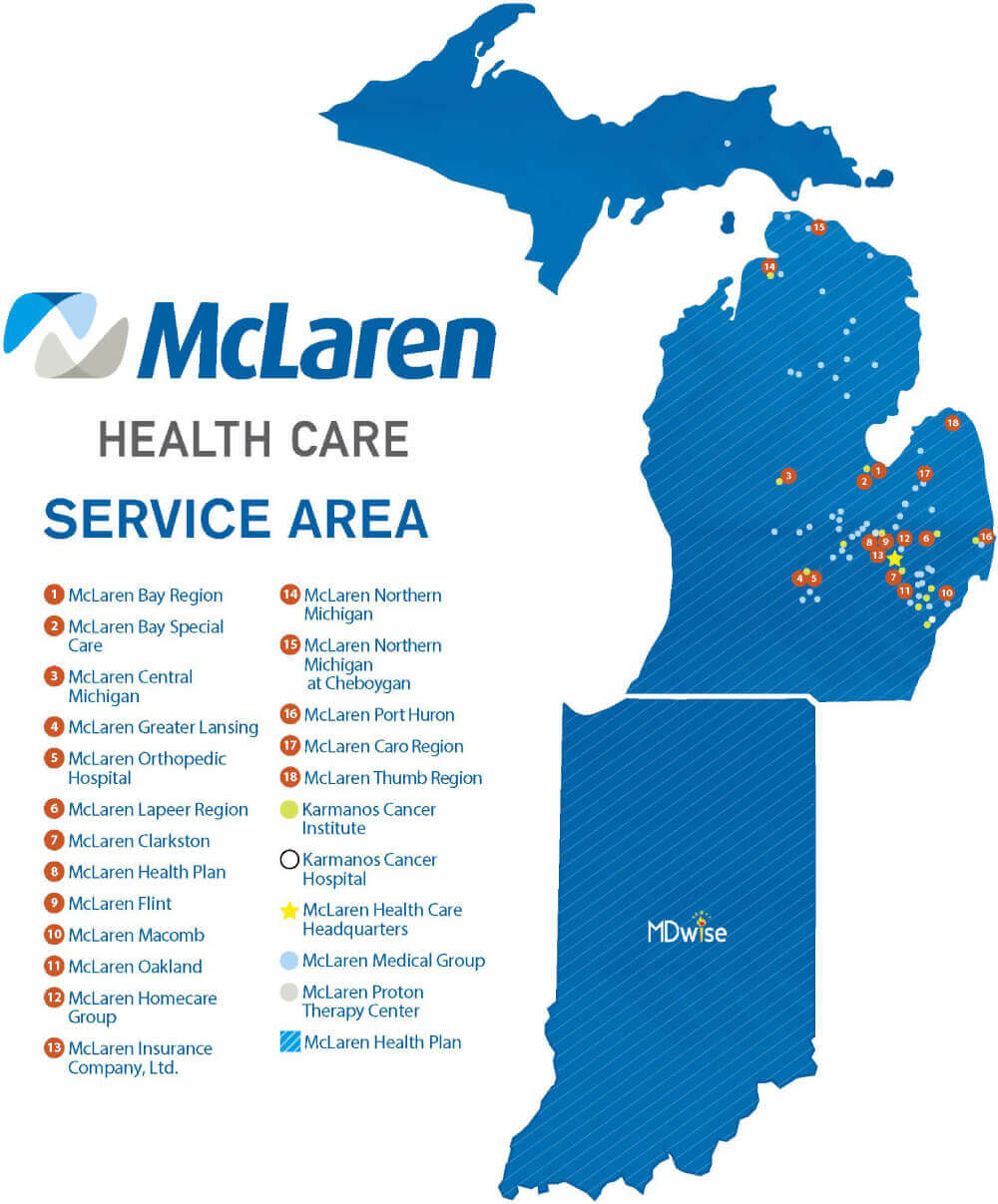
McLaren Health Care’s too secretive about finances, PPE, Michigan nurse union says

https://www.beckershospitalreview.com/workforce/mclaren-health-care-s-too-secretive-about-finances-ppe-michigan-nurse-union-says.html?utm_medium=email

About McLaren Health Care

Ten nurse unions in Michigan are accusing McLaren Health Care of not being transparent about its finances and personal protective equipment supply during the COVID-19 pandemic, but the health system said it has shared some of that information.

Many of the nurse unions have filed unfair labor practice charges with the National Labor Relations Board, alleging that by not sharing information with front-line healthcare workers the Grand Blanc, Mich.-based health system is violating federal labor law, a media release from the Michigan Nurses Association states.

According to the association, each of its 10 unions received a letter from the health system May 15, in which the system refused to divulge how much funding it received in federal COVID-19 grants. The health system also has refused to provide details about its protective gear inventory, the unions allege.

“The fact that they won’t share basic financial information with those of us working on the front lines makes you wonder if they have something to hide,” said Christie Serniak, a nurse at McLaren Central Michigan hospital in Mount Pleasant and president of the Michigan Nurses Association affiliate.

But the health system maintains it has been transparent and has worked with labor unions and bargaining units across the system since the beginning of the coronavirus pandemic.

“We’ve openly shared information about our operations, the challenges of restrictions on elective procedures, our plans for managing influxes of patients and our supplies of personal protective equipment,” Shela Khan Monroe, vice president of labor and employment relations at McLaren Health Care told Becker’s Hospital Review.

Ms. Khan Monroe said that the information has been shared through weekly meetings, departmental meetings and several union negotiation sessions over the last two months.

The unions also say that the health system has not offered its workers hazard pay or COVID-19 paid leave that is on par with other systems. They say that only workers who test positive for COVID-19 can take additional paid time off.

In a written statement, McLaren disputed the union’s claims about employee leave, saying that employees “dealing with child care and other COVID-related family matters” can take time off to care for loved ones.

McLaren did not specify if this time off is paid. Becker’s has reached out for clarification and will update the article once more information is available.

“We have negotiations pending with several of the unions involved in the coalition, and while we are deeply disappointed in these recent tactics, we will continue to work towards productive outcomes for all concerned,” said Ms. Khan Monroe.

Recently, a coalition of unions urged McLaren Health Care executives to reduce their own salaries before laying off employees.


Amazon Worker Fired After Staging Walkout Over Company’s Handling Of Coronavirus Risk

https://www.yahoo.com/huffpost/amazon-fires-worker-chris-smalls-033240313.html

Amazon Worker Fired After Staging Walkout Over Company's Handling ...

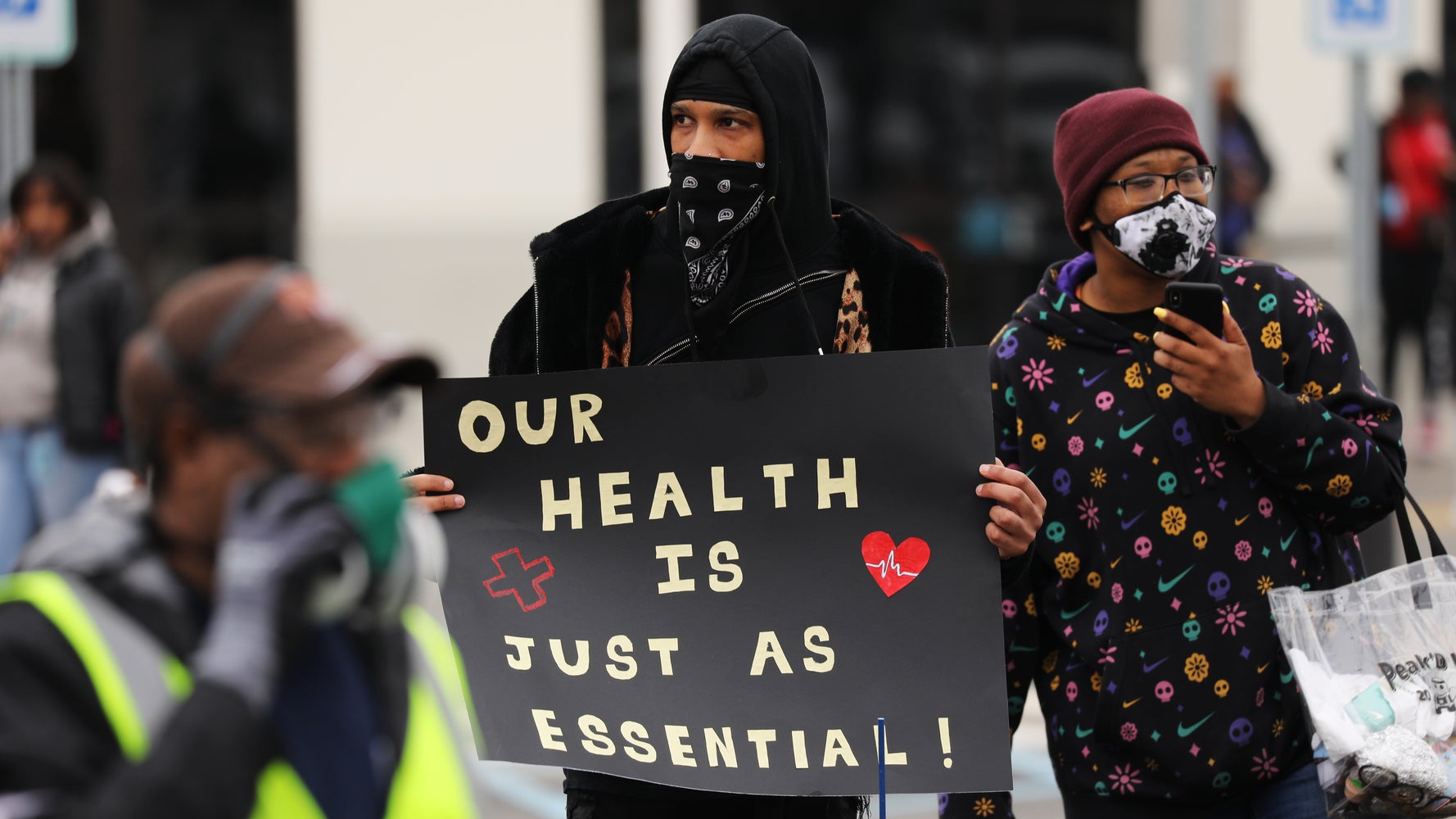
Amazon fired an employee who helped organize a walkout at one of its fulfillment centers over the company’s response to the ongoing coronavirus pandemic on Monday.

Chris Smalls, the employee who helped organize the demonstration, said he felt Amazon had failed to enact adequate measures to protect workers at the facility as many Americans turn to online shopping as stay-at-home mandates expand around the country. Smalls was one of a small group who walked out at a fulfillment center on Staten Island, demanding the company close the site and sanitize it before reopening. He said Amazon had notified employees at the warehouse of one confirmed case of the virus but claimed there were several others that hadn’t yet been reported.

Shortly after the strike, Smalls was terminated after working at Amazon for five years.

“Amazon would rather fire workers than face up to its total failure to do what it should to keep us, our families, and our communities safe,” Smalls said in a statement obtained by HuffPost. “I am outraged and disappointed, but I’m not shocked. As usual, Amazon would rather sweep a problem under the rug than act to keep workers and working communities safe.”

Amazon disputed Smalls’ account in a statement on Monday, saying he had been warned several times for “violating social distancing guidelines” and had been fired after failing to stay home. The company said Smalls’ claims were “simply unfounded.”

“He was also found to have had close contact with a diagnosed associate with a confirmed case of COVID-19 and was asked to remain home with pay for 14 days, which is a measure we’re taking at sites around the world,” a company spokesperson told HuffPost. “Despite that instruction to stay home with pay, he came onsite today, March 30, further putting the teams at risk. This is unacceptable and we have terminated his employment as a result of these multiple safety issues.”

The company also said just 15 employees out of 5,000 at its Staten Island location had participated in the demonstration.

“Our employees are heroes fighting for their communities and helping people get critical items they need in this crisis,” the spokesperson said. “Like all businesses grappling with the ongoing coronavirus pandemic, we are working hard to keep employees safe while serving communities and the most vulnerable.”

The Washington Post notes workers in at least 21 Amazon warehouses and shipping facilities in the U.S. have tested positive for the virus.

Employees at several other major companies staged walkouts on Monday. Workers at Instacart, the grocery delivery company, went on strike nationwide to demand better protections, including hazard pay and expanded paid sick leave. And employees at Whole Foods, owned by Amazon, said they planned to hold a nationwide “sick out” on Tuesday.

Workers at the Staten Island warehouse were first told last week that an employee had tested positive for the novel coronavirus, but they told HuffPost’s Emily Peck that business was “normal” and “running just as it had been” after the declaration. Others said they were afraid of getting sick at work, saying there wasn’t enough protection equipment on site, such as hand sanitizer or masks.

Amazon said it has extended a range of benefits to help protect workers during the pandemic, including extended paid leave options for some employees and increased health and safety measures. Employees diagnosed with COVID-19 are entitled to up to two weeks of paid leave, and Amazon says it notifies workers at sites with infected individuals.

The ongoing efforts by warehouse workers throughout the coronavirus pandemic have garnered support from several lawmakers. Rep. Alexandria Ocasio-Cortez (D-N.Y.) wrote Monday that the employees were simply “demanding dignity.”

“When people work an hourly job, it’s suggested in many ways that you‘re unimportant or expendable,” she wrote on Twitter. “Except you aren’t. Everyone deserves safe work, paid leave, & a living wage.”


Kaiser workers block traffic in Labor Day protest

https://www.beckershospitalreview.com/human-capital-and-risk/kaiser-workers-block-traffic-in-labor-day-protest.html

Image result for Kaiser workers block traffic in Labor Day protestImage result for Kaiser workers block traffic in Labor Day protest

About 50 employees blocked traffic in front of Kaiser Permanente’s downtown Sacramento, Calif., office on Sept. 2 as part of a planned Labor Day protest in five cities, reports The Sacramento Bee.

The workers held strikes in Los Angeles, Sacramento, Denver, Portland, Ore., and Oakland, Calif. Police said 54 people were cited and released after the protest in Sacramento, according to CBS Sacramento.

“We support the rights of workers to publicly demonstrate and celebrate Labor Day,” Sandy Sharon, RN, senior vice president and area manager of Kaiser’s Sacramento office, told The Sacramento Bee. “Unfortunately, there were acts of civil disobedience that taxed our city and police resources.”

The Kaiser employees are protesting the system’s “unfair labor practices and shift from prioritizing patients and the community to profits and enriching top executives,” the Coalition of Kaiser Permanente Unions said in a press release cited by The Sacramento Bee.

The coalition’s bargaining team and Kaiser have been negotiating a new contract for workers, as the current contract is set to expire this month.

The protests come as workers continue voting on whether to call a nationwide strike in early October. If a nationwide strike is called, it would be the country’s largest since 1997, according to the coalition. The strike would affect more than 80,000 workers in California, Oregon, Washington, Colorado, Maryland, Virginia and the District of Columbia.

John Nelson, vice president of communications at Kaiser, previously accused the unions of using the strike threat as a bargaining tactic, “designed to divide employees and mischaracterize Kaiser Permanente’s position, even though most of the [union] contracts don’t expire until October.”