Can you spread Covid-19 if you get the vaccine?

https://qz.com/1954762/can-you-spread-covid-19-if-you-get-the-vaccine/?utm_source=YPL

Can you spread Covid-19 if you get the vaccine? — Quartz

We know that the vaccines now available across the world will protect their recipients from getting sick with Covid-19. But while each vaccine authorized for public use can prevent well over 50% of cases (in Pfizer-BioNTech and Moderna‘s case, more than 90%), what we don’t know is whether they’ll also curb transmission of the SARS-CoV-2 virus.

That question is answerable, though—and understanding vaccines’ effect on transmission will help determine when things can go back to whatever our new normal looks like.

The reason we don’t know if the vaccine can prevent transmission is twofold. One reason is practical. The first order of business for vaccines is preventing exposed individuals from getting sick, so that’s what the clinical trials for Covid-19 shots were designed to determine. We simply don’t have public health data to answer the question of transmission yet.

The second reason is immunological. From a scientific perspective, there are a lot of complex questions about how the vaccine generates antibodies in the body that haven’t yet been studied. Scientists are still eager to explore these immunological rabbit holes, but it could take years to reach the bottom of them.

Acting the part

Vaccines work by tricking the immune system into making antibodies before an infection comes along. Antibodies can then attack the actual virus when it enters our systems before they have a chance to replicate enough to launch a full-blown infection. But while vaccines could win an Oscar for their infectious acting job, they can’t get the body to produce antibodies exactly the same way as the real deal.

From what we know so far, Covid-19 vaccines cause the body to produce a class of antibodies called immunoglobulin G, or IgG antibodies, explains Matthew Woodruff, an immunologist at Emory University. IgG antibodies are thugs: They react swiftly to all kinds of foreign entities. They make up the majority of our antibodies, and are confined to the parts of our body that don’t have contact with the outside world, like our muscles and blood.

But to prevent Covid-19 transmission, another type of antibodies could be the more important player. The immune system that patrols your outward-facing mucosal surfaces—spaces like the nose, the throat, the lungs, and digestive tract—relies on immunoglobulin A, or IgA antibodies. And we don’t yet know how well existing vaccines incite IgA antibodies.

“Mucosal immunology is ridiculously complicated,” says Woodruff. “Rather than thinking of immune system as a way to fight off bad actors, it’s really a way for your internal environment to maintain some sort of homeostatic existence with a really dynamic outside world,” as you breathe, eat, drink, and touch your face.

People who get sick and recover from Covid-19 produce a ton of these more-specialized IgA antibodies. Because IgA antibodies occupy the same respiratory tract surfaces involved in transmitting SARS-CoV-2, we could reasonably expect that people who recover from Covid-19 aren’t spreading the virus any more. (Granted, this may also depend on how much of the virus that person was exposed to.)

But we don’t know if people who have IgG antibodies from the vaccine are stopping the virus in our respiratory tracts in the same way. And even if we did, scientists still don’t know how much of the SARS-CoV-2 virus it takes to cause a new infection. So even if we understood how well a vaccine worked to prevent a virus from replicating along the upper respiratory tract, it’d be extremely difficult to tell if that would mean a person couldn’t transmit the disease.

Making it real

Because of all that complication, it’s unlikely that immunological research alone will reveal how well vaccines can prevent Covid-19 transmission—at least, not for years. But there’s another way to tell if a vaccine can stop a person from transmitting a virus to others: community spread.

As more and more people get both doses of a Covid-19 vaccine (and wait a full two weeks after their second dose for maximum immunity to kick in), public health officials can see how fast case counts fall. It may not be a perfect indicator of whether we’re stopping the virus in its tracks—there are many other variables that can slow transmission, including lockdown measures—but for practical purposes, it’ll be good enough to help make public health decisions.

Plus, even though the data we have from clinical trials isn’t perfect, it’s a pretty good indicator that the vaccine at least stops some viral replication. “I can’t imagine how the vaccine would prevent symptomatic infection at the efficacies that [companies] reported and have no impact on transmission,” Woodruff says.

Each of the vaccines granted emergency use in western countries—Moderna, Pfizer-BioNTech, and AstraZeneca—have all shown high efficacy in phase 3 clinical trials. (The Sinopharm and Sinovac vaccines from China and the Bharat Biotech vaccine in India have also been shown to be effective at preventing Covid-19, but aren’t widely approved for use yet.)

Frustratingly, it’s just going to take more time to see if people who got the vaccine are involved in future transmission events. That’s why it’s vital that even after receiving both doses of the Covid-19 vaccine, all individuals wear masks, practice physical distancing, and wash their hands when around those who haven’t been vaccinated—just in case.
How Does the AstraZeneca COVID-19 Vaccine Compare to Pfizer’s and Moderna’s?

covid 19 vaccine

It’s cheaper, easier to distribute, and relies on very different tech than its competitors.

  • AstraZeneca’s COVID-19 vaccine has been approved for emergency use in the United Kingdom, India, and Mexico.
  • Unlike its competitors, AstraZeneca’s vaccine is a modified version of a common cold virus that spreads among chimpanzees.
  • This is the first vaccine of its kind to be approved for human use, but other companies are developing similar tech to fight COVID-19.

The United Kingdom became the first country to approve AstraZeneca’s COVID-19 vaccine for emergency use on Dec. 30, just weeks after Pfizer’s and Moderna’s vaccine candidates received a green light from the Food and Drug Administration in the United States. The approval is another promising sign in the global immunization rollout—especially because this option, developed by Oxford University and biopharmaceutical company AstraZeneca, could be key to reaching people in rural and underfunded areas.

Unlike its competitors, the AstraZeneca COVID-19 vaccine can be stored at higher temperatures, costs less per dose, and uses different technology to immunize people. Although the vaccine hasn’t been approved for use in the U.S. yet, it could reach arms stateside in February at the earliest, The New York Times reports. Here’s what we know about the vaccine so far, and how it stacks up against Pfizer’s and Moderna’s.

How does the AstraZeneca COVID-19 vaccine work?

AstraZeneca’s vaccine uses adenovirus-vectored technology. Translation: It’s a harmless, modified version of a common cold virus that usually only spreads among chimpanzees. This altered virus can’t make you sick, but it carries a gene from the novel coronavirus’ spike protein, the portion of the virus that triggers an immune response. This allows the immune system to manufacture antibodies that work against COVID-19, teaching your body how to respond should you become infected.

In other words, AstraZeneca’s vaccine mimics a COVID-19 infection without its life-threatening side effects, per a release from the company. The reason researchers chose a chimpanzee adenovirus is simple: The modified virus needs to be new to the people being vaccinated—otherwise, the body won’t create those all-important antibodies. Anyone could already have antibodies for a cold spread among humans, but far fewer people have been exposed to a cold spread among chimps.

The Pfizer-BioNTech and Moderna vaccines, meanwhile, rely on mRNA technology, which essentially introduces a piece of genetic code that tricks the body into producing COVID-19 antibodies, no virus required. All three vaccines require two shots spaced about a month apart. Although no adenovirus-vectored vaccine has been approved for human use before, companies like Johnson & Johnson, CanSino, and NantKwest are all working on their own versions.

How does the AstraZeneca vaccine compare to the Moderna and Pfizer vaccines?

Storage and distribution

AstraZeneca’s vaccine is the easiest to transport so far—it can be stored for up to six months between 36 and 46°F, normal refrigerator temperatures. The Moderna and Pfizer options, meanwhile, must be stored at subzero temperatures until they’re ready to be used, at -4°F and -94°F, respectively. (mRNA technology is relatively fragile compared to adenovirus-vectored tech, meaning it must be kept at much lower temperatures to remain effective and stable.)

AstraZeneca’s higher storage temperature could make distribution much easier. “A clinic, a nursing home, or even [regional] health departments may not have freezers that can hold things at -94°F,” says Kawsar Talaat, M.D., an infectious disease doctor, vaccine researcher, and assistant professor in the department of International Health at Johns Hopkins University. Being able to use a typical fridge “allows time for distribution, allows the vaccine time to get to more rural areas, [and allows vaccines] to be kept at a clinic for a longer period of time.”

Cost

The new vaccine also beats its competitors on price: AstraZeneca’s vaccine costs providers about $4 per dose, while Pfizer’s costs $20 and Moderna’s costs $33, Al Jazeera reports. These prices will most likely fluctuate as time goes on and the vaccines evolve.

Efficacy

The two mRNA vaccines have a slight edge in efficacy; both Pfizer and Moderna report being about 95% effective against COVID-19 after the second shot in clinical trials, while AstraZeneca has reported an average efficacy of 70%, and up to 90% if the dosing is adjusted. (For comparison, the annual flu shot is usually between 40 and 60% effective, per the CDC.)

Side effects

All three vaccines’ side effects are similar, including potential injection site pain and flu-like symptoms, including fever, fatigue, headaches, and muscle pain, which are to be expected as your immune system is primed.

Which COVID-19 vaccine is the best?

There’s no “best” vaccine option, as there’s not enough research to confirm that yet. Vaccines aren’t a silver bullet, especially as the pandemic rages on: They must be combined with masks, hand-washing, and social distancing to work as effectively as possible, per the CDC. No matter which COVID-19 vaccine becomes available to you first, you can feel confident in its ability to protect you, as long as you continue being cautious until positive cases, hospitalizations, and deaths are significantly reduced nationwide.

In the meantime, it’s likely “that all the manufacturers are working on making their vaccines more stable at easier-to-manage temperatures,” Dr. Talaat explains. As their formulations change, their pros and cons will, too.

For now, we can be thankful that AstraZeneca’s vaccine is nearing worldwide clearance. “The next generation of vaccines, like AstraZeneca’s, which is kept at refrigerator temperatures, is a major advancement,” Dr. Talaat says. “When you’re talking about distribution to the entire world, it’s much easier to do because we already keep vaccines cold. It’s a lot harder to keep things frozen.”

Two Dead Every Minute: U.S. Covid-19 Cases Surge In 2021

COVID-19 on pace to become the third-leading cause of death in Arizona this  year - The Gila Herald

TOPLINE

In the first week of 2021, roughly two people died from Covid-19 in the U.S. every minute, amid a struggling national vaccination effort, soaring coronavirus cases and the deadliest day of the pandemic yet.

KEY FACTS

According to data from the Covid Tracking Project, 19,418 people died from the disease in the first seven days of 2021.

The U.S. is the country hardest hit by the novel coronavirus — more than 4,000 people died on Thursday, the deadliest day yet of the pandemic, and over 355,000 people have died from the disease since the pandemic began. 

Experts warn that things are likely to get worse before they get better as hospitals across the country are stretched to breaking point — hospitals in LA are reportedly rationing oxygen and many are running out of beds. 

More than 132,000 Americans are currently admitted in hospitals for Covid-19-related care. 

Widespread vaccination, which could help turn the tide against the virus, has failed to gain momentum and the U.S. is way behind its inoculation targets.

The Centers for Disease Control and Prevention says that only 28% of the more than 21 million vaccines it has distributed have been used —  many are reportedly languishing in storage. 

WHAT TO WATCH FOR

President-elect Joe Biden has said he will release all available Covid-19 vaccine doses for immediate use upon taking office, ending Trump’s strategy of saving doses to ensure people have access to a recommended second shot. Some countries, such as the U.K., have decided to space out doses beyond what manufacturers recommend in a bid to provide as many people as possible with some degree of immunity. Experts are torn on the strategy. The U.S. Food and Drug Administration recommends the vaccines are distributed as intended, with a second shot after a 21 or 28 day gap. The British medical regulator, and more recently the World Health Organization, say the second shot can be delayed, although they do not agree on how long this should be.

CRUCIAL QUOTE

Biden warned that the U.S. is falling “far behind” what is needed to control the pandemic. Trump’s approach would take “years,” he said. 

WHAT WE DON’T KNOW

A highly infectious variant of coronavirus, first discovered in the U.K., could be circulating in the U.S.. At least 52 cases have been reported so far. Fortunately, scientists do not believe the variant is able to evade the recently-developed vaccines. 

U.S. surpasses 300,000 daily coronavirus cases, the second alarming record this week

CDC advises 'universal' masks indoors as US Covid deaths again break records  | Coronavirus | The Guardian

The United States on Friday surpassed 300,000 daily coronavirus cases, the second alarming record this week. The number, which roughly equates to the population of St. Louis, Pittsburgh or Cincinnati, comes about two months after the country reported 100,000 coronavirus cases a day for the first time, and one day after more than 4,000 people died from the virus, also a record.

The United States has reported 21.8 million infections and 367,458 deaths.

Storming of Capitol was textbook potential coronavirus superspreader, experts say

https://www.washingtonpost.com/health/2021/01/08/capitol-coronavirus/

Wednesday’s storming of the U.S. Capitol did not just overshadow one of the deadliest days of the coronavirus pandemic — it could have contributed to the crisis as a textbook potential superspreader, health experts warn.

Thousands of Trump supporters dismissive of the virus’s threat packed together with few face coverings — shouting, jostling and forcing their way indoors to halt certification of the election results, many converging from out of town at the president’s urging. Police rushed members of Congress to crowded quarters where legislators say some of their colleagues refused to wear masks as well.

“This was in so many ways an extraordinarily dangerous event yesterday, not only from the security aspects but from the public health aspects, and there will be a fair amount of disease that comes from it,” said Eric Toner, senior scholar at the John Hopkins Center for Health Security.

Experts said that resulting infections will be near-impossible to track, with massive crowds fanning out around the country and few rioters detained and identified. They also wondered if even a significant number of cases would register in a nation overwhelmed by the coronavirus. As Americans shared their shock and anger at the Capitol breach Thursday, the United States reported more than 132,000 people hospitalized with the virus, and more than 4,000 deaths from covid-19, the disease caused by the coronavirus — making it the highest single-day tally yet.

“It is a very real possibility that this will lead to a major outbreak but one that we may or may not be able to recognize,” Toner said. “All the cases to likely derive from this event will likely be lost in the huge number of cases we have in the country right now.”

Trump devotees who flocked to the capital this week said they were unconcerned by the virus, belittling common precautions known to slow its spread and echoing the president’s dismissive attitude toward rising case counts. Trump had encouraged them to gather in defiance of his election loss: “Big protest in D.C. on January 6th,” he tweeted last month. “Be there, will be wild!”

Mike Hebert, 73, drove two days from Kansas to participate. Marching toward the Capitol on Wednesday with an American flag, he said he did not feel the need to wear a face covering.

“I am as scared of the virus as I am of a butterfly,” said Hebert, adding that he is a veteran who was shot twice in Vietnam.

Sisters Courtney and Haley Stone left New York at 11 p.m. to make it to the Capitol by morning so they could quietly counterprotest, draped in Biden gear. “Do you want a mask? I have one,” Haley, 22, asked a Trump supporter, only to be rebuffed.

“Oh, you believe in the mask hoax?” the woman replied.

Health experts predicted Wednesday’s events will contribute to an ongoing case surge in the greater Washington region. The average number of daily new infections in Virginia, Maryland and the District of Columbia reached a record high Thursday, and current covid-19 hospitalizations in the District have risen 19 percent in the past week.

They also noted differences with other large gatherings such as Black Lives Matter protests. Fewer people wore masks during the Capitol protests and riot, they said, and crowds were indoors.

“If you wanted to organize an event to maximize the spread of covid it would be difficult to find one better than the one we witnessed yesterday,” said Jonathan Fielding, a professor at the schools of Public Health and Medicine at UCLA.

“You have the drivers of spreading at a time when we are bearing the heaviest burden of this terrible virus and terrible pandemic,” he said.

Calling in to CBS News Wednesday, Rep. Susan Wild (D-Pa.) described her evacuation to a “crowded” undisclosed location with 300 to 400 other people.

“It’s what I would call a covid superspreader event,” she said. “About half the people in the room are not wearing masks, even though they’ve been offered surgical masks. They’ve refused to wear them.”

She did not identify the lawmakers forgoing face coverings beyond saying they were Republicans, including some freshmen. The Committee on House Administration says it is a “critical necessity” to mask up while indoors at the Capitol, and D.C. has a strict mask mandate.

“It’s certainly exactly the kind of situation that we’ve been told by the medical doctors not to be in,” Wild said.

“We weren’t even allowed to get together with our families for Thanksgiving and Christmas,” she said, “and now we’re in a room with people who are flaunting the rules.”

At least one member of Congress has tested positive since the mob spurred an hours-long lockdown. Newly elected Rep. Jacob LaTurner (R-Kan.) tested positive for the coronavirus late Wednesday evening, according to a statement posted on his Twitter account. It said he is not experiencing symptoms.

“LaTurner is following the advice of the House physician and CDC guidelines and, therefore, does not plan to return to the House floor for votes until he is cleared to do so,” the statement said.

Luke Letlow, a 41-year-old congressman-elect from Louisiana, died of covid-19 last month.

Any infections among members of Congress and their staff will be far easier to contact-trace than those among rioters, said Angela Rasmussen, an affiliate at the Center for Global Health Science and Security at Georgetown University.

“It certainly would have been easier if they were detained by Capitol police and identified, but testing suspects may be something to consider as law enforcement begins to identify them,” Rasmussen said in an email.

She noted that some may try to evade identification and criminal charges, and said she is deeply concerned for the households and communities they might expose.

“I think really rigorous contact tracing of people who are not identified as being present on Capitol grounds will not be possible,” she said.

Nearly 60% of COVID-19 spread may come from asymptomatic spread, model finds

How asymptomatic cases fuelled spread of coronavirus - Times of India

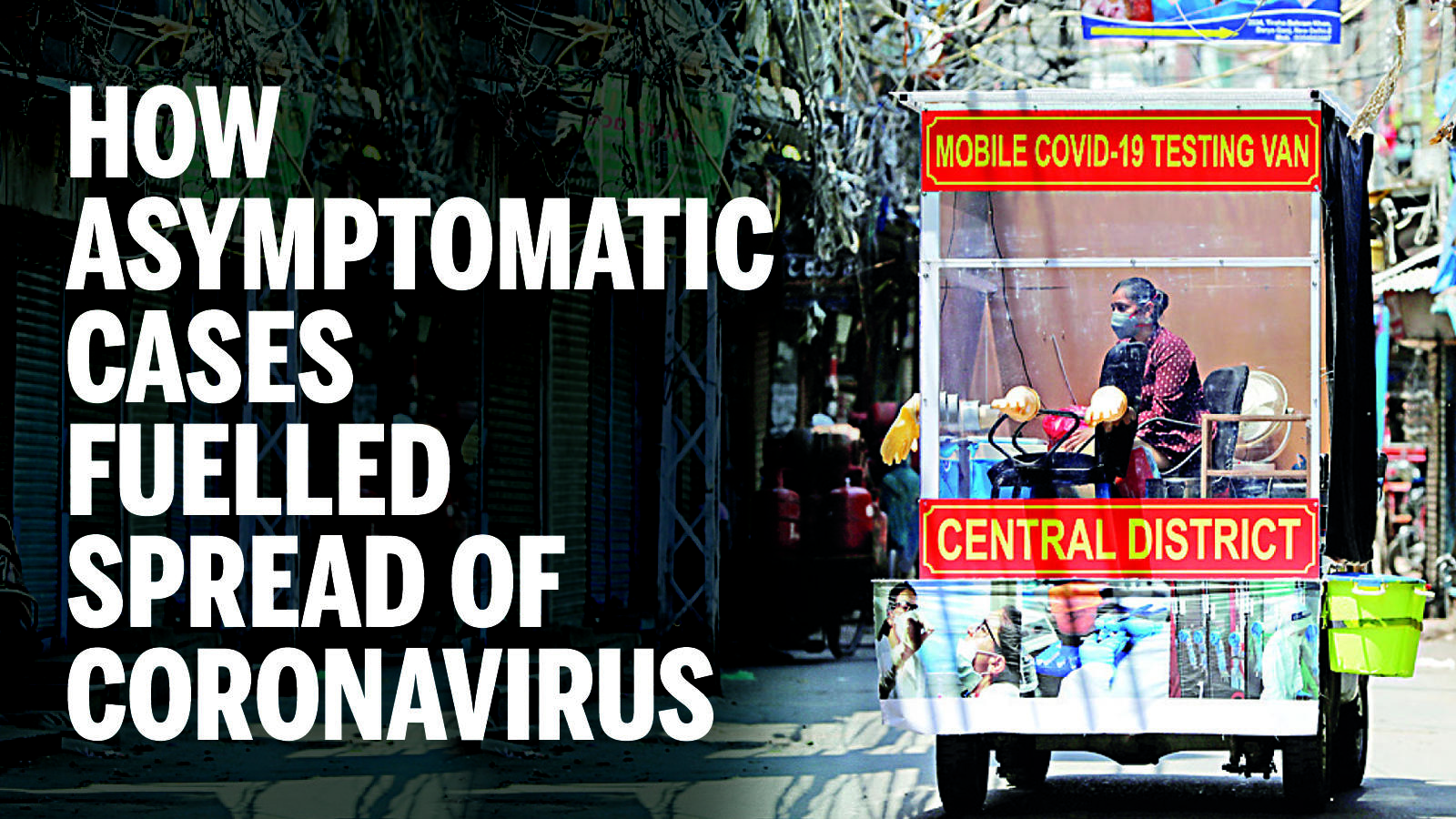
People with COVID-19 who don’t exhibit symptoms may transmit 59 percent of all virus cases, according to a model developed by CDC researchers and published Jan. 7 in JAMA Network Open. 

Since many factors influence COVID-19 spread, researchers developed a mathematical approach to assess several scenarios, varying the infectious period and proportion of transmission for those who never display symptoms according to published best estimates.  

In the baseline model, 59 percent of all transmission came from asymptomatic transmission. That includes 35 percent of new cases from people who infect others before they show symptoms and 24 percent from people who never develop symptoms at all. Under a broad range of values for each of these assumptions, at least 50 percent of new COVID-19 infections were estimated to have originated from exposure to asymptomatic individuals. 

The more contagious variant first identified in the U.K. and since found in six states underscores the importance of the model findings, said Jay Butler, MD, CDC deputy director for infectious diseases and a co-author of the study.

“Controlling the COVID-19 pandemic really is going to require controlling the silent pandemic of transmission from persons without symptoms,” Dr. Butler told The Washington Post. “The community mitigation tools that we have need to be utilized broadly to be able to slow the spread of SARS-CoV-2 from all infected persons, at least until we have those vaccines widely available.”

Whether vaccines stop transmission is still uncertain and was not a scenario addressed in the model. 

States ranked by percentage of COVID-19 vaccines administered: Jan. 8

E.U. Starts Effort to Vaccinate 450 Million - The New York Times

North Dakota has administered the highest percentage of COVID-19 vaccines it has received, according to the CDC’s COVID-19 vaccine distribution and administration data tracker.

The CDC’s data tracker compiles data from healthcare facilities and public health authorities. It updates daily to report the total number of COVID-19 vaccines that have been distributed to each state and the total number each state has administered.

As of 9 a.m. ET Jan. 7, a total of 21,419,800 vaccine doses have been distributed in the U.S. and 5,919,418 have been administered, or 27.64 percent. That means about 1.8 percent of the U.S. population has been vaccinated. 

Below are the states ranked by the percentage of COVID-19 vaccines they’ve administered of those that have been distributed to them.

  1. North Dakota
    Doses distributed to state: 43,950
    Doses administered: 27,289
    Percentage of distributed vaccines that have been administered: 62.09
  2. West Virginia
    Doses distributed to state: 126,275
    Doses administered: 74,016
    Percentage of distributed vaccines that have been administered: 58.61
  3. South Dakota
    Doses distributed to state: 59,900
    Doses administered: 33,389
    Percentage of distributed vaccines that have been administered: 55.74
  4. New Hampshire
    Doses distributed to state: 77,075
    Doses administered: 37,369
    Percentage of distributed vaccines that have been administered: 48.48
  5. Connecticut
    Doses distributed to state: 219,125
    Doses administered: 100,889
    Percentage of distributed vaccines that have been administered: 46.04
  6. Nebraska
    Doses distributed to state: 132,800
    Doses administered: 53,548
    Percentage of distributed vaccines that have been administered: 40.32
  7. Montana
    Doses distributed to state: 69,025
    Doses administered: 27,693
    Percentage of distributed vaccines that have been administered: 40.12
  8. Tennessee
    Doses distributed to state: 454,800
    Doses administered: 179,811
    Percentage of distributed vaccines that have been administered: 39.54
  9. Iowa
    Doses distributed to state: 191,675
    Doses administered: 74,224
    Percentage of distributed vaccines that have been administered: 38.72
  10. Kentucky
    Doses distributed to state: 244,350
    Doses administered: 94,443
    Percentage of distributed vaccines that have been administered: 38.65
  11. Vermont
    Doses distributed to state: 48,550
    Doses administered: 18,740
    Percentage of distributed vaccines that have been administered: 38.6
  12. Maine
    Doses distributed to state: 96,475
    Doses administered: 37,128
    Percentage of distributed vaccines that have been administered: 38.48
  13. Rhode Island
    Doses distributed to state: 72,175
    Doses administered: 27,696
    Percentage of distributed vaccines that have been administered: 38.37
  14. New Mexico
    Doses distributed to state: 133,125
    Doses administered: 48,306
    Percentage of distributed vaccines that have been administered: 36.29
  15. Colorado
    Doses distributed to state: 361,375
    Doses administered: 130,445
    Percentage of distributed vaccines that have been administered: 36.1
  16. Utah
    Doses distributed to state: 191,075
    Doses administered: 62,662
    Percentage of distributed vaccines that have been administered: 34.8
  17. Oklahoma
    Doses distributed to state: 264,000
    Doses administered: 85,978
    Percentage of distributed vaccines that have been administered: 32.57
  18. Texas
    Doses distributed to state: 1,676,925
    Doses administered: 545,658
    Percentage of distributed vaccines that have been administered: 32.54
  19. New York
    Doses distributed to state: 1,134,800
    Doses administered: 353,788
    Percentage of distributed vaccines that have been administered: 31.18
  20. Massachusetts
    Doses distributed to state: 449,025
    Doses administered: 137,858
    Percentage of distributed vaccines that have been administered: 30.7
  21. Ohio
    Doses distributed to state: 576,250
    Doses administered: 175,681
    Percentage of distributed vaccines that have been administered: 30.49
  22. Indiana
    Doses distributed to state: 409,625
    Doses administered: 123,835
    Percentage of distributed vaccines that have been administered: 30.23
  23. Florida
    Doses distributed to state: 1,355,775
    Doses administered: 402,802
    Percentage of distributed vaccines that have been administered: 29.71
  24. Illinois
    Doses distributed to state: 737,125
    Doses administered: 213,045
    Percentage of distributed vaccines that have been administered: 28.9
  25. Missouri
    Doses distributed to state: 401,050
    Doses administered: 113,369
    Percentage of distributed vaccines that have been administered: 28.27
  26. New Jersey
    Doses distributed to state: 572,250
    Doses administered: 155,458
    Percentage of distributed vaccines that have been administered: 27.17
  27. Maryland
    Doses distributed to state: 371,425
    Doses administered: 100,049
    Percentage of distributed vaccines that have been administered: 26.94
  28. Delaware
    Doses distributed to state: 64,375
    Doses administered: 16,677
    Percentage of distributed vaccines that have been administered: 25.91
  29. Hawaii
    Doses distributed to state: 95,200
    Doses administered: 24,558
    Percentage of distributed vaccines that have been administered: 25.80
  30. South Carolina
    Doses distributed to state: 225,850
    Doses administered: 58,044
    Percentage of distributed vaccines that have been administered: 25.7
  31. Minnesota
    Doses distributed to state: 378,425
    Doses administered: 97,098
    Percentage of distributed vaccines that have been administered: 25.66
  32. Pennsylvania
    Doses distributed to state: 789,250
    Doses administered: 202,498
    Percentage of distributed vaccines that have been administered: 25.66
  33. Wisconsin
    Doses distributed to state: 322,775
    Doses administered: 82,170
    Percentage of distributed vaccines that have been administered: 25.46
  34. Alaska
    Doses distributed to state: 87,325
    Doses administered: 21,830
    Percentage of distributed vaccines that have been administered: 25
  35. Virginia
    Doses distributed to state: 556,625
    Doses administered: 136,924
    Percentage of distributed vaccines that have been administered: 24.60
  36. Oregon
    Doses distributed to state: 262,100
    Doses administered: 61,672
    Percentage of distributed vaccines that have been administered: 23.53
  37. Washington
    Doses distributed to state: 518,550
    Doses administered: 121,354
    Percentage of distributed vaccines that have been administered: 23.40
  38. Wyoming
    Doses distributed to state: 40,400
    Doses administered: 9,324
    Percentage of distributed vaccines that have been administered: 23.08
  39. California
    Doses distributed to state: 2,314,350
    Doses administered: 528,173
    Percentage of distributed vaccines that have been administered: 22.82
  40. Idaho
    Doses distributed to state: 104,925
    Doses administered: 22,822
    Percentage of distributed vaccines that have been administered: 21.75
  41. Louisiana
    Doses distributed to state: 298,825
    Doses administered: 64,664
    Percentage of distributed vaccines that have been administered: 21.64
  42. North Carolina
    Doses distributed to state: 647,450
    Doses administered: 139,474
    Percentage of distributed vaccines that have been administered: 21.54
  43. Nevada
    Doses distributed to state: 187,375
    Doses administered: 39,761
    Percentage of distributed vaccines that have been administered: 21.22
  44. Michigan
    Doses distributed to state: 662,450
    Doses administered: 137,887
    Percentage of distributed vaccines that have been administered: 20.81
  45. Alabama
    Doses distributed to state: 245,100
    Doses administered: 48,888
    Percentage of distributed vaccines that have been administered: 19.95
  46. Arizona
    Doses distributed to state: 453,275
    Doses administered: 88,266
    Percentage of distributed vaccines that have been administered: 19.47
  47. Arkansas
    Doses distributed to state: 212,700
    Doses administered: 40,899
    Percentage of distributed vaccines that have been administered: 19.23
  48. Kansas
    Doses distributed to state: 191,225
    Doses administered: 36,538
    Percentage of distributed vaccines that have been administered: 19.11
  49. Mississippi
    Doses distributed to state: 159,625
    Doses administered: 28,356
    Percentage of distributed vaccines that have been administered: 17.76
  50. Georgia
    Doses distributed to state: 619,250
    Doses administered: 103,793
    Percentage of distributed vaccines that have been administered: 16.76

Biden plans to release nearly all available vaccine doses in an attempt to speed delivery.

President-elect Joseph R. Biden Jr. plans to release nearly all available coronavirus vaccine doses “to ensure the Americans who need it most get it as soon as possible,” the Biden transition team said Friday, a move that represents a sharp break from the Trump administration’s practice of holding back some of the vaccine.

The announcement coincided with a letter from eight Democratic governors — including Andrew M. Cuomo of New York and Gretchen Whitmer of Michigan, both of whom have clashed with President Trump — imploring the current administration to release all available doses to the states as soon as possible.

“The failure to distribute these doses to states who request them is unconscionable and unacceptable,” the governors wrote in the letter, which was obtained by The New York Times and sent Friday to the secretary of health, Alex M. Azar II, and Gen. Gustave F. Perna, who is in charge of vaccine distribution. “We demand that the federal government begin distributing these reserved doses to states immediately,” the letter said.

Because both of the vaccines with emergency approval require two doses, the Trump administration has been holding back roughly half of its supply to ensure those already vaccinated receive the booster dose. The vaccine rollout has been troubled from the start.

As of Thursday, the Trump administration had shipped more than 21 million vaccine doses, and millions more were already in the federal government’s hands. Yet only 5.9 million people had received a dose. State and local public health officials, already overwhelmed with rising infections, have been struggling to administer the vaccine to hospital workers and at-risk older Americans while most people remain in the dark about when they might be protected. Mr. Biden has promised that 100 million doses of the vaccine would be administered by his first 100th day in office.

Releasing the vast majority of the vaccine doses raises the risk that second doses would not be administered on time. Officials from the Food and Drug Administration — experts whose advice Mr. Biden has pledged to follow — have spoken out strongly against changing the dosing schedule, calling such a move “premature and not rooted solidly in the available evidence.”

A transition official, speaking anonymously to provide insight into the president-elect’s thinking, said would use the Defense Production Act, if needed, to ensure that enough doses are available.

However, the official also noted that the Biden team has “faith in our manufacturers that they can produce enough vaccines to ensure people can get their second dose in a timely manner, while also getting more people their first dose.”

A spokesman for Operation Warp Speed, the Trump administration’s vaccine initiative, released a statement sharply criticizing Mr. Biden’s approach.

“If President-elect Biden is calling for the distribution of vaccines knowing that there would not be a second dose available, that decision is without science or data and is contrary to the FDA’s approved label,” said the spokesman, Michael Pratt. “If President-elect Biden is suggesting that the maximum number of doses should be made available, consistent with ensuring that a second dose of vaccine will be there when the patient shows up, then that is already happening.”

A spokesman for the transition team, T.J. Ducklo, said Mr. Biden “believes we must accelerate distribution of the vaccine while continuing to ensure the Americans who need it most get it as soon as possible.”

“He supports releasing available doses immediately, and believes the government should stop holding back vaccine supply so we can get more shots in Americans’ arms now,” Mr. Ducklo said. “He will share additional details next week on how his Administration will begin releasing available doses when he assumes office on January 20th.”

Dr. Leana Wen, an emergency physician and public health expert at the George Washington University School of Public Health, said she was surprised and concerned about the new strategy, which seemed to offer a solution incongruous with the biggest problems in the vaccine rollout. Distribution has sputtered in large part because of a lack of administering capacity and several logistical hurdles, rather than a severe shortage of doses.

“This is not the problem we’re trying to solve right now,” Dr. Wen said.

For such a plan to work, Dr. Wen added, the Biden administration will need to be confident in both improved distribution tactics and sufficient vaccine production, “so all who receive the first dose of the vaccine will receive the second in a timely manner.”

Should a high number of delayed second doses occur — ostensibly shirking the regimens laid out in clinical trials — “it runs the risk of substantially eroding public trust in vaccines,” Dr. Wen said. The recommended timeframe for administering the second dose for the Pfizer-BioNTech vaccine is 21 days later, and for the Moderna vaccine, 28 days.

Mr. Biden’s announcement came amid growing pressure to step up the slow pace of mass vaccinations.

Speaking at a news briefing on Friday, Dr. Stephen Hahn, the F.D.A. commissioner, urged states that have utilized only a small part of their supply to begin vaccinating lower-priority groups, while still observing government guidelines.

“We think that will go a long way toward using these vaccines appropriately and getting them into the arms of individuals,” he said.

Mr. Biden also formally announced nearly two dozen members of his National Security Council staff on Friday, including a senior official for global health threats whose office was downgraded before the coronavirus pandemic.

Among the 21 appointees is Elizabeth Cameron, who will be the council’s senior director for global health security and biodefense, the job she held until John R. Bolton, Mr. Trump’s then-national security adviser, eliminated the office in May 2018, reassigning its responsibilities elsewhere within the N.S.C. Ms. Cameron has argued publicly that the move “contributed to the federal government’s sluggish domestic response” to the pandemic, and Mr. Biden vowed as a candidate to restore the office.

Large Numbers Of Health Care And Frontline Workers Are Refusing Covid-19 Vaccine

Large Numbers Of Health Care And Frontline Workers Are Refusing Covid-19  Vaccine

TOPLINE

Despite the Covid-19 death count in the United States rapidly accelerating, a startlingly high percentage of health care professionals and frontline workers throughout the country—who have been prioritized as early receipts of the coronavirus vaccine—are reportedly hesitant or outright refusing to take it, despite clear scientific evidence that the vaccines are safe and effective.

KEY FACTS

Earlier this week, Ohio Gov. Mike DeWine said he was “troubled” by the relatively low numbers of nursing home workers who have elected to take the vaccine, with DeWine stating that approximately 60% of nursing home staff declined the shot. 

Dr. Joseph Varon, chief of critical care at Houston’s United Memorial Medical Center, told NPR in December more than half of the nurses in his unit informed him they would not get the vaccine.

Roughly 55 percent of surveyed New York Fire Department firefighters said they would not get the coronavirus vaccine, the Firefighters Association president said last month.

The Los Angeles Times reported Thursday that hospital and public officials in Riverside, Calif., have been forced to figure out how best to allocate unused doses after an estimated 50% of frontline workers in the county refused the vaccine.

Fewer than half of the hospital workers at St. Elizabeth Community Hospital in Tehama County, Calif., were willing to be vaccinated, and around 20% to 40% of L.A. County’s frontline workers have reportedly declined an opportunity to take the vaccine. 

Dr. Nikhila Juvvadi, the chief clinical officer at Chicago’s Loretto Hospital, said that a survey was administered in December, and 40% of the hospital staff said they would not get vaccinated.

KEY BACKGROUND:

recent survey by the Kaiser Family Foundation found that 29% of healthcare workers were hesitant to receive the vaccine, citing concerns related to potential side effects and a lack of faith in the government to ensure the vaccines were safe. Frontline workers in the United States are disproportionately Black and Hispanic. The pandemic has taken an “outsized toll” on this segment of the population, which has reportedly accounted for roughly 65% of fatalities in cases in which there are race and ethnicity data. A study published by the journal The Lancet over the summer found “healthcare workers of color were more than twice as likely as their white counterparts” to test positive for the coronavirus. According to a Pew Research Center poll published in December, vaccine skepticism is highest among Black Americans, as less than 43% said they would definitely/probably get a Covid-19 vaccine. Dr. Juvvadi told NPR that “there’s no transparency between pharmaceutical companies or research companies — or the government sometimes — on how many people from” Black and Latino communities were involved in the research of the vaccine. Dr. Varon said that “the fact that [President] Trump is in charge of accelerating the process bothers” those individuals who refuse to be immunized, adding “they all think it’s meant to harm specific sectors of the population.” In an op-ed published in the New York Times earlier this week, emergency physicians Benjamin Thomas and Monique Smith wrote that “vaccine reluctance is a direct consequence of the medical system’s mistreatment of Black people” and past atrocities, such as the unethical surgeries performed by J. Marion Sims and the Tuskegee Syphilis Study, best exemplifies “the culture of medical exploitation, abuse and neglect of Black Americans.” 

CRUCIAL QUOTE: 

“I’ve heard Tuskegee more times than I can count in the past month — and, you know, it’s a valid, valid concern,” said Dr. Juvvadi.

WHAT TO WATCH FOR:

Dr. Anthony Fauci, the director of the National Institute of Allergy and Infectious Diseases, said in a Friday interview that it’s “quite possible” the Covid-19 vaccine could be required for international travel and to attend school at some point in the future.

BIG NUMBER:

40 million. In early December, government officials said they planned to have 40 million doses available by the end of 2020, which would be enough to fully vaccinate 20 million Americans. However, according to the Centers for Disease Control and Prevention, less than 3 million Americans have received the first dose of the vaccine, with 14 million doses have been distributed.

The Health 202: When will 2021 feel normal again? Here’s what eight experts predict.

We won't be back to normal from coronavirus pandemic until Fall 2021 -  Business Insider

Around half a million Americans are now getting a coronavirus vaccine shot every day. But that pace must accelerate considerably if the United States has any hope of quashing the virus in 2021.

Public health experts differ on how quickly that might happen  and when things might start to feel “normal” again around the country.

To inaugurate our first Health 202 of the new year, we asked eight experts for their predictions.

After all, we all want to know when we can go to concerts and ballgames again. Or even just go to the office. (Let’s start small.)

We asked two questions. The first has to do with when the United States will reach “herd immunity” — the point at which enough people are immune to a virus, either by recovering from it or getting vaccinated against it. Herd immunity generally kicks in when about 70 percent of people are immune, although experts differ on the precise threshold.

To reach herd immunity with the coronavirus, approximately 230 million Americans would need the vaccine. As of yesterday, just 4 million had gotten the first of two shots. Daily immunizations have increased considerably over the past few days, with about 500,000 people getting the shot each day, but experts say that number needs to at least double and ideally quadruple.

We also asked these experts when they personally expect their lives to return to normal.

Here are their responses, edited lightly for clarity and brevity.

When will enough Americans be vaccinated for the U.S. to reach herd immunity, based on how things look right now?

Carlos del Rio, professor of medicine and global health at Emory University

“At the current pace it will take a really long time. … I think if we can get our act together and start vaccinating 1 million people a day like President-elect Biden is promising, then we can get to 260 million people getting at least one dose … more or less or by late August or early September. If we really scale up and get to 3 million per day, then we can get to 260 million people in [less than] 100 days or three months. Can we do it? Yes! But it will require coordination, leadership and funding. So, as you see, my answer is: It depends.”

Eric Topol, director and founder of Scripps Research Translational Institute:

I think by July, if we get 2 to 3 million people vaccinated per day, and even sooner, if we have a rapid neutralization antibody assay to be able to defer those who have had a prior infection and mounted a durable immune response. Yes, that is optimistic, but it can be done.”

Jay Bhattacharya, professor of medicine at Stanford University:

“There is a lot of disagreement in the scientific literature about the herd immunity threshold, which is certain to vary from place to place. I don’t think anyone responsible would confidently say what it is, and would never put forward a single number for the U.S. as a whole. Rather, the key question is how rapidly we inoculate people who have a high risk of mortality conditional on infection — most older folks and some late middle-aged folks with severe chronic conditions. Prioritizing them for vaccination will yield the greatest benefit in reducing covid-19-related mortality, regardless of when herd immunity is hit.”

Jesse Goodman, professor of medicine and infectious diseases at Georgetown University:

“I am not sure that in the near future we will reach a level of population immunity where the virus will be virtually shut down, as we are accustomed to with measles. Through immunity due to vaccination, combined, unfortunately, with infections in the unvaccinated, we should reach a state where the risk of exposure is reduced due to a mostly immune population. While cases will still occur, our health system will no longer be stressed and large outbreaks should be less common.

“I am hopeful we can get to such a situation in the last quarter of this year, provided vaccine production, access and acceptance go well and no mutant viruses arise that gain the ability to escape current vaccines.”

Kimberly Powers, associate professor of epidemiology at the University of North Carolina at Chapel Hill:

“That question is difficult to answer, as there is considerable uncertainty around the level of immunity we would need in the population to achieve herd immunity, along with the speed with which we can expect widespread vaccine uptake to occur.”

Leana Wen, public health professor at George Washington University and former Baltimore health commissioner:

“Right now, vaccine distribution is progressing at an unacceptably slow speed, and at this current rate, it will take years to reach herd immunity — if ever. If we are able to pick up speed by many times in January, there is still a chance we could substantially slow down the infection and perhaps approach herd immunity in 2021.”

Marc Lipsitch, professor of epidemiology at Harvard University:

“I think you mean ‘will enough Americans be vaccinated to reach the herd immunity threshold?’ My answer is possibly not because we don’t know if the vaccines protect enough against transmission for the threshold to be achievable, and because the new variant may increase that threshold substantially.”

Michael Osterholm, chairman of the Center for Infectious Disease Research and Policy at the University of Minnesota:

“There are three factors that will independently determine when enough Americans will either be protected from covid-19 via vaccination or development of antibody following actual infection.

First, when will there be sufficient vaccine produced and distributed so everyone can receive their two doses? This includes vaccinating those who may have immune protection from actual infection but are vaccinated anyway to increase durable protection. Second, will enough people agree to be vaccinated? And finally, what is the durability of vaccine-induced protection over time? 

“Each of these factors will play a role in achieving local, regional or national herd immunity protection. I feel confident we can achieve the first factor of sufficient vaccine by the late summer or early fall. But ultimately, the second two factors, how many will be vaccinated and how durable is immune protection will determine the answer to this question. I hope, when considering all three factors, it will be late summer or early fall, but we all realize hope is not a strategy.”

When do you expect your own daily life to feel similar to pre-pandemic times?

Carlos del Rio:

I am hoping to be ‘close to normal’ by December 2021 more or less. However, as a physician seeing patients, I will probably continue to wearing a face mask and goggles for much longer.”

Eric Topol:

“In 2022.”

Jay Bhattacharya: 

“Given the changes that the previous year has had on my professional and personal life, I do not expect my daily life to ever feel similar to pre-pandemic times. More broadly though and given the disappointingly slow roll out of the vaccine to the vulnerable in many states, I anticipate that American society will start to feel more like normal by April 2021.”

Jesse Goodman:

“Hopefully late this yearlife should begin to feel similar to pre-pandemic times. However, it is likely that both great vigilance and some social distancing will still be needed, particularly if the population is not nearly all vaccinated. In addition, we may well require periodic immunization against the current and, possibly, other emerging coronavirus variants.”

Kimberly Powers: 

“I expect daily life to feel more normal by sometime this summer, but I think it will be 2022 before some mitigation measures can be fully relaxed.  And I expect that our society will feel ongoing consequences of this pandemic — physical, mental, emotional, and economic — for years to come.”

Leana Wen: 

“I don’t know. I was much more optimistic a few weeks ago. But given the lag in vaccine rollout thus far and how under-resourced our public health systems are, I am concerned things for much of 2021 will feel more like 2020 than 2019.”

Marc Lipsitch:

I think that sometime in the second half of the year there will be enough vaccination in the U.S. and some other countries that we will begin to treat covid-19 more like seasonal flu, which is deadly to large numbers of people but does not overwhelm health care and does not cause us to curtail normal social contact. This is because with enough vaccine in those at high risk of death and hospitalization, transmission may continue (at a reduced level thanks to some immunity in the population from prior infection and vaccine) but the outcomes will be less severe.”

Michael Osterholm:

“I’m not sure it ever will. We will not go back to a pre-covid-19 normal. We will instead exist in world with a new normal. And even that will in part be determined by the availability of adequate vaccine supply to cover everyone in high, middle and low income countries. I look forward to the day when my office hours are as they were pre-covid-19.”