Now that we’ve entered a new phase of the vaccine rollout, with supply beginning to outstrip demand and all adults eligible to get vaccinated, we’re hearing from a number of health systems that their strategy is shifting from a centralized, scheduled approach to a more distributed, access-driven model. They’re recognizing that, in order to get the vaccine to harder-to-reach populations, and to convince reticent individuals to get vaccinated, they’ll need to lean more heavily on walk-in clinics, community settings, and yes—primary care physicians.
For some time, the primary care community has been complaining they’ve been overlooked in the national vaccination strategy, with health systems, pharmacy chains, and mass vaccination sites getting the lion’s share of doses. But now that we’re moving beyond the “if you build it, they will come” phase, and into the “please come get a shot” phase, we’ll need to lean much more heavily on primary care doctors, and the trusted relationships they have with their patients.
As one chief clinical officer told us this week, that means not just solving the logistical challenges of distributing vaccines to physician offices (which would be greatly aided by single-dose vials of vaccine, among other things), but planning for patient outreach. Simply advertising vaccine availability won’t suffice—now the playbook will have to include reaching out to patients to encourage them to sign up.
There will be workflow challenges as well, particularly while we await those single-dose shots—primary care clinics will likely need to schedule blocks of appointments, setting aside specific times of day or days of the week for vaccinations. The more distributed the vaccine rollout, the more operationally complex it will become. Health systems won’t be able to “get out of the vaccine business”, as one health system executive told us, because many have spent the past decade or more buying up primary care practices and rolling out urgent care locations. Now those assets must be enlisted in the service of vaccination rollout.
Health systems will have to orchestrate a “pull” strategy for vaccines, rather than the vaccination “push” they’ve been conducting for the past several months. To put it in military terms,the vaccination “air war” is over—now it’s time for what’s likely to be a protracted and difficult “ground campaign”.
With more than 222M Americans having received at least one dose of COVID vaccine, and 27.5 percent of the population now fully vaccinated,we are now nearing a point at which vaccine supply will exceed demand, signaling a new phase of the rollout.
This week, for the first time since February, the daily rate of vaccinations slowed substantially, down about 11 percent from last week on a seven-day rolling average. Several states and counties are dialing back requests for new vaccine shipments, and the New York Times reported that some local health departments are beginning to shutter mass vaccination sites as appointment slots go unfilled.
On Friday, the White House’s COVID response coordinator, Jeff Zients, said that the Biden administration now expects “daily vaccination rates will fluctuate and moderate,” after several weeks of accelerating pace. In every state, everyone over the age of 16 is now eligible to be vaccinated, but experts expect that demand from the “vaccine-eager” population will run out over the next two weeks, necessitating a more aggressive campaign to distribute vaccines in hard-to-reach populations, and to convince vaccine skeptics to get the shot.
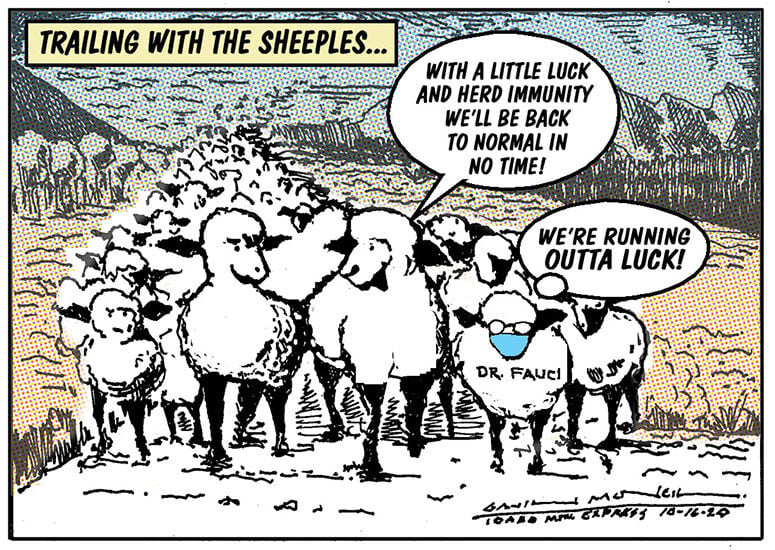
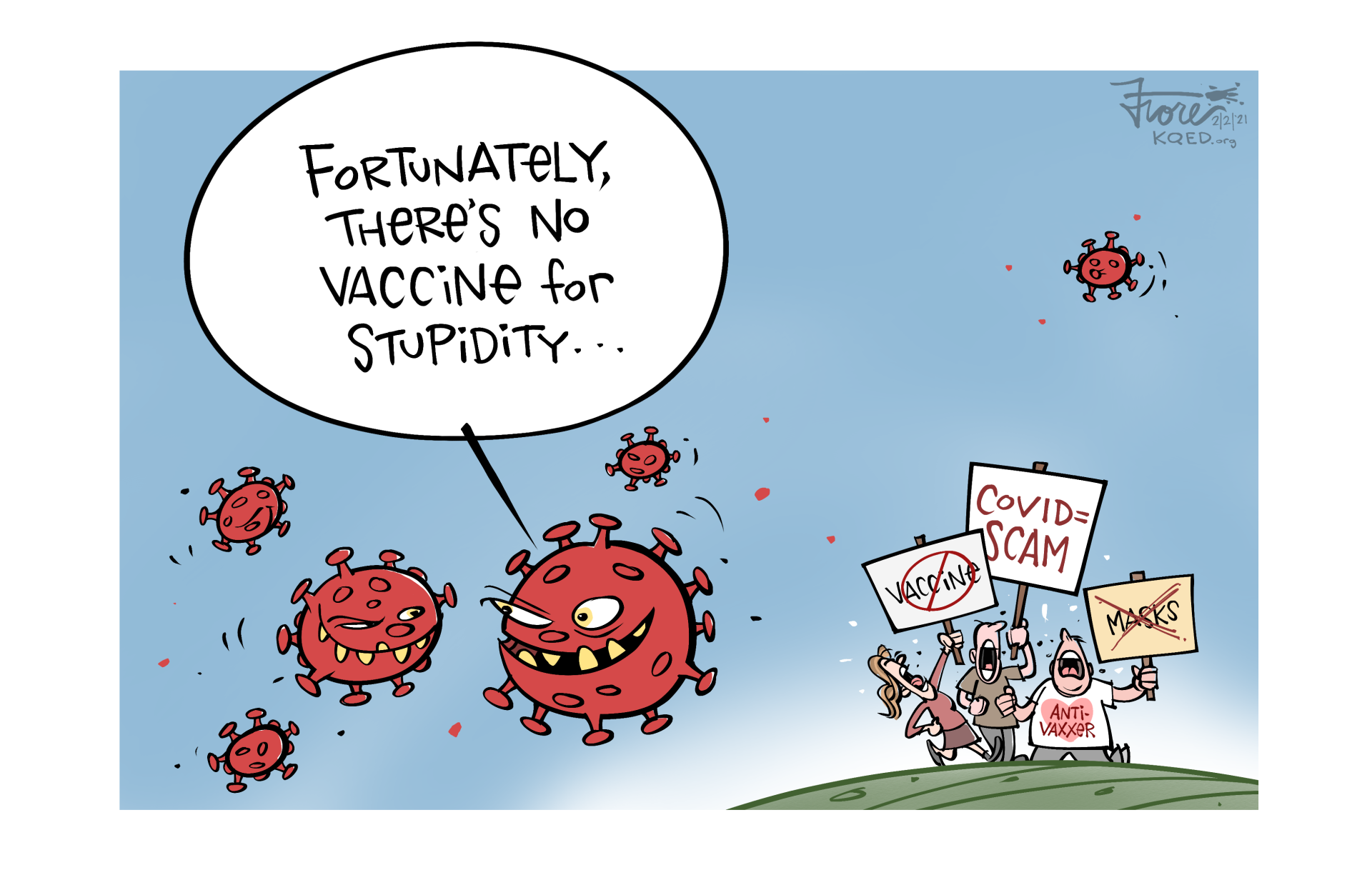
Vaccine hesitancy, like so many other issues related to the COVID pandemic, has now become starkly politicized—one recent survey found that 43 percent of Republicans “likely will never get” the vaccine, as opposed to only 5 percent of Democrats. Another 12 percent of those surveyed, regardless of party identification, say they plan to “see how it goes” before getting the vaccine, a subset that will surely be unnerved by continued doubts about the safety of the Johnson & Johnson (J&J) vaccine.
An expert advisory panel on Friday recommended that use of the J&J shot be resumed, but advised that a warning be included about potential risk of rare blood clots in women under 50. The first three months of the COVID vaccination campaign have been a staggering success—but getting from 27 percent fully vaccinated to the 80 percent needed for “herd immunity” will likely be a much tougher slog.
The CDC and FDA on Friday lifted the recommended pause on use of Johnson & Johnson’s coronavirus vaccine, saying the benefits of the shot outweigh the risk of a rare blood clot disorder.
Why it matters: The move clears the way for states to immediately resume administering the one-shot vaccine.
The Johnson & Johnson shot had been seen as an important tool to fill gaps in the U.S. vaccination effort. But between the pause in its use and repeated manufacturing problems, its role in that effort is shrinking.
Driving the news:J&J shots have been paused for about two weeks, in response to reports that they may have caused serious blood clots in a small number of patients.
Only six people had experienced those blood clots at the time of the pause. The CDC said Friday that there have been nine additional cases.
Regulators said the number is small enough to safely resume the use of J&J’s vaccine.
What they’re saying: “Safety is our top priority. This pause was an example of our extensive safety monitoring working as they were designed to work — identifying even these small number of cases,” said acting FDA Commissioner Janet Woodcock.
“We’ve lifted the pause based on the FDA and CDC’s review of all available data and in consultation with medical experts and based on recommendations from the CDC’s Advisory Committee on Immunization Practices,” she said.
“We are confident that this vaccine continues to meet our standards for safety, effectiveness and quality.”
What’s next: Regulators said health care providers administering the shot and vaccine recipients should review revised fact sheets about the J&J vaccine, which includes information about the rare blood clot disorder.
That heightened attention is important because the standard treatment for blood clots can make this particular type of clot worse.
Yes, but:J&J was already a relatively small part of the overall domestic vaccination effort, in part because the company missed some of its early manufacturing targets.
Multiple problems have since emerged at a Baltimore facility that makes a key ingredient for the vaccine, which could sideline production for weeks.
There’s a lot of anxiety about the AstraZeneca vaccine thanks to recent reports of incomplete data, as well as reports on blood clot risks. Let’s take a look at both issues in context, understanding the efficacy data before and after numbers were updated, and understanding blood clot risk in relation to other common situations where blood clots are a potential concern.
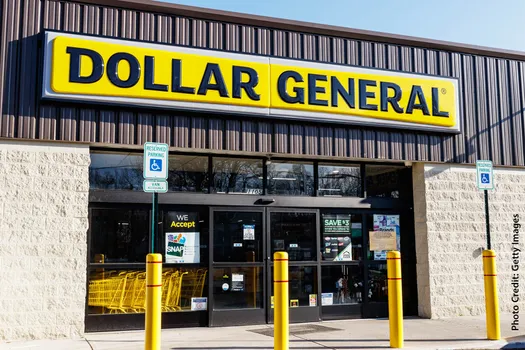
For some time, we’ve been focused on the efforts of Walmart to launch and grow a care delivery business, especially as it has piloted an expanded primary care clinic offering in a handful of states. We’ve long thought that access to basic care at the scale that Walmart brings could be transformative, given that more than half of Americans visit a Walmart store every week. Along those same lines, we’ve always wondered why Dollar General and Dollar Tree—each with around four times as many retail locations as Walmart—haven’t gotten into the retail clinic or pharmacy businesses.
(Part of the answer is ultra-lean staffing—this piece gives a good sense of the basic, and troubling, economics of dollar stores.) Now, as the federal government ramps up its efforts to widely distribute the COVID vaccines, it turns out that the CDC is actively discussing a partnership with Dollar General to administer the shots.
A fascinating new paper (still in preprint) from researchers at Yale shows why this could be a true gamechanger. The Biden administration, through its partnership with national and independent pharmacy providers, aims to have a vaccination site within five miles of 90 percent of the US population by next week. Compared to those pharmacy partners, researchers found,Dollar General stores are disproportionately located in areas of high “social vulnerability”, with lower income residents and high concentrations of disadvantaged groups. Particularly in the Southeast, a partnership with Dollar General would vastly increase access for low-income Black and Latino residents, allowing vaccine access within one mile for many, many more people. And the partnership could form the basis for future expansions of basic healthcare services to vulnerable and rural communities, particularly if some of the $7.5B in funding for COVID vaccine distribution went to helping dollar store locations bolster staffing and equipment to deliver basic health services. We’ll be watching with interest to see if the potential Dollar General partnership comes to fruition.
As states rush to fully reopen businesses, and Americans leave their masks at home in greater numbers, it appears that the feared “fourth surge” of COVID is now underway in many parts of the country.Coronavirus cases are up in half of all states, and up nationally by 9 percent compared to last week. While the latest wave appears to be much less deadly—largely targeting younger people who haven’t yet been vaccinated—it adds urgency to the effort to get shots in arms as quickly as possible.
The good news: that’s happening. Today the US surpassed the milestone of 200M vaccinations given, with nearly a quarter of the population now fully vaccinated (including nearly two-thirds of those over age 65). The progress on vaccines comes as the Johnson & Johnson COVID jab is sidelined, over safety concerns stemming from a small number of rare blood-clotting cases in younger women that caused the Food and Drug Administration (FDA) and the Centers for Disease Control and Prevention (CDC) to urge states to pause the use of the shot. Wednesday’s inconclusive meeting of the FDA’s Advisory Committee on Immunization Practices meant an additional 7 to 10 days of limbo for the J&J vaccine, drawing criticism from experts who warned that the negative publicity could undermine confidence in vaccines among the general population, both in the US and around the world.
Count us among those skeptical of the decision to pull back on the J&J vaccine, which plays a pivotal role in the campaign against COVID, given that it’s a single-dose vaccine that can be stored at normal refrigerator temperatures, making it more easily distributed than the two-dose mRNA vaccines. While the blood clotting cases are serious, and merit investigation, the odds of suffering a vaccine-related blood clot are far outweighed by an individual’s risk of death or severe complications from COVID itself, let alone the chances of getting a blood clot from other medications (such as oral contraceptives).
It was a big week for innumeracy, unfortunately: headlinesabounded about the CDC’s discovery of 5,800 “breakthrough” COVID cases, in which fully vaccinated people still contracted the disease. Unsurprisingly, the numerator got the headlines, not the denominator—the 80M people who’ve been fully vaccinated. Your chances of hitting a hole-in-one as an amateur golfer are better than the chances of getting COVID after being fully vaccinated. Furthermore, of those 5,800 people infected after being fully vaccinated, only 7 percent were hospitalized, and 74 died. Each a tragedy, to be sure—but we’ll take those odds any day.






 HENRY KOTULA