Hospitals that care for a large share of Medicaid, low-income and uninsured patients stand to receive less funding from the federal government after the D.C. Circuit reconsidered how Medicaid disproportionate-share hospital reimbursement is calculated.
A three-judge panel of the U.S. Court of Appeals for the District of Columbia Circuit reversed a lower court and reinstated a 2017 rule establishing that payments by Medicare and private insurers are to be included in calculating a hospital’s DSH limit, ultimately lowering its maximum reimbursement.
“By requiring the inclusion of payments by Medicare and private insurers, the 2017 rule ensures that DSH payments will go to hospitals that have been compensated least and are thus most in need,” Henderson wrote.
The case, brought by four children’s hospitals in Minnesota, Virginia and Washington and an association representing eight children’s hospitals in Texas, concerns the calculation of the uncompensated costs of treating Medicaid beneficiaries known as the “Medicaid shortfall.”
For instance, if a hospital spends $1 million on treating Medicaid patients who have no other healthcare coverage and Medicaid pays $600,000, then the Medicaid shortfall is $400,000. In some instances, Medicaid patients have additional third-party coverage such as Medicare or private insurance.
Hospitals cannot receive more money in Medicaid DSH payments than they spent to treat Medicaid beneficiaries or the uninsured. Part of the motivation behind that stipulation was to prevent hospitals from double dipping by collecting DSH payments to cover costs that had already been reimbursed. Previous cases also revealed that some states have made DSH payments to state psychiatric or university hospitals that exceed the net costs, or even total costs, of operating the facilities.
Providers successfully fought the 2017 rule that limited hospitals’ reimbursement. A federal judge sided with the hospitals that claimed the CMS overstepped its authority and essentially ignored payments by commercial insurers and Medicare. That was overturned Tuesday.
The Children’s Hospital Association of Texas said in a statement that it is exploring its options.
“We are disappointed with the result because it will reduce critical Medicaid funding to safety net providers like children’s hospitals,” the association said. “These hospitals are heavily reliant on Medicaid payments because between 50% and 80% of their inpatient days are covered by Medicaid. Children’s hospitals care for all children, and are, in fact, often the only place that children with complex conditions can get life-saving care.”


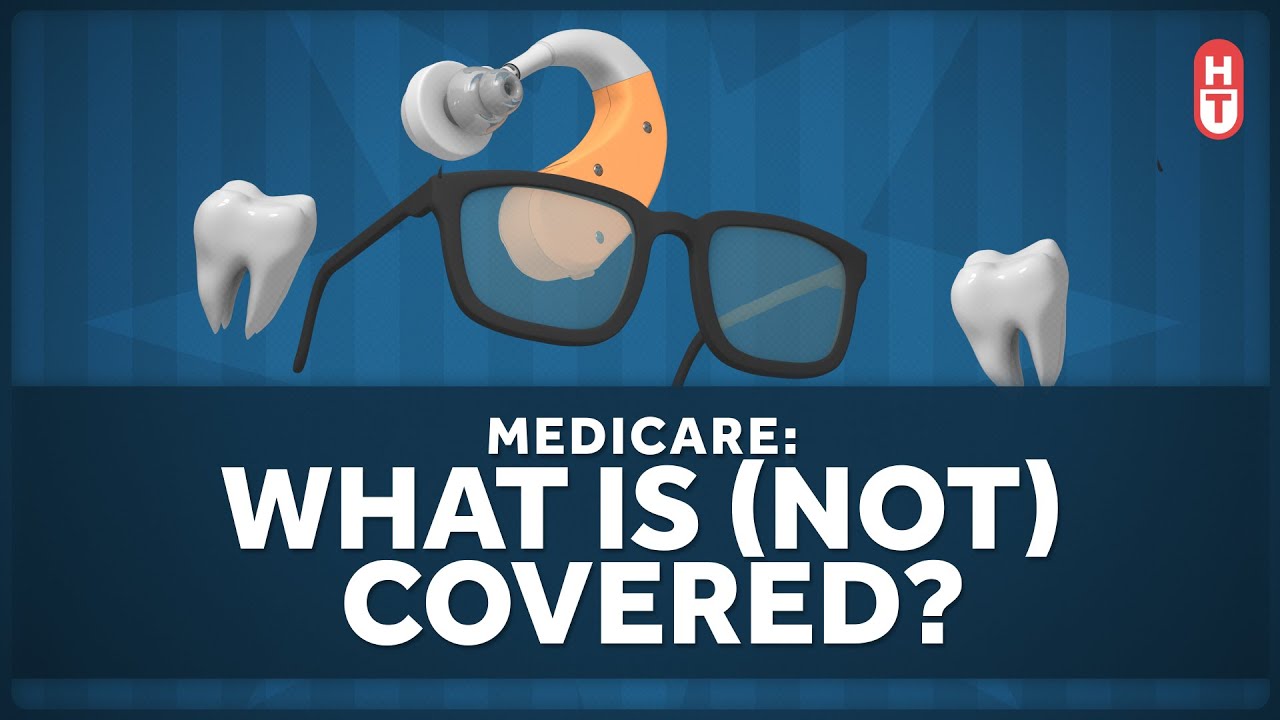
If it followed the path of traditional Medicare, it would end up paying for a lot of coverage that has little medical value.
In the first congressional hearing held on “Medicare for all” in April, Michael Burgess, a Republican congressman from Texas and a physician, called such a proposal “frightening” because it could limit the treatments available to patients.
The debate over Medicare for all has largely focused on access and taxpayer cost, but this raises a question that hasn’t gotten much attention: What treatments would it cover?
A good starting place for answers is to look at how traditional Medicare currently handles things. In one sense, there are some important elements that Medicare does not cover — and arguably should. But a little digging into the rules governing treatments also reveals that Medicare allows a lot of low-value care — which it arguably should not.
Many countries don’t cover procedures or treatments that have little medical value or that are considered too expensive relative to the benefits. American Medicare has also wrestled with the challenge of how to keep out low-value care, but for political reasons has never squarely faced it.
You might remember the factually misguided “death panel” attack on the Affordable Care Act, which preyed on discomfort with a governmental role in deciding what health care would or would not be paid for. (This discomfort also extends to private plans, exemplified by the backlash against managed care in the 1990s.)
Perhaps as a result, Americans don’t often talk about what treatments and services provide enough value to warrant coverage.
You can divide current Medicare coverage into two layers.
The first is relatively transparent. Traditional Medicare does not cover certain classes of care, including eyeglasses, hearing aids, dental or long-term care. When the classes of things it covers changes, or is under debate, there’s a big, bruising fight with a lot of public comment. The most recent battle added prescription drug coverage through legislation that passed in 2003.
Over the years, there have also been legislative efforts to add coverage for eyeglasses, hearing aids, dental and long-term care — none of them successful. Some of these are available through private plans. So a Medicare for all program that excluded all private insurance coverage and that resembled today’s traditional Medicare would leave Americans with significant coverage gaps. Most likely, debate over what Medicare for all would cover would center on this issue.
But there is a second layer of coverage that receives less attention. Which specific treatments does Medicare pay for within its classes of coverage? For instance, Medicare covers hospital and doctor visits associated with cancer care — but which specific cancer treatments?
This second layer is far more opaque than the first. By law, treatments must be “reasonable and necessary” to be approved for Medicare coverage, but what that means is not very clear.
We think of Medicare as a uniform program, but some coverage decisions are local. What people are covered for in, say, Miami can be different from what people are covered for in Seattle.
Many treatments and services are covered automatically because they already have standard billing codes that Medicare recognizes and accepts. For treatments lacking such codes, Medicare makes coverage determinations in one of two ways: nationally or locally.
Although Medicare is a federal (national) program, most coverage determinations are local. Private contractors authorized to process Medicare claims decide what treatments to reimburse in each of 16 regions of the country.
In theory, this could allow for lots of variation across the country in what Medicare pays for. But most local coverage determinations are nearly identical. For example, four regional contractors have independently made local coverage determinations for allergen immunotherapy, but they all approve the same treatments for seasonal allergy sufferers.
There are more than 2,000 local coverage determinations like these. National coverage decisions, which apply to the entire country, are rarer, with only about 300 on the books.
When Medicare makes national coverage decisions, sometimes it does so while requiring people to enter clinical trials.
It has been doing this for over a decade. The program is called coverage with evidence development, and its use is rare. Fewer than two dozen therapies have entered the program since it was introduced in 2006. But it allows Medicare to gather additional clinical data before determining if the treatment should be covered outside of a trial. To be considered, the treatment must already be deemed safe, and it must already be effective in some population. The aim is to test if the treatment “meaningfully improves” the health of Medicare beneficiaries.
Only one therapy (CPAP, for sleep apnea) that entered this process has ever emerged to be covered as a routine part of Medicare. The others are in a perpetual state of limbo, neither fully covered nor definitively not covered. CAR-T cell therapy, a type of cancer immunotherapy, which appears to be very successful but is also very expensive, is one of the most recent to enter this process.
Despite the complexity of all these coverage determination methods — local, national, contingent on clinical trials — the bottom line is that very few treatments are fully excluded from Medicare, so long as they are of any clinical value. And this suggests that it’s not very likely that Medicare for all would deny coverage for needed care.
A 2018 study in Health Affairs found only 3 percent of Medicare claims were denied in 2015. And traditional Medicare doesn’t limit access to doctors or hospitals either, as it is accepted by nearly every one. (This is in contrast with Medicare Advantage.)
Medicare has a troubled history in considering cost-effectiveness in its coverage decisions. Past efforts to incorporate it have failed. For example, regulations proposed in 1989 were withdrawn after a decade of internal review.
As a result, Medicare covers some treatments that are extremely expensive for the program and that offer little benefit to patients. The Medicare Payment Advisory Commission recently studied this in detail. In a 2018 report to Congress, it noted that up to one-third of Medicare beneficiaries received some kind of low-value treatment in 2014, costing the program billions of dollars. If Medicare for all followed in traditional Medicare’s path, it could be wastefully expensive.
The United States has had a historical unwillingness to face cost-effectiveness questions in health care decisions, something many other countries tackle head-on. Some Americans favor Medicare for all because it would make the system more like some overseas. And yet, in choosing not to consider the value of the care it covers, Medicare remains uniquely American.
https://www.healthcareitnews.com/news/healthcare-workforce-development-new-strategies-new-demands

As hospitals and ambulatory sites grapple with the challenges of quality improvement, value-based care, cybersecurity and more, the size and shape of the workforce is changing as technology and imperatives evolve.
The healthcare workforce is evolving, often by necessity, thanks to the same gravitational forces that are affecting the rest of the industry and the economy at large: technological advances, competitive market forces, shifting imperatives that demand new skill sets, challenges with job satisfaction and burnout.
Whether they’re C-suite leaders, physicians, nurses, IT staff, data scientists, case managers, security pros or revenue cycle, billing and accounting experts, hospitals and health systems large and small are facing an array of challenges when it comes to finding the right people to fit the right roles.
There’s a lot that needs doing in healthcare these days, after all – managing the clinical and operational demands of value-based reimbursement, caring for a growing aging population with a shrinking number of doctors and nurses, fighting the good fight against relentless cybersecurity threats – and finding the right employees to do it all is more important than ever.
During July, Healthcare IT News and our sister publication, Healthcare Finance, will explore how hospitals and health systems are managing these challenges – optimizing their workforces and positioning skilled leaders to help drive long-term strategic success in those areas and others.
The recent 2019 HIMSS U.S. Leadership and Workforce Survey polled 232 health information and technology leaders from acute and ambulatory providers nationwide to gain some insights about the challenges they’re prioritizing and the organizational structures they’re putting in place to deal with them.
Surprisingly or not, “hospitals and non-acute providers appear to have very different strategies regarding information and technology leadership and workers,” according to the report.
For instance, inpatient sites are much more able to prioritize the hiring of skilled C-suite execs to guide strategic initiatives. But “the absence of information and technology leaders in non-acute organizations is unsettling as it becomes more challenging to advance capabilities in settings without strong executive champions.”
Likewise, hospitals and practices also differ substantially when it comes to more rank-and-file employees. The larger inpatient sites “tend to operate environments with fairly extensive opportunities, whereas non-acute providers tend to deal with static workforce demands,” according to HIMSS. “The culture that can result from these different settings is something healthcare leaders should take into consideration when developing a staffing strategy.”
And health system hiring strategies are indeed shifting as providers face an array of challenges that need skilled and forward-thinking workers to help solve them. The HIMSS report listed the top 10 of these as:
The big hurdle, however, is that many “hospitals are continuing to be negatively impacted by staffing challenges,” according to the study. “The negative impacts on providers resulting from paused/scaled back projects are significant enough to at least warrant an exploratory consideration,” said HIMSS researchers.
A look at the numbers tells one story: When it comes to workforce vacancy barely one-third 36% of providers polled by HIMSS say they’re fully staffed – while more than half (52%) said they have open positions (12% didn’t answer or weren’t sure).
Indeed, there’s plenty of hiring to be done for health systems trying to tackle some of the biggest ongoing strategic challenges.
Even though the size in provider workforces since 2018 increased for 38% of the providers in this year’s survey – it stayed the same for 37% and decreased for just 14% – the projection for 2020 is a further expected hiring boost at 34% of providers (compared with a status quo for 42% and a contraction at just 9%).
Still, there’s nuance when one considers the differences between inpatient versus ambulatory organizations. While both are more likely to increase their workforces than to decrease them in 2020 (37% and 12% percent of hospitals, respectively, and 26% and 1% of outpatient sites), far more non-acute organizations expect their staff sizes to stand pat than hospitals (51 percent, compared with 38%).
“The variances in staffing growth trajectories evidenced in the two provider groups … has the potential to produce exceedingly different workplace cultures; a fast-paced environment in hospitals and a fairly stable setting in non-acute organizations,” according to the HIMSS report. “If true, then it is very possible these settings attract health IT workers with remarkably different needs/wants. Provider organizations looking to stabilize their workforce should take these factors into consideration when developing staff recruitment, retention and development strategies.”
Over the course of this month, Healthcare IT News and Healthcare Finance will be exploring the many challenges related to staffing and workforce, across many facets of healthcare in the U.S.
We’ll examine the industry’s labor force spend (the percentage of total budgets may surprise you), and look at how how AI, telehealth and consumerism can help change that equation. We’ll learn how to attract top C-suite talent and combat clinician burnout. We’ll explore the benefits of apprenticeship programs, and see the strategies some hospitals are using to deal with labor shortages. And much more.
So, as your healthcare organization looks to the fiscal year or remaining calendar year ahead, be sure to check back at HITN and HF during July to learn from thought leaders and industry peers – about the best way to put the best people in the best position to help meet your strategic goals.

More than 70% of Virginia hospitals that garnish wages are nonprofit, and the money collected is only a tiny percentage of revenue.
Nonprofit hospitals in Virginia are more likely to garnish patients’ wages if they don’t pay their medical bills than for-profit hospitals in the state, and ultimately, the practice does little to drive revenue for those hospitals, according to a JAMA study published this week.
Researchers examined Virginia court records from 2017 that dealt with completed “warrant in debt” lawsuits, or cases where a party sues an individual for unpaid debt. They examined how hospital characteristics link to wage garnishments, and found that 71% of hospitals in Virginia that garnished wages were nonprofit.
A recent ProPublica report highlighted Methodist Le Bonheur Healthcare, which it said filed more than 8,300 lawsuits from 2014 through 2018. Methodist isn’t alone. The JAMA researchers unearthed more than 20,000 debt lawsuits filed by various Virginia hospitals in 2017; more than 9,300 garnishment cases took place that year, and almost three in four were liked to nonprofits.
Some even sue their own employees. Again looking at Methodist, ProPublica found the hospital has sued more than 70 of its employees for unpaid medical bills since 2014, including a suit brought against a hospital housekeeper in 2017 for $23,000 — $7,000 more than her annual salary.
Methodist responded by pointing out its considerable charity care, with community contributions estimated at more than $226 million annually. The federal government expects nonprofit hospitals to provide charity care and financial assistance since those hospitals are exempt from local, state and federal taxes.
WHAT’S THE IMPACT
Just five hospitals — four of them nonprofit — were responsible for more than half of the garnishment cases in the state, JAMA researchers found. Overall, 48 out of 135 Virginia hospitals garnished patient wages, amounting to 36 percent.
Despite the high prevalence of the practice, the money collected from garnishments comprised a minuscule share of hospital revenue. Hospitals that garnished wages collected annual gross revenue that averaged out to $806 million, while garnishments accounted for $722,342. That’s about 0.1% of gross revenue.
The garnishments, which ranged from $24.80 to $25,000, averaged $2783.15 per patient, researchers found.
According to a report filed by NPR, nonprofit Mary Washington Hospital in Fredericksburg was the hospital that sued the most patients in Virginia in 2017 — so much so that Fredericksburg General District Court reserved a morning each month to hear its cases.
The day after NPR published its report, Mary Washington announced its intention to suspend the practice of suing patients for unpaid bills, saying it was committed to a “complete re-evaluation of our entire payment process.”
The JAMA study found that, of those whose wages were garnished, Walmart, Wells Fargo, Amazon and Lowes were the most common employers.
THE LARGER TREND
Though researchers focused on Virginia, suing patients over medical debt is not a trend that’s unique to the state. Arizona hospitals have gone to court over personal injury claims, and Johns Hopkins Hospital in Baltimore, Maryland, was recently presented with a petition from citizens and unions to drop medical debt lawsuits.

Here are 11 hospitals and health systems with strong operational metrics and solid financial positions, according to recent reports from Moody’s Investors Service, Fitch Ratings and S&P Global Ratings.
1. Altamonte Springs, Fla.-based AdventHealth has an “Aa2” rating and stable outlook with Moody’s. The health system has strong margins, low operating leverage and solid cash levels, according to Moody’s.
2. Children’s Healthcare of Atlanta has an “Aa2” rating and stable outlook with Moody’s. The health system has strong margins, and its good management discipline and detailed planning capabilities will drive consistent operating performance, according to Moody’s.
3. Falls Church, Va.-based Inova Health System has an “Aa2” rating and stable outlook with Moody’s. The health system has a leading market position in the broader northern Virginia region and strong operating cash flow margins, according to Moody’s.
4. IHC Health Services, the borrowing group of Salt Lake City-based Intermountain Healthcare, has an “Aa1” rating and stable outlook with Moody’s. Intermountain’s exceptional credit quality is supported by low debt levels, strong cash levels, solid operating performance and its leading market position, according to Moody’s.
5. Oakland, Calif.-based Kaiser Permanente has an “AA-” rating and stable outlook with Fitch and S&P. Kaiser has a robust integrated business model, strong operational cash flow and ample unrestricted reserves, according to S&P.
6. Bryn Mawr, Pa.-based Main Line Health has an “Aa3” rating and stable outlook with Moody’s. The health system has a leading market position in the Philadelphia suburbs, strong balance sheet measures and a modest debt load, according to Moody’s.
7. Chicago-based Northwestern Memorial HealthCare has an “Aa2” rating and stable outlook with Moody’s. The health system has a prominent market position in the broader Chicago region because of its strong brand, and its consolidated operating model and comprehensive IT systems will allow it to execute growth strategies while maintaining good margins, according to Moody’s.
8. Renton, Wash.-based Providence St. Joseph Health has an “Aa3” rating and stable outlook with Moody’s and an “AA-” rating and stable outlook with Fitch. The health system has a large service area, a revenue base of more than $24 billion and an integrated care delivery platform, which includes health plans, employed physicians and inpatient and outpatient services, according to Moody’s.
9. Broomfield, Colo.-based SCL Health has an “AA-” rating and stable outlook with S&P. The health system has ample liquidity and a healthy balance sheet, according to S&P.
10. San Diego-based Scripps Health has an “Aa3” rating and stable outlook with Moody’s. The health system has strong market share within San Diego County, a history of strong and stable management, and favorable balance sheet measures, according to Moody’s.
11. Tahoe Forest Hospital District, which operates Tahoe Forest Hospital in Truckee, Calif., and Incline Village (Nev.) Community Hospital, has an “Aa3” rating and stable outlook with Moody’s. The hospital district has a healthy cash position, low debt burden and a large and increasing tax base, according to Moody’s.