4 Regulations That Would Terrify U.S. Drug Companies Ahead Of The 2018 Midterms

https://www.forbes.com/sites/robertpearl/2018/07/16/drug-companies/#72ce13501e41
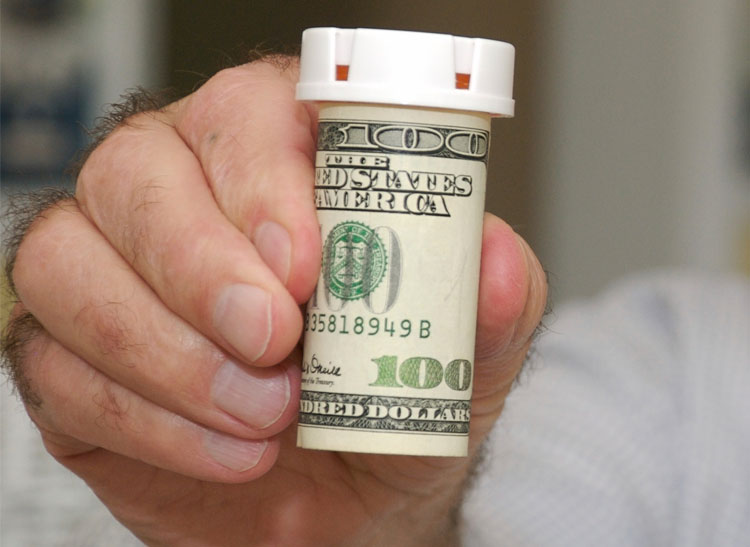
Image result for High Drug Prices

If you’re a powerful American drug company, then you’ve had a strange couple of months. In that time, you’ve experienced a rainbow of emotions: fear, relief and, now, confusion and anxiety.

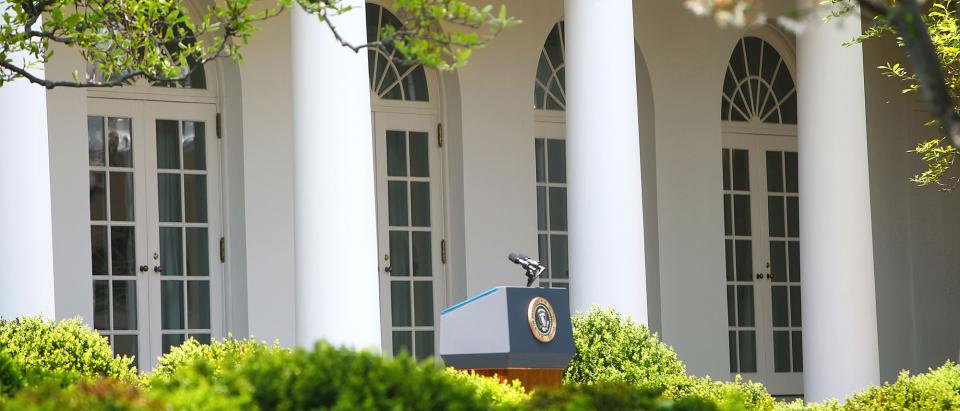
The roller-coaster ride, as you recall, began in mid-May when President Trump stood alongside HHS Secretary Alex M. Azar, in the Rose Garden of the White House, in front of a sign reading “Lower Drug Prices for Americans.”

As the president approached the mic, you watched with bated breath, remembering Trump’s campaign promise to drive down prescription drug prices to below a penny on the dollar. You always knew that’d be impossible but, then again, you thought, is anything really impossible?

Things started off poorly that morning. Almost immediately, Trump began denouncing the actions of drug manufacturers who, he said, were contributing to a “broken system.” He then urged all U.S. pharma companies to drop their prices, before deriding pharmacy benefits managers (PBMs) as “middlemen” who are getting “very, very rich” off the same broken system as you.

But when his speech ended, relief washed over you. After all, President Trump made no mention of his previous promise to negotiate lower drug prices for seniors enrolled in Medicare. He didn’t revive his vow to allow the importation of prescription medications, either. He didn’t discuss the popular notion of shortening pharmaceutical patents, nor that idea about requiring drug-companies to justify the price of new medications.

Granted, all these promises would be incredibly difficult to legislate. And, like most drug companies, you know that most of these ideas wouldn’t severely damage your bottom line anyway. But had the president committed to even one of them in his Rose Garden speech, he would have sent a clear message that this is not business as usual.

Instead, you and your colleagues took solace in his words. By late afternoon, the nation’s pharmaceutical, biotech and PBM stocks were up, not down. In the following weeks, drug companies interpreted Trump’s comments the same way drag-racers look at a stop signs—as more of a request than a rule.

Now, in fairness, President Trump and Secretary Azar had no intention of revealing a final, comprehensive set of proposals, rules or regulations on May 11. They set their sights on Tuesday, July 16—the official deadline for interested parties to comment on Secretary Azar’s blueprint Q&A. That’s when the real policy-making is set to begin. And, until early this month, most of the drug industry had been bracing for incremental, not radical, change.

But on July 1, Pfizer learned that it’s not safe to wake a sleeping bear. Thinking they had a clear runway, Pfizer’s corporate executives went ahead and raised list prices on more than 100 prescription drugs.

He followed that Tweet with a phone call and, within 24 hours, Pfizer had rolled back its price increases. Just like that, Trump had the drug industry’s full attention.

It stands as a public relations win for Trump in the lead up to the 2018 midterm elections. With recent polls indicating that 22% to 30% of Americans say healthcare is their top voting issue, Trump and the Republican party are wise to appear tough on rising drug prices (even if Pfizer is merely deferring its price hikes until later in the year).

Uncertainty and confusion, once again, permeate the drug industry. If the polls are even remotely accurate at predicting voter behavior this November, Trump and his cabinet will have good reason to take action.

I personally hope they have the courage to do so.

Unfortunately, the ideas Trump and Azar presented in the Rose Garden won’t be enough. They aren’t going to flatten the rapid rate of drug-price inflation or dramatically impact future price escalation.

So, alongside the administration’s proposed ideas, I offer four alternative policies that could make a real difference:

Leading idea No. 1: Take out the “middlemen”

In his May 11 address, the president went after PBMs, those insurance-company intermediaries between drug manufacturers and patients. At present, consumers know nothing about the prices these intermediaries negotiate or the size of the rebates/kickbacks they keep for themselves. Revenue for PBMs is determined as a percentage of all Rx drugs sold, which means there’s virtually no incentive to drive prices lower or replace the high-margin, brand-name drugs on PBM formularies with new, lower-cost alternatives. Federal legislation could require PBMs to operate transparently and work to lower out-of-pocket costs and drug prices for patients. However, there are way too many “ifs” with this approach to expect major change on the horizon.

A more frightening proposition for drug makers: Imagine if the U.S. government negotiated drug prices for all 55.5 million Medicare patients and made those costs publicly available so that everyone knew what price was fair and reasonable. Nearly all other nations do this. Why not the United States? Besides, Medicare already establishes prices for participating hospitals and doctors. Why not do the same for drug prices?

Leading idea No. 2: Make other nations pay more

Whether it’s NATO spending or wall-building, President Trump expects other nations to pony up for American interests. Most nations have made a habit of saying no. Now, rather than negotiating on behalf of Medicare for lower-cost medications (particularly Part B), the president has encouraged citizens of other countries to pay more for their prescriptions and, thereby, contribute an increased share of funding to drug-company R&D. Health ministers in other nations haven’t made this high priority for their 2019 healthcare agendas. They likely won’t. Even if drug prices were to rise in other countries, would drug manufacturers pass that added revenue on to American patients? Or to their shareholders? History suggests it’s the latter.

A more frightening proposition for drug makers: Require drug companies to document all the R&D dollars they spend in bringing a product to market. Further, force them to quantify and compare their drug’s efficacy to other drugs on the market. If pharmaceutical companies want generous patent protections (for products that often determine whether a patient lives or dies), their pricing can’t be capricious or simply what the market will bear. Prices should relate either to: (a) the cost of the drug’s R&D or (b) the superior clinical effectiveness of the medication.

Leading idea No. 3: Put prices in Rx ads

This is one of the most interesting concepts to come out of Trump and Azar’s blueprint. That’s because such a policy would, at least in theory, make it impossible for drug makers to hide their prices. USDA regulations already require companies to disclose possible side-effects in ads. Imagine if the administration also stipulated that pharmaceutical manufacturers must disclose their prices in ad copy, as well. For now, it’s unclear which costs the drug makers would need to disclose, given that patients and purchasers pay very different amounts for the same medications. Already, drug companies are using coupons and rebates, what critics deem to be clever schemes, to lower the advertised price for patients while simultaneously raising what they charge insurers—who ultimately pass those costs back to purchasers and patients through higher premiums.

A more frightening proposition for drug makers: Limit what U.S. pharmaceutical companies can charge. Period. American drug makers should be required to pay a penalty if they charge Americans more than 120% for the same medication as the 10 wealthiest nations pay on average. It’d be the same thing that happens when baseball teams exceed the salary cap. And when comparable medications exist at lower prices, TV ads would need to disclose that fact to viewers, as well.

Leading idea No. 4: Speed up generic medication approvals

This idea is a step in the right direction. Unfortunately, the president didn’t explain why generics currently undergo such lengthy delays for approval. The biggest hurdle is not government regulations, but drug company tactics. For most patented prescriptions, the generic versions have exactly the same chemical structure, and therefore, the same efficacy. As such, once a generic exists, there’s little or no reason to purchase the more expensive product. Knowing this, makers of the brand-name version use legal maneuvers to extend their patent protections before driving generic competitors out of business with their pricing and marketing leverage.

A more frightening proposition for drug makers: The government needs to change patent laws to protect patients first. Medications fall into two classifications. There are the small-molecule ones that often are available over-the-counter. With these, the generic version’s chemical structure is identical to that of the brand-name version. There also are the biologicals, so named because they are produced by living cells and organisms. Insulin is one example. Increasingly, this latter class of drugs has the highest price. These chemicals are too complex to be copied exactly, which is why the generic equivalents are labeled “biosimilars.” The solution here is to focus on the most expensive, large-molecule biologics first. In so doing, the government should force manufacturers to hand over drug samples to biosimilar companies 18 months before their patents end. This will speed up the development of biosimilars and fast-track the approval of lower-cost (but equally efficacious) medications. For patients with diabetes, this could lower the cost of life-saving insulin by 50% or more. Recent research from Yale shows up to 1 in 4 people with diabetes are injecting less insulin than they should simply because of the cost.

A Realistic Glimpse Into The Future Of Drug Pricing

Today, the pharmaceutical industry enjoys powerful patent protections and, thereby, monopolistic control over pricing. The consequence is that Americans are paying exorbitant prices for patented medications. The simplest solution is to strike a legislative balance that allows (a) drug companies to invent (and invest in) the next generation of breakthrough medication while (b) allowing the American people to afford the medications they need to stay healthy.

For most of the 20th century, the pharmaceutical world stayed within those guardrails. But over the past decade, profits have been way out of line with R&D and investment. The time has come to restore balance and reasonableness, regardless of what the national drug lobby wants.

Later this week, Secretary Azar will receive feedback on the administration’s blueprint and will begin drafting potential cost-cutting regulations. I encourage him and President Trump to use their authority to make drugs more affordable.

I suspect the pharmaceutical industry believes it will be business as usual, despite the campaign rhetoric and another Rose Garden event this coming fall. I hope the Secretary and the president have the courage to prove them wrong. The health of the American people depends on it.


‘What The Health?’ ACA Under Fire. Again.

https://khn.org/news/podcast-khns-what-the-health-aca-under-fire-again/

Image result for ‘What The Health?’ ACA Under Fire. Again.

Democrats in the Senate are gearing up to fight President Donald Trump’s nominee to the Supreme Court, U.S. Circuit Judge Brett Kavanaugh. They argue he is not only a potential threat to abortion rights, but also to the Affordable Care Act.

Meanwhile, the Trump administration continues its efforts to undermine the workings of the Affordable Care Act. This week, officials announced a freeze on payments to insurers who enroll large numbers of sicker patients, and another cut to the budget for “navigators” who help people understand their insurance options and enroll for coverage.

This week’s panelists for KHN’s “What the Health?” are:

Julie Rovner of Kaiser Health News

Margot Sanger-Katz of The New York Times

Anna Edney of Bloomberg News

Julie Appleby of Kaiser Health News

Among the takeaways from this week’s podcast:

  • One reason Democrats are rallying around the health issue rather than the abortion issue is that there is more unity in their caucus over health than abortion. Also, the two key Republican senators who support abortion rights — Sen. Susan Collins (R-Maine) and Sen. Lisa Murkowski (R-Alaska) — also voted against GOP efforts to repeal the Affordable Care Act last year.
  • The Trump administration’s action on risk-adjustment payments sent yet another signal to insurers that the federal government does not necessarily have their backs and is willing to change the rules along the way.
  • The Trump administration says it wants to cut to payments for navigators because they are not cost-effective. But the navigator money does not come from taxpayers or government sources. It is paid from insurance industry user fees. These funds also go to support ACA advertising — which has also been cut. However, the user fees have not been reduced. In theory, reducing these fees could provide savings that could be passed on to consumers.
  • After being called out on Twitter by Trump, drugmaker Pfizer this week announced it would delay some already-announced price increases on about 100 of its drugs. It is worth noting that the president used his bully pulpit and gained some success. The six-month delay will mean that consumers will not experience an increase in cost at the pharmacy for at least that time period. But it still raises questions.
  • The Trump administration worked to block a World Health Organization resolution to promote breastfeeding. But while this seemed a clear case of promoting the interests of infant formula companies over public health experts, there was pushback from some women who say they are unable to breastfeed and feel stigma when they opt for formula instead. On the other hand, formula can be dangerous in developing countries without easy access to clean water.


Forty Years of Winning Friends and Influencing People

Forty Years of Winning Friends and Influencing People

An interview with former US Representative Henry Waxman of California.

Of the more than 12,000 Americans who have served in Congress since it convened in 1789, few have had careers as fruitful as Henry Waxman’s. Representing west Los Angeles and its surrounding areas for 40 years, Waxman, 78, left a remarkable imprint on US health policy. His manifold accomplishments were capped by the passage of the Affordable Care Act (ACA) in 2010. A son of south-central Los Angeles, he worked at his father’s grocery store, earned a law degree at the University of California, Los Angeles, and in 1968 won a seat in the State Assembly. He was elected to the US House in 1974 in an era when bipartisanship was ordinary and health care had yet to become an overwhelming economic and political force in American life. Waxman was known in Congress for his persistence at wearing down opposition. Republican Senator Alan Simpson of Wyoming famously called him “tougher than a boiled owl” after negotiating the landmark Clean Air Act amendments of 1990. Waxman led efforts to ban smoking in public places and to require nutrition labels on food products. I talked with him recently about his experiences, the future of health policy, and the changing language of health reform. The transcript has been lightly edited for length and clarity.

Q: In 1974, when Los Angeles voters first sent you to Washington, health policy wasn’t the ticket to political influence. You are a lawyer, not a doctor. What drew you to health care?

A: When I was first elected to the California State Assembly in 1968, I believed that if I specialized in a policy area I would have more impact than if I tried to be an expert on everything. Health policy fit my district in Los Angeles, and I could see that government needed to be involved in a whole range of decisions, from health care services to biomedical research to public health. I was chairman of the Assembly Committee on Health. I was elected to Congress in 1974 in a Democratic wave election. I wanted to get on a health policy committee, which was Energy and Commerce. Democrats picked up so many seats and there were so many committee vacancies that year that it was easy to claim one, and I got on that committee. Within four years there was a vacancy for chair of the health and environment subcommittee, and I stepped up to that. It gave me a lot more impact.

Q: What role do you think health care will play in the upcoming elections?

A: If the Democrats do as well as I expect and hope, it will be more because of what Trump was doing in the health area than anything else. Even though people value health care services and insurance, the idea that the president and the GOP wanted to take away health insurance and reduce benefits for people who needed it — that was something they didn’t expect and were angry about.

Q: Is it feasible to provide health coverage to everyone?

A: I have always felt we needed access to universal health coverage. It wasn’t until we got the ACA under Obama that we were able to narrow the gap of the uninsured — those who couldn’t get insurance through their jobs, who weren’t eligible for Medicare and Medicaid, who had preexisting conditions, or who couldn’t afford the premiums. The ACA helped people have access to an individual health policy by eliminating insurance company discrimination and giving a subsidy to those who couldn’t afford coverage. It wasn’t a perfect bill, but it was important. The idea that Republicans would come along and bring back preexisting conditions as a reason to deny people coverage is what drove enough GOP senators to stop the GOP repeal bill from going forward last year. We’ll see what they do by way of executive orders or through the courts to try to frustrate people’s ability to buy insurance.

The Republican ACA repeal bill last year was a real shock because they also wanted to repeal the Medicaid program and allow states to cut funds for people in nursing homes, people with disabilities, and low-income patients who rely so heavily on that program. And they had proposals to hurt Medicare that House Speaker Paul Ryan had been advancing. The American people do not want to deny others insurance coverage and access to health services.

Q: Bipartisanship has gone out of style. Can it be revived?

A: It doesn’t look very likely now, but I built my legislative career on the idea that there could be bipartisan consensus to move forward on legislation. All the big bills had bipartisan support. The only bill that got through on a strictly partisan basis was the Obamacare legislation, and I regretted that. The Republicans just wanted to denigrate it and scare people into believing the ACA would provide for death panels, hurt people, take away their insurance, and keep them from getting access to care. None of that was true.

Q: A growing number of Democrats want to establish a single-payer health care system for the state. Do you agree with them?

A: A lot of people mistake the phrase “single payer” with universal health coverage. While I share the passion of people who want to cover everybody, single payer is not a panacea. My goal is universal health coverage. The Republican attempt last year to repeal the ACA and send 32 million Americans into the ranks of the uninsured was an albatross around their necks.

But the Democrats could turn this winning issue into a loser if some make a single-payer bill such as Medicare for All into a litmus test. I cosponsored single-payer legislation in Congress with Senator Ted Kennedy, and I always sought to bring the nation closer to universal coverage. I authored laws to bring Medicaid to more children and to establish the Children’s Health Insurance Program, and I led the fight to enact the ACA. These bills were very important. If we passed something like a single-payer bill, which would be extremely hard to do, we would be passing up opportunities to make progress. A lot of people who want a Medicare for All bill don’t realize that those of us on Medicare have to pay for supplemental insurance, because Medicare doesn’t cover everything. Medicare doesn’t generally cover certain services like nursing home care, so to get help you have to impoverish yourself to qualify for Medicaid.

One organization is sending out letters telling voters to support a single-payer bill and you won’t have to pay anything anymore. We can’t afford something like that. Democrats can embrace a boundless vision for a health care future without being trapped by a rigid model of how to get there. We should increase the number of people with comprehensive health insurance and focus on lowering costs. People with Medicare don’t want to give it up. People have health insurance on the job.

I would rather expand on what we have and build it out to cover everybody.

People don’t seem to remember that Democrats could barely muster the votes for the ACA when we had 60 votes in the Senate and a 255–179 majority in the House. Even if we recapture Congress and the presidency, I don’t think we would get a Medicare for All bill passed. It would require such a high tax increase that people would be absolutely shocked.

Q: What would be the national impact of California adopting a universal coverage plan?

A: Californian progress would be a model for the rest of the country, and we would be doing what’s right for the people of California who don’t have access to coverage. I think California is a trendsetter — for good and for bad. Proposition 13 and term limits started in California and spread to other states, and I think they have been a disservice. We’ve also done a lot of good things in California, and the rest of the country follows those things as well.

People who try to marginalize California do so at their own risk. People around the country look at California as a leader. California embraced the ACA, expanded Medicaid, and has been moving forward on making sure our public health care system is reforming itself to represent the needs for population health care and to ensure that uninsured low-income patients get access to decent, good-quality health care.

Q: More states are adopting work requirements in Medicaid. Do you think that will become the standard nationwide?

A: Work requirements are inconsistent with the Medicaid law. We’re talking about making people go to work to get health care when they’re sick. I just don’t think it makes sense. The courts may throw it out, and if not, at some point there will be a reaction against it, and it will be repealed by a future Congress.

Q: Some see parallels between the conduct of tobacco companies and opioid makers. Do you think “Big Pharma” will be held to account like “Big Tobacco?”

A: In the difficult fight against big tobacco, one of the lessons we learned was that even an extremely powerful group like the tobacco industry could be beaten if you keep pushing back. Even though there was overwhelming public support for regulation of tobacco, it took until 2009 before we could enact tobacco regulation by giving the Food and Drug Administration (FDA) authority to act. In the meantime, there were lawsuits by states to recover money they spent under Medicaid programs to cope with the harm from smoking. With opioids, there will be more and more lawsuits against distributors and manufacturers whose actions resulted in deaths of people from opioid addiction. Congress now is grappling with many bills to help people who are addicted, to prevent addiction from spreading further, and to restrict the ability to get the drug product. I’m optimistic we can come to terms with this crisis.

Q: What have you been doing since retiring from Congress?

A: I wanted to stay in the DC area near my son, Michael Waxman, and his family. He had a traditional public relations firm and he asked me to join him. In the health area, we represent Planned Parenthood in California, public hospitals in California, community health centers at the national level, and hospitals that get 340b drug discounts because they serve many low-income patients. We have foundation grants to work on problems of high pharmaceutical prices, and foundation grants to have a program to make sure women know about the whole range of health services available to them for free under the ACA. I enjoy working with my son and pursuing causes I would have pursued as a member of Congress.


Kavanaugh Supreme Court Fight Will Be All About Health Care

https://www.thefiscaltimes.com/2018/07/10/Kavanaugh-Supreme-Court-Fight-Will-Be-All-About-Health-Care

Image result for supreme court


he fight over President Trump’s pick of Appeals Court Judge Brett Kavanaugh to the Supreme Court is on, with Democrats launching what The Washington Post called “an all-out blitz” to defeat the nomination.

So get ready to hear a lot about health care in the coming days.

The Washington Post’s Dana Milbank notes that former Republican senator Jon Kyl, now a lobbyist for the pharmaceuticals industry, has been tapped to guide Kavanaugh’s path through the Senate. Why? Because by picking Kavanaugh, “Trump has guaranteed that health care will be at the center of the confirmation fight,” Milbank says.

Democrats welcome that fight, even if they have little chance of actually blocking the nomination. “The liberal base is fired up about abortion rights, but Senate Democratic Leader Charles Schumer (N.Y.) will seek to emphasize access to affordable health care as much as Roe v. Wade in the battle over the Supreme Court,” The Hill’s Alexander Bolton reports.

Focusing on health care might make sense for Democrats in a number of ways:

  • It reinforces the party’s preferred midterm election messaging in an area where voters say they trust Democrats more than Republicans.
  • Framing women’s reproductive rights as a matter of access to health care will be less polarizing in red states where seats are at stake in November, Bolton writes.
  • Playing up access to affordable health care may also put more pressure on Republican Sens. Susan Collins of Maine and Lisa Murkowski of Alaska, both of whom voted against Obamacare repeal last year.

If confirmed, Kavanaugh may get to weigh in on any of a number of cases with the potential to reshape health policy well beyond abortion rights. Despite his long legal record, “many of his health-related decisions are open to parsing from either side of the aisle and don’t actually provide a clear insight into where he’d stand on the Supreme Court,” The Washington Post’s Colby Itkowitz says.

Here are some key issues and cases that could be decided by the Supreme Court and Kavanaugh:

Obamacare’s protections for people with pre-existing medical conditions: Americans overwhelmingly support keeping these protections in place, according to a Kaiser Family Foundation poll from last month, but Trump’s Justice Department has asked a federal court to rule that those provisions of Obamacare are invalid. The case will soon be heard in a district court in Texas and could make its way to the Supreme Court before long. Sen. Joe Manchin of West Virginia, one of the few Democrats who might back Kavanaugh, said in a statement that he wants to hear where the judge stands on the ACA protections for those with pre-existing conditions before deciding whether to confirm him.

Medicaid: A federal court late last month blocked Kentucky’s plan to introduce work requirements for Medicaid recipients. The Trump administration is likely to appeal the ruling. Other states are also implementing work requirements. “As more states experiment with these programs and the cases wind their way through the courts, the Supreme Court may weigh in and shape how low-income Americans access Medicaid across the country,” Arielle Kane, director of health care at the Progressive Policy Institute, writes at the New York Daily News. The high court could also be asked to consider whether private health care providers can sue over Medicaid reimbursement rates, a question that could open the door to state funding cuts.

Risk adjustment payments to insurers: The Trump administration just froze billions of dollars of payments to insurers who enroll costlier-than-expected patients. The payments come from money collected from other insurers in the individual market. Legal challenges involving these payments are making their way through the courts. In the meantime, “the insurers in the individual market must manage uncertainty and constant change — resulting in higher prices for health care consumers,” Kane writes.

Industry consolidation: “Last year, four of the largest insurers tried, and failed, to merge into two. This year, CVS has proposed merging with Aetna, Amazon has acquired PillPack, and Walmart is seeking to combine with Humana,” Kane writes. “This so called ‘vertical integration’ raises questions about monopolies, competition and health-care pricing. It is likely that at some point courts will weigh in.”


This Tweet Captures the State of Health Care in America Today

Image result for This Tweet Captures the State of Health Care in America Today

A nightmarish accident on a Boston subway platform on Friday — described in gory detail by a local reporter, Maria Cramer, as it unfolded and quickly retweeted by thousands — is one you might expect to see in an impoverished country.

In the face of a grave injury, a series of calculations follow: The clear and urgent need for medical attention is weighed against the uncertain and potentially monumental expense of even basic services, like a bandage or a ride to the hospital, and that cost, in turn, weighed against all the known expenses of living that run through any given head on any given day.

This discord, between agony and arithmetic, has become America’s story, too.

The United States spends vastly more on health care than other industrialized countries, nearly 17 percent of the nation’s gross domestic product in 2014, according to a report by the Commonwealth Fund, compared with just 10 percent of G.D.P. in Canada and Britain. But that disparity is not because Americans use more medical services — it’s because health care is far more expensive here than in other countries. One 2010 study by the Organization for Economic Cooperation and Development found that hospital costs were 60 percent higher in the United States than in 12 other nations.

And that cost is often passed on to patients, either in the form of deductibles and other out-of-pocket expenses or through ever-soaring insurance premiums.

The Affordable Care Act has improved access to health care, especially for lower-income families that now qualify for Medicaid or subsidies to buy private health insurance. Wider access, however, has not come cheaply for most people. As a result, many Americans, including those who are insured, have determined that they must avoid going to the hospital, visiting doctors or filling prescriptions that they need. A 2017 Kaiser Family Foundation survey found that 43 percent of people with insurance said that they struggled affording their deductibles, and 27 percent said that they put off getting care because of cost. Turning to GoFundMe and other crowdsourcing websites has become the norm in medical crises.

Whether the woman on the train platform received the medical attention she needed is unknown. Ms. Cramer said on Monday that she had not been able to get an update on the woman’s condition yet. Ms. Cramer went on to tweet that after several minutes had passed, an ambulance still had not arrived. Instead, fellow passengers tried to help. “One man stood behind her so she could lean against him,” she wrote. “Another pressed cold water bottles to her leg.”

Health care is a complicated problem, one exacerbated by the gridlock in Washington. But the trade-offs that everyday people are being asked to make, the calculations they are being forced to undertake in the scariest of situations, suggest that far too many of America’s politicians have placed too little value on the well-being of its citizens. Nothing will change until their fellow citizens step into the ballot box and insist on something better.


The “pleasant ambiguity” of Medicare-for-all in 2018, explained

https://www.vox.com/policy-and-politics/2018/7/2/17468448/medicare-for-all-single-payer-health-care-2018-elections

Are we talking about single-payer health care or something else?

Democrats across the country are running on three simple words, recognizable to every American: Medicare for all.

“There’s no more popular brand in American politics than Medicare,” says Adam Green, co-founder of the lefty Progressive Change Campaign Committee (PCCC). “Our hope is that Democrats wrap themselves in the flag of Medicare in 2018.”

In Democratic primaries around the country, Medicare-for-all candidates are winning — from Kara Eastman in Nebraska to Katie Porter in Orange County, California, to Alexandria Ocasio-Cortez in the Bronx, the message is resonating.

“The system we have, the status quo is not acceptable,” Porter told me when I covered her primary race in May. “We’re questioning whether we can rely on major players, like health insurance companies, to continue to be reliable partners in delivering health care.”

Even before these candidates started winning, polling was showing that Medicare-for-all is really popular: 62 percent of Americans liked the sound of it in last November. Almost every single rumored 2020 candidate in the Senate has backed Sen. Bernie Sanders’s Medicare-for-all bill. It’s clear the idea is in ascendancy among Democrats.

But someday, a reckoning will come. When Democrats hold power again — especially control of Congress and the White House — they will be expected to actually deliver on these Medicare-for-all promises. And when that day arrives, the party will have to decide whether they want to blow up America’s current health care system to build something new or figure out a less disruptive path, but risk falling short of truly universal coverage.

So even now, there is some jockeying among Democrats to define those three little words.

What does “Medicare-for-all” actually mean?

As popular as Medicare-for-all is, the slightly more vexing question is what it actually means.

Historically, Medicare-for-all has meant single-payer health insurance, a national government-run program that covered every American and replaced private coverage entirely, similar to the government-run health care programs in Canada and some European countries.

Then-Rep. John Conyers (D-MI) first introduced the Expanded and Improved Medicare for All Act in 2003. Conyers has since been disgraced by sexual harassment allegations but the idea lives on. It’s now sponsored by Rep. Keith Ellison (D-MN) and it is still a single-payer proposal. So is Sanders’s Medicare-for-all bill, a cornerstone of his unexpectedly resonant 2016 presidential campaign.

But these days, other plans are falling under the Medicare-for-all umbrella. Some progressives, like Green, are even comfortable with the term being applied to the various proposals to allow all Americans buy into Medicare. Some of those plans used to be branded as a “public option”; they would not end private insurance that more than half of Americans get, usually through work, as a true single-payer would. But these plans would also not provide the same guarantee of universal coverage that a single-payer system does.

“For anybody who supports Medicare-for-all single payer, what better way to debunk the right wing lies than to allow millions and millions of Americans to voluntarily opt into Medicare and love it?” Green told me in our interview. “As a political strategy, having Medicare-for-all be a broad umbrella where any candidate can embrace some version of it… that moves the center of gravity in the Democratic party.”

In 2018, with control of Congress at stake, nobody is taking up arms to insist that their version should be orthodoxy. What we know for certain is that Medicare-for-all is popular, and so Democrats of all stripes want to campaign on it. Governing comes later.

What does the public think about Medicare-for-all versus single-payer health care?

Ultimately, the direction the Democratic party goes in may have a lot to do with how far the public is willing to go.

One chart from the Kaiser Family Foundation, the gold standard for health policy polling, sums up why there is any debate at all about the meaning of Medicare-for-all.

Medicare-for-all gets nearly two-thirds support, but a “single-payer health insurance system” is a little more divisive: 48 percent have a positive reaction, and 32 percent have a negative reaction; the gap between favor and disfavor closes considerably. Medicare buy-ins poll the highest, with the support of three-fourths of Americans, including 6 out of 10 Republicans.

You could absolutely argue these numbers still seem pretty strong for single-payer described as such, given the conventional wisdom that such a plan is unworkable. But it is undoubtedly true that Medicare-for-all, as a slogan, is more popular — as are some of these more incremental policies, like giving people the option of buying into Medicare.

The “pleasant ambiguity” of Medicare-for-all, explained

Back in 2012, a group of progressive activists and Democratic lawmakers got together to talk about what they would do if the Supreme Court ruled the Affordable Care Act unconstitutional. That looked like a real possibility, and they agreed on a new campaign to keep pushing for universal health care.

Democrats planned to run on a platform of Medicare-for-all if the Court struck the law down. At that point, the Conyers single-payer bill had been around for nearly a decade, but the PCCC’s Green says that on that day and in that room, some people heard Medicare-for-all and thought of a single-payer system. Yet others heard the same thing and thought of something that looks more like a public option. From his perspective, those different ideas aren’t a problem.

“There is a pleasant ambiguity and more of a north star goal nature around Medicare-for-all,” Green said. “This really does not need to be a huge intra-party battle. Why get in the weeds during the campaign?”

Voters themselves seem to like the sound of Medicare-for-all, even if they themselves don’t always agree on what it means. BuzzFeed’s Molly Hensley-Clancy reported on this phenomenon while covering Eastman’s campaign in Nebraska ahead of the May primary:

[C]onversations with more than two dozen Omaha voters reveal a dynamic that polling, too, has begun to capture: When some moderate and left-leaning voters say “Medicare for All” sounds like a pretty good idea, they aren’t actually thinking about single-payer health care. Instead, they’re thinking about simply expanding the program to include more seniors or children, or offering a public option that people can buy into.

On one warm May day a week from the primary, Phil, a devout liberal, told Eastman the story of his wife’s brain cancer — rejected by Medicaid, and still too young for Medicare, they’ve barely been able to afford pricey experimental treatments.

He likes the sound of Medicare for All, he said, but wouldn’t want everyone to be part of a single-payer, government-run system. “I wouldn’t want one system,” he told BuzzFeed News. “I wouldn’t want that.”

We heard similar ambiguity when Vox conducted some focus groups with Hillary Clinton voters in suburban Washington, DC, last fall. Those voters, particularly the ones who currently had their own insurance through work, liked the idea of having a choice, having an option. They also liked the sound of Medicare-for-all, but a top-to-bottom overhaul of the American health care system made them nervous.

“To me, [single-payer] sounds like it’s somehow complete overhaul of everything, whereas Medicare-for-all sounds like warming people up to the idea using the structure that’s already in place to deliver that care,” Dennis, a 34-year-old Hillary Clinton voter in Bethesda, told us.

One of the things that made Democrats the most nervous about single payer is how political health care has become. They see how Trump has attacked Obamacare, and they see future Republican administrations meddling with single-payer health care as a real possibility. That could be a sticking point for some Democratic voters, especially those who are better off and already get good insurance through work.

Medicare-for-all is uniting Democrats for now — but it could divide them later

That explains why there’s this fledgling competition over what Medicare-for-all is really describing.

The best example might be the health care plan from the Center of American Progress, which is, tellingly, called “Medicare Extra For All.” It’s a seriously ambitious plan, one that would achieve universal coverage through a combination of government plans and private insurance, while preserving employer-based insurance for those who want it. But it is not single payer. And it is notably produced by an organization closely aligned with the Democratic establishment.

“To the extent there will be moments where we have to bring clarity to what Medicare-for-all means for us on the progressive side of the house, compared to other people who want to dance around the issue, we will do that,” Nina Turner, who leads the Sanders-affiliated Our Revolution, told me. “For us, at Our Revolution, it is Medicare for all, the whole thing, for everybody in this country.”

The scars from the Obamacare reveal themselves in this debate. For all the health care law has achieved, it also showed the limits of incrementalism. Even Medicaid expansion, the closest thing the law had to a single-payer pilot, was undermined by the Supreme Court by allowing Republican-led states to refuse it. The Obamacare insurance markets have been susceptible to sabotage from Republicans in Congress and the Trump administration.

Yes, the uninsured rate has reached historic lows under Obamacare, but 10 percent of Americans still lack coverage. Democrats will be faced again, at some point, with a choice between a more incremental approach, like the Medicare public options introduced by some Democrats in Congress, or a sweeping overhaul like single-payer. They can put it off for a while and campaign, as Green suggests, on whatever Medicare-for-all means to voters. But eventually that debate will need to be had.

Its outcome is far from certain. Eastman, one of Medicare-for-all’s most notable champions so far in 2018, described the dilemma perfectly.

She unambiguously supports single-payer Medicare-for-all. But “with the current Congress, with the current president, is that feasible?” she said. “I think you have to be practical about what’s happening in our country.”

Yet even if she recognizes the political realities of the moment, she wants Democrats to be bolder in their agenda.

“We have to stop backing off from this issue,” Eastman said. “That’s one of the problems with the ACA. It didn’t go far enough.”


Labor Unions Will Be Smaller After Supreme Court Decision, but Maybe Not Weaker


Image result for Labor Unions Will Be Smaller After Supreme Court Decision, but Maybe Not Weaker

With the Supreme Court striking down laws that require government workers to pay union fees, one thing is clear: Most public-sector unions in more than 20 states with such laws are going to get smaller and poorer in the coming years.

Though it is difficult to predict with precision, experts and union officials say they could lose 10 percent to one-third of their members, or more, in the states affected, as conservative groups seek to persuade workers to drop out.

The court’s decision is the latest evidence that moves to weaken unions are exacting a major toll. Beyond the dropout campaigns aimed at members, conservatives are bringing lawsuits to retroactively recover fees collected by unions from nonmembers.

In May, President Trump signed three executive orders making it easier to fire government workers and reining in the role of unions representing federal workers.

Dropping out of a union is a more attractive proposition now that workers no longer have to pay a so-called agency fee, typically about 80 percent of union dues, if they choose not to belong to a union. (Those doing so generally account for a small fraction of the workers whom public-sector unions represent.)

In the five years after Michigan passed a law ending mandatory union fees in 2012, the number of active members of the Michigan Education Association dropped by about 25 percent, according to government filings, a much faster attrition rate than before. Its annual receipts fell by more than 10 percent, adjusting for inflation.

Still, the more interesting question is whether the unions, whatever the blow to their ranks and finances, will be substantially weaker.

Union leaders insist that they won’t — that the crisis posed by the case, Janus v. American Federation of State, County and Municipal Employees, has brought more cohesion and energy to their ranks.

“No one wanted this case,” said Randi Weingarten, president of the American Federation of Teachers. “But the gestalt around the country has been to turn an existential threat into an opportunity to engage with our members like never before.”

There are reasons to believe that the claim is not merely desperate bravado.

One parallel to the current development is a 2014 Supreme Court ruling known as Harris v. Quinn, which struck down mandatory union fees for home-based workers who serve private individuals but are paid through government programs like Medicaid.

As of late 2013, the Service Employees International Union represented about 60,000 public-sector home care and child-care workers in Illinois, about 40 percent of whom were union members. (The rest paid agency fees.)

Receipts for the service employees union local representing home-based workers in Illinois dropped significantly in the four years after the decision. But an aggressive membership campaign largely offset the loss of members.

It also built and reinforced personal relationships with members, who could be summoned to make demands of politicians in nearly every legislative district.

“Our members go and meet Sam McCann,” said Keith Kelleher, who until last year was president of the local representing these home-based workers, referring to a Republican state senator. “He says yes most of time because he’s got hundreds of members in his district.”

Public home-based workers in Illinois, a state with a notably anti-union Republican governor, continue to notch victories as a result. Last summer, home care workers won a 48-cent-an-hour wage increase from the state, up from an average wage of $13, in a budget that the legislature passed by overriding the governor’s veto. This spring, home child-care workers won more than a 4 percent raise.

In anticipation of the Janus ruling, major public-sector unions have invested heavily in recent years in reaching out to current members — an effort known as internal organizing — and to prospective members to keep their numbers from dropping precipitously and to create a more activist culture. They plan to continue funding these initiatives even if it requires cutting spending elsewhere.

Mary Kay Henry, the international president of the service employees union, said the union used projections derived from its experience after the Harris decision to cut its budget by 30 percent shortly after Mr. Trump was elected. She said the union, which represents about two million workers, roughly half of them in the public sector, was focusing its spending on recruiting members and mobilizing workers to face down employers and elect pro-labor politicians.

“We intend to prioritize the political and organizing work,” she said.

Government filings show that the union has cut contributions to organizations that it had traditionally supported, including the Children’s Defense Fund, People for the American Way, and the National Immigration Law Center. (The union says it provides nonmonetary support to some of these groups.)

At the same time, the union is investing tens of millions of dollars in a door-to-door canvassing initiative for the midterm elections, intended to turn out people who don’t normally vote.

Lee Saunders, president of the American Federation of State, County and Municipal Employees, said that his union’s two highest priorities going forward would be its internal outreach and helping to organize nonunionized workplaces, and that the union would probably “have to make adjustments” to fund these programs. The union spent more than $15 million during the 2016 campaign cycle supporting political candidates, parties and committees.

Mr. Saunders said the union, which represents over 1.2 million workers, had held one-on-one conversations with nearly 900,000 members since 2013. Among the goals of these conversations, he said, is to inoculate members against campaigns by conservative groups to urge them to quit.

“If someone knocks on their door talking about how you can get out of the union — ‘it would be so easy, you don’t have to pay union dues’ — our folks are prepared to tell them to get the hell off their doorstep,” he said.

Alexander Hertel-Fernandez, a political scientist at Columbia University who studies corporate and conservative efforts to weaken labor, said organized interest groups had traditionally had the greatest impact on elections by educating members about candidates and through on-the-ground canvassing rather than large campaign contributions. “It’s doubly so for unions,” he said, adding that the focus “seems like a wise decision, but the effectiveness has to be weighed against what happens to membership and overall revenues.”

The unions enjoy certain advantages. States like California and New Jersey have tried to ease the blow from Janus pre-emptively by passing legislation that, for example, guarantees public-sector unions access to new hires and their personal contact information to help in recruiting.

There is also a substantial wind at their back: a rising energy on the left during the Trump era. Workers in particular appear more willing to take to the streets and state capitols, including tens of thousands of teachers who walked off their jobs this year in conservative states to protest the underfunding of public education.

When the Supreme Court ruled last month that employment contracts could prohibit workers from bringing class-action lawsuits, activists in states like New York, Vermont and Oregon escalated their efforts to pass so-called private attorneys general legislation, allowing workers to bring cases on the state’s behalf that could benefit all affected workers, the same way litigation by an attorney general would.

“We’ve had many, many folks calling: ‘I heard about this legislation you helped design. How do we make this happen?’” said Deborah Axt, co-executive director of Make the Road New York, an advocacy group pushing the measure. Ms. Axt said the group planned to campaign for the legislation’s enactment this summer.

That kind of energy appears to be benefiting unions. A Gallup poll last summer showed labor’s approval at its highest level since 2003, and unions in West Virginia and several other states where teachers walked off the job this year report gains in members.

“We’ve seen a 13 percent jump in membership because of the walkout,” said Ed Allen, president of the Oklahoma City American Federation of Teachers. “We have over 300 people signed up to work in political campaigns. We’ve never seen those kinds of numbers before.”


How Policy, Business Decisions in Iowa Led to Higher Premiums

https://www.commonwealthfund.org/blog/2018/policy-decisions-iowa?omnicid=EALERT%%jobid%%&mid=%%emailaddr%%

Map of Iowa where premiums are higher due to policy decisions

This year, Iowa’s legislature took the extraordinary step of abdicating the state’s authority to regulate health insurance products. The bill, enacted in April, exempts health plans offered by the state’s Farm Bureau from state and federal insurance regulation, including Affordable Care Act (ACA) provisions designed to protect people with preexisting conditions and provide a minimum standard of benefits.

Proponents argue that such a law is needed to provide individual market consumers with cheaper health plan options than available under the ACA. Critics point out that younger, healthier consumers are most likely to benefit from these plans. And while details haven’t been provided yet, the Farm Bureau plans are expected to be medically underwritten, and not cover the ACA’s minimum set of benefits. As a result, older Iowans, those with preexisting conditions, and those who need comprehensive coverage are unlikely to find these plans affordable or attractive. And many could be denied enrollment outright. As enrollment in the ACA-compliant individual market becomes older and sicker, marketplace consumers who do not qualify for the ACA’s income-related premium subsidies will face increasingly higher premiums.

Iowa’s Farm Bureau statute is making a bad situation worse for the state’s individual market. Thanks to a number of decisions by state policymakers and the dominant insurance company – Wellmark Blue Cross Blue Shield – premiums in the state’s individual market are already among the highest in the country, with an average annual marketplace plan premium in excess of $10,000 in 2018.

A Study of Market Failure: Iowa’s Individual Health Insurance Market

The current dismal state of the ACA individual market in Iowa was not a foregone conclusion. In 2014, when the marketplaces launched, Iowa had four insurers competing in the ACA’s marketplace. In 2018, only one insurer is selling ACA-compliant health plans; it agreed to do so only after implementing an average 50 percent increase to unsubsidized premiums.

Iowa’s marketplace enrollment has also lagged that of other states. As of 2016, only 20 percent of eligible Iowans had enrolled (by comparison, that number was 40 percent in Illinois, 43 percent in Missouri, and 57 percent in Maine). Iowa is an outlier for a critical reason. Wellmark BlueCross BlueShield declined to participate in the marketplace for the first three years, entered only briefly in 2017 and then declined to participate in 2018, but is returning to the market in 2019. The insurer also maintained a large block of pre-ACA grandfathered and transitional, or “grandmothered,” health plans (see table).

Because the enrollees in these plans must pass a health screen before being allowed to enroll, they are relatively healthy. Because Wellmark was able to hang on to these healthy enrollees, the pool of people available for the ACA-compliant market was much smaller and sicker than it otherwise would have been.

Affordable Care Act Grandfathered and Grandmothered Health Plans
Grandfathered health plans Policies in effect before the March 2010  enactment of the ACA;  not subject to ACA standards and protections. Although these policies can be renewed indefinitely as long as they do not undergo substantial changes, they can’t be newly issued.
Grandmothered (transitional) health plans Policies issued after the ACA’s 2010 enactment but before 2014. Policies are not required to meet critical ACA protections.

Grandfathered and Grandmothered Policies: Policy and Business Choices with Long-Term Consequences

Due to the transitional nature of the individual market and the high administrative costs of maintaining grandfathered health plans, many insurers — other than Wellmark — discontinued these products over time. And unlike several states that prohibited these policies in order to ensure a healthier, more stable individual market, Iowa’s leadership embraced the Obama administration’s decision to allow the renewal of grandmothered health plans. Iowa stands out even among states that did not ban such plans:  an estimated 38,000 people remained in grandmothered policies as late as 2018. Indeed, approximately 60 percent of Iowans buying insurance on their own stayed with pre-ACA grandfathered or grandmothered health plans.

Left with a smaller and sicker pool of enrollees than they had projected, it is therefore not surprising that the insurers remaining in the market needed significant premium increases. The premium hike implemented in 2018 likely drove as many as 26,000 Iowans to drop their coverage this year.

Enrollment and Premiums Had Iowa Taken a Different Path

What if Iowa had taken a different path? If Wellmark had, like many other insurers, discontinued its grandfathered policies, and if the state had prohibited grandmothered plans, the individual market would be a lot healthier than it is today. In fact, doing so would have added up to 85,000 people to Iowa’s ACA-compliant market, according to a new estimate by Wakely Consulting Group. Those added enrollees, because they are relatively healthy, would have reduced average premiums for ACA-compliant plans by up to 18 percent (see table).1

Enrollment and Premiums in ACA-Compliant Market Due to Improved Risk Pool
  Without Grandfathered Plans Without Grandmothered Plans Without Grandfathered or Grandmothered Plans
Total change in ACA-compliant enrollment +25,000 to 40,000 +30,000 to 45,000 +55,000 to 85,000
Change in premiums -5% to -12% -5% to -12% -8% to -18%

Analysis by Wakely Consulting Group. Numbers have been rounded.

Looking Ahead

Iowa’s experience offers important lessons. The more the individual market is segmented between healthy and the less-healthy consumers, the more likely unsubsidized enrollees are to face unaffordable premiums. Federal proposals such as those to expand the availability of short-term and association health plans, to the extent they are not limited by state policies, could result in more state individual markets resembling Iowa’s. The primary losers in such a scenario are the working middle-class consumers: entrepreneurs who run their own businesses, freelancers and consultants, farmers and ranchers, and early retirees who earn too much to qualify for the ACA’s premium subsidies.

State leaders can protect these families by adopting policies that will expand the risk pool and maintain a balance between healthy and less-healthy enrollees. A number of states have already done so, through state-level reinsurance programs, expanded annual enrollment opportunities, and limits on short-term and association health plans. It’s not too late for other states to follow their lead.


Americans Want to Keep Obamacare Protections for Pre-Existing Conditions

http://www.thefiscaltimes.com/2018/06/27/Americans-Want-Keep-Obamacare-Protections-Pre-Existing-Conditions

Americans of all political stripes favor keeping the Affordable Care Act’s provisions prohibiting insurers from denying care or charging more to people with pre-existing medical conditions, according to the latest Kaiser Family Foundation tracking poll.

About three-quarters of people surveyed by Kaiser said it’s “very important” that those provisions remain law. That includes 58 percent of Republicans — even as many of them continue to support a repeal of the Affordable Care Act. Nearly 60 percent of Americans say they live in a household where someone has a pre-existing health problem.

The protections introduced by the Affordable Care Act may be at risk because the Trump administration has refused to defend them in court against a legal challenge brought by 20 Republican state attorneys general who argue that the law is unconstitutional.

The telephone poll of 1,492 U.S. adults was conducted June 11-20. It has a margin of error of 3 percentage points.


Getting Ready for Health Reform 2020: What Past Presidential Campaigns Can Teach Us

https://www.commonwealthfund.org/publications/fund-reports/2018/jun/getting-ready-health-reform-2020-presidential?omnicid=EALERT%%jobid%%&mid=%%emailaddr%%

Getting Ready for Health Reform 2020

Abstract

  • Issue: The candidates for the 2020 presidential election are likely to emerge within a year, along with their campaign plans. Such plans will include, if not feature, health policy proposals, given this issue’s general significance as well as the ongoing debate over the Affordable Care Act.
  • Goal: To explain why campaign plans matter, review the health policy components of past presidential campaign platforms, and discuss the likely 2020 campaign health reform plans.
  • Methods: Review of relevant reports, data, party platforms, and policy documents.
  • Findings and Conclusions: Proposals related to health care have grown in scope in both parties’ presidential platforms over the past century and affect both agendas and assessments of a president’s success. Continued controversy over the Affordable Care Act, potential reversals in gains in coverage and affordability, and voters’ concern suggest a central role for health policy in the 2020 election. Republicans will most likely continue to advance devolution, deregulation, and capped federal financing, while Democrats will likely overlay their support of the Affordable Care Act with some type of Medicare-based public plan option. The plans’ contours and specifics will be developed in the months ahead.

This report is the first in a series on health reform in the 2020 election campaign. Future papers will delve into key reform design questions that candidates will face, focusing on such topics as: ways to maximize health care affordability and value; how to structure health plan choices for individuals in ways that improve system outcomes; and how the experience of other nations’ health systems can inform state block-grant and public-plan proposals.

Introduction

During the 2020 presidential campaign, which begins in earnest at the end of 2018, we are sure to hear competing visions for the U.S. health system. Since 1988, health care has been among the most important issues in presidential elections.1 This is due, in part, to the size of the health system. In 2018, federal health spending comprises a larger share of the economy (5.3%) than Social Security payments (4.9%) or the defense budget (3.1%).2 Moreover, for the past decade, partisan disagreement over the Affordable Care Act (ACA) has dominated the health policy debate. If health care plays a significant role in the 2018 midterm elections, as some early polls suggest it will,3 the topic is more likely to play a central role in the 2020 election.

This report on health reform plans focuses on policies related to health insurance coverage, private insurance regulation, Medicare and Medicaid, supply, and tax policy. It explains why campaign plans are relevant, their history since 1940, the landscape for the 2020 election, and probable Republican and Democratic reform plans. The Republican campaign platform is likely to feature policies like those in the Graham-Cassidy-Heller-Johnson amendment: a state block grant with few insurance rules, replacing the ACA’s coverage expansion. The Democratic platform will probably defend, improve, and supplement the ACA with some type of public (Medicare-like) health plan. The exact contours and details of these plans have yet to be set.

Importance of Campaign Plans

Campaign promises, contrary to conventional wisdom, matter.4 During elections, they tell voters each party’s direction on major topics (e.g., health coverage as a choice or a right in 1992). In some cases, candidates or party platforms include detailed policies (reinsurance in Republicans’ 1956 platform, prospective payment in Democrats’ 1976 platform). Campaign plans tend to be used to solidify party unity, especially in the wake of divisive primaries (2016, e.g.).5 Election outcomes are affected by such factors as the state of the economy, incumbency, and political competition rather than specific issues.6 That said, some exit polls suggest that candidates’ views on health policy can affect election outcomes.7

Campaign plans also help set the agenda for a president, especially in the year after an election. Lyndon B. Johnson told his health advisers, “Every day while I’m in office, I’m gonna lose votes. . . . We need . . . [Medicare] fast.”8 Legislation supported by his administration was introduced before his inauguration and signed into law 191 days after it (Exhibit 1). Bill Clinton, having learned from his failure to advance health reform in his first term, signed the bill that created the Children’s Health Insurance Program (CHIP) 197 days after his second inauguration. Barack Obama sought to sign health reform into law in the first year of his first term, but the effort spilled into his second year; he signed the ACA into law on his 427th day in office. These presidents, along with Harry Truman, initiated their attempts at health reform shortly after taking office.

In addition, campaign plans are used by supporters and the press to hold presidents accountable. For instance, candidate Obama’s promises were the yardstick against which his first 100 days,9 first year,10 reelection prospects,11 and presidency were measured.12 Though only 4 percent of likely voters believe that most politicians keep their promises, analyses suggest that roughly two-thirds of campaign promises were kept by presidents from 1968 through the Obama years.13

Health as a Campaign Issue (1912–2016)

The United States has had public health policies since the country’s founding, with its policy on health coverage, quality, and affordability emerging in the twentieth century. Teddy Roosevelt supported national health insurance as part of his 1912 Bull Moose Party presidential bid.14 Franklin Delano Roosevelt included “the right to adequate medical care and the opportunity to achieve and enjoy good health” in his 1944 State of the Union address, although it was not mentioned in the 1944 Democratic platform.15 Harry Truman is generally credited with being the first president to embrace comprehensive reform. He proposed national health insurance in 1945, seven months after F.D.R.’s death, and campaigned on it in 1948 as part of a program that would become known as the Fair Deal, even though it was not a plank in the Democratic platform. Legislation was blocked, however, primarily by the American Medical Association (AMA), which claimed that government sponsoring or supporting expanded health coverage would create “socialized medicine.”16 Health policy became a regular part of presidential candidates’ party platforms beginning about this time (Exhibit 2).

After Truman’s failure, the next set of presidential candidates supported expanding capacity (e.g., workforce training, construction of hospitals and clinics) and making targeted coverage improvements. In 1960, John F. Kennedy campaigned on a version of Medicare legislation: extending Social Security to include hospital coverage for seniors. It was opposed by the AMA as well, whose spokesman, the actor Ronald Reagan, claimed socialized medicine would eventually limit freedom and democracy.17 It took the death of Kennedy, the landslide Democratic victory in 1964, and persistence by Lyndon B. Johnson to enact Medicare and Medicaid, in 1965. This was about 20 years after Truman introduced his proposal; President Johnson issued the first Medicare card to former President Truman.

Shortly after implementation of Medicare and Medicaid, how best to address rising health care costs became a staple subject in presidential campaigns. Between 1960 and 1990, the share of the economy (gross domestic product) spent on health care rose by about 30 percent each decade, with the public share of spending growing as well (Exhibit 3). In his 1968 campaign, Richard Nixon raised concerns about medical inflation, and subsequently proposed his own health reform, which included, among other policies, a requirement for employers to offer coverage (i.e., an employer mandate).18 Nixon’s proposal was eclipsed by Watergate, as Jimmy Carter’s health reform promises were tabled by economic concerns. Presidents and candidates in the 1980s set their sights on incremental health reforms.19

In 1991, comprehensive health reform helped Harris Wofford unexpectedly win a Pennsylvania Senate race. In 1992, it ranked as the second most important issue to voters.20 Democratic candidates vied over health reform in the 1992 primaries, with Bill Clinton embracing an employer “pay or play” mandate. George H. W. Bush developed his own plan, which included premium tax credits and health insurance reforms. Five days after his inauguration, President Clinton tasked the first lady, Hillary Clinton, with helping to develop health care legislation in the first 100 days. Yet, mostly because he prioritized economic and trade policy, Clinton did not address a joint session of Congress until September and did not send his bill to Congress until November of 1993. Key stakeholders (including the AMA and the Health Insurance Association of America) initially supported but ultimately opposed the legislation. In September 1994, the Senate Democratic leadership declared it could not pass a bill.21 Less than two months later, Democrats lost their majorities in the House and the Senate, and did not regain them for over a decade. This created a view that comprehensive reform of the complex health system was politically impossible.22 Indeed, presidential candidates in 1996, 2000, and 2004 did not emphasize major health policies. That said, by 2004, health system problems had escalated and, at least on paper, the candidates’ plans addressing them had expanded.23

In 2008, health reform was a dominant issue in the Democratic primaries and platform. Hillary Clinton supported a requirement for people who could afford it to have coverage (i.e., the individual mandate). Barack Obama limited his support to a requirement that all children be insured. Both candidates supported an employer mandate.24 John McCain countered with a plan whose scope exceeded those of many Republican predecessors: it would cap the tax break for employer health benefits and use the savings to fund premium tax credits for the individual market.25 Attention to health reform waned during the general election, as the economy faltered. Even so, the stage was set for a legislative battle. President Obama opened the door to his rivals’ ideas at a White House summit in March 2009.26 After more than a year of effort, he signed the Affordable Care Act into law.27 Obama said that he did so “for all the leaders who took up this cause through the generations — from Teddy Roosevelt to Franklin Roosevelt, from Harry Truman, to Lyndon Johnson, from Bill and Hillary Clinton, to one of the deans who’s been fighting this so long, John Dingell, to Senator Ted Kennedy.”28

Nonetheless, the partisan fight over the ACA extended into the 2012 and 2016 presidential elections. Despite the ACA’s resemblance to his own 2006 reform plan for Massachusetts, Mitt Romney, as the 2012 Republican presidential candidate, vowed to repeal the ACA before its major provisions were implemented; Republicans would subsequently replace it with conservative ideas (mostly to be developed). Four years later, even though the health system landscape had dramatically changed following the ACA’s implementation, the Republicans’ position had not altered.29 Candidate Donald Trump joined his primary rivals in pledging to “repeal and replace Obamacare” (he also embraced unorthodox ideas such as Medicare negotiation for drug prices). Democratic candidate Hillary Clinton proposed a wide array of improvements to the ACA rather than a wholesale replacement of it with a “Medicare for All” single-payer proposal, as did her Democratic primary rival, Bernie Sanders.30 The intra-party differences among primary candidates in 2016 increased attention to the party platforms relative to previous elections.31 But despite continued voter interest (Exhibit 4), differences in health policy were not credited with determining the outcome of the 2016 election.

Setting the Stage for 2020

President Trump’s attempt to fulfill his campaign promise to repeal and replace the ACA dominated the 2017 congressional agenda. In January 2017, the Republican Congress authorized special voting rules toward this effort, while President Obama was still in office. On the day of his inauguration, Trump signed an executive order to reduce the burden of the law as his administration sought its prompt repeal.32 Yet among other factors,33 the lack of a hammered-out, vetted, and agreed-upon replacement plan crippled the Republicans’ progress.34 Speaker Paul Ryan had to take his bill off the House floor on March 24, 2017, because it lacked the necessary votes; the House passed a modified bill on May 4. Senator Mitch McConnell’s multiple attempts in June and July to secure a majority in favor of his version of a health care bill failed on July 26, when Senator John McCain cast the deciding vote against it. In September, Senators Lindsey Graham, Bill Cassidy, Dean Heller, and Ron Johnson failed to get 50 cosponsors for their amendment, the prerequisite for its being brought to the Senate floor.35 The Republicans subsequently turned to tax legislation and, in it, zeroed out the tax assessment associated with the ACA’s individual mandate. At the bill’s signing on December 22, Trump claimed that “Obamacare has been repealed,”36 despite evidence to the contrary.37

A different type of legislative effort began in mid-2017: bipartisan attempts to improve the short-run stability of the ACA’s individual market. This was in part necessitated by the Trump administration’s actions pursuant to the Inauguration Day executive order: reductions in education efforts, marketing funding, and premium tax credits, among others.38 On October 12, 2017, the president signed a second ACA executive order, directing agencies to authorize the sale of health plans subject to fewer regulatory requirements.39 On the same day, his administration halted federal funding for cost-sharing reductions, a form of subsidy, claiming the ACA lacked an appropriation to make such payments. Concerns that these actions would increase premiums, reduce insurer participation, and discourage enrollment prompted coalitions of bipartisan lawmakers to introduce bills. Most notable was a bill by Senators Lamar Alexander and Patty Murray; their proposal, released October 18, 2017, had 12 Republican cosponsors and implicit support from all Democrats, giving it the 60 votes needed in the Senate to overcome a filibuster.40 Yet the version that Senator McConnell ultimately brought to the floor for a vote, in March 2018, included changes that repelled Democrats, preventing its passage.41 Partisans on both sides have blamed this failure, in part, for emerging increases in health insurance premiums.

Indeed, benchmark premiums in the health insurance marketplaces rose by an average of over 30 percent in 2018 and are projected to increase by 15 percent in 2019, largely because of policy changes.42 Some data suggest that the growth in health care costs may be accelerating as well.43 This may have contributed to an increase in the number of uninsured Americans. One survey found that the number of uninsured adults, after falling to a record low in 2016, had risen by about 4 million by early 2018.44 These statistics could heighten candidates’ interest in health policy in 2020.

Public opinion, too, could help health reform gain traction. Tracking polls suggest that concerns about health care persist, with 55 percent of Americans worrying a great deal about the availability and affordability of health care, according to a poll from March 2018.45 Interestingly, while the partisan differences of opinion on the ACA continue, overall support for the ACA has risen, reaching a record high in February 2018 (Exhibit 5).

This concern about health care has entered the 2018 midterm election debate. It is currently a top midterm issue among registered voters, a close second to jobs and the economy.46 Some House Republicans who formerly highlighted their promise to repeal and replace the ACA no longer do so in light of the failed effort of 2017.47 Democrats, in contrast to previous elections, have embraced the ACA, unifying around its defense in the face of Republican “sabotage.”48 The debate also has been rekindled by Trump’s decision to abandon legal defense of key parts of the ACA.49 Regardless of what happens in the courts, this signifies his antipathy toward the law. Barring a midterm surprise, the next Congress is unlikely to succeed where the last one failed. As such, “repeal and replace” would be a repeat promise in Trump’s reelection campaign.

Likely 2020 Campaign Plans

Against this backdrop, presidential primary candidates and the political parties will forge their health care promises, plans, and platforms. Common threads from past elections are likely to be woven into the 2020 debate. The different parties’ views of the balance between markets and government have long defined their health reform proposals.50 Republicans will most likely still be against the ACA as well as uncapped Medicare and Medicaid spending, and for market- and consumer-driven solutions. Democrats will most likely blame Republicans’ deregulation for rising health care costs; defend the ACA, Medicare, and Medicaid; and advocate for a greater role for government in delivering health coverage and setting payment policy. Potential policies for inclusion in candidates’ plans have been introduced in Congress (Exhibit 6). But major questions remain, such as: how will these campaign plans structure choices for individuals and employers, promote efficient and high-quality care, and learn from the experience of local, state, national, and international systems?

Likely Republican Campaign Plan: Replace the ACA with Devolution and Deregulation

President Trump has indicated he will run for reelection in 2020.51 His fiscal year 2019 budget included a proposal “modeled closely after the Graham-Cassidy-Heller-Johnson (GCHJ) bill.” It would repeal federal financing for the ACA’s Medicaid expansion and health insurance marketplaces, using most of the savings for a state block grant for health care services. It would also impose a federal per-enrollee spending cap on the traditional Medicaid program. States could waive the ACA’s insurance reforms.52 The congressional bill also would repeal the employer shared responsibility provision (i.e., the employer mandate) and significantly expand tax breaks for health savings accounts, among other policies.53 The framework for this proposal — repealing parts of the ACA, replacing them with state block grants, reducing regulation, and expanding tax breaks — is similar to the 2016 Republican platform.

Trump may continue to express interest in lowering prescription drug costs. In 2016 and early 2017, he supported letting Medicare negotiate drug prices54 — a policy excluded from the 2016 Republican platform and his proposals as president. His 2019 budget seeks legislation primarily targeting insurers and other intermediaries that often keep a share of negotiated discounts for themselves.55 On May 11, 2018, he released a “blueprint” to tackle drug costs, including additional executive actions and ideas for consideration. Polls suggest that prescription drug costs rank high among health care concerns.56

One policy initiative in the recent Republican platforms but not embraced by the president is Medicare reform. The idea of converting Medicare’s defined benefit into a defined contribution program and raising the eligibility age to 67 was supported by Vice President Mike Pence when he was a member of Congress and by Speaker of the House Paul Ryan.57 Major Medicare changes were excluded from the 2017 ACA repeal and replace proposals. In contrast, versions of Medicaid block grant proposals appeared in various bills, including the GCHJ amendment, as well as numerous Republican presidential platforms.

Historically, presidents running for reelection have limited competition in primaries. Those challengers, by definition, emphasize their differences with the incumbent, which may include policy. It may be that John Kasich will run on maintaining the ACA Medicaid expansion but otherwise reforming the program (his position as governor of Ohio throughout 2017). Or, Rand Paul could campaign on his plan to repeal even more of the ACA than the Republicans’ 2017 bills attempted to do. Incumbents tend to have slimmer campaign platforms than their opponents in general and primary elections, since their budget proposals, other legislative proposals, and executive actions fill the policy space (see Reagan, Clinton, George W. Bush, Obama). Exceptions include George H. W. Bush, who in 1992 developed a plan given voters’ concerns about health; and Nixon, who offered a proposal for health reform at the end of his first term.

Likely Democratic Campaign Plan: Improve the ACA and Add a Public Plan

It is possible and maybe probable that the ultimate Democratic Party platform in 2020 will resemble that of 2016: build on the ACA and include some sort of public plan option. Legislation has been introduced during this congressional session that builds on the law by extending premium tax credits to higher-income marketplace enrollees (e.g., Feinstein, S. 1307), lowering deductibles and copayments for middle-income marketplace enrollees (e.g., Shaheen, S. 1462), providing marketplace insurers with reinsurance (e.g., Carper, S. 1354), and strengthening regulation of private market insurance (e.g., Warren, S. 2582). Some proposals aim to increase enrollment following the effective repeal of the individual mandate, by, for example, raising federal funding for education and outreach, and testing automatic enrollment of potentially eligible uninsured people (e.g., Pallone, H.R. 5155). These proposals would have different effects on health insurance coverage, premiums, and federal budget costs.58

The Democrats will inevitably discuss a public plan in their platform, although the primary contenders will most likely disagree on its scale (e.g., eligibility) and design (e.g., payment rates, benefits).59 In September 2017, Senator Bernie Sanders introduced the Medicare for All Act (S. 1804). It would largely replace private insurance and Medicaid with a Medicare-like program with generous benefits and taxpayer financing. “Medicare for more” proposals have also been introduced: Medicare Part E (Merkley, S. 2708), an option for individuals and small and large businesses; Medicare X (Bennet, S. 1970), which is available starting in areas with little insurance competition or provider shortages; and a Medicare buy-in option, for people ages 50 to 65 (Higgins, H.R. 3748). A Medicaid option (Schatz, S. 2001), similar to Medicare Part E, offers a public plan choice to all privately insured people, aiming to capitalize on the recent popularity of that program. Publicly sponsored insurance plans have long been included in Democratic presidents’ platforms, although the government’s role has ranged from regulating the private plans (Carter, Clinton) to sponsoring them (Truman, Obama). It may be that the candidate who prevails in the primaries will determine whether the Democratic platform becomes “Medicare for all” or “Medicare for more.”

This may be the extent of Medicare policies in the 2020 Democratic platform. Relatively high satisfaction and low cost growth in Medicare have limited Democratic interest in Medicare policy changes in recent years. Similarly, Democrats have not introduced or embraced major reforms of Medicaid. However, the public concern about prescription drug costs has fueled Democratic as well as Republican proposals, some of which target the drug companies (e.g., addressing “predatory pricing,” allowing Medicare rather than prescription drug plans to negotiate the prices for the highest-cost drugs).60

Discussion

Predictions about presidential campaigns have inherent limits, as many experts learned in the 2016 election. Events concerning national security (e.g., conflict), domestic policy (e.g., a recession), or the health system (e.g., a disease outbreak) could alter the policy choices of presidential candidates. New ideas could emerge, or candidates could take unconventional approaches to improving the health system. And, while campaign plans have relevance, the long history of attempts at health reform underscores that by no means are promises preordained.

That said, perennial policies and recent political party differences will likely figure in 2020. Republican presidential candidates, with few exceptions, have adopted a small government approach to health reform: shifting control to states, cutting regulation, preferring tax breaks and block grants over mandatory federal funding, and trusting markets to improve access, affordability, and quality. Democratic presidential candidates have supported a greater government role in the health system, arguing that market solutions are insufficient, and have defended existing programs like Medicare, Medicaid, and, now, the ACA. Some will probably support the government’s taking a primary role in providing coverage given criticism of the efficacy and efficiency of private health insurers. The direction and details of the campaign plans for 2020 will be developed in the coming months and year. Given such plans’ potential to shape the next president’s agenda, now is the time to scrutinize, modify, and generate proposals for health reform.