Mediocre Evidence Behind Many Primary Care Decisions

http://www.healthleadersmedia.com/quality/mediocre-evidence-behind-many-primary-care-decisions?spMailingID=11361778&spUserID=MTY3ODg4NTg1MzQ4S0&spJobID=1182449350&spReportId=MTE4MjQ0OTM1MAS2

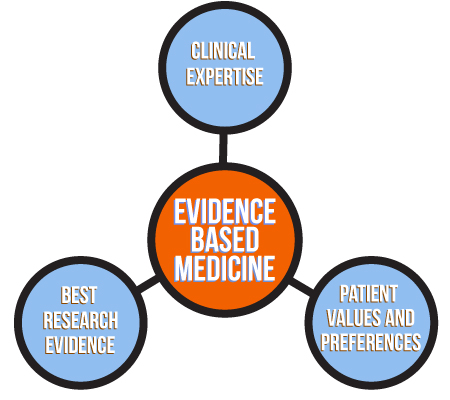
Image result for evidence based medicine

Only 18% of clinical recommendations were based on high-quality, patient-oriented evidence, a primary care research study shows.

Research-based evidence to help primary care physicians make decisions seems to be hard to come by, according to research from the University of Georgia.

Researchers, led by Mark Ebell, epidemiology professor at UGA’s College of Public Health, analyzed 721 topics from an online medical reference for generalists and found that only 18% of the clinical recommendations were based on high-quality, patient-oriented evidence. Their work appears in the journal BMJ Evidence-Based Medicine.

“The research done in the primary care setting, which is where most outpatients are seen, is woefully underfunded, and that’s part of the reason why there’s such a large number of recommendations that are not based on the highest level of evidence,” Ebell said in a statement.

The researchers used Essential Evidence, an online, evidence-based, medical reference for generalists to identify areas of care that are supported by high-quality studies and others that are not. Each of Essential Evidence’s topics are graded A, B, or C using the Strength of Recommendations Taxonomy (SORT), the study said.

They found that topics related to pregnancy and childbirth, cardiovascular health, and psychiatry had the highest percentage of recommendations backed by research-based evidence. Hematological, musculoskeletal and rheumatological, and poisoning and toxicity topics had the lowest percentage.

In addition, just 51% of the recommendations overall were based on studies reporting patient-oriented outcomes, such as morbidity, mortality, quality of life, or symptom reduction, instead of laboratory markers like blood sugar or cholesterol levels.

“Practice should wherever possible be guided by studies reporting patient-oriented health outcomes,” Ebell said. “You would want your care to be guided by studies that have demonstrated that what the physician recommends will help you live better or longer. We should all want that kind of information to guide care.”

The study authors also note that the lack of funding for primary care research stands in stark contrast to patients’ primary care usage: Primary care visits account for 53.2% of all physician office visits, according to the CDC.


Nonacute Care: The New Frontier

http://www.healthleadersmedia.com/leadership/nonacute-care-new-frontier?spMailingID=10066722&spUserID=MTY3ODg4NTg1MzQ4S0&spJobID=1061461419&spReportId=MTA2MTQ2MTQxOQS2

Image result for New Frontier

What happens outside the hospital is increasingly important to success, so healthcare leaders need to influence or control care across the continuum.

If you’re running a hospital, one irony in the transformation toward value in healthcare is that your future success will be determined by care decisions that take place largely outside your four walls. If you’re running a health system with a variety of care sites and business entities other than acute care, the hospital’s importance is critical, but its place at the top of the healthcare economic chain is in jeopardy.

Certainly, the hospital is the most expensive site of care, so hospital care is still critically important in a business sense, no matter the payment model. But if it’s true that demonstrating value in healthcare will ensure long-term success—a notion that is frustratingly still debatable—nonacute care is where the action is.

For the purposes of developing and executing strategy, one has to assume that healthcare eventually will conform to the laws of economics—that is, that higher costs will discourage consumption at some level. That means delivering value is a worthy goal in itself despite the short-term financial pain it will cause—never mind the moral imperative to efficiently spend limited healthcare dollars.

So no longer can hospitals exist in an ivory tower of fee-for-service. Unquestionably, outcomes are becoming a bigger part of the reimbursement calculus, which means hospitals and health systems need a strategy to ensure their long-term relevance. They can do that as the main cog in the value chain, shepherding the healthcare experience, a preferable position; but physicians, health plans, and others are also vying for that role. Even if hospitals or health systems can engineer such a leadership role, acute care is high cost and to be discouraged when possible.

‘Somewhere in between’: Finding the balance between quality and the bottom line

http://www.beckershospitalreview.com/finance/somewhere-in-between-finding-the-balance-between-quality-and-the-bottom-line.html

Values-GeneralLeadership

As healthcare continues its shift from fee-for-service to value-based care, hospitals and health systems are working steadily to try and improve quality while reducing costs. However, striking a balance between the two can be challenging.

At the Becker’s Hospital Review 5th Annual CEO + CFO Roundtable on Nov. 8 in Chicago, healthcare experts discussed how their entities balance rewarding physicians for quality and clinical activity in what is still primarily a fee-for-service environment.

“We’re not totally in a fee-for-service environment. We’re not totally in a value-based care environment. We’re kind of somewhere in between,” said Patrice M. Weiss, MD, executive vice president and CMO of Roanoke, Va.-headquartered Carilion Clinic. “In the past, the two were felt to be mutually exclusive, but recent models of care have demonstrated that quality of care can be delivered in a low-cost model.”

While the shift from fee-for-service to value-based care is slightly slower in coming to her organization’s region, they are preparing, according to Dr. Weiss.

Carilion is a nonprofit organization with a network of hospitals, primary and specialty physician practices and other complementary services. The health system offers physicians a base salary, as well as a Tier 1 bonus and a Tier 2 bonus. The Tier 1 bonus is based on scorecard measures, which include quality metrics, patient experience metrics and operating margin.

“We have found we’ve been able to reduce the cost by using evidence-based medicine, standardization of care and appropriateness of testing and imaging,” Dr. Weiss said. “This reduced utilization has not reduced the quality of care or outcomes but has reduced the cost of care, thereby positively affecting our operating margin. So improving quality care and reducing the cost of care are not mutually exclusive.”

Physician-led, cost-reducing initiatives and physician engagement have been primary drivers in achieving reduced costs and improved quality, according to Dr. Weiss. For instance, Carilion has a significant physician-led initiative on early elective inductions or deliveries. This initiative, which was based on national guidelines, resulted in less utilization of obstetrical resources at an earlier gestational age.

Discussion on issues in adaptive design for clinical trials with Dr. Deepak L. Bhatt and Dr. Cyrus Mehta


The Downside of Merging Doctors and Hospitals

Drugs2

The lesson is simple: Coordinating your own care is still a good idea. Don’t count on the health system to do it for you.

Why you should manage your own care

30% of antibiotics inappropriately prescribed in US

http://www.fiercepracticemanagement.com/story/30-antibiotics-inappropriately-prescribed-us/2016-05-04?utm_medium=nl&utm_source=internal&mrkid=959610&mkt_tok=eyJpIjoiTWpVd1lqSTNZalZsWWpReCIsInQiOiJINE9BNitVSm1VYUR3NFVOZG1YMFFiVFQ2d2lmRGtEZ01NdjVpY0x2bmZUSmxTVFFcL2NcL3FMTmlGaXJqRFhSUHI2Tm1yK0Q1MHU1R3U2OWlGQ3NVYU9uTll2VXMxcEJSdUxlcGlYSjJEV1ZBPSJ9

Antibiotic Overuse

Study findings may drive efforts to curb improper prescription practices.

‘Time to Rethink What Healthcare Does, and Doesn’t Do,’ Says Lown Chief

http://www.healthleadersmedia.com/quality/time-rethink-what-healthcare-does-and-doesnt-do-says-lown-chief

Vikas Saini, MD

“There really needs to be an alliance among patients, families, and communities. At the end of the day, they get to decide what is the right care,” says Vikas Saini, MD, president of the Lown Institute.

51 hospitals reach $23M settlement as DOJ concludes cardiac device investigation

http://www.healthcaredive.com/news/51-hospitals-reach-23m-settlement-as-doj-concludes-cardiac-device-investig/414147/

Dartmouth Atlas: Evidence-based, Coordinated Care for Seniors Elusive

http://healthleadersmedia.com/content.cfm?topic=QUA&content_id=325531

Evidence Based Medicine

Three areas where the use of evidence-base care is particularly lacking are prostate cancer screenings, breast cancer screenings, and feeding tube placement for Medicare recipients with advanced dementia.

Healthcare Triage: Who Decides Which Tests Are Effective? The US Preventive Services Task Force

Healthcare Triage: Who Decides Which Tests Are Effective? The US Preventive Services Task Force

Biotech Blue