Consumers are paying less for ACA plans, even as premiums continue to rise

https://www.fiercehealthcare.com/payer/consumer-satisfaction-exchange-enrollment-up-but-premiums-continue-to-rise?mkt_tok=eyJpIjoiWlRReU4yTXdZelF5TUdJMyIsInQiOiJqbDN6cndBd1YwOHFvQkV3NGNvXC9xVWh3bVpNYzJ0djZyaXJOakFGaU5nQWdETG0wWE1nWDhTck5XK2JIVTZkanFidU85clo2akpIT0VvXC9MWjFjOExsUm5kUEpRZk9IQ0tYNWFQeGJaQmhJMWNTdnkweFBtTGRJME1KNzJvaTRFIn0%3D&mrkid=959610

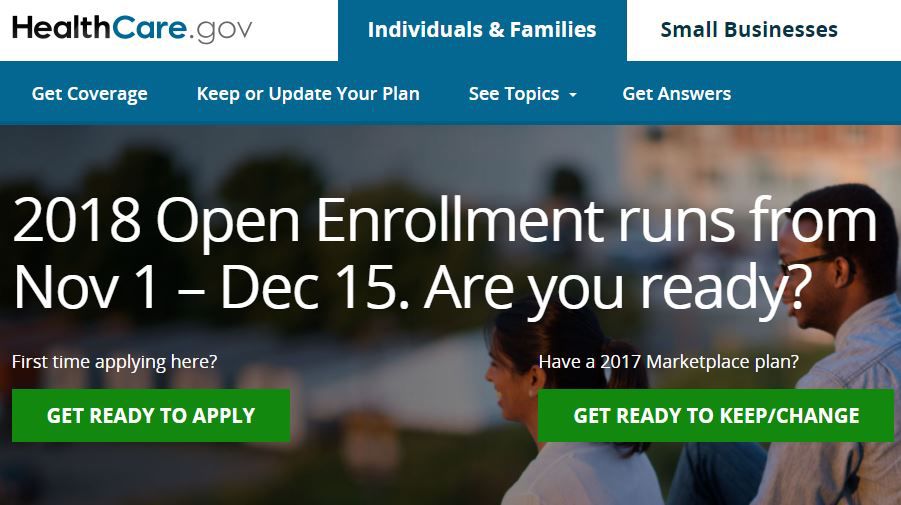
Healthcare.gov site on computer

The Centers for Medicare & Medicaid Services (CMS) proclaimed its 2018 open enrollment period a success, citing relatively stable enrollment on reduced costs of outreach and a tightened enrollment period.

The agency’s final report on 2018 enrollment data provides insight on the 11.8 million individuals who enrolled or renewed coverage through the exchanges in 2018. That number includes approximately 8.7 million who signed up through HealthCare.gov, where the average premium rose 30% from $476 last year to $621 this year. A solid majority of consumers opted for the middle-tier silver plans, with 29% choosing bronze plans and only 7% purchasing gold plans.

CMS Administrator Seema Verma lauded the agency’s efforts on Twitter, but pointed to the 30% jump in premiums as an indication that “more affordable options are needed,” particularly for those that don’t qualify for tax credits.

Despite delivering the most successful consumer experience to date, Americans continue to experience skyrocketing premiums and limited choice on http://Healthcare.gov .

Despite higher premiums, consumers that qualified for the tax credit actually saw a 16% decline in their final cost, with average monthly costs dropping from $106 in 2017 to $89 in 2018.

“The reduction in price that consumers paid was staggering,” Josh Peck, co-founder of Get America Covered and former chief medical officer of Healthcare.gov under President Barack Obama, told FierceHealthcare.

“To be totally honest, enrollment would have been far higher had they tried,” he added.

While the total number of enrollees dipped slightly year over year, they remained relatively stable given the shortened time frame rolled out by the Trump administration. Verma also pointed to consumer satisfaction scores of 90%, up from 85% last year, as proof the agency had met its primary goal of ensuring “a seamless experience” for consumers.

Critics, however, lashed out at CMS for doing little to educate the public about open enrollment options.

Lori Lodes@loril

Really weird (and gobsmacking) to see @SeemaCMS take credit for 11.8 million people signing up for health care when she refused to do anything to educate people about Open Enrollent. https://twitter.com/SeemaCMS/status/981250136344088576 

The agency also touted the cost effectiveness of the enrollment period, after CMS slashed its advertising spending from approximately $11 per enrollee last year to just over $1 per enrollee in 2018. Those cuts spurred increased advertising dollars from private insurers in an attempt to make up the gap.

The majority of consumers using the exchanges continues to rely on premium subsidies. The age mix among consumers trended older, as enrollees aged 55 and over ticked up two percentage points to 29%, while the share of those aged 18-34 declined slightly.

Final Exchange Enrollment Report also shows most consumers on the Exchanges relied on premium subsidies. Approximately 83% of consumers nationwide had their premiums reduced by tax credits.

In a statement, Verma said she was pleased with the rise in customer satisfaction, but expressed concerns about the future. “Even with the success of this year’s open enrollment, the individual market continues to see premiums rise and choices diminish,” she said.


How Did State-Run Health Insurance Marketplaces Fare in 2017?

http://www.commonwealthfund.org/publications/issue-briefs/2018/mar/how-did-state-run-marketplaces-fare-in-2017?

Image result for How Did State-Run Health Insurance Marketplaces Fare in 2017?

Abstract

  • Issue: Sixteen states and the District of Columbia manage their own health insurance marketplaces under the Affordable Care Act. These states, which were broadly supportive of health reform, chose to run their marketplaces to exert greater control over their insurance markets and tailor the portals to suit local needs. Though federal policy changes and political uncertainty around the ACA in 2017 have posed challenges across the country, states that operate their own marketplaces had greater flexibility than others to respond.
  • Goal: To understand how states on the forefront of health reform perceived and responded to federal policy changes and political uncertainty in 2017.
  • Methods: Structured interviews with the leadership staff of 15 of the 17 state-run marketplaces.
  • Findings and Conclusions: Respondents unanimously suggested that federal administrative actions and repeal efforts have created confusion and uncertainty that have negatively affected their markets. The state-run marketplaces used their broader authority to reduce consumer confusion and promote stable insurer participation. However, their capacity to deal with federal uncertainty has limits and respondents stated that long-term stability requires a reliable federal partner.

Background

The Affordable Care Act created health insurance marketplaces, also known as exchanges, in each state to help people who don’t have access to insurance through an employer or public program. The marketplaces act as a gateway to coverage for residents, providing a platform through which they can compare and purchase plans. Sixteen states and the District of Columbia are responsible for managing their own marketplaces; 34 states rely on the federal government to operate their exchange.

States that decided to manage their marketplaces wanted to retain control over their insurance markets and have the authority to tailor the portal to meet local needs.2 Compared with states using the federally run marketplace, nearly all these states have expanded their Medicaid programs and have been much more likely to adopt the ACA’s consumer protections into state law — potentially making it easier to enforce these reforms.3

Since President Trump’s election, the ACA and marketplaces have faced an uncertain future. The president has been openly hostile to the ACA and sought its repeal.4 At the same time, the administration has made regulatory and other implementation changes and reduced the funding that supports the marketplaces. These decisions have all affected how the law operates in practice and have had serious repercussions across the country.5 However, the impact has not been uniform. It has varied, in part, based on the choices state policymakers have made in implementing the ACA — including whether to run their own exchange.

We sought to understand how states that have been more actively engaged in reform have perceived federal policy changes and political uncertainty in 2017, and to explore whether these states were better able to promote stability within their markets. To do so, we interviewed the leadership staff of 15 of the 17 state-run marketplaces in September and October 2017.6 This brief explores key themes that emerged from those interviews. It identifies the major challenges facing the marketplaces as they went into the fifth open enrollment period, how states responded to those challenges, and the limits on states’ capacities to act.

Key Findings

Federal Actions Made It Harder for States to Manage Their Own Marketplaces

Marketplace respondents were unanimous in suggesting that actions taken by the Trump administration and ongoing efforts to repeal the ACA have created confusion and uncertainty that have negatively affected their markets. While these marketplaces had experienced ups and downs during their first three years of operation, many respondents were relatively optimistic in the fall of 2016 about future enrollment growth and stability in terms of plan participation and premiums — a view supported by independent analyses.7 But federal developments in 2017 made the challenges of the previous year “pale in comparison,” and respondents described a far more uncertain future.

Officials highlighted four federal-level developments during 2017 that jeopardized stability. First, respondents said that the administration’s repeated threats to end federal payments supporting the ACA’s cost-sharing reduction (CSR) plans caused protracted confusion and disruption and placed states in a “real jam.” These threats were eventually carried out, after months of uncertainty, in October 2017. But as deadlines for marketplace participation and rate setting for the upcoming year (2018) came and went with no clarity on whether the administration would continue to reimburse insurers for the cost of the CSR subsidies, marketplaces struggled to get insurers to commit to participate and to develop responses to the significantly higher premiums the insurers sought to offset the lost payments.8

Second, most respondents noted that actions taken by the administration to undermine the ACA’s individual mandate had the effect of undermining their marketplaces, as well. The requirement to maintain coverage, ultimately repealed on a prospective basis in December, was the law of the land throughout 2017 (and remains so in 2018). However, officials noted that an executive order, signed by the president on Inauguration Day, cast doubt on the enforcement of the mandate and caused insurers to be more cautious when setting rates.9 Many priced higher than they would have otherwise, fearing that a weakened mandate would lead to a sicker and more expensive risk pool.10 The president’s actions and words were also perceived to have caused widespread confusion among consumers about whether the requirement to maintain coverage was still the law.

In a related vein, officials repeatedly expressed frustration at “federal noise”: ongoing but thus far inconclusive discussions about repealing and replacing the ACA, and related rhetoric by administration officials and congressional allies asserting that the health law was “dead” or “collapsing.” Respondents said it was a challenge to ensure residents had accurate information. They reported many instances of consumer confusion about the marketplaces, the mandate, coverage options, and the status of the health law, in general.

Fourth, a majority of respondents predicted that the administration’s decision to reduce advertising spending for the federal marketplace by 90 percent would have negative side effects for the state-run exchanges. Officials in both big and small states explained that because the federal marketing campaign was national in scope and used television advertising — a medium too expensive for several state marketplaces — it was effective in reaching their residents and had complemented state messaging efforts in prior years. Several respondents also lamented the perceived political ramifications of the funding cut, suggesting that the administration’s action would cause enrollment through the federal exchange to diminish, putting the entire program at greater risk of repeal.


ACA marketplace enrollment has beat expectations

Even with final numbers not yet in from several states, it’s fair to say that ACA marketplace enrollment has beat expectations.


https://www.kff.org/health-reform/state-indicator/marketplace-enrollment-2014-2017/?activeTab=graph&currentTimeframe=0&startTimeframe=4&selectedDistributions=number-of-individuals-who-selected-a-marketplace-plan&selectedRows=%7B%22wrapups%22:%7B%22united-states%22:%7B%7D%7D%7D&sortModel=%7B%22colId%22:%22Location%22,%22sort%22:%22asc%22%7D


No, Trump Hasn’t ‘Essentially Repealed Obamacare’

https://www.politico.com/magazine/story/2017/12/20/trump-obamacare-mandate-repeal-taxes-216125

Image result for ACA

Killing the mandate doesn’t gut the health care law. Most likely, it will muddle along, because the rest of it is broadly popular.

In July and again in September, Republicans narrowly failed to repeal the Affordable Care Act. But their newly passed tax legislation included a provision getting rid of Obamacare’s mandate requiring Americans to buy insurance, and President Donald Trump immediately declared victory in the partisan health care wars. “When the individual mandate is being repealed, that means Obamacare is being repealed,” he crowed at a Cabinet meeting on Wednesday. “We have essentially repealed Obamacare.”

Well, no. The individual mandate is only part of Obamacare. It wasn’t even included in the original health care plan that Barack Obama unveiled during the 2008 campaign. The mandate did become an important element of Obamacare, and the only specific element that a majority of the public opposed. But the more generous elements of the program—like a major expansion of Medicaid, significant government subsidies for private insurance premiums, and strict protections for pre-existing conditions—are still popular, and still the law of the land.

“The death of Obamacare has been exaggerated,” says Larry Levitt, who oversees health reform studies at the Kaiser Family Foundation. “Eliminating the mandate creates uncertainty, but all the benefits for people remain in place.”

The Republican ecstasy and Democratic gloom over the death of the mandate reflects the most consistent misperception over the seven-plus years of Affordable Care Act debates, the incorrect assumption that the “Obamacare exchanges,” where Americans can buy private insurance, are synonymous with Obamacare. The vast majority of Americans who get their coverage through Medicare, Medicaid or their employers shouldn’t be affected. Yes, killing the mandate could cause problems for the remaining 6 percent of Americans who have to buy insurance on the open market, but nearly half will remain eligible for subsidies that would insulate them from any premium hikes.

Repealing the tax penalties for Americans who don’t buy insurance would not repeal Obamacare’s perks for Americans who do—like the ban on annual and lifetime caps that insurers previously used to cut off coverage for their sickest customers, or the provision allowing parents to keep their children on their plans until they turn 26. And it would not repeal Obamacare’s “delivery reforms” that are quietly transforming the financial incentives in the medical system, gradually shifting reimbursements to reward the quality rather than quantity of care. The growth of U.S. health care costs has slowed dramatically since the launch of Obamacare, and the elimination of the mandate should not significantly affect that trend.

In fact, during the 2008 campaign, Obama was the only Democratic candidate whose health plan did not include a mandate, because he was the only Democratic candidate who thought the main problem with health care was its cost. “It’s just too expensive,” he explained at an Iowa event in May 2007. Insurance premiums had almost doubled during the George W. Bush era, and Obama believed that was the reason so many Americans were uninsured. He doubted it would be worth the political heartburn to try to force people to buy insurance they couldn’t afford.

But Obama eventually embraced the argument that a mandate was necessary to ensure that young and healthy Americans bought insurance. The fear was that otherwise, insurance markets dominated by the old and sick (who would enjoy the law’s new protections for pre-existing conditions) would have produced even higher premiums, and might scare insurers away from serving Americans who don’t get coverage through their jobs or the government. Killing the mandate will be a step in that direction, boosting Trump’s heighten-the-contradictions effort to sabotage the functioning of Obamacare to build support for a more sweeping repeal.

That effort has already produced some damaging results for the exchanges. Insurers have increased their premiums for 2018, repeatedly citing uncertainty over Trump’s efforts to blow up Obamacare as well as his decision to cut off promised payments to insurers who cover lower-income families. Several insurers left the exchanges even before the elimination of the mandate, and others could follow.

But the widespread warnings that wide swaths of America would have no insurers on the exchanges were wrong; there are zero “bare counties” with no insurers for 2018. And a Kaiser review found the exchanges have gotten more profitable for insurers this year,despite Trump’s efforts to damage them. This year’s enrollment period appears to have gone fairly well even though the Trump administration shortened it by half and slashed its promotional budget.

The fear is that eliminating the mandate could produce a “death spiral” for the exchanges, where higher premiums scare away healthier customers, leading to even higher premiums and even sicker customers—until eventually,the insurers decide to bail. It could also encourage insurers to try to lure healthier customers with cheaper but skimpier plans that don’t provide protections for pre-existing conditions, since those customers would no longer have to pay a tax penalty.

But it is also possible that younger and healthier customers who initially bought insurance because they were required to do so will now buy insurance because they want to; surveys show that more than 75 five percent of Americans covered on the exchanges are happy with their coverage. And as a political matter, repealing the unpopular mandate could make it even harder for Republicans to pass legislation repealing insurance protections, Medicaid expansions and the rest of Obamacare, because the rest of Obamacare is popular. It’s not surprising that Republicans managed to kill the law’s vegetables, but it won’t be as easy to kill dessert.

Trump thinks congressional Democrats will soon be begging him to come up with a replacement for Obamacare, and even many Republicans who don’t embrace that fantasy believe the demise of the mandate will ratchet up pressure for a permanent solution to a seven-year political war. It could happen. But there hasn’t been a lot of bipartisanship in Washington lately, and after the Doug Jones upset in Alabama, it seems unlikely that a Senate with one fewer Republican will be more amenable to a Republican-only repeal bill.

The most likely outcome seems to be at least a few more years of Obamacare muddling through, and at least a few more years of Obamacare political warfare.


Despite Compressed Sign-Up Period, ACA Enrollment Nearly Matches Last Year’s

https://khn.org/news/despite-compressed-sign-up-period-aca-enrollment-nearly-matches-last-years/

A day after President Donald Trump said the Affordable Care Act “has been repealed,” officials reported that 8.8 million Americans have signed up for coverage on the federal insurance exchange in 2018 — nearly reaching 2017’s number in half the sign-up time.

That total is far from complete. Enrollment is still open in parts of seven states, including Florida and Texas, that use the federal healthcare.gov exchange but were affected by hurricanes earlier this year. The numbers released Thursday by the Department of Health and Human Services also did not include those who signed up between midnight Dec. 15 and 3 a.m. ET on Dec. 16, the final deadline for 2018 coverage, as well as those who could not finish enrolling before the deadline and left their phone number for a call back.

And enrollment has not yet closed in 11 states — including California and New York — plus Washington, D.C., that run their own insurance exchanges. Those states are expected to add several million more enrollees.

The robust numbers for sign-ups on the federal exchange — 96 percent of last year’s total — surprised both supporters and opponents of the health law, who almost universally thought the numbers would be lower. Not only was the sign-up period reduced by half, but the Trump administration dramatically cut funding for advertising and enrollment aid. Republicans in Congress spent much of the year trying to repeal and replace the law, while Trump repeatedly declared the health law dead, leading to widespread confusion.

On the other hand, a Trump decision aimed at hurting the exchanges may have backfired. When he canceled federal subsidies to help insurers offer discounts to their lowest-income customers, it produced some surprising bargains for those who qualify for federal premium help. That may have boosted enrollment.

“Enrollment defied expectations and the Trump administration’s efforts to undermine it,” said Lori Lodes, a former Obama administration health official who joined with other Obama alumni to try to promote enrollment in the absence of federal outreach efforts. “The demand for affordable coverage speaks volumes — proving, yet again, the staying power of the marketplaces.”

“The ACA is not repealed and not going away,” tweeted Andy Slavitt, who oversaw the ACA under President Barack Obama.

The tax bill passed by Congress this week repeals the fines for those who fail to obtain health coverage, but those fines do not go away until 2019. Still, that has added to the confusion for 2018 coverage.

And it remains unclear whether Congress will make another attempt to repeal the law in 2018.

“I think we’ll probably move on to other issues,” Senate Majority Leader Mitch McConnell (R-Ky.) said in an interview Friday with NPR.


Clean Up on Aisle 12! The Obamacare Pop-Up Store is Open but Stocks are Limited

Clean Up on Aisle 12! The Obamacare Pop-Up Store is Open but Stocks are Limited

Image result for ACA

The fifth Open Enrollment period under the Affordable Care Act (ACA) started on November 1st, and will continue for a scant 45 days ending on December 15, 2017. This year, not only has the Open Enrollment been cut in half, but obstacles abound – obstacles that were not part of the 2016 Open Enrollment Period. For example:

  • Healthcare.gov is undergoing maintenance that could interfere with access during the Open Enrollment Period;
  • Federal support for Open Enrollment outreach and advertising is substantially lower this year than it has been in prior Open Enrollment periods; and
  • The number of health insurers participating in the exchanges has dropped significantly from last year (prompted in part by well-founded concerns regarding the future of federal cost-sharing reduction (CSR) payments), and in some counties, only one plan is available to individuals and families seeking coverage through the exchanges.

Plan Departure: A Continuing Trend from Prior Years

In 2016, a significant number of large, national insurance companies announced that they were withdrawing from the exchanges and would no longer offer health insurance coverage during 2017. As for 2018, the following chart identifies, as of October 12, 2017, both (1) those national insurance companies that will fully withdraw from one or more exchanges effective January 1, 2018, and (2) those national insurance companies that will continue to offer plans on the state exchanges in 2018 as they did in 2017.

Insurance Company: Insurance Exchange Exits for 2018: Insurance Exchange Participation in 2018:
Aetna Delaware, Iowa, Nebraska, Virginia None
Anthem Indiana, Maine, Missouri, Nevada, Ohio, Wisconsin California, Colorado, Connecticut, Georgia, Kentucky, Missouri, New Hampshire, New York, Virginia
Centene None Arizona, Arkansas, California, Florida, Georgia, Indiana, Kansas, Mississippi, Missouri, Nevada, New Hampshire, Ohio, Texas, Washington
Cigna Maryland Colorado, Illinois, Missouri, North Carolina, Tennessee, Virginia
Molina Wisconsin, Utah California, Florida, Michigan, New Mexico, Ohio, Texas, Washington
Humana Florida, Georgia, Illinois, Louisiana, Kentucky, Michigan, Missouri, Mississippi, Ohio, Tennessee, Texas None
UnitedHealthcare Virginia Nevada, New York

Who Ordered the Retreat?

There are a variety of reasons that large national insurers are retreating from the federal and state exchanges, but as a general rule, they stem from uncertainty regarding the profitability of state exchange participation.

CSR Funding Uncertainty

President Trump’s inauguration spurred speculation that the ACA’s CSR subsidy payments could be discontinued, and insurance companies priced exchange plans accordingly. The Congressional Budget Office estimated that the cessation of CSR payments for the 2018 calendar year – which has since come to pass – would result in a 25% increase in premiums by 2020 and at least a temporary increase in the number of areas with zero individual exchange offerings (as a result of further insurer exits and stifled entry / expansion).

The Individual Mandate

One year-over-year driver of the insurance company exodus from the exchanges is the weakness of the individual mandate.

The individual mandate is critical to whether the health insurance companies can turn a profit on the exchange plans. In an ideal world, the individual mandate would successfully induce all eligible citizens to obtain health coverage. Under such circumstances, health insurers would have a much easier time estimating enrollment, risk pools and, ultimately, profits from participation on the insurance exchanges. In practice, however, many of the “young invincibles” whose participation in the health insurance market could offset the costs of insuring older and sicker populations elect to incur the relatively modest tax penalty resulting from a failure to obtain coverage.

Even if the penalty were tougher (and as a consequence, presumably more effective), enforcement is rather lax, and the Trump administration has signaled in 2017 it may instruct the Internal Revenue Service to deprioritize enforcement of the individual mandate.

Enrollee Fraud and Gaming the System

The large national insurance companies have also complained about enrollee fraud that increases the actuarial unpredictability of the performance of a particular risk pool. For example, insurers have complained that enrollees in an exchange plan may have an expensive procedure early in the year, and then stop paying premiums after the insurance plan has paid for the procedure.

The Importance of the Big Players in the ACA Exchanges

Because they have greater resources to understand, and hedge, the actuarial risks of the exchange plans – including balancing the prospects of fraud, unhealthy patient mix and less then desirable compliance with the individual mandate – large national health insurers are better positioned than their smaller counterparts to succeed in the ACA exchanges.

As such national insurers have migrated away from exchange participation, they have in many instances been replaced by regional players, such as health plans associated with regional hospital systems, physician groups and faith-based organizations. Such entities generally do not have the same financial wherewithal as the large national insurance companies to successfully diversify risk or endure greater potential losses with respect to the exchange risk pools. As a result, many healthcare analysts and commentators have concluded that regional plans are ill-equipped to fully replace the large national insurance plans if the large national insurance plans continue to leave the state exchanges.

Notwithstanding the foregoing concerns regarding regional plan participation on the exchanges, Centene Corporation, a publicly-traded healthcare company that is the parent corporation of multiple state-based plans that participate in the state exchanges, has elected to expand its participation in 2018. Whether Centene Corporation succeeds with its expansion into more state ACA exchanges, and whether it chooses to further expand in future years, will be an important indicator of the health of the ACA health insurance exchanges in years to come.

“Repair and Encourage”

The remedy for stabilizing the exchanges is not overly complicated, and realizable, if the political will existed to accomplish what needs to be done.

A strong first step would be changing the conversation in Washington D.C. about the ACA – get rid of the “repeal and replace” mantra and instead make the conversation about “repair and encourage.” The point is that the manner in which the political class is addressing healthcare and the ACA is toxic, and the result is driving the insurance companies away from participation. A change in tone from our elected leaders would probably do remarkable good in stabilizing the state insurance exchanges over time.

In addition to calming the political dialogue regarding the ACA, for 2018 (ahead of the 2019 open enrollment period), we propose some specific policies that we think would help encourage participation by the large, national insurance companies in the exchanges in 2019 and beyond:

  • The judicial branch needs to resolve, ideally favorably, whether CSRs will continue.
  • The individual mandate needs to be strengthened by increasing the applicable tax penalty and more vigorously pursuing enforcement.
  • Congress should consider incentives, whether tax-based or otherwise, to specifically encourage the large, national insurance companies to increase participation on the exchanges.

In the current political climate, such dedicated action seems unlikely, but the political winds may yet shift and blow the health insurers safely home to the exchanges.

The individual market will thrive in the long run

Image result for healthcare.gov 2018 open enrollment

Not since the first year of the Affordable Care Act has there been so much uncertainty at the start of an open enrollment period. How many Americans will sign up for health coverage? As experts weigh the uncertain impact of the Trump administration’s last-minute policy moves, estimates from the Congressional Budget Office and Urban Institute range from nearly one million fewer Americans with coverage to at least 600,000 more.
As co-founders of Oscar Health, an insurance startup that will be signing up Americans for individual plans across six states this year, we anticipate the Trump administration’s actions will simultaneously aid and undermine enrollment, thanks to the mixed impact of its political and policy changes.
The bottom line: It will be hard — after four years where tens of millions of Americans have gained access to health insurance — for the administration to erase the virtues of an individual market where consumers choose their health plan and no one is discriminated against based on health status. In fact, we project that Oscar will enroll significantly higher membership across our six states this year.

Here’s why we believe the administration’s actions will both help and hurt enrollment:

  • Plans will be more affordable for millions of Americans due to the seesaw impact of cuts to cost-sharing reduction subsidies, which will actually increase subsidies for many low-income consumers. And for the first time, the IRS will be aggressively enforcing the individual mandate.
  • On the other hand, the administration’s cuts to outreach and sporadic lip service to repealing the ACA do nothing to stanch growing confusion among shoppers.
The biggest threat to a strong open enrollment period is consumer confusion. That’s why our outreach this year, themed “Get Covered,” is so focused on educating Americans on the importance of health insurance. We were the first to launch our open enrollment ads six weeks ago. And when HealthCare.gov is down for maintenance every Sunday, Oscar will be up — consumers in our states will be able to get subsidized coverage on our website.
The big picture: Our optimism about the individual market, both this year and beyond, stems from our conviction that the near-term regulatory turbulence will pass and that the individual market will thrive in the long run.
That’s because health care costs are spiraling out of control across the board, even for Americans who get coverage through their jobs. This year, premium contributions for workers increased by 8.2%, while the employer’s share increased hardly at all: 1.4%.
But Americans see the full sticker price of care in the individual market alone. To ensure that consumers who are paying out of their own pockets can still afford coverage, it’s actually the insurers and providers in the individual market who are working hardest to control costs.
The details: Indeed, we are seeing signs that sustainable strategies to keep health care costs down for all Americans are being accelerated and proven out in the individual market.
  • Our health care system, for example, must move away from expensive emergency room visits and embrace virtual care. Prices to treat many of the same exact conditions in emergency rooms — where half of all care is delivered in the U.S. — can be orders of magnitude higher than telemedicine. In the first year of the ACA, Oscar introduced the first health insurance plan in the country with free, 24/7 access to telemedicine — and today, one in four Oscar members use it.
  • The individual market has also accelerated the shift away from big hospital networks in health insurance plans that drive prices up for all Americans. Narrow networks — which most ACA plans have — can result in lower premiums for consumers without impacting their quality of care.
  • The true innovation unlocked by the smaller networks, however, is one of integration by design. By making the insurer and hospital more dependent on each other, we can finally begin to remove the friction between your doctor and insurer to result in better, more coordinated care. For example, more than one third of all first-time doctor visits for our members are routed through our Oscar app and Concierge teams, to doctors that we partner with.
  • Hospitals are now looking to become your insurance company, too. Indeed, the Cleveland Clinic, a world-renowned hospital, is offering its own jointly-run plan with Oscar next year — in the individual market.
What’s next: There is no doubt that the individual market under the ACA has stumbled out of the gate, and is in need of some fixes. But America has seen rocky private insurance markets recover before.
Between 1998 and 2002, the number of private Medicare+Choice plans — what are now known as Medicare Advantage plans — was cut in half, to less than 150. After a legislative fix in 2003, the market recovered and matured, and seniors this year will have over 3,000 Medicare Advantage plans to choose from.
We’re confident the same can and will happen with the individual market.

Moody’s: Trump Executive Actions Credit Negative for HIX Insurers

http://www.healthleadersmedia.com/health-plans/moodys-trump-executive-actions-credit-negative-hix-insurers?spMailingID=12171449&spUserID=MTY3ODg4NTg1MzQ4S0&spJobID=1261586415&spReportId=MTI2MTU4NjQxNQS2

Related image


The investor-service company gauges impact of new ‘association’ health plans, expanded short-term insurance, and elimination of subsidies on the Obamacare exchanges.

President Donald Trump’s health-insurance executive actions last week are credit negative for insurance carriers operating on the Obamacare exchanges, New York, NY-based Moody’s Investors Service reported today.

On Oct. 12, Trump took two executive actions that will likely undermine the insurance exchanges established under the Patient Protection and Affordable Care Act (PPACA), Moody’s says:

  • In an executive order, the president eased regulations on “association” health plans and expanded the definition of short-term health insurance. The executive order calls for the federal departments of Labor, Treasury and Health and Human Services to expand insurance coverage for individuals such as allowing insurance purchases across state lines.
  • Although regulations must be put into place, association health plans will likely allow small businesses to band together to offer insurance to their employees. “Associations likely would be allowed to offer plans with lower benefits and lower costs,” Moody’s reported.
  • In a decision that did not require an executive order, Trump announced that his administration would end cost-sharing reduction (CSR) payments that subsidize the purchase of health insurance on the exchanges. The subsidies help insure low-income individuals who do not qualify for Medicaid coverage but can’t afford to buy commercial insurance health plans.
  • This year, the federal government spent about $7 billion on CSR payments.

The executive order is expected to promote creation of skimpy health plans, which would undermine the PPACA exchanges, Moody’s reported. “The introduction of lower-benefit, lower-cost plans and short-term insurance would be credit negative for health insurers that are still participating in the PPACA-governed individual market. These new plans would incentivize healthy people to exit the PPACA market, which would increase risk in the remaining pool of insureds.”

The decision to stop CSR payments will also have a credit negative effect on commercial carriers operating on the exchanges, Moody’s reported. This negative impact will fall particularly hard on commercial insurers that did not submit rates for next year based on the assumption that the CSR payments would be eliminated.

Health insurance rates are set on a state-by-state basis.

There could be an “offset” linked to the executive order that would soften the financial blow for commercial carriers operating on the exchanges, Moody’s reported. “If the executive order succeeds in bringing more healthy but currently uninsured people into the small group or individual market, that could mitigate at least some of the order’s negative effects.”

Moody’s highlighted the PPACA-exchange risk exposure of four commercial carriers in today’s report, which lists the companies’ beneficiaries on the exchanges as a percentage of their total number of health-insurance beneficiaries:

  • Indianapolis-based Anthem Inc.: 2.9%
  • Chicago-based Health Care Service Corporation: 6.8%
  • St. Louis-based Centene Corporation: 9.2%
  • Long Beach, CA-based Molina Healthcare Inc.: 20.4%

In New Test for Obamacare, Iowa Seeks to Abandon Marketplace

Image result for In New Test for Obamacare, Iowa Seeks to Abandon Marketplace

With efforts to repeal the Affordable Care Act dead in Congress for now, a critical test for the law’s future is playing out in one small, conservative-leaning state.

Iowa is anxiously waiting for the Trump administration to rule on a request that is loaded with implications for the law’s survival. If approved by the federal Centers for Medicare and Medicaid Services, it would allow the state to jettison some of Obamacare’s main features next year — its federally run insurance marketplace, its system for providing subsidies, its focus on helping poorer people afford insurance and medical care — and could open the door for other states to do the same.

Iowa’s Republican leaders think their plan would save the state’s individual insurance market by making premiums cheaper for everyone. But critics say the lower prices come at the expense of much higher deductibles for many with modest incomes, and that approval of the plan would amount to another way of undermining the law. Already the administration has slashed funding for advertising and outreach to help people sign up for insurance, and President Trump is preparing to issue an executive order allowing more access to plans that don’t meet the law’s standards.

Adding to the uncertainty, the Washington Post reported last week that Mr. Trump in August asked Seema Verma, the federal official in charge of reviewing Iowa’s plan, to reject it. Some supporters of the law saw that as a deliberate effort to keep premiums high; Mr. Trump frequently cites sharply rising premiums as proof that the health law is failing.

Neither C.M.S. nor the White House would comment on whether Mr. Trump had pushed for the application to be denied. A spokeswoman for C.M.S. said only that the plan remains under review.

In Des Moines on Tuesday, Gov. Kim Reynolds told reporters that her team was in constant contact with the White House and C.M.S. about the plan, including a call with Ms. Verma this week, trying “to get to yes.” She said the administration has been “very receptive” to the plan as a solution to the “unaffordable,” “unworkable” health law until it can be repealed.

Iowa calls its request a stopgap plan that would allow the state to opt out of the federal health insurance marketplace, HealthCare.gov, for 2018 and create a state-run system that its insurance commissioner says would lower premiums for the 72,000 Iowans who currently have Obamacare health plans, including 28,000 who earn too much to get subsidies to help with the cost.

But the cheaper premiums would come with a big trade-off: higher out-of-pocket costs. The only option for customers would be a plan with deductibles of $7,350 for a single person and $14,700 for a family. The proposal would also reallocate millions of federal dollars that the health law dedicates to lowering costs for people with modest incomes and use the money for premium assistance to those with higher incomes, no matter how much money they make.

The individual insurance market is particularly fragile in Iowa, partly because the state has allowed tens of thousands of people to keep old plans that do not meet the health law’s standards. Aetna and Wellmark Blue Cross & Blue Shield, the state’s most popular insurer, are both withdrawing at the end of the year. The only insurer planning to remain, Medica, is seeking premium increases that average 56 percent, blaming Mr. Trump’s ongoing threats to stop paying subsidies known as cost-sharing reductions that lower many people’s deductibles and other out-of-pocket costs. Wellmark has said it will stay if the stopgap plan is approved.

“What we are trying to address is a really large number of people being priced out,” said Doug Ommen, the state’s Republican insurance commissioner.

Two other states, Alaska and Minnesota, have already won permission to shore up their Obamacare markets with waivers allowed under the law; they will use federal money to help insurers cover the claims of their most expensive customers next year. But Oklahoma abruptly withdrew a similar request in late September — one that state officials said would have reduced premiums by an average of 30 percent — saying that the Trump administration had reneged on a promise to approve it by Sept. 25 and they were out of time. (A C.M.S. spokeswoman said, “At no time was an approval package or an approval date ever agreed upon.”)

Iowa’s waiver request is more far-reaching, providing what Timothy S. Jost, an emeritus professor of health law at Washington and Lee University, has called a “watershed moment” for Obamacare.

“It’s a decision to abandon a number of key principles of the Affordable Care Act,” he said.

Under the law, people who don’t get insurance through work can buy it through the online marketplace. They get federal subsidies to help with the cost if their income is below 400 percent of the poverty level, or about $65,000 a year for a couple. Those whose incomes are below 250 percent of the poverty level — $40,600 a year for a couple — also get cost-sharing reductions.

Iowa’s plan would reallocate much of that federal assistance, using it to provide premium subsidies based on age and income for even the wealthiest individual market customers. It would also be used to create a “reinsurance” program, like Alaska’s and Minnesota’s, to help insurers cover their sickest customers. The law’s essential health benefits and protections for people with pre-existing conditions would remain in place, but every individual market customer would get the same standardized high-deductible plan.

Mr. Jost and other supporters of the law say Iowa’s proposal does not meet the requirements for so-called innovation waivers, including that the coverage they provide must be at least as comprehensive and affordable as Obamacare plans, because poorer people would face higher deductibles and other out-of-pocket costs. That, they say, leaves the plan open to almost-certain legal challenges.

Seemingly acknowledging that problem, Mr. Ommen has tweaked Iowa’s proposal — including with a supplemental filing to the Trump administration on Thursday — to preserve subsidies that reduce out-of-pocket costs for roughly 21,000 low-income Iowans.

But those at slightly higher income levels would lose cost-sharing assistance completely, facing the $7,350 deductible and other out-of-pocket expenses.

“You still have some real problems from the perspective of making sure low-income people can afford coverage,” said Joel Ario, a managing director at Manatt Health who worked on the Affordable Care Act at the Department of Health and Human Services during the Obama administration.

But for the roughly 28,000 Iowans who have Obamacare coverage but earn too much to get subsidies, the need for a shake-up is urgent. And with open enrollment starting in about three weeks, time is of the essence.

Dozens of them, including many farmers, submitted comments to Mr. Ommen or testified at public hearings in favor of the stopgap plan, with many saying they would be forced to drop their insurance next year if it were not approved.

“Fortunately both my husband and I have already prepaid our funeral expenses,” write a woman identified as Nancy K., of Bellevue, who said she could no longer afford her coverage. “Every single item, even our cemetery marker, is paid for or covered for my death in the event that we cannot afford insurance to pay for any so-called catastrophic health care.”

Landi Livingston, whose family raises beef cattle in rural southern Iowa, said she was paying almost $500 a month for a Wellmark plan and dreaded having to switch to Medica next year, with what she assumed would be significantly higher prices.

If the Trump administration approves the state’s request, Ms. Livingston’s premium would likely drop to around $350 a month, according to estimates from the state, saving her $1,800 next year. But her $3,000 deductible would more than double, meaning that if she had high medical expenses she could end up paying more toward those bills.

“I still think it’s the best thing on the table right now,” she said of the stopgap plan. “It’s high time the people in power get this figured out.”

For Tony Ross, a retired paralegal in Des Moines who has a subsidized marketplace plan from Aetna, the stopgap plan would lower his premiums to about $85 a month, from $220, according to the state estimates. But his deductible – currently $750 because his low income qualifies him for cost-sharing reductions – would balloon by almost tenfold. That would mean paying thousands more each year for his expensive blood pressure medication, he said.

“Obviously I need a way lower deductible than $7,350,” said Mr. Ross, 63. “This doesn’t seem like a fair way of fixing things.”


How Trump set up Obamacare to fail

https://www.vox.com/policy-and-politics/2017/10/11/16447504/obamacare-open-enrollment-trump-sabotage

All the ways the Trump administration has made it harder to sign up for health insurance this year.

President Trump hasn’t succeeded in repealing Obamacare yet. But his administration is doing its best to force the law to fail.

The most critical time of the year for the health care law is almost here: open enrollment, when millions of people log on to online marketplaces, check whether they qualify for federal subsidies to help them pay their premiums, and shop for plans. For the past three years, at least 10 million people have gotten insurance that way each year.

But this year, open enrollment is in the hands of a White House that’s openly hostile to the Affordable Care Act — and the Trump administration is taking advantage of the best opportunity it has to undercut the law.

President Trump has said that he wants Obamacare to implode, which he hopes would reignite the stalled congressional effort to repeal it. He isn’t just sitting around waiting for that to happen. His administration halved the length of open enrollment. They slashed spending on advertising and assistance programs. They pulled out of outreach events at the last minute.

The entire health care law could be at stake. Advertising and outreach are primarily targeted to younger and healthier people, who are essential to the law’s goal of affordable insurance coverage for all Americans. If their enrollment drops while older, sicker people keep signing up, premiums are going to increase even more next year.

It’s the start of a death spiral, a self-perpetuating cycle of price hikes and falling enrollment — which is exactly what Trump has said he wants.

“I think what this cumulative activity can do is start that death spiral,” Kathleen Sebelius, President Obama’s health and human services secretary during the ACA’s first open enrollment, told me.

Obamacare supporters are already conceding that as a result of these cuts, they likely won’t be able to match last year’s 12 million sign-ups. “I don’t actually think that’s possible anymore,” Lori Lodes, who worked on Obamacare enrollment in the Obama administration, told me.

We will know by December 15, the end of this year’s open enrollment period, how much the White House has succeeded in gutting Obamacare. By embracing this strategy, the Trump administration has put its political goals ahead of the millions of people who depend on the ACA for insurance.

“I really do think what they want to be able to do is come out on December 16 and say, ‘See, we told you Obamacare is imploding; it’s failing,’” Lodes said. “When the reality is they are going to be responsible because of the decisions they’ve made to undermine open enrollment.”

Open enrollment and outreach, explained

Every fall, the Obamacare insurance marketplaces open for business. People have a few weeks to log on, check out their options, and sign up for coverage. This year, sign-ups start on November 1 and close on December 15.

An entire apparatus exists to support open enrollment. Most states use the federal Healthcare.gov, while a few run their own marketplaces. The feds and some states run call centers, where people can talk to a real person to walk through enrollment. The federal government funds navigator and in-person assistance programs, which set up places where people can get help navigating the sign-up process.

Open enrollment hasn’t technically changed much this year, except it’s been shortened from 12 weeks to six. Otherwise, it’s pretty much the same. Healthcare.gov will still be open. People can still get tax subsidies and shop for coverage. All of the ACA’s regulations, such as protections for people with preexisting conditions and the requirement that insurers cover essential health benefits, remain in place.

But the mere need to clarify that, yes, Obamacare is still around is a big problem for open enrollment. After eight months of Republicans fighting to repeal it while claiming it’s failing, people like Lodes worry that many Americans think the law either is already gone or won’t be around for much longer.

Which is why outreach is so important.

The Obama administration went all out every year to promote open enrollment. President Obama appeared on late-night TV and viral online shows. The administration recruited celebrities to star in ads or highlight open enrollment on social media. Senior officials scrounged for as much money for the navigator program as they could find.

While things didn’t always go smoothly — the launch of Healthcare.gov was a disaster — the efforts helped 12 million people sign up for coverage in 2016. The uninsured rate has dropped to historic lows, and insurers have started to see improved business on the law’s marketplaces.

The key, Lodes said, was blanketing people with information — from television ads and email and text message reminders to working with community-based groups and churches. The biggest barrier was convincing people they could actually afford insurance, once the law’s financial assistance was accounted for.

Outreach works: The Huffington Post reportedrecently that an internal Health and Human Services Department report concluded that 37 percent of sign-ups in the last few months of 2016 could be attributed to outreach.

Trump administration officials have defended their outreach cuts in part by arguing that people are already familiar with Obamacare after three years. “I don’t think we can force people to sign up for a program,” a senior administration official told reporters in August.

But that runs counter to the available evidence. Nearly 40 percent of the US uninsured were still unaware of the marketplaces last year, and almost half did not know they might be eligible for financial assistance, according to surveys by the Commonwealth Fund.

“There is a difference knowing Obamacare is the law and knowing what you should do with that information,” Lodes said, “between knowing you need to sign up in this finite period of time or you do not get health coverage.”

The Obama administration had assumed that older people or people with preexisting conditions who struggled to get insurance before the ACA would be eager to sign up. So they focused their efforts on reaching younger people or people who hadn’t had insurance before. Every year, people turn 26 and roll off their parents’ health insurance, or maybe they get a new job with a higher salary and need to move from Medicaid to private insurance.

Every year, in other words, there are brand new customers for the ACA marketplaces.

“They’re either the least familiar or they are the healthiest. Either way, they either don’t know or don’t believe they need or want health insurance,” Sebelius said. “For somebody to suggest that there is no persuasion needed is just nuts.”

How Trump is sabotaging Obamacare enrollment

Because open enrollment is such a sprawling undertaking, the Trump administration has many tools at its disposal to undermine it and, by extension, the ACA. It seems to be using all of them.

The White House has some minimal requirements under federal law. It must perform outreach and education, it must run a call center, it must have a website where people can enroll, and it must operate a navigator program.

On paper, the Trump administration will do each of those things. But each is facing significant cuts. Together, they add up to a clear picture of an administration using every means available to drop support for ACA enrollment:

  1. Just a few weeks into the Trump administration, HHS announced it would reduce open enrollment from 12 weeks to six weeks.
  2. Trump has threatened since the spring to cut off federal payments to health insurers, driving up premiums and leaving some counties at risk of having no insurance options.
  3. Over the summer, Trump administration officials hinted they might not enforce the individual mandate.
  4. In August, HHS said it would cut funding for Obamacare advertising by 90 percent, from $100 million to $10 million.
  5. HHS also said it would cut funding for in-person assistance by 40 percent.
  6. A few weeks later, the department let the in-person assistance budget run out entirely without awarding more money.
  7. Late last month, the administration abruptly pulled out of state-level open enrollment events.
  8. HHS has cut off relationships with Latino groups that had worked with the Obama administration to enroll that population in coverage, Talking Points Memo has reported.

In other words, the Trump administration is cutting funding for outreach, cutting funding for enrollment assistance, and dropping out of partnerships to support enrollment, while shrinking the window for people to sign up for coverage, sowing doubts about whether people will be required to have insurance, and making threats that drive up premiums.

So as Trump claims Obamacare is failing, his administration is setting up a self-fulfilling prophecy.

Obamacare supporters are trying to fill the gaps with grassroots programs like the Get Covered campaign, run by former Obama administration officials. But they do not have the same resources as the federal government.

The ideal TV advertising campaign, for example, would cost about $15 million, said Lodes, who is helping to oversee Get Covered. They already know, with mere weeks left until open enrollment starts, that they will not be able to raise that kind of money, which means the hole left by the Trump administration cutting $90 million from the ACA’s advertising budget will go largely unfilled.

“There is no way that anything we do or anyone else does can fill the footprint of what the admin should be doing,” she said. “They were unable to get repeal passed through the Congress, so they really seem intent to do everything they can do to make sure open enrollment is not successful.”

Weak enrollment is a huge threat to Obamacare’s future

The inevitable result of the Trump administration’s actions will be fewer Americans with health insurance. Last year, 12 million people signed up for coverage through the Obamacare marketplaces. Nobody expects to match that number this year, after open enrollment has been so severely undermined.

“There is no doubt that the actions by the administration will mean that fewer people get covered,” Lodes said.

The number of uninsured Americans will likely tick up from its current historic lows. Hundreds of thousands or even millions will not be financially protected against a medical emergency, and it will be harder for them to afford the routine health care that prevents bigger problems later on. That will have a real effort on people’s lives and financial security.

But falling enrollment also threatens Obamacare’s future.

The law works when younger, healthier people and older, sicker people all sign up for coverage. Insurers need the low-cost patients to help cover the costs of the sicker ones, who are more likely to rack up big medical bills. The ACA has both sticks (the individual mandate) and carrots (cheaper premiums for young people and generous subsidies) to get everybody into the market.

But getting younger and healthier people takes a little more effort. They have been the focus of the outreach that Trump is now cutting.

People who have medical conditions already or who are older and know they may soon need insurance are going to find a way to enroll regardless. But young and healthy people are less likely to think they need insurance. They need some persuading that the ACA’s coverage will help them in an unlikely medical event and that they will be able to afford it, Sebelius and Lodes said.

“The last person to sign up is probably the healthiest person to sign up,” David Anderson, a former insurance industry official who now researches at Duke University, told me.

With a sicker pool left behind, health insurers are likely to either increase premiums even more next year or leave the market altogether. Plans have already cited the marketing cuts as one reason for increased premiums in 2018. And the higher premiums get, the more difficult it is to persuade young and healthy people to pay the price.

If sign-ups plummet — which even Obamacare supporters expect after the Trump administration has done so much to undermine open enrollment — the law’s future will be in serious peril.

“What that means over the long term is the health of the marketplace is at risk,” Lodes said.

No matter what the president says, Obamacare isn’t failing yet. But his administration is trying as hard as it can to make those words a reality.