Podcast: ‘What The Health?’ Tax Bill Or Health Bill?

https://khn.org/news/podcast-what-the-health-tax-bill-or-health-bill/?utm_campaign=KFF-2017-The-Latest&utm_source=hs_email&utm_medium=email&utm_content=58570997&_hsenc=p2ANqtz-90FnDooDrGIdtTTHP8VfZovw1vS_Y_js4RdDwCCIwslKGDgrqu1yZ6bbcLJ5AbWfyJaM2B3HhQ9fR9txLD5dY-TnO3HA&_hsmi=58570997

Image result for kaiser podcast what the health?


Republican efforts to alter the health law, left for dead in September, came roaring back to life this week as the Senate Finance Committee added a repeal of the “individual mandate” fines for not maintaining health insurance to their tax bill.

In this episode of “What the Health?” Julie Rovner of Kaiser Health News, Sarah Kliff of Vox.com, Joanne Kenen of Politico and Alice Ollstein of Talking Points Memo discuss the other health implications of the tax bill, as well as the current state of the Affordable Care Act.

Among the takeaways from this week’s podcast:

  • The tax bill debate proves that Republicans’ zeal to repeal the Affordable Care Act is never dead. The new congressional efforts to kill the penalties for the health law’s individual mandate could seriously wound the ACA since the mandate helps drive healthy people to buy insurance.
  • One of the most overlooked consequences of the tax debate is that it could trigger a substantial cut in federal spending on Medicare.
  • A $25,000 MRI? That’s what one family paid to go out of their plan’s network to get the hospital they wanted for the procedure for their 3-year-old. Such choices are again drawing complaints about narrow networks of doctors and hospitals available in some health plans.
  • Although they don’t likely say it in front of cameras, many Democrats are relieved at President Donald Trump’s choice to head the Department of Health and Human Services, former HHS official Alex Azar.
  • Federal officials have given 10 states and four territories extra money to keep their Children’s Health Insurance Programs running but it’s not clear what couch they found the money hidden in.
  • And in remembrance of Uwe Reinhardt, a reminder that he always stressed that a health care debate was about more than money — it was about real people.

Plus, for “extra credit,” the panelists recommend their favorite health stories of the week they think you should read, too.

The Senate Tax Bill Threatens Access to Health Care

https://www.americanprogress.org/issues/healthcare/news/2017/11/16/442906/senate-tax-bill-threatens-access-health-care/

Image result for individual mandate

This week, Senate Republicans announced that they plan to pay for their tax cuts for large corporations and millionaires not only by imposing tax increases on the middle-class but also by undermining people’s access to health care. Specifically, they have proposed eliminating the Affordable Care Act’s (ACA) individual mandate, which helps keep premium costs affordable by ensuring that both healthy and sick people have health insurance.

Repealing the mandate would drive up premiums by 10 percent in 2019 and lead to 13 million fewer people having health insurance by 2025. A Congressional Budget Office (CBO) report also revealed that the similar House version of the tax bill would result in $25 billion in cuts to Medicare in fiscal year 2018 and hundreds of billions of dollars of cuts to the program overall. Taken as a whole, the tax bill would not only increase taxes for millions of middle-class families but would also have disastrous effects on people’s health care.

A typical middle-class family buying individual market insurance would see premiums increase nearly $2,000

The Senate tax bill would substantially increase premiums in the individual market for health insurance, and middle-class families would bear the brunt of the price hike. The bill would eliminate the individual mandate—the requirement that people maintain health coverage or pay a penalty. Without the mandate, people would only purchase coverage when they needed it, resulting in adverse selection that would drive up premiums. The CBO estimates that premiums would increase about 10 percent as a result of this adverse selection.

The Center for American Progress estimates that this premium increase translates to an extra $1,990 for benchmark plan coverage for an unsubsidized middle-class family of four. Families with incomes above 400 percent of the federal poverty level (FPL)—more than $98,400 for a family of four in the lower 48 states—are not eligible for premium tax creditsto reduce the cost of marketplace coverage. The 10 percent increase would be an even greater financial burden for families in states with higher premium levels, increasing costs by $2,900 in Alaska, $2,350 in Maine, and $2,060 in Arizona.

13 million more people would be uninsured by 2025

The CBO estimates that repeal of the mandate would result in 4 million fewer people having coverage in 2019 and 13 million fewer with coverage by 2025. As a result, about 16 percent of the nonelderly population would not have health insurance by 2025, compared with about 10 percent currently.

The individual mandate is necessary because of the consumer protections put in place by the ACA. The ACA banned discrimination by insurance companies against people with pre-existing conditions, required that people be charged the same amount regardless of health status, and eliminated annual and lifetime limits on coverage. But these protections would also make it easy for people to game the system by only buying health insurance once they needed it. To address this concern, the ACA coupled these reforms with an individual shared responsibility provision, also known as the individual mandate, which requires that everyone maintain health insurance coverage so that the overall insurance risk pool is healthy and premium rates are kept in check.

Repeal of the mandate would have two effects on the individual market. First, people who expect to be healthy would avoid purchasing coverage until they need it. As a result, the remaining enrollees in the individual market would be sicker on average, and insurance companies would need to raise rates to cover the increased average cost. Second, the resulting higher premiums would discourage additional people from purchasing coverage through the individual market. Those who become uninsured would no longer have financial protection against catastrophic medical costs, and hospitals and other providers would be forced to provide more uncompensated care.

Medicare would be cut by $25 billion in 2018

In addition to its frontal assault on health care for the middle class, the Senate bill would also secretly cut Medicare. Because the tax cuts for the wealthy in the proposed bill are not fully paid for, they would increase the deficit by more than $1.4 trillion over 10 years. But the little-known Statutory Pay-As-You-Go Act of 2010 requires that any deficit-increasing legislation be offset with cuts to other mandatory programs, including Medicare. The CBO has estimated that the offsetting spending reductions for the similar House version of the tax bill would cut Medicare by about $25 billion in fiscal year 2018. Given that similar cuts would be required in subsequent years, the total cost imposed on the Medicare program would be hundreds of billions of dollars over the next decade. This would have a particularly harmful effect on rural hospitals with thin margins, which could be at risk of closure as a result.

Asking millions of middle-class families to pay more in taxes so that corporations and the wealthy few can pay less in bad enough. But to use those cuts to also undermine health care for middle-class families is unconscionable. Once again, the congressional majority seems to be doing everything in its power to make life harder for everyday Americans, just so it can provide giveaways to the wealthy few.

Methodology

Our estimated reduction in coverage in 2025 due to repeal of the mandate is based on national projections by the CBO. The CBO estimates that 13 million fewer people will have coverage in 2025, including 5 million fewer people with Medicaid, 5 million fewer people with individual market coverage, and 3 million fewer people with employer-sponsored insurance. We used data from the 2016 American Community Survey Public Use Microdata Sample (ACS PUMS), available from the IPUMS-USA to tabulate the number of nonelderly people in each state by primary coverage type using a coverage hierarchy. We then assumed that each state’s reduction in coverage was proportional to its share of the national total for each of those three coverage types. For more on the IPUMS-USA data set, see Steven Ruggles and others, “Integrated Public Use Microdata Series: Version 5.0” (Minneapolis: Minnesota Population Center, 2010).

We made two adjustments to our ACS PUMS tabulations to account for potential effects of Medicaid expansion in Maine, given voters’ recent approval of expansion. We increased the number of Medicaid enrollees in Maine by 51,000 based on projections by the Urban Institute. We also decreased the number of people with coverage through Maine’s individual market by 20 percent to account for the fact that some enrollees will lose access to marketplace premium subsidies when they become Medicaid eligible under expansion. Enrollment data from the Centers for Medicare and Medicaid Services (CMS) show that 27 percent of 2017 marketplace plan selections were by people with family incomes between 100 and 150 percent of the federal poverty level.

Our estimates of 2019 premium increases are based on the CBO projection that mandate repeal will increase individual market premiums 10 percent. We used the HealthCare.govplan information to calculate the 2018 average marketplace benchmark—second-lowest cost silver—plan in each state, weighting by the geographic distribution of current marketplace enrollment. We then inflated that premium to 2019 levels according to National Health Expenditure projections for per-enrollee cost growth. To calculate the 2019 average benchmark premium specific to a typical family of four, we borrowed the example family composition that the U.S. Department of Health and Human Services uses in its reports: 40-year-old and 38-year-old parents and two children. We estimated that the family would pay an additional 10 percent of that 2019 benchmark due to mandate repeal. Premium data were not available for all states.

Finally, our estimates of state-level cuts to Medicare in fiscal year 2018 divided the $25 billion total Medicare funding reduction projected by the CBO proportional to each state’s share of national Medicare spending as of 2014, the most recent year for which CMS National Health Expenditure data is available, using data published by the Kaiser Family Foundation.

Health Care for Millions at Risk as Tax Writers Look for Revenue

https://www.bloomberg.com/news/articles/2017-11-16/health-care-for-millions-at-risk-as-tax-writers-look-for-revenue

Image result for individual mandate

The Republican tax plans are suddenly looking a lot more like health-care bills, with provisions that may affect coverage and increase medical expenses for millions of families.

The House version of the tax bill, which President Donald Trump endorsed on Tuesday, would end a deduction that allows families of disabled children and elderly people to write off large medical expenses. The Senate plan would repeal the Obamacare requirement that most Americans carry insurance, a move that insurers promise would raise premiums in the nationwide individual insurance market.

The provisions would help offset the cost of large tax cuts for corporations and individuals. But the move has sparked a new wave of opposition from the health-care industry and others who are concerned about its impact — the same political headwinds that tanked Republican efforts to repeal the Affordable Care Act earlier this year.

Either proposal, if signed into law, “could be devastating for some families with disabilities,” said Kim Musheno, vice president of public policy at the Autism Society, a Bethesda, Maryland, organization that advocates for people with autism. “Families depend on that deduction. And if they deal with the individual mandate, that’s going to cut 13 million people from their health care,” she said, citing a Congressional Budget Office estimate.

Republicans and some conservative groups, though, argue that removing the penalty for uninsured individuals would represent a tax cut for many low-income people who pay it now. Americans for Tax Reform, the group led by anti-tax crusader Grover Norquist, said that Internal Revenue Service data from tax year 2015 show that 79 percent of households that paid the penalty earned less than $50,000 a year.

Most Americans already think the tax legislation is designed to benefit the rich and oppose the bill by a two-to-one margin, according to a Quinnipiac University poll released on Wednesday. The survey was conducted between Nov. 7 and Nov. 13 — before the repeal of the Obamacare mandate was introduced — and has a margin of error of 3 percentage points. Some of the details in both tax plans have changed since the survey, and the Senate tax-writing committee is still working on its draft.

Republican Concerns

Few Republicans have spoken out about the House bill’s repeal of the medical-expense break. The bill faces a vote on the House floor Thursday. But some criticism has begun to surface as advocacy groups including the AARP and the American Cancer Society have highlighted the harm the House bill could have on families battling diseases and on the elderly. People with tens of thousands of dollars in annual medical expenses often rely on the tax deduction to make ends meet.

Representative Walter Jones, a North Carolina Republican, said Wednesday he’ll vote against the House bill in part because it eliminates the deduction for out-of-pocket medical expenses.

“There are a lot of seniors in my district and this is life and death for them,” he said.

The deduction is allowed under current law if medical expenses exceed 10 percent of a taxpayer’s adjusted gross income. Almost 9 million taxpayers deducted about $87 billion in medical expenses for the 2015 tax year, according to the IRS.

Representative Greg Walden, an Oregon Republican who chairs the Energy and Commerce Committee, said some of his constituents who live in expensive elder-care facilities could be harmed if the deduction is scrapped.

“I think it’s one we have to continue to massage a bit,” he said. “There’s a lot of things out there and there’s maybe going to be an opportunity to adjust some of them.”

He declined to elaborate.

Obamacare Repeal

On the other side of the Capitol, Senate Republican leaders’ sudden decision to add a partial Obamacare repeal to their bill has energized Democratic opposition.

“You don’t fix the health insurance system by throwing it into a tax bill and causing premiums to go up 10 percent,” Senator Sherrod Brown, an Ohio Democrat, told reporters Wednesday.

Were the ACA’s insurance mandate repealed absent a new policy to compel the purchase of coverage, the CBO projects that premiums would rise 10 percent for people who buy insurance on their own and more than 13 million Americans would lose or drop their coverage.

But a reduction in the number of people with insurance also translates to less taxpayer money spent to provide subsidies for premiums under the ACA. Ending the requirement as of 2019 would save the government an estimated $318 billion, helping to offset the cost of lowering the corporate tax rate.

In addition, the Senate’s tax plan could trigger sharp cuts to Medicare and other programs in order to meet budget deficit rules, according to CBO.

Easy Ads

The move to target Obamacare comes after Republicans lost elections in Virginia and other states earlier this month. Health care was a significant factor in those races and Republicans will face punishing campaign ads if they try to chip away at Obamacare or end the medical-expense deduction while cutting taxes, said political analyst David Axelrod, a former top adviser to President Barack Obama.

“The thing that makes it more of a potent issue is that it’s all being done to facilitate what essentially is a massive corporate tax cut and an individual tax cut that’s skewed to wealthy Americans,” he said in an interview. “You don’t have to work very hard to make those ads.”

The White House argues that the ACA’s insurance mandate isn’t popular and disproportionately affects low- and middle-income Americans who are forced to buy insurance that may be more expensive than they can afford.

“The President’s priorities for tax reform have been clear from the beginning: make our businesses globally competitive, and deliver tax cuts to the middle class,” White House spokesman Raj Shah said in a statement. “He is glad to see the Senate is considering including the repeal of the onerous mandates of Obamacare in its tax reform legislation and hopes that those savings will be used to further reduce the burden it has placed on middle-class families.”

‘Cut Top Rate’

Trump, though, has said proceeds from repealing the insurance mandate should be used to cut taxes even further for wealthy people.

“How about ending the unfair & highly unpopular Indiv Mandate in OCare & reducing taxes even further?” Trump said Monday in a tweet. “Cut top rate to 35% w/all of the rest going to middle income cuts?”

Like Republicans’ failed attempts to repeal the ACA, the tax plan is amassing a growing list of opponents from the world of medicine.

Insurers, hospital groups and disability advocates have spoken out forcefully against the health-care proposals in the bill. Hospitals and insurance groups wrote a letter to Congressional leaders on Tuesday warning of dire health-care outcomes if the tax measure becomes law.

“Repealing the individual mandate without a workable alternative will reduce enrollment, further destabilizing an already fragile individual and small group health insurance market on which more than 10 million Americans rely,” said the letter, signed by six health-care groups, including the American Hospital Association and America’s Health Insurance Plans.


Why Tax Reform Could Be a Serious Threat to Health Care

http://www.commonwealthfund.org/publications/blog/2017/nov/why-tax-reform-could-be-a-serious-threat-to-health-care

After nine months of unsuccessful efforts to repeal and replace the Affordable Care Act (ACA), Congress has moved on to the challenge of reforming the U.S. tax code. At first glance, it may appear that Congress has shifted priorities: The House tax proposal released last week doesn’t propose to repeal the Affordable Care Act’s individual mandate requiring health insurance, nor does it fund tax reform with cuts to Medicaid.

However, this shift in congressional focus does not mean that Republicans in Washington are done with the ACA. The executive branch continues to undermine the individual health insurance marketplaces. As Sara Collins points out in a recent post on To the Point, two presidential actions last month — the first bypassing ACA consumer protections to allow multistate association health plans, and the second ending payments to insurers for cost-sharing subsidies — are likely to increase premiums on the marketplaces by 2019. Executive branch decisions to cut funding for marketplace outreach are already making it difficult for young, healthy people to explore their insurance options, which could depress enrollment for 2018 and further destabilize the marketplaces.

Moreover, this shift in focus does not mean that the attempts to deeply cut federal health care programs are over, either. Even if congressional leaders lose their appetite for full-scale ACA repeal bills, the futures of tax reform and health care will be intertwined for at least three reasons.

First, some conservatives in the House and Senate remain committed to including ACA repeal provisions in the tax bill. And, while they initially lost in their efforts to attach a repeal of the individual mandate to the current House Bill, conservatives may withhold support unless such a provision is included in the final bill.

Second, the House tax proposal is expensive: the proposed tax cuts total $5 trillion. The budget resolution Congress passed last month allows up to $1.5 trillion of the total cost of the tax cut to be paid for with an increase in the federal deficit. That means the U.S. Treasury will have to borrow money to cover 30 percent of the cost of the House bill — a notable departure from Reagan-era tax cuts that were fully offset. This shortfall will go up over time, because several of the bill’s tax code changes expire in a few years.

While the current House proposal includes $3.5 trillion in revenue-generating provisions to help pay for the remaining 70 percent of the tax cuts, several provisions are unpopular with rank-and-file Republicans. These include a 50 percent cut to the maximum home mortgage deduction and elimination of the current deduction for state and local income taxes. If some Republicans force these provisions out of the bill or modify them to affect fewer taxpayers — changes likely to be sought by Republicans representing districts in large Blue states with high housing costs and high state taxes — then the bill will not raise the revenue required by the budget resolution. Congressional leadership would be forced to pay for tax cuts with other sources of revenue or with cuts in federal spending. Key targets would be cuts to Medicaid and Medicare.

Third, tax reform may ultimately affect access to health care in the not-so-distant future, even if specific health provisions are not included in the bill. Should it pass, the ballooning federal deficit that will follow its implementation will invariably lead to calls to reduce federal spending. Medicaid, Medicare, and ACA coverage will again be in the crosshairs given the portion of federal spending — 28 percent in 2017, growing to 40 percent in 2037 according to the Congressional Budget Office — these health programs represent.

Blue Cross Blue Shield insurers are still doing well

https://www.axios.com/the-blue-cross-blue-shield-insurers-are-still-doing-well-2507217868.html

 Blue Cross Blue Shield health insurance companies have more than quintupled their net profits in the first half of this year compared with the same six months of 2016, according to an analysis of financial records by Fitch Ratings.

The bottom line: We reported over the summer that the Blues, which have the most exposure to the Affordable Care Act marketplaces, are making a lot of money despite the Trump administration’s threats and actions against the ACA. Why are profits still growing for the Blues? They raised premiums a lot, people are not going to the doctor or hospital as much, and the federal government modified some enrollment policies to the benefit of insurers.

The details: Fitch analyzed the first-half financial documents of 34 Blue Cross Blue Shield companies, including the publicly traded Anthem as well as other large Blues brands such as Health Care Service Corp. and Blue Shield of California. Almost every company improved its finances year over year, leading to the following aggregate financial data for the first six months of 2017:

  • $135 billion of revenue (up 7%)
  • $7.7 billion underwriting profit, or the amount of money made after subtracting medical costs from premiums paid (up 194%)
  • $6.5 billion net profit (up 441%)
  • 85.9% medical loss ratio, which reflects how much of the premium dollar is spent on medical care (down 0.8 percentage points)

What was true previously is still true now: Most health insurers are not currently losing their shirts on the ACA’s individual marketplaces, although next year could be different depending on what happens to the law’s cost-sharing subsidies. While the higher premium rates have not harmed people who get federal subsidies, they have caused more financial pain for middle-class people who have to pay the full cost of their health insurance.

Looking ahead: Congress delayed the ACA’s health insurer tax throughout 2017 — another reason why companies have done so much better this year. Insurers have conducted a lobbying blitz to get Congress to repeal or delay that fee again, and legislation that would delay the tax for another two years could be folded into a year-end package.

CMS to allow states to define essential health benefits

http://www.modernhealthcare.com/article/20171027/NEWS/171029872/cms-to-allow-states-to-define-essential-health-benefits

Image result for end run

The CMS proposed a rule late Friday aimed at giving states more flexibility in stabilizing the Affordable Care Act exchanges and in interpreting the law’s essential health benefits as a way to lower the cost of individual and small group health plans.

In the 365-page proposed rule issued late Friday, the agency said the purpose is to give states more flexibility and reduce burdens on stakeholders in order to stabilize the individual and small-group insurance markets and improve healthcare affordability.

The CMS said the rule would give states greater flexibility in defining the ACA’s minimum essential benefits to increase affordability of coverage. States would play a larger role in the certification of qualified health plans offered on the federal insurance exchange. And they would have more leeway in setting medical loss ratios for individual-market plans.

“Consumers who have specific health needs may be impacted by the proposed policy,” the agency said. “In the individual and small group markets, depending on the selection made by the state in which the consumer lives, consumers with less comprehensive plans may no longer have coverage for certain services. In other states, again depending on state choices, consumers may gain coverage for some services.”

However, the CMS acknowledged it’s unclear how much money the new state flexibility will save. States are not required to make any changes under the policy.

The CMS urged states to consider the so-called spillover effects if they choose to pick their own benefits. These include increased use of other services, such as increased used of emergency services or increased use of public services provided by the state or other government entities.

The agency in 2017 proposed standardized health plan options as a way to simplify shopping for consumers on the federally run marketplaces. The CMS said it would eliminate standardized options for 2019 to maximize innovation. “We believe that encouraging innovation is especially important now, given the stresses faced by the individual market,” the proposed rule states.

The CMS proposes to let states relax the ACA requirement that at least 80% of premium revenue received by individual-market plans be spent on members’ medical care. It said states would be allowed to lower the 80% medical loss ratio standard if they demonstrate that a lower MLR could help stabilize their individual insurance market.

The CMS also said it intended to consider proposals in future rulemaking that would help cut prescription drug costs and promote drug price transparency.

The Trump administration hopes to relax the ACA’s requirements and provide as much state flexibility as possible through administrative action, following the collapse of congressional Republican efforts this year to make those changes legislatively.

The proposed rule comes after months of calls from health insurers and provider groups for the federal administration to help stabilize the struggling individual insurance market. The fifth ACA open enrollment is slated to begin Nov. 1, and experts have predicted fewer sign-ups in the wake of a series of actions by the Trump administration to undercut the exchanges.

In the proposed rule, the CMS also proposes to exempt student health insurance from rate reviews for policies beginning on or after Jan. 1, 2019. The CMS said student health insurance coverage is written and sold more like group coverage, which is already exempt from rate review, and said the change would reduce regulatory burden on states and insurance companies.

The ACA requires that insurers planning to increase premiums by 10% or more submit their rates to regulators for review. The CMS proposed to increase the rate review threshold to 15% “in recognition of significant rate increases in the past number of years.”

The rule also tweaks a requirement that enrollees need to have prior coverage before attempting to get coverage via special enrollment after moving to a new area. Under the proposal, a person who lived in an area with no exchange qualified health plans will be able to obtain coverage.

Trump tells Senate to fix taxes — not Obamacare

https://www.politico.com/story/2017/10/24/trump-obamacare-taxes-senate-republicans-244124

Image result for ACA

The bipartisan effort to stabilize insurance markets gets pushed to the end of the year.

President Donald Trump on Tuesday steered Senate Republicans toward tax reform and away from health care, pushing off any deal to fund controversial Obamacare subsidies to the end of the year at best.

Trump joined Senate Republicans at their weekly policy lunch but gave no direction on what he wants to see in a health care bill. He praised Sen. Lamar Alexander’s (R-Tenn.) work on a bipartisan deal meant to stabilize the Obamacare markets, but his emphasis on taxes led senators in the room to believe Trump doesn’t want a stand-alone Obamacare vote anytime soon.

“There isn’t anything else other than taxes,” said Sen. John Cornyn (R-Texas).

A filibuster-proof majority backs the bipartisan deal Alexander brokered with Sen. Patty Murray (D-Wash.), but conservatives and the White House oppose it, meaning it won’t even come up for a vote in the Senate.

Without a clear directive from the president, Republicans are still debating whether to work with Democrats to fund Obamacare’s “cost-sharing” program, which helps low-income people pay their out-of-pocket medical bills. Trump abruptly cut off the subsidies — the subject of a court battle — earlier this month. Insurers still have to make the payments, and many boosted their premiums for 2018 to take those costs into account.

Alexander’s stabilization bid got even more muddled when a pair of top Republicans said they would release a different bill — rivaling the bipartisan proposal — to fund the subsidies. But their version would neuter the individual mandate for five years, a nonstarter for Democrats who would be needed to get a bill through the Senate.

The new version “proves that we should be focused on tax reform right now, because obviously we haven’t gotten our act together on health care,” said Sen. John Thune (R-S.D.).

Republicans are increasingly confident that the subsidies will get rolled into a large, year-end bill to fund the government and raise the nation’s debt limit. But there is no agreement on what exactly that will look like, and leadership-level negotiations on the year-end bill are weeks away.

The lack of clarity left Senate Republicans with enough wiggle room to interpret Trump’s Obamacare comments as they see politically fit.

Cornyn saw a “shoutout” by Trump to Alexander as encouragement for his bill. “He wasn’t specific, but that’s the way I interpreted it,” he said.

But Sen. Ted Cruz (R-Texas) — an Alexander-Murray skeptic — said Trump didn’t offer any clear support for the proposal over the GOP’s competing ideas.

“There was not significant discussion on Alexander-Murray,” Cruz said.

Sen. Orrin Hatch (R-Utah), another foe of Alexander-Murray, walked away with the same conclusion.

“He didn’t get into that in great depth — put it that way,” Hatch said. “All I can say is that he wasn’t too definitive.”

During the lunch meeting, Trump focused more on getting tax reform done so that the GOP can take another shot at repealing Obamacare in the future, instead of what should be done to stabilize the health care law in the interim.

“If we get taxes done, we’ll have momentum for health care,” said Sen. Lindsey Graham (R-S.C.), summing up Trump’s position. “He talked a lot about doing health care again.” Trump has repeatedly stated recently that the GOP now has the votes for repeal in the Senate — but senators say that’s not the case, that no one has flipped.

The meeting marked Trump’s first visit to the Senate GOP’s weekly policy lunch as president, and it came amid a rift with Sen. Bob Corker (R-Tenn.) and growing concern within the GOP that lawmakers will go into the 2018 midterm election without a legislative accomplishment. That’s amped up the pressure in the GOP to do tax reform.

But many Republican senators said after the lunch meeting that there was no discussion of petty politics and that Trump was focused on notching some GOP wins.

“It was the complete opposite of what I thought it would be — the atmosphere in the room and his complete focus,” said one senator.

The conservative Obamacare bill introduced Tuesday came from Hatch, the chairman of the Senate Finance Committee, and House Ways and Means Chairman Kevin Brady.

That bill, which would fund the cost-sharing program for two years, is designed to appeal to Republicans who want to fund the Obamacare program but feel that Alexander didn’t get enough conservative concessions in his negotiations with Murray.

It would eliminate Obamacare’s individual mandate penalties through 2021 and expand the use of health savings accounts. The Hatch-Brady bill would also exempt businesses from the employer mandate for 2015 through 2017 and apply certain “pro-life protections” to the cost-sharing funding.

“We must include meaningful structural reforms that provide Americans relief,” Hatch said. “This agreement addresses some of the most egregious aspects of Obamacare.”

Some of the provisions in the proposal — like the expansion of HSAs and employer mandate exemption — mirror the changes that the White House requested be made to the Alexander-Murray bill.

Alexander said he was encouraged by a growing consensus Congress should fund the payments to insurers for two more years.

“We’ve gone from a position where everybody was saying we can’t do cost sharing to responsible voices like Sen. Hatch and Chairman Brady saying we should,” he said.

But any cost-sharing bill will need 60 votes to get through the Senate, meaning Republicans will have to get at least eight Democrats to sign on. Undoing the mandates in the future would be a nonstarter for many Democrats.

“If it were just a matter of getting Republicans to agree with each other, we would have repealed and replaced Obamacare by now,” said a Senate GOP aide.

The individual market will thrive in the long run

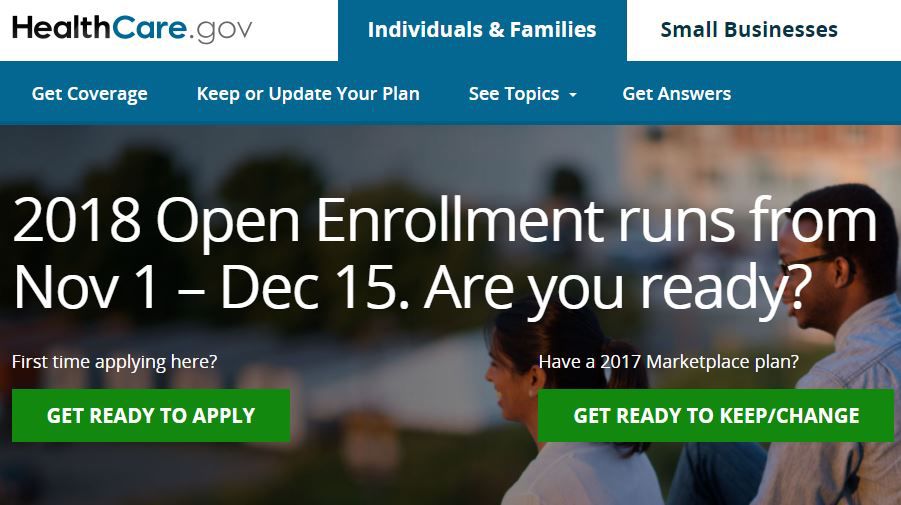
Image result for healthcare.gov 2018 open enrollment

Not since the first year of the Affordable Care Act has there been so much uncertainty at the start of an open enrollment period. How many Americans will sign up for health coverage? As experts weigh the uncertain impact of the Trump administration’s last-minute policy moves, estimates from the Congressional Budget Office and Urban Institute range from nearly one million fewer Americans with coverage to at least 600,000 more.
As co-founders of Oscar Health, an insurance startup that will be signing up Americans for individual plans across six states this year, we anticipate the Trump administration’s actions will simultaneously aid and undermine enrollment, thanks to the mixed impact of its political and policy changes.
The bottom line: It will be hard — after four years where tens of millions of Americans have gained access to health insurance — for the administration to erase the virtues of an individual market where consumers choose their health plan and no one is discriminated against based on health status. In fact, we project that Oscar will enroll significantly higher membership across our six states this year.

Here’s why we believe the administration’s actions will both help and hurt enrollment:

  • Plans will be more affordable for millions of Americans due to the seesaw impact of cuts to cost-sharing reduction subsidies, which will actually increase subsidies for many low-income consumers. And for the first time, the IRS will be aggressively enforcing the individual mandate.
  • On the other hand, the administration’s cuts to outreach and sporadic lip service to repealing the ACA do nothing to stanch growing confusion among shoppers.
The biggest threat to a strong open enrollment period is consumer confusion. That’s why our outreach this year, themed “Get Covered,” is so focused on educating Americans on the importance of health insurance. We were the first to launch our open enrollment ads six weeks ago. And when HealthCare.gov is down for maintenance every Sunday, Oscar will be up — consumers in our states will be able to get subsidized coverage on our website.
The big picture: Our optimism about the individual market, both this year and beyond, stems from our conviction that the near-term regulatory turbulence will pass and that the individual market will thrive in the long run.
That’s because health care costs are spiraling out of control across the board, even for Americans who get coverage through their jobs. This year, premium contributions for workers increased by 8.2%, while the employer’s share increased hardly at all: 1.4%.
But Americans see the full sticker price of care in the individual market alone. To ensure that consumers who are paying out of their own pockets can still afford coverage, it’s actually the insurers and providers in the individual market who are working hardest to control costs.
The details: Indeed, we are seeing signs that sustainable strategies to keep health care costs down for all Americans are being accelerated and proven out in the individual market.
  • Our health care system, for example, must move away from expensive emergency room visits and embrace virtual care. Prices to treat many of the same exact conditions in emergency rooms — where half of all care is delivered in the U.S. — can be orders of magnitude higher than telemedicine. In the first year of the ACA, Oscar introduced the first health insurance plan in the country with free, 24/7 access to telemedicine — and today, one in four Oscar members use it.
  • The individual market has also accelerated the shift away from big hospital networks in health insurance plans that drive prices up for all Americans. Narrow networks — which most ACA plans have — can result in lower premiums for consumers without impacting their quality of care.
  • The true innovation unlocked by the smaller networks, however, is one of integration by design. By making the insurer and hospital more dependent on each other, we can finally begin to remove the friction between your doctor and insurer to result in better, more coordinated care. For example, more than one third of all first-time doctor visits for our members are routed through our Oscar app and Concierge teams, to doctors that we partner with.
  • Hospitals are now looking to become your insurance company, too. Indeed, the Cleveland Clinic, a world-renowned hospital, is offering its own jointly-run plan with Oscar next year — in the individual market.
What’s next: There is no doubt that the individual market under the ACA has stumbled out of the gate, and is in need of some fixes. But America has seen rocky private insurance markets recover before.
Between 1998 and 2002, the number of private Medicare+Choice plans — what are now known as Medicare Advantage plans — was cut in half, to less than 150. After a legislative fix in 2003, the market recovered and matured, and seniors this year will have over 3,000 Medicare Advantage plans to choose from.
We’re confident the same can and will happen with the individual market.

Moody’s: Trump Executive Actions Credit Negative for HIX Insurers

http://www.healthleadersmedia.com/health-plans/moodys-trump-executive-actions-credit-negative-hix-insurers?spMailingID=12171449&spUserID=MTY3ODg4NTg1MzQ4S0&spJobID=1261586415&spReportId=MTI2MTU4NjQxNQS2

Related image


The investor-service company gauges impact of new ‘association’ health plans, expanded short-term insurance, and elimination of subsidies on the Obamacare exchanges.

President Donald Trump’s health-insurance executive actions last week are credit negative for insurance carriers operating on the Obamacare exchanges, New York, NY-based Moody’s Investors Service reported today.

On Oct. 12, Trump took two executive actions that will likely undermine the insurance exchanges established under the Patient Protection and Affordable Care Act (PPACA), Moody’s says:

  • In an executive order, the president eased regulations on “association” health plans and expanded the definition of short-term health insurance. The executive order calls for the federal departments of Labor, Treasury and Health and Human Services to expand insurance coverage for individuals such as allowing insurance purchases across state lines.
  • Although regulations must be put into place, association health plans will likely allow small businesses to band together to offer insurance to their employees. “Associations likely would be allowed to offer plans with lower benefits and lower costs,” Moody’s reported.
  • In a decision that did not require an executive order, Trump announced that his administration would end cost-sharing reduction (CSR) payments that subsidize the purchase of health insurance on the exchanges. The subsidies help insure low-income individuals who do not qualify for Medicaid coverage but can’t afford to buy commercial insurance health plans.
  • This year, the federal government spent about $7 billion on CSR payments.

The executive order is expected to promote creation of skimpy health plans, which would undermine the PPACA exchanges, Moody’s reported. “The introduction of lower-benefit, lower-cost plans and short-term insurance would be credit negative for health insurers that are still participating in the PPACA-governed individual market. These new plans would incentivize healthy people to exit the PPACA market, which would increase risk in the remaining pool of insureds.”

The decision to stop CSR payments will also have a credit negative effect on commercial carriers operating on the exchanges, Moody’s reported. This negative impact will fall particularly hard on commercial insurers that did not submit rates for next year based on the assumption that the CSR payments would be eliminated.

Health insurance rates are set on a state-by-state basis.

There could be an “offset” linked to the executive order that would soften the financial blow for commercial carriers operating on the exchanges, Moody’s reported. “If the executive order succeeds in bringing more healthy but currently uninsured people into the small group or individual market, that could mitigate at least some of the order’s negative effects.”

Moody’s highlighted the PPACA-exchange risk exposure of four commercial carriers in today’s report, which lists the companies’ beneficiaries on the exchanges as a percentage of their total number of health-insurance beneficiaries:

  • Indianapolis-based Anthem Inc.: 2.9%
  • Chicago-based Health Care Service Corporation: 6.8%
  • St. Louis-based Centene Corporation: 9.2%
  • Long Beach, CA-based Molina Healthcare Inc.: 20.4%

ACA Alterations Will Jolt Health Exchanges for 2018

http://www.healthleadersmedia.com/health-plans/aca-alterations-will-jolt-health-exchanges-2018?spMailingID=12171449&spUserID=MTY3ODg4NTg1MzQ4S0&spJobID=1261586415&spReportId=MTI2MTU4NjQxNQS2#

Image result for wrecking ball hospital

The end of cost sharing reductions has insurers trying to raise premiums even higher than planned. Those high premiums and other changes to the Affordable Care Act may drive consumers away from the exchanges.

The loss of cost sharing reductions (CSR) and the presidential executive order altering the Affordable Care Act will combine to significantly shake up the insurance market for 2018, one analyst says.

The effect is likely to include raising rates so high that the number of healthcare consumers who do not purchase coverage will skyrocket.

Health plans are scrambling to raise their rates even higher than already planned, responding to President Donald Trump’s announcement that insurers will no longer receive the subsidies.

Insurers were forced to submit rates for next year while the fate of CSRs was still uncertain—one set of rates is for if the subsidies continued and the second is for a higher rate to be used if they did not.

Some insurers are asking for a chance to revise the rates already submitted, says Julius W. Hobson Jr., an attorney and healthcare analyst with the Polsinelli law firm in Washington, D.C.

The CSR termination comes right after President Trump issued a new executive order he says is designed to increase competition and choice. Critics say it would seriously weaken the ACA, and some say that’s intentional.

President Trump says the order will give millions of Americans more access to affordable coverage and make it easier for people to obtain large-group coverage. Others worry that it could lure healthy young Americans away from the ACA exchanges, leaving those who remain to pay higher premiums.

“The combination of the executive order and the CSR termination wreaks havoc on the health insurance market for all of 2018,” Hobson says. “This also comes just before the open enrollment and with cutting back money for the patient navigators who help people sign up, and with reduced access to the website. That all means there are going to be fewer people who sign up.”

Higher premiums and deductibles already were driving some consumers away from purchasing individual healthcare plans, Hobson notes, and more will follow when the CSR loss forces insurers to raise rates even higher.

If the Trump administration stops enforcing the individual mandate, as it has said it might, that would make even more consumers forgo coverage, he says.

Fewer consumers buying insurance on the ACA exchanges intensifies their existing problems, Hobson says.

Premiums and deductibles will continue to rise as insurers struggle to remain profitable with a smaller pool of older, sicker patients driving high utilization costs. More and more consumers will leave the exchanges if they can, he says.

“People are going to be looking at premium increases they just can’t afford,” Hobson says. “The individual market will take a big hit, but the impact on the group market is harder to predict. We don’t know yet whether the increases in the individual market will bleed over into the group market.”

The recent changes are intended to weaken the ACA, Hobson says.

“The administration has said the ACA is imploding, but also that they’re going to do everything they can to wreck it. It’s not imploding on its own, it’s being shoved down the trash chute,” Hobson says.

“Losing the CSR payments is critical and, at this point, it’s unlikely that even if Congress acted they could do anything in time to affect 2018. There’s no way of looking at this other than it having a negative outcome,” he says.