CBO’s Revised View Of Individual Mandate Reflected In Latest Forecast

https://www.healthaffairs.org/do/10.1377/hblog20180605.966625/full/?utm_term=Read%20More%20%2526gt%3B%2526gt%3B&utm_campaign=HASU&utm_content=email&utm_source=06-10-18&utm_medium=Email&cm_mmc=Act-On%20Software-_-email-_-Health%20Affairs%20June%20Issue%3A%20Hospitals%2C%20Primary%20Care%20%2526%20More%3B%20ACA%20Round-Up%3B%20Harassment%20In%20Medicine-_-Read%20More%20%2526gt%3B%2526gt%3B

On May 23, the Congressional Budget Office (CBO) released updated projections of federal spending and tax expenditures related to supporting enrollment in health insurance, along with a new forecast of the number of Americans younger than age 65 who will have coverage or will be uninsured in the coming years.

The bottom line: The CBO continues to expect that the Affordable Care Act’s (ACA’s) markets will have relatively stable enrollment, more states will expand their Medicaid programs, and per-person health costs will rise at rates that exceed economic growth. Federal spending on subsidies for health insurance enrollment, along with tax breaks for employer coverage, will continue to grow at a rapid rate, thus intensifying pressure within the overall federal budget.

While the CBO’s new forecast looks in many ways quite similar to previous projections, the agency has revised its views on one very important aspect of its forecast—the effectiveness of the individual mandate—and also updated its forecast to reflect the effects of relevant executive decisions and proposed regulations by the Trump administration. These revisions and updates to the forecast are the primary reasons the current baseline does not differ more than it does from those issued by the CBO previously.

CBO’s Revised View Of The Individual Mandate

The most notable change in the CBO’s new forecast is the agency’s revised view of the effectiveness of the ACA’s individual mandate. During 2017, as Republicans in Congress attempted to pass legislation substantially rolling back and replacing the ACA, the CBO estimated that these efforts would dramatically increase the number of Americans going without insurance coverage. For instance, in July 2017, the CBO estimated that the version of repeal and replace assembled by Senate Majority Leader Mitch McConnell (R-KY) would have increased the number of uninsured from 28 million in 2017 to 41 million in 2018 and 50 million in 2026. There were several reasons that the McConnell proposal would have led to more people going without coverage, but the CBO specifically cited the planned repeal of the individual mandate as the most important factor.

In December, Congress repealed the penalty associated with the individual mandate as part of the sweeping individual and corporate tax reform law. At the time of enactment, the CBO estimated that the repeal would eventually lead to an increase in the number of people going without health insurance by 13 million people annually.

The CBO’s new forecast, however, places less weight on the importance of the mandate. The agency states that, for a number of reasons, it now believes that the mandate’s role in expanding coverage after 2013 is only about two-thirds of what it previously assumed. So instead of repeal adding 13 million more people to the ranks of the uninsured, the CBO now estimates the effect at slightly more than 8 million people.

The CBO cites a number of considerations for making this important revision to its forecast. Among other things, the agency is placing more emphasis on the financial reasons for expanded enrollment into coverage after 2013, such as the ACA’s subsidy structure, instead of nonfinancial factors, such as the expectation, or social norm, of insurance enrollment that the mandate was intended to create.

Summing Up 

In the aggregate, the CBO’s updated projections of health insurance enrollment and federal subsidies for coverage do not differ all that much from previous projections. What’s different are some of the assumptions. The CBO expects there will be more uninsured in the future than is the case today, but the agency does not expect a reversion back to the uninsured levels of the pre-ACA era. Furthermore, because of changes in policies set in motion by the Trump administration, there are likely to be more people enrolled in non-ACA compliant insurance plans than is the case today, and that coverage, while different, will still provide a reasonable level of financial protection to enrollees.


California’s Attorney General Vows National Fight To Defend The ACA

https://californiahealthline.org/news/californias-attorney-general-vows-national-fight-to-defend-the-aca/

Image result for aca

California Attorney General Xavier Becerra pledged Friday to redouble his efforts as the Affordable Care Act’s leading defender, saying attacks by the Trump Administration threaten health care for millions of Americans.

Becerra’s pledge came in response to an announcement from the administration Thursday that it would not defend key parts of the Affordable Care Act in court. The administration instead called on federal courts to scuttle the health law’s protection for people with preexisting medical conditions and its requirement that people buy health coverage.

Becerra accused the administration of going “AWOL.” It “has decided to abandon the hundreds of millions of people who depend on” the law, he said in an interview with California Healthline.

“It’s, simply put, an attack on the health care that millions of Americans have come to count on, and California, being the most successful state in implementing the Affordable Care Act, stands to lose perhaps more than anyone else.”

About 1.5 million Californians buy coverage through the state’s ACA exchange, Covered California, and nearly 4 million have joined Medicaid as a result of the program’s expansion under the law.

The state has been at the forefront in resisting many Trump Administration policies, including on health care and immigration.

“This is not a new experience for us under this new Trump era of having to defend Californians,” Becerra said. In the case of health care, “fortunately we have 16 other  [Democratic attorneys general] who are prepared to do it with us. ”

At issue is a lawsuit filed by 20 Republican state attorneys general on Feb. 26, which charged that Congress’ changes to the law in last year’s tax bill rendered the entire ACA unconstitutional. In the tax law, Congress repealed the penalty for people who fail to have health insurance starting in 2019.

Becerra is leading an effort by Democratic attorney generals from others states and the District of Columbia to defend the ACA against that lawsuit. In May, the court allowed them to “intervene” in the case.


An Estimated 52 Million Adults Have Pre-Existing Conditions That Would Make Them Uninsurable Pre-Obamacare

An Estimated 52 Million Adults Have Pre-Existing Conditions That Would Make Them Uninsurable Pre-Obamacare

Image result for pre existing conditions

In Eleven States, 3 in 10 Non-Elderly Adults Would Likely Be Denied Individual Insurance Under Medical Underwriting Practices.

A new Kaiser Family Foundation analysis finds that 52 million adults under 65 – or 27 percent of that population — have pre-existing health conditions that would likely make them uninsurable if they applied for health coverage under medical underwriting practices that existed in most states before insurance regulation changes made by the Affordable Care Act.

In eleven states, at least three in ten non-elderly adults would have a declinable condition, according to the analysis: West Virginia (36%), Mississippi (34%), Kentucky (33%), Alabama (33%), Arkansas (32%), Tennessee (32%), Oklahoma (31%), Louisiana (30%), Missouri (30%), Indiana (30%) and Kansas (30%).

States with the most people estimated to have the conditions include: California (5,865,000), Texas (4,536,000), and Florida (3,116,000).

Using data from two large government surveys, the analysis estimates the total number of nonelderly adults in each state with a health condition that could lead to a denial of coverage in the individual insurance market, based on pre-ACA field underwriting guides for brokers and agents. The results are conservative because the data don’t include some declinable conditions. The estimates also don’t include the number of people with other health conditions that wouldn’t necessarily cause a denial, but could lead to higher insurance costs based on underwriting.


Suicide rates rise sharply across the United States, new report shows

https://www.washingtonpost.com/news/to-your-health/wp/2018/06/07/u-s-suicide-rates-rise-sharply-across-the-country-new-report-shows/?noredirect=on&utm_term=.2e83fb652ffe


Suicide rates rose in all but one state between 1999 and 2016, with increases seen across age, gender, race and ethnicity, according to a report released Thursday by the Centers for Disease Control and Prevention. In more than half of all deaths in 27 states, the people had no known mental health condition when they ended their lives.

In North Dakota, the rate jumped more than 57 percent. In the most recent period studied (2014 to 2016), the rate was highest in Montana, at 29.2 per 100,000 residents, compared with the national average of 13.4 per 100,000.

Only Nevada recorded a decline — of 1 percent — for the overall period, although its rate remained higher than the national average.

Increasingly, suicide is being viewed not only as a mental health problem but a public health one. Nearly 45,000 suicides occurred in the United States in 2016 — more than twice the number of homicides — making it the 10th-leading cause of death. Among people ages 15 to 34, suicide is the second-leading cause of death.

The most common method used across all groups was firearms.

“The data are disturbing,” said Anne Schuchat, the CDC’s principal deputy director. “The widespread nature of the increase, in every state but one, really suggests that this is a national problem hitting most communities.”

It is hitting many places especially hard. In half of the states, suicide among people age 10 and older increased more than 30 percent.Percent change in annual suicide rate* by state, from 1999-2001 to 2014-2016 (Centers for Disease Control and Prevention)

“At what point is it a crisis?” asked Nadine Kaslow, a past president of the American Psychological Association. “Suicide is a public health crisis when you look at the numbers, and they keep going up. It’s up everywhere. And we know that the rates are actually higher than what’s reported. But homicides still get more attention.”

One factor in the rising rate, say mental health professionals as well as economists, sociologists and epidemiologists, is the Great Recession that hit 10 years ago. A 2017 study in the journal Social Science and Medicine showed evidence that a rise in the foreclosure rate during that concussive downturn was associated with an overall, though marginal, increase in suicide rates. The increase was higher for white males than any other race or gender group, however.

“Research for many years and across social and health science fields has demonstrated a strong relationship between economic downturns and an increase in deaths due to suicide,” Sarah Burgard an associate professor of sociology at the University of Michigan, explained in an email on Thursday.

The dramatic rise in opioid addiction also can’t be overlooked, experts say, though untangling accidental from intentional deaths by overdose can be difficult. The CDC has calculated that suicides from opioid overdoses nearly doubled between 1999 and 2014, and data from a 2014 national survey showed that individuals addicted to prescription opioids had a 40 percent to 60 percent higher risk of suicidal ideation. Habitual users of opioids were twice as likely to attempt suicide as people who did not use them.

High suicide numbers in the United States are not a new phenomenon. In 1999, then-Surgeon General David Satcher issued a report on the state of mental health in the country and called suicide “a significant public health problem.” The latest data at that time showed about 30,000 suicides a year.

Kaslow is particularly concerned about what has emerged with suicide among women. The report’s findings came just two days after 55-year-old fashion designer Kate Spade took her own life in New York — action her husband attributed to the severe depression she had been battling.

“Historically, men had higher death rates than women,” Kaslow noted. “That’s equalizing not because men are [committing suicide] less but women are doing it more. That is very, very troublesome.”

National Institute of Mental Health director Joshua A. Gordon explains some of the latest research surrounding suicide rates in the U.S. 

Among the stark numbers in the CDC report was the one signaling a high number of suicides among people with no diagnosed  mental health condition. In the 27 states that use the National Violent Death Reporting System, 54 percent of suicides fell into this category.

But Joshua Gordon, director of the National Institute of Mental Health, said that statistic must be viewed in context.

“When you do a psychological autopsy and go and look carefully at medical records and talk to family members of the victims,” he said, “90 percent will have evidence of a mental health condition.” That indicates a large portion weren’t diagnosed, “which suggests to me that they’re not getting the help they need,” he said.

Cultural attitudes may play a part. Those without a known mental health condition, according to the report, were more likely to be male and belong to a racial or ethnic minority.

“The data supports what we know about that notion,” Gordon said. “Men and Hispanics especially are less likely to seek help.”

The problems most frequently associated with suicide, according to the study, are strained relationships; life stressors, often involving work or finances; substance use problems; physical health conditions; and recent or impending crises. The most important takeaway, mental health professionals say, is that suicide is an issue not only for the mentally ill but for anyone struggling with serious lifestyle problems.

“I think this gets back to what do we need to be teaching people — how to manage breakups, job stresses,” said Christine Moutier, medical director of the American Foundation for Suicide Prevention. “What are we doing as a nation to help people to manage these things? Because anybody can experience those stresses. Anybody.”People without known mental health conditions were more likely to be male and to die by firearm. (CDC)

The rates of suicide for all states and the District of Columbia were calculated using data from the National Vital Statistics System. Information about contributing circumstances for those who died by suicide was obtained via the National Violent Death Reporting System, which is relatively new and in place in only 27 states.

“If you think of [suicide] as other leading causes of death, like AIDS and cancer, with the public health approach, mortality rates decline,” Moutier said. “We know that same approach can work with suicide.”


A Long Road to Care for Rural Californians

A Long Road to Care for Rural Californians

Cramped rural hospital in Happy Valley California

In the northeast corner of California, nearly kissing Nevada and Oregon, lies Surprise Valley. At approximately 70 miles long, the valley is home to 1,232 people, which works out to about two people per square mile. Services are sparse: The Chamber of Commerce website lists two grocery stores, one insurance agency, and one hospital with an emergency room to provide care to its residents.

Essential CoverageThat hospital, Surprise Valley Community Hospital, is a vital institution, but it is bankrupt. Barbara Feder Ostrov of Kaiser Health News reports that years of mismanagement caught up to the hospital in 2017. By the time state inspectors arrived that June, the hospital was in a state of disarray — crushed by debt, it had only one acute care bed and a chief administrator who was MIA. Residents of Surprise Valley were torn between keeping it open and shuttering it even though the nearest hospital with an emergency room is 25 miles away on the other side of a mountain pass. In the June 5 California election, county voters chose to sell the hospital to an out-of-state entrepreneur rather than risk the hospital’s closure.

Surprise Valley isn’t alone in its lack of access to health care. Since 2010, 83 rural US hospitals have closed, Michael Graff writes in the Guardian. For residents of rural areas, the closure of the local hospital can cut off a lifeline. When Portia Gibbs of Belhaven, North Carolina, had a heart attack in 2014, her husband, Barry, had to choose between driving her 60 miles east to a hospital in Nags Head or 70 miles west to a hospital in the town of Washington. Portia never made it to a hospital.

It’s difficult to attract physicians and hospitals to rural areas, where wages and reimbursement rates tend to be lower. “What happens is if you’re a cardiologist you have a tendency to move to the East Coast where you can get paid more for the same procedure,” said US Senator Jerry Moran (R-Kansas) in a meeting with HHS Secretary Alex Azar, according to Modern Healthcare.

Solving the Rural Hospital Puzzle

There is no easy fix for the decline in the number of rural hospitals, but Moran and other senators have proposed fixing the Medicare wage index. The index, which factors into reimbursement of hospitals serving Medicare patients, is a formula that accounts for geographic differences in wages and the cost of living. Some lawmakers contend that the formula penalizes rural hospitals and exacerbates the hospital shortage. Updating the index to increase payments to Medicare providers in underserved areas could draw more physicians to rural hospitals, which could help prevent hospitals from going under.

Some rural hospitals have tried another solution: joining multihospital systems. In California, where 25% of rural hospitals have closed over the past two decades, 19 rural hospitals have combined forces in systems composed of at least two other hospitals. However, our analysis of six of these hospitals showed mixed results for this strategy: The financial status of one rural hospital improved substantially after joining a system, but two others saw lower net income.

Perhaps a more feasible solution to lack of access to care in rural areas can be found in expanding the health care workforce. A study published in Health Affairsfound a growing presence of nurse practitioners (NPs) among rural practices nationwide. From 2008 to 2016, the number of NPs in rural areas increased 43%. Not surprisingly, “states with restricted scopes of practice had lower NP presence and slower growth.” The authors conclude that “adding nurse practitioners is a useful way for practices to align themselves with contemporary efforts to improve access and performance.”

It seems fitting and bittersweet to end this edition of Essential Coverage with our tribute to the late Herrmann Spetzler, the visionary CEO and the heart of Open Door Community Health Centers in rural Humboldt and Del Norte Counties. To underscore his commitment to providing health care in remote locales, he often described himself in meetings and speeches as “Herrmann Spetzler, RURAL.” Spetzler’s unexpected death in March cut short his life’s work to provide health care to everyone, regardless of income or geography. His passing leaves a huge hole in the community he served.


Plan to Cut $15B in Spending Squeaks Through House

https://www.usnews.com/news/politics/articles/2018-06-07/house-takes-up-trump-sponsored-plan-to-cut-15b-in-spending

Image result for CHIP Spending Cuts

The House on Thursday only narrowly passed a White House plan to cut almost $15 billion in unused government money, a closer-than-expected tally on legislation that’s designed to demonstrate fiscal discipline in Washington even though it wouldn’t have much of an impact on spiraling deficits.

The measure, which passed 210-206, would take a mostly symbolic whack at government spending because it would basically eliminate leftover funding that wouldn’t have been spent anyway. The bill now goes to the Senate, where it faces long odds.

The deficit is on track to exceed $800 billion this year despite a strong economy. Republicans controlling Congress are not attempting to pass a budget this year.

The package of so-called rescissions has been embraced by GOP conservatives upset by passage in March of a $1.3 trillion catchall spending bill that they say was too bloated. More pragmatic Republicans on Capitol Hill’s powerful Appropriations panels aren’t keen on the measure since it would eliminate accounting moves they routinely use to pay for spending elsewhere.

The measure includes $4 billion in cuts to a defunct loan program designed to boost fuel-efficient, advanced-technology vehicles, rescissions of various agriculture grant programs, and cuts to conservation programs at the Department of Agriculture, among others.

While Democrats blasted the cuts, the real objection to some of them, such as $7 billion from popular Children’s Health Insurance Program funding, is that it would take that money off the table so it couldn’t be used later as it was in the earlier spending bill. The CHIP cuts wouldn’t affect enrollment in the program, which provides health care to children from low-income families that don’t qualify for Medicaid.

“Targeting CHIP for a rescission prevents Congress from reinvesting in other priorities like child and maternal health, early childhood education, biomedical research and our community health centers,” said New York Rep. Nita Lowey, the top Democrat on the Appropriations Committee.

Some GOP moderates also worry that they’re casting a difficult-to-explain vote to cut CHIP funding in the run-up to November’s midterm elections.

“I don’t think the vote’s intended for people in swing districts,” said Rep. Ryan Costello, R-Pa. Nineteen Republicans, mostly moderates, opposed the bill. No Democrats voted for it.

President Donald Trump is the first President to employ the so-called rescissions tool since the Clinton administration. The obscure process is one of the few ways around the Senate filibuster, though other parliamentary problems could await in that chamber — even if resistance from moderates and Republicans on the Appropriations Committee can be overcome.

The nonpartisan Congressional Budget Office weighed in Thursday to estimate that the measure — pushed largely by White House budget director Mick Mulvaney and No. 2 House Republican Kevin McCarthy of California — would only cut the deficit by $1.1 billion over the coming decade. That’s because most of the cuts wouldn’t affect the deficit at all since CBO doesn’t give deficit credit for cutting money that would never have been spent.

Trump proposed the measure last month, but it was slow to come to a vote because some Republicans came out against it.

The White House submitted a revised package of cuts Tuesday, removing politically troublesome proposals to cut money to fight Ebola funds and to rebuild watersheds damaged by Superstorm Sandy. Trump weighed in soon after to urge Republicans to pass the plan.

It’s still unclear whether it will pass in the Senate, where pragmatic-minded Republicans are focusing on trying to get the troubled process for handling annual appropriations back on track on a bipartisan basis.

The White House and tea party lawmakers upset by the budget-busting “omnibus” bill have rallied around the plan, aiming to show that Republicans are taking on out-of-control spending.

“If this body cannot be trusted to reclaim money that will not or cannot be used for its intended purpose, can we really be trusted to save money anywhere else?” McCarthy said.

While some Democrats opposed the spending cuts as heartless, others mostly mocked the legislation.

“After spending nearly $2 trillion on tax cuts for the super-rich and blowing up the deficit, the Majority’s bill is like putting a Band-Aid on a gaping wound,” said Rep. Jim McGovern, D-Mass. “Republicans are trying to trick the American people into thinking they care about fiscal responsibility. They’re not fooling anyone.”


KHN’s ‘What The Health?’ Health Care Politics, Midterm Edition

https://khn.org/news/podcast-khns-what-the-health-health-care-politics-midterm-edition/

Image result for KHN’s ‘What The Health?’ Health Care Politics, Midterm Edition

The 2018 midterm elections were supposed to be a referendum on President Donald Trump, not about issues such as health care. Still, voters, Democrats and, to a lesser extent, Republicans seem to be keeping health care on the front burner.

The news from Medicare’s trustees that its hospital trust fund is on shakier financial footing than it was last year, hefty premium increases being proposed in several states and activity on Medicaid expansion all take on a political tinge as the critical elections draw closer.

Also this week, an interview with Matt Eyles, president and CEO of America’s Health Insurance Plans, the health insurance industry trade group.

This week’s panelists for KHN’s “What the Health?” are Julie Rovner of Kaiser Health News, Stephanie Armour of The Wall Street Journal, Alice Ollstein of Talking Points Memo and Rebecca Adams of CQ Roll Call.

Among the takeaways from this week’s podcast:

  • Outside Washington, concerns about health care accessibility and prices remain a big issue.
  • Democrats, looking toward the midterm elections in the fall, think that health care can be a potent issue for them. But many also believe that they can’t just run on complaints that the Republicans are sabotaging the Affordable Care Act. They are seeking to find a message that looks to the future.
  • Republicans see the plans by the White House to implement new regulations that allow expansion of association health plans and short-term health plans as a strong action that will thwart complaints that they haven’t fixed the ACA.
  • The states are beginning to release the initial requests from health insurers for premium increases. They vary substantially, but many appear to be partly attributed to the decision last year by Congress to repeal the penalty for people who don’t get insurance.
  • The report this week by the Medicare trustees that the hospital trust fund is closer to insolvency has ignited Democratic criticism of changes in health care law that were part of the GOP tax cut last year.
  • Arkansas has begun implementing its work requirements for healthy adults covered by the Medicaid expansion. It’s the first state to do that. But critics point out that those adults will have to register their work hours online only — and many do not have access to computers.


The ‘Biggest Health Care News of the Year’

http://www.thefiscaltimes.com/2018/06/08/Biggest-Health-Care-News-Year

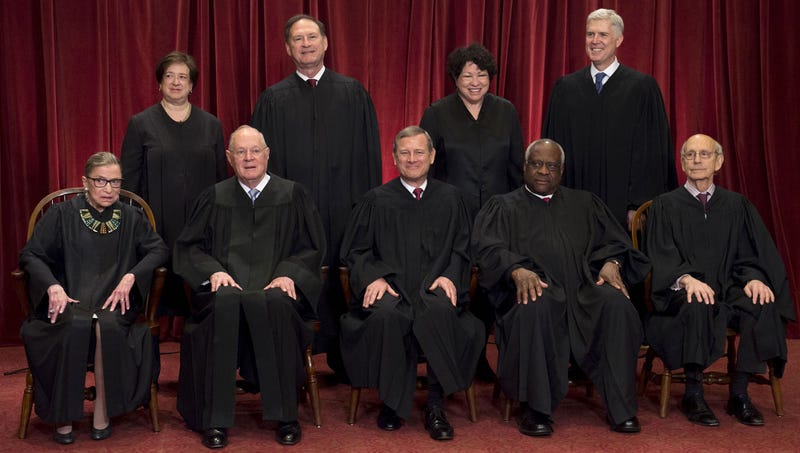
Image result for supreme court


Trump Administration Says ACA Protections for Preexisting Conditions Are Unconstitutional.

The Department of Justice said Thursday that it will not defend the constitutionality of key provisions of the Affordable Care Act in a lawsuit currently underway in Texas. Here’s what you need to know:

The background: Twenty states, led by Texas, sued the federal government in February as part of an effort to overturn the Affordable Care Act, arguing that, because the GOP tax bill eliminated the penalty for individuals who don’t buy health insurance, the law as a whole was unconstitutional. The Supreme Court’s 2012 ruling that upheld the Affordable Care Act called the individual mandate penalty a tax — and therefore legal. But the lawsuit argues that since the mandate can no longer raise any revenue, the mandate itself is now unconstitutional – and so is the entire ACA.

What they did: The Department of Justice filed a brief Thursday in support of the suit, saying “this Court should hold that the ACA’s individual mandate will be unconstitutional as of January 1, 2019,” and that some other provisions of the law – including those protecting people with pre-existing conditions being denied coverage or charged higher premiums – are inseparable from the mandate and therefore should be declared unconstitutional as well.

Why they did it: Republicans have targeted the Affordable Care Act for elimination ever since it passed, and President Trump continues to promise that it will be overturned. However, the federal support for the states’ lawsuit is unusual, since the Justice Department typically defends existing law. Attorney General Jeff Sessions wrote a letter to House Speaker Paul Ryan explaining that this is a “rare case” that warrants deviating from the Justice Department’s “longstanding tradition of defending the constitutionality of duly enacted statutes.” Tom Miller of the American Enterprise Institute told Politico that the refusal to defend key parts of the ACA shows that the Trump administration is going even further in its battle against the health care law.

What it means: If successful, the states’ lawsuit would allow insurers to charge much higher rates to people with pre-existing conditions, or deny them coverage altogether, effectively ending the ACA’s promise of providing health care for all Americans. If the Justice Department’s analysis is ultimately persuasive, however, other parts of the law, including Medicaid expansion, could stay in place. Some legal experts say the suit is weak, since it turns on the idea that if one part of a law is invalid, the whole thing is invalid, without recognizing that the Congress passed the law and is free to alter it while leaving the rest in place. But the lawsuit has been filed in a conservative court in Texas, and the Trump administration’s refusal to defend key parts of the law has likely boosted the plaintiffs’ chances.

Supporters of the health care law expressed considerable alarm on Friday. Andy Slavitt, who ran the Centers for Medicare and Medicaid Services under President Obama, tweeted that the Justice Department’s decision is the “biggest health care news of the year” and a blow to public health. Slavitt and others criticized the move as an unprecedented decision by the Justice Department to not defend the rule of law. Ultimately, the case may be heading for the Supreme Court.


Trump’s Justice Department says the ACA is unconstitutional

https://www.axios.com/trumps-justice-department-says-aca-is-unconstitutional-06f8714d-7606-4104-9982-f057786828a7.html?stream=top-stories&utm_source=alert&utm_medium=email&utm_campaign=alerts_all

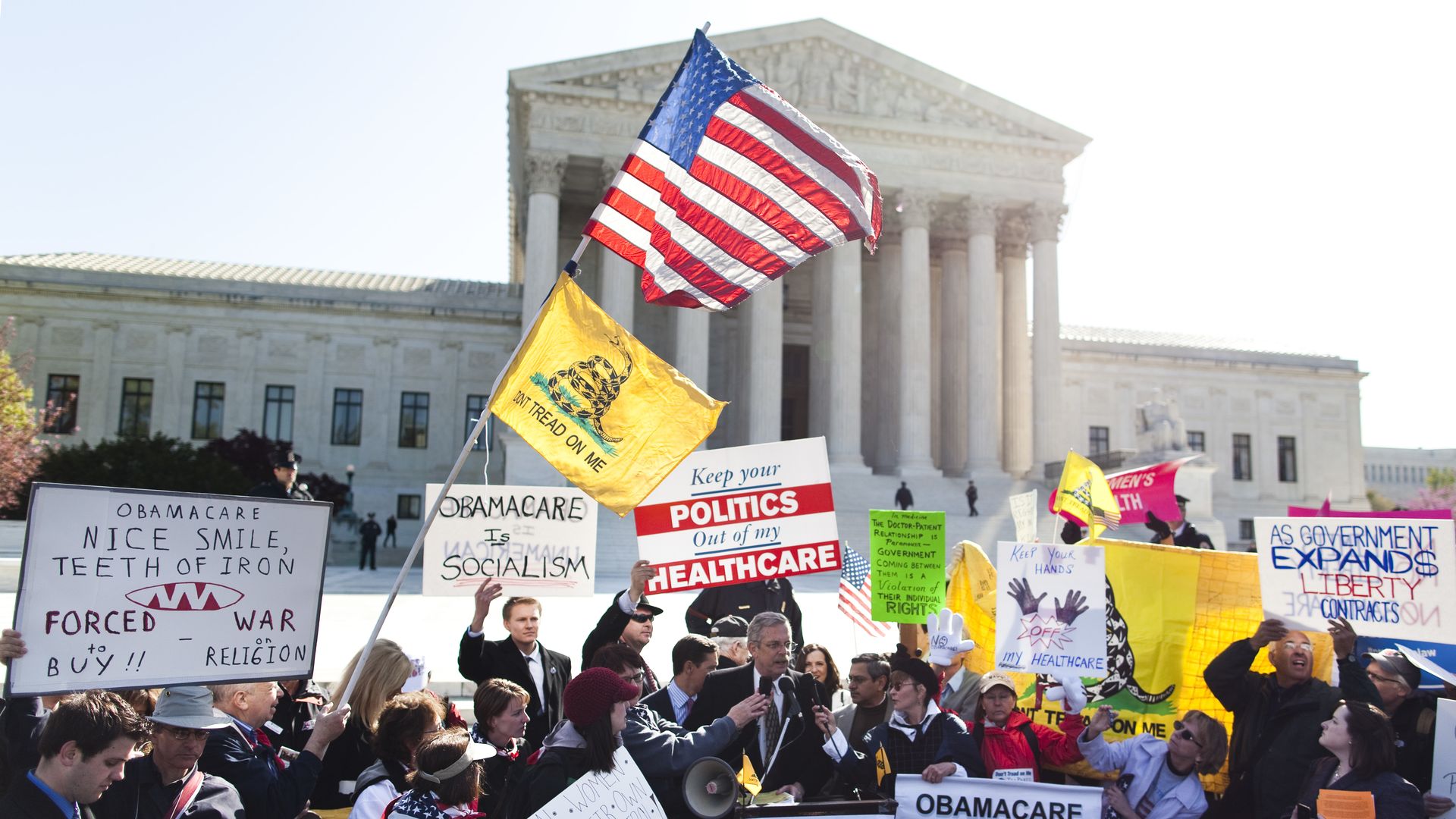
Affordable Care Act protesters in front of the Supreme Court


The Justice Department will not defend the Affordable Care Act in court, and says it believes the law’s individual mandate — the provision the Supreme Court upheld in 2012 — has become unconstitutional.

Why it matters: The Justice Department almost always defends federal laws when they’re challenged in court. Its departure from that norm in this case is a major development — career DOJ lawyers removed themselves from the case as the department announced this shift in its position.

The details: The ACA’s individual mandate requires most people to buy insurance or pay a tax penalty. The Supreme Court upheld that in 2012 as a valid use of Congress’ taxing power.

  • When Congress claimed it repealed the individual mandate last year, what it actually did was drop the tax penalty to $0.
  • So the coverage requirement itself is still technically on the books. And a group of Republican attorneys general, representing states led by Texas, say it’s now unconstitutional — because the specific penalty the Supreme Court upheld is no longer in effect.
  • The Justice Department agreed with that position in a brief filed Thursday night.
  • DOJ said the courts should strike down the coverage requirement, as well as the provision of the law that forces insurance companies to cover people with pre-existing conditions.

Between the lines: For the Justice Department to stop defending a federal law is not unprecedented — the Obama administration did it with the Defense of Marriage Act. But it is exceptionally rare.

Yes, but: A group of Democratic attorneys general has been granted permission to defend the ACA in this case, so someone will be in its corner.

What to watch: The argument against it is by no means a slam dunk. For starters, critics — now including the Justice Department — will have to prove that people are still being injured by the remaining shell of the individual mandate, even without a penalty for non-compliance.

Justice Dept. argues key parts of ObamaCare are unconstitutional

Justice Dept. argues key parts of ObamaCare are unconstitutional

Image result for aca challenge

The Department of Justice (DOJ) argued in court Thursday that key parts of ObamaCare are now unconstitutional, siding in large part with a conservative challenge to the law.

The move is a break from the norm of the DOJ to defend federal laws when they are challenged in court. Under President Trump, the department has opted not to defend a law that it strongly opposes.

Attorney General Jeff Sessions acknowledged in a letter to Speaker Paul Ryan (R-Wis.) that the DOJ has a “longstanding tradition” of defending federal laws, but argued that this is “a rare case where the proper course is to forgo defense” of the law.

The lawsuit in question was filed in February by Texas and 19 other GOP-led states, arguing that ObamaCare is unconstitutional and should be overturned.

Legal experts are deeply skeptical the challenge can succeed, and 17 Democratic-led states have already intervened to defend the law in the absence of DOJ action.

The DOJ argues that ObamaCare’s protections against people with pre-existing conditions being denied coverage or charged more should be invalidated, maintaining that the individual mandate that people have insurance or face a tax penalty is now unconstitutional.

The conservative states and DOJ point to the Supreme Court’s 2012 ruling that upheld ObamaCare’s individual mandate under Congress’s taxing power. Now that Congress has repealed the mandate penalty as part of last year’s tax bill – while technically keeping the mandate itself in place – they argue the mandate is no longer a tax and is now invalid.

They also argue that the key pre-existing condition protections cannot be separated from the mandate and should be invalidated. The DOJ argues the remainder of the law can stay.

The chances for that argument succeeding are viewed with deep skepticism by legal experts, in part because Congress itself indicated that the rest of ObamaCare could still stand without the mandate when it moved to repeal the tax penalty last year.

The case is currently before a federal district court judge in Texas, Reed O’Connor, who was appointed by former President George W. Bush.

Some supporters of ObamaCare view the DOJ’s move more as a damaging break from precedent rather than an actual serious legal threat to ObamaCare, since the lawsuit is unlikely to succeed.