California Suing Trump Administration Over Rollback Of Birth Control Rule

https://www.huffingtonpost.com/entry/california-trump-birth-control_us_59d80b87e4b0f6eed35065d4

Image result for Fifth Amendment Equal Protection

“The California Department of Justice will fight to protect every woman’s right to healthcare, including reproductive healthcare.”

Becerra’s suit comes hours after Trump’s administration announced a new rule that will allow all employers to opt out of including birth control in their health care plans, rolling back an Obama-era mandate that guaranteed 62 million women access to contraception at no cost.

“Donald Trump wants businesses and corporations to control family planning decisions rather than a woman in consultation with her doctor. These anti-women’s health regulations prove once again that the Trump Administration is willing to trample on people’s rights,” Becerra said in a statement Friday. “The California Department of Justice will fight to protect every woman’s right to healthcare, including reproductive healthcare. We’ll see the Trump Administration in court.”

In announcing the decision, the administration argued the coverage requirement created a “substantial burden” on employers’ free exercise of religion as protected by the U.S. Constitution. The new regulations will allow any employer to deny coverage for contraception on religious and/or moral grounds.

This, Becerra argues, violates the Constitution as well as federal law.

The complaint makes the case that the rollback violates the First Amendment’s Establishment Clause by allowing employers to use their religious beliefs to deny women a health care benefit.

Becerra also argues the regulations violate the Fifth Amendment’s Equal Protection Clause.

The new rules “specifically target and harm women,” reads the complaint. “The [Affordable Care Act] specifically contemplated disparities in health care costs between women and men, and specifically sought to rectify this problem by giving women cost-free preventative services. The new [regulations] undermine this action and is discriminatory to women.”

 The suit also contends the rules violate the federal Administrative Procedure Act, which requires a notice and comment period for major policy changes, and that the new rules will harm the state of California by burdening it with additional costs to fill coverage gaps.

“Millions of women in California may be left without access to contraceptives and counseling and the State will be shouldering that additional fiscal and administrative burden as women seek access for this coverage through state-funded programs,” reads the complaint.

Becerra filed the suit Friday in the U.S. District Court for the Northern District of California.

The American Civil Liberties Union filed a similar suit Friday, also arguing the rules violate the Establishment and Equal Protection clauses.

“The Trump administration is forcing women to pay for their boss’s religious beliefs,” ACLU senior staff attorney Brigitte Amiri said in a statement.

Women’s health groups have also pushed back on the move, noting the low unintended pregnancy rates, as well as low abortion rates, since the birth control coverage mandate went into place.

How Trump is planning to gut Obamacare by executive order

https://www.vox.com/policy-and-politics/2017/10/8/16439492/trump-obamacare-association-health-plans

Image result for aca repeal


With a repeal bill off the table, the Trump administration has drafted an executive order that could blow a huge hole in the Affordable Care Act, according to a source with direct knowledge of the plan.

The order would, in effect, exempt many association health plans, groups of small businesses that pool together to buy health insurance, from core Obamacare requirements like the coverage of certain essential health benefits. It would potentially allow individuals to join these plans too, which would put individual insurance marketplaces in serious peril by drawing younger and healthier people away from them.

The draft order is also said to broaden the definition of short-term insurance, which is also exempt from the law’s regulations. Together, these changes represent a serious threat to Obamacare: President Trump seems ready to open more loopholes for more people to buy insurance outside the health care law’s markets, which experts anticipate would destabilize the market for customers who are left behind with higher premiums and fewer insurers.

“This appears to be a backdoor way of undermining the Affordable Care Act,” Kevin Lucia, who studies the markets at Georgetown University, said of the alleged changes.

It’s possible that the order could change before Trump signs it, or never be signed at all, as has happened with other executive orders in the past. The details of the order as described, though, generally match up with what had been expected after Trump said he would soon issue an executive order on health care. Association health plans have been a priority for Sen. Rand Paul (R-KY), who has urged Trump to expand them.

The White House declined to comment when Vox inquired about the pending order. A senior administration official detailed the outline of the executive order to the Wall Street Journalon Saturday evening, which aligns with the description provided to Vox.

On Tuesday morning, Trump promised that his forthcoming actions would provide “great HealthCare to many people.”

But experts have warned they could significantly destabilize the Obamacare markets.

Association health plans, explained

An association health plan, as Vox’s Sarah Kliff has previously explained, is a way for a group of small businesses pool together to buy insurance, giving them more purchasing power and access to cheaper premiums. A group of bakeries, for example, might form a bakers association and purchase health coverage together. The most famous examples have been farm bureaus, which allowed independent farming businesses to band together and get insurance.

Before Obamacare, national associations could pick and choose which states’ insurance rules they wanted to follow and use those rules to guide the plans they offered nationwide. The bakers association could choose to follow the rules for, say, the Alabama insurance market, which mandates coverage of relatively few benefits, for all its bakeries in New York, a state with many mandates.

The result was often health insurance that skirted state rules and was a better deal for businesses with young and healthy employees, who are likely to prefer skimpier health plans. The former insurance regulator described the situation prior to the ACA to Kliff as being “a race to the bottom, with some associations offering lower-cost plans that covered virtually nothing.”

Obamacare changed these rules. Association health plans were treated as small businesses and were therefore required to cover all of the law’s mandated benefits.

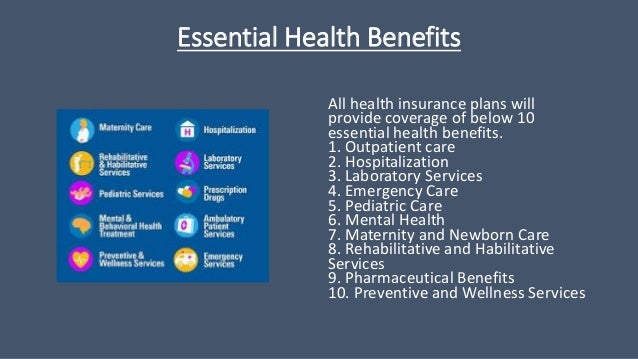
Essential health benefits, mandating that insurers cover everything from hospital care to prescription drugs to maternity care, are central to the ACA’s insurance protections: They prevent plans from crafting their coverage to attract mostly young and healthy customers at the expense of older and sicker people, which had been one of the primary problems with the association health plan model before the law.

How Trump’s executive order could damage Obamacare

Requiring association health plans to follow the same rules as small businesses was one of the many ways the Affordable Care Act cracked down on skimpy health plans. Trump is now looking to roll back those changes.

Under the draft executive order as described, new regulations would allow association health plans to be considered large employers when it comes to health insurance. Large employers are not subjected to the same rules as individual or small-group plans under Obamacare. Most notably, they do not have to cover all of the law’s essential health benefits or meet the requirement that insurance cover a minimal percentage of a person’s medical bills.

If that change were made, association health plans would be freed to craft skimpier (and cheaper) health plans that appeal only to businesses with younger and healthier employees. Small businesses left in Obamacare’s marketplace would likely face higher costs and fewer options as the market became less attractive to insurers.

“It will destroy the small-group market,” Tim Jost, a law professor at Washington and Lee University who generally supports Obamacare, told me. “We’ll be back to where we were before the Affordable Care Act.”

The draft order did not specify whether individuals would also be allowed to buy into these associations health plans, as some Republicans like Paul want. But, according to the source, the regulations resulting from the order could potentially be written to allow self-employed people to buy into the now-deregulated association market, which would be an even bigger blow to Obamacare.

The self-employed individuals likely to flee the law’s markets for association plans would probably be younger and healthier, leaving behind an older, sicker pool for the remaining Obamacare plans. That has the makings of a death spiral, with ever-increasing premiums and insurers deciding to leave the market altogether.

“The ability for individuals to purchase health insurance through an association really puts the individual market at risk and destabilizes it over the long term,” Lucia said. “When you have market segmentation, it over time leads to higher premiums and it becomes less attractive to carriers.”

Trump is also eyeing short-term coverage to undercut the health law

Trump’s executive order would also expand what’s called short-term limited duration insurance. These short-term policies typically have higher out-of-pocket costs and cover fewer services than traditional insurance. They were designed for people who, for example, expect to be out of work and therefore without insurance for a limited period of time.

That kind of coverage is totally free from the health care law’s insurance regulations: the mandate to cover essential health benefits, the prohibition on charging sick people more than healthy people or denying people coverage based on their medical history, and so on.

Short-term insurance had previously been allowed to last as long as 364 days. The Obama administration, in an effort to curtail the use of such coverage to circumvent the health care law, shortened it to three months. Trump’s draft order would reverse that rule, once again allowing people to buy this non-Obamacare coverage for almost an entire year, my source said.

The effect would be much the same as the changes to association health plans: Healthier people would be the consumers most likely to use this escape hatch to find cheaper, if far less comprehensive, coverage outside of Obamacare — though they would still be subject to the law’s individual mandate, as short-term insurance is not considered sufficient.

“If you allow them to sell 364-day policies, or policies that are renewable, that’s just going to suck a lot of the healthy people out of the individual market,” Jost said.

And here, again, fewer healthy people in the Obamacare market means higher costs to insurers, which leads to higher premiums and possibly more insurers dropping out.

“Consumers are going to face a less stable, less competitive individual market,” Lucia said.

The ultimate impact on Obamacare will depend on the final language of the executive order Trump signs. But based on the draft described to me, Trump is readying the devastating blow to the health care law that congressional Republicans have so far failed to deliver.

Trump could make waves with health-care order

Trump could make waves with health-care order

Image result for essential health benefits

President Trump’s planned executive order on ObamaCare is worrying supporters of the law and insurers, who fear it could undermine the stability of ObamaCare.

Trump’s order, expected as soon as this week, would allow small businesses or other groups of people to band together to buy health insurance. Some fear that these association health plans would not be subject to the same rules as ObamaCare plans, including those that protect people with pre-existing conditions.

That would make these plans cheaper for healthy people, potentially luring them away from the ObamaCare market. The result could be that only sicker, costlier people remain in ObamaCare plans, leading to a spike in premiums.

“If this executive order is anything like the rumors then it could have a huge impact on stability of the individual insurance market,” said Larry Levitt, a health policy expert at the Kaiser Family Foundation.

Andy Slavitt, a former top health-care official in the Obama administration, warned that insurers could drop out of the Affordable Care Act markets because of the order.

“I am now hearing that the Executive Order may cause insurers to leave ACA markets right away,” Slavitt tweeted on Sunday.

Slavitt argues the order is part of Trump’s broader effort to undermine ObamaCare. He said the order could accomplish through executive action what Congress failed to do through legislation.

But supporters say Trump’s move could unleash the free market and lower prices for consumers.

Sen. Rand Paul (R-Ky.) has been pushing for the order, arguing it is something Trump can do without Congress to give people an alternative to ObamaCare.

“This is something I’ve been advocating for six months,” Paul said on MSNBC in late September.

“I think it’s bigger than Graham-Cassidy, it’s bigger than any reform we’ve even talked about to date, but hasn’t gotten enough attention,” Paul added, referring to the failed Republican repeal-and-replace bill co-sponsored by Sens. Lindsey Graham (R-S.C.) and Bill Cassidy (R-La.).

Paul said allowing more people to band together to purchase health insurance gives them more leverage to lower premiums than when people are buying coverage on their own.

The National Federation of Independent Businesses (NFIB), which has long opposed ObamaCare, supports expanding association health plans and has been advocating for action.

“Allowing people more affordable arrangements is not a bad thing,” said Kevin Kuhlman, director of government relations at the NFIB. He said fears about undermining ObamaCare markets are “overblown.” His group is waiting to review the details of the order, which he said he expects to be issued on Thursday.

Association health plans already exist, but Trump’s order could allow them to expand and get around ObamaCare rules, creating plans that are only for healthy people.

Experts pointed to the Tennessee Farm Bureau, which currently offers an association health plan in the state that, through a loophole, does not have to follow ObamaCare rules.

The plan has about 73,000 enrollees and may be one of the reasons that Tennessee’s ObamaCare market has struggled, according to researchers at Georgetown University.

There is still much uncertainty about the order. Many observers doubt that Trump has the power to change much on his own.

Tim Jost, a health law expert at Washington and Lee University, said it is hard to imagine how the White House could find the legal authority to expand association health plans to individuals. The move would likely draw legal challenges.

A more likely action, Jost said, would be to expand association health plans so that it is easier for small groups to form them. That could destabilize the small group insurance market but would be a less sweeping step than expanding association health plans to individuals.

Given the limits on his authority, Trump is likely to direct agencies, including the Department of Health and Human Services and the Department of Labor, to issue guidance or regulations. Those additional steps will prolong the process.

Insurers are worried about the potentially destabilizing effects of the order. Lobbyists said insurers had begun quietly working on the issue and talking to the administration but do not yet know how far-reaching the effects would be.

It is possible there could be legal challenges to the regulations. The order would change the interpretation of a 1974 law called the Employee Retirement Income Security Act. That interpretation could be challenged in court, for example if the order sought to allow individuals, not just small groups, to join association health plans.

“There will likely be challenges,” said Kevin Lucia, a professor at Georgetown University’s Center for Health Insurance Reforms.

Lucia said the planned order, in combination with other steps the Trump administration is taking, like cutting back on outreach efforts, “really undermines the future of the individual market.”

A sicker group of enrollees remaining in the ObamaCare plans poses problems.

The changes “will lead to less [insurers] playing in this market and potentially a sicker risk pool which translates to higher premiums,” Lucia said.

Cori Uccello, senior health fellow at the American Academy of Actuaries, said that one aspect to watch in the order is when the changes will take effect. Insurers have already set their prices and made plans for 2018.

“Anything that applied to 2018 would be incredibly destabilizing,” she said. “It would still be destabilizing in 2019 but people would know ahead of time.”

Hospitals Brace For Unpaid Bills If GOP Balks On Children’s Healthcare

https://www.forbes.com/sites/brucejapsen/2017/10/05/hospitals-brace-for-unpaid-bills-if-gop-balks-on-childrens-healthcare/#6b40118272e9

Image result for children's health insurance program (chip)


Hospitals are bracing for an increase in unpaid medical bills and related uncompensated care after the Republican-led Congress let funding for the Children’s Health Insurance Program lapse.

Congressional committees this week are working on language to renew the CHIP program after federal funding expired Saturday, Sept. 30, leaving coverage of 9 million children in doubt. What was thought to be a done deal with bipartisan agreement a month ago that CHIP would be renewed for five years has lately become bogged down in Congressional gridlock and charges of ineptitude against Republicans and the Trump White House.

U.S. Speaker of the House Rep. Paul Ryan (R-WI) (L) speaks as Senate Majority Leader Sen. Mitch McConnell (R-KY) (3rd L), Sen. Ted Cruz (R-TX) (2nd L) and Sen. Pat Toomey (R-PA) (R) listen during a press event on tax reform September 27, 2017 at the Capitol in Washington, DC. (Photo by Alex Wong/Getty Images)

“States will not have access to additional funds and either will have to scramble to find money to pay for the health care costs for some of the most vulnerable patients or hospitals likely will experience a surge in uncompensated care,” Mizuho Securities USAresearch director Sheryl Skolnick said in a report Wednesday. “The need to reauthorize CHIP was well-known and the failure seems symptomatic of the larger issue of a dysfunctional political process.”

Some states could begin to run out of money to cover children over the next three months, triggering an uptick in medical bills that could lead to layoffs and a freeze on capital spending.

Hospitals generally account for CHIP funds in their Medicaid revenues, which can be 10% and 20% of some facility revenues. For-profit hospital operators like Tenet Healthcare, HCA Holdings and Community Health Systems, though, have less than 10% of their operations funded by Medicaid, Mizuho’s report this week shows.

Since the Affordable Care Act expanded coverage to more than 20 million Americans, hospital charity care and related uncompensated care expenses that include bad debt have dropped significantly.

Uncompensated care costs for the nation’s 4,862 hospitals dropped below 5% to 4.2%, or $35.7 billion in 2015, the American Hospital Association’s most recent tally showsThe 2015 level of uncompensated care costs were the lowest amount since 2007 , the AHA figures show.

But a loss in money from millions of children covered by CHIP would reverse the uncompensated care trend and certainly hit hospitals hard.

The healthcare industry was still hopeful momentum would return in Congress and CHIP funding would be renewed before providers and their patients would be harmed.

“Given CHIP’s immensely positive impact on children’s health, MHPA is very gratified that the House language released on Monday, October 2 extends the CHIP funding for another five years,” Medicaid Health Plans of America said in a letter to Congress. “We also appreciate that the language acknowledges any changes to funding must be made carefully and over time by gradually reducing the temporary 23 percent increase to 11.5 percent in October 2019, before allowing the program to resume the regular CHIP funding in October 2020. MHPA also appreciates that the funding, once extended, will be retroactive thus ensuring states’ current budgets will not be negatively affected.”

MHPA members include Aetna, Centene, Cigna and UnitedHealth Group.

New York City Health+Hospitals to sue state over $380 million in withheld DSH payments

http://www.healthcarefinancenews.com/news/new-york-city-healthhospitals-sue-state-over-380-million-withheld-dsh-payments?mkt_tok=eyJpIjoiWXpabVkyVTNNR1U1WVdFeiIsInQiOiJHQWw3aVJJbjVuT2JhM3NsUW1Ub0M5Yk5iSXVxSVNuc0lKSE1oa0F3MmhzU2gwaVE4MkJZTExVSHd6OE90VEFIZ3ZUOVhSUllXenBnZGtiK0QzRVpYbHVKRjFUZG1ZUzJjR3FnM3pOZ2R6bENFaFJKZndoTzVMMnlweHhOUTdFciJ9

System is already cutting hiring, using attrition to conserve cash and will end the week with only 13 days cash on hand.

NYC H+H plans to sue New York state over the $380 million in disproportionate share hospital payments they claim should have been delivered to them by Sept. 30, NYC H+H interim CEO Stan Brezenoff said on Friday.

City spokeswoman Freddie Goldstein said the suit would be filed sometime next week, though she couldn’t specify whether it would be filed in state or federal court. She also couldn’t specify exactly what state entities would be named as respondents or whether it would include the federal government.

More details will be forthcoming in the coming days, but regarding the purpose of the lawsuit, she said the payments in question were allocated by the federal government for the purpose of reimbursing the city for services already rendered in fiscal 2017. She said the state has no role other than to be a vessel for this funding.

“They can’t change the purpose of the funding once it’s been allocated by the feds.”

Dean Fuleihan, director of the NYC Office of Management and Budget said pursuant to state law it’s clear the $380 million has to go H+H. While he recognizes that there are reconciliations after every fiscal year, he said the $380 million in DSH payments has nothing to do with that.

“That can not turn into we are not giving you the $380 million that you expected, that we knew you expected, that we never objected to and that had to be paid in the prior federal fiscal year.”

The state has argued that the impending massive federal cuts to the DSH program are the reason for not releasing the funds, and that the state will be conducting detailed financial analysis of each hospital that receives funds from the program to assess their situation and need. Gov. Andrew Cuomo said the $1.1 billion cut that will unfold over the next 18 months will mean the state can’t fund any public hospital 100 percent, and they have not made any DSH payments since Oct. 1, when the law went into effect. The cuts are a caveat of the Affordable Care Act.

Fuleihan also conceded that there is no actual statute stipulating the Sept. 30 deadline. Rather, the past pattern of payment dictated it, and the payments are for expenses incurred in fiscal 2017, which ended Sept.30. He said the state’s decision to withhold the funds is a first.
And there was no federal cut to DSH funding in fiscal 2017, so the money should come.

“Is there anyone in the state of New York that does not recognize that NYC H+H is the major provider of care to Medicaid recipients and the uninsured. One-third of our patients are uninsured and we don’t get any of the FY17 DSH money? The voluntaries got their money. We’re not getting anything,” said Brezenoff.

About a third of the system’s patients are uninsured and large number of them are not eligible for insurance.

Brezenoff has already told staff that they will using attrition and drastic cuts to hiring to try and conserve cash. He said by the end of Friday they’ll have only $255 million, equal to 13 days of cash on hand.

“You can see just how precarious our situation is…We have begun painful process of adjusting our operations in ways that will almost certainly impact services to patients and put additional strain on our hard working employees.”

He said they will now be looking closely at each position that becomes open and deciding whether or not to fill it, and that those decisions could ultimately impact clinical staff and patient care.

“It is definitely conceivable that some physician positions will not be filled,” Brezenoff said.

They are also slowing down payments to vendors, which could impact future pricing and maintaining of supplies.

“The longer this goes on, it will require more and more difficult things to conserve cash. That’s the mode NYC H+H is in.”

Between last fiscal year and this one, NYC H+H is looking at a more than $700 million gap, including the currently withheld DSH funds as well as a possible $330 million cut for fiscal 2018 if Congress does not repeal the cuts.

Brezenoff said they have no plans to ask the city for more funds, as the traditional amount that comes from the city to NYC H+H is between $1 billion and $1.3 billion. The city is currently slated to contribute $1.8 billion, with commitment for $2 billion in their financial plan. NYC is facing their own $3.5 billion budget gap for fiscal 2019.

Steep Premiums Challenge People Who Buy Health Insurance Without Subsidies

http://www.npr.org/sections/health-shots/2017/10/07/555957419/steep-premiums-challenge-people-who-buy-health-insurance-without-subsidies

Image result for Uninsured

Paul Melquist of St. Paul, Minn., has a message for the people who wrote the Affordable Care Act: “Quit wrecking my health care.”

Teri Goodrich of Raleigh, N.C., agrees. “We’re getting slammed. We didn’t budget for this,” she says.

Millions of people have gained health insurance because of the federal health law. Millions more have seen their existing coverage improved.

But one slice of the population, which includes Melquist and Goodrich, is unquestionably worse off. They are healthy people who buy their own coverage but earn too much to qualify for help paying their premiums. And the premium hikes that are being announced as enrollment looms for next year — in some states, increases topping 50 percent — will make their situations more miserable.

Exactly how big is this group? According to Mark Farrah Associates, a health care analysis firm, as of 2017, there were 17.6 million people in the individual market, 5.4 million of whom bought policies outside the health exchanges, where premium help is not available. Combine that with the percentage of people who bought insurance on the exchanges but earned too much (more than four times the federal poverty level, or about $48,000 for an individual) to get premium subsidies, and the estimate is 7.5 million, or 43 percent of the total individual market purchasers, according to insurance industry consultant Robert Laszewski.

Who are these people?

“They’re early retirees,” says Laszewski. “They’re people working part time who have substantial outside income. They’re people who are self-employed of any age, people who are small employers.”

Melquist is one of those early retirees. He and his wife are both 59. He worked in the defense industry and retired at the end of 2016.

He always planned to retire at age 55 but ended up working longer, in part because he knew health insurance costs were rising. When he did retire and sought to purchase coverage for himself and his wife, he says, “I was shocked to find out how bad it actually was.”

For a bronze-level plan with a health savings account, Melquist says, “we pay $15,000 a year [in premiums] and the first $6,550 [for health care expenses] for each of us comes out of our pocket. So basically you could be looking at $30,000 out of pocket before anything gets covered.”

Insurance is important, Melquist says, particularly if a catastrophic health issue were to hit either of him or his wife. In the meantime, he can still pay the bills. But he’s frustrated. “I’m not eating dog food, but I’m also not able to do stuff for my grandchildren,” he says, like help with college costs. “It’s not that my life is falling apart, but the [Affordable Care Act] has ruined a lot of things I’d like to have done.”

The good news, if there is any, for Melquist is that premiums in Minnesota are going up by only small amounts for 2018, and in some cases going down, because of a reinsurance program passed by the state legislature that will help cover the costs for some of the state’s sickest patients in the individual market. That move will help keep premiums from spiking even more.

But that won’t be the case in Raleigh, where Goodrich and her husband, John Kistle, work as private consultants in the energy industry.

Goodrich, 59, and Kistle, 57, bought insurance through the ACA exchange in their state for three years. When premiums reached $1,600 per month with deductibles of $7,500 each, however, “it was just unbelievable. We decided just not to get insurance,” Goodrich says.

Eventually, they bought short-term plans that cover only catastrophic illness or injury. That insurance is not considered adequate under the ACA, so the couple could be liable for a tax penalty as well.

Goodrich, who volunteers to help people with their taxes in her spare time, says she has run the numbers and thinks that insurance is so expensive where she lives that the couple will be exempt from the penalty. That is because the cheapest insurance would cost the couple more than 8.16 percent of their income. Under the health law’s provisions, the penalty doesn’t apply above that level because insurance is considered unaffordable.

“We try to be good citizens and do the right thing,” she says. “Next year, we’re trying to figure out how to make less than $64,000 so we can get subsidies.” That amount is equal to 400 percent of the federal poverty line for two people, the cutoff for premium assistance because Congress assumed those who earned more could afford to buy affordable coverage.

Sabrina Corlette, a research professor at Georgetown University who specializes in health insurance, agreed that this is a population “that faced big hikes” in premiums when the health law took effect.

But, she says, in many cases, people in the individual market were previously paying artificially low premiums. Some of those old policies had substandard coverage. For others, however, the higher prices are the result of one of the fundamental changes enacted by the health law. “These are folks who were benefiting from a system that was affordable solely because insurers were able to keep sick people out,” Corlette says, adding that they are now being asked “to pay more of the true cost of health care.”

This is a population that is also more likely to vote Republican, says Laszewski, “which is one of the grand ironies now.”

Republicans in Congress and President Trump haven’t been able to “repeal and replace” the health law. But some of their efforts are undermining it — primarily the administration’s threat to stop paying billions of dollars to insurers in subsidies to help some lower-income people pay their out-of-pocket costs. The uncertainty surrounding those subsidies has led insurers to boost premiums next year by an estimated 20 percent. Those who get premium help from the government won’t have to pay more. But those who are paying the full freight will.

Also driving up premiums for next year, says Corlette, are the administration’s threats not to enforce the individual requirement for insurance and its decision to cancel most advertising and outreach for the year’s open-enrollment period that begins Nov. 1. Both of those provisions bring more healthy people into the insurance pool to help spread costs.

“One could argue that the 2014 premium increases were painful, but it was about getting us to a system that was more fundamentally fair and just,” Corlette says. “Now, it’s completely unnecessary price increases for unsubsidized folks that could so easily be avoided by a rational political system.”

Can the U.S. Repair Its Health Care While Keeping Its Innovation Edge?

Image result for Can the U.S. Repair Its Health Care While Keeping Its Innovation Edge?

The United States health care system has many problems, but it also promotes more innovation than its counterparts in other nations. That’s why discussions of remaking American health care often raise concerns about threats to innovation.

But this fear is frequently misapplied and misunderstood.

First, let’s acknowledge that the United States is home to an outsize share of global innovation within the health care sector and more broadly. It has more clinical trials than any other country. It has the most Nobel laureatesin physiology or medicine. It has won more patentsAt least one publicationranks it No. 1 in overall scientific innovation.

Strong promotion of innovation in health care is one reason the United States got as far as it did in our recent bracket tournament on the best health system in the world. Though the United States lost to France, 3-2, in the semifinals, it picked up its two votes in part because of its influence on innovation, which can save lives in the United States and throughout the world.

Now we shouldn’t delude ourselves into thinking Americans are inherently more innovative than people in other countries. In fact, many American innovators are immigrants who may or may not be citizens. Many technological and procedural breakthroughs in medicine have occurred in other countries.

Rather, the nation’s innovation advantage arises from a first-class research university system, along with robust intellectual property laws and significant public and private investment in research and development.

Perhaps most important, this country offers a large market in which patients, organizations and government spend a lot on health and companies are able to profit greatly from health care innovation.

The United States health care market, through which over one-sixth of the economy flows, offers investors substantial opportunities. Rational investors will invest in an area if it is more profitable than the next best opportunity.

“The relationship between profits and innovation is clearest in the biopharmaceutical and medical device sectors,” said Craig Garthwaite, a health economist with Northwestern University’s Kellogg School of Management, and one of the judges in our tournament. “In these sectors, firms are able to patent innovations, and we have a good sense of how additional research funds lead to new products.”

High brand-name drug prices, along with generous drug coverage for much of the population, fuel an expectation that large biopharmaceutical research and development investments will pay off. Were American drug prices to fall, or coverage of prescription drugs to retrench, the drug market would shrink and some of those investments would not be made. That’s a potential innovation loss.

This is not mere theory, economists have shown. Daron Acemoglu and Joshua Linn found that as the potential market for a type of drug grows, so do the number of new drugs entering that market. Amy Finkelstein showedthat policies that made the market for vaccines more favorable in the late 1980s encouraged 2.5 times more new vaccine clinical trials per year for each affected disease. And Meg Blume-Kohout and Neeraj Sood found that Medicare’s introduction of a drug benefit in 2006 was associated with increases in preclinical testing and clinical trials for drug classes most likely affected by the policy.

Health care innovation can have direct benefits for health, well-being and longevity. A study led by a Harvard economist, David Cutler, showed that life expectancy grew by almost seven years in the second half of the 20th century at a cost of only about $20,000 per year of life gained. The vast majority of gains were because of innovations in the care for high-risk, premature infants and for cardiovascular disease. These technologies are expensive, but other innovation can be cost-reducing. For instance, in the mid-1970s, new dialysis equipment halved treatment time, saving labor costs.

Even with those undeniable improvements, there are questions about the nature of American innovation. Work by Mr. Garthwaite, along with David Dranove and Manuel Hermosilla, showed that although Medicare’s drug benefit spurred drug innovation, there was little evidence that it led to “breakthrough” treatments.

And although high prices do serve as incentive for innovation, other work by Mr. Garthwaite and colleagues suggests that under certain circumstances drug makers can charge more than the value of the innovation.

The high cost of health care, an enormous burden on American consumers, isn’t necessarily a unique feature of our mix of private health insurance and public programs. In principle, we could spend just as much, or more, under any other configuration of health care coverage, including a single-payer program. We spend a great deal right now through the Medicare program — often held out as a model for universal single-payer.

Despite the fact that traditional Medicare is an entirely public insurance program, there’s an enormous market for innovative types of care for older Americans. That’s because we are willing to spend a lot for it, not because of what kind of entity is doing the spending (government vs. private insurers).

In fact, some question whether the innovation incentive offered by the health care market is too strong. Spending less and skipping the marginal innovation is a rational choice. Spending differently to encourage different forms of innovation is another approach.

“We have a health care system with all sorts of perverse incentives, many of which do little good for patients,” said Dr. Ashish Jha, director of the Harvard Global Health Institute and the other expert panelist who favored the U.S. over France, along with Mr. Garthwaite. “If we could orient the system toward measuring and incentivizing meaningfully better health outcomes, we would have more innovations that are worth paying for.”

Naturally, the innovation rewarded by the American health care system doesn’t stay in the U.S. It’s enjoyed worldwide, even though other countries pay a lot less for it. So it’s also reasonable to debate whether it’s fair for the United States to be the world’s subsidizer of health care innovation. This is a different debate than whether and how the country’s health care system should be redesigned. We can stifle or stimulate innovation regardless of how we obtain insurance and deliver care.

“We have confused the issue of how we pay for care — market-based, Medicare for all, or something else — with how we spur innovation,” Dr. Jha said. “In doing so, we have made it harder to engage in the far more important debate: how we develop new tests and treatments for our neediest patients in ways that improve lives and don’t bankrupt our nation.”

Patients, Health Insurers Challenge Iowa’s Effort To Privatize Medicaid

http://www.npr.org/sections/health-shots/2017/10/07/555591770/patients-health-insurers-challenge-iowas-effort-to-privatize-medicaid

Iowa is one of 38 states that radically changed the way it runs Medicaid over the past few years. The state moved about 600,000 people on the government-run health program into care that is managed by for-profit insurance companies.

The idea is that the private companies would save the state money, but it has been a rocky transition in Iowa, especially for people like Neal Siegel.

Siegel is one of six disabled Iowans suing the state, alleging that Medicaid managed care, as it is known, deprives thousands of Iowans with disabilities the right to live safely in their homes.

Medicaid serves people with disabilities, low-income people and people in nursing homes. A combination of federal and state funds pays for the program. It covers 74 million people across the country these days, about half of whom are in Medicaid managed care.

Siegel, a former financial consultant, was in a hit-and-run bicycle crash four years ago that left him with a severe brain injury. He uses a wheelchair and can barely speak.

“I would probably put Neal at about 98 percent cognitive of what’s going on around him, but unfortunately not able to articulate it,” says Siegel’s girlfriend, Beth Wargo. “So it’s being trapped inside your own body.”

After the accident, Siegel qualified for Medicaid. He lived in a rehabilitation center for a while, and the lawsuit, filed in U.S. district court in June, says he was the victim of abuse and neglect while living there.

Eventually, he moved home with Wargo, where he is reliant on caregivers to assist him with all activities of daily life.

Then last year, Wargo says, they got a letter in the mail from AmeriHealth Caritas, the company that manages his care. Siegel’s budget for home help had been slashed by 50 percent, Wargo says. Siegel’s face lights up as Wargo talks about the lawsuit, and he manages to say, “Oh yeah,” when she mentions how happy they were that they could be part of it.

Cyndy Miller is the legal director with Disability Rights Iowa, the advocacy group that spearheaded the lawsuit.

“The system is too stressed right now with the way it’s being managed, and it’s not healthy for individuals with chronic or serious disabilities,” says Miller.

According to the lawsuit, the company claimed that spending on Siegel’s case was cut because it had exceeded a limit set in state policy. A spokesman for AmeriHealth Caritas said the company could not comment on ongoing litigation. The state has asked for the lawsuit to be dropped.

In addition to the suit, complaints about Medicaid from hospitals, doctors and patients have spiked in Iowa.

Iowa Department of Human Services Director Jerry Foxhoven defends moving the entire Medicaid population to managed care. He says more taxpayer dollars will be saved under private management.

But he says his agency is willing to make changes, especially for people like Neal, who have serious disabilities.

“Everything’s always on the table. We’re always looking at everything to say how do we best serve the people we’re trying to serve and be the best stewards of taxpayer dollars,” Foxhoven says.

For their part, the three companies with contracts in Iowa say in statements that the first 18 months have been successful. But they also have said to state officials that reimbursement rates were based on deeply flawed cost estimates provided to them before the project began.

They are now negotiating to get millions of dollars more in state funding.

So where is the savings? So far, no state has actually done a comprehensive review of whether private companies actually save Medicaid dollars, says Kelly Whitener, an associate professor with Georgetown University who studies managed care.

“You’d really need to be able to see are you saving money overall or not, and if you are spending less money, are you suppressing services that are needed? Or are you really finding efficiencies and only delivering care that families really need?” says Whitener.

For the moment, those questions don’t have definitive answers.

Meanwhile, Iowa has to balance its books. Republican Gov. Kim Reynolds had to tap more than $260 million of the state’s reserve fund this year, and officials expect next year’s budget will be even tougher to negotiate. Medicaid funding will likely be a large part of the discussion.

U.S. Health Care Reform Can’t Wait for Quality Measures to Be Perfect

https://hbr.org/2017/10/u-s-health-care-reform-cant-wait-for-quality-measures-to-be-perfect

oct17-04-117155330

There’s a debate in the United States about whether the current measures of health care quality are adequate to support the movement away from fee-for-service toward value-based payment. Some providers advocate slowing or even halting payment reform efforts because they don’t believe that quality can be adequately measured to determine fair payment. Employers and other purchasers, however, strongly support the currently available quality measures used in payment reform efforts to reward higher-performing providers. So far, the Trump administration has not weighed in.

The four of us, leaders of organizations that represent large employers and other purchasers of health care, reject any delay in payment reform efforts for the following three reasons:

Even imperfect measurement and transparency accelerate quality improvement. One set of measures often questioned is the Agency for Healthcare Research and Quality’s (AHRQ) Patient Safety Indicators (PSIs) used by the Centers for Medicare and Medicaid Services (CMS) and others in value-based payment programs. These indicators measure surgical complications and errors in hospitals, which is critical given that one in four hospital admissions is estimated to result in an adverse event.

PSIs remain among the most evidence-based, well-tested, and validated quality measures available. CMS uses many in its value-based purchasing programs. Use and reporting of PSIs through AHRQ’s Medicare Patient Safety Monitoring System has measurably improved quality. For instance, CMS reported a reduction in inpatient venous thromboembolisms (VTEs) from 28,000 in 2010 to 16,000 in 2014, meaning that 12,000 fewer patients had potentially fatal blood clots in 2014.

In addition to using quality measures in payment programs and for quality improvement, making measures public is key to accelerating change. “If transparency were a medication, it would be a blockbuster,” concluded a multi-stakeholder roundtable convened by the National Patient Safety Foundation’s Lucian Leape Institute in 2015. The foundation’s report cited the Leapfrog Group’s first-ever reporting of early elective delivery rates by hospitals in 2010, which galvanized a cascade of efforts to curtail the problem and thus reduce maternal harms and neonatal intensive care unit (NICU) admissions. This was effective: The national mean of early elective deliveries declined from a rate of 17% to 2.8% in only five years.

Using measures improves measurement. Providers and health care executives sometimes point to flaws in their medical-record and billing systems as a main reason certain measures shouldn’t be used. As they see it, their performance on the measures isn’t the issue; it’s their medical records or billing coding that’s the problem. They believe these internal systems should be fixed before measures that use this information are applied in payment formulas or public reporting.

But use of these measures is often necessary to break logjams in correcting the health care industry’s long-neglected weaknesses in data-quality control. Indeed, many of the nuanced imperfections providers criticize were only uncovered by public reporting, which revealed unexpectedly poor performance for some providers, prompting them to research the medical records to find out the reasons.

Even rough measures make a big difference when they are publicly reported. For instance, New York State’s release of surgical mortality data for coronary artery bypass grafting (CABG) procedures jump-started the movement to define and more carefully collect much stronger measures of CABG outcomes, and today we have many advances in cardiac care and its measurement.

In the New York example, the success in generating ever better measures — and more importantly, achieving ever better outcomes for patients — came about because providers made the changes that saved lives, and they deserve all the credit for that. A thorough, respectful process for building scientific and stakeholder consensus around measures has been orchestrated by leaders like the National Quality Forum (NQF) and the National Committee for Quality Assurance (NCQA). Purchasers are committed to partnering in the development and refinement of excellent measures while we advance transparency and payment reform alongside that work.

Returning to fee-for-service is not an optionGiven the widely acknowledged waste, heavy costs, and quality-of-care issues produced by the fee-for-service system, the fact that there are rough spots on the road to value-based payment is hardly a justification for slowing down reform. If converting to a more sensible payment system were easy, it would have been done a long time ago.

The change to performance-based payment and market share requires tenacity and patience. Current quality measures may have rough edges, but stakeholders have worked hard to steadily improve their validity and reliability. Employers and other purchasers, such as those involved in our organizations, must work with forward-thinking colleagues in the health care system to continually improve the measures that publicly signal value. It will be a learning process for providers and purchasers as long as we’re guided by a spirit of transparency.

Whatever the risks of imperfect measurement, America’s first priority must be to eliminate avoidable suffering, mortality, and waste in its uniquely costly health care system. We hope that the Trump administration and lawmakers on both sides of the aisle will continue to recognize what our members see clearly: delaying payment reform is not an option.


Trump rolls back Obamacare birth control mandate

http://www.politico.com/story/2017/10/06/trump-rolls-back-obamacares-contraception-rule-243537

Image result for Trump rolls back Obamacare birth control mandate

The new policy reignites the battle over one of the health care law’s most controversial provisions.

The Trump administration will allow virtually any employer to claim a religious or moral objection to Obamacare’s birth control coverage mandate under a sweeping rollback announced Friday.

The new policies, which take effect immediately, reignite a fierce battle over one of the health care law’s most controversial provisions and quickly drew legal challenges. The requirement to provide FDA-approved contraception at no cost was long opposed by religious groups that heavily favored Trump, and has been wrapped up in litigation for more than five years.

“The United States has a long history of providing conscience protections in the regulation of health care for entities and individuals with objections based on religious beliefs or moral convictions,” the administration wrote in new rules.

The American Civil Liberties Union said it will file a lawsuit on Friday to block the long-anticipated rules from the Trump administration, and California Attorney General Xavier Becerra also announced plans to sue. Women’s health groups for months have been preparing lawsuits against the new policies, which they say will enable employers to deny their workers access to needed care.

The Trump administration said it was acting to protect individuals and groups from being forced to violate their religious beliefs as it downplayed concerns that more women would struggle to afford birth control.

“The attempts by the previous administration to provide some protections were inadequate,” said a senior HHS official of the Obama administration’s efforts to provide workarounds for religious groups. “They are being rebuffed here.”

The administration issued two rules — one outlining how an employer could claim an exemption for religious beliefs, the other outlining an exemption for sincerely held moral convictions — on the same day Attorney General Jeff Sessions called for sweeping protections for religious freedom in a government-wide memo that could have far-reaching implications.

The new birth control rules hew closely to a draft that leaked in May and drew swift condemnation from Democrats, public health groups and women’s health care advocates.

“Today’s outrageous rules by the Trump Administration show callous disregard for women’s rights, health, and autonomy, said Fatima Goss Graves, president and CEO of the National Women’s Law Center. “By taking away women’s access to no-cost birth control coverage, the rules give employers a license to discriminate against women. We will take immediate legal steps to block these unfair and discriminatory rules.”

It’s unclear how many organizations will now look to drop birth control coverage from their insurance plans. In the aftermath of the Supreme Court’s 2014 Hobby Lobby ruling that closely held private companies could seek an exemption on religious grounds, only a few dozen employers requested one from the Obama administration, POLITICO found last year.

The birth control coverage mandate is broadly supported by the general public, polling has found over the years. And it appears to have reduced women’s spending on contraception. One study estimated that women saved $1.4 billion on birth control pills in 2013 as a result of the coverage requirement. About 55 million women have directly benefited from no-cost birth control, according to an Obama administration report released last year.

“Any move to decrease access to these vital services would have damaging effects on public health and women’s health,” said Haywood Brown, director of the American Congress of Obstetricians and Gynecologists.

Trump hinted at his plan to roll back the birth control mandate this spring as he signed an executive order on religious freedom, but the regulation had been tied up at his budget office for more than four months. By weakening the mandate, Trump is unilaterally paring back a small piece of Obamacare detested by his conservative base, which has grown increasingly frustrated with the GOP’s inability to fulfill its longstanding promise to repeal the health care law.

The Affordable Care Act’s birth control mandate took effect in 2012 after the Obama administration accepted a recommendation from an independent panel to require plans to cover it at no cost to women. The administration exempted houses of worship and unsuccessfully tried to make accommodations for religiously affiliated groups to allow their employees to still receive the coverage from a third party. But those groups rejected the accommodations and filed dozens of lawsuits, leading to two separate Supreme Court challenges, including the Hobby Lobbydecision.

The Supreme Court last year ordered the Obama administration and religiously affiliated organizations, such as universities and charities, to reach agreement on an accommodation that would let employees of such groups have access to no-cost contraception. They never resolved the issue.

Advocates for religious groups called the rule a major step forward after years of fighting the mandate.

“Today President Trump delivered a huge victory for conscience rights and religious liberty in America,” said Susan B. Anthony List President Marjorie Dannenfelser in a statement. “No longer will Catholic nuns who care for the elderly poor be forced by the government to provide abortion-inducing drugs in their health care plans.”

The Trump administration argues that women have affordable contraceptive options should employers drop coverage, and that several government programs provide free or subsidized contraception for low-income women, including Title X family planning grants.

But women’s health advocates say that program is already underfunded, and other Trump administration priorities — including stalled plans to repeal Obamacare and defund Planned Parenthood — would further erode access to affordable birth control.

“President Trump’s shameful war on women rages on,” said Rep. Jan Schakowsky (D-Ill.) in a statement. “By ending the birth control mandate, the President and his Administration are allowing employers to stand in the way of women accessing the healthcare that they and their doctors have deemed necessary.”