


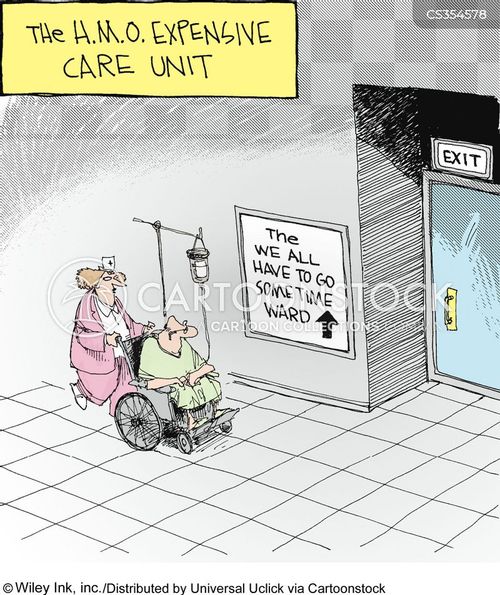
Cartoon – Your HMO has approved your surgery
http://khn.org/news/californias-new-single-payer-proposal-embraces-some-costly-old-ways/

Three of the dirtiest words in health care are “fee for service.”
For years, U.S. officials have sought to move Medicare away from paying doctors and hospitals for each task they perform, a costly approach that rewards the quantity of care over quality. State Medicaid programs and private insurers are pursuing similar changes.
Yet the $400 billion single-payer proposal that’s advancing in the California legislature would restore fee-for-service to its once-dominant perch in California.
A state Senate analysis released last week warned that fee-for-service and other provisions in the legislation would “strongly limit the state’s ability to control costs.” Cost containment will be key in persuading lawmakers and the public to support the increased taxes that would be necessary to finance this ambitious, universal health care system for 39 million Californians.
Several health experts expressed skepticism about the bill’s prospects in its current form.
“Single-payer has its pros and cons, but if it’s built on the foundation of fee-for-service it will be a disaster,” said Stephen Shortell, dean emeritus of the School of Public Health at the University of California-Berkeley. “It would be a huge step backwards in delivering health care.”
Paul Ginsburg, a health economist and professor at the University of Southern California, agreed and said the legislation reads like something out of the 1960s in terms of how it wants to reimburse providers.
“There’s broad consensus we ought to go from volume to value. This bill ignores all the signs pointing to progress and advocates a system that failed,” he said.
Backers of the Healthy California proposal are pushing for a vote in the Senate by Friday so the legislation can go to the state Assembly and remain in play for this year’s session.
The authors say that their single-payer proposal won’t rely entirely on old-fashioned fee-for-service and that there’s plenty of time for the bill to be amended. According to the authors, some of the criticism in the legislative analysis reflects a misreading of the bill: It would, they say, include some use of managed care.

http://www.chcf.org/articles/2016/11/dynamics-decline-truth-hmos

California’s commercial health maintenance organization population shrank from 11.9 million to 9.8 million enrollees between 2004 and 2015 (see figure below), a 17.5% decline. But the decline has not been consistent across all HMOs — Kaiser’s commercial enrollment has actually grown during this period.
Two new publications from CHCF take a closer look at how commercial managed care enrollment (including individual enrollment) and the public sector’s embrace of managed care are shifting the way physician organizations are paid — important trends that could affect California’s delivery system.
Healthcare Triage News: Health Care Reform, and the Issues We Face
As we approach the election this fall, it seems like the news media report on little else. Unfortunately, too little news coverage addresses health care reform. That’s wackadoo, because there is still so much to be done to improve the cost, quality, and access for patients within the US health care system.
So let’s talk about the major health policy issues we in the US face. This is Healthcare Triage News.


Saying the last goodbye in the dorm parking lot, you realize more than ever that you can’t protect your child from every risk. It’s time to let go.
But back at home, you can assemble a strong financial safety net. Knowing what your current insurance will pay for — and whether you need to buy extra coverage — is a good first step.
Here’s how to evaluate your auto, homeowners, life and health insurance needs as your child heads to college.
 HENRY KOTULA