Duke, UNC Health among health systems to join value-based program with Blue Cross NC

https://www.fiercehealthcare.com/payer/duke-wake-forest-among-health-systems-to-join-value-based-arrangement-blue-cross-nc

Duke Medical

Five major health systems are teaming up with one of North Carolina’s largest insurers to launch a new value-based care program.

Duke University Medical Center, University of North Carolina Health Care, Wake Forest Baptist Health, WakeMed Health and Hospitals, Cone Health and their respective accountable care organizations (ACOs) will join the new program led by Blue Cross and Blue Shield of North Carolina (Blue Cross NC).

Under the new program, called Blue Premier, Blue Cross NC and the health systems will be jointly responsible for better health outcomes and patient experiences while lowering costs. The idea is to make providers share risk for higher costs and inefficiencies in the healthcare system in exchange for reaping the rewards of the savings.

The total payments to the health system under Blue Premier will be based on the health systems’ ability to manage the total cost of care and their overall performance.

“Historically, our healthcare system pays for services that may or may not improve a patient’s health, and our customers simply cannot afford this approach,” said Patrick Conway, M.D., Blue Cross NC president and CEO and the former head of the Center for Medicare and Medicaid Innovation (CMMI), in a statement. “Moving forward, insurers, doctors and hospitals must work together, and hold each other accountable for improving care and reducing costs.”

The news comes just a month after Blue Cross NC announced a partnership with Aledade, a well-funded startup that partners with primary care physicians to build and lead ACOs, to launch a new initiative that will support hundreds of independently owned and operated primary care physician clinics in the state in value-based care.

The insurer has an established history of working with the health systems to find ways to drive down costs. In August, Blue Cross NC worked out a deal with UNC Health in a move that reduced premiums on the ACA exchange. However, at the same time, the insurer cut ties with WakeMed and Duke Health by discontinuing its Blue Local exchange.

Blue Cross NC has said that by 2020, it plans to have at least half of its members with a provider who is working under a value-based contract. 


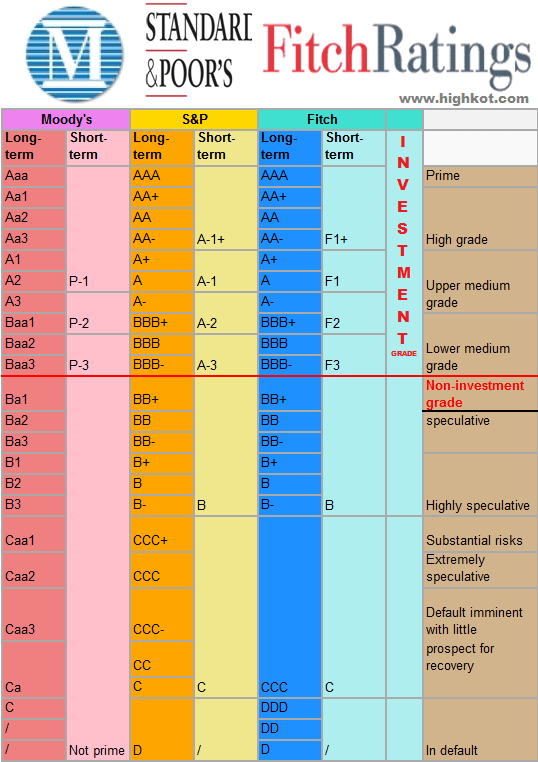
20 recent hospital, health system outlook and credit rating actions

https://www.beckershospitalreview.com/finance/20-recent-hospital-health-system-outlook-and-credit-rating-actions.html?origin=cfoe&utm_source=cfoe

Related image

The following hospital and health system credit rating and outlook changes or affirmations occurred in the last two weeks, beginning with the most recent:

1. Fitch upgrades Cottage Health rating to ‘AA-‘

Fitch Ratings assigned an issuer default rating of “AA-” to Santa Barbara, Calif.-based Cottage Health and upgraded its revenue bond rating from “A+” to “AA-.”

2. Moody’s assigns ‘A1’ rating to Bexar County Hospital District

Moody’s Investors Service assigned an “A1” rating to Bexar County (Texas) Hospital District.

3. Moody’s confirms ‘Ba1’ ratings for Monroe County Health Authority

Moody’s Investors Service confirmed its “Ba1” issuer and general obligation limited tax ratings for Monroe County (Ala.) Health Care Authority.

4. Moody’s affirms ‘A3’ rating for The Christ Hospital

Moody’s Investors Service has affirmed its “A3” rating for Cincinnati-based The Christ Hospital, affecting $311 million of outstanding debt.

5. Moody’s assigns ‘Aa3’ rating to Partners Healthcare System

Moody’s Investors Service assigned an “A3” rating to Boston-based Partners Healthcare’s proposed revenue bonds.

6. Moody’s affirms ‘Aa2’ rating for Northwestern Memorial HealthCare

Moody’s Investors Service affirmed its “Aa2,” “Aa2/VMIG 1,” and “P-1” ratings for Chicago-based Northwestern Memorial HealthCare, affecting $1.1 billion of debt.

7. Moody’s affirms Yale New Haven Health’s ‘Aa3’ rating

Moody’s Investors Service affirmed the long-term underlying “Aa3” ratings of Yale New Haven (Conn.) Health, affecting $715 million of rated debt.

8. Moody’s assigns ‘A2’ rating to Kettering Health Network

Moody’s Investors Service assigned an “A2” rating to Dayton, Ohio-based Kettering Health Network.

9. S&P assigns ‘A+’ rating to Indiana’s Marion General Hospital

S&P Global Ratings assigned an “A+” long-term rating to Marion (Ind.) General Hospital.

10. Moody’s affirms ‘Ba3’ rating for Antelope Valley Healthcare District

Moody’s Investors Service affirmed its “Ba3” rating for Lancaster, Calif.-based Antelope Valley Health District, which includes Antelope Valley Hospital, affecting $122 million of revenue bonds.

11. Moody’s affirms ‘Ba2’ rating for Community Memorial Health System

Moody’s Investors Service affirmed Ventura, Calif.-based Community Memorial Health System’s “Ba2” rating, affecting $339 million of rated debt.

12. Moody’s affirms ‘A2’ rating for University of Maryland Medical System

Moody’s Investors Service affirmed its “A2” rating for the Baltimore-based University of Maryland Medical System, affecting $1.1 billion of outstanding debt.

13. Moody’s affirms ‘B1’ rating for Sauk Prairie Healthcare

Moody’s Investors Service affirmed its “B1” rating for Sauk Prairie Healthcare in Prairie du Sac, Wis., affecting $38 million of fixed rate bonds.

14. Moody’s affirms ‘A3’ rating for Excela Health

Moody’s Investors Service affirmed Greensburg, Pa.-based Excela Health’s “A3” rating, affecting $72 million of outstanding debt.

15. Moody’s affirms Northwest Community Hospital’s ‘A2’ rating

Moody’s Investors Service affirmed its “A2” rating for Arlington Heights, Ill.-based Northwest Community Hospital, affecting $194 million of rated debt.

16. Fitch assigns ‘AA-‘ long-term rating to Trinity Health

Fitch Ratings assigned an “AA-” long-term rating to Livonia, Mich.-based Trinity Health, affecting $175 million of bonds.

17. Fitch withdraws rating for Greenwich Hospital

Fitch Ratings has withdrawn its issuer default rating for Greenwich (Conn.) Hospital.

18. Fitch assigns ‘A’ rating to East Tennessee Children’s Hospital

Fitch Ratings has assigned an “A” rating and an “A” issuer default rating to Knoxville-based East Tennessee Children’s Hospital.

19. Moody’s affirms ‘A1’ rating for Lexington County Health Services District

Moody’s Investors Service affirmed its “A1” rating for Lexington County (S.C.) Health Services District, affecting $369 million of outstanding revenue bonds.

20. Moody’s assigns ‘A1’ rating to Munson Healthcare

Moody’s Investors Service assigned an “A1” long-term rating to the proposed revenue refunding bonds for Traverse City, Mich.-based Munson Healthcare while also maintaining an “A1” rating on the system’s existing debt.

Bankrupt hospital chain receives $610M bid

https://www.beckershospitalreview.com/hospital-transactions-and-valuation/bankrupt-hospital-chain-receives-610m-bid.html?origin=cfoe&utm_source=cfoe

Image result for verity health system bankruptcy

El Segundo, Calif.-based Verity Health received a $610 million offer for four of its hospitals in California.

Four things to know:

1. Verity Health, which operated six hospitals in California when it entered Chapter 11 bankruptcy in August, is selling its assets through the bankruptcy process.

2. Corona, Calif.-based KPC Group bid $610 million to purchase the following four Verity hospitals: St. Francis Medical Center in Lynwood, St. Vincent Medical Center in Los Angeles, Seton Medical Center in Daly City, and Seton Coastside in Moss Beach.

3. KPC Group’s offer is a stalking horse bid, meaning Verity will evaluate competing bids to ensure it receives the highest offer for its assets.

4. Verity’s hospitals in San Jose and Gilroy are not included in KPC Group’s bid. Santa Clara County previously placed a bid for those two hospitals. The bankruptcy court approved the sale, but California Attorney General Xavier Becerra appealed the bankruptcy court’s approval.


Trump wants to bypass Congress on Medicaid plan

https://www.politico.com/story/2019/01/11/trump-bypass-congress-medicaid-plan-1078885?utm_source=Sailthru&utm_medium=email&utm_campaign=Newsletter%20Weekly%20Roundup:%20Healthcare%20Dive%2001-19-2019&utm_term=Healthcare%20Dive%20Weekender
Image result for medicaid block grant

Block grants for states would achieve conservative dream on health program for poor.

The Trump administration is quietly devising a plan bypassing Congress to give block grants to states for Medicaid, achieving a longstanding conservative dream of reining in spending on the health care safety net for the poor.

Three administration sources say the Trump administration is drawing up guidelines on what could be a major overhaul of Medicaid in some states. Instead of the traditional open-ended entitlement, states would get spending limits, along with more flexibility to run the low-income health program that serves nearly 75 million Americans, from poor children, to disabled people, to impoverished seniors in nursing homes.

Capping spending could mean fewer low-income people getting covered, or state-designated cutbacks in health benefits — although proponents of block grants argue that states would be able to spend the money smarter with fewer federal strings attached.

Aware of the political sensitivity, the administration has been deliberating and refining the plan for weeks, hoping to advance an idea that Republicans since the Reagan era have unsuccessfully championed in Congress against stiff opposition from Democrats and patient advocates. During the Obamacare repeal debate in 2017, Republican proposals to cap and shrink federal Medicaid spending helped galvanize public opposition, with projections showing millions would be forced off coverage.

In addition to potential legal obstacles presented by moving forward without Congress, the administration effort could face strong opposition from newly empowered House Democrats who’ve vowed to investigate the administration’s health care moves.

“Hell no,” Sen. Bob Casey (D-Pa.) wrote on Twitter on Friday evening, vowing to oppose the administration’s block grant plan “through legislation, in the courts, holding up Administration nominees, literally every means that a U.S. Senator has.”

The administration’s plan remains a work in progress, and sources said the scope is still unclear. It’s not yet known whether CMS would encourage states to seek strict block grants or softer spending caps, or if new limits could apply to all Medicaid populations — including nursing home patients — or just a smaller subset like working-age adults.

A spokesperson for CMS did not comment on the administration’s plans but indicated support for the concept of block grants.

“We believe strongly in the important role that states play in fostering innovation in program design and financing,” the spokesperson said. “We also believe that only when states are held accountable to a defined budget — can the federal government finally end our practice of micromanaging every administrative process.”

Republicans have sought to rein in Medicaid spending, especially as enrollment swelled under Obamacare’s expansion of the program to millions of low-income adults in recent years. CMS Administrator Seema Verma has warned increased spending on the Medicaid expansion population could force cutbacks on sicker, lower-income patients who rely on the program.

The administration wants to let states use waivers to reshape their Medicaid programs, but the effort could face legal challenges in the courts. Waivers approved by the Trump administration to allow the first-ever Medicaid work requirements for some enrollees, for example, are already being challenged in two states.

Also complicating the administration’s push: the newfound popularity of Medicaid, which has grown to cover about one in five Americans. Voters in three GOP-led states in November approved ballot measures to expand Medicaid, which has been adopted by about two-thirds of states. Newly elected Democratic governors in Kansas and Wisconsin are pushing their Republican-led legislatures to expand Medicaid this year.

Verma has been trying to insert block grant language into federal guidance for months but has encountered heave scrutiny from agency lawyers, two CMS staffers said. She mentioned interest in using her agency’s authority to pursue block grants during a meeting with state Medicaid directors in the fall but did not provide details, said two individuals who attended.

There is some precedent for the federal government capping its spending on the entitlement program. Former President George W. Bush’s health department approved Medicaid spending caps in Rhode Island and Vermont that would have made the states responsible for all costs over defined limits. However, those spending caps were set so high there was never really any risk of the states blowing through them.

In recent years, governors have complained about the rising costs of Medicaid, which is eating up a bigger share of their budgets. States jointly finance the program with the federal government, which on average covers 60 percent of the cost – though the federal government typically shoulders more of the burden in poorer states. The federal government covers a much higher share of the cost for Medicaid enrollees covered by the Obamacare expansion.

An official from a conservative state, speaking on background to discuss an effort not yet public, said states would consider a block grant as long as the federal government’s guidance isn’t overly prescriptive.

CMS is hoping to make an announcement early this year, but it could be further delayed by legal review, which has already been slowed by the prolonged government shutdown.

Some conservative experts said the administration’s plans ultimately may be limited by Medicaid statute, which requires the federal government to match state costs. However, they say the federal government can still try to stem costs by approving program caps.

“There’s no direct provision of authority to waive the way that the federal government pays the states,” said Joe Antos of the American Enterprise Institute, a right-leaning think tank. “However, that doesn’t mean that you can’t try to have some of the effects that people that like block grants would like to see, in terms of encouraging states to be more prudent with the ways they spend the money.”


Healthcare M&A now more about strategy than opportunity, Kaufman Hall says

https://www.healthcaredive.com/news/healthcare-ma-now-more-about-strategy-than-opportunity-kaufman-hall-says/545909/

Dive Brief:

  • The size of the companies involved in healthcare M&A continues to grow. The average size in revenue of sellers was $409 million last year, nearly 14% higher than a decade ago, Kaufman Hall said in a new report.
  • Kaufman Hall found that seven transactions in 2018 involved sellers with net revenues of at least $1 billion.
  • Healthcare M&A today is more of a strategic decision than one about opportunistic growth. Fewer deals last year involved financially distressed sellers, according to the report.

Dive Insight:

Healthcare M&A isn’t so much about saving a struggling hospital now. Instead, these deals often involve strong health systems looking to expand into new areas.

Nearly one-third of healthcare transactions last year involved companies with revenues of between $100 million and $500 million. About one-fifth of deals were at least $500 million.

Nearly half involved not-for-profit companies acquiring other nonprofits and about one-quarter were not-for-profits buying for-profits. Another nearly 25% involved a for-profit acquiring either another for-profit or nonprofit.

Kaufman Hall said M&A activity isn’t about taking advantage of a struggling competitor. A mere 20% of deals involved a distressed company. Instead, health systems want strategic advantages.

“Health system leaders are seeking to acquire organizations that bring embedded expertise and resources to the deal, making these transactions more of a strategic partnership than an asset acquisition,” according to the report.

Kaufman Hall said it has found that health systems with “strong operational or clinical capabilities” are looking beyond their local markets.

New competitors in the market are offering larger scale and resources, including annual revenues as much as nearly 10 times the levels of the biggest not-for-profit systems. The CVS Health-Aetna deal kicked off a trend that continued with Humana-Kindred Healthcare and Optum-DaVita Medical Group and goes on with Amazon’s efforts to enter healthcare.

“New combinations across healthcare verticals and new market entrants are creating competitors that dwarf the scale of even the largest health systems,” according to the analysis. “The forces that are reshaping the industry affect not-for-profit and for-profit health systems alike and are causing not-for-profit and for-profit strategies to converge.”

Kaufman Hall found that consolidation is happening faster in some states than others. Not surprisingly, Texas led with eight deals in 2018. Florida (seven), Pennsylvania (six) and Louisiana and Tennessee (five each) ranked next.

Texas ($6.8 billion) and Florida ($3.6 billion) led in terms of revenue of announced deals. Kaufman Hall said 16 states didn’t have any healthcare transactions. However, some of those states, such as Kentucky and Massachusetts, have seen a high volume or large deals in recent years.

One downside of M&A is consolidation that can limit competition. The Center for American Progress recently reported that provider consolidation has led to higher healthcare prices. That report also found that consolidation isn’t lowering costs and improving care coordination, which is a common argument in favor of M&A activity.


Universal Health Services finance chief Steve Filton on cost containment and challenges hospital CFOs face

https://www.beckershospitalreview.com/finance/universal-health-services-finance-chief-steve-filton-on-cost-containment-and-challenges-hospital-cfos-face.html?origin=cfoe&utm_source=cfoe

Image result for cfo challenges

As CFO of one of the nation’s largest hospital management companies, Steve Filton understands the challenges hospitals face.

Mr. Filton has served as executive vice president and CFO of King of Prussia, Pa.-based Universal Health Services since 2003.

He  joined the company in 1985 as director of corporate accounting and in 1991, he was promoted to vice president and controller.

Mr. Filton spoke with Becker’s about some of the challenges facing CFOs and his top cost-containment strategies.

Question: What is the greatest challenge hospital and health system CFOs faced in 2018? Do you expect this to be their biggest challenge in 2019 as well?

Steve Filton: I think effectively we’re in an environment where our payers have all concluded that costs and medical spending have to be reduced, and a lot of that burden ultimately falls on providers, like hospitals and doctors. As a [result], I think hospitals are tasked with the difficult goal of continuing to provide the highest quality care in more efficient ways. I think that was the biggest challenge last year and will be the biggest challenge this year. I think, frankly, for the foreseeable future, that’s the challenge of being a provider in today’s healthcare environment.

Q: How do you feel the CFO role has evolved in recent years?

SF: I think CFOs have a particularly challenging role in that our organizations explore the ways to deliver high quality care that’s best for our patients and try to create an environment that is satisfying for our employees. We as CFOs then say, ‘How do we accomplish these things and remain efficient and remain profitable?’ [That way organizations] can continue to do all the things we have to do as far as investing and reinvesting in the business and continuing to be competitive with our labor force and do all the things that allow us to continue to run high quality facilities, which in many cases involve significant expenditures.

Q: What are your top cost-containment strategies?

SF: I think a lot of our cost-containment strategies are focused on what I describe as driving the variability out of our business. I think so many other industries and businesses are accustomed to delivering their products and services in very standardized ways that are determined to be most efficient. I think healthcare has sort of long resisted that, and as a [result], we have lots of variability in the way that we deliver services in our various geographies. Various clinicians will deliver services differently. And I think we could benefit by following the lead of some of our peer industries and becoming much more focused on … delivering all our care and service in that standard way in accordance with best practice protocols. Driving out excess utilization and driving out rework and re-dos and errors — those things I think are a significant focus of getting the hospital industry to be more efficient and cost-efficient.

Question: During your tenure at UHS, what has been one of your proudest moments as CFO?

SF: What I take great pride in is the growth of the company. When I joined the company in the mid-1980s, it had maybe 35 [or] 40 hospitals around the country and maybe $500 million of consolidated revenues. This coming year we’ll have well over 300 domestic facilities and another 100 or so in the United Kingdom and over $11 billion of revenue.  And what I’m proud of is not just the growth of the company, but … the way the company has grown and yet really adhered to its core principles. When I joined the company 30 some odd years ago, it was very committed to high quality patient care and to the satisfaction to our employees. And honestly, if anything, I think the company has recommitted itself to those core principles over the years, and to be a much bigger company [and] not have abandoned our core principles, at least for me, is a source of great pride.

Q: If you could pass along one nugget of advice to another hospital CFO, what would it be?

SF: I tell the folks who work with me and for me all the time that it’s so important to behave every day with the highest level of integrity. I think at the end of the day you can’t replace that. People, I think, will give you a lot of leeway if they trust you, if they believe that you’re behaving transparently and with great honesty. And so I encourage everyone who works for me to do that, and I certainly endeavor to try to do that as best I can. And it’s tough. There are all kinds of pressures on folks in a financial role in this sort of environment. But I think if you behave with integrity, everything else will follow from that.


Tenet looks at offshoring more than 1,000 healthcare jobs

https://www.beckershospitalreview.com/workforce/tenet-looks-at-offshoring-more-than-1-000-healthcare-jobs.html?origin=cfoe&utm_source=cfoe

Related image

Dallas-based Tenet Healthcare is looking to offshore roles throughout the organization to enhance efficiency, according to executive chairman and CEO Ronald Rittenmeyer’s Jan. 8 presentation at the J.P. Morgan Healthcare Conference in San Francisco.

Tenet, one of the nation’s major for-profit hospital operators, did not specify what areas of the organization would be affected. However, Mr. Rittenmeyer told The Dallas Morning News that Tenet will “look at aggressively” offshoring jobs “across the whole enterprise,” which includes Conifer Health Solutions, the company’s Frisco, Texas-based healthcare business services subsidiary.

Mr. Rittenmeyer told the publication that Tenet hadn’t determined how many workers would be displaced. He said he expects it will be more than 1,000 but “certainly not 10,000 or 5,000.”

“The number moves around, depending on what we’re looking at,” he added.

Mr. Rittenmeyer said direct patient care employees such as physicians and nurses won’t be affected, but the offshoring could affect employees who manage corporate functions, according to the Morning News.

He told the publication changes will not take place immediately; he expects them to happen over the next 12 to 18 months.

When contacted by Becker’s, Tenet declined to provide more information on the offshoring plans.

But according to the Morning News, Mr. Rittenmeyer expects to release more information at an upcoming employee town hall meeting.

Tenet’s enterprise includes three areas — hospital operations, Conifer and its Addison, Texas-based ambulatory services operation, United Surgical Partners International. A company spokesperson told the Morning News that Tenet’s total North Texas workforce is about 6,150 employees.


3+ clicks needed to find online price lists of largest hospitals, Quartz says

https://www.beckershospitalreview.com/finance/3-clicks-needed-to-find-online-price-lists-of-largest-hospitals-quartz-says.html?origin=cfoe&utm_source=cfoe

Related image

The websites of 75 percent of the nation’s 115 biggest hospitals required three or more clicks to find their chargemaster, according to an analysis by Quartz.

Five things to know:

1. As of Jan. 1, hospitals are required to post their standard charges online under a CMS price transparency rule. They must present the information in a machine-readable format that can be easily imported into a computer system and update the information at least annually. On Jan. 10, CMS Administrator Seema Verma acknowledged that the information hospitals are posting “isn’t patient-specific,” but she said the federal government still believes the requirement “is an important first step.”

2. For its analysis, Quartz surveyed the websites of 115 of the largest U.S. hospitals, which receive 20 percent of all Medicare and Medicaid hospital funding. The reporters said “after spending an inordinate amount of time clicking through pages,” they found 105 hospitals’ lists online.

3. “Even among those hospitals that are technically compliant with the new rule, the vast majority don’t make it especially easy for the average person to find their pricing information. We found that most price lists are buried under many sub-menus or at the very bottom of a long page scroll,” the reporters said.

4. For six hospitals the reporters had trouble finding price lists for, they were able to track them down through a Google search pairing the name of each hospital with phrases like “price list” or “chargemaster.” Another four hospitals whose lists remained elusive to the reporters were contacted via email or phone, with three — Hackensack (N.J.) University Medical Center, Allentown, Pa.-based Lehigh Valley Hospital and Washington Hospital Center in the District of Columbia — not replying to Quartz at the time of writing.

5. Even for hospitals whose online lists were more accessible, some required hundreds of clicks to find a particular item, according to the publication. For example, Louisville, Ky.-based Norton Hospital’s 1,560-page price list had three separate pages for “treatment rooms.” At least five hospitals also requested a user’s email and name to access the data.

“In many instances, the price list is published on illogical pages. Most hospital sites have a ‘billing’ section, but, for example, the Methodist Hospital in San Antonio decided to put its standard rates on the legal page while [Indianapolis-based] Indiana University Health has placed it under the Frequently Asked Questions section of its website. Baptist Hospital in Miami published their chargemaster as fine print,” according to Quartz.

For the full Quartz report, click here.


Supreme Court hears case over disproportionate share hospital payments

https://www.healthcarefinancenews.com/news/supreme-court-hears-hospital-case-over-disproportionate-share-hospital-payments?mkt_tok=eyJpIjoiWW1KbFlXUTRPV1V6WlRjeSIsInQiOiJ1VTVCYWtvaUMwRXRLbGd2N1BTSlhLVjYrT0VjdEpVdUlKc0hhaEVYZ3d1UjdORUp3RzkrNWd6Zjl0elwvSkwyMlwvMkxDSjZxN3I0alVzV1ZwbjZ0R0xBU3o4QWZpUlhsdkl0czMxMWY5MUVuV1hpWUxNeDhEXC9rcjg2Y01nYXA5VCJ9

Hundreds of millions of dollars in reimbursement are at stake; $3-4 billion from 2005 to 2013.

The Supreme Court was expected to hear oral arguments today over notice and rulemaking requirements for Medicare reimbursement.

The outcome of Azar vs. Allina Health Services could greatly affect reimbursement for hospitals that serve a disproportionate share of low-income patients. The DSH payment calculation is based on the percentage of low-income patients served.

The government wants to add Part C, or Medicare Advantage beneficiaries into the calculation, a move hospitals fear would decrease payments based on their belief that MA members are, on average, wealthier than Medicare Part A beneficiaries.

But the lawsuit is about how the Department of Health and Human Services went about attempting to implement its rule.

The hospitals in the lawsuit argue that HHS is required to conduct notice and comment rulemaking before providing the instructions to a Medicare administrative contractor that makes the initial determinations of payments due under Medicare. Medicare uses private contractors to administer its reimbursements to providers.

The case went to the District of Columbia Circuit Court, which vacated the rule. The hospitals argue that after the circuit court’s decision, CMS simply tried to make the same change without undertaking notice and comment.

The judge in the District of Columbia Circuit Court case was Brett Kavanaugh, who as Supreme Court Justice, is recusing himself in the HHS case Azar vs. Allina Health.

WHY THIS MATTERS

CMS’s proposed rule changes affect hundreds of millions of dollars in reimbursement for hospitals. The government estimates that the DSH payments from 2005 to 2013 totaled $3 to $4 billion, according to SCOTUSblog.

Hospitals suing HHS said the Centers for Medicare and Medicaid Services “botched” attempted rulemaking in 2004, when the department tried to change the standard governing Medicare payment to hospitals nationwide for services furnished to low-income patients.

The Medicare Act requires the agency to engage in notice-and-comment rulemaking, the hospitals argue.

HHS disagrees, saying the Medicare Act does not require HHS to issue formal notice-and-comment rulemaking prior to changing the DSH calculation formula. Doing so would cripple the Medicare program, requiring the agency to use rulemaking for any change in its lengthy and detailed operations manuals, it argues.

The hospitals involved in the lawsuit are Allina Health System and its affiliated hospitals, Abbott Northwestern, United, and Unity; Florida Health Sciences Center; Montefiore Medical Center; Mount Sinai Medical Center, New York-Presbyterian/Queens; New York Presbyterian Brooklyn Methodist Hospital; and New York and Presbyterian Hospital.

ON THE RECORD

“The agency botched that rulemaking: the final rule was not the ‘logical outgrowth’ of the proposed rule, and the D.C. Circuit vacated it,” Allina and other health systems said.

HHS Secretary Alex Azar said in court documents, “As the government has explained, respondents’ theory, if adopted, has the potential to substantially undermine effective administration of the Medicare program, not least because its rationale would encompass not just the Medicare fractions at issue here but nearly every instruction to the agency’s contractors, including those contained in the Provider Reimbursement Manual.”


Hahnemann University Hospital, St. Christopher’s to share newly-appointed CEO

https://www.healthcarefinancenews.com/news/hahnemann-university-hospital-st-christophers-share-newly-appointed-ceo?mkt_tok=eyJpIjoiWW1KbFlXUTRPV1V6WlRjeSIsInQiOiJ1VTVCYWtvaUMwRXRLbGd2N1BTSlhLVjYrT0VjdEpVdUlKc0hhaEVYZ3d1UjdORUp3RzkrNWd6Zjl0elwvSkwyMlwvMkxDSjZxN3I0alVzV1ZwbjZ0R0xBU3o4QWZpUlhsdkl0czMxMWY5MUVuV1hpWUxNeDhEXC9rcjg2Y01nYXA5VCJ9

Image result for hahnemann university hospital

Related image


Hahnemann, St. Christopher’s were recently sold by Tenet Healthcare to American Academic Health System, a newly-formed affiliate of Paladin Health.

The California healthcare firm that owns both Hahnemann University Hospital and St. Christopher’s Hospital for Children has combined leadership of the two well-known Philadelphia institutions under one new chief executive.

Paladin Healthcare created a new affiliate, American Academic Health System, to own and operate Hahnemann and St. Christopher’s. A memo sent to staff this week said that Southern California hospital executive Suzanne Richards took over as CEO for both hospitals Monday,  according to the Philadelphia Inquirer.

Neither of the previous CEOs, Hahnemann interim CEO Anthony Rajkumar or St. Christopher’s leader George Rizzuto, were mentioned in the memo, the report said.

THE IMPACT

Hahnemann University Hospital is a 496-bed academic medical center affiliated with Drexel University School of Medicine. St. Christopher’s staffs more than 220 pediatric experts and offers both general pediatric care and pediatric specialties including cardiology, ear, nose and throat, gastroenterology, oncology and orthopedics, as well as one of only three Level I pediatric trauma centers in Pennsylvania and the only pediatric burn center in the Philadelphia area.

The hospital also touts an expansive primary and specialty care network that reaches into the Philadelphia suburbs and New Jersey.

THE TREND

The Inquirer report said this is one in a line of management changes American Academic has made since it acquired Hahnemann and St. Christopher’s from Tenet Healthcare in September.

In August, St. Christopher’s laid off 45 people in its physician practices and eliminated an unspecified number of positions also in its physician practices, which amounted to roughly 7 percent of the workforce in the hospital’s practices. Quoting a hospital spokesperson, the report said those being laid off were given severance or offered positions at other American Academic Health System facilities.

Paladin Healthcare formed AAHS to own and operate academic medical centers and general acute care hospitals across the country. Paladin currently manages four Southern California general acute care hospitals as well as the 145-year-old teaching hospital Howard University Hospital in Washington, DC.

Tenet netted roughly $170 million from the sale of Hahnemann and St. Christopher’s, comprised of $152.5 million in cash at closing and a promissory note in the amount of $17.5 million.

ON THE RECORD

At the time of publishing, requests for comment made to Hahnemann, St. Christopher’s and American Academic Health on the change in leadership had not been returned.

On the sale of Hahnemann and St Christopher’s to Paladin/American Academic: “Our leadership team has extensive, first-hand experience in operating hospitals in the Philadelphia market and understands the vital role Hahnemann and St. Christopher’s play in the Philadelphia healthcare delivery system,” said Barry Wolfman, president of Paladin Healthcare. “We appreciate Drexel University College of Medicine’s support and look forward to working closely with the entire physician community to continue the longstanding clinical and academic excellence of both hospitals.”