Nonprofit hospitals ‘on an unsustainable path,’ Moody’s says

https://www.healthcaredive.com/news/nonprofit-hospitals-on-an-unsustainable-path-moodys-says/531245/

Dive Brief:

  • Not-for-profit and public hospitals spent more than they gained in revenues for the second consecutive year in fiscal 2017, according to Moody’s Investors Service.
  • Moody’s said the widening gap leaves facilities “on an unsustainable path” and will remain the largest strain on nonprofits through next year.
  • Median annual expense growth decreased to 5.7% in 2017 from 7.1%. That’s compared to annual revenue growth, which declined to 4.6% from 6.1%, according to Moody’s analyst Rita Sverdlik.

Dive Insight:

Hospitals, especially nonprofit facilities, are facing difficult times. Morgan Stanley recently reported that about 18% of more than 6,000 hospitals studied were at a risk of closure or are performing weakly. About 8% of studied hospitals were at risk of closing and 10% were called “weak,” according to that report. 

For perspective, just 2.5% of hospitals closed over the past five years.

What’s in store for hospitals in the near term depends on the specific outlook. Moody’s this year revised its outlook for the sector from stable to negative. That move followed nonprofit hospitals seeing more credit downgrades in 2017.  

On the other hand, Fitch Ratings recently called off its “Rating Watch” for U.S. nonprofit hospitals and health systems after the organizations showed improved or stable results this year.

So, there are signs of improvement in the sector, but challenges with revenues, sagging reimbursements and lower admissions will continue to plague hospitals.

The reasons Moody’s gave for lower revenue growth came from lower reimbursements, the shift to outpatient care, increased M&A activity and additional ambulatory competition. It said the move away from inpatient to outpatient moved into its fifth year.

Reversing sluggish volume trends and growing profitable service lines will be critical to improving the sector’s financial trajectory over the near-term as most hospitals continue to operate in a fee-for-service environment,” Sverdlik said.

Moody’s added that more hospitals reported operating deficits in 2017. That coincided with lower absolute operating cash flow. It said 28.4% of nonprofit hospital experienced operating losses, an increase from 16.5% in 2016. Also, 59% of providers reported lower absolute operating cash flow, which was more than double the 24% noted in 2015. The 2017 figure was the highest percentage in five years.

Don’t expect times to get better any time soon. Moody’s said nonprofit hospital margins will continue to remain thin through this year. Margins have fallen to an all-time low of 1.6% operating and 8.1% of operating cash flow.

“Margin pressures led to softened debt coverage ratios, though the median growth rate of total debt has been negative over the last five years,” Sverdlik said. “Ongoing operating pressures will constrain the ability to reverse these trends, especially if providers turn to debt to fund capital needs.”

However, it’s not all bad news. Moody’s said the medians have shown positive signs. For instance, median unrestricted cash and investments growth rate improved to 8.9% thanks to strong market returns and steady capital spending. Also, absolute cash growth exceeded expenses growth, which caused improved median cash on hand. That trend isn’t expected to continue if hospitals spend more cash flow on capital or if equity markets fall.


A Little-Known Windfall for Some Hospitals, Now Facing Big Cuts

A Little-Known Windfall for Some Hospitals, Now Facing Big Cuts

Image result for 340B cuts

Most hospitals are nonprofit and justify their exemption from taxation with community service and charity care. But the Trump administration could require some of them to do more to help the poor, and the hospitals that are in the cross-hairs are those benefiting from an obscure drug discount program known as 340B.

The 340B program requires pharmaceutical manufactures to sell drugs at steep discounts to certain hospitals serving larger proportions of low-income and vulnerable people, such as children or cancer patients. The participating hospitals may charge insurers and public programs like Medicare and Medicaid more for those drugs than they paid for them and keep the difference.

By one estimate, the program saved hospitals $6 billion in 2015 alone. The original intent of the program, enacted in 1992, was for hospitals to use the revenue to provide more low-income patients a broader range of services.

Many institutions that serve mostly low-income and uninsured populations say they need the program. “Most nonprofit hospitals have very slim profit margins, and they’ve come to rely on this revenue,” said Melinda Buntin, chairwoman of the Department of Health Policy at Vanderbilt School of Medicine. A hospital lobbying group said that for some rural hospitals, the funding cut “could actually be the difference between staying open and closing.”

But there is concern that 340B has come to include hospitals that don’t need the extra help and are not using its windfall as originally intended.

The program has grown considerably, most recently as a result of an expansion included in the Affordable Care Act. As of 2004, about 200 hospitals benefited from the 340B program; by 2015, over 1,000 were participating. The program now encompasses 40 percent of all hospitals and an even larger number of hospital-affiliated clinics and pharmacies.

It might seem odd to give discounts on drugs to help hospitals offer care to low-income patients. How can we be sure they’ll use the money for that?

An increasing number of hospitals are not.

A study published in JAMA Internal Medicine found that the early participating hospitals were more likely to be located in poor communities with higher levels of uninsured people, to spend more of their budget on uncompensated care, and to offer more low-profit services than hospitals that started participating later.

“The 340B program may produce the results intended at some hospitals,” said Sayeh Nikpay, an assistant professor at Vanderbilt University and a co-author on the study. “But as the program grew, it benefited many hospitals with less need for assistance in serving low-income populations.”

Other research corroborates that hospitals aren’t using the 340B program as intendedA study in The New England Journal of Medicine was unable to find any evidence that profits from 340B have led to more access to care for low-income patients, or reductions in mortality rates among them. Another study in Health Affairs found that 340B hospitals have increasingly expanded into more affluent communities with higher rates of insurance.

The 340B program may have also inadvertently raised costs — for example, by encouraging care in 340B-eligible hospitals that could have been provided less expensively elsewhere. A study in Health Services Research found that hospital participation in 340B is associated with a shift of cancer care from lower-cost physician offices to higher-cost hospital settings.

The program may also encourage providers to use more expensive drugs. The more hospitals can charge insurers and public programs for a drug — relative to how much they have to pay for it under the program — the greater the revenue they receive. They also receive more revenue when the drugs are prescribed more often.

In January, Medicare lowered the prices it pays for 340B drugs by 27 percent. Although this move chips away at how much hospitals can benefit financially, it does little to address how much insurers and individuals pay for prescription drugs or the value they obtain from them. In addition, the move does nothing to increase hospital spending that could help the poor.

It may even harm some health care organizations, leading to lower-quality care at those institutions that are helping the poor. Studies have shown that, by and large, when hospitals lose financial resources, they make cuts that could harm some patients.

This can happen if cuts lead to reductions in workers who perform important clinical functions. A study in Health Services Research found that hospitals cut nursing staff in response to Medicare payment cuts in the late 1990s. Heart attack mortality rates improved less at hospitals that had larger cuts.

Another response to reduced revenue is cuts to specific services, which would harm patients who rely on them. A study by economists from Northwestern’s Kellogg School of Management found that some hospitals that endured financial setbacks during the Great Recession cut less profitable services like trauma centers and alcohol- and drug-treatment facilities.

Another study looked at a 1998 California law that required hospitals to comply with seismic safety standards — imposing a large cost on those institutions, without providing additional funding. Hospitals that were hit harder financially by this law were more likely to close; government hospitals responded by reducing charity care.

Hospitals could absorb cuts without harming care if they could become more productive — by doing more with less. Historically, there is very little evidence they have been able to do that.

Two powerful lobbies are now battling each other, with the pharmaceutical industry arguing that 340B has grown well beyond its original intent. Hospital lobbying groups are fighting back and also squaring off against the government, suing over the planned federal cuts.

Those are big clashes over a program that began modestly a quarter of a century ago to help the poor, albeit in a most convoluted way.


Vanderbilt University Medical Center points to Epic rollout for 68% drop in operating income

https://www.beckershospitalreview.com/finance/vanderbilt-university-medical-center-points-to-epic-rollout-for-68-drop-in-operating-income-082918.html

Related image


Nashville, Tenn.-based Vanderbilt University Medical Center saw revenues increase in fiscal year 2018, but the hospital ended the period with lower operating income, according to recently released unaudited financial documents.

Here are five things to know about the hospital’s most recent financial results:

1. VUMC reported operating revenues of $4.1 billion in the 12 months ended June 30, up from $3.9 billion in the same period a year earlier. The hospital said the financial boost was largely attributable to higher net patient service revenue, which climbed 3.4 percent year over year.

2. VUMC’s operating expenses increased 8.3 percent year over year to $4 billion in fiscal year 2018. The hospital saw expenses across several categories rise, including a 7.2 percent year-over-year increase in expenses related to salaries, wages and benefits.

3. “The increase in salaries, wages and benefits is primarily due to increased staffing to meet additional demand associated with higher net patient service revenue, research contracts, along with training costs and post-live ramp up related to our EMR system implementation,” VUMC said. Higher consulting and management fees related to the Epic EMR implementation and an increase in subcontract expenses related to increased grant and contract revenue also caused the hospital’s expenses to rise.

4. VUMC ended fiscal year 2018 with operating income of $56.2 million, down 68.5 percent from $178.5 million in the same period a year earlier. The decline was largely attributable to the rollout of the new EMR system. VUMC said it had planned for future operating income reductions due to the implementation.

5. “We successfully completed our EMR implementation in November and we anticipate the new system will yield future efficiencies,” VUMC said. “However, in the year of implementation, increased operating expenses related to implementation caused a reduction in operating income. The EMR implementation put pressure on clinical volumes in the post-live period. Although we have achieved net patient services revenue in excess of our budget, the implementation has muted procedural volumes.


450 hospitals at risk of potential closure, Morgan Stanley analysis finds

https://www.bloomberg.com/news/articles/2018-08-21/hospitals-are-getting-eaten-away-by-market-trends-analysts-say

Related image

More than 15 percent of U.S. hospitals have weak financial metrics or are at risk of potential closure, according to Business Insider, which cited a recent report from Morgan Stanley.

Morgan Stanley analyzed data from more than 6,000 hospitals and found 600 of the hospitals were “weak” based on criteria for margins for earnings before interest and other items, occupancy and revenue, according to Bloomberg. The analysis revealed another 450 hospitals were at risk of potential closure, according to Business Insider

Texas, Oklahoma, Louisiana, Kansas, Tennessee and Pennsylvania had the highest concentration of hospitals in the “at risk” pool, according to the report.

Industry M&A may be no savior as the pace of hospital closures, particularly in hard-to-reach rural areas, seems poised to accelerate.

Hospitals have been closing at a rate of about 30 a year, according to the American Hospital Association, and patients living far from major cities may be left with even fewer hospital choices as insurers push them toward online providers like Teladoc Inc. and clinics such as CVS Health Corp’s MinuteClinic.

Morgan Stanley analysts led by Vikram Malhotra looked at data from roughly 6,000 U.S. private and public hospitals and concluded eight percent are at risk of closing; another 10 percent are considered “weak.” The firm defined weak hospitals based on criteria for margins for earnings before interest and other items, occupancy and revenue. The “at risk” group was defined by capital expenditures and efficiency, among others.

The next year to 18 months should see an increase in shut downs, Malhotra said in a phone interview.

The risks are coming following years of mergers and acquisitions. The most recent deal saw Apollo Global Management LLC swallowing rural hospital chain LifePoint Health Inc. for $5.6 billion last month. Apollo declined to comment on the deal; LifePoint has until Aug. 22 to solicit other offers. Consolidation among other health-care players, such as CVS’s planned takeover of insurer Aetna Inc., could also pressure hospitals as payers push patients toward outpatient services.

There are already a lot of hospitals with high negative margins, consultancy Veda Partners health care policy analyst Spencer Perlman said, and that’s going to become unsustainable. Rural hospitals with a smaller footprint may have less room to negotiate rates with managed care companies and are often hobbled by more older and poorer patients.

Also wearing away at margins are technological improvements that allow patients to get more surgeries and imaging done outside of the hospital. They are also likely to be forced to pay more to attract and retain doctors in key areas, Bloomberg Intelligence analyst Jason McGorman said.

They “are getting eaten alive from these market trends,” Perlman cautioned.

Future M&A options could be too late — buyers may hesitate as debt laden operators like Community Health Systems Inc. and Tenet Healthcare Corp. focus on selling underperforming sites to reduce leverage, Morgan Stanley’s Zachary Sopcak said.

The light at the end of the tunnel is some hospitals are rising to the occasion, Perlman said. Some acute care facilities are restructuring as outpatient emergency clinics with free-standing emergency departments. “Microhospitals,” or facilities with ten beds or less, are another trend that may hold promise.


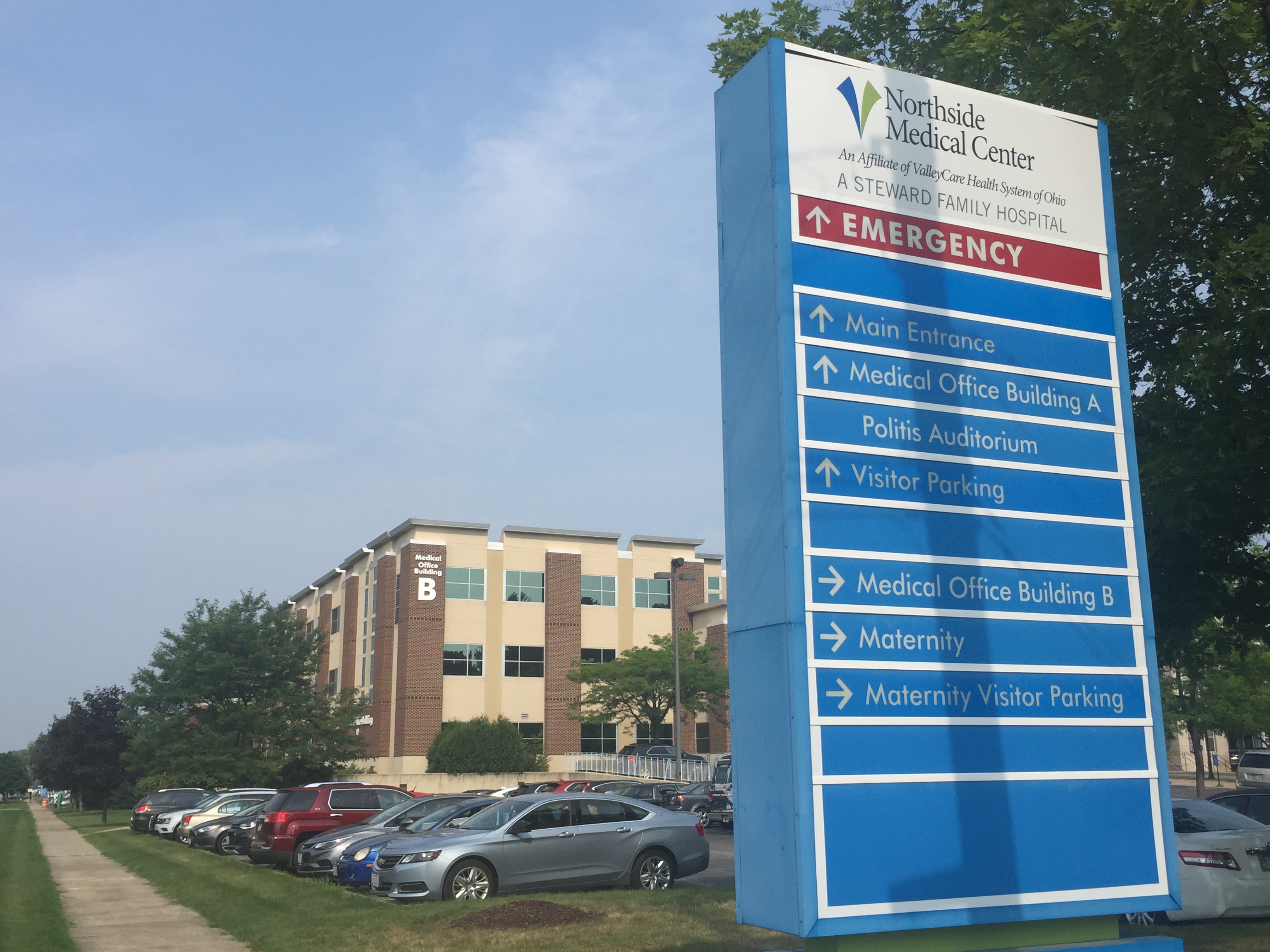
Steward Ohio hospital ups layoffs to 468 as closure looms

https://www.beckershospitalreview.com/human-capital-and-risk/steward-ohio-hospital-ups-layoffs-to-468-as-closure-looms.html

Image result for northside regional medical center a steward family hospital

Dallas-based Steward Health Care issued a revised notice Aug. 17 indicating job losses from the pending closure of one of its hospitals in Ohio will affect approximately 80 more people than previously reported, according to the Ohio Department of Job and Family Services.

Steward revealed plans last week to close Youngstown-based Northside Regional Medical Center on Sept. 20. The health system initially stated it would lay off all of the facility’s 388 employees, according to a WARN notice filed Aug. 15.

However, a revised WARN notice dated Aug. 17 indicates the closure will affect 468 employees. All hospital workers will be paid through Oct. 14.

Steward acquired Northside Regional and seven other facilities from Franklin, Tenn.-based Community Health Systems last year.

Area healthcare leaders expressed dismay over the planned closure to The Business Journal, but said the move was not entirely unexpected.


6 latest hospital bankruptcies

https://www.beckershospitalreview.com/finance/6-latest-hospital-bankruptcies-082018.html

Image result for hospital bankruptcies

From reimbursement landscape challenges to dwindling inpatient volumes, many factors lead hospitals to file for bankruptcy.

Here are six hospitals that have filed for bankruptcy protection since Jan. 1:

1. Rockdale, Texas-based Little River Healthcare, its parent company and several of its affiliated entities entered Chapter 11 bankruptcy July 24. One of the hospitals included in the bankruptcy filing, Crockett, Texas-based Timberlands Hospital, closed in 2017.

2Florence (Ariz.) Hospital at Anthem entered Chapter 11 bankruptcy in late May after it failed to contest an involuntary bankruptcy petition from creditors within the required 21-day timeline.

3. Gilbert (Ariz.) Hospital, which is affiliated with Florence Hospital at Anthem, entered Chapter 11 bankruptcy May 24.

4. The Miami Medical Center, a 67-bed hospital that suspended services in October 2017, filed for Chapter 11 bankruptcy protection March 9. The hospital was sold in auction in late June.

5. Iron County Medical Center, a critical access hospital in Pilot Knob, Mo., filed for Chapter 9 bankruptcy Feb. 21. The hospital is owned by the Iron County Hospital District.

6. Surprise Valley Health Care District, which operates 26-bed Surprise Valley Hospital in Cedarville, Calif., filed for Chapter 9 bankruptcy Jan. 4.


Trying to Survive: Community Responses to Uncertainties About Federal Funding for Medicaid and Public Health Programs

https://www.commonwealthfund.org/blog/2018/community-responses-federal-funding?omnicid=EALERT1457501&mid=henrykotula@yahoo.com

Mother and baby at a Federally Qualified Health Center

“We are just trying to survive.”

So says the director of an Ohio federally qualified health center (FQHC) that, like many such clinics nationwide, struggles to meet the demand for a wide range of services, from prenatal and other preventive care to addiction treatment and oral health care.

Along with community hospitals and public health departments, FQHCs — critical providers of health services in many low-income communities — are funded through state and local taxes, federal and state government programs, and private philanthropy. But some FQHCs are experiencing shortfalls in trying to meet their clients’ needs. Threats from Congress to reduce federal Medicaid funding, scale back Medicaid expansion, and decrease funding for public health programs have further compounded the financial uncertainties.

To learn how funding shortfalls are being experienced on the ground, my colleagues and I spoke with hospital administrators, chiefs of emergency departments, directors of county public health departments, and heads of FQHCs and behavioral health clinics. We also interviewed community leaders connected to businesses, law enforcement, local media, religious organizations, and political groups in eight North Carolina, Ohio, Pennsylvania, and Wisconsin counties.

Local Health Funding Inadequate

Nearly all of these community leaders described increasing access to health care as just one of three priorities for their communities. Improving local schools and attracting businesses with good-paying jobs are the other top concerns. As one school superintendent said, “We need to focus on all of these if we are to attract employers and people and remain a desirable place to live.”

But local health needs keep growing. The list is daunting: the decontamination of public water supplies; prenatal and infant care; immunizations; reductions in smoking and obesity; better nutrition; dental care for children and adults; and addressing mental illness, suicide risks, and substance use disorders. “We don’t have the capacity to deal with all who [need help],” says a Wisconsin county public health director. “We need to build infrastructure” — clinics and treatment centers — “and provider network capacity.”

Health departments and community clinics report that local funding has been inadequate for some time. As state and county governments have resisted raising taxes and increasing funds for public health needs and community clinics, grants from local organizations and foundations have helped fill the breach. But private philanthropy only goes so far. “Local foundations do not want to fund long-term staff needs,” one public health director said.

Medicaid Funding Is Critical for FQHCs and Emergency Departments

Threats to Medicaid funding have community providers worried. Medicaid generally provides about half the revenues for FQHCs, enabling them to provide care to all, regardless of ability to pay. FQHC directors fear that changes to eligibility — including requirements that beneficiaries work or volunteer, as proposed under various waivers — could mean that some patients will lose coverage, along with their access to counseling and medications for mental illness or chronic conditions like diabetes. Medicaid cutbacks also could make it harder for FQHCs to find specialists willing to see their uninsured or underinsured patients.

Hospital emergency departments (EDs) also would suffer from cuts to Medicaid. “Medicaid and self-pay [patients are] now 40 percent of our revenue, compared to 20 percent before Medicaid was expanded,” one ED chief told us. While more patients are covered thanks to the expansion, ED revenue from private insurance in these communities is down over the past two years, making hospitals more dependent on public insurance. ED chiefs also say that people with mental illnesses or substance use disorders experiencing crises are already crowding EDs, in part because it’s often easier for Medicaid beneficiaries to get to the hospital than to find primary care providers willing to treat them in a timely manner. If Medicaid funding is cut or eligibility requirements are changed, such problems could become much worse.

Medicaid Changes Already Impacting Providers

Complicating matters is a 2016 rule issued by the Centers for Medicare and Medicaid Services that was intended to improve quality of care and oversight for the growing number of Medicaid beneficiaries enrolled in managed care. Some states are responding to the rule by requiring that FQHCs and other safety-net clinics use more complex coding to file their claims for reimbursement, adding to the administrative burden on clinics. “We used to use just 15 codes to bill for services,” the director of a behavioral health clinic said. “Now there are about 250, and I’ve had to hire more administrative staff.”

Moreover, some clinics have seen longer gaps between the time claims are submitted and reimbursement is received from the state. The resulting cash flow problems hit smaller clinics, which have narrow operating margins, particularly hard. “This [delay] is causing smaller clinics to live in their ‘line of [bank] credit’,” one clinic director said. “Does the state want to deal only with large provider agencies?”

Paralyzed by Unease About the Future

These ongoing changes to Medicaid payment, along with proposed eligibility changes and fears of funding cutbacks, are causing grave concerns among community health leaders. With needs for care growing, they are understandably focused on the present. Otherwise, as one clinic director said, “[we] would be paralyzed by unease about the future.”

In the counties we visited, local independent political groups that have sprung up in response to these and other concerns see the federal government as out of touch with local needs for better health care, better schools, and higher-paying jobs — and with communities’ inability to dig deeper into their pockets to address these needs. For the clinics and hospitals that serve Medicaid patients and their communities, stable Medicaid funding will be critical to meeting their missions.


Hospital profits in Massachusetts shriveling due to financial pressure

https://www.healthcarefinancenews.com/news/hospital-profits-massachusetts-shriveling-due-financial-pressure?mkt_tok=eyJpIjoiWWpFek9EVm1ZbU5tT0RWaSIsInQiOiI2YVwvTFhvMGpzWkpHSkttMFgrS253RWU5RlNJRE51ZzF0Zkdadjd4MmRKVVwvTUpYZW5qTjF2OU1LQnJcL3hDN1l4aGRnRmo0cWxGZk9CcXBRdm9Ga21iUkNhVG9XVTQ5UFZUbGZpbHRXTUgwcng4M081S3hpQ1dQMCt2N2lCQU5VTyJ9

Image result for hospital profits


Hit especially hard were Massachusetts’ community hospitals, with median operating margins plunging to 0.9 percent.

Acute care hospitals in Massachusetts are turning a profit for the most part, but in many cases those profits are less than robust. The state’s Center for Health Care Information and Analysis found that many are in a financially precarious position.

According to the report, about 65 percent of the commonwealth’s hospitals have operating margins below three percent. Overall, hospitals’ operating margins hovered around 1.6 percent. That’s down from 2.8 percent during the previous fiscal year.

While 49 of 62 hospitals were profitable in the fiscal year ending Sept. 30, many low margins low enough not to be considered financially healthy.

Hit especially hard were Massachusetts’ community hospitals, with median operating margins plunging to 0.9 percent — down two full percentage points from the previous year.

The northeastern part of the state saw the lowest margins geographically, at 1.6 percent, with some facilities operating on negative margins and hemorrhaging cash. North Shore Medical Center in Salem was among the hardest hit, seeing $57.7 million evaporate in fiscal year 2017.

Not all Massachusetts hospitals are feeling those kinds of pressures. Northeast Hospital enjoyed a 9 percent operating margin during the past fiscal year, translating into a $33.1 million surplus.

That the state’s rural hospitals are struggling isn’t surprising, given the national trend. A recent report found that nearly half are operating at negative margins, fueled largely by a high rate of uninsured patients. Eighty rural hospitals closed from 2010 to 2016, and more have shut their doors since.

Aside from the high uninsured rate, a payer mix heavy on Medicare and Medicaid with lower claims reimbursement rates is a contributing factor. More patients are seeking care outside rural areas, which isn’t helping, and many areas see a dearth of employer-sponsored health coverage due to lower employment rates. Many markets are also besieged by a shortage of primary care providers, and tighter payer-negotiated reimbursement rates.


5 key takeaways from hospitals’ Q2 results

https://www.healthcaredive.com/news/5-key-takeaways-from-hospitals-q2-results/530072/

Earnings results were mixed for hospital operators in the second quarter, with debt-laden health systems slagging and high-performing counterparts pulling ahead.


8 ways hospitals are cutting readmissions

https://www.beckershospitalreview.com/quality/8-ways-hospitals-are-cutting-readmissions.html

Related image

As hospitals work to reduce readmissions, healthcare experts are looking at why patients return to the hospital and strategizing ways to keep discharged patients from becoming inpatients again, according to U.S. News & World Report.

1. Rapid follow-up. Congestive heart failure patients are some of the patients who have the highest risk of early hospital readmission, and patients who see a physician soon after their hospital stay or receive a follow up from a nurse or pharmacist are less likely to be readmitted, a study published in Medical Care found.

After researchers looked at about 11,000 heart failure patients discharged over a 10-year period, they found the timing of follow-up is closely tied to readmission rates, said study co-author Keane Lee, MD. “Specifically, it should be done within seven days of hospital discharge to be effective at reducing readmissions within 30 days,” Dr. Lee said.

2. Empathy training. When clinicians are trained in empathy skills, they may better communicate with patients preparing for discharge, and encouraging two-way conversations may help patients reveal their care expectations and concerns. Providers at Cleveland Clinic, for example, receive empathy training to better engage with patients and their families.

3. Treating the whole patient. When a patient suffers from multiple medical conditions, catching and treating symptoms of either condition early may prevent an emergency room visit. Integrated care models make it easier to give patients all-encompassing, continuous care, said Alan Go, MD, director of comprehensive clinical research at the Kaiser Permanente Division of Research in Oakland, Calif.

4. Navigator teams. A patient navigator team of a nurse and pharmacist can help cut heart failure patient readmissions. Patients who are discharged may be overwhelmed by long medication lists and multiple outpatient appointments. A patient navigator team of a nurse and pharmacist can help cut heart failure patient readmissions.

One study examined results of these teams at New York City-based Montefiore Medical Center. The navigator team helped reduce 30-day readmission rates by providing patient education, scheduling follow-up appointments and emphasizing patient frailty or struggle to comprehend discharge instructions.

5. Diabetes home monitoring. For high-risk patients with diabetes and coronary artery disease, home monitoring can help avoid readmissions. In a study examining a Medicare Advantage program of telephonic diabetes disease management, nurses conducted regular phone assessments of patients’ diabetes symptoms, medication-taking and self-monitoring of glucose levels. The study found hospital admissions for any cause were reduced for the program’s patients.

6. Empowered patients. It is critical for patients to understand their care plan at discharge, including medications, physical therapy and follow-up appointments, said Andrew Ryan, PhD, professor of healthcare management at the University of Michigan School of Public Health in Ann Arbor. “Patients don’t want to be readmitted, either,” Dr. Ryan said. “They can take an active role in coordinating their care. Ideally, they wouldn’t have to be the only ones to do that.”

7. Proactive nursing homes. “There are very high readmission rates from skilled nursing facilities,” Dr. Ryan said. If a recuperating resident developed a health problem, traditionally, they were immediately referred to the hospital. “Now, hospitals are doing some creative things, like putting physicians in nursing homes, where they [make rounds] and try to figure out what could be treated there and what really requires another admission,” Dr. Ryan said. “It speaks to this interest in engaging in care in a broader sense than hospitals historically have.”

8. Nurses on board. A program putting nurse practitioners and RNs in about 20 Indiana nursing homes is seeing success in cutting preventable hospitalizations among residents. The OPTIMISTIC project, or Optimizing Patient Transfers, Impacting Medical Quality and Improving Symptoms: Transforming Institutional Care, reduced hospitalizations by one-third, a November 2017 report found. OPTIMISTIC allows on-site nurses to give direct support to patients and educate nursing home staff members, sparing frail older adults from the stress of hospital admissions and readmissions.