Safety-net providers operated with an average margin of 1.6% in 2017

https://www.healthcarefinancenews.com/news/safety-net-providers-operated-average-margin-16-2017?mkt_tok=eyJpIjoiWkdWbVpqTmxZelJpT1RNMCIsInQiOiJBa3NWRnZ1KzVEc29BeFkyMnRTUUtmaFRZNWgrVmVGTXJ0SlwvdW5NVitiUGQzVDJjYXFXRkd4eUlvckROVG1uQkxQdE9ROVZOM0pwQWJBUlpmK0dGZnEwS0V2XC9wRUs4SUQ3bFc3bmorbVlTeXZQaHhHbjRva2V6UnQwakZtVHZaIn0%3D

Image result for medicaid disproportionate share hospital payments

This is less than half their 2016 average and below the 7.8 percent average of other U.S. hospitals, according to the annual study.

Hospitals that serve vulnerable patients have much lower average margins that other providers, according to America’s Essential Hospitals.

The safety-net providers have persistently high levels of uncompensated and charity care that pushed average margins down to one-fifth that of other hospitals in 2017, according to the annual study, Essential Data: Our Hospitals, Our Patients. They operated with an average margin of 1.6 percent in 2017 — less than half their 2016 average and far below the 7.8 percent average of other U.S. hospitals, according to the data from Essential Hospitals’ 300 members.

While these hospitals represent about 5 percent of all U.S. hospitals, they provided 17.4 percent of all uncompensated care, or $6.7 billion, and 23 percent of all charity care, or $5.5 billion in 2017, the study said.

THE IMPACT

Amercia’s Essential Hospitals fears further financial pressure from $4 billion in federal funding cuts to disproportionate share hospitals slated to go into effect on October 1. This represents a third of current funding levels.

The DSH payments are statutorily required and are intended to offset hospitals’ uncompensated care costs. In 2017, Medicaid made a total of $18.1 billion in DSH payments, including $7.7 billion in state funds and $10.4 billion in federal funds, according to the Medicaid and CHIP Payment and Access Commission, or MACPAC.

MACPAC recommends starting with cuts of $2 billion in the first year.

The association and other organizations have been urging Congress to stop or phase-in the cuts. Speaker Nancy Pelosi said Congress must take action to ease the DSH cuts.

TREND

Since 1981, Medicaid DSH payments have helped offset essential hospitals’ uncompensated care costs.

The study data shows essential hospitals provide disproportionately high levels of uncompensated and charity care.

In 2017, three-quarters of essential hospitals’ patients were uninsured or covered by Medicaid or Medicare and 53 percent were racial or ethnic minorities. They served 360,000 homeless individuals, 10 million with limited access to healthy food, 23.9 million living below the poverty line, and 17.1 million without health insurance, the study said.

The association’s members averaged 17,000 inpatient discharges, or 3.1 times the volume of other acute-care hospitals. They operated 31 percent of level I trauma centers and 39 percent of burn care beds nationally.

ON THE RECORD

“Our hospitals do a lot with often limited resources, but this year’s Medicaid DSH cuts will push them to the breaking point if Congress doesn’t step in,” said association President and CEO Dr. Bruce Siegel. “Our hospitals are on the front lines of helping communities and vulnerable people overcome social and economic barriers to good health, and they do much of this work out of their own pocket. They do this because they know going outside their walls means healthier communities and lower costs through avoided admissions and ED visits.”


A digital front door that no one’s walking through

The Weekly Gist: The Winter is Coming Edition

Image result for patient portal

Here’s this week’s good news in health IT: over 90 percent of hospitals now provide portals or similar platforms allowing patients to electronically access their medical records, according to a new report from the Office of the National Coordinator for Health IT (ONC).

The bad news, however, is that few patients actually use them. Fewer than eight percent of hospitals report that half or more of their patients have activated their patient portal, and nearly 40 percent reported that less than ten percent of patients have logged on. This is in spite of data in the report showing that two-thirds of hospitals offer services like secure messaging, electronic bill pay, and online scheduling that are highly valued by consumers.

The root cause lies in simplicity and connectivity. Each hospital or independent physician practice has its own portal, forcing the patient to manage multiple logins and navigate myriad systems, each of which only displays a slice of their medical records. Rarely can the systems communicate with each other to allow providers access to the patient’s complete record.

Asking patients to navigate multiple portals from different healthcare providers is like asking them to use different web browsers for each site they visit—it’s cumbersome and nonsensical, the hallmark of a design driven by regulatory requirement rather than consumer value.

What’s needed is one, unified consumer portal for healthcare, which integrates all the different providers’ information feeds. For that, we’d need a truly consumer-centric healthcare system, built around and controlled by the individual. Maybe one day.


Ex-MetroHealth COO sentenced to 15 years for defrauding hospital

https://www.beckershospitalreview.com/legal-regulatory-issues/ex-metrohealth-coo-sentenced-to-15-years-for-defrauding-hospital.html?origin=cfoe&utm_source=cfoe

Related image

The former chief operating officer of Cleveland-based MetroHealth System was sentenced to more than 15 years in prison for his role in a conspiracy to defraud the health system through a series of bribes and kickbacks, according to the Department of Justice.

Five things to know:

1. The sentencing came after former COO Edward Hills, DDS, and three co-defendants — all dentists at MetroHealth — were found guilty of criminal charges in July 2018. The four men were indicted for the crimes in October 2016.

2. According to court documents presented by the Justice Department during the trial, Dr. Hills and two of his co-defendants engaged in a racketeering conspiracy from 2008 through 2016 that involved a series of bribes, witness tampering and other crimes.

3. Federal prosecutors alleged Dr. Hills solicited cash, checks and expensive gifts from the two co-defendants beginning in 2009, and in return took actions on their behalf allowing them to operate their individual private dental clinics during regular business hours while receiving full-time salaries from MetroHealth.

4. Dr. Hills, who also served as interim president and CEO of MetroHealth from December 2012 through July 2013, allowed the co-defendants to hire MetroHealth dental residents to work at their private clinics during regular business hours and did not require them to pay wages or salaries to residents. He allowed the three individuals and others to solicit bribes from prospective dental school residents, which amounted to at least $75,000 between 2008 and 2014.

5. Dr. Hills’ co-defendants are scheduled to be sentenced later this month.


NC hospital system tries another megamerger

https://www.axios.com/newsletters/axios-vitals-f500be38-f71e-4984-955b-efc69e20a435.html?utm_source=newsletter&utm_medium=email&utm_campaign=newsletter_axiosvitals&stream=top

Image result for hospital market lack of competition

Atrium Health struck out a year ago when it attempted to merge with in-state rival UNC Health Care, Bob reports. Now, the hospital system has inked a new deal to combine with Wake Forest Baptist Health, which is 90 minutes away from its headquarters.

Why it matters: Research overwhelmingly shows these kinds of regional hospital mergers lead to higher health care prices (and, consequently, premiums) because providers gain negotiating leverage and make it harder for health insurers to exclude them from networks.

Between the lines: The primary hook that Atrium and Wake Forest are selling is that they would build a new medical school in Charlotte. Because who could be against more doctors and research?

  • The organizations didn’t mention how, or if, they would try to keep costs and prices down.
  • The combined system would have almost $10 billion of revenue, which is roughly the size of Boston Scientific.


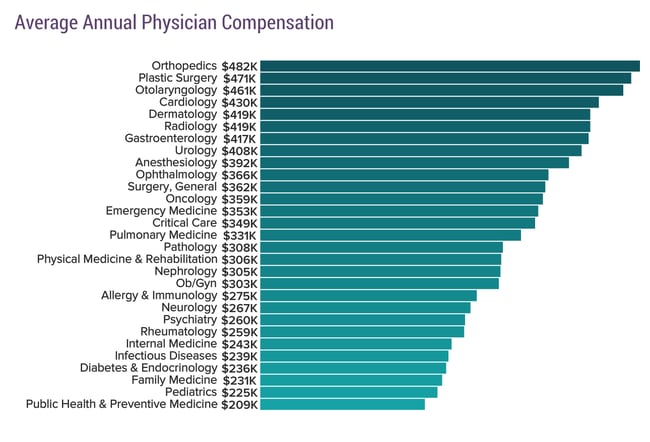
Medscape Physician Compensation Report 2019

https://www.medscape.com/slideshow/2019-compensation-overview-6011286?faf=1#1


Erlanger’s board faces overhaul if conflict of interest bill becomes law

https://www.beckershospitalreview.com/hospital-management-administration/erlanger-s-board-faces-overhaul-if-conflict-of-interest-bill-becomes-law.html

Image result for conflict of interest

Chattanooga, Tenn.-based Erlanger Health System may have to upend its board of trustees if a bill targeting ties between governing bodies and public hospitals is signed into Tennessee law, according to the Times Free Press.

The bill, which passed the state’s Senate and is moving through its House, aims to protect consumers who live near a county or publicly owned hospital. It would prevent hospital authority trustees and former trustees from signing an employment agreement with an authority until at least 12 months after the trustee’s tenure of service on the board. The bill would not affect private or nonprofit hospitals.

The Times Free Press reviewed a list of current and former trustees from Erlanger to see if anyone would be affected by the bill. A hospital spokesperson told the publication “it would be premature for Erlanger to speculate who this bill impacts at this point.”

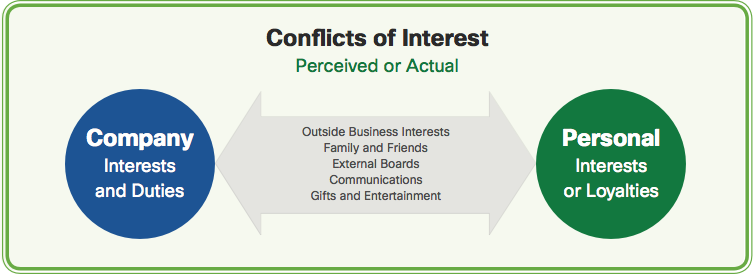
After reviewing conflict of interest disclosures trustees have to complete, the Times Free Press found current physician board members could have to choose between ending any financial ties with Erlanger or staying on the 11-member board.

Erangler’s Board Chairman Mike Griffin told the publication having physicians on the board is “a tremendous asset.” He added, “I am hopeful that the bill, in its final form, will not impact physician participation on Erlanger’s board.” 


Illinois hospital moves to suspend services, gives employees 60-day notice of closing

https://www.beckershospitalreview.com/finance/illinois-hospital-moves-to-suspend-services-gives-employees-60-day-notice-of-closing.html

Image result for temporary restraining order

Citing a staff shortage, Los Angeles-based Pipeline Health announced plans April 9 to suspend services at Westlake Hospital in Melrose Park, Ill. That plan was put on hold after a Cook County Circuit Court judge held that the abrupt closure could have “irreparable harm” to the community, according to the Chicago Sun Times.

In late January, Pipeline acquired Westlake Hospital and two other facilities from Dallas-based Tenet Healthcare. A few weeks after the transaction closed, Pipeline revealed plans to shut down 230-bed Westlake Hospital, citing declining inpatient stays and losses of nearly $2 million a month.

Pipeline said staffing rates have significantly declined in the weeks since it filed the application to close Westlake Hospital.

“Our utmost priority is safety and quality of patient care,” Pipeline Health CEO Jim Edwards said in an April 9 press release. “With declining staffing rates and more attrition expected, a temporary suspension of services is necessary to assure safe and sufficient operations. This action is being taken after considering all alternatives and with the best interest of our patients in mind.”

In addition to announcing the suspension of services, Pipeline also said it gave hospital employees a 60-day notice of closure, which is required by state and federal law.

Pipeline’s plan to immediately suspend services at the hospital was put on hold yesterday evening, when Judge Eve Reilly granted the village of Melrose Park a temporary restraining order to prevent the hospital from closing. The restraining order prevents Pipeline from closing the hospital, cutting services or laying off workers until after the state Health Facilities and Services Review Board considers the application to shut down the hospital on April 30, according to the Chicago Tribune.

The board could postpone the application due a pending lawsuit against Pipeline over the closure, according to the Chicago Tribune.

The village of Melrose Park sued Pipeline in March, alleging Pipeline acquired Westlake Hospital under false pretenses. The lawsuit alleges Pipeline and its owners kept their plans to shut down the hospital secret until after the transaction with Tenet closed to avoid opposition from village leaders and community members.

Pipeline recently filed a motion to dismiss the lawsuit, arguing its application for change of ownership made no promise to keep Westlake Hospital open and that the hospital’s financial troubles were not fully evident at the time the change of ownership was prepared.

“The complete impact of Westlake’s 2018 devastating net operating loss was not known until the year’s end and had not fully occurred in September 2018 when Pipeline submitted its application for change of ownership or even when that application was granted,” Pipeline said in a press release.

Pipeline said Westlake Hospital ended 2018 with a net operating loss of $14 million, and those losses are projected to worsen over time.


ECONOMIC RIPPLES: HOSPITAL CLOSURE HURTS A TOWN’S ABILITY TO ATTRACT RETIREES

https://www.healthleadersmedia.com/finance/economic-ripples-hospital-closure-hurts-towns-ability-attract-retirees?utm_source=silverpop&utm_medium=email&utm_campaign=ENL_190410_LDR_BRIEFING%20(1)&spMailingID=15444335&spUserID=MTY3ODg4NTg1MzQ4S0&spJobID=1620658993&spReportId=MTYyMDY1ODk5MwS2

The epidemic of rural hospital closures is threatening small towns such as Celina, Tenn. The town of 1,500 has been trying to position itself as a retiree destination but that task has grown more difficult since the March 1 closure of 25-bed Cumberland River Hospital.


KEY TAKEAWAYS

Celina became the 11th rural hospital in Tennessee to close in recent years — more than in any state but Texas. Both states have refused to expand Medicaid in a way that covers more of the working poor.

The closest hospital is now 18 miles away. That adds another 30 minutes through mountain roads for those who need an X-ray or bloodwork. For those in the back of an ambulance, that bit of time could mean the difference between life or death.

When a rural community loses its hospital, health care becomes harder to come by in an instant. But a hospital closure also shocks a small town’s economy. It shuts down one of its largest employers. It scares off heavy industry that needs an emergency room nearby. And in one Tennessee town, a lost hospital means lost hope of attracting more retirees.

Seniors, and their retirement accounts, have been viewed as potential saviors for many rural economies trying to make up for lost jobs. But the epidemic of rural hospital closures is threatening those dreams in places like Celina, Tenn. The town of 1,500, whose 25-bed hospital closed March 1, has been trying to position itself as a retiree destination.

“I’d say, look elsewhere,” said Susan Scovel, a Seattle transplant who arrived with her husband in 2015.

Scovel’s despondence is especially noteworthy given she leads the local chamber of commerce effort to attract retirees like herself. She considers the wooded hills and secluded lake to hold scenic beauty comparable to the Washington coast — with dramatically lower costs of living; she and a small committee plan getaway weekends for prospects to visit.

When she first toured the region before moving in 2015, Scovel and her husband, who had Parkinson’s, made sure to scope out the hospital, on a hill overlooking the sleepy town square. And she has rushed to the hospital four times since he died in 2017.

“I have very high blood pressure, and they’re able to do the IVs to get it down,” Scovel said. “This is an anxiety thing since my husband died. So now — I don’t know.”

She can’t in good conscience advise a senior with health problems to come join her in Celina, she said.

When Seconds Count, Delays In Care

Celina’s Cumberland River Hospital had been on life support for years, operated by the city-owned medical center an hour away in Cookeville, which decided in late January to cut its losses after trying to find a buyer. Cookeville Regional Medical Center executives explain that the facility faced the grim reality for many rural providers.

“Unfortunately, many rural hospitals across the country are having a difficult time and facing the same challenges, like declining reimbursements and lower patient volumes, that Cumberland River Hospital has experienced,” CEO Paul Korth said in a written statement.

Celina became the 11th rural hospital in Tennessee to close in recent years — more than in any state but Texas. Both states have refused to expand Medicaid in a way that covers more of the working poor. Even some Republicans now say the decision to not expand Medicaid has added to the struggles of rural health care providers.

The closest hospital is now 18 miles away. That adds another 30 minutes through mountain roads for those who need an X-ray or bloodwork. For those in the back of an ambulance, that bit of time could mean the difference between life or death.

“We have the capability of doing a lot of advanced life support, but we’re not a hospital,” said Natalie Boone, Clay County’s emergency management director.

The area is already limited in its ambulance service, with two of its four trucks out of service.

Once a crew is dispatched, Boone said, it’s committed to that call. Adding an hour to the turnaround time means someone else could likely call with an emergency and be told — essentially — to wait in line.

“What happens when you have that patient that doesn’t have that extra time?” Boone asked. “I can think of at least a minimum of two patients [in the last month] that did not have that time.”

Residents are bracing for cascading effects. Susan Bailey hasn’t retired yet, but she’s close. She has spent nearly 40 years as a registered nurse, including her early career at Cumberland River.

“People say, ‘You probably just need to move or find another place to go,'” she said.

Bailey and others are concerned that losing the hospital will soon mean losing the only three physicians in town. The doctors say they plan to keep their practices going, but for how long? And what about when they retire?

“That’s a big problem,” Bailey said. “The doctors aren’t going to want to come in and open an office and have to drive 20 or 30 minutes to see their patients every single day.”

Closure of the hospital means 147 nurses, aides and clerical staff have to find new jobs. Some employees come to tears at the prospect of having to find work outside the county and are deeply sad that their hometown is losing one of its largest employers — second only to the local school system.

Dr. John McMichen is an emergency physician who would travel to Celina to work weekends at the ER and give the local doctors a break.

“I thought of Celina as maybe the ‘Andy Griffith Show’ of healthcare,” he said.

McMichen, who also worked at the now-shuttered Copper Basin Medical Center, on the other side of the state, said people at Cumberland River knew just about anyone who would walk through the door. That’s why it was attractive to retirees.

“It reminded me of a time long ago that has seemingly passed. I can’t say that it will ever come back,” he said. “I have hopes that there’s still some hope for small hospitals in that type of community. But I think the chances are becoming less of those community hospitals surviving.”


“UNFORTUNATELY, RURAL HOSPITALS ACROSS THE COUNTRY ARE HAVING A DIFFICULT TIME AND FACE THE SAME CHALLENGES, LIKE DECLINING REIMBURSEMENTS AND LOWER PATIENT VOLUMES THAT CUMBERLAND RIVER HOSPITAL HAS EXPERIENCED.”


WILLIS-KNIGHTON CEO CONTRACT EXTENDED DESPITE RETIREMENT PLANS, ‘COUP ATTEMPT’

https://www.healthleadersmedia.com/strategy/willis-knighton-ceo-contract-extended-despite-retirement-plans-coup-attempt?utm_source=silverpop&utm_medium=email&utm_campaign=ENL_190410_LDR_BRIEFING%20(1)&spMailingID=15444335&spUserID=MTY3ODg4NTg1MzQ4S0&spJobID=1620658993&spReportId=MTYyMDY1ODk5MwS2

The board gave James K. Elrod two more years at the health system’s helm, despite the 81-year-old CEO’s retirement plans announced amid controversy.


KEY TAKEAWAYS

The longtime CEO signaled in 2017, after a push for his ouster, that his likely successor would be recruited to the health system so he could retire.

The board decided keeping the same leader in place for another two years would be ‘our greatest advantage’ in the midst of change.

Eighteen months have passed since the medical executive committee of Willis-Knighton Health System in Shreveport, Louisiana, urged the board to force President and CEO James K. Elrod to either step out of his longtime leadership position voluntarily or be pushed.

The committee’s statement of no confidence in a letter to the trustees complained that Elrod failed to tolerate dissent and hadn’t responded appropriately to changes in the healthcare industry, as the Shreveport Times reported, describing the incident as “an attempted coup.”

Elrod was 80 at the time. He had worked for the organization more than 50 years and turned what was an 80-bed hospital into what became Louisiana’s largest health system. He weathered the criticism with backing from the board. Then he signaled in a letter to hospital staff that a succession planning process for his likely successor was underway.

Despite the controversy, the board announced Friday that it asked Elrod, now 81, to stay at his post for another two years.

“After taking some time to consider our vote, Mr. Elrod graciously agreed to delay his retirement plans,” board president Frank Hughes, MD, said in a statement describing Elrod as “our greatest advantage” in the face of uncertainty and change.

“This is a clear indication of his ongoing dedication and commitment to Willis-Knighton, and we are grateful for this decision,” Hughes added. “While we are pleased with the current senior leadership team assembled during the past 18 months, we felt that the greatest gift we could give them is additional time for mentoring and guidance. We made this decision in support of our physicians, our employees and the larger community.”

“WHILE WE ARE PLEASED WITH THE CURRENT SENIOR LEADERSHIP TEAM ASSEMBLED DURING THE PAST 18 MONTHS, WE FELT THAT THE GREATEST GIFT WE COULD GIVE THEM IS ADDITIONAL TIME FOR MENTORING AND GUIDANCE.”


COMMUNITY HEALTH CENTERS MORE FINANCIALLY STABLE UNDER MEDICAID EXPANSION

https://www.healthleadersmedia.com/finance/community-health-centers-more-financially-stable-under-medicaid-expansion?source=EHLM8&effort=B&utm_source=HealthLeaders&utm_medium=email&utm_campaign=MeritWelcomeB&emailid=&utm_source=silverpop&utm_medium=email&utm_campaign=Warming-Merit-Finance-040319%20(1)&spMailingID=15443417&spUserID=Mzc4MjM1NTY0ODgyS0&spJobID=1620654151&spReportId=MTYyMDY1NDE1MQS2

Facilities are faring better in states that expanded Medicaid, according to a new Commonwealth Fund report.


KEY TAKEAWAYS

A year after facing a federal funding cliff, CHCs in expansion states are thriving. 

CHCs provide care to 27 million patients each year, according to the Health Resources and Services Administration.

The financial stability of CHCs, which serve medically vulnerable communities, is a benefit for health systems.

Community health centers (CHC) operating in states that expanded Medicaid under the ACA are 28% more likely to report improvements to their financial stability, according to a Commonwealth Fund report released Thursday morning.

CHCs in Medicaid expansion states reported were more likely to report improvements in their ability to provide affordable care to patients, 76%, than their counterparts in non-expansion states, 52%.

More than 60% of CHCs in expansion states reported improved ability to fund service or site expansions and upgrades for facilities, while only 46% of CHCs in non-expansion states said the same.

These facilities reported higher levels of unfilled job openings for mental health professional and social workers, while also implying a greater openness to operating under a value-based payment model.

The success and viability of CHCs are essential for larger health systems, according to Melinda K. Abrams, M.S., vice president and director of the Commonwealth Fund’s Health Care Delivery System Reform program, adding that CHCs act as a strong foundation for providing primary care to medically vulnerable populations in rural communities.

Abrams said that by making sure patients are insured and receiving care up front, rather than delaying treatment and exacerbating their condition, they are less likely to end up in a hospital emergency room and contribute to a rise in uncompensated care for hospitals.

She also told HealthLeaders that populations with higher enrollment rates make it easier for CHCs to innovate, invest in technology, hire new staff, train existing the workforce, and adopt new models of care.

“[Medicaid expansion] makes it a lot easier to provide high-quality comprehensive care when [a CHC’s] patients have health insurance,” Abrams said. “In this particular instance, it’s a lot easier to innovate and have financial stability when you have more paying patients, which means that it is easier if you are [a CHC] in a state that has expanded Medicaid.”

The Commonwealth Fund report provides a welcome note of positivity for CHCs, which serve vulnerable populations primarily composed by the uninsured, but have faced funding challenges in the past.

During the budget battles that produced multiple government shutdowns throughout the early portion of 2018, advocates wondered anxiously whether Congress would provide long term funding to the nearly 1,400 CHCs operating at nearly 12,000 service delivery sites across the country.

According to the Health Resources and Services Administration, CHCs provide care to more than 27 million patients annually.

The Community Health Center Fund (CHCF), created in 2010 as a result of the ACA, is the largest source of comprehensive primary care for medically underserved communities, according to the Kaiser Family Foundation.

However, Abrams said that Medicaid expansion has also been a beneficial tool for CHCs, as they have begun to see more insured patients while also benefiting from Medicaid reimbursements, even though they are low compared to other reimbursement rates.

CHCs in states that expanded Medicaid have been able to grow the services that are offered while assisting in the ongoing fight against the opioid epidemic, according to the Commonwealth Fund report.

Abrams said that one downside to the growing success of CHCs have been the unfilled positions, mostly for mental health providers, that are falling behind rising demand levels, though she added that this finding is not surprising.

“I think it’s in part because the supply of the workforce is lagging a little bit behind the demand,” Abrams said. “There’s no reason to think that over time that this gap wouldn’t be closed. But we did find that as a challenge, that [CHCs] have a lot of positions open [yet] they’re hiring. A number of these CHCs are in economically depressed areas, so the good news is that there are some jobs available.”

CHCs are much more likely to participate in value-based payment models as a result of Medicaid expansion, with Abrams explaining that changes in payments and delivery models are common during insurance expansions.

She sees the continued progress made on the value-based front by CHCs as a way to “promote better healthcare and save money” over time.